
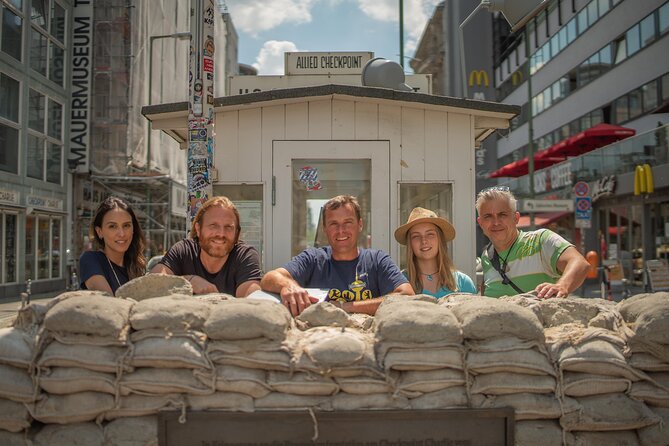
Reviewed · BERLIN COLD WAR TOURS
Berlin’s Best: 2 Hour Walking Tour Third Reich and the Cold War
Berlin’s past comes at you fast on this two-hour walk from Brandenburg Gate to Checkpoint Charlie. You move through the places tied to Nazi rule, wartime destruction, the divided city, and reunification, with an English-speaking guide filling in the links between them. Guides including Glen, Maggie, Mikey, Tom, and James have been praised for clear explanations, good stories, and a respectful touch with hard subjects.
I like two things right away: the route covers ground a bus cannot reach, and the ending at Checkpoint Charlie gives you a useful Cold War finish. I also like the short format, which works well when you have only part of a day. The tradeoff is simple: two hours is not enough for a slow look at every site, and you’ll be outdoors for the entire walk.
Key points to know before you book
- Brandenburg Gate to Checkpoint Charlie: The route connects major Berlin landmarks in a logical eastward walk.
- Nazi and Cold War focus: You’ll hear about the Reichstag fire, Hitler’s bunker, the SS and Gestapo, the Berlin Wall, and the 1961 tank standoff.
- Free-access sights: Every listed stop is viewed from public areas, so the tour price pays for the guide and route rather than entry tickets.
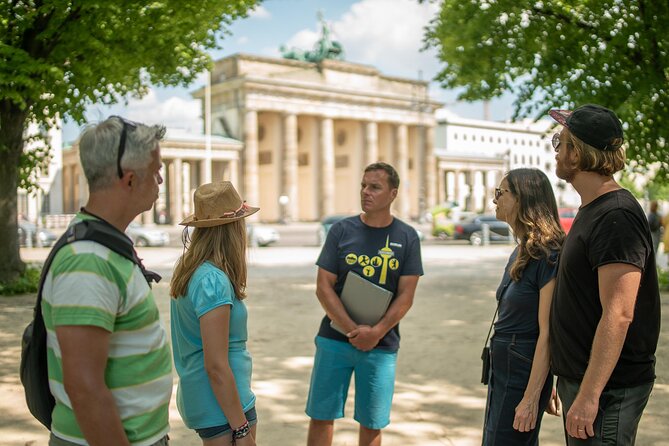
- Pink umbrella meeting point: Meet 15 minutes early in front of the Tourist Information office on the Pariser Platz side of Brandenburg Gate.
- English only, with up to 30 people: The group can be fairly large, so staying near the guide matters.
- Good value at $24.07: You get a structured history walk, local guidance, and a quick way to cover central Berlin.
Why this route makes sense for Berlin
Berlin can feel like a history book spread across a large city. A grand gate, a government building, a memorial, a bombed-out remnant, and a former border crossing may all sit within a reasonable walk, yet their connections are easy to miss without explanation.
This tour gives you that connecting thread. The story begins with the German Empire and the Reichstag, moves through the Nazi dictatorship and its crimes, then follows the city’s postwar split into East and West Berlin. It finishes with the Wall’s fall on November 9, 1989, and the question of how reunification has worked over the past three decades.
At $24.07 per person, I consider the price fair. You are not paying for museum admission, since the stops are viewed from outside and all listed admission costs are free. You are paying for someone to select the route, explain what happened at each place, answer questions, and keep the timeline moving.
That last part matters. Berlin’s memorials can be powerful but confusing if you encounter them without context. The guide turns separate sights into one connected lesson. Guides such as Mikhail have used old photographs at stops, while others, including Pete F, have added practical city tips after the formal walk.
More Third Reich history tours in Berlin:
- Berlin: Third Reich and Cold War 2 Hour Walking Tour
★ 4.9 · 6,830 reviews - Third Reich Berlin: Hitler and WWII Walking Tour
★ 5.0 · 3,301 reviews - Berlin: Third Reich, Hitler, and WWII Walking Tour
★ 4.9 · 1,133 reviews
Meeting at Brandenburg Gate
The tour begins at Brandenburg Gate, on Pariser Platz. Look for the guide with the pink umbrella and arrive 15 minutes before the start time. That detail is worth taking seriously, since a famous landmark can have plenty of people around it, and the group needs a clear meeting point.
The gate is more than a grand photo stop. Your guide explains why it became a symbol of reunified Germany, which gives the walk a strong opening idea: Berlin’s central monuments have changed meaning as the political order around them changed.
You’ll spend about 15 minutes here. That is enough to get oriented, hear the main story, and look closely at the gate without turning the opening into a long architecture lecture.
Because the tour is offered in English only, you should be comfortable following spoken explanations while walking outdoors. Guides have been praised for making difficult material accessible, and several have handled questions well. Still, the experience depends on the individual guide’s style and on how close you remain to the group.
The Reichstag and the fire that changed Germany
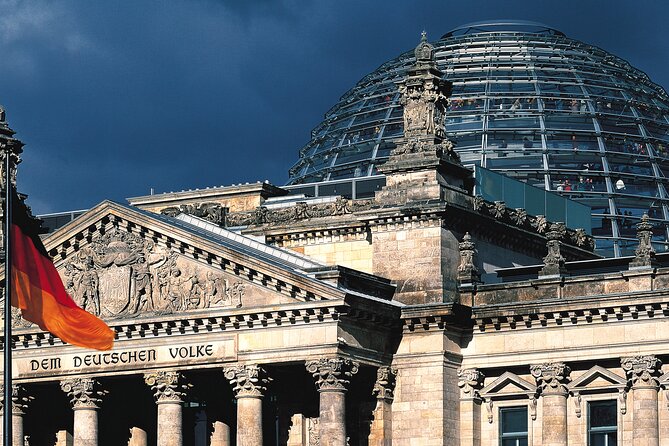
The next stop is the Reichstag Building, Germany’s parliament. You see it from outside and hear how the building reflects the political shocks of the past century.
The key story here is the Reichstag fire of 1933. The guide explains how Hitler used the fire as a political opening during his dictatorship. This stop helps you see that Nazi power did not appear fully formed overnight. It grew through political pressure, emergency measures, and the weakening of democratic institutions.
The visit lasts about 10 minutes. That is enough for the central facts, but not for an extended look at the building or a detailed study of German parliamentary history. If you want to visit the Reichstag interior or its dome, you would need to arrange that separately.
I like this early stop because it gives you political context before the walk reaches the more direct sites of Nazi terror. You are not simply looking at an impressive government building. You are learning how a place linked to democracy became part of the story of dictatorship.
Soviet tanks in the Tiergarten
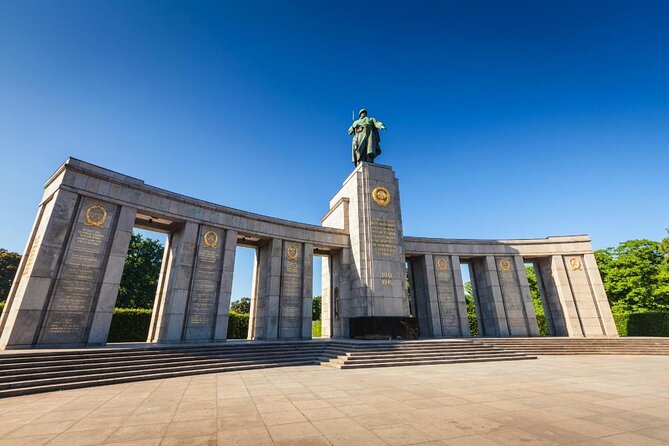
At the Soviet Memorial in the Tiergarten, you see Soviet T-34/76 tanks and field artillery from the Second World War. The stop lasts about seven minutes, so expect a focused explanation rather than a long memorial visit.
This is one of the more unusual parts of the route. A bus tour might point out the memorial from the road, but walking brings you close enough to see the military hardware and understand its position in the city.
Your guide also explains the Victory Column and why Albert Speer moved it from its original location. That leads into Speer’s plans for Germania, the proposed Nazi redesign of Berlin as a world capital. The idea is useful because it shows how architecture and city planning were tied to Nazi ambition and power.
There is a lot to cover here in a short time. If military memorials or Nazi urban planning interest you, listen closely and ask questions. If you prefer long, quiet visits at monuments, this quick stop may feel compressed.
More Cold War tours in Berlin:
- Skip-the-Line: Berlin Wall Museum at Checkpoint Charlie
★ 4.1 · 2,041 reviews - Cold War, Berlin Wall, Spies and the East Side Gallery
★ 5.0 · 1,024 reviews - Berlin: Cold War Walking Tour on Berlin Wall Route
★ 4.8 · 437 reviews - Berlin: Cold War Era History Guided Bike Tour
★ 4.8 · 413 reviews
Walking through the Holocaust Memorial
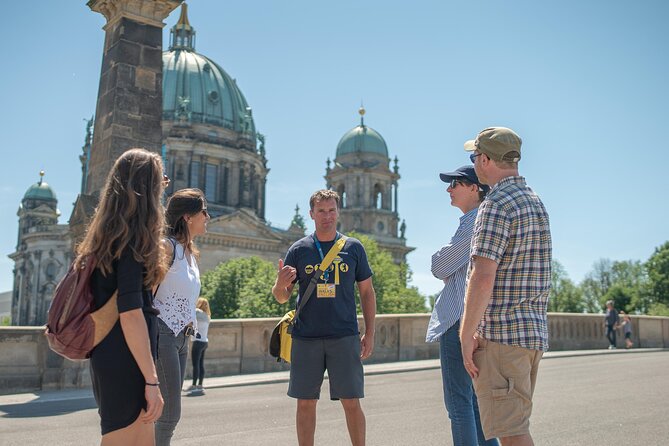
The Memorial to the Murdered Jews of Europe, usually called the Holocaust Memorial, is one of the tour’s most affecting stops. You walk through the field of concrete blocks, with the guide explaining its purpose and the scale of the crime it commemorates.
The listed time is about 10 minutes. That allows you to enter the memorial and absorb its changing spaces, but it is not a full visit to the underground Information Centre. The tour does not list an interior museum visit, so you should plan extra time if you want more names, documents, and personal stories.
This stop needs a careful tone, and that is where the better guides make a real difference. Several guides have been praised for keeping a friendly manner while treating Nazi crimes with respect. That balance matters. The subject is too serious for careless jokes, but a clear, human explanation can help you stay engaged rather than lost in dates.
I would not rush through the memorial simply because the group is moving on. Stay within sight of the guide, but take a moment to notice how the blocks change as you walk among them.
Above Hitler’s bunker
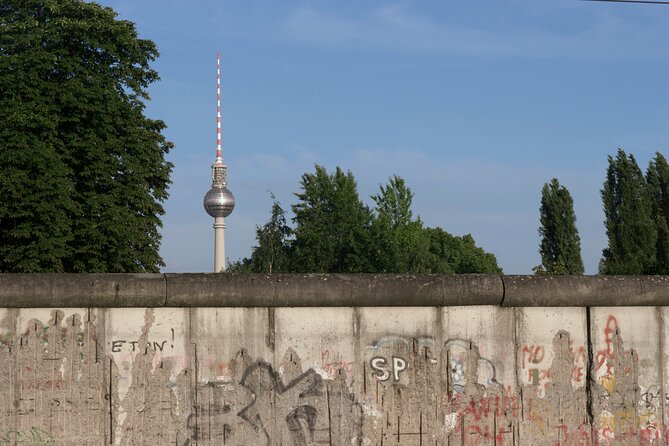
Near the site of the Führerbunker, you stand above the location where Hitler spent his final days and died by suicide on April 30, 1945. The bunker itself is not presented as an attraction, and the significance comes from the ground beneath you and the story told there.
The guide explains the final days of the war, the bunker’s role, and how Germany deals with this destructive past today. That final point is important. The stop is not about treating Hitler as a celebrity or turning a grim location into a spectacle. It is about understanding how the dictatorship ended and how modern Germany remembers it.
You get about 10 minutes here. The site can feel surprisingly plain, which is part of the lesson. There is no grand ruin to photograph and no preserved interior to explore. The guide’s explanation gives the ordinary-looking place its historical weight.
This is one of the moments when a strong guide matters most. Guides such as James and Mikey have been praised for handling grim subjects with sensitivity, clarity, and carefully judged humor.
The Aviation Ministry and Nazi power
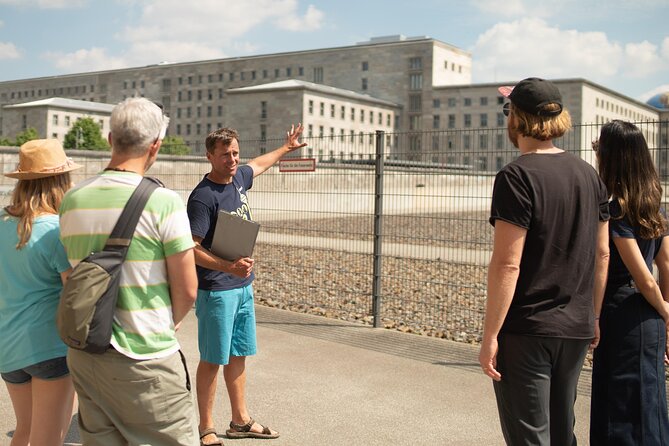
The walk continues to the Aviation Ministry of Berlin, the long building associated with Hermann Göring’s air force ministry. You also hear that the building was where East Germany, or the GDR, was proclaimed in 1949.
The stop lasts about five minutes. It is brief, but the building links two very different regimes: Nazi Germany and the new East German state created after the war. That overlap is typical of Berlin, where the same street or structure can carry several political meanings.
You walk the length of the building rather than entering it. That makes comfortable shoes useful, especially because the tour includes several stretches between stops. A guide may pause at different points to keep the group together, so you should not expect a nonstop march.
Topography of Terror and the machinery of repression
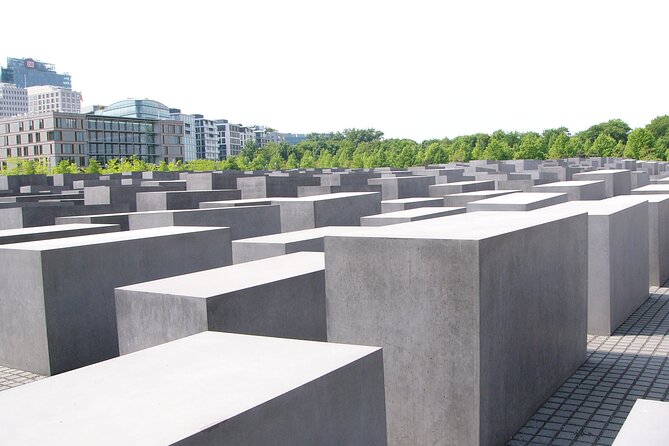
At the Topography of Terror, you see the former site of the SS, Gestapo, and SD headquarters. The present-day exhibition teaches about the crimes carried out by those institutions during the Second World War.
The tour gives you about 15 minutes here. You’ll receive an outdoor introduction to the site and its role, but the short schedule does not allow a full museum visit. If this subject matters to you, return later for more time with the displays.
This is an important stop because it shifts the focus from individual leaders to the institutions that made persecution and mass violence possible. You begin to see how offices, police bodies, and administrative systems turned ideology into action.
The site sits close to the Berlin Wall section on Niederkirchnerstraße, so the route changes from Nazi terror to postwar division without losing its sense of place. That contrast is one of the strongest features of the walk.
The Berlin Wall on Niederkirchnerstraße
On Niederkirchnerstraße, you see a large surviving section of the Berlin Wall. The guide tells stories of people who tried to escape, including those who did not make it, and explains daily life on both sides of the border.
The stop lasts about seven minutes. That is enough to understand the Wall’s purpose and human cost, but not enough for a full study of escape tunnels, border engineering, or the many Wall memorials around the city.
You’ll benefit from the guide’s ability to connect the concrete barrier with personal experience. The Wall was not just a line on a map. It divided families, work, neighborhoods, and political systems. A short story about an attempted escape can make that reality far clearer than a list of dates.
The Wall section also gives you a chance to compare the physical remains with old photographs. Guides have used historic images to show how the scene looked during the divided years, which can help you understand what has changed.
Checkpoint Charlie and the road to reunification
The tour ends at Checkpoint Charlie, at Friedrichstraße 43 to 45. This was the best-known crossing point through the Berlin Wall, and the guide explains the 1961 Soviet and American tank standoff on the street.
You also hear how the Wall came down on November 9, 1989, followed by a look at German reunification over the past 30-plus years. The ending works well because it brings the story into the recent past rather than stopping with the Wall itself.
Checkpoint Charlie is a heavily visited place, and the surrounding area can feel more commercial than solemn. The tour helps by separating the real Cold War event from the modern photo setting. You leave with a clearer sense of why the crossing mattered, even if the present-day scene feels busy.
The final stop lasts about 15 minutes. It is also a useful location for continuing your day, since the tour ends near public transportation and central attractions.
Timing, group size, and walking comfort
The tour lasts about two hours and has a maximum of 30 people. That is a reasonable group size for a city walk, but you should expect some pauses while the guide gathers everyone and finds a place to speak.
The route includes many stops, but the experience is not a strenuous hike. The main challenge is standing and walking outdoors for the full time. Wear sensible shoes, bring water, and dress for the forecast. In winter, take gloves and extra layers. Berlin’s cold can make a two-hour outdoor lesson feel much longer.
Use a restroom before you arrive. The route is organized around public streets and memorial areas, and a long scheduled break is not part of the plan. One guide has been praised for accommodating restroom needs, but you should not count on an extended pause.
The tour is near public transportation, and most people can take part. Service animals are allowed. Since the tour is in English only, it is best for you if you can follow a guide’s spoken English while moving between sites.
Who will get the most from this walk
I would choose this tour if you are in Berlin for a short stay and want a strong first look at the city’s central political history. It also works well on your first full day, since the route gives you places to return to later.
Families can make it work too. One guide helped an 11-year-old and a 16-year-old feel comfortable asking questions, which suggests the tone can suit older children and teenagers when the guide keeps explanations lively.
This is less suitable if you want museum interiors, long photography stops, or a detailed academic study of one period. The tour moves quickly and covers a lot. Its strength is the broad connection between sites.
The guide can shape the experience. Names praised for clear, engaging work include Glen, Ben, Maggie, Rebecca, Tom, Mikey, James, Mikhail, Peter F, Georgia, and Eyan. You cannot select a particular guide from the information provided, but the repeated pattern is clear: the best experience comes when the guide tells stories, answers questions, and treats painful history with care.
Should you book Berlin’s Best?
Yes, if you want a well-priced introduction to Berlin’s Nazi and Cold War landmarks. The $24.07 cost is good for a two-hour guided walk that includes Brandenburg Gate, the Reichstag, the Holocaust Memorial, Hitler’s bunker site, the Topography of Terror, the Berlin Wall, and Checkpoint Charlie.
Book it early if your dates are fixed, since it is commonly reserved about 16 days ahead. Choose another format if you need indoor shelter, a slower pace, or detailed museum time.
For most first-time visitors, I like this as a city orientation with real historical weight. Bring good shoes, warm clothes in cold weather, arrive 15 minutes early, and stay near the pink umbrella. You’ll leave with a better map of Berlin, and with several places worth revisiting at your own pace.
FAQ
How long does the walking tour last?
The tour lasts approximately two hours.
Where does the tour begin?
It begins at Brandenburg Gate, Pariser Platz, 10117 Berlin, Germany, in front of the Tourist Information office on the Pariser Platz side.
Where does the tour end?
The tour ends at Checkpoint Charlie, Friedrichstraße 43 to 45, 10117 Berlin, Germany.
How do I identify the guide?
Look for the guide with the pink umbrella. You should arrive 15 minutes before the tour begins.
Is the tour offered in English?
Yes. The walking tour is offered in English only.
What places are included?
The route includes Brandenburg Gate, the Reichstag Building, the Soviet Memorial in the Tiergarten, the Victory Column area, the Holocaust Memorial, the Führerbunker site, the Aviation Ministry, the Topography of Terror, a Berlin Wall section on Niederkirchnerstraße, and Checkpoint Charlie.
Are admission tickets included?
The listed stops have free admission, and the tour takes place on foot in public areas. The experience includes a professional English-speaking local guide and the walking tour.
How large can the group be?
The tour can have a maximum of 30 people.
Can I cancel for a full refund?
Yes, you can cancel up to 24 hours before the experience start time for a full refund. Cancellations or changes made less than 24 hours before the start time are not refunded or accepted.
More Walking Tours in Berlin
- Discover Berlin Half-Day Walking Tour
★ 5.0 · 9,624 reviews - Berlin: Discover Berlin Walking Tour
★ 4.9 · 5,998 reviews - Berlin: Hidden Backyards Guided Walking Tour
★ 4.8 · 5,360 reviews - Berlin: Alternative Berlin Walking Tour
★ 4.6 · 1,204 reviews
More two-hour experiences in Berlin
- Berlin: 2-Hour Lake Oberhavel Cruise from Tegel
★ 4.4 · 577 reviews - Berlin 2-Hour Segway Tour
★ 4.6 · 238 reviews - East Berlin and the Berlin Wall 2-Hour Walking Tour
★ 5.0 · 228 reviews - Berlin: Backyards of Berlin 2-Hour Tour
★ 4.7 · 163 reviews
Newest Berlin reviews
- Where It All Began: Berlin’s Queer & Trans History Tour★ 4.9 · 6 reviews
- Understanding Kreuzberg: The roots of local (sub)culture★ 4.9 · 11 reviews
- Berlin: guided canoe | kayaktour★ 4.1 · 7 reviews
- Private Potsdam City Tour in an authentic vintage van★ 5.0 · 14 reviews
- Warnemünde Shore Excursion: Private Sachsenhausen and Berlin Tour★ 5.0 · 12 reviews
- Ultimate E-Bike Tour of Berlin with Beer Garden Stop★ 5.0 · 4 reviews
- In the Forbidden City – Potsdam Walking Tour★ 5.0 · 17 reviews
- Private Walking Tour of Potsdam and Sanssouci★ 5.0 · 24 reviews
Berlin Cold War Tours, compared.
Skip-the-Line: Berlin Wall Museum at Checkpoint Charlie
Read our review →
Cold War, Berlin Wall, Spies and the East Side Gallery
Read our review →

Listening Station Teufelsberg Tour with Transfer
Read our review →
Browse the lists this tour appears in