
Reviewed · BERLIN WALL TOURS
Skip-the-Line: Berlin Wall Museum at Checkpoint Charlie
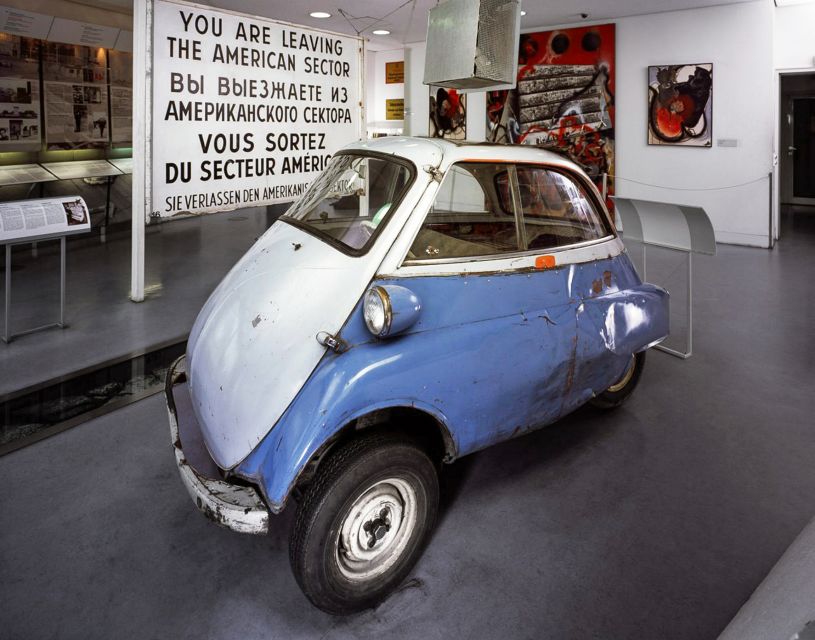
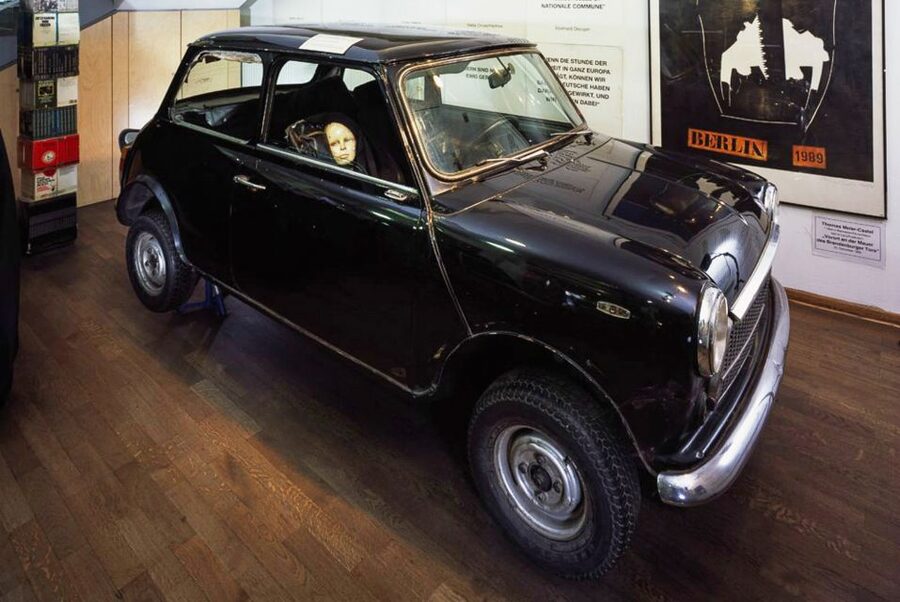
The most striking part of the Berlin Wall Museum is its collection of real escape equipment. You’ll see the cars, aircraft, hot-air balloon, and mini-submarine used in attempts to get people out of East Germany. These are not abstract Cold War stories. They show the clever, risky lengths people took to cross a border built through the middle of their lives.
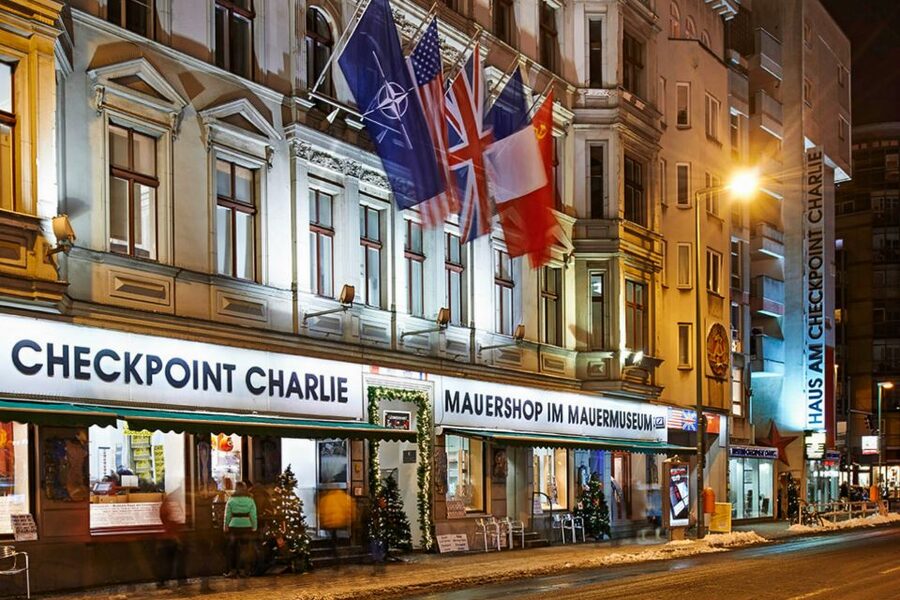
I like the museum’s location at Checkpoint Charlie, where the subject is not merely explained in a distant gallery. I also like its serious focus on human rights and resistance, including stories that reach beyond the Wall’s fall. The main drawback is its presentation: there is a great deal of text, some displays feel dated, and the path through the museum is not always easy to follow.
Key points to know before you go
- Original escape vehicles: See a hot-air balloon, mini-submarine, cars, and aircraft connected with successful escapes.
- A museum born during the Wall’s early years: It opened on October 19, 1962, shortly after the Wall was built.
- Expect a large, reading-heavy visit: Allow about two hours if you want more than a quick look, and longer if you read most panels.
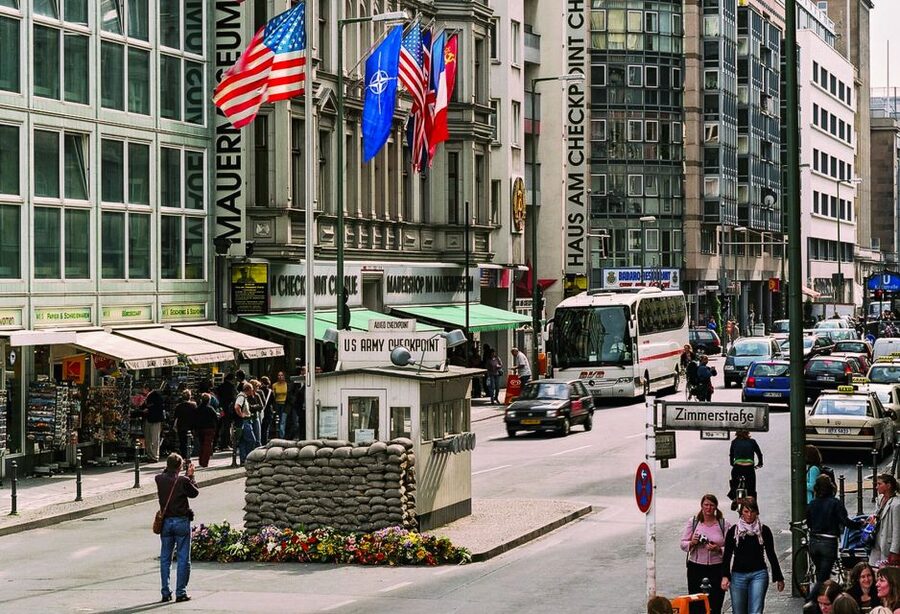
- Checkpoint Charlie is part of the experience: The museum gives you an overhead view and places the political story right beside the famous crossing point.
- No guide or audioguide is included: Multilingual written material carries most of the visit.
- Good value for history-minded visitors: At $21, the ticket is reasonable if you have time to use it, but less appealing for a rushed visit.
Why this museum matters at Checkpoint Charlie
The Wall Museum began in 1962, only a year after East Germany built the Berlin Wall. That timing matters. This was not a museum created decades later by people looking back with comfortable distance. It began as an active protest against the Wall and as a place where people sought help.
The museum also served as a base for people who organized escapes and resistance against the GDR regime. Refugees and helpers later donated the tools of those escapes, which explains why the collection includes such unusual objects. A hot-air balloon or mini-submarine tells you more about the pressure of the time than a neat political timeline ever could.
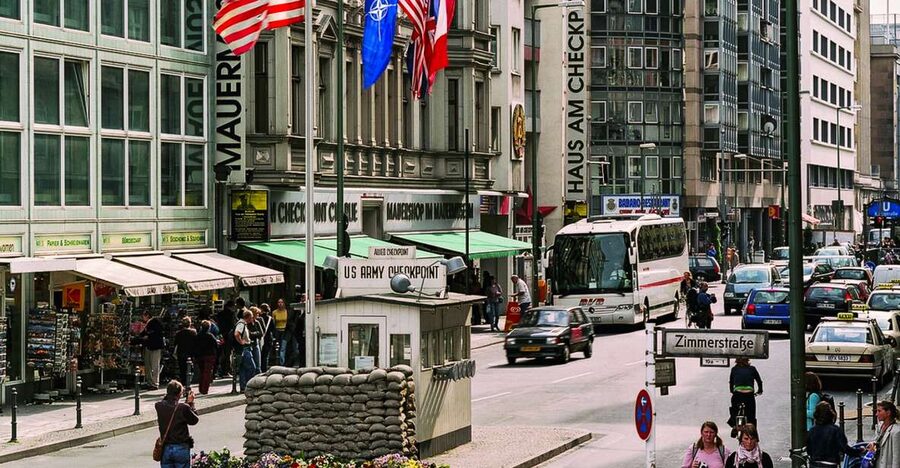
Checkpoint Charlie adds another layer. The crossing point outside is one of Berlin’s best-known Cold War locations, though the modern street scene can feel commercial and reconstructed. Inside, the museum gives the place more weight by explaining the people, decisions, and dangers behind the name.
You’ll also find material about the wider Cold War, international conflicts, peace movements, and human rights. That broader reach is useful if you want more than a narrow account of the Wall. It can also make the visit feel less focused, especially if your main goal is simply to understand how Berlin was divided.
More Berlin Wall tours in Berlin:
- Cold War, Berlin Wall, Spies and the East Side Gallery
★ 5.0 · 1,024 reviews - THE WALL: asisi Panorama Berlin Ticket
★ 4.5 · 580 reviews - Berlin: Guided Bike Tour of the Berlin Wall and Third Reich
★ 4.7 · 499 reviews
What you see inside, from escapes to resistance
The visit is not a guided route with a timed start. You enter with your ticket and make your way through a substantial collection of photographs, written displays, documents, and objects.
The escape stories are the strongest part. You may see the physical means used to cross borders, hide people, or travel unnoticed. The cars are especially effective because they make the problem feel practical. A person trying to escape had to think about space, concealment, checkpoints, fuel, timing, and the possibility of betrayal or arrest.
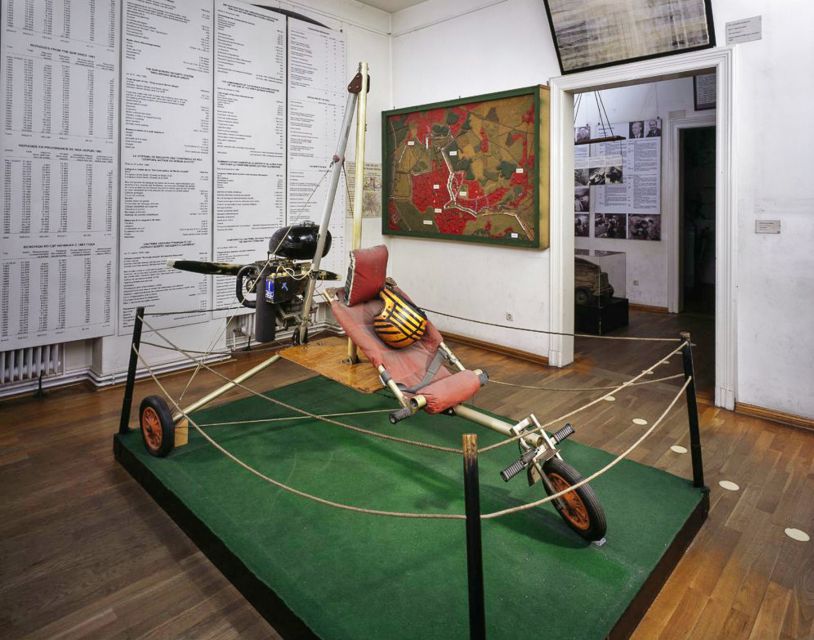
The aircraft and hot-air balloon show a different kind of planning. They represent the boldness and technical skill involved in reaching the West from a country designed to restrict movement. The mini-submarine is another memorable object, and one that many visitors do not expect to encounter in a Berlin museum.
These artifacts are valuable because they carry a direct link to successful escapes. You are not only reading that someone found a way out. You are looking at the machinery, vehicles, and improvised solutions that helped make it possible.
The displays also cover daily life in divided Berlin and the political conditions of the Soviet-controlled East. The museum explains the growth of the Wall, the division between East and West, and the pressures placed on people who challenged the system.
Some sections continue past the Wall’s fall. That choice gives the museum a present-day edge. The message is that borders, repression, displacement, and human rights do not belong only to Cold War history. One exhibit has even included a car connected with a family fleeing Ukraine, showing how the museum links earlier events with current conflicts.
A lot to read, and not always in a straight line
Plan your visit around your attention span. You can see the main objects in perhaps an hour, but two hours is a more sensible minimum if you want to read the panels and understand the background. Some visitors spend two and a half hours inside, and you could stay longer if modern conflicts and peace movements interest you.
The museum is larger than the exterior suggests. That surprises many people, particularly those who arrive expecting a small memorial focused only on Checkpoint Charlie. The upper levels add more material, including displays about protests and nonviolent movements for peace and human rights.
The tradeoff is presentation. This is a text-heavy museum. Some sections rely on long wall panels and dense explanations, while interactive elements may not always work. Teenagers and younger children who need hands-on displays can lose interest quickly. Adults who enjoy documents, photographs, and detailed political explanation may find the same format worthwhile.
The route can also feel loosely organized. You might move from escape stories to broader international subjects without a clear sense of chronology. If you want a tidy beginning-to-end account, bring your own patience and read the room headings carefully.
Written information is available in several languages, which makes the museum accessible to a broad audience. Do not count on an audioguide to solve the navigation problem. An audioguide is not included, and the museum’s written material remains the main way to follow the story.
The human cost behind the political story
The best reason to visit is not the machinery alone. It is the human cost represented by those objects.
The Wall divided families, neighborhoods, workplaces, and ordinary routines. Escape attempts could mean years in prison or danger for relatives who remained behind. The museum’s photographs and accounts show that leaving East Germany was not a simple journey from one city to another. It required secrecy, courage, and often help from people willing to risk their own freedom.
This is also why the museum can feel emotionally heavy. You are standing near a former crossing point while reading about people who could not move freely through their own city. The subject is recent enough to feel surprisingly close, and the museum makes clear that the Wall was not just a piece of concrete or a Cold War symbol.
I appreciate that the museum gives attention to helpers as well as escapees. The people who designed routes, provided vehicles, hid others, and organized resistance are part of the story. Their donations created much of the collection you see today.
The political material explains the GDR system and the division between East and West, but the museum’s strongest voice remains personal. If you already know the basic dates, the escape stories will likely give you the most new information.
More Cold War tours in Berlin:
- Berlin: Third Reich and Cold War 2 Hour Walking Tour
★ 4.9 · 6,830 reviews - Berlin’s Best: 2 Hour Walking Tour Third Reich and the Cold War
★ 5.0 · 5,486 reviews - Berlin: Cold War Walking Tour on Berlin Wall Route
★ 4.8 · 437 reviews - Berlin: Cold War Era History Guided Bike Tour
★ 4.8 · 413 reviews
How the ticket works and what $21 buys you
The entrance price is $21 per person. That is a fair price if you give the museum enough time, especially since the collection is much bigger than it first appears and includes original objects rather than only photographs.
The value drops if you have a tight schedule. This is not a quick, polished attraction that you can absorb in 30 minutes. You pay for access to a large amount of material, so rushing through it means leaving much of the value behind.
A skip-the-line ticket can be useful at busy times. It lets you avoid the ticket queue, though it does not turn the visit into a guided tour or reserve a personal time slot in the usual sense. The activity is valid for one day, and you should check the available starting information when booking.
There is no guided tour included. That matters because the displays can feel unevenly ordered. If you prefer a clear narrative with someone pointing out the key objects, you may find a separate guided option more satisfying. If you like setting your own pace, the self-guided format gives you freedom to stop at the stories that interest you.
There is also no audioguide included. Several visitors find the written translations sufficient, but a headset could help if you want a spoken explanation or struggle with long panels.
The museum is wheelchair accessible. The meeting point is Friedrichstraße 43-45, 10969 Berlin, right by the Checkpoint Charlie area. It is easy to combine with other central Berlin sights, but allow enough time for the museum rather than squeezing it between two fixed appointments.
When to go and how to plan your visit
A quiet visit gives you the best chance to read the material. In January, for example, the museum can be calm, and you may find it easier to spend two or more hours with the displays. Busy periods may bring school groups, and a large group of teenagers can make narrow areas and stairways feel crowded.
I would visit earlier in the day if the museum is a major priority. That leaves room to slow down when a story catches your attention. It also prevents the common mistake of treating the museum as a short stop before another booking.
Wear comfortable shoes, not because the building is difficult to manage, but because the visit can last much longer than expected. You will spend time standing and reading. If you are with children, set expectations before entering: this is mostly a serious history museum, not an interactive attraction.
Photography rules may be restrictive. One visitor was disappointed at not being allowed to take pictures, so ask about current rules when you enter rather than assuming you can photograph every panel or artifact.
If you carry a bag, locker arrangements may require a €2 coin deposit. That detail has been noted by past visitors, but conditions can change, so keep a coin handy without treating it as guaranteed.
Who will get the most from this visit
I recommend the museum most strongly to adults, students, history enthusiasts, and anyone who wants to understand the Wall through real escape attempts. It is also a useful choice if you want to connect Berlin’s Cold War story with larger questions about borders, authoritarian government, and human rights.
It suits you if you enjoy reading and building a story from documents, photographs, and objects. You will get more from it if you are willing to pause over details rather than look only for dramatic displays.
Families can still visit, but younger children may find the amount of text tiring. Teenagers who have already studied the Wall may appreciate the escape technology, while those who need frequent interaction could lose patience.
You might also choose this museum after visiting a more streamlined Berlin Wall memorial. It provides a broader collection and many escape accounts, though it does not always present them in the cleanest order.
My practical verdict
Book this if you want a serious, object-filled account of the Berlin Wall and have at least two hours available. The original escape equipment, the museum’s early role in helping people flee, and its location beside Checkpoint Charlie make it more than a standard political-history display.
Skip it if you want a short, highly interactive museum or a guided explanation included in the ticket. The $21 price is reasonable for a long visit, but you need to accept plenty of reading and a presentation that could use clearer organization.
For most first visits to Berlin, I think it is worthwhile. Go in with a plan: start with the Wall and escape displays, allow time for the broader human-rights sections, and do not expect to finish everything in a hurry.
FAQ
Where is the Berlin Wall Museum located?
The meeting point is Friedrichstraße 43-45, 10969 Berlin, beside Checkpoint Charlie.
How much does admission cost?
The listed price is $21 per person.
How long should I allow for the museum?
The ticket is valid for one day, but a practical visit takes about one to two and a half hours. You may need longer if you read most of the displays.
Is a guided tour included?
No. The entrance ticket includes admission only. A guided tour and audioguide are not included.
Is the museum wheelchair accessible?
Yes, the activity information states that the museum is wheelchair accessible.
Can I cancel the booking?
You can cancel up to 24 hours in advance for a full refund. Reserve-now, pay-later booking is also available.
More museums and galleries in Berlin
- Berlin: Natural History Museum Entrance Ticket
★ 4.6 · 3,382 reviews - Berlin: Museum Island Multiple Museum Entry Ticket
★ 4.4 · 2,007 reviews - Berlin: Interactive DeJa Vu Museum Entrance Ticket
★ 4.1 · 1,338 reviews - Berlin: “Pergamonmuseum. The Panorama” Exhibition Tickets
★ 4.6 · 1,245 reviews
More skip-the-line tickets in Berlin
- Skip-the-line Charlottenburg Palace Private Tour & Transfers
★ 5.0 · 6 reviews - Stasi Museum GDR History Skip-the-line Private Tour Berlin
★ 5.0 · 5 reviews - Skip-the-line Berlin Cathedral and Old Town Private Tour
★ 4.7 · 4 reviews
Newest Berlin reviews
- Where It All Began: Berlin’s Queer & Trans History Tour★ 4.9 · 6 reviews
- Understanding Kreuzberg: The roots of local (sub)culture★ 4.9 · 11 reviews
- Berlin: guided canoe | kayaktour★ 4.1 · 7 reviews
- Private Potsdam City Tour in an authentic vintage van★ 5.0 · 14 reviews
- Warnemünde Shore Excursion: Private Sachsenhausen and Berlin Tour★ 5.0 · 12 reviews
- Ultimate E-Bike Tour of Berlin with Beer Garden Stop★ 5.0 · 4 reviews
- In the Forbidden City – Potsdam Walking Tour★ 5.0 · 17 reviews
- Private Walking Tour of Potsdam and Sanssouci★ 5.0 · 24 reviews
Berlin Wall Tours, compared.
Cold War, Berlin Wall, Spies and the East Side Gallery
Read our review →
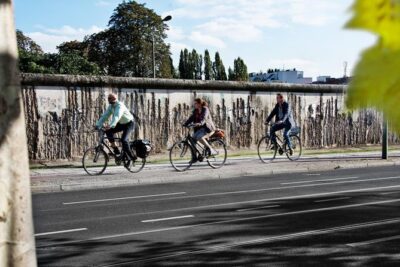
Guided Bike Tour of the Berlin Wall and Third Reich
Read our review →
Cold War, Berlin Wall, Spies and the East Side Gallery
Read our review →Browse the lists this tour appears in