
Reviewed · KREUZBERG TOURS
Understanding Kreuzberg: The roots of local (sub)culture
Kreuzberg’s character did not appear by magic. It grew from squatting, activism, experimental art, and life beside the Wall, and this walking tour explains how those forces still shape the district today. Guide Lee brings personal insight, local stories, and a clear sense of how residents continue to influence their neighborhood.
I like the focus on ordinary local life, not just famous sights. I also like the stop at Rio-Reiser-Platz, where you pause for a drink from a small Berlin chocolate business and have time to notice the neighborhood around you. The main consideration is the timing: the experience is advertised at two to three and a half hours, so it can take a good part of your day.
Key points
- Kreuzberg’s squatter past: Learn how 1970s housing struggles helped shape the district’s political and artistic culture.
- Stories from the Wall era: Hear about daily life in Kreuzberg during Berlin’s divided years and what changed afterward.
- Local projects today: See how residents work together on social, environmental, and urban ideas.
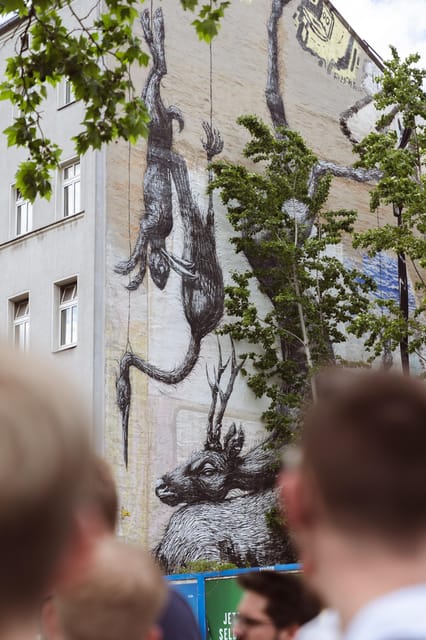
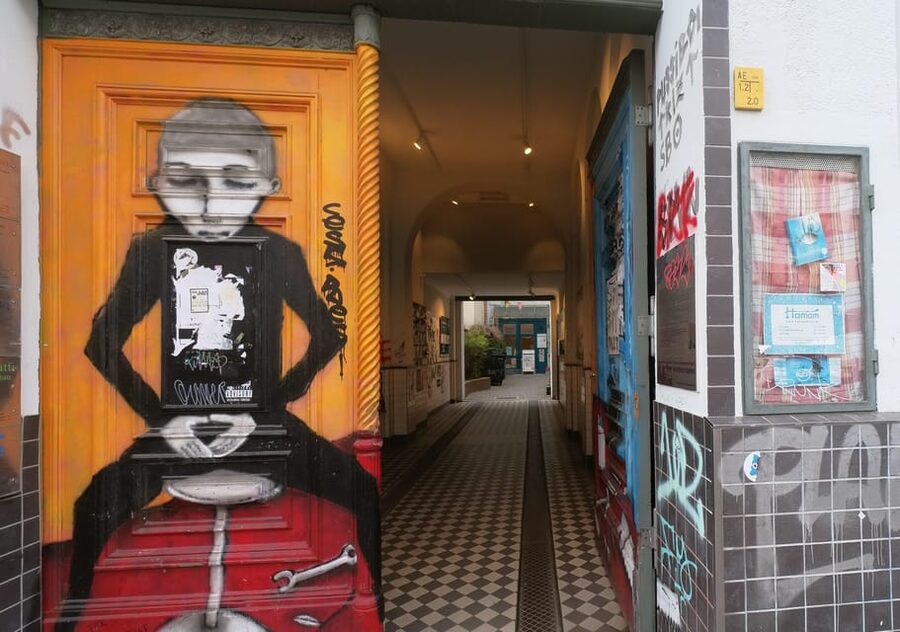
- Hidden courtyards and street art: The route sometimes turns away from the main streets to examine less obvious parts of the district.
- A thoughtful break at Rio-Reiser-Platz: Enjoy one hot chocolate, coffee, or tea from a local small business.
- A guide with a personal touch: Lee is praised for clear explanations, charm, local knowledge, and useful suggestions for the rest of your day.
Why Kreuzberg Needs More Than a Photo Walk
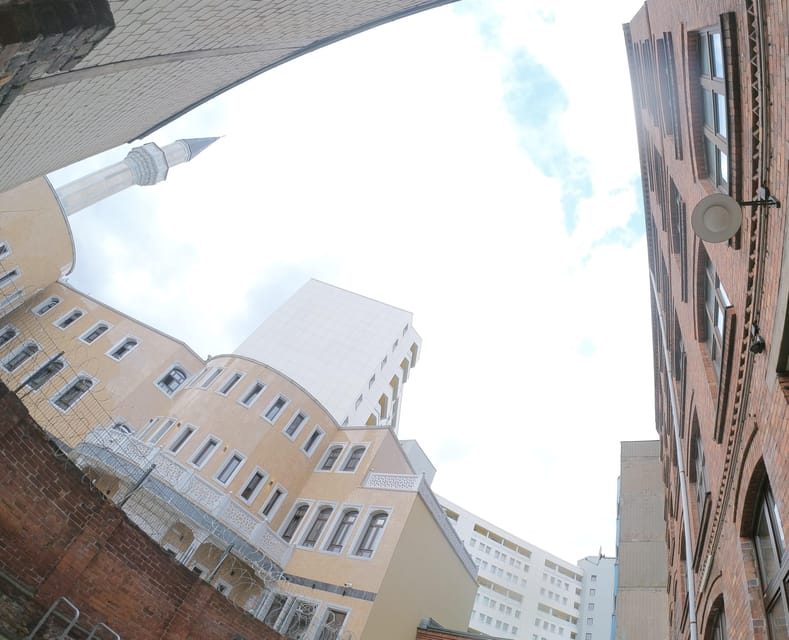
Kreuzberg is easy to reduce to a few postcard ideas: graffiti, clubs, Turkish food, old apartment blocks, and a rebellious reputation. Those pieces are real, but they do not explain why the district feels different from more polished parts of Berlin.
This tour gives you the missing story. You look at the political and social conditions that allowed alternative culture to grow, then connect that past to the way people live in Kreuzberg now. The result is less a checklist of sights and more a guided reading of the neighborhood.
I find that approach useful because Kreuzberg’s most important details are often not grand monuments. They may be a courtyard, a wall covered in art, a community project, or a street whose meaning changes once you know what happened there.
The tour also avoids treating the squatter movement as a colorful bit of Berlin folklore. It presents that period as part of a larger struggle over housing, public space, and who gets to shape a city. That gives you a better way to understand both the district’s appeal and its tensions.
More Kreuzberg tours in Berlin:
- Kreuzberg: Culinary Food Tour
★ 4.5 · 770 reviews - Berlin: Kreuzberg Guided Walking Evening Tour
★ 4.7 · 555 reviews - Berlin: Alternative Bike Tour of Kreuzberg & Friedrichshain
★ 4.7 · 548 reviews
Starting Near YAAM and the Schillingbrücke
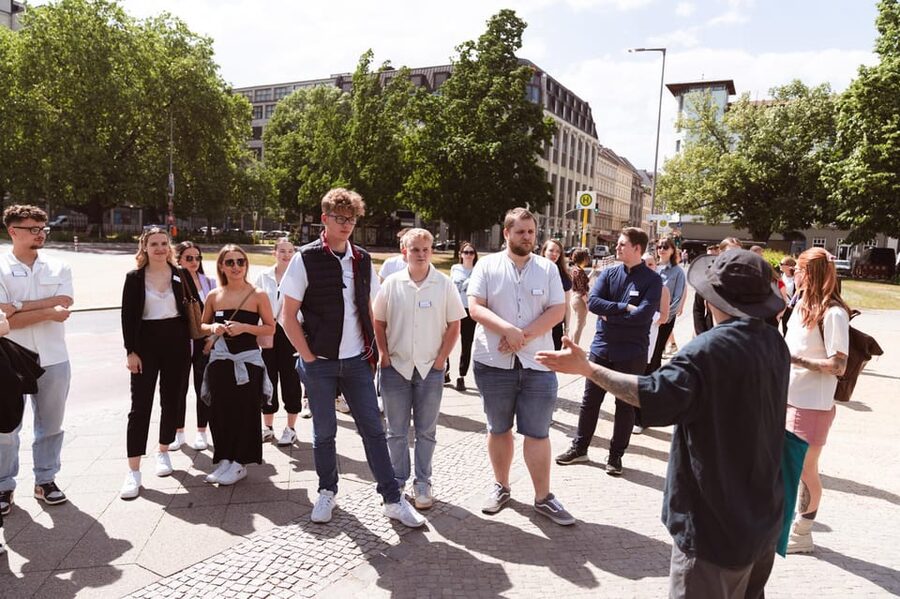
You meet in front of the YAAM entrance, close to Ostbahnhof, with the listed starting point at An d. Schillingbrücke 4. This puts you near the eastern edge of the route and gives the walk a clear sense of moving into Kreuzberg rather than simply circling a famous central attraction.
The opening section helps set the scene. Instead of rushing into a list of dates, the guide explains why creative people, activists, artists, and other outsiders were drawn to this part of Berlin. The location beside the former Wall and the district’s long-standing mix of communities are key parts of that explanation.
Bring comfortable shoes. The experience is a walking tour with scenic views along the way, and the route continues through Kreuzberg streets, courtyards, and public spaces. The pace is designed for conversation and observation, not for racing between stops.
If you are arriving by public transport, check the exact meeting instructions before setting out. YAAM is close to Ostbahnhof, while the tour finishes at U Kottbusser Tor, so you can plan to continue your day from a different part of Kreuzberg.
Reading the District Through Its Squatter Past
The heart of the experience is the explanation of how Kreuzberg’s alternative culture developed. You learn about squatting, activism, and experimental arts, with attention to the values behind those movements rather than just their visual style.
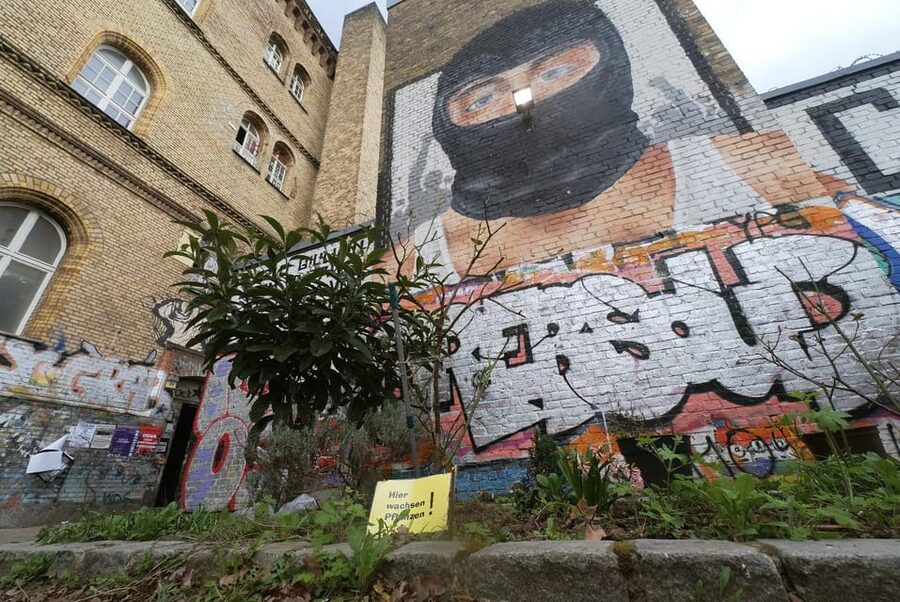
That distinction matters. A wall covered in graffiti may look like decoration if you pass it alone. With context, it can point to arguments about ownership, freedom of expression, neighborhood identity, or the right to use a city in a different way.
The guide also connects the 1970s to the present. You hear how ideas formed during that period continue to affect local lifestyles and community projects. The point is not that Kreuzberg has stayed frozen in its old rebellious image. Instead, the district keeps negotiating between its past and the pressures of city life today.
I especially like this time-based approach. You get a sense of change without losing sight of continuity. The old squatter scene is not presented as a museum exhibit. It becomes a key to understanding why people still organize around social and environmental goals, and why local identity can be so strong.
The tour is likely to suit you if you want more than a quick explanation of street art. It also works well for someone who has already visited Berlin and wants a sharper understanding of a district they may have seen only from the surface.
Life Beside the Wall and After Reunification

Kreuzberg’s position near the Wall shaped daily life for decades. The tour includes stories about what it was like to live in the district during the divided-city era and how life changed after the Wall fell.
These stories add a human scale to Berlin’s political history. You are not only dealing with border crossings, government policy, and famous dates. You are also considering how a city boundary affected streets, buildings, neighbors, and the feeling of living at the edge of a divided city.
The route’s scenic views help tie those stories to the streets around you. This is one reason I prefer a walking format for this subject. You can discuss change while physically moving through the places where that change took place.
The post-Wall period is just as important. Reunification brought new attention, new people, and new pressures to many parts of Berlin. Kreuzberg’s identity continued to shift, but its earlier traditions of self-organization and creative resistance did not simply disappear.
Guide Lee has received particular praise for explaining this development with warmth and personal insight. The style appears to be conversational rather than academic, which helps when the subject includes housing struggles, political movements, and cultural change. You get serious context without a lecture-room feel.
A different sort of day out in Berlin:
- Berlin: Reichstag, Dome and Government District Guided Tour
★ 4.7 · 18,288 reviews - Berlin: 1-Hour City Tour by Boat with Guaranteed Seating
★ 4.3 · 16,993 reviews - Berlin: Boat Tour Along the River Spree
★ 4.4 · 11,252 reviews - Discover Berlin Half-Day Walking Tour
★ 5.0 · 9,624 reviews
Courtyards, Street Art, and Local Projects
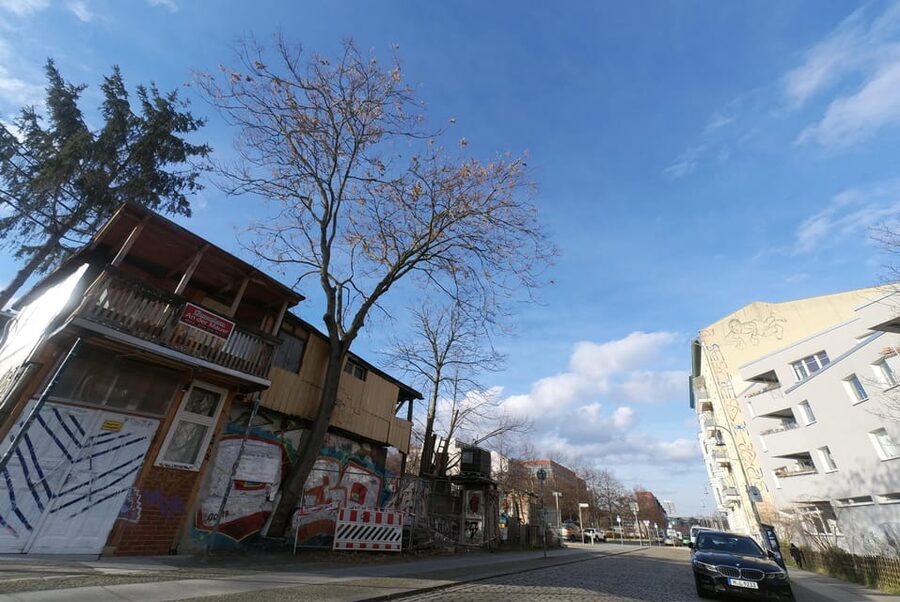
At points, the route turns into hidden courtyards or quieter spaces. These detours are valuable because they show how Kreuzberg works at a smaller scale. The main streets tell only part of the story.
You may discuss striking examples of local street art, then look at social and environmental projects organized by residents. The emphasis is on people actively shaping their district, not simply reacting to decisions made elsewhere.
That makes the tour practical as well as historical. You see how urban ideas can take form in shared spaces and community efforts. The guide also explains how values from earlier subcultures still influence present-day choices.
Do not expect every part of the route to feel like a formal attraction. Some of the most interesting places may be ordinary spaces whose meaning depends on explanation. If you prefer major landmarks and polished displays, this could feel less immediately rewarding. If you enjoy understanding how a neighborhood functions, it should be a strong match.
Small groups can make this part especially effective. A private group is available, and one recent outing with Lee had only three people. That kind of setting gives you more room to ask questions and adjust the conversation to your interests, though the actual group size depends on the booking.
The Rio-Reiser-Platz Break
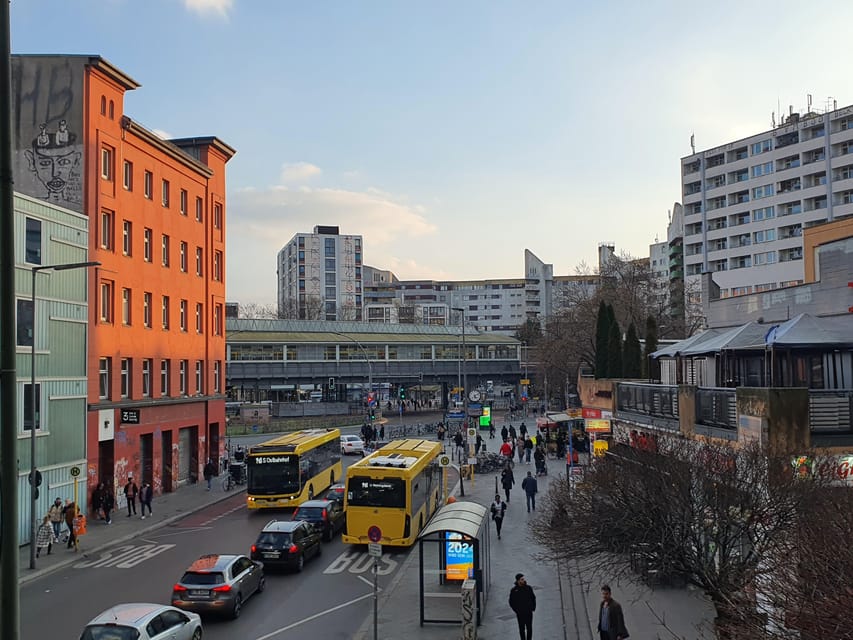
The tour includes a 15-minute break at Rio-Reiser-Platz. You receive one hot beverage, choosing chocolate, coffee, or tea, in collaboration with a local small business.
The chocolate is presented as one of the district’s special treats, and it gives the walk a welcome pause. After discussing history, politics, and urban change, you have time to sit or stand with a drink and watch local life continue around you.
The break also helps prevent the tour from becoming an unbroken stream of information. Three hours on foot can feel long if there is no pause, especially when you are listening closely. The short stop gives you a chance to reset before the final part of the route.
Keep in mind that the drink is included, but other food and beverages are not specified. If you need a larger meal, plan one before or after the walk. The finishing point at U Kottbusser Tor puts you in a useful area for continuing your day, and Lee may offer suggestions for places to eat or visit afterward.
Finishing at Kottbusser Tor
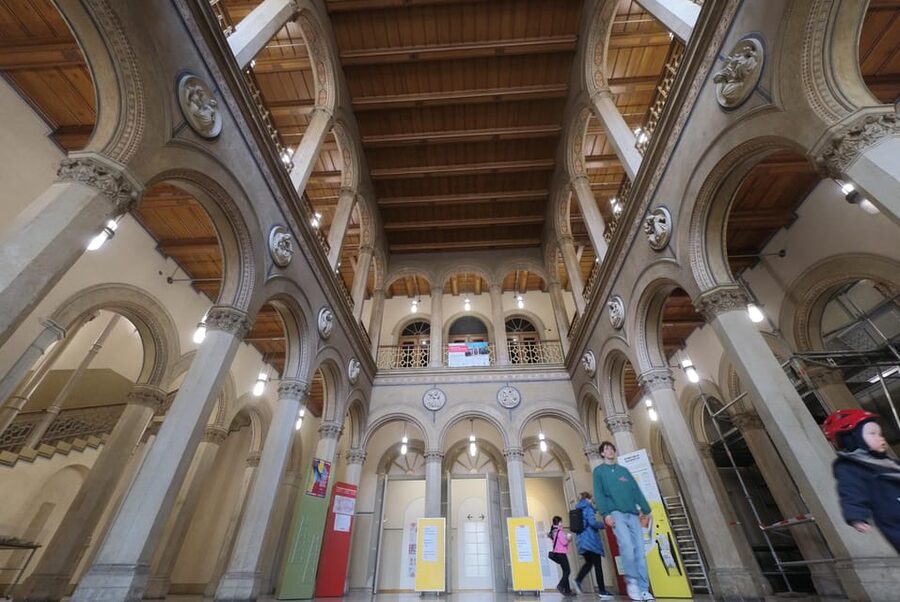
The tour ends at U Kottbusser Tor after a second guided section through Kreuzberg. By this stage, you should have a clearer view of how the district’s past and present fit together.
Kottbusser Tor is a fitting endpoint because it returns you to one of Kreuzberg’s active urban areas. The experience does not end at a single monument that claims to explain everything. Instead, you finish with a set of ideas you can keep applying as you walk around on your own.
This is also where the guide’s practical advice can be useful. Lee has helped people adjust their plans for the rest of the day and suggested places to eat and go afterward. That is a worthwhile extra, especially if Kreuzberg is your main base for exploring Berlin.
The route is described as lasting from two hours to 210 minutes, with the detailed plan adding up to about three and a quarter hours. Check the available start time and allow room in your schedule. The longer format is part of the value, but it means this is not a quick orientation before lunch.
How Much Value Do You Get for $35?
At $35 per person, the price is reasonable if you want a guided explanation rather than a self-directed walk. You are paying for an experienced local guide, a route built around context, and one hot drink from a small business.
The value improves if you are interested in Berlin’s social history, housing politics, street art, or community action. A standard sightseeing tour may show you Kreuzberg’s appearance. This experience spends more time explaining why the district developed that way.
It is less compelling if your priority is a long list of famous sights or museum-style information. The tour’s strengths are conversation, interpretation, and local perspective. You are paying for a way of seeing the neighborhood, not for admission to major attractions.
The very high rating of 4.9 from 11 ratings fits the strongest points of the experience: clear explanations, a personal approach, and a tour that feels different from standard Berlin routes. I would still treat the rating as a guide, not a guarantee. Your enjoyment will depend on how much you like walking, discussion, and social history.
Who Will Enjoy This Kreuzberg Walk?
I would recommend this tour to:
- First-time Berlin visitors who want a more local view of the city.
- Returning visitors who have seen the main sights and want to understand Kreuzberg.
- People interested in squatting, activism, art, housing, and urban change.
- Anyone who prefers a small-group conversation to a large sightseeing crowd.
- Residents or long-term visitors who want to notice details they have previously missed.
- Couples, friends, and families with older children who can manage a long urban walk.
It may be less suitable if you want a short, highly structured tour with constant landmark stops. The exact duration can reach three and a half hours, and the appeal comes from listening, asking questions, and looking closely at the surroundings.
The experience is wheelchair accessible, but route conditions and access to individual courtyards are not described in detail. If you need specific access information, confirm it before booking.
The tour is offered in English, German, and Russian. A private group option is available, which may be useful if you want to shape the discussion around your own interests.
Should You Book It?
Book this tour if you want to understand why Kreuzberg became a center for alternative culture, and how that past still affects local life. Guide Lee’s warm, informed style appears to be a major strength, especially if you value personal stories and practical suggestions as much as dates and facts.
I would choose it early in a Berlin stay if you plan to spend more time in Kreuzberg afterward. The route can give you a useful framework for seeing courtyards, street art, community projects, and ordinary streets with more attention.
Skip it if your Berlin plans are already packed with quick attractions and you cannot spare up to 210 minutes. For everyone else, $35 buys a thoughtful introduction to one of the city’s most distinctive districts, with a local drink and a better sense of what lies behind Kreuzberg’s famous image.
FAQ
Where does the Kreuzberg tour meet?
You meet in front of the YAAM entrance, very close to Ostbahnhof. The listed starting address is An d. Schillingbrücke 4.
Where does the tour finish?
The tour finishes at U Kottbusser Tor.
How long does the experience last?
The advertised duration is between two hours and 210 minutes. The detailed route includes two guided sections of about 1.5 hours each, with a 15-minute break.
What languages are available?
The live tour guide is available in English, German, and Russian.
Is a hot drink included?
Yes. One hot beverage is included, with a choice of chocolate, coffee, or tea, provided in collaboration with a local small business.
Is the tour wheelchair accessible?
Yes, the activity is listed as wheelchair accessible.
Can I book a private group?
Yes. A private group option is available.
What subjects does the tour cover?
The tour covers Kreuzberg’s squatter scene, activism, experimental arts, life during and after the Wall, street art, local social and environmental projects, and the way residents shape the district.
Can I cancel the booking?
You can cancel up to 24 hours in advance for a full refund. A reserve-now-and-pay-later option is also available.
Newest Berlin reviews
- Where It All Began: Berlin’s Queer & Trans History Tour★ 4.9 · 6 reviews
- Berlin: guided canoe | kayaktour★ 4.1 · 7 reviews
- Private Potsdam City Tour in an authentic vintage van★ 5.0 · 14 reviews
- Warnemünde Shore Excursion: Private Sachsenhausen and Berlin Tour★ 5.0 · 12 reviews
- Ultimate E-Bike Tour of Berlin with Beer Garden Stop★ 5.0 · 4 reviews
- In the Forbidden City – Potsdam Walking Tour★ 5.0 · 17 reviews
- Private Walking Tour of Potsdam and Sanssouci★ 5.0 · 24 reviews
- Potsdam Highlights – Private sightseeing tour by minibus★ 5.0 · 3 reviews
Kreuzberg Tours, compared.
Alternative Bike Tour of Kreuzberg & Friedrichshain
Read our review →
Berlin Off-the-Beaten-Path Walking Tour: Kreuzberg, Mitte and Friedrichshain
Read our review →
Kreuzberg Berlin: Off the Beaten Track PRIVATE Walking Tour
Read our review →
Experience the Alternative Kreuzberg on a Bike Tour
Read our review →Browse the lists this tour appears in