
Reviewed · KREUZBERG TOURS
Berlin Off-the-Beaten-Path Walking Tour: Kreuzberg, Mitte and Friedrichshain
Berlin’s best stories are not all found at the Brandenburg Gate. This four-and-a-half-hour walk follows the city’s unruly, creative side through Kreuzberg, Mitte, Friedrichshain, and Prenzlauer Berg, with stops tied to punk, protest, street art, migration, food, and Berlin’s long habit of making something new from abandoned space.
I like the way the route connects ordinary neighborhoods with major social changes, rather than treating Berlin as a museum of war and government buildings. I also like the practical mix of walking and public transport, which lets you cover more ground without spending the entire afternoon on foot. The drawback is simple: much of the tour takes place outdoors, so cold or wet weather can make the four-and-a-half hours feel long.
Key points to know
- Berlin beyond the postcard sights: Visit Kreuzberg, Friedrichshain, Prenzlauer Berg, and Mitte instead of sticking to the usual central monuments.
- Counterculture with context: Learn how student protest, punk, the Baader-Meinhof group, the May 1 riots, and electronic music shaped the city.
- Food is part of the story: Hear about currywurst and Berlin’s doner kebab culture, with time for food at your own expense.
- A guide-led route: Guides such as Reese, Jake, Jason, Lee, Antonio, Ben, Arnie, and Rhys have led versions of this tour.
- Public transport is required: Bring an AB ticket, with a day pass recommended, because several legs use tram, train, or U-Bahn services.
- A strong finish: End at Yaam Beach, a riverside cultural center associated with reggae, hip-hop, and rasta culture.
Why this is a different Berlin walking tour
Many first visits to Berlin focus on the same powerful subjects: the Nazi period, the Berlin Wall, and the Cold War. Those stories matter, but they can leave you with a picture of Berlin built almost entirely from monuments and tragedy.
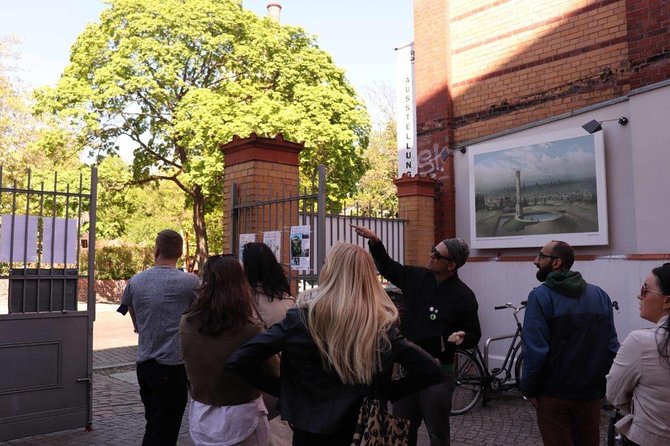
This tour adds the city that came afterward, and the city that often existed alongside official Berlin. You hear how artists, squatters, musicians, immigrants, students, and activists used neglected buildings and overlooked streets to create new communities. The result is a more current picture of the capital, one shaped by argument, art, music, and constant change.
I especially like that the route does not reduce Berlin’s alternative culture to colorful graffiti and quirky shops. The guide connects street scenes to political movements and social pressure. You may hear about the 1960s student protests, the Baader-Meinhof group in the 1970s, punk and the May 1 riots in the 1980s, and the Love Parade’s role in Berlin’s electronic music identity.
The tour is also a good choice after you have already visited the city’s main memorials. One guide, Reese, was praised for bringing a personal connection to the alternative scene rather than simply reciting dates. Other guides, including Jake, Jason, Lee, Ben, Rhys, Antonio, and Arnie, have been described as engaging, funny, warm, or especially good at telling stories. The exact guide matters here, since this route depends heavily on personality and conversation.
More Kreuzberg tours in Berlin:
- Kreuzberg: Culinary Food Tour
★ 4.5 · 770 reviews - Berlin: Kreuzberg Guided Walking Evening Tour
★ 4.7 · 555 reviews - Berlin: Alternative Bike Tour of Kreuzberg & Friedrichshain
★ 4.7 · 548 reviews
Starting near Alexanderplatz and Rathausstraße
The meeting point is Vapiano am Alex at Rathausstraße 6, close to Alexanderplatz. The tour begins at noon, a useful time if you want a relaxed morning before heading out.
Do not think of the starting point as the main subject of the walk. It is simply a central place to gather before the route moves away from the standard sightseeing core. From there, your guide sets the tone, introduces the group, and begins placing Berlin’s neighborhoods in a wider story.
The group can include up to 20 people. That is not a tiny private walk, but it is small enough for questions and conversation if everyone stays engaged. Bring comfortable shoes. The walk includes public transport, but you will still cover a lot of ground on foot.
You also need an AB public transport ticket, with a day pass recommended. The transport is not included in the $30.25 price, and food and drinks are separate. That adds a little to the cost, but it also lets the tour connect districts that would be awkward to cover on foot alone.
Kreuzberg, migration, and Berlin’s food culture
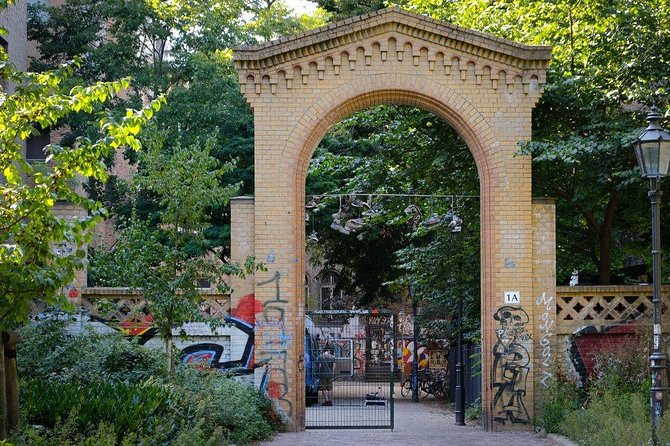
Kreuzberg is one of the most important parts of the route. The district is known for its Turkish community, alternative art spaces, organic markets, urban farms, and guerrilla gardens. These are not random decorations. They show how residents have shaped streets and unused land when formal planning did not meet local needs.
Your guide also introduces Berlin’s Jewish quarter as part of the city’s wider story. The route does not treat history as something sealed in the past. Instead, it looks at how communities, memory, migration, and political change continue to shape the neighborhoods you are walking through.
Food gives this section a welcome pause. You hear about currywurst, fried sausage served with curry-flavored ketchup, and the Berlin story of doner kebab, which became a local favorite through the city’s Turkish community. You may have the chance to stop for currywurst at your own expense, and the schedule includes time for a lunch break.
That break matters. Four and a half hours is a long period for a walking tour, especially when much of it is outside. A quick meal gives you time to sit down, refuel, and chat with other people in the group. Just remember that the food is not included, so bring money or a card for your own purchase.
Prater Garten and the pleasure of a slower stop
The route includes Prater Garten, known as Berlin’s oldest beer garden. It offers a change of pace from walls covered in posters and paint, and it helps explain another side of local social life.
This is one of the tour’s useful contrasts. Berlin’s alternative identity is not only about protest, clubs, and rough-edged streets. It also includes long-standing places where people gather over food and drink. A stop like this gives the afternoon some rhythm instead of turning it into a nonstop lecture.
You should not expect a full beer garden meal to be included. Food and drinks are your responsibility, and the schedule can vary by guide and group. Still, the stop adds a practical sense of place that a purely historical walking route would miss.
More neighbourhood tours in Berlin:
- Berlin: Hidden Backyards Guided Walking Tour
★ 4.8 · 5,360 reviews - Berlin: Spree Boat Tour to Müggelsee
★ 4.6 · 1,973 reviews - Berlin: Mitte Culinary Food Tour
★ 4.5 · 447 reviews - Berlin: Prenzlauer Berg District Guided Walking Tour
★ 4.9 · 316 reviews
Street art, urban farms, and the creative city
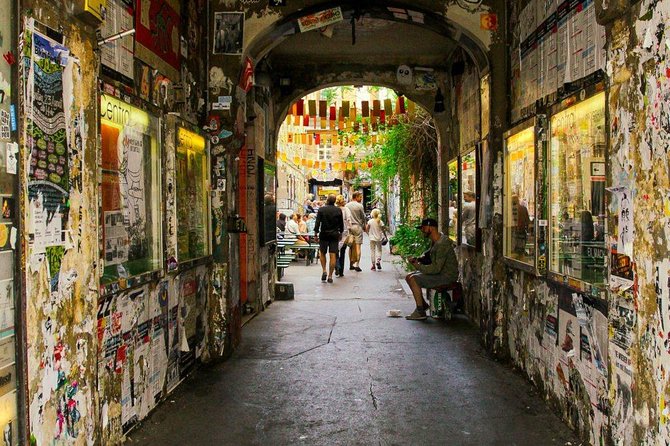
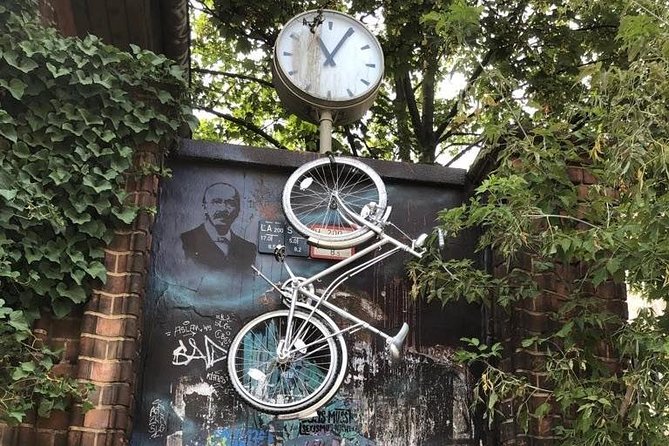
Street art is a major thread through the tour. You see graffiti, murals, alleys, and other signs of Berlin’s creative life while learning how art has been tied to politics and social change.
The guide’s explanation is what makes these stops useful. Without context, painted walls can blur into background decoration. With context, you begin to see how artists and local groups have used public space to make arguments, claim identity, or simply resist the clean-up of a district.
The tour also points out alternative galleries, organic markets, urban farms, and guerrilla gardens. These places show the city at street level. You are not just looking at famous attractions. You are seeing how people use leftover land, shared spaces, and small businesses to shape a neighborhood.
One particularly memorable story from the route concerns a playground built largely by children aged 6 to 16, without adult supervision, with part of it burned each year to make room for new construction. That detail captures the unusual freedom and risk-taking associated with some Berlin projects. It is also a reminder that this tour is not limited to adult political movements or famous musicians.
From student protest to punk and the May 1 riots
The tour’s historical material is strongest when it explains how Berlin’s counterculture developed over time. The 1960s student protest movement leads into the unrest of the 1970s, including the rise of the Baader-Meinhof group, then into the punk scene and May 1 riots of the 1980s.
This is not a standard political history lecture. The emphasis is on people and places, and on the way ideas appeared in daily life. You learn how opposition to authority, housing problems, youth culture, and anger at the established order affected Berlin’s districts.
For me, this is where the tour earns its price. A $30.25 walk is not cheap if you only want a list of landmarks. It is good value if you want a guide to connect events that are usually taught separately. The city’s political movements, music scenes, and street art begin to feel like parts of one continuing argument about who gets to shape Berlin.
The tone may not suit everyone. The history includes violence, extremism, riots, and black humor. Guides such as Reese and Jake have been praised for passionate, slightly rebellious storytelling, but that style can feel intense if you prefer a quiet, formal presentation.
Friedrichshain, Prenzlauer Berg, and former East Berlin
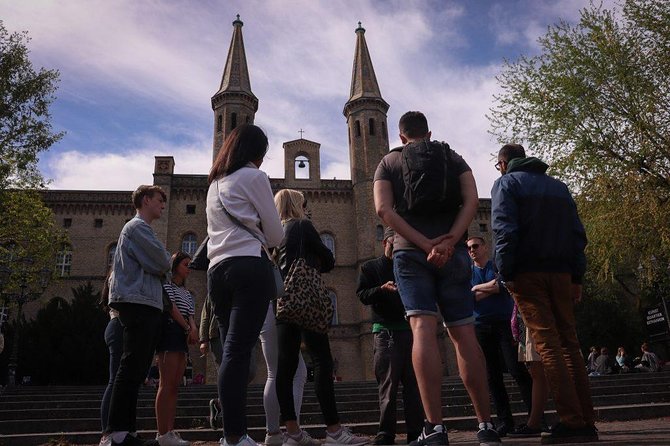
The route continues through Friedrichshain and Prenzlauer Berg, with connections to Mitte and the city’s former East and West divisions. Public transport helps the group move between these areas, so the tour is not limited to one neighborhood.
This broader route is a real strength. You get to compare parts of Berlin that developed under different political systems and then changed again after reunification. You also see how former industrial or working-class districts gained new cultural energy and, in some places, new popularity.
The tour does not promise a polished architectural survey. Instead, you get a look at how Berlin evolved through protest, occupation, music, migration, and art. That is why it works well for someone who has already seen the main historical sights and wants a more current sense of the city.
The route description and actual ending can vary slightly. One person found that the tour finished a bit farther into Kreuzberg than the stated endpoint. It was not a problem for them, but you should avoid booking a tight appointment immediately after the scheduled finish.
Love Parade, Yaam Beach, and Berlin’s music scenes
Music provides another strong link across the afternoon. The guide discusses the Love Parade, Berlin’s famous electronic dance festival, along with reggae, hip-hop, and rasta culture at Yaam Beach.
These subjects help explain why Berlin became associated with nightlife and alternative music. The city’s music identity did not appear from nowhere. It grew from open space, divided-city politics, youth movements, clubs, migration, and a willingness to tolerate scenes that might not fit neatly into official culture.
The tour finishes at Yaam Beach on Stralauer Allee 34. Yaam is connected with reggae, hip-hop, and rasta culture, making it a fitting final stop after an afternoon focused on music and community.
The ending is not near the original meeting point, so plan your onward route before you start. You will be in the Friedrichshain area near the finish, not back at Alexanderplatz. That is useful if you want to continue exploring the eastern side of the city, but less convenient if your hotel or dinner reservation is in central Mitte.
What the walking pace and group size feel like
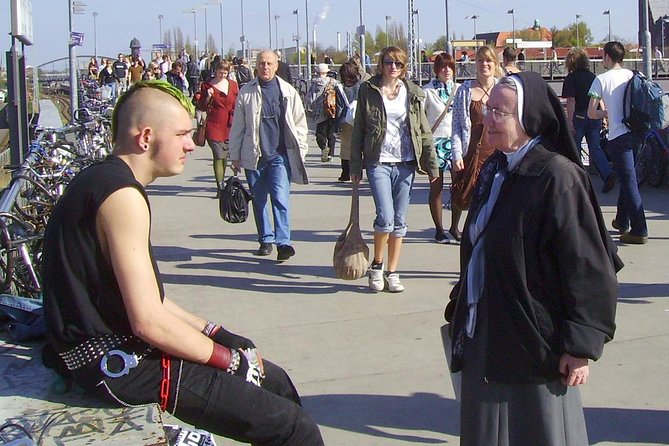
The advertised duration is about four hours and 30 minutes, but the experience is not four and a half hours of uninterrupted walking. Public transport covers two or three legs, and time is set aside for lunch or a food stop.
Even so, you should wear good walking shoes. The route moves through several districts, and the pavement, stops, and transfers will require energy. Most people can participate, and service animals are allowed, but the tour is not ideal if you dislike long outdoor activities or need frequent indoor breaks.
Weather is the main practical concern. One person found the tour uncomfortable in freezing conditions, and that is easy to understand. The route has no guaranteed shelter because its subject is the streets themselves. Check the forecast, dress in layers, and bring rain protection on unsettled days.
The maximum group size of 20 keeps the walk manageable, though it is large enough that you may not hear every aside if you drift to the back. Stay close to the guide, especially during street crossings and public transport changes.
Who will get the most from this tour
I would choose this tour for someone who has already seen Berlin’s major war and Cold War sights, or for anyone who wants those subjects placed in a broader social setting. It suits curious people who enjoy street art, music, migration stories, political history, and neighborhood change.
It is also a good fit for first-time visitors who want a quick orientation to districts they might otherwise miss. The guide gives you ideas for what to explore later, and several people found themselves returning to areas they had first encountered on the walk.
I would be more cautious if you want a short, highly structured sightseeing tour with indoor stops and famous monuments. This route is conversational, outdoors, and shaped by the guide’s personality. The exact experience can differ depending on who leads it.
At $30.25 per person, the value is fair. You still pay for transport, lunch, and drinks, but the price covers a long afternoon with an English-speaking local guide and a route that would be difficult to assemble efficiently on your own.
Should you book the Kreuzberg and Friedrichshain walk?
Book it if you want Berlin’s less official story: Turkish and Jewish communities, punk, protest, street art, alternative gardens, food, music, and the city’s ongoing habit of reinventing itself.
Skip it if bad weather would ruin your day, if you have limited mobility for a long outdoor route, or if you need to finish at a precise time and place. For the best chance of enjoying it, bring an AB day pass, wear reliable shoes, allow extra time after the finish, and choose a mild day.
The strongest reason to go is the guide-led storytelling. Names such as Reese, Jake, Jason, Lee, Rhys, Ben, Antonio, and Arnie have been associated with especially engaging versions of the route. You are not simply collecting sights. You are learning how Berlin’s people have repeatedly used art, music, protest, and shared space to reshape the city.
FAQ
Where does the tour start?
It starts at Vapiano am Alex, Rathausstraße 6, 10178 Berlin, near Alexanderplatz.
What time does the tour begin?
The scheduled start time is 12:00 pm.
Where does the tour end?
It concludes at Yaam Beach, Stralauer Allee 34, Berlin.
How long does the tour last?
The tour lasts approximately four hours and 30 minutes.
Is public transport included?
No. You need an AB public transport ticket, and a day pass is recommended. Some parts of the route use tram, train, or U-Bahn services.
Are food and drinks included?
No. Food and drinks are not included. The route includes discussion of currywurst and doner kebab, and time may be available for a lunch or food stop at your own expense.
Is the tour offered in English?
Yes. The tour includes an English-speaking local guide and is offered in English.
More Walking Tours in Berlin
- Discover Berlin Half-Day Walking Tour
★ 5.0 · 9,624 reviews - Berlin: Third Reich and Cold War 2 Hour Walking Tour
★ 4.9 · 6,830 reviews - Berlin: Discover Berlin Walking Tour
★ 4.9 · 5,998 reviews - Berlin’s Best: 2 Hour Walking Tour Third Reich and the Cold War
★ 5.0 · 5,486 reviews
Newest Berlin reviews
- Where It All Began: Berlin’s Queer & Trans History Tour★ 4.9 · 6 reviews
- Understanding Kreuzberg: The roots of local (sub)culture★ 4.9 · 11 reviews
- Berlin: guided canoe | kayaktour★ 4.1 · 7 reviews
- Private Potsdam City Tour in an authentic vintage van★ 5.0 · 14 reviews
- Warnemünde Shore Excursion: Private Sachsenhausen and Berlin Tour★ 5.0 · 12 reviews
- Ultimate E-Bike Tour of Berlin with Beer Garden Stop★ 5.0 · 4 reviews
- Potsdam Highlights – Private sightseeing tour by minibus★ 5.0 · 3 reviews
- In the Forbidden City – Potsdam Walking Tour★ 5.0 · 17 reviews
Kreuzberg Tours, compared.
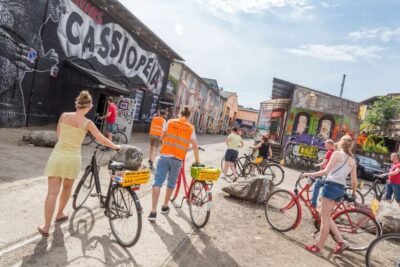
Alternative Bike Tour of Kreuzberg & Friedrichshain
Read our review →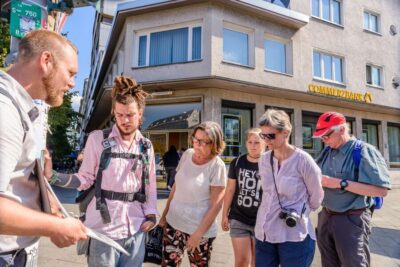
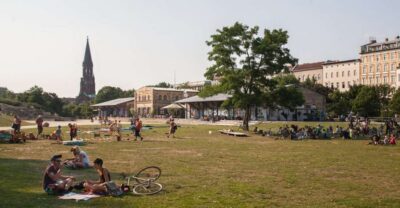
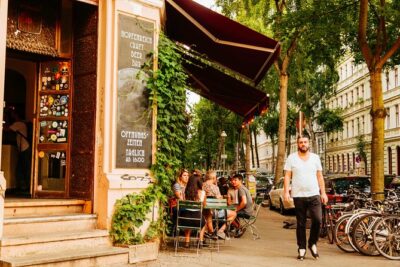
Kreuzberg Berlin: Off the Beaten Track PRIVATE Walking Tour
Read our review →
Experience the Alternative Kreuzberg on a Bike Tour
Read our review →
Browse the lists this tour appears in