
Reviewed · BERLIN NEIGHBORHOOD TOURS
Berlin: Hidden Backyards Guided Walking Tour
Berlin’s best stories are often tucked behind an ordinary doorway. This two-hour walk through Spandauer Vorstadt takes you into courtyards where artists work, ivy climbs old walls, and Berlin’s past feels close enough to touch. The tour links Jewish history, architecture, street art, and daily life without dragging you through the city’s usual headline sights.
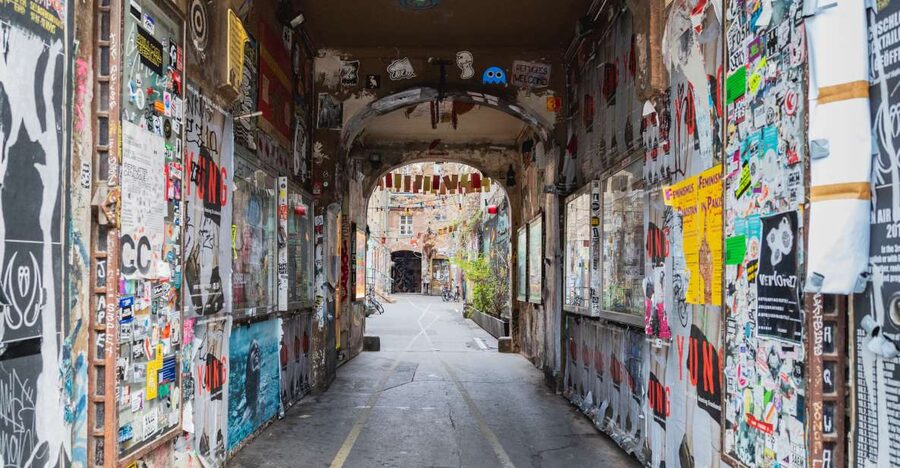
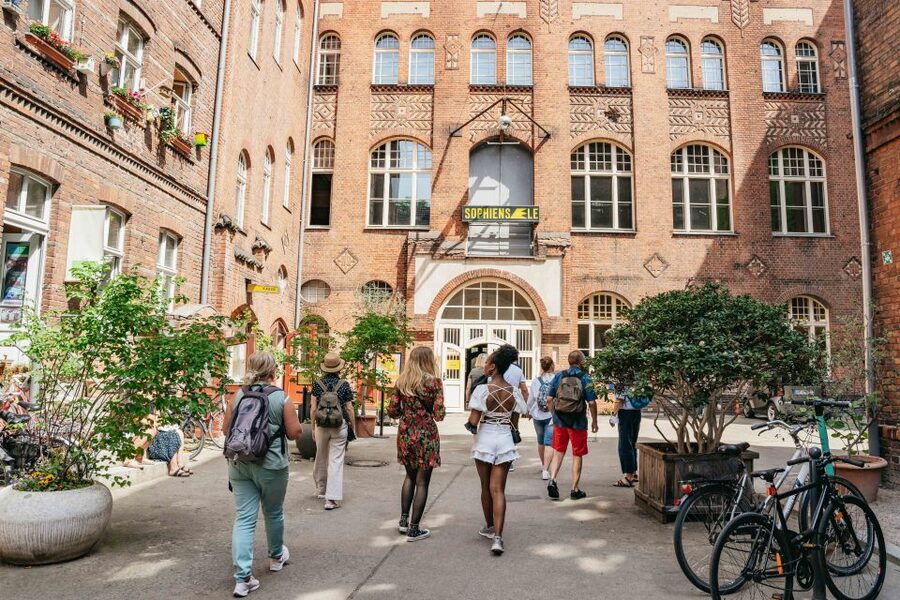
I especially like the Haus Schwarzenberg courtyard, where rough walls and street art frame working studios, and the leafy calm of Heckmann Höfe, a welcome pause from busy Oranienburger Straße. The guides are another strong point. Nick, Susanne, Lydia, Alex, and Nicolas have all been praised for clear storytelling and lively local context.
The main consideration is language. The activity is offered in English and German, but at least one session was conducted only in German, so confirm your chosen departure before booking. Also, this is an outdoor walk in all weather, with no food or drinks included.
What makes this Berlin courtyard walk worth your time
- You enter courtyards most people walk past: The route reveals passageways and inner spaces that are easy to miss from the street.
- You connect architecture with social history: Berlin’s Mietskaserne style, Jewish life, changing neighborhoods, and creative culture all fit into the story.
- Haus Schwarzenberg still feels usefully scruffy: Its art studios, graffiti, and old buildings show a working cultural space rather than a polished monument.
- Heckmann Höfe offers a quiet change of pace: Trees, ivy, and colorful walls create a pleasant place to pause.
- The route covers major local landmarks in two hours: You see Hackesche Höfe, Rosenhöfe, Sophienkirche, Auguststraße, and several less obvious courtyards.
- The walk suits repeat visitors especially well: If you have already seen the Brandenburg Gate and Museum Island, this gives you a more local view of central Berlin.
Starting at Hackescher Markt
Meet your guide in front of the BUTLERS shop at Hackescher Markt 4. This is a convenient starting point, but give yourself a little time to find the exact storefront. Hackescher Markt is busy, and a clear meeting place matters when several walking groups are gathering nearby.
The tour begins in Berlin-Mitte’s Spandauer Vorstadt, a district with layers of commercial, residential, religious, and artistic life. You are not simply being led from one pretty courtyard to the next. The guide uses the neighborhood to explain how Berlin developed and how this part of the city changed over several centuries.
That setting gives the walk its purpose. From the street, Berlin-Mitte can look like a mix of shops, restaurants, transit stops, and restored façades. Inside the courtyards, you see the less polished machinery of city life: workspaces, old housing patterns, creative projects, and narrow passages that once served practical purposes.
The pace is generally an easy walk. You should still wear comfortable shoes, since the route moves through streets, courtyards, and passageways rather than staying on one smooth boulevard.
More neighbourhood tours in Berlin:
- Berlin: Spree Boat Tour to Müggelsee
★ 4.6 · 1,973 reviews - Berlin: Alternative Bike Tour of Kreuzberg & Friedrichshain
★ 4.7 · 548 reviews - Berlin: Mitte Culinary Food Tour
★ 4.5 · 447 reviews
Spandauer Vorstadt and the Jewish quarter
A key part of the tour is the area around the New Synagogue. The guide explains how Spandauer Vorstadt became a center of Jewish life and how that identity was affected by Berlin’s wider political and social changes.
This is where the walk gains weight. The courtyards are not just attractive backdrops for photographs. They help explain where people lived, worked, worshipped, and built community. The tour also touches on the district’s transformation into a fashionable, colorful, international part of Berlin.
The storytelling can vary with the guide. Nick has been singled out for connecting the courtyards with as much as 600 years of city history, while Susanne has been praised for presenting a large amount of information in a lively way. One especially memorable subject raised on the route is the story of the first female rabbi, a detail that helps move the history beyond dates and building façades.
I like this approach because it gives you a framework for seeing the rest of the city. Berlin is full of dramatic events, but the effects of those events are often easiest to understand in ordinary streets and buildings.
Haus Schwarzenberg, art in a rough-edged courtyard
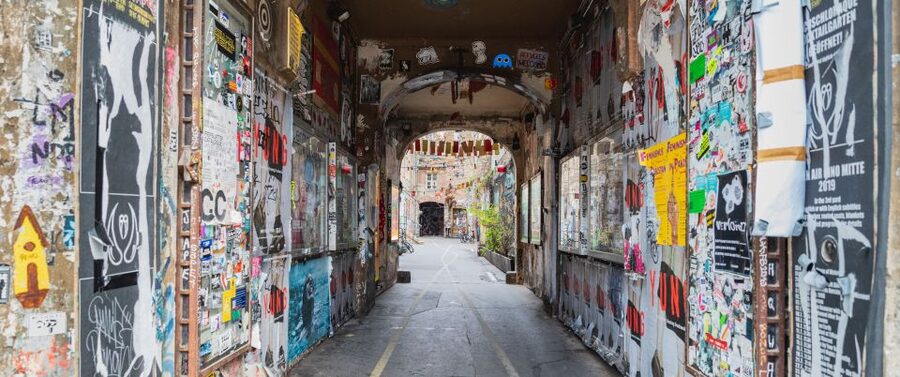
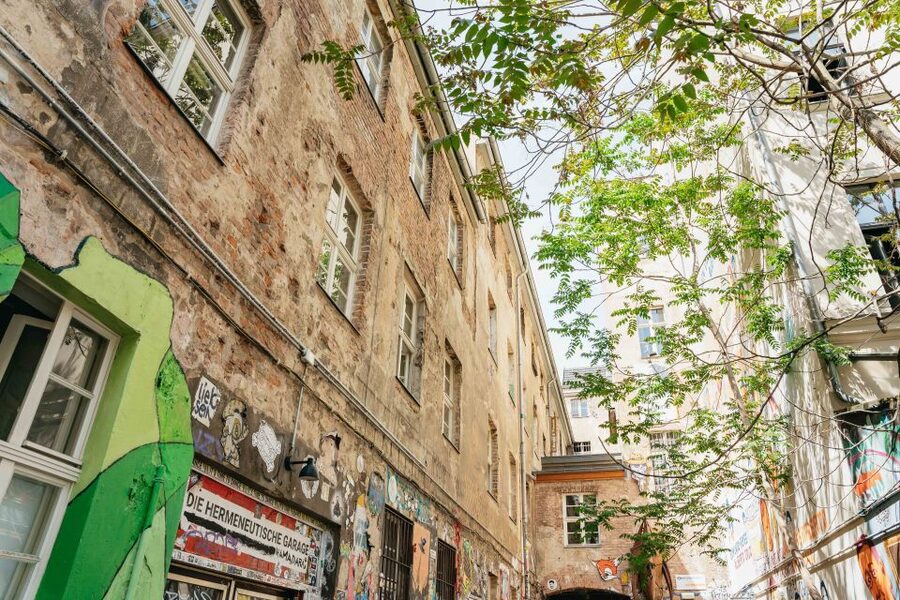
Haus Schwarzenberg is likely to be one of the tour’s strongest stops. The courtyard is home to art studios and creative spaces, with walls covered in street art. Its buildings have served different purposes over the years, and their worn appearance is part of the appeal.
Do not expect a tidy historic courtyard with freshly painted plaster and carefully arranged flower boxes. Haus Schwarzenberg has an improvised, lived-in quality. It feels connected to Berlin’s alternative cultural life, and the art on the walls changes how you read the older structures around it.
The guide adds the missing context. Without explanation, you might simply see graffiti, studios, and a rough passageway. With the story of the buildings’ changing roles, the courtyard becomes a small lesson in how Berlin reuses old spaces.
This stop also shows why a guided walk is useful here. You can wander around Berlin-Mitte on your own, but you will not necessarily know which doorway to enter or why a particular courtyard matters. The value is not just access. It is having someone explain what you are looking at.
Hackesche Höfe and the Berlin mixture
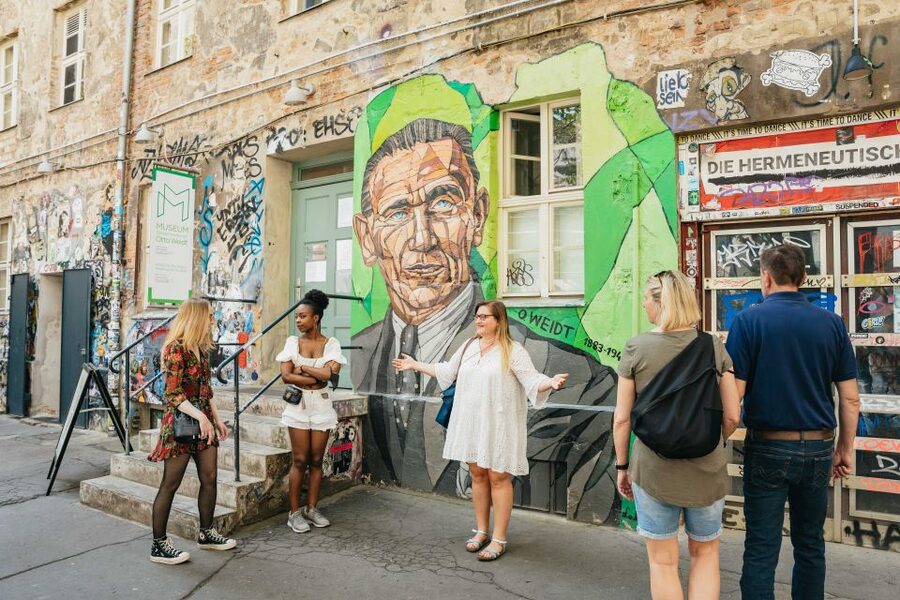
The route includes Hackesche Höfe, one of the best-known courtyard complexes in this part of town. Compared with Haus Schwarzenberg, it may feel more orderly and finished, but it helps demonstrate another side of Berlin’s courtyard architecture.
The guide discusses the mixture of uses found in Berlin buildings, often described as the Berlin mixture: homes, workshops, businesses, and other functions organized around shared inner courtyards. This arrangement tells you something about how the city grew and how urban space was used.
For you, the important point is that these courtyards are not isolated decorative features. They are part of a larger building pattern. The tour helps you notice the relationship between the front street, the inner yard, and the working life once carried on behind the main façade.
Hackesche Höfe can be busy, and it is not as secret as some of the other stops. Still, it earns its place because it gives you a clear example of the architecture that shaped this quarter. The contrast with quieter courtyards makes the route more interesting.
Other Berlin experiences to weigh up
- Berlin: Reichstag, Dome and Government District Guided Tour
★ 4.7 · 18,288 reviews - Berlin: Government District around the Reichstag Guided Tour
★ 4.7 · 8,447 reviews - Berlin: 1-Hour Boat Tour with Bilingual Live Guide
★ 4.7 · 3,629 reviews - Berlin: Sights and Highlights Bike Tour with a Local Guide
★ 4.8 · 2,698 reviews
Rosenhöfe, Sophienkirche, and Auguststraße

Rosenhöfe adds another courtyard setting to the walk. The changing character of each hof is part of the pleasure. Some spaces feel grander, some more practical, and some more creative. You begin to see that Berlin’s inner courtyards are not one fixed style.
The route also passes Sophienkirche. This stop broadens the story beyond Jewish life and commercial courtyards, bringing religious architecture and local history into the picture. The church helps show how different traditions and institutions developed within the same compact area.
Auguststraße provides another link between old Berlin and its current cultural life. The walk does not treat the district as a museum frozen in the past. Instead, it shows how historical buildings and modern uses continue to sit side by side.
You should expect short explanations at each place rather than a long indoor visit. The value comes from the connections between stops. A façade, a passage, a church, and a studio make more sense when the guide explains how they fit into the neighborhood’s development.
Heckmann Höfe, a calm finish near Oranienburger Straße
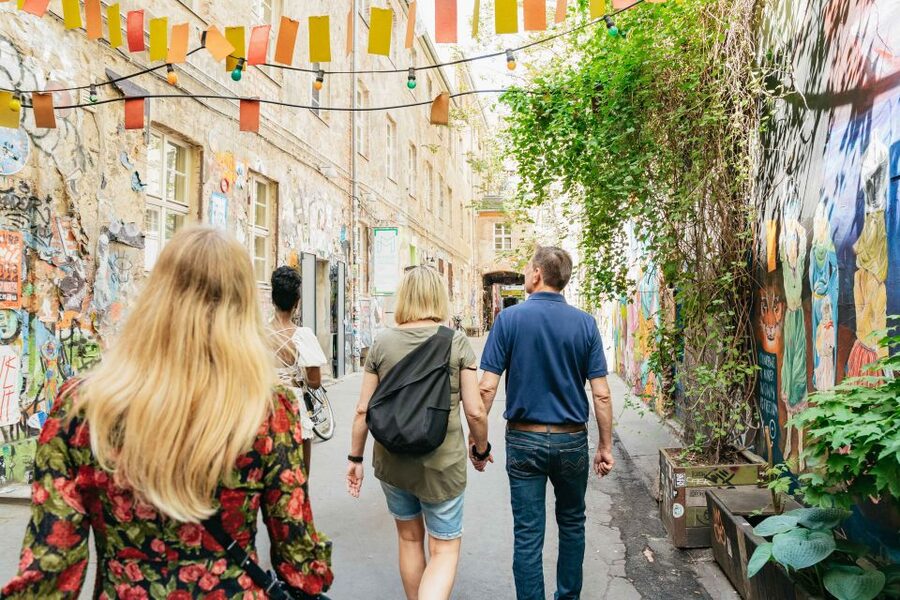
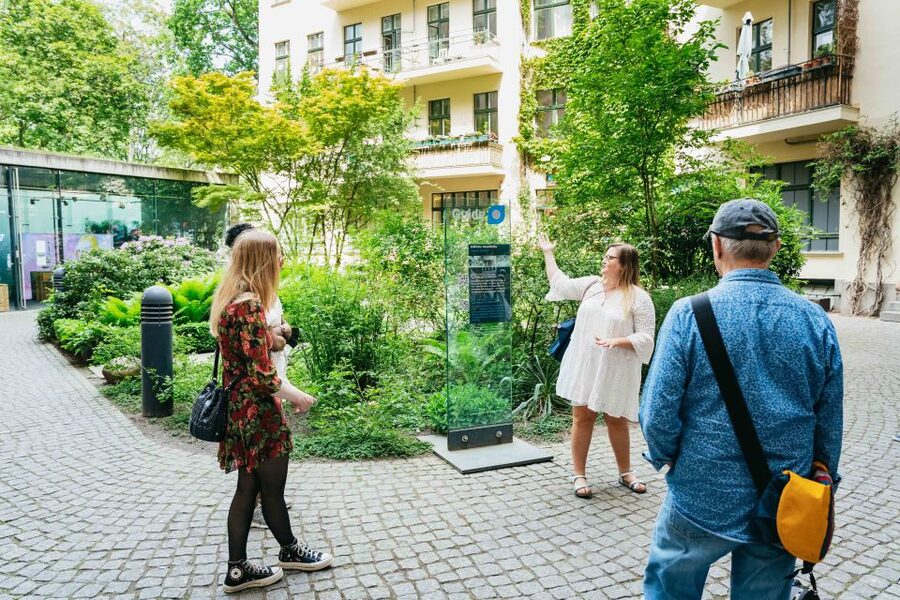
Heckmann Höfe is described as a colorful courtyard with trees, ivy-lined buildings, and a relaxed local atmosphere. After the denser streets and more urban edges of the earlier stops, it offers a pleasant change of pace.
This is a good place to appreciate the physical side of the tour. You can look up at the buildings, notice the vegetation, and see how an inner courtyard can feel separate from the traffic just outside. It is not wilderness, of course, but it works as a small urban refuge.
The tour finishes with drop-off points on Oranienburger Straße. That is useful for continuing your day in central Berlin. You are close to restaurants, bars, cultural sights, and the New Synagogue area, though the walking tour itself does not include food or drinks.
If you want a café break, plan it after the tour. The two hours are focused on walking and interpretation, not refreshments.
The guides make the difference
This tour depends heavily on presentation. The material covers architecture, Jewish life, urban development, and Berlin’s changing social character. A flat delivery would make the courtyards blur together.
The guide names associated with particularly strong sessions include Nick, Susanne, Lydia, Alex, Nicolas, and Minit. Nick has been praised for his friendly manner and strong command of local history. Nicolas has been noted for speaking informally, making the experience feel more like a conversation than a lecture. Susanne has been described as a dynamic presenter who can handle a lot of information without losing the group.
That does not mean every departure will have one of these guides. It does mean you can reasonably expect a guide-led experience rather than a simple walk between photo stops. The best guides turn the route into a story about how Berliners lived and how the district changed.
Language deserves a clear warning. The activity lists English and German, but one booking was conducted only in German, leaving a participant unable to follow the historical explanation. Other people with intermediate German managed well, especially when the guide checked that they understood. If you need English, confirm the language for your date and time.
Is the $23 price good value?
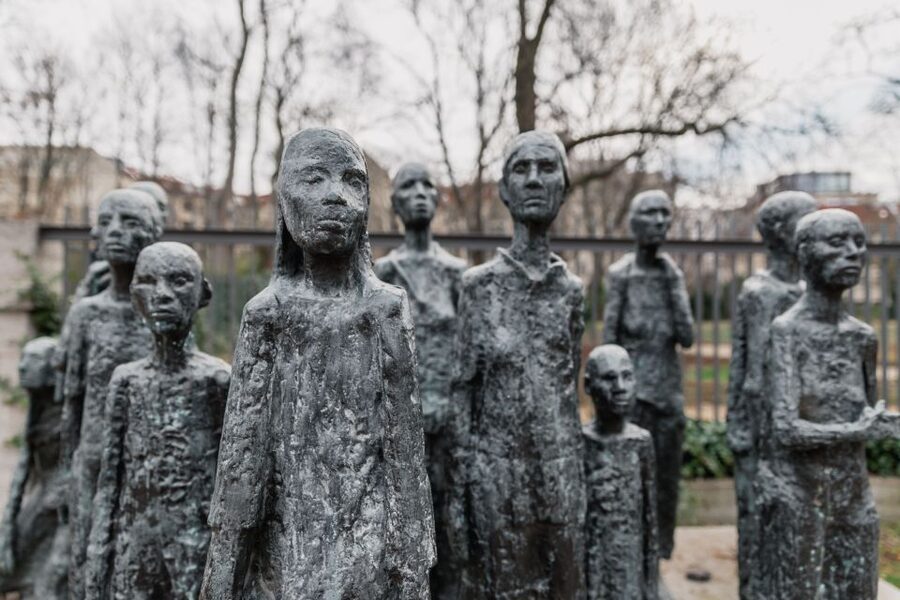
At $23 per person, this is a fair price for a two-hour guided walk in central Berlin. You are paying for local interpretation, not admission to a major museum or a long list of included extras.
The value is strongest if you care about context. You can visit Hackesche Höfe and walk along Oranienburger Straße for free, but finding the less obvious passageways and understanding the connection between architecture, Jewish life, and social change is harder on your own.
The price also compares well with the route’s range. In two hours, you see several courtyards plus Haus Schwarzenberg, Hackesche Höfe, Rosenhöfe, Sophienkirche, Auguststraße, and Heckmann Höfe. You do not spend the whole time at one landmark, so the experience feels varied.
It is less useful if you prefer to explore at your own speed or stop frequently for photographs. A guided group has to keep moving, and the tour’s value comes from listening as you walk.
Practical advice for a comfortable walk
The tour runs for two hours and takes place rain or shine. Bring weather protection, especially in colder months, since the route remains outdoors. A December walk was enjoyed despite bitter cold, and another session continued through heavy rain, but that is a reason to dress sensibly, not a challenge to ignore the forecast.
Wear shoes suited to ordinary city walking. The route is described as easy, but courtyards and passageways can have different surfaces, and you will be on your feet for the full session.
The activity is wheelchair accessible. If mobility is a major concern, it is still sensible to confirm the conditions for your chosen departure, since the route includes several courtyards and historic spaces.
You can cancel up to 24 hours ahead for a full refund, and the reserve-now, pay-later option keeps the booking flexible. Those policies are useful in Berlin, where weather and competing museum plans can change your schedule.
Who should book this tour?
I would choose this walk if you have already seen Berlin’s major sights and want a closer look at one neighborhood. It is also a strong first-day activity for anyone who likes to understand a city through its buildings and ordinary spaces.
History-minded visitors will get the most from the discussion of Jewish life, the New Synagogue area, urban growth, and the district’s changing identity. Architecture fans will appreciate the courtyard design and the way buildings combine residential and working spaces.
It also suits curious photographers and street-art fans, especially at Haus Schwarzenberg. Families and older visitors can manage the easy pace, provided everyone is prepared for outdoor walking.
I would skip it if you want a grand monument tour, substantial indoor time, or a food-focused experience. This is a neighborhood walk, and its appeal lies in details that are easy to overlook.
Should you book the Berlin Hidden Backyards tour?
Yes, if you want Berlin beyond the postcard route. The two-hour format is compact, the $23 price is reasonable, and the route gives you access to courtyards you might otherwise pass without noticing.
Book with two things in mind: confirm the tour language, and prepare for rain or cold. If those conditions work for you, this is a smart way to connect Berlin’s Jewish history, architecture, street art, and present-day creative life in one walk.
FAQ
Where does the tour begin?
Meet the guide in front of the BUTLERS shop at Hackescher Markt 4 in Berlin.
How long does the walking tour last?
The tour lasts two hours.
Which places are included on the route?
The walk includes Haus Schwarzenberg, Hackesche Höfe, Rosenhöfe, Sophienkirche, Auguststraße, and Heckmann Höfe, with the tour ending near Oranienburger Straße.
Is the tour offered in English?
The activity is offered in English and German. Confirm the language for your chosen departure, since at least one session was conducted only in German.
Is the tour wheelchair accessible?
Yes, the activity is listed as wheelchair accessible.
Does the tour run in bad weather?
Yes. The tour takes place rain or shine, so bring suitable clothing and footwear.
Are food and drinks included?
No. Food and drinks are not included in the tour price.
More Walking Tours in Berlin
- Discover Berlin Half-Day Walking Tour
★ 5.0 · 9,624 reviews - Berlin: Third Reich and Cold War 2 Hour Walking Tour
★ 4.9 · 6,830 reviews - Berlin: Discover Berlin Walking Tour
★ 4.9 · 5,998 reviews - Berlin’s Best: 2 Hour Walking Tour Third Reich and the Cold War
★ 5.0 · 5,486 reviews
Newest Berlin reviews
- Where It All Began: Berlin’s Queer & Trans History Tour★ 4.9 · 6 reviews
- Understanding Kreuzberg: The roots of local (sub)culture★ 4.9 · 11 reviews
- Berlin: guided canoe | kayaktour★ 4.1 · 7 reviews
- Private Potsdam City Tour in an authentic vintage van★ 5.0 · 14 reviews
- Warnemünde Shore Excursion: Private Sachsenhausen and Berlin Tour★ 5.0 · 12 reviews
- Ultimate E-Bike Tour of Berlin with Beer Garden Stop★ 5.0 · 4 reviews
- Potsdam Highlights – Private sightseeing tour by minibus★ 5.0 · 3 reviews
- In the Forbidden City – Potsdam Walking Tour★ 5.0 · 17 reviews
Berlin Neighborhood Tours, compared.

Alternative Bike Tour of Kreuzberg & Friedrichshain
Read our review →
Berlin Off-the-Beaten-Path Walking Tour: Kreuzberg, Mitte and Friedrichshain
Read our review →
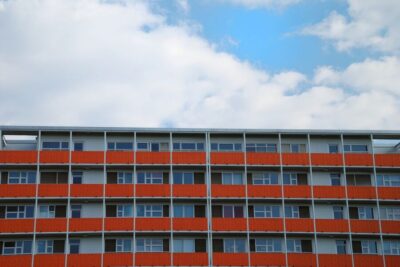
Hansaviertel “The City of Tomorrow” Guided Tour
Read our review →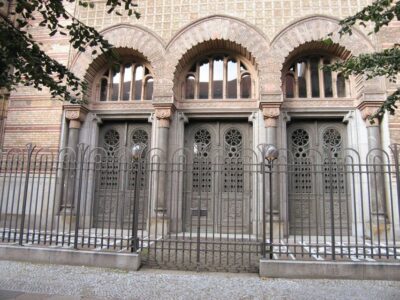
Browse the lists this tour appears in