
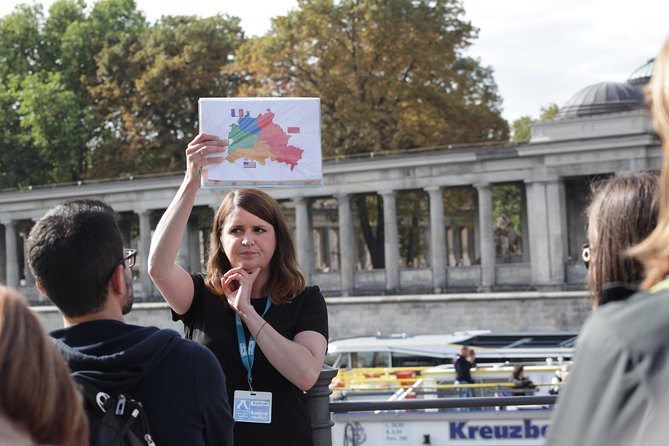
Reviewed · WALKING TOURS
Discover Berlin Half-Day Walking Tour
Berlin’s story is too tangled for a quick monument checklist, but this 3.5-hour walking tour gives you a useful map of the city’s past. You move from Prussian Berlin and grand royal boulevards to Nazi crimes, the divided city, and reunification, with places such as Bebelplatz, the Reichstag, and the Topography of Terror tying the story together.
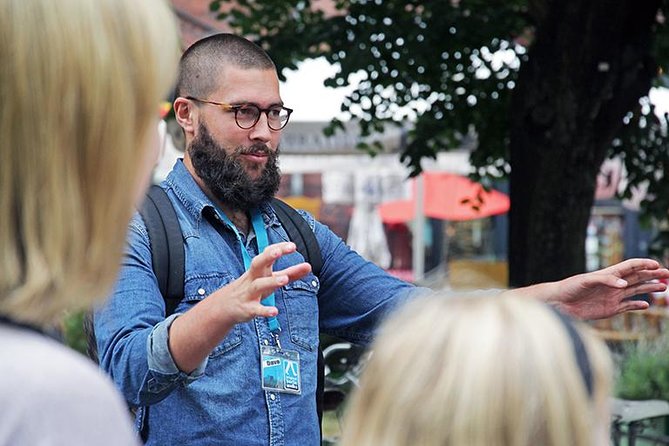
I like two things here. First, the route links famous sights with less obvious stops, including the book-burning memorial and the site of Hitler’s bunker. Second, the guides bring different strengths: Tobi, Rebecca, Georgia, Anjo, Luisa, and others are praised for humor, clear English, personal stories, and thoughtful treatment of difficult subjects.
The catch is simple: this is a lot of Berlin on foot. You may cover the ground in cold, rain, or crowds, and the tour usually explains buildings from outside rather than taking you in. Bring good shoes and treat it as an orientation, not a full museum visit.
Key points to know before booking
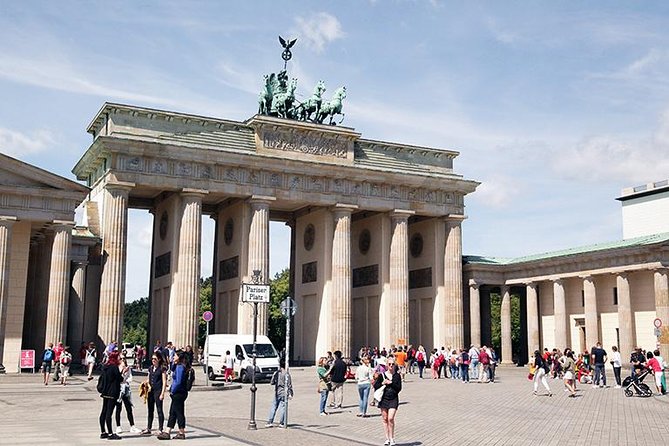
- Four centuries in one walk: Prussian power, imperial Berlin, Nazi terror, the Cold War, and reunification all appear along the route.
- A serious amount of walking: The tour lasts about 3 hours 30 minutes and links Museum Island with Brandenburg Gate, the Berlin Wall area, and Checkpoint Charlie.
- Strong guide-led storytelling: Guides such as Tobi, Rebecca, Georgia, Luisa, and Ruaridh are noted for humor, clear explanations, personal insight, and care with painful history.
- A low price for city orientation: At $24.19 per person, the tour offers a useful first look at many central landmarks without charging for museum entry.
- Mostly outdoor sightseeing: You receive explanations at each stop, but food, drinks, and admissions are not included.
- Best early in your stay: The route helps you decide which sites deserve a longer visit later.
Why this route helps you understand Berlin
Berlin can feel like several cities placed on top of one another. A royal boulevard runs past a Nazi-era memorial. A Cold War border cuts through busy streets. New buildings sit beside empty spaces created by war and political change.
That is the real value of this walk. You are not only looking at the Brandenburg Gate or Berlin Cathedral. You are learning how each place fits into the city’s changing power structure. The guide begins with Berlin’s founding and the Prussian period, then moves through imperial ambition, the Nazi dictatorship, postwar division, and the city’s present-day renewal.
I especially like this order because it gives you a framework before you start exploring alone. Berlin’s museums are excellent, but they can leave you with many facts and no clear sense of how the city fits together. A good guide turns the streets into a timeline.
The tour is conducted in English and has a maximum group size of 25 people. That is large enough to keep the price down, but small enough for a guide to answer questions and keep the group together. Some sessions may feel more crowded, especially around major landmarks, so stay close when crossing streets or moving through busy squares.
The tour begins at Neue Promenade 3, near Hackescher Markt. The sightseeing sequence includes Hackescher Markt, James Simon Park, Museum Island, and the central boulevard of Unter den Linden. The supplied route lists many stops, but most are short outdoor explanations rather than long visits.
More half-day trips in Berlin:
- Berlin Third Reich Sites: Half-Day Walking Tour
★ 5.0 · 835 reviews - Potsdam Half-Day Walking Tour from Berlin
★ 4.5 · 398 reviews - Berlin Private Half-Day Walking Tour: Discover the German Capital’s History
★ 5.0 · 244 reviews
Museum Island and Berlin’s royal center
The opening stretch introduces the city’s old cultural and political core. At Hackescher Markt and James Simon Park, you get an early explanation of Berlin’s development before reaching Museum Island.
Museum Island is one of Berlin’s great concentrations of art and architecture. The route passes the Neues Museum, Pergamonmuseum, Altes Museum, Berlin Cathedral, Lustgarten, and the former Stadtschloss site. You should think of this section as a visual survey, not a museum tour. Admission to the museums is not included, and the schedule does not allow time to explore their galleries.
That limitation is also useful. You can see which buildings interest you most, then return later with a separate ticket and enough time to look properly. The Pergamonmuseum, Neues Museum, and Altes Museum each need more attention than a few minutes outside can provide.
The route also includes the Rotes Rathaus, Nikolaiviertel, Schlossbrücke, and the German Historical Museum. These stops broaden the picture beyond the grand museums. You hear about Berlin as a royal capital, a growing European city, and a place shaped by war and political change.
At the Neue Synagoge and the Centrum Judaicum, the guide adds another important layer to Berlin’s Jewish history. This is one of the places where a guide matters. You get context about the building and its place in the city’s story instead of simply taking a photograph and moving on.
The Berliner Fernsehturm appears along the way too. Its tall profile is an easy visual marker for the former East Berlin. You may not have time to visit the tower, but the guide can place it within the city you are walking through.
Unter den Linden and the marks of power
Unter den Linden is one of Berlin’s grandest streets. It links the former royal center with Pariser Platz and Brandenburg Gate, and its broad layout reflects the ambitions of Prussian and imperial Berlin.
Along the way, the tour pauses at Neue Wache, the State Opera, St. Hedwig’s Cathedral, Humboldt University, and the Berlin State Library. These buildings show how the boulevard gathered military, religious, academic, and cultural power in one corridor.
Neue Wache is especially important. Its memorial space has been used to remember victims of war and dictatorship, and its stark interior creates a quiet break from the street. The guide can help you understand why this small building matters without reducing it to a photo stop.
Bebelplatz is another powerful moment. The square is linked to the Nazi book burning of 1933, and the underground Book Burning Memorial gives the subject a physical presence. You look down into an empty library below the pavement. It is a small memorial, but the image is direct and hard to forget.
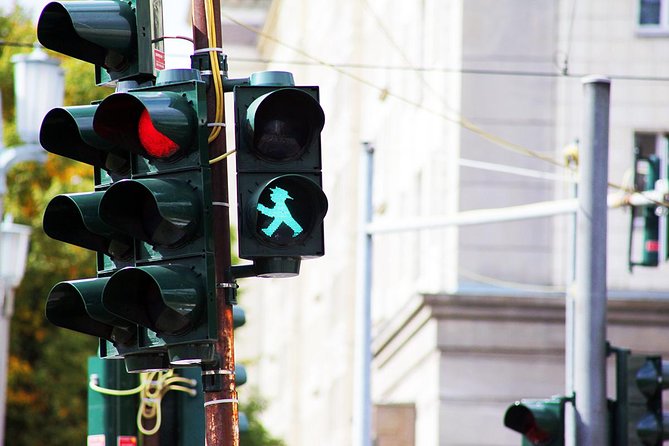
The Ampelmann shop appears on the route as a lighter, more commercial reminder of East Berlin. The familiar walking figure from East German traffic signals has become a popular symbol, and the stop gives the tour a brief change of tone before the route returns to heavier subjects.
This part of the walk is also where you should expect the most standing still in public spaces. You may be beside traffic, cyclists, and other tour groups. The guide’s voice and positioning matter, so an attentive guide makes a real difference.
Brandenburg Gate, the Reichstag, and Pariser Platz
Pariser Platz and Brandenburg Gate are the classic Berlin sights, but the guide adds useful context to both. The gate once marked a city entrance and later became a symbol used by different governments. Its meaning shifted again when the Berlin Wall fell and the city began to reunite.
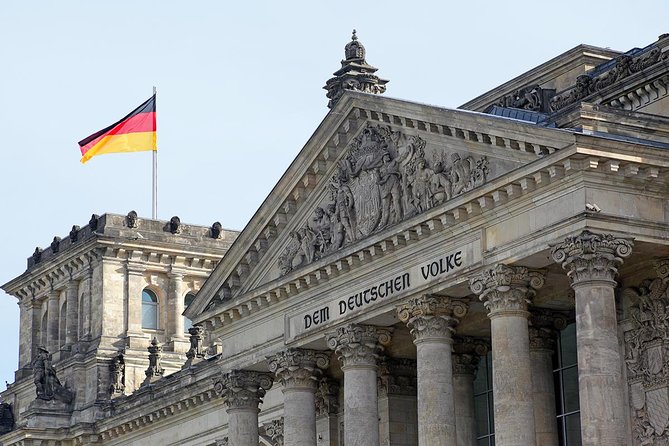
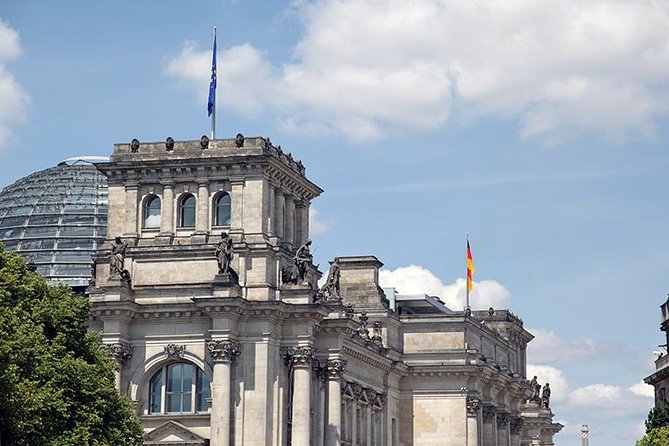
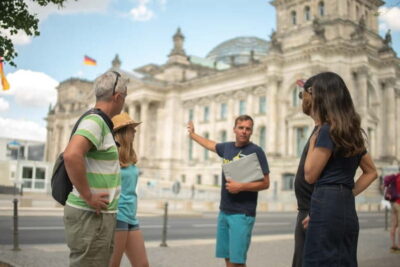
The Reichstag is close by. Germany’s parliament now occupies a building with a complicated past, including war damage and postwar division. You see the exterior and hear about its role in modern Germany, but a visit inside is not part of this activity.
The guide also points out the Victory Column, though it is not the same as visiting the monument. This is a good example of the tour’s purpose: you see a large portion of central Berlin, learn what each place represents, then choose where to spend more time.
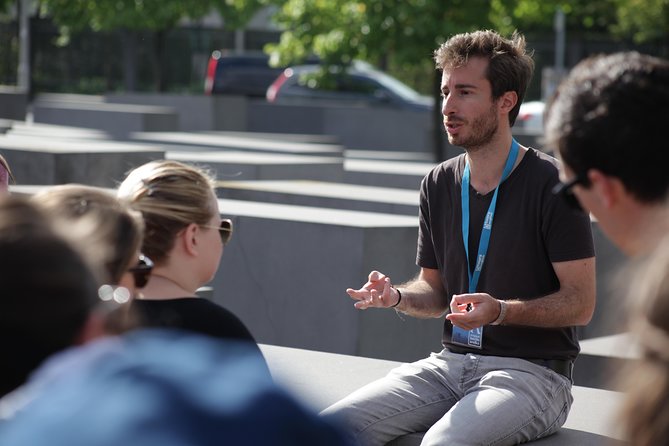
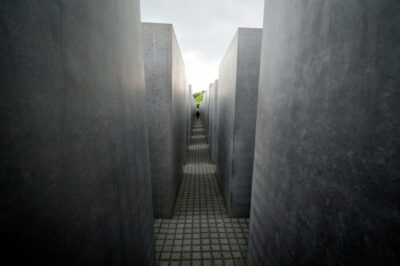
The Holocaust Memorial is one of the most important stops. The field of concrete blocks creates an unsettling, uneven space in the middle of the city. The guide explains its connection to the Jewish victims murdered under the Nazi regime and places it near other sites tied to the dictatorship.
Nearby, you hear about Hitler’s bunker. The location is deliberately plain, and there is no dramatic structure to enter. That plainness matters. The guide helps you understand why the site is marked carefully without turning it into a spectacle.
This section requires respectful attention. Berlin does not hide its crimes, and a good tour treats the subject with care. Several guides praised in the supplied comments, including Ruaridh and guides with East Berlin experience, are described as handling difficult history thoughtfully while still keeping the walk human and approachable.
Other Berlin experiences to weigh up
- Berlin: Third Reich and Cold War 2 Hour Walking Tour
★ 4.9 · 6,830 reviews - Berlin: Discover Berlin Walking Tour
★ 4.9 · 5,998 reviews - Berlin’s Best: 2 Hour Walking Tour Third Reich and the Cold War
★ 5.0 · 5,486 reviews - Berlin: Hidden Backyards Guided Walking Tour
★ 4.8 · 5,360 reviews
From the death strip to Checkpoint Charlie
The Cold War portion follows the former path of the Berlin Wall and its death strip. The physical barrier is mostly gone from central Berlin, but the route helps you see how the border once cut through ordinary streets and divided families, workplaces, and neighborhoods.
You visit the Memorial of the Berlin Wall and hear about the wall’s construction, the failed escape attempts, daily life in East and West Berlin, and its fall in 1989. The precise stories matter because the Cold War can otherwise feel like a distant political argument. Here, it becomes a story about movement, fear, and control in the streets around you.
The stop at Platz des Volksaufstandes von 1953 adds another lesser-known chapter. The name recalls the East German uprising, a reminder that opposition did not begin with the events of 1989.
The former Aviation Ministry of Berlin also appears in the route. Its setting connects the Nazi period with the postwar government and the divided city. This is one of the benefits of walking rather than riding a bus: you can see how close together these different chapters remain.
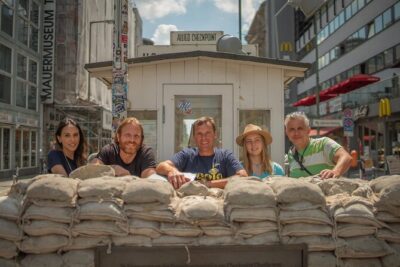
At Checkpoint Charlie, expect a famous name and a busy modern setting. It was the best-known crossing point between East and West Berlin, but today the area has commercial displays and heavy foot traffic. The guide helps separate the real border crossing from the later tourist presentation.
That contrast is worth understanding. Berlin’s most famous Cold War sites are not always the quietest or most atmospheric. A guide gives you the facts behind the signs and helps you avoid mistaking a reconstructed image for the complete story.
The Topography of Terror and Berlin’s difficult memory
The tour ends in the area of the Topography of Terror, near the former headquarters of the Gestapo and SS. The museum is built where Nazi institutions planned and carried out persecution, making the location itself part of the lesson.
The route includes a look at excavated cellars where political prisoners were tortured and killed. This is a sobering stop, and it is handled best with patience. You may want time afterward to visit the museum’s indoor exhibits on your own, since the guided walk only introduces the site.
The Topography of Terror is a strong final stop because it brings the tour back to evidence and responsibility. Berlin has chosen to mark painful places instead of clearing them away. You see how memorials, museums, empty spaces, and plaques form part of the city’s effort to confront its past.
The stated end point is different from the starting location, so plan to finish somewhere else in central Berlin. The provided details do not specify the exact final meeting point. Your guide will direct the group as the walk ends.
What the $24.19 price really buys
At $24.19 per person, this is good value if you want orientation and historical explanation. You are paying for a professional English-speaking guide who connects more than 30 central sights in one route.
The price does not include food, drinks, or museum admissions. That keeps the base cost low, but it also means you should budget separately if you want to enter the Neues Museum, Pergamonmuseum, Topography of Terror, or another site.
You may also want a short break. One account describes a stop at a bakery or coffee house, with drinks and food costing extra. Do not count on this as a formal included meal. Carry water, and consider a small snack if you are prone to fading after several hours of walking.
The tour is particularly good value on a first day in Berlin. It shows you where the main sights are and helps you build a plan for the rest of your stay. If you already know Berlin well, the route may feel broad rather than detailed.
How hard is the walk?
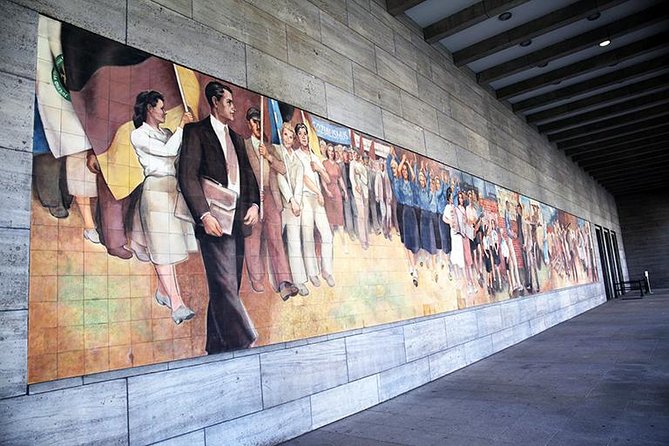
The walk is steady, and the schedule gives many stops only five minutes. That means you cover a wide area without spending long periods inside any one attraction.
Cold weather comes up in several accounts, including snow and freezing conditions. The tour still operated as an outdoor walk, and a warm coat, gloves, sturdy shoes, and weather protection will make a major difference. Berlin’s stone streets and open squares offer little shelter when the weather turns.
Most people can participate, and service animals are allowed. Still, the tour’s length and pace make it less suitable if you need frequent seated breaks or find long walks difficult. Ask about the route before booking if mobility is a concern, since the provided details do not promise a fully step-free experience.
The maximum group size is 25. A group of that size can spread out near Brandenburg Gate or Checkpoint Charlie, so keep the guide in sight. On the positive side, the larger group helps make this inexpensive tour possible.
Which guide style suits you?
The guide can shape the experience as much as the route. Tobi is praised for humor, care for individual needs, and even using more than one language to clarify points. Rebecca is described as patient, friendly, and good at mixing facts with memorable stories.
Georgia receives praise for a well-paced presentation, while Luisa adds personal insight and practical advice about places to eat and visit. Ruaridh is noted for discussing Germany’s darker history with care, and guides such as Joacham, Emma, Phillip, Ben, Lewis, Glenn, and Anjo are described as engaging and clear.
You cannot choose a specific guide from the information provided, so book for the route and format rather than expecting a particular person. The consistent strengths are storytelling, humor, historical context, and a willingness to answer questions.
Should you book this Berlin walking tour?
Book it if you want a strong first look at central Berlin and are ready to walk for three and a half hours. It suits first-time visitors, families with older children or teenagers, history fans, and anyone who wants to understand why Berlin’s major sights sit where they do.
I would especially choose it near the start of a visit. You can mark the museums and memorials that deserve a second look, then return with more time and the right admission ticket.
Skip it if you want long indoor visits, a leisurely pace, or detailed museum interpretation. You will see many places from outside, and the route can feel demanding in bad weather.
With a 4.9 rating from 9,624 reviews and 98 percent of customers recommending it, the numbers are unusually strong. The practical reason is clear: for $24.19, you receive an informed guide, a broad route, and a useful explanation of Berlin’s hardest and most important stories. Free cancellation is available up to 24 hours before the start time, which gives you some flexibility if your plans change.
FAQ
How long does the Discover Berlin Half-Day Walking Tour last?
The tour lasts approximately 3 hours and 30 minutes.
What language is the tour offered in?
The tour is offered in English.
Where does the tour start?
The meeting point is Neue Promenade 3, 10178 Berlin, Germany.
Where does the tour finish?
The activity ends at a different location from the starting point. The exact final location is provided in the tour details.
Are museum admissions included?
No. The tour includes a professional guide, but museum admissions are not included.
Is food or drink included?
No. Food and drinks are not included unless specifically stated. A break at a bakery or coffee house may occur, but anything purchased there costs extra.
What happens if I need to cancel?
You receive a full refund if you cancel at least 24 hours before the experience starts. Cancellations or changes made less than 24 hours before the start time are not accepted for a refund.
Newest Berlin reviews
- Where It All Began: Berlin’s Queer & Trans History Tour★ 4.9 · 6 reviews
- Berlin: guided canoe | kayaktour★ 4.1 · 7 reviews
- Understanding Kreuzberg: The roots of local (sub)culture★ 4.9 · 11 reviews
- Private Potsdam City Tour in an authentic vintage van★ 5.0 · 14 reviews
- Warnemünde Shore Excursion: Private Sachsenhausen and Berlin Tour★ 5.0 · 12 reviews
- Ultimate E-Bike Tour of Berlin with Beer Garden Stop★ 5.0 · 4 reviews
- In the Forbidden City – Potsdam Walking Tour★ 5.0 · 17 reviews
- Private Walking Tour of Potsdam and Sanssouci★ 5.0 · 24 reviews
Walking Tours, compared.

Berlin’s Best: 2 Hour Walking Tour Third Reich and the Cold War
Read our review →
Third Reich Berlin: Hitler and WWII Walking Tour
Read our review →

Browse the lists this tour appears in