
Reviewed · WALKING TOURS
Berlin: Discover Berlin Walking Tour
Berlin’s past is unusually visible from the pavement. On this walking tour, you move from the Brandenburg Gate to Checkpoint Charlie, Museum Island, Bebelplatz, and the site of Hitler’s bunker while your guide links the monuments into one clear story. Berlin’s history is the main attraction, not just the backdrop.
I like the choice of a shorter or longer route, which makes this easier to fit into a first day in the city. I also like the guide-led storytelling: guides such as Anja, a historian and archaeologist, and Berlin local Gregor have been praised for explaining difficult events in a clear, human way. The main drawback is simple: you are outside for two to four hours, rain or shine, and the amount of walking may feel demanding in cold or wet weather.
Key points to know
- The route connects major sights: Brandenburg Gate, Checkpoint Charlie, Museum Island, Berlin Cathedral, Palace Square, Bebelplatz, the Berlin Wall, and the former bunker site are part of the story.
- The history spans centuries: You move from Berlin’s medieval beginnings through Prussian and imperial rule, Nazism, the Cold War, reunification, and modern Berlin.
- The guide matters: English and German tours are available, with guides such as Philipp, Georgia, Tobi, Luisa, Walid, and Gregor praised for warmth, humor, and clear explanations.
- You can choose the duration: Options run from two to four hours, useful if you want either a brisk introduction or more time for context and questions.
- The tour is outdoors: Wear clothing suited to the forecast. The tour operates in rain and cold, and winter conditions can be particularly tough.
- It is strong value at $23: You see many central sights and gain a framework that can help you make better use of the rest of your Berlin visit.
Why this walk works as a first look at Berlin
Berlin can feel confusing at first. Its important sights are spread across a large central area, and the city’s story is broken into pieces: a palace here, a Cold War checkpoint there, a memorial somewhere else. A good guide gives those pieces an order.
That is the real purpose of this tour. You are not simply ticking off the Brandenburg Gate and Checkpoint Charlie. You are hearing how Berlin grew from a modest medieval settlement into the capital of Prussia, the German Empire, Nazi Germany, a divided Cold War city, and the reunited capital of modern Germany.
I especially value the way the tour brings different eras together. A discussion of Albert Einstein or Marlene Dietrich can make Berlin’s cultural life feel more personal. A reference to JFK connects the city to the political drama of the Cold War. Stories about present-day Berlin help you understand that the city is still shaped by the events you are seeing.
The structure also suits first-time visitors. You get a broad orientation without spending the whole day inside one museum. Later, you can return to the places that caught your attention and explore them at greater length.
Other Berlin experiences to weigh up
- Discover Berlin Half-Day Walking Tour
★ 5.0 · 9,624 reviews - Berlin: Third Reich and Cold War 2 Hour Walking Tour
★ 4.9 · 6,830 reviews - Berlin’s Best: 2 Hour Walking Tour Third Reich and the Cold War
★ 5.0 · 5,486 reviews
Brandenburg Gate and the making of modern Berlin
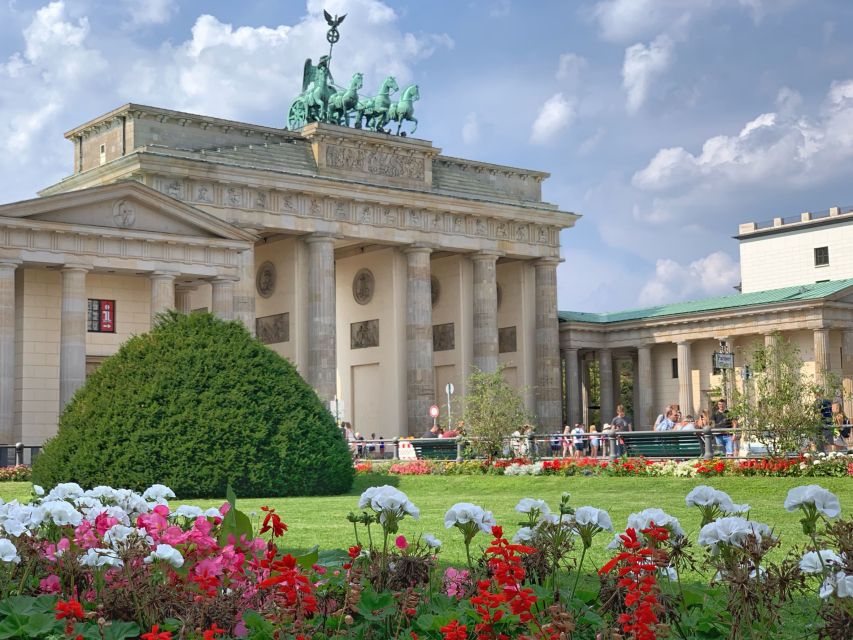
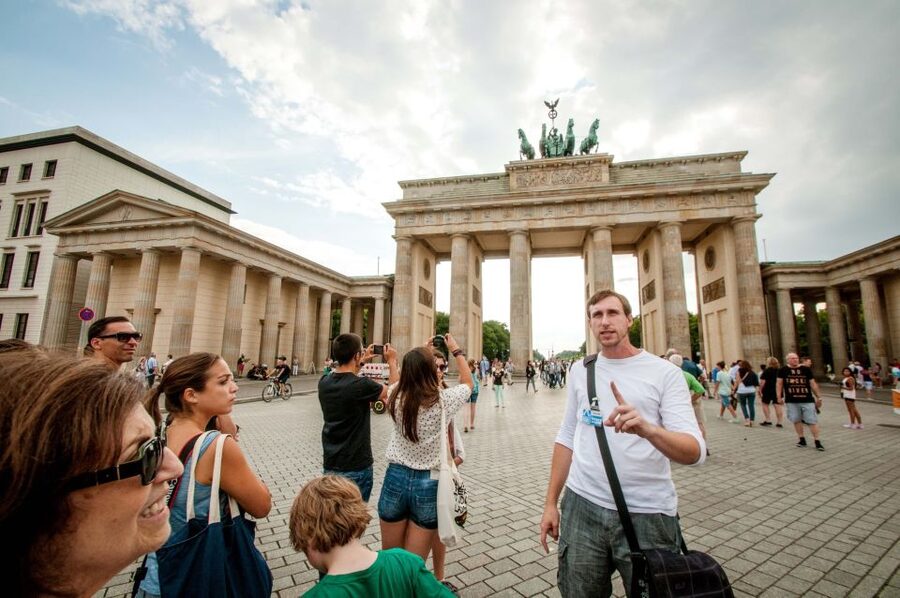
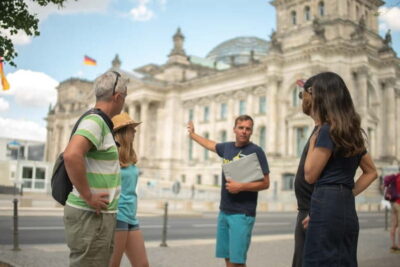
The Brandenburg Gate is an obvious place to begin thinking about Berlin. It is one of the city’s most recognizable monuments, but its meaning has changed repeatedly as political power shifted around it.
Here, your guide can help you look past the postcard view. The gate relates to Prussian ambition, imperial Berlin, Nazi ceremony, wartime destruction, the division of the city, and reunification. The same stone structure has served very different political purposes, which makes it a useful introduction to Berlin’s complicated identity.
You will likely spend time taking photographs, but the explanation is what gives the stop value. Without context, the gate is a handsome neoclassical landmark. With context, it becomes a marker of changing power in Germany.
The area is also useful for orientation. From here, several major sites are within walking distance, including the Memorial to the Murdered Jews of Europe, government buildings, and the former Cold War border area. The route uses that concentration of sights well.
The Memorial to the Murdered Jews of Europe
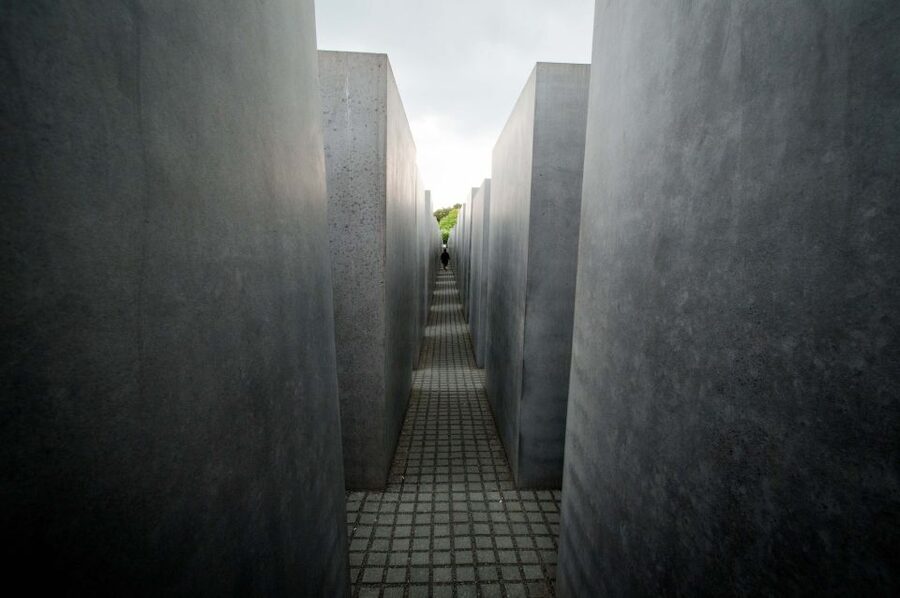
The memorial near Brandenburg Gate is one of the most serious stops on the route. Its field of concrete slabs has provoked debate since its design was proposed, and your guide discusses those controversies rather than treating the memorial as a simple photo stop.
That matters because the design is deliberately open to interpretation. As you walk among the blocks, the space changes around you. The memorial does not present a conventional statue or a single written message. The guide’s explanation helps you consider why Germany chose this form of public remembrance and how a city represents the murder of Europe’s Jews.
This portion of the tour requires some quiet attention. The overall walk includes humor and lively storytelling, but not every stop should feel light. A strong guide adjusts the tone, giving difficult subjects their proper weight without turning the entire experience into a lecture.
You should also remember that this is an outdoor visit. If you want to explore the memorial’s underground information center, you would need separate time beyond the walking tour. The tour’s role is to explain the site and place it in Berlin’s wider story.
Bebelplatz and the Nazi book burning
Bebelplatz offers one of the tour’s most memorable details. It is the site associated with the Nazi book burning of 1933, when works seen as politically or culturally threatening were destroyed.
The square is easy to pass without noticing what happened there. That is exactly why a guide adds so much. You learn how the event reflected the Nazi attack on free expression, independent thought, and the people whose ideas the regime rejected.
The memorial in the square is particularly striking because it is set below ground level. Your guide can point it out and explain what you are seeing, turning an otherwise subtle feature into a meaningful stop.
I like this part of the itinerary because it links ideology to ordinary public space. The event did not happen in some distant battlefield. It happened in a central Berlin square surrounded by important buildings. The contrast between the elegant setting and the destructive act is hard to miss.
A different sort of day out in Berlin:
- Berlin: Reichstag, Dome and Government District Guided Tour
★ 4.7 · 18,288 reviews - Berlin: 1-Hour City Tour by Boat with Guaranteed Seating
★ 4.3 · 16,993 reviews - Berlin: Boat Tour Along the River Spree
★ 4.4 · 11,252 reviews - Berlin: Hop-on Hop-off Bus Tour with Live Commentary
★ 4.3 · 8,579 reviews
The former bunker site and the final days of Hitler
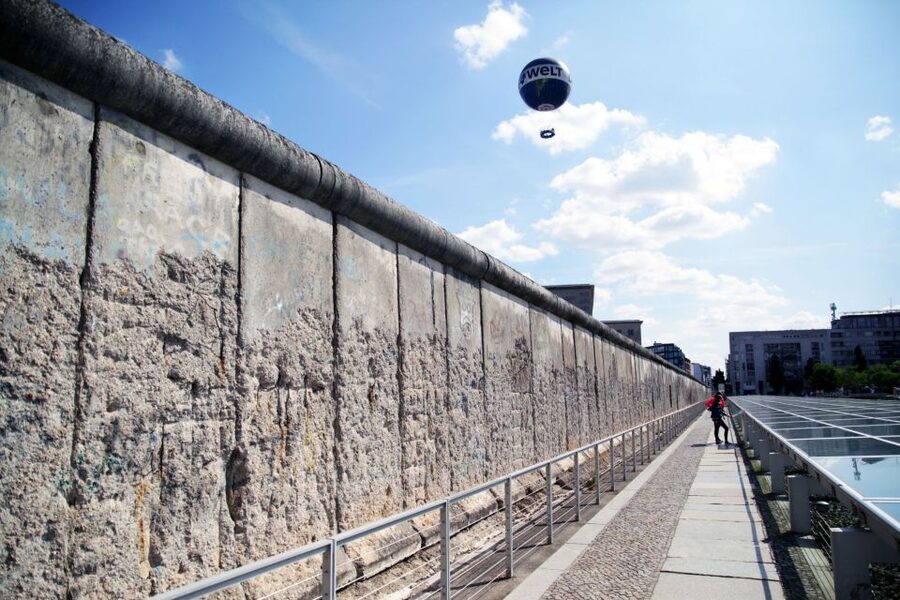
The tour also takes you to the area above the site where Hitler died in April 1945. The bunker itself is not open as a visitor attraction, and the location does not offer a dramatic ruin. That lack of spectacle is part of the point.
You are standing in an ordinary urban setting above a place that became central to the final days of Nazi Germany. A guide helps explain the war’s closing phase, the destruction around Berlin, and the later decisions about how to mark the site.
This is a stop where accurate explanation matters more than theatrical presentation. The subject can easily become sensational, but the best approach is factual and restrained. Several guides, including Stefan, Philipp, and Reuben, have been praised for making serious history understandable without making it heavy or confusing.
If you expect a preserved bunker interior, adjust your expectations. You see the location and hear the story, not an underground museum.
Checkpoint Charlie and the Cold War city
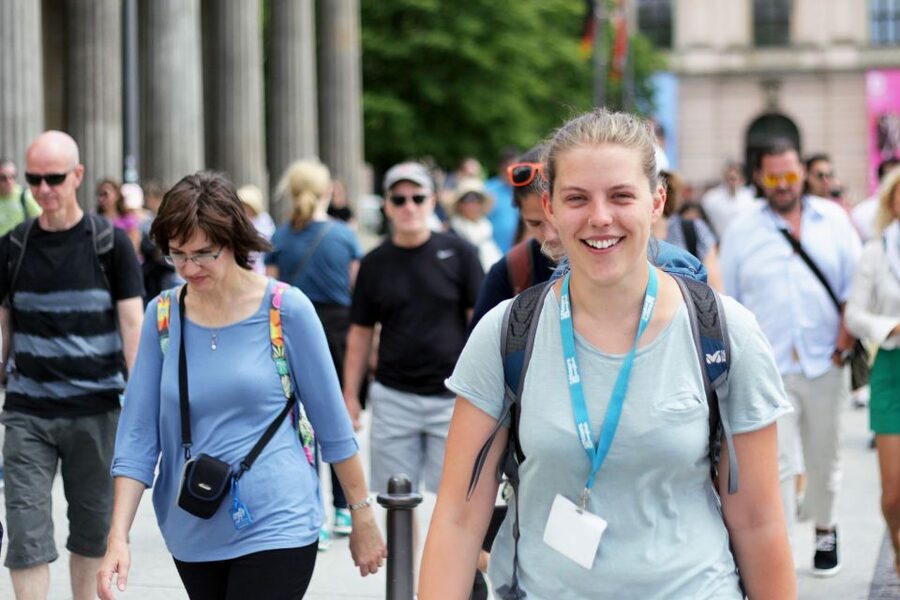
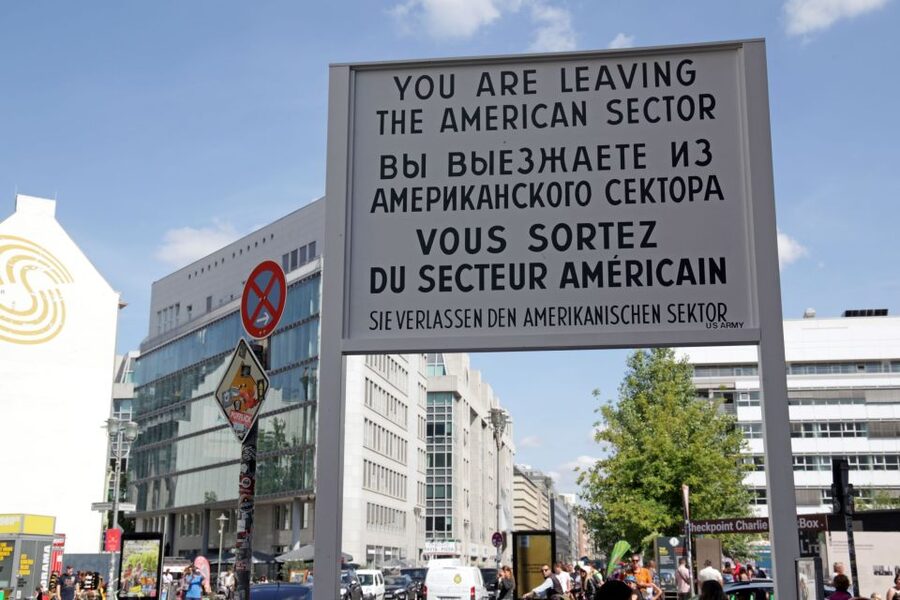
Checkpoint Charlie brings the tour into Berlin’s postwar division. The former crossing point became one of the best-known symbols of the Cold War, and its name is now familiar around the world.
The value of the stop lies in understanding what the checkpoint represented. Berlin was not simply divided by a line on a map. Families, jobs, streets, and daily routines were affected by the border between East and West. The tour also covers daring escape attempts across the Berlin Wall, giving you a sense of the risks some people took to leave East Germany.
The present-day site can feel busy and commercial, so your guide’s context is important. You may see visitors taking photographs and people moving through the area, but the historical explanation restores the seriousness of the location.
This is also a useful point to hear about the Wall’s fall in 1989 and what followed. The story is not only about repression. It is also about the pressures that built over time, the choices made by ordinary people, and the moment when the border system began to break apart.
Museum Island, Berlin Cathedral, and Palace Square
Museum Island gives the route a different tone. The area gathers several major cultural institutions beside the Spree, with Berlin Cathedral providing an impressive visual anchor. You may not enter the museums during the walk, but you get an introduction to why this part of the city matters.
The stop helps explain Berlin as a capital of art, learning, monarchy, and public display. It also shows how the city’s built environment changed after war damage and political division. The nearby Palace Square adds another layer, linking present-day Berlin to Prussian and imperial power.
You will not receive a full museum visit here. That is a limitation, but it is also a practical advantage if your goal is to see the city rather than spend the day indoors. I would use this portion of the tour to decide which museum or building deserves a separate visit.
Because these sights are visually impressive, it is easy for a tour to become a list of names and dates. The better guides keep asking what each place tells you about Berlin’s political priorities. That approach makes the buildings easier to remember after the walk ends.
The guide’s role in making difficult history clear
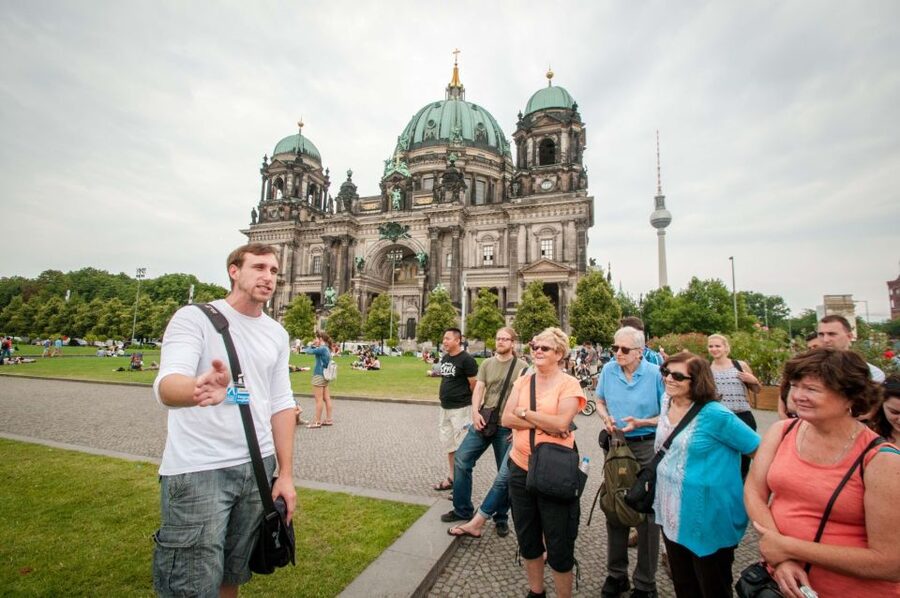
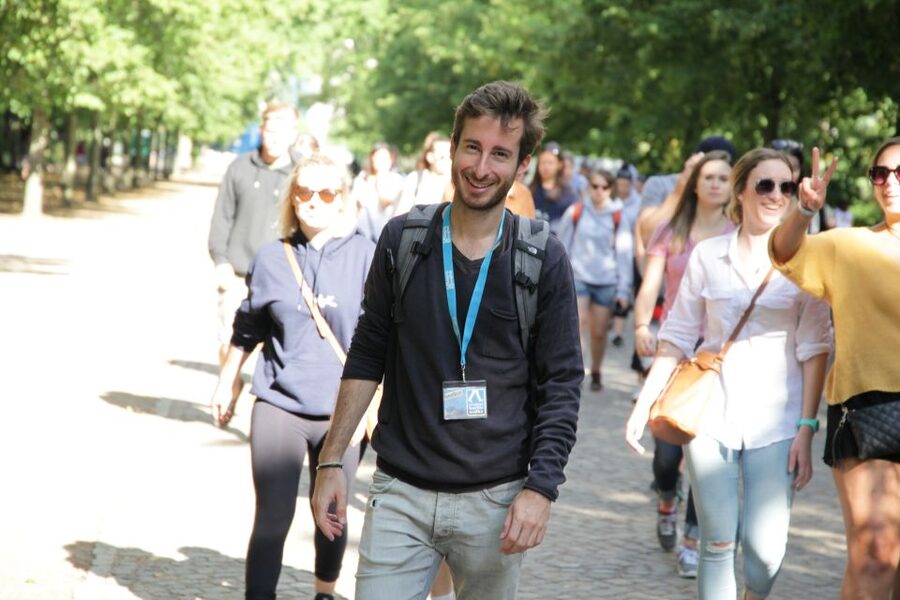
The strongest feature of this experience is the person leading it. The guide roster varies, so you cannot book it expecting one particular individual unless your chosen option states otherwise. Still, the available feedback points to a consistent style: clear explanations, humor where appropriate, patience with questions, and an ability to connect past events with present-day Berlin.
Anja’s background in history and archaeology helped provide a clear framework for the city’s origins and its wartime and Cold War sites. Gregor has used family stories about growing up in Berlin to explain how the city changed. Philipp, Georgia, Tobi, Luisa, Walid, and others have also been praised for combining facts with warmth and personal energy.
That personal element can make a difference. A list of dates is easy to forget. A story about how Berliners experienced division, rebuilding, or reunification gives the facts a human scale.
Families and mixed-age groups should find the style useful. One parent specifically valued the pace and clear explanations for a 13-year-old. The tour still covers serious material, but it does not require you to already know German history.
Two hours or four hours?
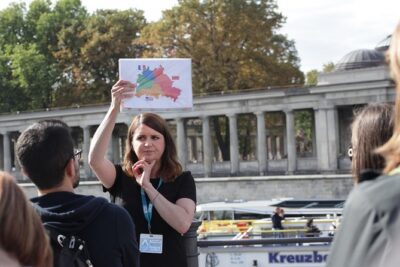
The duration ranges from two to four hours, depending on the option you book. The shorter version is a sensible choice if you have limited time or want a quick introduction before exploring Berlin on your own.
Choose the longer option if you want more explanation, more questions, and a slower rhythm between major stops. The extra time matters because Berlin’s sights are not self-explanatory. You can see a building in seconds, but understanding why it matters takes longer.
The pace appears to include regular stops for information and short breaks. That said, this is still a walking tour across central Berlin. You should expect to be on your feet for much of the experience, and you may find the full route tiring in winter or wet weather.
I would book it near the beginning of your stay. Then you can use the guide’s suggestions to shape the rest of your visit. If you only have one day in Berlin, the longer option may be especially useful because it covers many key sites in one outing.
Price, weather, and practical value

At $23 per person, this is a strong value if you want a broad introduction to Berlin. You are paying for a guide who explains several major sites, not for admission to museums or indoor attractions. The value is greatest when you care about context and want help deciding what deserves a second visit.
The main practical issue is weather. The tour runs rain or shine, so bring a waterproof layer, warm clothing in winter, and comfortable shoes. Free cancellation up to 24 hours before the tour and the reserve-now, pay-later option make planning less risky, but you should still check the meeting point for your specific booking because it can vary by option.
Languages are English and German. A private group option is available, which may suit families or friends who want more control over questions and pace.
Who should book the Discover Berlin Walking Tour?
I would choose this tour if you are visiting Berlin for the first time, enjoy history, or want to see many central sights without arranging every stop yourself. It is particularly useful for anyone trying to connect Prussian, Nazi, Cold War, and modern Berlin into one understandable story.
It may be less suitable if you dislike walking, want to spend long periods inside museums, or prefer a narrow tour focused on one era. The visit is broad by design. You get a well-shaped introduction, not an in-depth examination of every building.
Should you book it?
Yes, if you want a clear first-day introduction to Berlin at a modest price. The strongest reason to book is the combination of major sights and serious explanation, especially at Bebelplatz, the former bunker site, Checkpoint Charlie, and the Wall locations.
Pick the longer option if you have the time and want questions answered along the way. Dress for the weather, keep your expectations realistic about outdoor sites, and remember that the guide’s individual style can vary. For most first-time visitors, this is a practical way to begin understanding Berlin before exploring the city on your own.
FAQ
How long does the Discover Berlin Walking Tour last?
The tour lasts between two and four hours, depending on the option you book. Starting times vary, so check availability when selecting your date.
How much does the tour cost?
The listed price is $23 per person.
Which languages are available?
The tour is available in English and German.
Is a private group option available?
Yes. A private group option is available when booking.
Which major Berlin sights are included?
The route includes the Brandenburg Gate, Checkpoint Charlie, Museum Island, Berlin Cathedral, Palace Square, Bebelplatz, Berlin Wall locations, and the site above Hitler’s former bunker.
Does the tour enter museums or the former bunker?
The supplied tour information describes visits to outdoor sites and viewpoints. It does not state that museum interiors or the former bunker are entered.
What should I bring?
Bring weather-appropriate clothing. The tour takes place outdoors and operates in all weather.
Can I cancel the tour?
Yes. You can cancel up to 24 hours in advance for a full refund. You can also reserve now and pay later, depending on the booking option.
Newest Berlin reviews
- Where It All Began: Berlin’s Queer & Trans History Tour★ 4.9 · 6 reviews
- Understanding Kreuzberg: The roots of local (sub)culture★ 4.9 · 11 reviews
- Berlin: guided canoe | kayaktour★ 4.1 · 7 reviews
- Private Potsdam City Tour in an authentic vintage van★ 5.0 · 14 reviews
- Warnemünde Shore Excursion: Private Sachsenhausen and Berlin Tour★ 5.0 · 12 reviews
- Ultimate E-Bike Tour of Berlin with Beer Garden Stop★ 5.0 · 4 reviews
- In the Forbidden City – Potsdam Walking Tour★ 5.0 · 17 reviews
- Private Walking Tour of Potsdam and Sanssouci★ 5.0 · 24 reviews
Walking Tours, compared.


Berlin’s Best: 2 Hour Walking Tour Third Reich and the Cold War
Read our review →
Third Reich Berlin: Hitler and WWII Walking Tour
Read our review →

Browse the lists this tour appears in