
Reviewed · BERLIN COLD WAR TOURS
Berlin: Third Reich and Cold War 2 Hour Walking Tour
Berlin’s most important history is often found in ordinary streets, and this two-hour walking tour puts that idea to work. From Brandenburg Gate to Checkpoint Charlie, you trace the rise of Nazi power, the destruction of war, Germany’s division, and the Wall’s fall. The route also includes a 200-meter section of the Berlin Wall, a useful reminder that this was once a working border, not just a photo stop.
I like the clear route and the way it links famous sights to the events that shaped them. I also like the human scale: stories of escape attempts, the final days in Hitler’s bunker, and the Soviet soldiers buried at the Tiergarten memorial make the past easier to grasp. The main drawback is pace. Two hours covers a lot, so you will stop outside rather than spend long inside museums or memorial sites.
Key points at a glance
- A compact 2-kilometer route: Cover major Nazi and Cold War sites without committing half a day.
- Brandenburg Gate to Checkpoint Charlie: Follow a logical central Berlin route through the city’s most charged historic ground.
- A real section of Berlin Wall: Walk beside roughly 200 meters of surviving barrier and hear about escape attempts.
- Strong guide-led storytelling: Guides such as Hannah, Jimmy, Steve, Ru, Scott, Marie, Peter, and Mikhail are praised for clear explanations, humor, and thoughtful answers.
- A serious subject handled with care: The Holocaust Memorial, Hitler’s Bunker site, and Topography of Terror call for attention rather than quick sightseeing.
- Easy to fit into a day: The tour lasts two hours, runs in English or German, and has group or private options.
Why this short Berlin history tour works

Berlin can feel like an open-air history book, but the pages are scattered across a large city. This walk helps you connect them. You begin with the symbol of German division and reunification, pass the building linked to Hitler’s rise, see reminders of the Soviet victory, and finish at a former Cold War crossing point.
The price is $23 per person, which is fair for a live two-hour tour covering this many central sights. You are paying mainly for the guide’s explanation and the links between places. The buildings and memorials are generally viewed from outside, so this is not the right choice if you want museum admission or a long visit inside the Reichstag.
The strongest feature is the storytelling. Hannah is described as energetic and inventive, while Jimmy is praised for a comfortable pace, humor, and willingness to answer questions. Scott brings passion to the subject, and Peter is noted for adding small incidents that make each stop easier to remember. Other named guides, including Ru, Marie, Mikhail, Tina, Alex, Jasper, and Thomas, are praised for clear delivery and strong command of the material.
Guide quality can vary on any group tour, but the repeated pattern here is encouraging: clear speech, good pacing, and explanations that connect the sites. Thomas, for example, is noted for speaking loudly enough for the whole group and keeping the tour moving during rain. That matters in a busy city, where a hard-to-hear guide can undo the value of an otherwise excellent route.
More Third Reich history tours in Berlin:
- Berlin’s Best: 2 Hour Walking Tour Third Reich and the Cold War
★ 5.0 · 5,486 reviews - Third Reich Berlin: Hitler and WWII Walking Tour
★ 5.0 · 3,301 reviews - Berlin: Third Reich, Hitler, and WWII Walking Tour
★ 4.9 · 1,133 reviews
Starting at Brandenburg Gate and the Reichstag
Meet at the tourist information point at Brandenburg Gate, Pariser Platz 1. Look for the guide with the pink umbrella. The closest public transport is Brandenburger Tor station, served by S-Bahn lines S1, S2, S25, and S26, plus U5. Buses 100 and 245 also stop nearby.
Brandenburg Gate is a smart place to begin. It has watched Nazi parades, Cold War division, and the celebrations that followed reunification. Your guide uses the gate to set the scene, showing how one monument can be used by different political systems and mean different things at different times.
The walk continues past the Reichstag. Here, you hear about the 1933 Reichstag Fire, an event used by Hitler’s government to attack political opponents and tighten its grip on Germany. The building itself later survived war damage, years of division, and a long period when Berlin was no longer the capital of a united Germany.
I like this early section because it gives you political context before the tour moves into more personal and painful subjects. You are not simply told that the Reichstag is an important building. You learn why its history matters to the German democracy you see today.
The stop is outside, so allow time on another day if you want to visit the Reichstag interior. This tour does not include a dome visit or entry to the building.
Soviet tanks and the Battle of Berlin
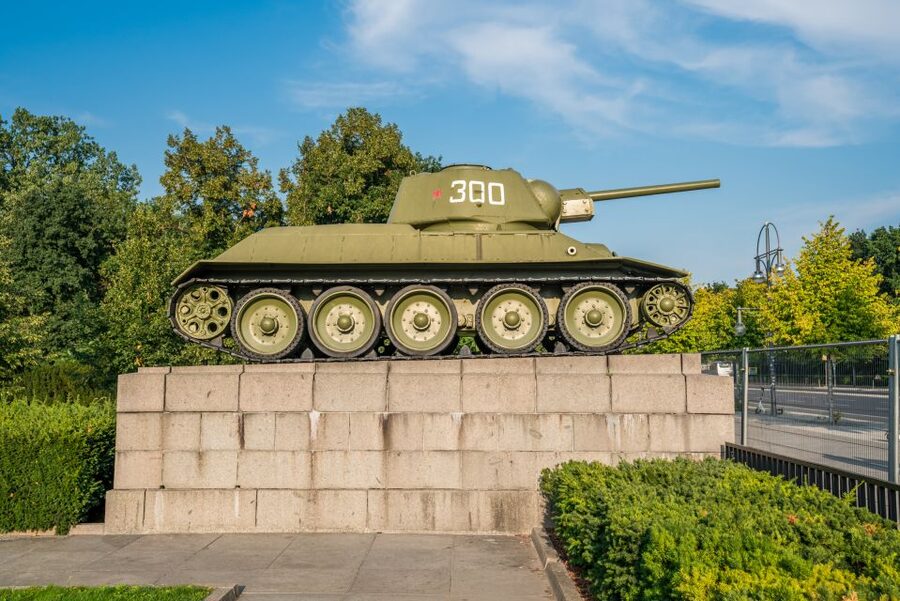
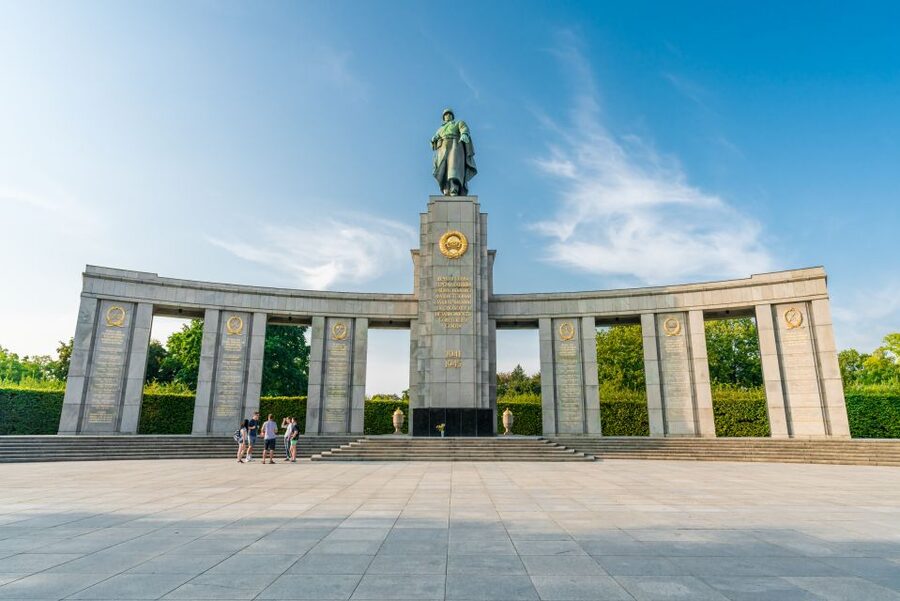
The Soviet War Memorial in Tiergarten changes the mood. Preserved Red Army tanks sit beside the memorial, which honors about 80,000 Soviet soldiers who fell during the Battle of Berlin.
This is one of the route’s most useful stops because it shows the war from the Soviet side. Berlin’s story is often told through Nazi Germany’s crimes and the later East-West split. The memorial brings the final military defeat of Nazi Germany into view and reminds you of the enormous cost of the battle.
You may find the memorial more solemn than picturesque. That is part of its value. It is not just another monument to pass on the way to the Wall. Your guide can explain how the Soviet victory shaped Berlin’s postwar control and helped set the stage for the division that followed.
The walking distance between stops is manageable, but you should wear comfortable shoes. The tour covers about 2 kilometers, with regular pauses for explanations.
The Holocaust Memorial and Hitler’s Bunker site
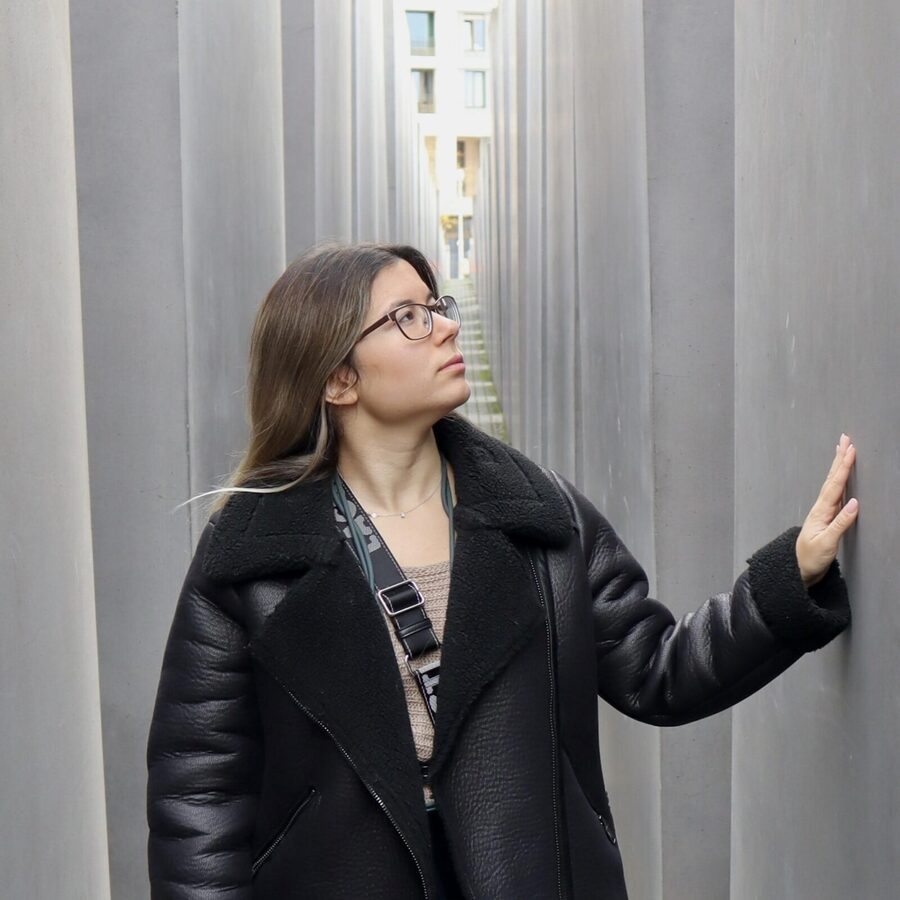
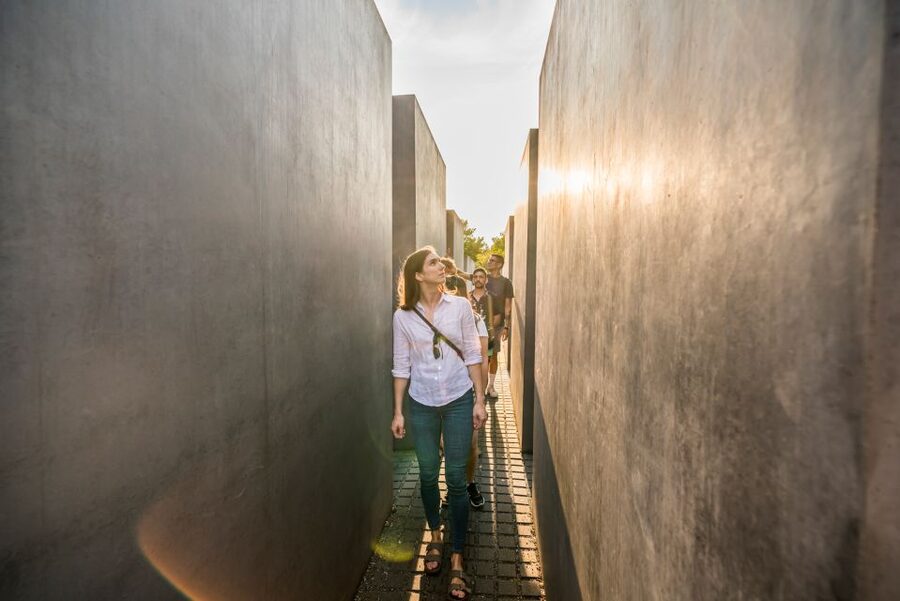
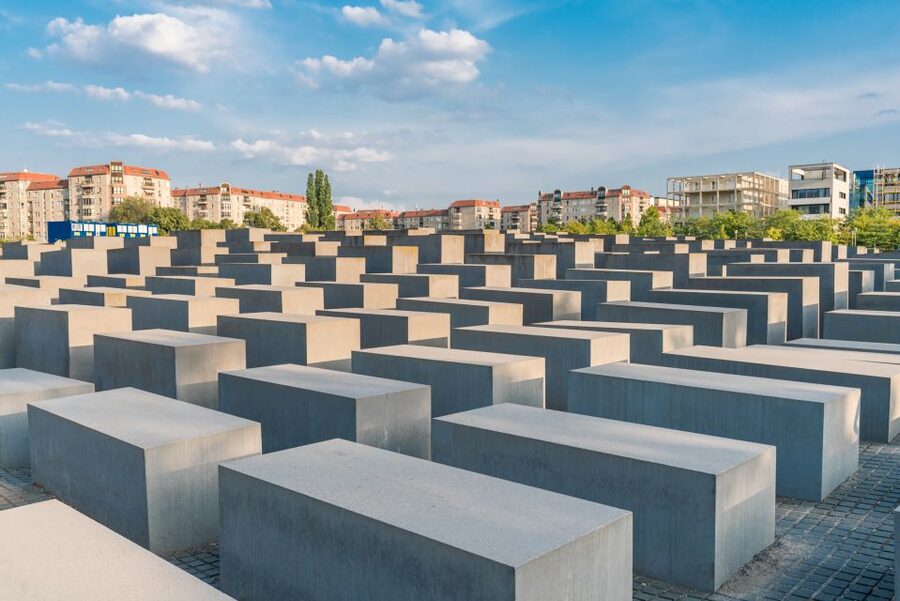
The Memorial to the Murdered Jews of Europe is one of Berlin’s most affecting places. Its field of concrete blocks creates a physical sense of uncertainty and unease. The tour pauses here to honor the six million Jewish victims of the Holocaust.
This stop benefits from a guide’s framing, but it also needs quiet time. You will be looking at the memorial as part of a group, so do not expect a long solitary visit. I recommend returning later if you want to walk through it at your own pace.
Nearby is the site of Hitler’s Bunker, where Hitler spent his final days before the fall of the Third Reich. There is no grand ruin to inspect. The historical weight comes from knowing what happened below the ordinary-looking ground and from understanding how close the bunker was to the government buildings and central streets above.
That contrast is important. Berlin does not always give you a dramatic building or preserved room. Sometimes you get a location and an explanation. A good guide makes clear why the absence of visible remains is itself part of the story.
These stops deal with genocide, dictatorship, and the destruction of a city. If you are visiting with children or anyone sensitive to difficult material, prepare them for a serious tour rather than a light city walk.
More Cold War tours in Berlin:
- Skip-the-Line: Berlin Wall Museum at Checkpoint Charlie
★ 4.1 · 2,041 reviews - Cold War, Berlin Wall, Spies and the East Side Gallery
★ 5.0 · 1,024 reviews - Berlin: Cold War Walking Tour on Berlin Wall Route
★ 4.8 · 437 reviews - Berlin: Cold War Era History Guided Bike Tour
★ 4.8 · 413 reviews
From the Ministry of Aviation to the Topography of Terror
The route passes Detlev-Rohwedder-Haus, formerly Hermann Göring’s Ministry of Aviation. The building later became the birthplace of East Germany in 1949. That change tells you a great deal about Berlin’s political reversals: a structure tied to the Nazi state was absorbed into the new political order after the war.
You then reach the Topography of Terror area, the former headquarters of the SS and Gestapo. This is where the Nazi regime’s system of persecution and terror was directed. The location helps you understand that the machinery of dictatorship was not hidden away in some distant place. It operated from central Berlin, close to the streets and institutions you are walking through.
The outdoor route gives you an introduction rather than a full museum visit. If the subject interests you, return later for more time at the documentation center. On the walking tour, your guide’s job is to connect the site to the larger story and keep the group moving toward the Berlin Wall.
A guide who can explain without rushing is especially useful here. The strongest comments about this tour describe guides who answer questions while walking, speak clearly, and use small details to make complicated events easier to follow. Peter, Joachim, Ben, and Ariel are all praised for making difficult material understandable.
Walking beside 200 meters of the Berlin Wall
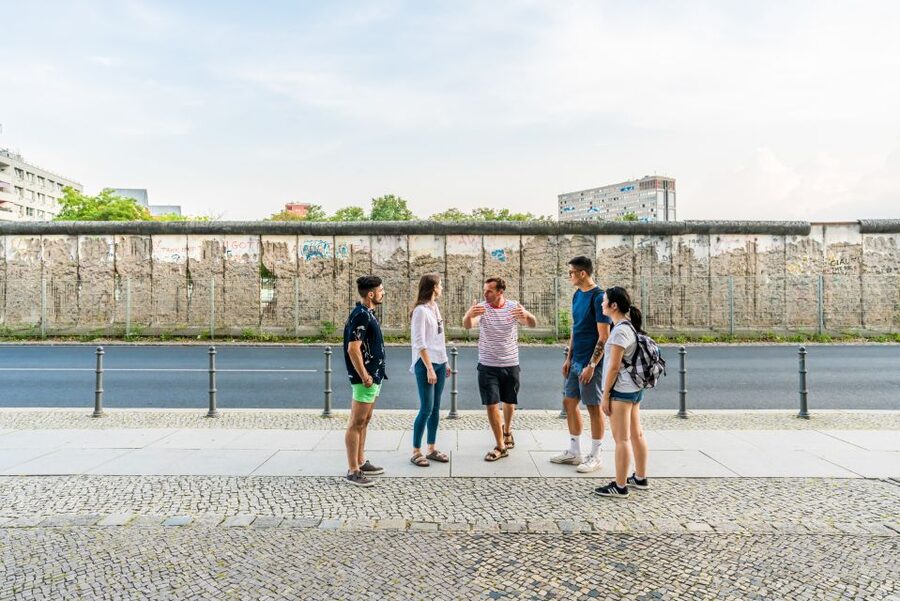
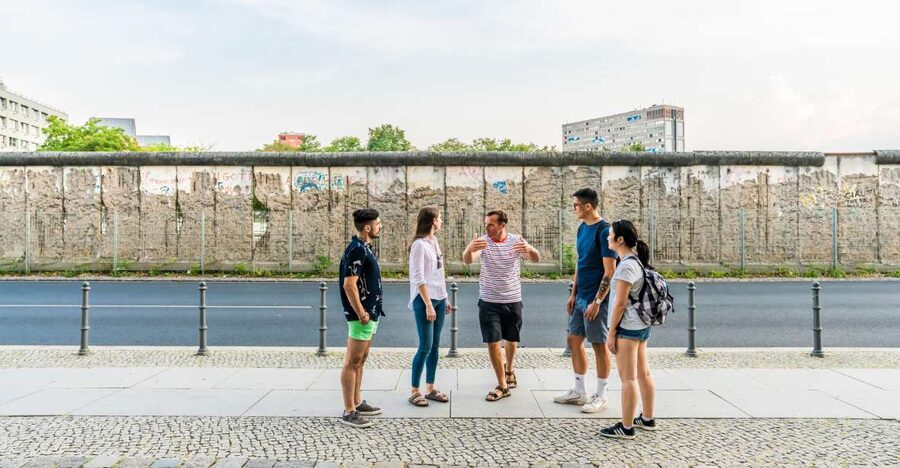
The surviving 200-meter section of Berlin Wall is the route’s clearest link to the Cold War. It gives you a physical barrier to look at while the guide explains how Berlin was split between East and West, how people tried to escape, and how the Wall’s fall changed Germany.
Do not expect a perfectly preserved border zone or a long museum session. You get a section of Wall and the story around it. That is enough to make the division tangible, especially after hearing about the Nazi period earlier in the walk.
The Wall worked because it turned a political division into a daily physical fact. Families, jobs, streets, and neighborhoods were separated. Your guide can help you picture that change, then explain the final period before the border opened in 1989.
This is also where the tour becomes especially helpful for first-time visitors. Berlin has Wall fragments in many places, but without context they can seem like isolated pieces of concrete. Here, the Wall fits into a route that has already shown you the war’s end, the creation of East Germany, and the competing power systems of the Cold War.
The group format may limit how long you can linger. If you want detailed photographs or time to read every nearby panel, consider returning after the tour.
Finishing at Checkpoint Charlie
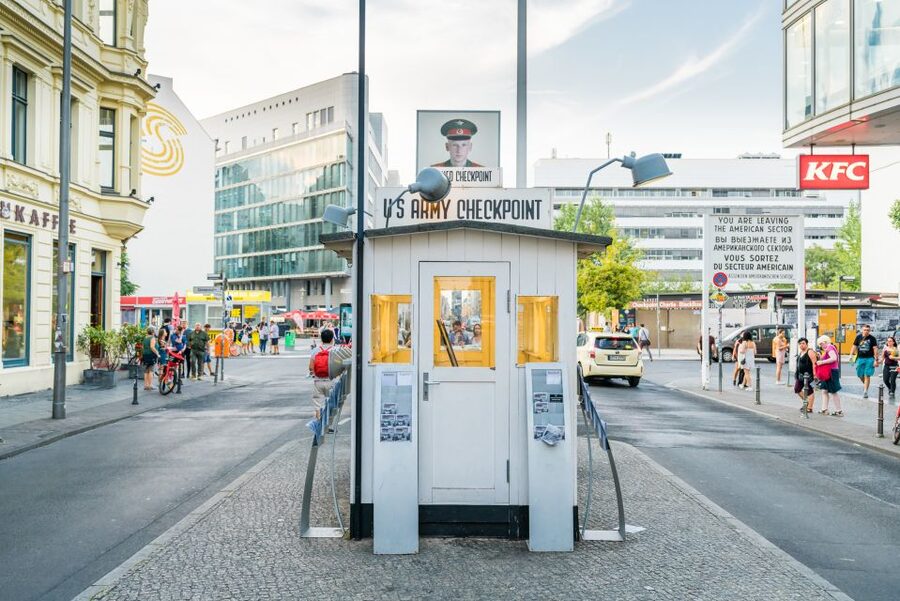
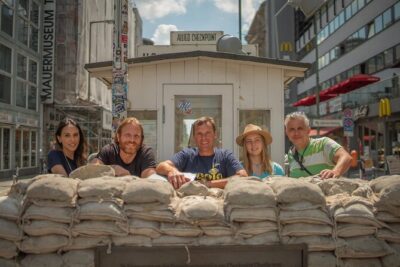
Checkpoint Charlie was the best-known crossing point between East and West Berlin. American and Soviet tanks once faced each other here during a tense Cold War standoff, and the site became linked to escape attempts and the final years before reunification.
The tour concludes at Checkpoint Charlie, giving the route a strong ending. You begin at a symbol of German division and reunification, then finish at a border crossing where that division was enforced in very practical ways.
The area is now crowded with commercial displays and visitors taking photographs. It can feel more theatrical than the quieter Wall section earlier in the walk. That contrast is worth keeping in mind. Checkpoint Charlie is historically important, but the modern setting does not always communicate that seriousness on its own.
Your guide supplies the missing context, including the border confrontation and the events leading to the Wall’s fall. Afterward, you can decide if you want to spend more time in the area or move on by public transport.
The provided meeting information also says the activity ends back at the meeting point, while the route description places the finish at Checkpoint Charlie. Since those locations are not the same, confirm the exact end point when you book, especially if you have a timed reservation afterward.
Guide style, group size, and comfort
The tour is available as a shared group walk or a private group. The shared option gives you a social setting and the best value. The private option may suit families or small groups that want more room for questions, though the available languages can differ between group types.
English and German are offered. Check the language carefully for the specific option you choose, since shared and private tours do not always provide the same choices.
The pace is described as comfortable, and two hours is short enough to fit into a busy first day. Still, this is a history walk, not a casual stroll. You will be outside in all weather, including public holidays, so bring water, an umbrella, and shoes you can walk in.
The tour is wheelchair accessible. The route covers about 2 kilometers, and you will spend much of the time standing while the guide speaks. If mobility or fatigue is a concern, confirm the route details for your selected group before booking.
Rain does not automatically cancel the experience. Thomas is specifically praised for keeping the explanation going while finding cover during bad weather. On a hot day, Mikhail is noted for choosing shade when possible. Those practical touches matter more than fancy presentation.
Who should book this Berlin walking tour?
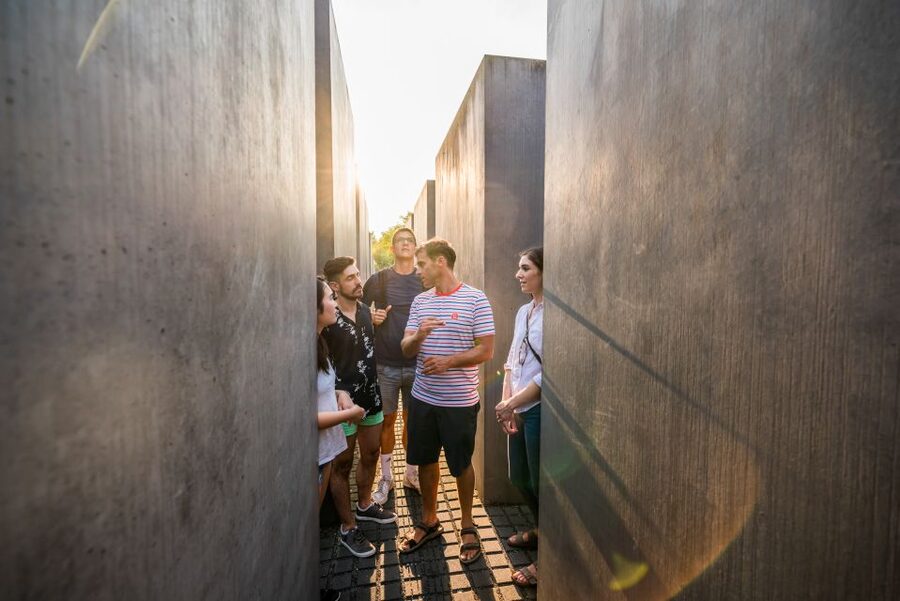
I would choose this tour early in a Berlin visit if you want a firm sense of the city’s 20th-century story. It suits first-time visitors, history-minded adults, and anyone who wants the major central sites explained rather than photographed in isolation.
It also works well for people with limited time. In two hours, you see Brandenburg Gate, the Reichstag, the Soviet War Memorial, the Holocaust Memorial, Hitler’s Bunker site, Detlev-Rohwedder-Haus, Topography of Terror, part of the Berlin Wall, and Checkpoint Charlie.
You should choose another activity if you want extensive museum time, long periods at each memorial, or a tour focused on only one era. The Nazi and Cold War subjects are both substantial, and this walk can only introduce each one.
At $23, the value is strongest when you treat the tour as a guided orientation. You gain a route, historical framework, and the chance to ask questions. Then you can return to the places that interest you most, such as the Holocaust Memorial, Topography of Terror, or the Reichstag.
Should you book it?
Book this tour if you want Berlin’s landmarks tied together by a clear story. The route is efficient, the cost is modest, and the guide is the main attraction. The repeated praise for guides such as Hannah, Jimmy, Scott, Peter, Marie, Mikhail, and Thomas points to a tour built around lively explanation, strong pacing, and useful answers.
Skip it if you prefer to explore silently or spend an hour inside each museum. For everyone else, it is a practical first look at Berlin’s Nazi and Cold War past, with enough detail to make the city’s monuments mean more afterward.
FAQ
How long is the Berlin Third Reich and Cold War walking tour?
The tour lasts two hours and covers approximately 2 kilometers on foot.
Where does the tour start?
Meet in front of the tourist information point at Brandenburg Gate, Pariser Platz 1. Look for the guide with the pink umbrella.
Which public transport stops are closest to the meeting point?
Brandenburger Tor station is closest, with S-Bahn lines S1, S2, S25, and S26 and U5. Buses 100 and 245 also serve the area.
Which languages are available?
The tour is offered in English and German. Language availability can differ between shared group and private options, so check the specific option before booking.
Is the walking tour wheelchair accessible?
Yes, the activity is listed as wheelchair accessible. It includes approximately 2 kilometers of walking and outdoor stops.
Can I cancel the tour if my plans change?
You can cancel up to 24 hours in advance for a full refund. A reserve-now, pay-later option is also available.
More Walking Tours in Berlin
- Discover Berlin Half-Day Walking Tour
★ 5.0 · 9,624 reviews - Berlin: Discover Berlin Walking Tour
★ 4.9 · 5,998 reviews - Berlin: Hidden Backyards Guided Walking Tour
★ 4.8 · 5,360 reviews - Berlin: Alternative Berlin Walking Tour
★ 4.6 · 1,204 reviews
More two-hour experiences in Berlin
- Berlin: 2-Hour Lake Oberhavel Cruise from Tegel
★ 4.4 · 577 reviews - Berlin 2-Hour Segway Tour
★ 4.6 · 238 reviews - East Berlin and the Berlin Wall 2-Hour Walking Tour
★ 5.0 · 228 reviews - Berlin: Backyards of Berlin 2-Hour Tour
★ 4.7 · 163 reviews
Newest Berlin reviews
- Where It All Began: Berlin’s Queer & Trans History Tour★ 4.9 · 6 reviews
- Understanding Kreuzberg: The roots of local (sub)culture★ 4.9 · 11 reviews
- Berlin: guided canoe | kayaktour★ 4.1 · 7 reviews
- Private Potsdam City Tour in an authentic vintage van★ 5.0 · 14 reviews
- Warnemünde Shore Excursion: Private Sachsenhausen and Berlin Tour★ 5.0 · 12 reviews
- Ultimate E-Bike Tour of Berlin with Beer Garden Stop★ 5.0 · 4 reviews
- Potsdam Highlights – Private sightseeing tour by minibus★ 5.0 · 3 reviews
- In the Forbidden City – Potsdam Walking Tour★ 5.0 · 17 reviews
Berlin Cold War Tours, compared.
Berlin’s Best: 2 Hour Walking Tour Third Reich and the Cold War
Read our review →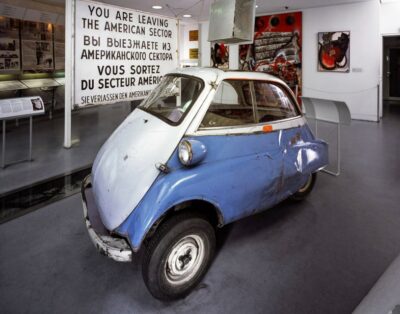
Skip-the-Line: Berlin Wall Museum at Checkpoint Charlie
Read our review →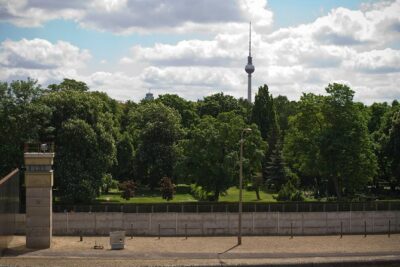
Cold War, Berlin Wall, Spies and the East Side Gallery
Read our review →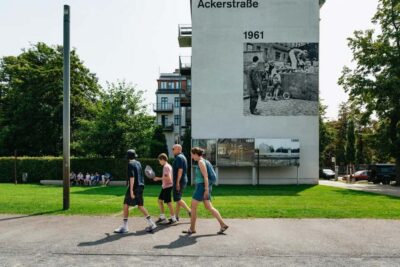

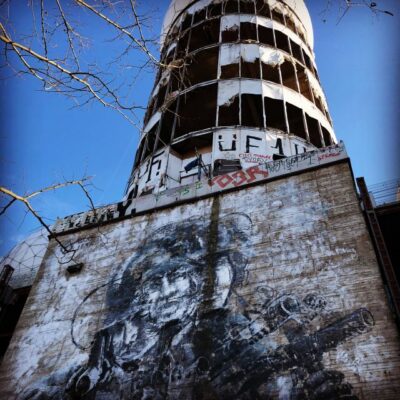
Listening Station Teufelsberg Tour with Transfer
Read our review →
Browse the lists this tour appears in