
Reviewed · QUEER BERLIN TOURS
Where It All Began: Berlin’s Queer & Trans History Tour
Berlin’s queer history is not tucked away in one museum. It runs along ordinary streets, past pharmacies, bars, cabarets, memorials, and nightclubs. This three-hour walk follows that story from the first organized LGBTQIA+ rights campaigns to today’s Pride marches and club culture.
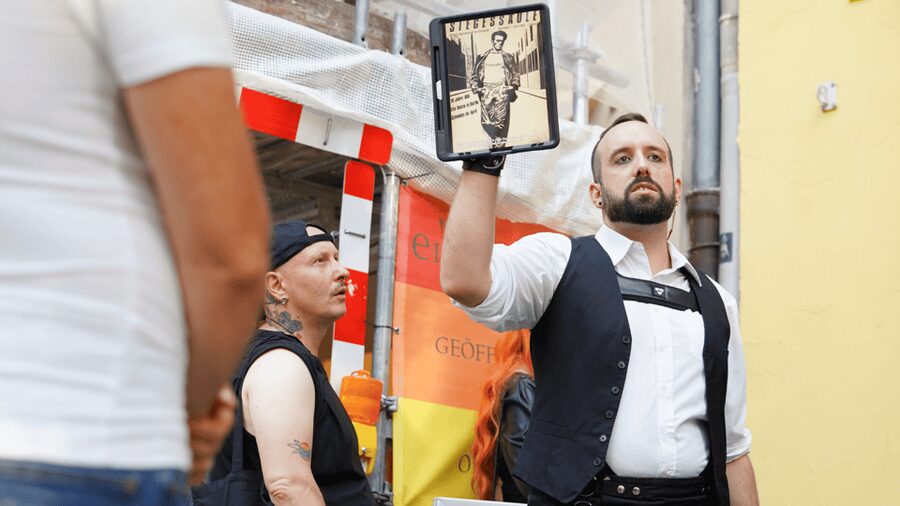
I like the mix of serious archival research and lively street storytelling, especially the rare audio clips, videos, and personal quotes. I also like the small group size, which gives Jeff room to answer questions and adjust the emphasis when the group has a particular interest.
The main drawback is the subject matter. Nazi persecution, racism, HIV/AIDS, sexual violence, suicide, and other painful topics are part of the tour. It is not a light sightseeing stroll, and children under 18 cannot join.
Key points to know before you go
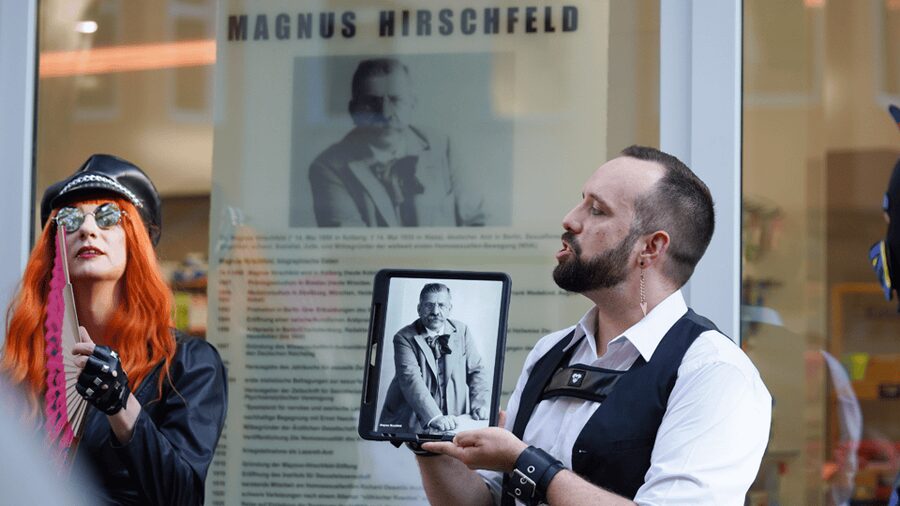
- More than 200 historical images and recordings: Photos, videos, audio clips, quotes, and quizzes give the walk a strong visual and personal focus.
- A route through Schöneberg’s queer past: The walk connects streets, nightlife venues, a pharmacy, a memorial, and Nollendorfplatz.
- Trans history receives real attention: You’ll learn about early gender-affirming surgeries, trans identities, and historic transvestite certificates.
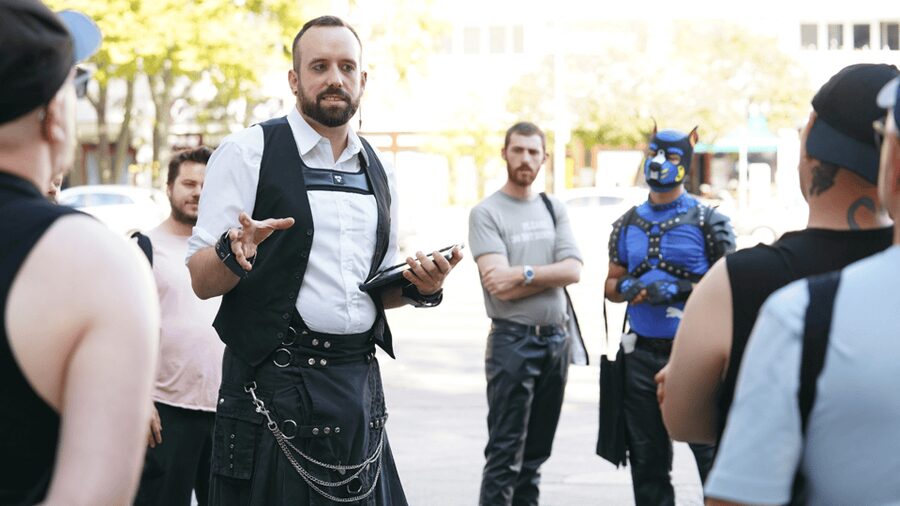
- A small group led by Jeff: The guide is a queer activist, social scientist, and certified sex educator who can respond to the group’s interests.
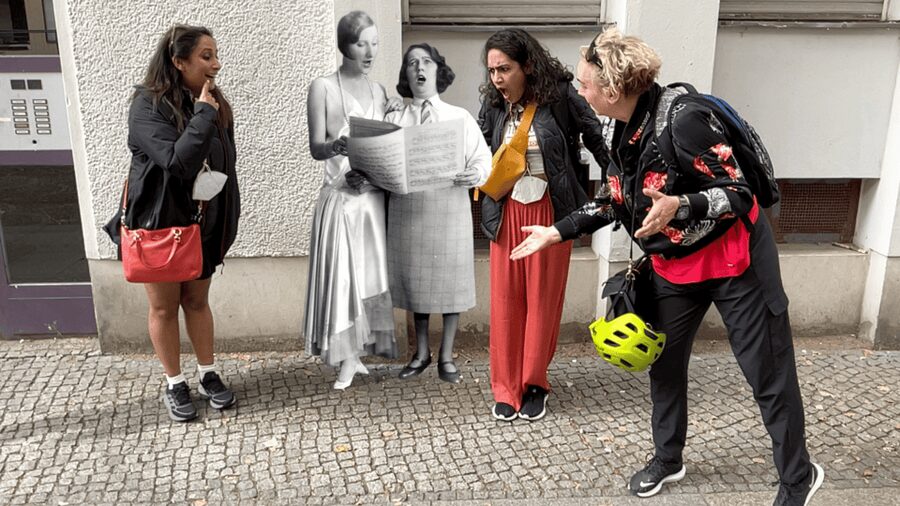
- Modern tools add a playful touch: AR scenes and Mixies let you take personalized photos with historic queer figures.
- Useful for locals and visitors: The tour ends with context for current nightlife, Pride, Dyke March, and Folsom Europe.
Why this three-hour walk matters
A standard Berlin sightseeing tour can leave out the people who shaped the city’s social life. This walk corrects that gap by placing queer and trans people at the center of Berlin’s story.
You begin at Nollendorfplatz, an area closely tied to queer life, then move through streets and venues connected with activism, nightlife, art, medicine, persecution, and community survival. The route is not just a list of old addresses. Each stop helps explain how queer Berlin changed over time, and how people kept building community when authorities tried to silence them.
The multimedia format is especially useful here. A former club, street corner, or pharmacy may look ordinary today. When Jeff adds an archival photograph, a voice recording, or a video, you can compare the present-day view with the people and places that once occupied it.
I also appreciate that the tour does not reduce LGBTQIA+ history to nightlife. The story includes political organizing, lesbian feminism, trans identity, Nazi repression, AIDS activism, and the effect of Berlin’s queer culture on nightlife and Pride movements around the world.
More queer history tours in Berlin:
- Berlin: Gay Berlin Out in Schöneberg Walking Tour
★ 4.8 · 281 reviews - Berlin’s Gay, Lesbian, and Queer Scene Small-Group Walking Tour
★ 4.5 · 66 reviews - Queer Berlin Walking Tour
★ 4.7 · 64 reviews
Starting at Nollendorfplatz and Karl-Heinrich-Ulrichs-Straße
Meet Jeff in front of Alnatura Super Natur Markt at Else-Lasker-Schüler-Straße 18, near Nollendorfplatz. This is a practical meeting point, but you should arrive ready for a walking tour rather than a museum visit. Wear comfortable clothes and check the weather before leaving.
The first named stop is Karl-Heinrich-Ulrichs-Straße. The guided visit lasts about 10 minutes and introduces Karl Heinrich Ulrichs, one of the early figures in organized LGBTQIA+ rights work. Along with Magnus Hirschfeld, he helped establish ideas that would shape the modern rights movement.
This opening gives the tour a useful foundation. You are not starting with a general explanation of queer life in Berlin. You are starting with people who challenged laws and social rules more than a century ago.
The next stop is an unnamed location described as a special point of interest, with about 10 minutes of guiding. Since the exact focus can depend on the group and the guide’s presentation, you should expect another piece of the early movement rather than a long stop at a formal attraction.
Schwerinstraße, Nollendorfstraße, and queer life in the city
The walk continues to Schwerinstraße for about 15 minutes, then Nollendorfstraße for another 10 minutes. These stops help shift the story from individual activists to the streets where queer social life took shape.
The focus includes lesbian and gay nightlife, cabarets, bars, and the cultural energy of 1920s Berlin. You’ll meet figures such as Claire Waldoff, Marlene Dietrich, and Josephine Baker, all connected in different ways with the city’s performance and queer worlds.
The value of these stops is the contrast between public creativity and private risk. Berlin’s cabarets and clubs offered room for gender play, same-sex desire, and new kinds of identity. Yet that freedom was never secure. The tour shows how nightlife could serve as both entertainment and a place to find community.
Do not expect a stop-by-stop collection of preserved clubs. Some historic sites have changed use or appearance. That is where the digital material earns its keep. Archival photographs and videos help you see the earlier city even when the original setting is no longer intact.
Magnus-Apotheke and the story of trans identity
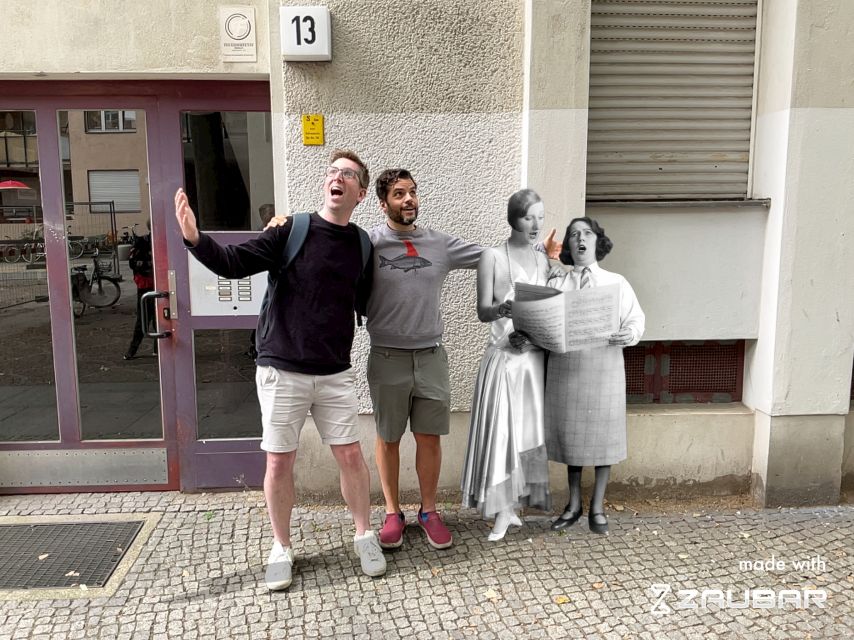
Magnus-Apotheke receives about 20 minutes, making it one of the longer stops. The pharmacy is tied to Magnus Hirschfeld and offers a natural point for discussing early sexology, trans identity, and the medical work that took place in Berlin.
You’ll learn about early gender-affirming surgeries and the lives of people who sought ways to live openly. The tour also explains transvestite certificates, which gave some trans people a formal document that could help them dress and live in a way that matched their identity.
This part is one of the tour’s strongest reasons to book. Many city tours mention Hirschfeld briefly, then move on. Here, trans history is not a side note. It is linked to medicine, law, daily life, and the attempt by the Nazis to erase records and institutions connected with this work.
The subject also requires care. Historical medical treatment and official documents did not mean full safety or equality. You’ll hear about the limits and dangers surrounding these lives, not just the hopeful breakthroughs.
More history tours in Berlin:
- Berlin: Natural History Museum Entrance Ticket
★ 4.6 · 3,382 reviews - Berlin: World Heritage Cruise to Potsdam
★ 4.5 · 1,435 reviews - Berlin Historical Highlights Walking Tour
★ 4.9 · 657 reviews - Berlin Private Complete History All Day Walking Tour
★ 5.0 · 474 reviews
From Denns BioMarkt to Prinz Eisenherz
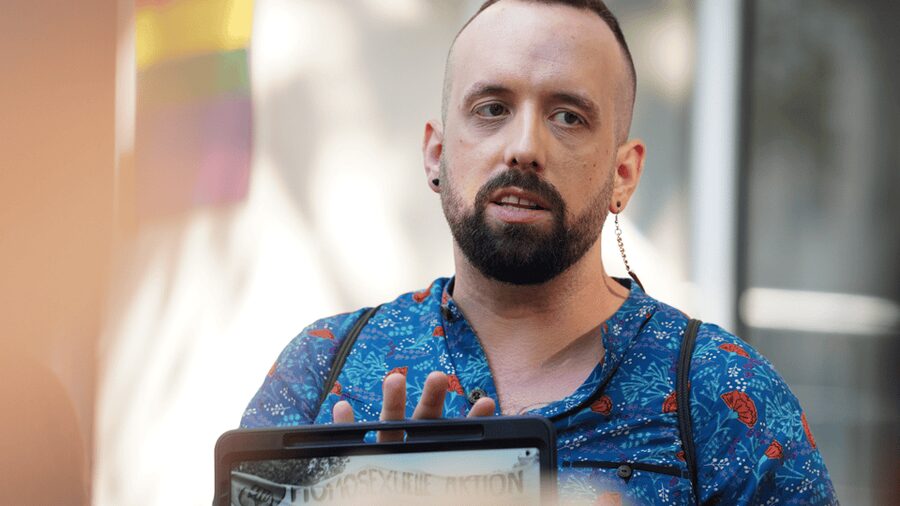
The route next reaches Denns BioMarkt for about 15 minutes. Like several stops on this walk, the modern business is less important than the history attached to the surrounding area. Jeff uses the street setting as a prompt for archival material and stories about queer community life.
The tour then continues to Prinz Eisenherz for about 15 minutes. This stop connects the walk with Berlin’s queer publishing and cultural networks. The name is also a reminder that queer spaces are not limited to bars and clubs. Bookshops, publishers, meeting places, and cultural organizations help preserve ideas and create a sense of belonging.
I like this broad definition of community. It gives you a fuller picture of how people find one another, share information, and keep cultural memory alive. If you are interested in LGBTQIA+ writing, activism, or local culture, this part may be especially useful.
The walk includes interactive quiz questions, so you are not simply listening for three hours. The questions are a light change of pace, though the overall subject remains serious.
Connection Club and Berlin’s changing nightlife
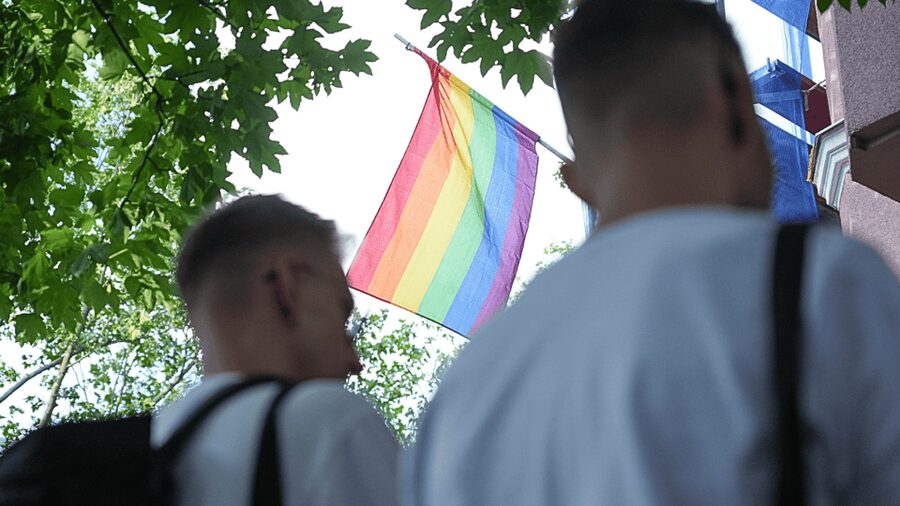
Connection Club receives about 15 minutes. The stop brings the story into the world of modern queer nightlife, including sex-positive spaces, club culture, and the changing ways Berlin communities have gathered.
The tour also looks at nightlife before the Nazi era, including drag clubs and cabarets, then connects that earlier period with later venues and current club culture. The point is not that every era offered the same freedoms. It is that nightlife repeatedly became a place where people tested social limits, built networks, and found room to express themselves.
The tour’s content includes BDSM, kinks, fetishes, sex work, nudity, drugs, and sexual abuse. You should know this before booking. These subjects are treated as part of the historical record and social context, but they may not suit everyone.
The memorial against forgetting
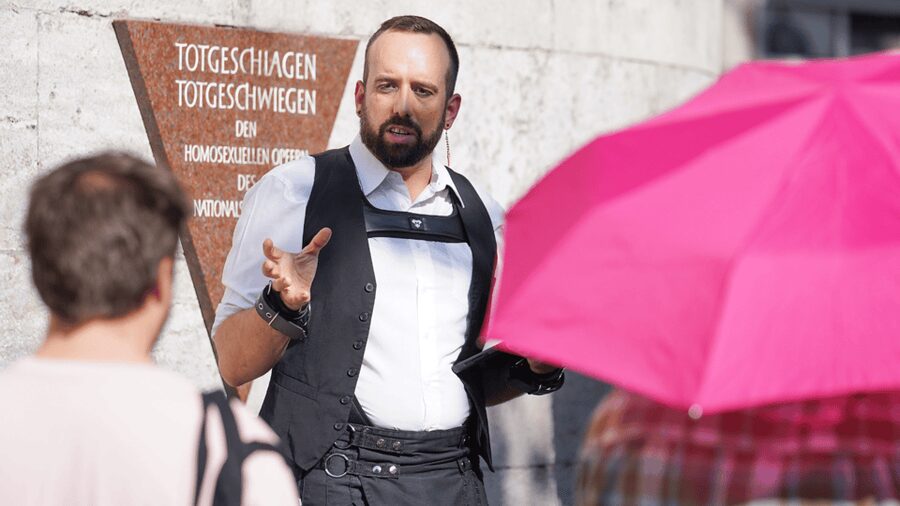
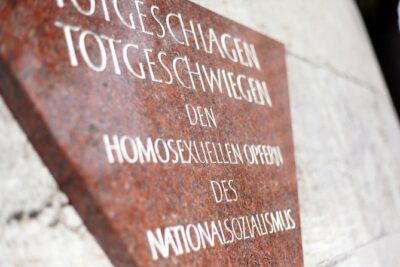
The Internationale Stele GEGEN DAS VERGESSEN receives about 10 minutes. This is one of the most serious points on the route, linking queer history with remembrance of persecution under Nazism.
You’ll learn about the contradictory treatment of homosexuality under Hitler, the persecution of queer people in concentration camps, and the ways queer resistance survived. The material also touches on antisemitism, racism, transphobia, queerphobia, mass murder, poverty, and violence.
This is not a simple story of Berlin as a once-free city that was suddenly ruined. The tour examines the tensions and failures within German society, as well as the efforts to recover queer memory after the Nazi period.
Expect the tone to become heavier here. Jeff’s use of photos, quotations, and other records gives the history a human scale, but it can also make the material difficult. Take care with your own limits.
Metropol and the AIDS crisis in divided Berlin
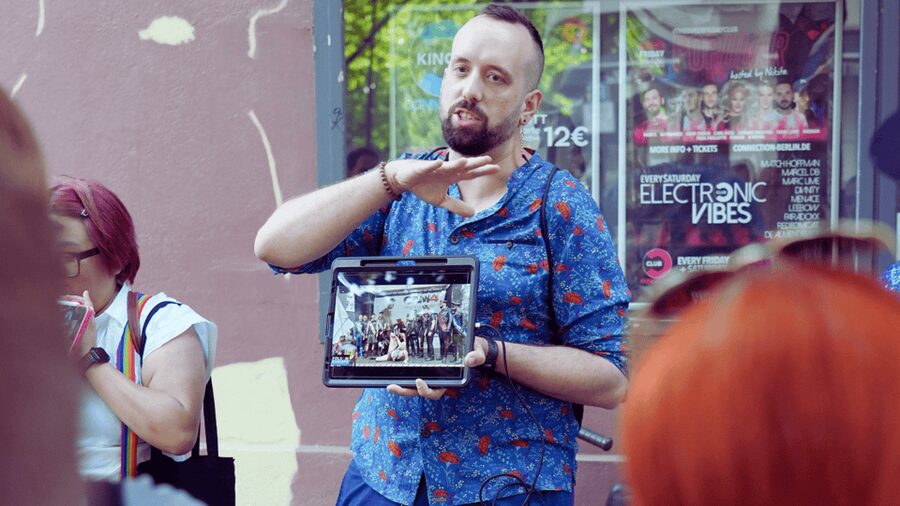
Metropol is another longer stop, with about 20 minutes. Its place in Berlin’s nightlife makes it a good setting for discussing the AIDS crisis, activism, and the political role of clubs.
You’ll hear about SchwuZ nightclub as an activist hub and about the ways Berlin’s LGBTQIA+ community fought for survival during the AIDS crisis. The tour also explains why the Berlin Wall was called the condom of the GDR, a sharp phrase that connects political division with public health and sexual life.
This section is valuable because it moves beyond the idea that queer history ended with the destruction of 1930s Berlin. Communities rebuilt, organized, protested, cared for one another, and created new institutions. The AIDS crisis brought fear and loss, but also powerful activism.
The multimedia format works well for this period. Videos, audio, and personal accounts can show the urgency of the crisis in a way that a brief plaque rarely can.
Finishing at Nollendorfplatz
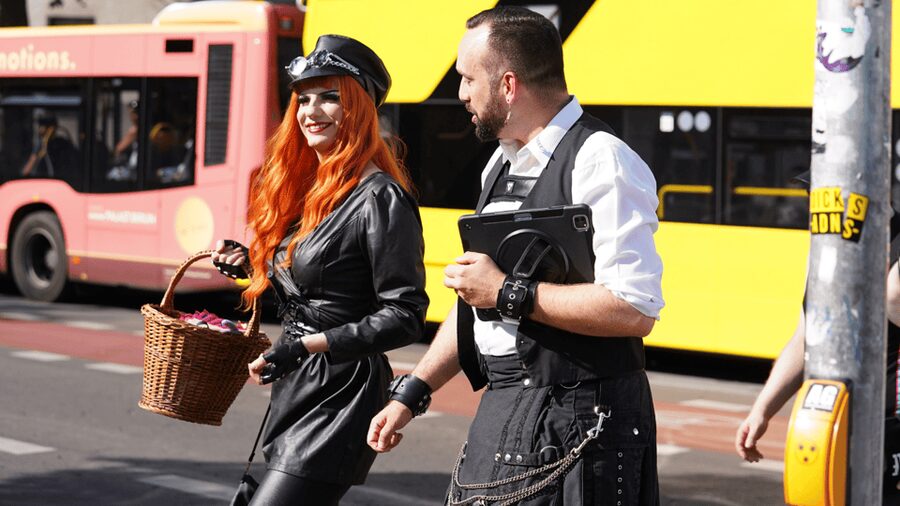
The walk ends at Nollendorfplatz, returning you to the area where it began. The final themes connect historic queer nightlife with current Berlin culture, including Berghain, Chez Romy Haag, Pride movements, Dyke March, and Folsom Europe.
You’ll see how Berlin’s queer culture influenced nightlife far beyond the city. The ending is not simply a list of famous clubs. It shows how older forms of resistance, performance, sexuality, and community continue to shape public celebrations and nightlife today.
Jeff also provides insider tips on modern queer events and nightlife. Since the tour ends at Nollendorfplatz, you are well placed to continue exploring the area, though the experience itself is a guided walk rather than a club visit.
How the multimedia elements change the experience
The tour includes more than 200 archival photos, videos, rare audio clips, and personal quotes. That is a lot of material for three hours, so the pace may feel full. Still, the format solves a real problem: much of queer Berlin’s past has disappeared from the street.
The AR features add a playful counterpoint. You can take Mixies, or personalized AR selfies, with historic queer activists and interact with digital scenes. Quizzes help break up the heavier material and keep you involved.
I would not book this if you want a quiet, purely conversational walk with no phone-based features. If you like visual material and short interactive tasks, the technology should make the history easier to remember.
Videos include subtitles in German, English, or both. If you have a visual disability, Jeff can describe the visual material. The route is wheelchair accessible, though some paths may be bumpy, and accessible toilets can be arranged upon request. Parts of the walk may include bright lights and loud sounds, so mention sensory needs in advance. Indoor mask use can also be arranged if needed.
Who will get the most from this tour?
This is a strong choice for LGBTQIA+ visitors and allies who want more than a nightlife recommendation. It also suits history lovers interested in stories that are often left out of standard Berlin sightseeing.
Berlin residents may find it useful too. Familiar streets can look different once you know who organized there, who performed there, and who fought to keep those communities alive.
The tour is for adults only. The content includes sex, sexism, sexual violence, HIV/AIDS, suicide, Nazi persecution, and mass murder. If you are sensitive to these subjects, read the content notes carefully before reserving.
Is $81 good value for three hours?
At $81 per person, this is more expensive than a basic city walk. The value comes from the small group, the specialist guide, the large archive of media, the AR material, and the unusual subject matter.
A group limit of 10 matters here. Queer history can raise personal and political questions, and a small group gives Jeff more room to make the discussion feel welcoming and inclusive. The guide’s background as a queer activist, social scientist, and certified sex educator also matches the tour’s mix of history, identity, health, and sexuality.
The price makes the most sense if you want a focused educational experience rather than general sightseeing. If you only want to see famous buildings, this is not the best use of your money. If you want context that you are unlikely to get from a standard Berlin itinerary, the cost is easier to justify.
The tour has a 4.9 rating from six posted bookings, including praise for Jeff’s research, unusual visual material, inclusive approach, humor, and ability to handle both informative and shocking subjects. Those details fit the design of the experience: it aims to be welcoming, but it does not soften difficult history.
Should you book Where It All Began?
Book this tour if you want a serious, personal look at Berlin’s queer and trans past, with enough technology to bring vanished places back into view. It is especially useful early in your Berlin visit if you want historical context for Schöneberg nightlife, Pride events, and current queer culture.
Skip it if you want a light walk, dislike multimedia activities, or would rather avoid discussions of persecution, sex, illness, and violence. For the right audience, though, this is a focused and unusual way to understand how resistance, nightlife, identity, and community shaped Berlin.
FAQ
Where does the tour meet?
The meeting point is in front of Alnatura Super Natur Markt at Else-Lasker-Schüler-Straße 18, near Nollendorfplatz.
How long does the tour last?
The tour lasts three hours and finishes at Nollendorfplatz.
What language is the tour in?
The live tour guide speaks English. Videos include German subtitles, English subtitles, or both.
Is the route wheelchair accessible?
Yes. The route is wheelchair accessible, though some paths may be bumpy. Accessible toilets are available upon request.
Can children join the tour?
No. The experience is not suitable for children under 18.
What happens if I need to cancel?
You can cancel up to 24 hours before the tour for a full refund. You can also reserve your place and pay later, which keeps your plans flexible.
Newest Berlin reviews
- Understanding Kreuzberg: The roots of local (sub)culture★ 4.9 · 11 reviews
- Berlin: guided canoe | kayaktour★ 4.1 · 7 reviews
- Private Potsdam City Tour in an authentic vintage van★ 5.0 · 14 reviews
- Warnemünde Shore Excursion: Private Sachsenhausen and Berlin Tour★ 5.0 · 12 reviews
- Ultimate E-Bike Tour of Berlin with Beer Garden Stop★ 5.0 · 4 reviews
- In the Forbidden City – Potsdam Walking Tour★ 5.0 · 17 reviews
- Private Walking Tour of Potsdam and Sanssouci★ 5.0 · 24 reviews
- Potsdam Highlights – Private sightseeing tour by minibus★ 5.0 · 3 reviews
Queer Berlin Tours, compared.
Berlin’s Gay, Lesbian, and Queer Scene Small-Group Walking Tour
Read our review →
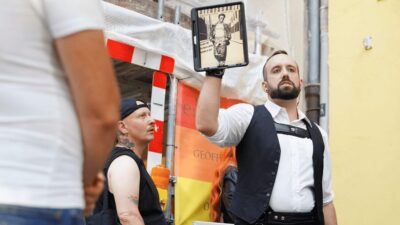
Where It All Began: Berlin’s Queer & Trans History Tour
Read our review →
Street Art & Berlin Gay, Queer, Trans History + Free Gay Map
Read our review →
Queer Berlin Tour: Birthplace of LGBTQ+ Movements
Read our review →
Browse the lists this tour appears in