
Reviewed · MUSEUMS
Berlin: Natural History Museum Entrance Ticket
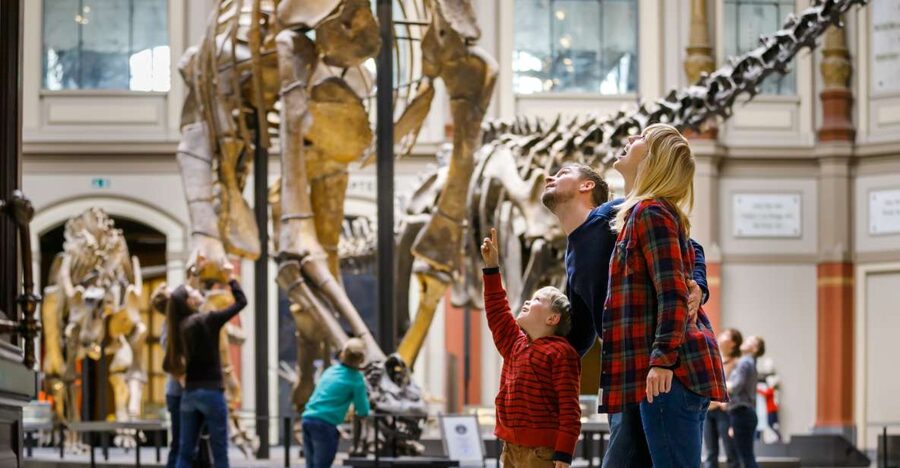
A towering Giraffatitan brancai greets you in Berlin’s dinosaur hall, where the world’s tallest mounted dinosaur skeleton rises through a recreation of life 150 million years ago. Nearby, you’ll find Archaeopteryx and Tristan Otto, one of the few original T. rex skeletons on display in Europe.
I like the museum’s mix of headline fossils and serious science, especially the one-million-animal wet collection and the biodiversity wall showing 3,000 species at once. The $12 entry price is fair for a short, focused museum visit, but you should know that some areas may be closed and the museum can feel small after the dinosaur hall.
Key points to know before you go
- Meet Tristan Otto: See one of the few original Tyrannosaurus rex skeletons on display in Europe.
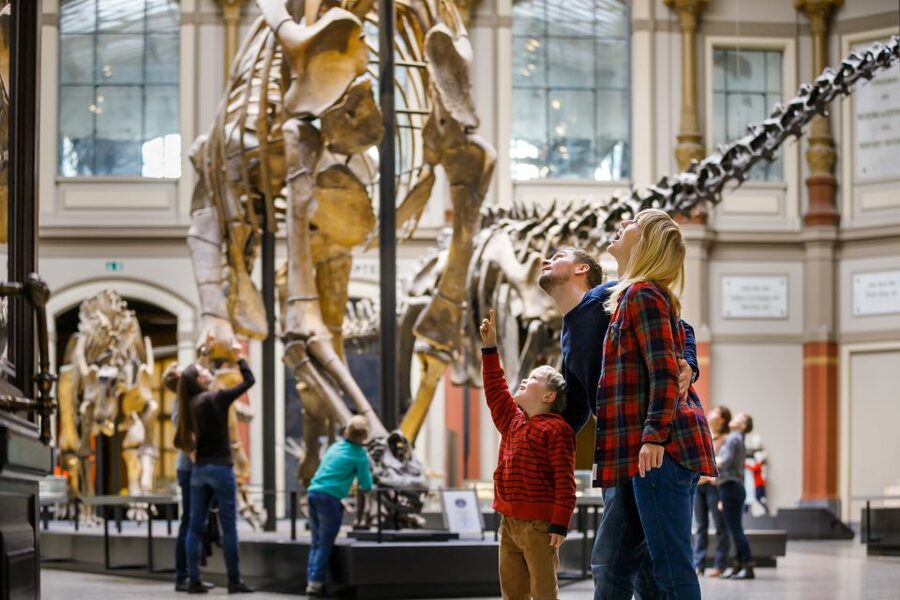
- Look up at Giraffatitan: The world’s tallest mounted dinosaur skeleton dominates the main dinosaur hall.
- Find the Archaeopteryx: This rare fossil is presented as one of natural history’s most important specimens.
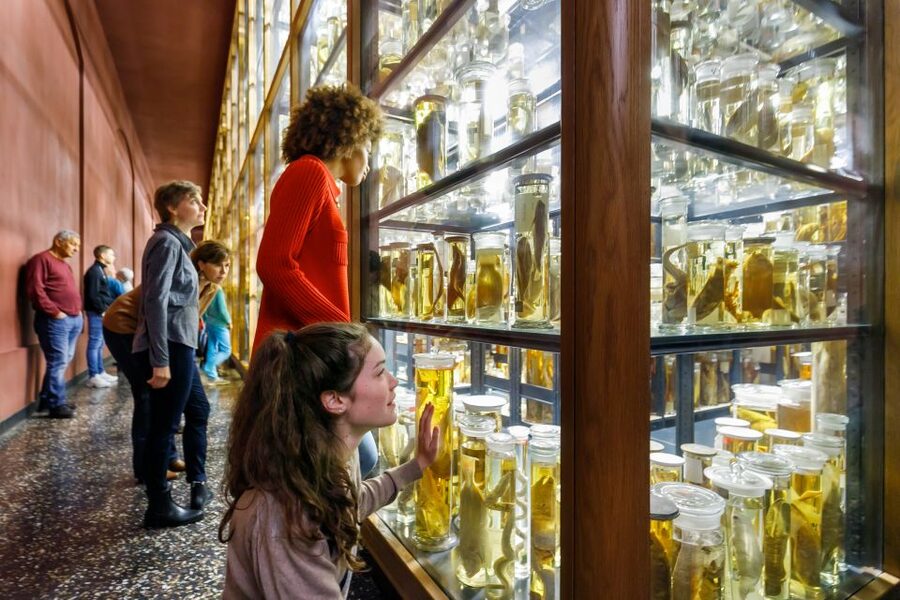
- See science behind the scenes: The East Wing holds about one million animals preserved in 80 tonnes of alcohol.
- Bring headphones: Free audio content is available online in 10 languages, but there is no physical audio guide.
- Book ahead at busy times: Online tickets can help you avoid a long line, and full capacity has occasionally caused waits.
Berlin’s dinosaur hall starts with the biggest sights
The Museum für Naturkunde, or Natural History Museum, works best when you begin with the dinosaur hall. You do not need to know much about paleontology to appreciate the scale. Giraffatitan brancai rises above the room with an unusually long neck and enormous frame, giving you an instant sense of how different the Jurassic world was from ours.
The hall presents life as it might have looked in the Upper Jurassic period, around 150 million years ago. Fossils and skeletons are not treated as simple decorations. The displays point out that researchers are still finding new information in these objects, so the museum connects the familiar dinosaur spectacle with current scientific work.
Tristan Otto provides the other major crowd-pleaser. Seeing a real T. rex skeleton is different from seeing a model in a film or a theme park. The bones give you a direct sense of the animal’s size, posture, and powerful head. The lighting around the display adds drama, though the darker presentation may make some labels harder to read.
The hall is especially effective for families. Children can focus on the huge bones first, while adults can spend more time with the fossil details and scientific explanations. It also works well for a short visit because the main attractions are easy to identify as soon as you enter.
More museums and galleries in Berlin:
- Skip-the-Line: Berlin Wall Museum at Checkpoint Charlie
★ 4.1 · 2,041 reviews - Berlin: Museum Island Multiple Museum Entry Ticket
★ 4.4 · 2,007 reviews - Berlin: Interactive DeJa Vu Museum Entrance Ticket
★ 4.1 · 1,338 reviews
Archaeopteryx gives the museum a quieter highlight
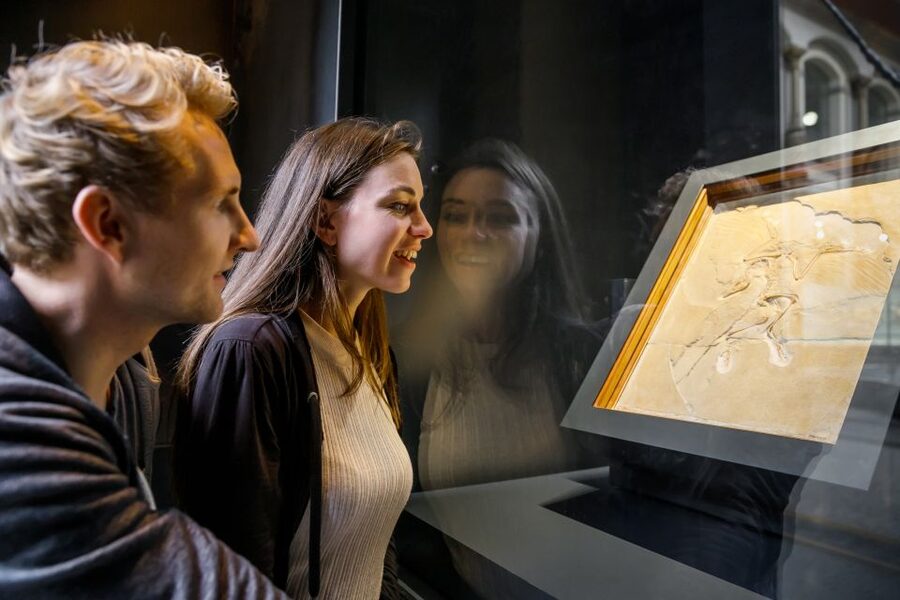
At the rear of the dinosaur hall, look for Archaeopteryx lithographica, a rare fossil often described as the Mona Lisa of natural history. It is displayed in a protective case, so it does not have the visual impact of the massive skeletons. Its importance comes from what it tells scientists about the link between dinosaurs and early birds.
This is the exhibit I would seek out before wandering. It is easy to become fixed on the giant skeletons and miss the smaller object that carries enormous scientific value. Take a moment to read the information around the case, then compare its delicate form with the heavy bones filling the room.
The quality of the English explanations appears to vary by display. Much of the museum has English text, and online translations or QR codes may help, but some areas are less convenient for English speakers. If you are visiting with young children, you may prefer to explain the main ideas yourself rather than stop at every case.
Tristan Otto is the main T. rex moment
Tristan Otto deserves separate attention because it is not simply another dinosaur display. The skeleton is one of the few original T. rex specimens in Europe, making it a major reason to visit the museum even if you only have limited time.
The presentation is theatrical, with the animal set apart in a darker room. That helps the skeleton command attention, but it can also make the space feel crowded when many people gather for photographs and a closer look. If you want a calmer view, spend a few minutes with the other dinosaur displays first and return to Tristan Otto later.
You will not need a guided tour to understand why this skeleton matters. The museum provides the essential context, and the audio content can add more detail if you access it on your own phone. Headphones are important here, since the museum does not provide a physical audio guide with the ticket.
The East Wing shows the less glamorous side of science
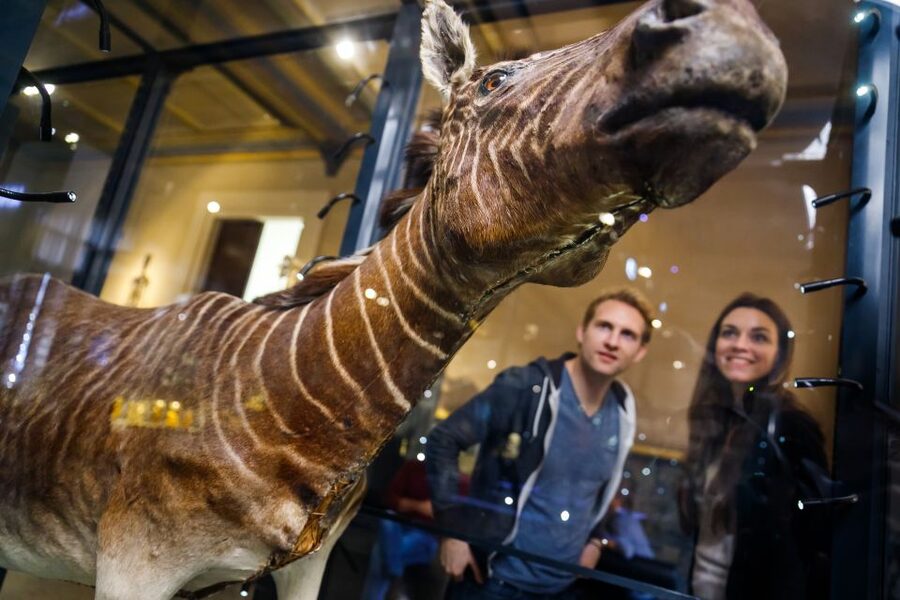
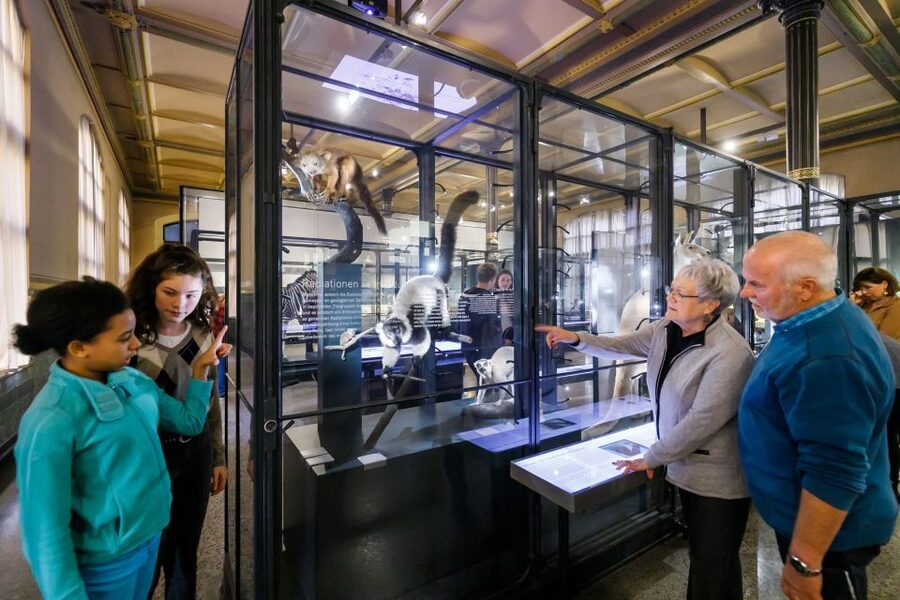
The East Wing changes the mood. Instead of enormous extinct animals, you see part of a genuine research collection: about one million animals preserved in alcohol, weighing roughly 80 tonnes in total.
This is not a polished collection designed only for quick entertainment. Rows of specimens show how scientists document animal life, compare species, and preserve material for future study. For some people, the displays will be fascinating. Others may find them unsettling, especially the sight of real animals stored in jars.
I appreciate this section because it explains what a natural history museum actually does. The dinosaur hall presents the past in a dramatic way, while the wet collection shows the patient, practical work that supports modern research. It also makes clear that the museum is not just a place for old fossils. Around 200 scientists work there, using collections that contain more than 30 million items.
Allow extra time if preserved specimens interest you. The museum’s listed activity duration is 30 minutes to one hour, but the material supports a longer visit if you read labels and stop at the smaller collections. The short time is enough for the major displays, not for a careful look at everything.
More history tours in Berlin:
- Berlin: World Heritage Cruise to Potsdam
★ 4.5 · 1,435 reviews - Berlin Historical Highlights Walking Tour
★ 4.9 · 657 reviews - Berlin Private Complete History All Day Walking Tour
★ 5.0 · 474 reviews - Berlin: Historic Boat Sightseeing City Center Tour
★ 4.5 · 415 reviews
The biodiversity wall puts extinction into perspective
The Biodiversity Wall presents more than 3,000 species in one large display. It is one of the museum’s strongest educational moments because it turns a broad subject into something you can see at a glance.
The arrangement invites you to compare the variety of life rather than focus on a single famous animal. It also leads into the difficult subject of biodiversity loss. After the dinosaur hall, this section shifts your attention from species that vanished millions of years ago to the pressure facing living species today.
This is a good place to slow down. You may find the wall less instantly exciting than Tristan Otto, but its message has more staying power. The museum uses the display to connect public viewing with the research being done in its laboratories and collections.
Minerals, Earth science, and smaller displays fill out the visit
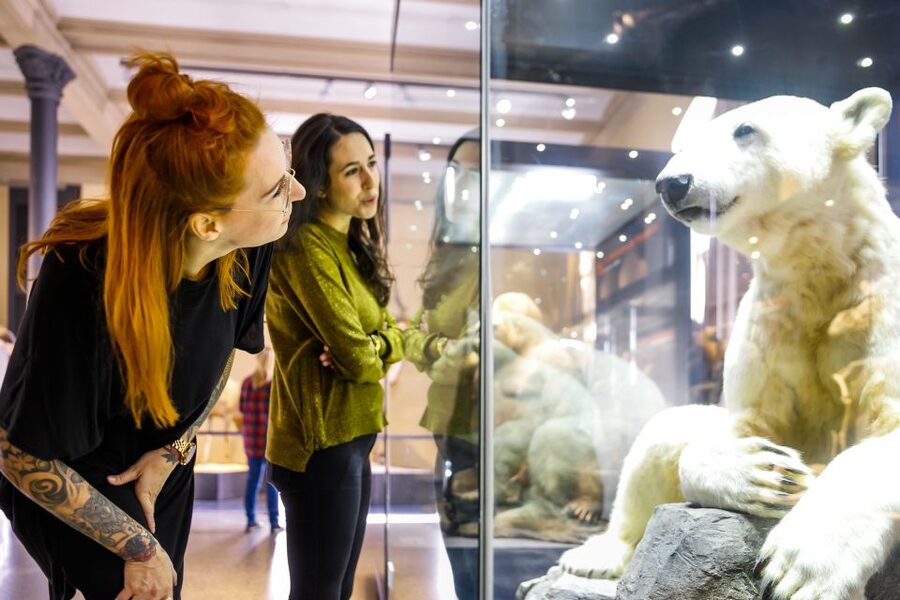
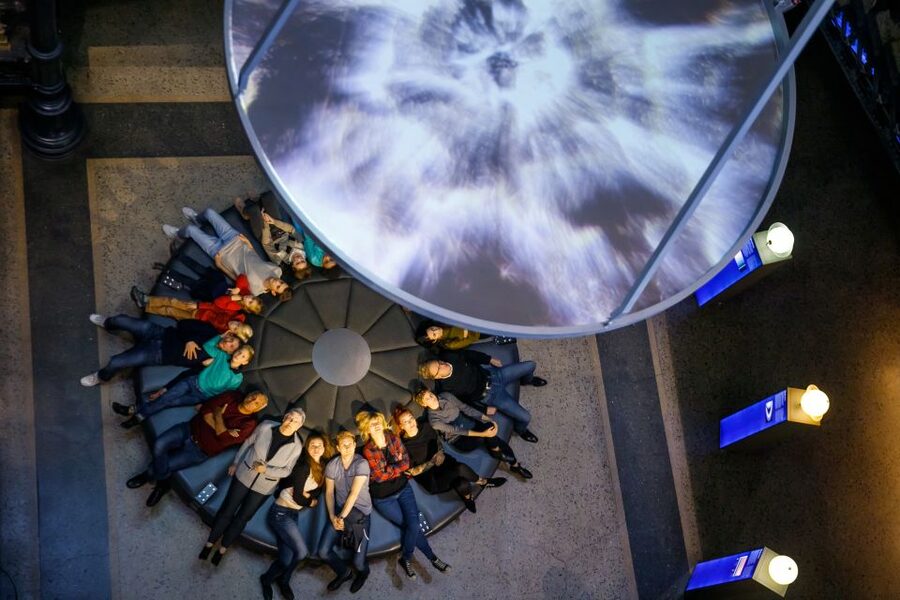
The museum offers more than dinosaurs and preserved animals. Mineral displays and Earth science material add variety, while other rooms explore biology, geology, geography, and the solar system.
The balance is useful for families or groups with different interests. One person can spend time with fossils, another can look at minerals, and a child can focus on the largest skeletons. Some areas feel older or less interactive than the dinosaur hall, so do not expect every room to have hands-on activities.
That is one of the museum’s limits. A few displays include interactive features, but this is not an activity center filled with touch screens and games. If your children need constant interaction, the museum may hold their attention best in shorter bursts. If they enjoy looking closely, spotting details, and asking questions, it can work very well.
The building can also be difficult to follow. Maps help, but the route is not always obvious, and some sections may be closed. One floor has occasionally been the only area open. Check the current setup when you arrive and treat the museum as a collection of rooms rather than a perfectly ordered route.
The online audio content is useful, with a catch
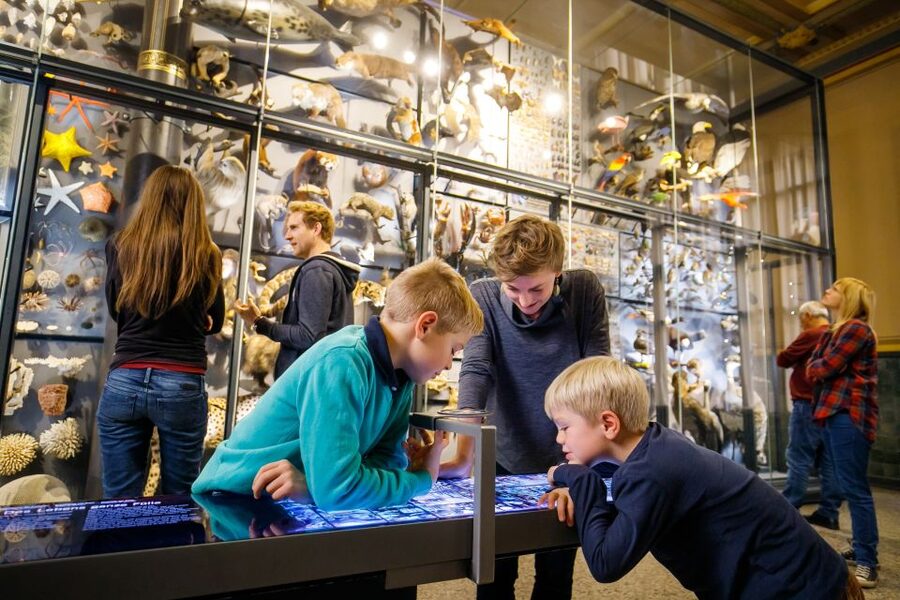
Your ticket includes access to downloadable audio content in English, French, German, Italian, Japanese, Polish, Portuguese, Russian, Spanish, and Turkish. It is a helpful option if you want more explanation than the wall labels provide.
You need to log into a website and use your own phone. Bring headphones, since there is no physical audio guide supplied. Free Wi-Fi is available, which helps, but relying on a phone creates a few practical problems. You need enough battery, and scanning QR codes or loading pages can be awkward when you are moving through crowded rooms.
The audio content is worth preparing before you arrive if possible. Some explanations may not cover every display, and QR codes have not always worked perfectly. English information is available for most, and possibly all, cases, but the coverage is not completely uniform.
For a family, one phone with headphones may not be enough. You can still enjoy the museum without audio, but the experience becomes more dependent on the written labels and your own explanations.
How long to allow and how busy it can get
The official activity length is listed as 30 minutes to one hour. That is a realistic minimum for the major rooms, especially if you focus on Giraffatitan, Archaeopteryx, Tristan Otto, and the most notable animal displays.
I would allow longer if you enjoy museums or want to use the audio content. The collections are large, and you can spend many hours reading, comparing specimens, and exploring the Earth science rooms. The museum is also a reasonable choice for a shorter afternoon because you can see the main highlights without committing an entire day.
Crowds matter. Busy periods can bring school groups, noise, and waits at the entrance. The dinosaur hall is the natural gathering point, and family groups may slow the flow around the largest skeletons. An advance ticket helps you avoid the main ticket line, though it does not guarantee that the building will never be busy.
The location is Invalidenstraße 43, 10115 Berlin, at the museum’s main entrance. Bring your passport or ID card. If you have a reduced ticket, you must show proof of age or status when entering.
Is the $12 ticket good value?
At about $12 per person, this is a strong buy for a focused museum visit. The price is especially reasonable if Tristan Otto or the dinosaur hall is high on your Berlin list. A single major fossil can justify the ticket for many people, and the rest of the museum adds enough variety to make the visit more than a quick dinosaur stop.
The value is less certain if you expect a huge museum with every floor open, constant interactive features, and a full-day route. Some people finish in about 30 minutes, especially when the available area is limited. Others can spend several hours because the collections reward closer reading.
I see it as a flexible ticket rather than an all-day commitment. You can pair it with nearby plans and visit for an hour, or stay longer if the preserved collections and Earth science rooms catch your attention. The price leaves room in your budget for other Berlin sights.
Who will enjoy this museum most
Families with children usually have an easy starting point: go directly to the dinosaur hall. The scale of the skeletons gives younger children something memorable to see, and the museum’s other specimens can keep adults interested. A child around preschool age may enjoy the main displays even if they do not read the labels.
Dinosaur fans should make this a priority. The combination of Giraffatitan, Archaeopteryx, and Tristan Otto gives the museum a strong fossil collection, even if some other sections feel modest.
It also suits anyone interested in scientific collections rather than only polished public exhibits. The wet collection and biodiversity wall show how natural history museums support research. You may find the preserved animals more thought-provoking than entertaining, but they add substance to the visit.
You may want to choose another attraction if you need a fully guided experience, a clear one-way route, or lots of hands-on play areas. Guided tours, special programs, special events, and a physical audio guide are not included with this ticket.
Practical booking advice
Reserve ahead if you are visiting at a busy time, particularly with children or a tight schedule. A mobile ticket can make entry quick, but keep the ticket ready on your phone rather than assuming the staff can find it for you. Bring headphones if you want the audio content, and bring identification as required.
The ticket includes the cloakroom, which is useful if coats or bags would make it harder to look up at the tall skeletons. The museum is wheelchair accessible.
Free cancellation is available up to 24 hours before the visit, and you can reserve now and pay later. The exact entry times depend on availability, so check the calendar before planning the rest of your day.
Should you book the Museum für Naturkunde?
Book it if you want major dinosaur sights at a modest price, especially Tristan Otto and the towering Giraffatitan. It is also a smart choice for families who want a museum that can work as a short visit but offers more depth for anyone willing to read and explore.
Go with realistic expectations. This is not a giant London-style natural history museum, and some displays may feel dated, quiet, or lightly interactive. Still, the fossils, Archaeopteryx, biodiversity wall, mineral collection, and wet specimens give you a varied look at life on Earth.
For most Berlin itineraries, I would book the $12 ticket, bring headphones, and allow at least an hour. If the museum is busy or part of the building is closed, focus on the dinosaur hall first. That way, you see the exhibits that make this visit worthwhile even if your time runs short.
FAQ
Where is the Museum für Naturkunde in Berlin?
The museum is at Invalidenstraße 43, 10115 Berlin. Enter through the main entrance.
How much does admission cost?
The listed price is $12 per person.
How long does the visit take?
The activity is listed as lasting 30 minutes to one hour. You can stay longer if you want to study the collections and displays in more detail.
Can I see a real T. rex skeleton?
Yes. The museum displays Tristan Otto, one of the few original T. rex skeletons in Europe.
What is the tallest dinosaur skeleton in the museum?
Giraffatitan brancai is presented as the world’s tallest mounted dinosaur skeleton.
Is an audio guide included?
Free downloadable audio content is included. You access it through a website on your own device. A physical audio guide is not included.
Which languages are available for the audio content?
The audio content is available in English, French, German, Italian, Japanese, Polish, Portuguese, Russian, Spanish, and Turkish.
Is the museum wheelchair accessible?
Yes, the activity is wheelchair accessible.
Newest Berlin reviews
- Where It All Began: Berlin’s Queer & Trans History Tour★ 4.9 · 6 reviews
- Berlin: guided canoe | kayaktour★ 4.1 · 7 reviews
- Understanding Kreuzberg: The roots of local (sub)culture★ 4.9 · 11 reviews
- Private Potsdam City Tour in an authentic vintage van★ 5.0 · 14 reviews
- Warnemünde Shore Excursion: Private Sachsenhausen and Berlin Tour★ 5.0 · 12 reviews
- Ultimate E-Bike Tour of Berlin with Beer Garden Stop★ 5.0 · 4 reviews
- In the Forbidden City – Potsdam Walking Tour★ 5.0 · 17 reviews
- Private Walking Tour of Potsdam and Sanssouci★ 5.0 · 24 reviews
Museums, compared.
Skip-the-Line: Berlin Wall Museum at Checkpoint Charlie
Read our review →
“Pergamonmuseum. The Panorama” Exhibition Tickets
Read our review →
East Side Gallery Spree Cruise in a Solar Catamaran
Read our review →
Cold War, Berlin Wall, Spies and the East Side Gallery
Read our review →
Browse the lists this tour appears in