
Reviewed · BERLIN WALL TOURS
Cold War, Berlin Wall, Spies and the East Side Gallery
Berlin’s Cold War story becomes most powerful when you leave the postcard sights and see where the division hurt ordinary people. This three-hour walk takes you from Friedrichstrasse Station and the Palace of Tears to Wall remains, escape sites, East Berlin’s grand socialist streets, and the murals of the East Side Gallery.
I like two things in particular: the tour connects world politics with daily life, and it uses real places rather than treating the Cold War like a classroom lecture. Guides such as Klaus, Paul, Tobi, and Nikolai have been praised for clear explanations, personal accounts, and stories of escape. The main drawback is the amount of walking and public transport, plus the need to buy a separate €10 AB Zone ticket.
Key points to know before booking
- Start at Friedrichstrasse Station: This former border point sets the mood before the tour even begins.
- See the Palace of Tears: The small museum explains how families were separated at the crossing between East and West Berlin.
- Use Berlin public transport: A Berlin AB Zone ticket costs €10 per person and is not included.
- Walk through Cold War power centers: Alexanderplatz and Karl-Marx-Allee show how East Germany presented itself to the world.
- Study the Wall from both sides: The tour includes the death strip, escape stories, Wall memorials, and former Stasi locations.
- Finish at the East Side Gallery: The former border becomes an outdoor art gallery and a fitting end to the story.
Why this Cold War Berlin tour works
This is not just a tour of surviving Wall fragments. It follows the structure of the divided city: the border crossing, the political center of East Berlin, the streets where surveillance and ideology shaped daily life, and the barrier that finally fell.
I like that the tour covers both the grand and the personal. You hear about the military tension between the United States, NATO, the Soviet Union, and its allies. Then the subject narrows to letters, family visits, escape attempts, surveillance, and the simple problem of getting from one side of Berlin to the other.
The guide matters a great deal here. The strongest reports single out guides including Klaus, Maria, Ariel, Xavier, Paul, James, Jasper, Tobi, Tina, Rohan, Lewis, Jamie, Cameron, Glen, Aran, and Eran. That is a long list, but it tells you something useful: the experience depends on the individual guide, and the company has several people able to handle the subject well.
Klaus is praised for making a large body of history easy to follow. Paul has used photos on an iPad to show how places looked in the past. Tobi offers firsthand knowledge of growing up in communist East Germany. Nikolai has connected the Iron Curtain to his own family, helping children understand that this was not distant ancient history.
There is one caution. A small number of experiences have been less polished, with complaints about unclear structure, hearing the guide, group management, or too much time spent on guessing games. Most of the available feedback is strongly positive, but you should stay near the guide and speak up if you cannot hear.
More East Side Gallery tours in Berlin:
- Berlin: 2.5-Hour East Side Boat Cruise with Commentary
★ 4.4 · 2,016 reviews - Berlin: East Side Gallery Spree Cruise in a Solar Catamaran
★ 4.0 · 1,039 reviews - Berlin: The Wall Museum East Side Gallery Ticket
★ 4.1 · 292 reviews
Starting at Friedrichstrasse Station and taking the ghost train
The tour begins at Reichstagufer 17, near Friedrichstrasse Station, at 10:00 am. Arrive 15 minutes early. This is important because the tour uses public transport and the group will not wait indefinitely for late arrivals.
Friedrichstrasse Station is a fitting starting point. During the Cold War, it was a major crossing point between East and West Berlin. The station’s history helps explain how the city could be divided while trains continued to move through it.
The opening section includes a ride on the underground route once known as a ghost train. These trains passed through East Berlin stations without stopping for Western passengers. From inside a modern train, it can be hard to picture the fear and control tied to those sealed or heavily guarded stations, so the guide’s explanation is essential.
You will need a Berlin public transport ticket for the tour. The required AB Zone ticket costs €10 per person and is separate from the tour price. At $18.04, the guiding fee is modest, but once transport is added, the real cost is higher. Still, the combination of walking and transit lets the tour cover parts of Berlin that would be difficult to connect on foot in only three hours.
Admiralspalast and the birth of East Germany’s ruling party
The short stop at Admiralspalast covers the founding of the Socialist Unity Party, known as the SED, in 1946. You spend only about five minutes here, so do not expect a long architectural visit.
The value is political context. The SED became the ruling party of East Germany, and its creation helps explain how the Soviet occupation zone developed into the German Democratic Republic. The guide can link this early postwar moment to the later system of state control, party loyalty, and surveillance.
This is one of the tour’s quicker stops, so it works best as part of the larger story rather than as a destination on its own.
The Palace of Tears and the human cost of the border
The Palace of Tears, or Tränenpalast, is one of the strongest parts of the tour. Located beside Friedrichstrasse Station, this former border crossing handled departures between East and West Berlin.
The nickname comes from the farewells that took place inside. Families and friends could meet, but the rules of the border often forced them to separate again. The building became a place of tears because political division turned ordinary goodbyes into painful and uncertain events.
Today, the museum presents the mechanics and personal cost of the crossing. You learn about escape attempts, travel restrictions, family separation, and the eventual reunification of Germany. The admission is free, and the tour allows about 20 minutes here.
I value this stop because it keeps the Cold War from becoming a contest between superpowers alone. The United States and the Soviet Union may have shaped the conflict, but Berliners dealt with the results at a railway station, a checkpoint, or a family visit.
The museum is also a useful place to pause. Much of the tour takes place outdoors, and this indoor stop provides a short break before the next sections.
More Berlin Wall tours in Berlin:
- Skip-the-Line: Berlin Wall Museum at Checkpoint Charlie
★ 4.1 · 2,041 reviews - THE WALL: asisi Panorama Berlin Ticket
★ 4.5 · 580 reviews - Berlin: Guided Bike Tour of the Berlin Wall and Third Reich
★ 4.7 · 499 reviews - Berlin: Cold War Walking Tour on Berlin Wall Route
★ 4.8 · 437 reviews
Alexanderplatz and East Berlin in public view
Alexanderplatz was one of East Berlin’s main public spaces. It served as a setting for official rallies, political displays, shopping, transport, and everyday life.
The square helps you see how East Germany used architecture and public space to present its values. Large buildings and open areas could project order and strength, while the realities of shortages, restrictions, and surveillance remained less visible.
The tour spends about 15 minutes here. That is enough to establish the role of the square, but not enough for a full architectural tour. If you are especially interested in GDR design, you may want to return later and explore at your own pace.
The guide’s storytelling makes this stop more useful than a simple look at buildings. You hear how the state presented public life and how people experienced that public life. The contrast between official image and private reality is one of the clearest themes of the day.
Karl-Marx-Allee and the architecture of power
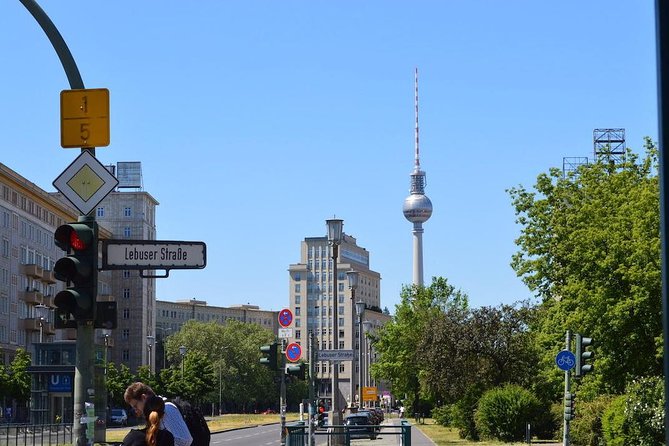
Karl-Marx-Allee offers another view of East Germany’s public image. The broad boulevard was designed as a grand socialist showcase, lined with monumental buildings influenced by Stalinist architecture.
The scale matters. The avenue was meant to express confidence, order, and the strength of the socialist state. It was also a place where ideology became part of the built environment. The architecture was not simply decorative. It told residents and foreign visitors how the government wanted East Germany to be understood.
The tour allows about 20 minutes here. No admission ticket is included, but the street itself is open to view. You will not get a full museum visit, so the main reward is the guide’s explanation of what you are seeing.
I like this stop because it adds balance. The Berlin Wall is the obvious symbol of division, but Karl-Marx-Allee shows that control also appeared in housing, streets, monuments, and civic planning. It helps you read East Berlin as a political project, not just a collection of old buildings.
The death strip, escape attempts, and Stasi surveillance
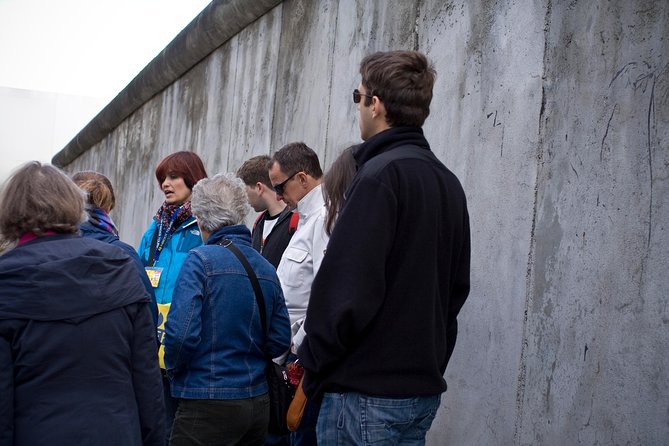
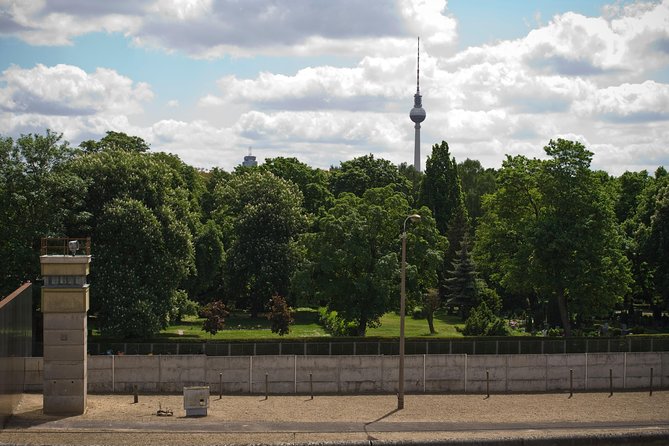
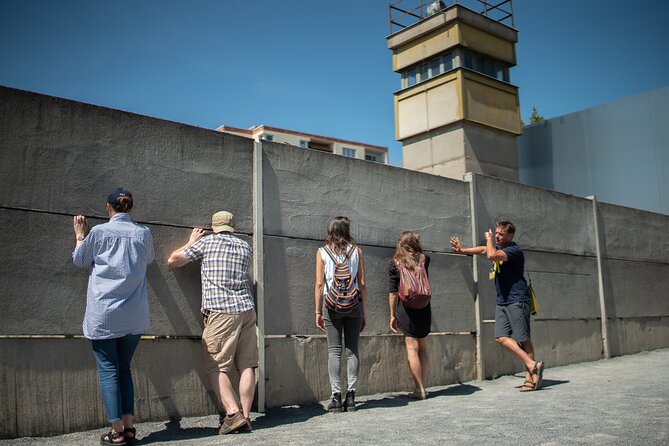
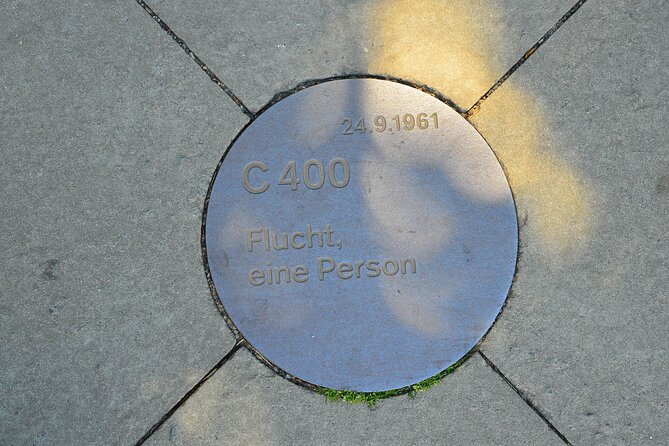
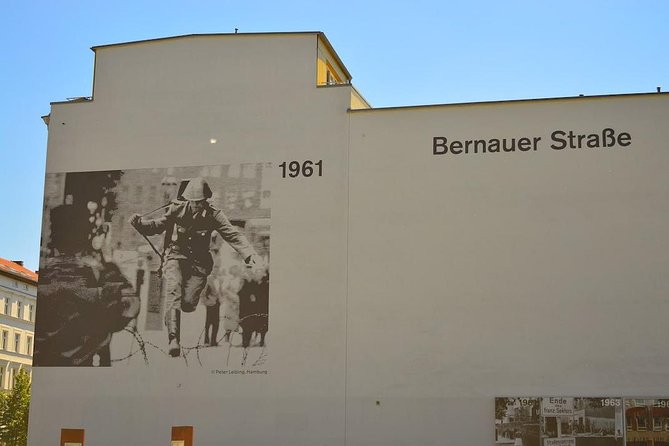
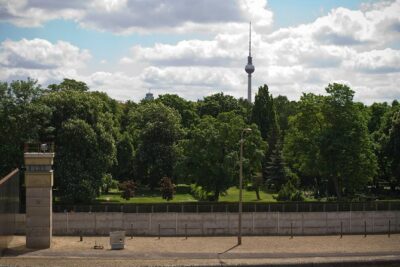
The Wall section brings the story down to ground level. Along Bernauer Strasse and other Wall sites, the guide explains the former death strip, escape attempts, watch systems, and the physical barriers that separated East and West Berlin.
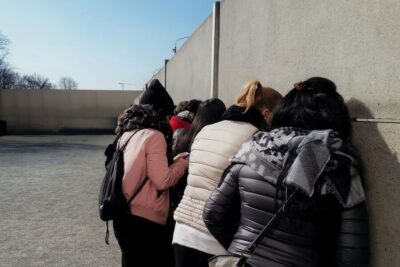
Some of the most affecting moments come from seeing the West side through an opening or gap from the former East side. That angle makes the border’s layout easier to understand. You can see how close the two parts of the city were, even when crossing was forbidden.
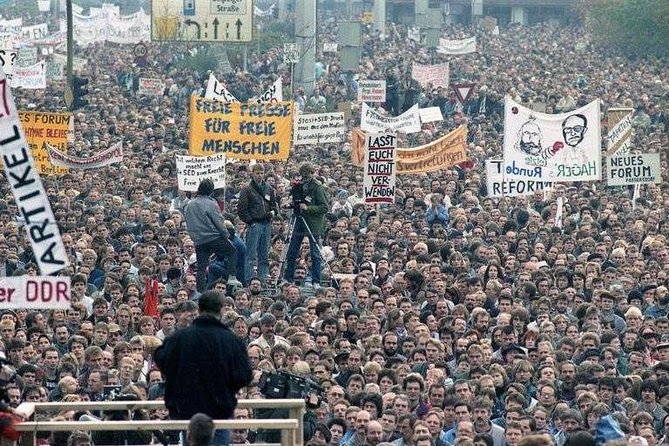
The tour also discusses the Stasi, East Germany’s secret police, along with CIA and KGB surveillance methods. The focus is not only on spy stories. You learn how surveillance affected ordinary people, including the fear of informers, the pressure to conform, and the suspicion that private conversations might not remain private.
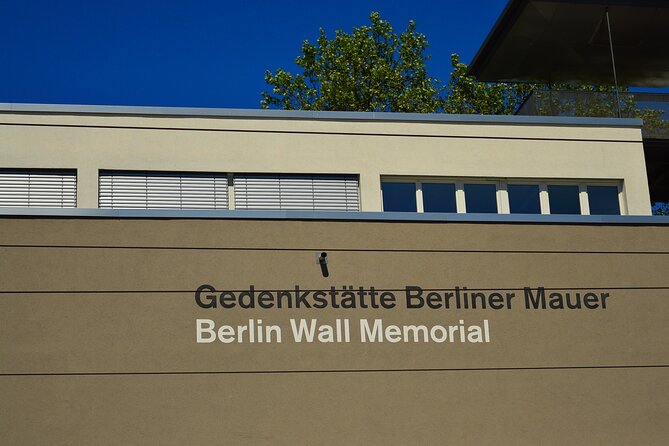
The Berlin Wall Memorial and former Stasi locations add physical evidence to the explanation. You may see remaining sections, preserved border areas, or traces that are easy to miss when exploring alone. A guide can point out what belonged to the Wall system and explain how the different barriers worked together.
This section requires attention and a moderate walking pace. One guide may use historic photos on a tablet, which is especially helpful when the modern city has replaced much of the original border. Wear comfortable shoes and dress for changing weather. Much of the experience takes place outside.
The Brandenburg Gate and the meaning of reunification
The Brandenburg Gate is one of Berlin’s essential monuments, but the tour gives it a specific Cold War meaning. During the division, the gate sat near the border and became a symbol of a divided city and country.
Today it represents peace and unity. The change is not just symbolic decoration. It reflects the transformation of Berlin from a guarded fault line into the capital of reunited Germany.
The gate is not listed as a separate timed stop in the schedule, so the amount of time there may depend on the guide and the group’s pace. You should see it as part of the broader walk rather than expect an extended monument visit.
Its place in this tour is valuable because it links the Wall to the larger story of Germany. The experience is not only about how Berlin was divided. It also explains how the city became a symbol of the end of the Cold War.
Ending at the East Side Gallery
The tour ends at the East Side Gallery on Mühlenstrasse. This is the longest permanent graffiti wall in the world and the largest remaining section of the Berlin Wall.
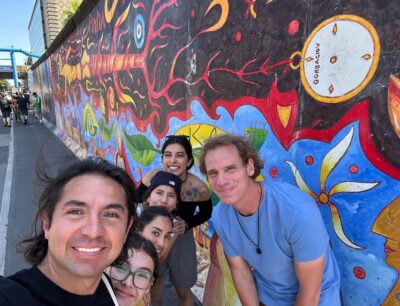
The murals turn a former instrument of control into a public art site. Their themes include freedom, resistance, hope, and the fall of the Wall. The change in mood is striking: the earlier stops focus on fear, paperwork, fences, and surveillance, while the East Side Gallery looks toward expression and release.
The tour allows about 25 minutes here. That is enough for an introduction and several key murals, though you may want to stay longer after the tour ends. Since the tour finishes here, you can continue looking at the artwork or use nearby public transport for the rest of your day.
The end point is practical as well as meaningful. It has many transport options, making it easy to continue to another part of Berlin.
Price, group size, and pace
The listed price is $18.04 per person for about three hours, with an English-speaking local guide and mobile ticket. That is a good price for a history tour that includes several parts of Berlin and uses a guide to connect them.
Add €10 for the required Berlin AB Zone transport ticket. Food, drinks, hotel pickup, and drop-off are not included. The maximum group size is 22 people, which is small enough for questions but large enough that you should stay close to the guide.
The tour covers a lot of ground. One guide received praise for keeping the group together on the U-Bahn and maintaining a moderate pace. Another tour ran longer than planned because the guide continued answering questions, which some people appreciated. If you have a tight schedule afterward, allow extra time.
The tour is not a private experience. You may get a guide who uses photos, personal stories, or detailed historical explanations, but the exact style depends on who leads the group. The strongest fit is for someone who enjoys asking questions and following a story across several locations.
Who should book this tour?
Book it if you want more than a quick photo at the Wall. It suits first-time visitors who need a clear introduction to Cold War Berlin, families who want history explained in an understandable way, and anyone interested in escape stories, surveillance, or life in East Germany.
It also works well if you have already seen the main sights. The route can give familiar places a sharper meaning, especially the Brandenburg Gate, Alexanderplatz, and the East Side Gallery.
You may want a different option if you dislike walking, public transport, outdoor touring in poor weather, or a schedule that can run beyond three hours. People seeking a highly specialized Stasi study should also plan a separate visit to the Stasi Museum, since this tour gives a broad account rather than a full museum examination.
Free cancellation is available up to 24 hours before the start time. Changes or cancellations inside that window are not accepted for a refund.
Should you book the Cold War, Berlin Wall, Spies and East Side Gallery tour?
I would book this tour if you want a strong, affordable introduction to Berlin’s divided past. The route covers the border crossing, East Berlin politics, socialist architecture, Wall memorials, surveillance, escape attempts, the Brandenburg Gate, and the East Side Gallery without reducing the story to one famous wall.
The best reason to go is the mix of scale. You get superpower politics, but also the Palace of Tears, the death strip, family separation, and the experience of living under state surveillance. Arrive early, buy the AB Zone ticket, wear good shoes, and stay close enough to hear the guide.
FAQ
How long is the Cold War Berlin tour?
The tour lasts approximately three hours.
Where does the tour begin?
It begins at Reichstagufer 17, 10117 Berlin, near Friedrichstrasse Station. You should arrive 15 minutes before the 10:00 am start.
Where does the tour finish?
The tour ends at the East Side Gallery on Mühlenstrasse, 10243 Berlin.
Is public transportation included?
No. Each participant needs a Berlin AB Zone transport ticket, which costs €10 per person and can be purchased from the meeting point.
Is the tour offered in English?
Yes. The tour is offered in English and includes a local expert guide.
What is the cancellation policy?
You can cancel at least 24 hours before the scheduled start for a full refund. Cancellations or changes made less than 24 hours before the start time are not accepted.
More museums and galleries in Berlin
- Berlin: Natural History Museum Entrance Ticket
★ 4.6 · 3,382 reviews - Berlin: Museum Island Multiple Museum Entry Ticket
★ 4.4 · 2,007 reviews - Berlin: Interactive DeJa Vu Museum Entrance Ticket
★ 4.1 · 1,338 reviews - Berlin: “Pergamonmuseum. The Panorama” Exhibition Tickets
★ 4.6 · 1,245 reviews
More Cold War tours in Berlin
- Berlin: Third Reich and Cold War 2 Hour Walking Tour
★ 4.9 · 6,830 reviews - Berlin’s Best: 2 Hour Walking Tour Third Reich and the Cold War
★ 5.0 · 5,486 reviews - Berlin: Cold War Era History Guided Bike Tour
★ 4.8 · 413 reviews - East Berlin and the Wall: Walking Tour
★ 4.9 · 407 reviews
Newest Berlin reviews
- Where It All Began: Berlin’s Queer & Trans History Tour★ 4.9 · 6 reviews
- Understanding Kreuzberg: The roots of local (sub)culture★ 4.9 · 11 reviews
- Berlin: guided canoe | kayaktour★ 4.1 · 7 reviews
- Private Potsdam City Tour in an authentic vintage van★ 5.0 · 14 reviews
- Warnemünde Shore Excursion: Private Sachsenhausen and Berlin Tour★ 5.0 · 12 reviews
- Ultimate E-Bike Tour of Berlin with Beer Garden Stop★ 5.0 · 4 reviews
- In the Forbidden City – Potsdam Walking Tour★ 5.0 · 17 reviews
- Private Walking Tour of Potsdam and Sanssouci★ 5.0 · 24 reviews
Berlin Wall Tours, compared.
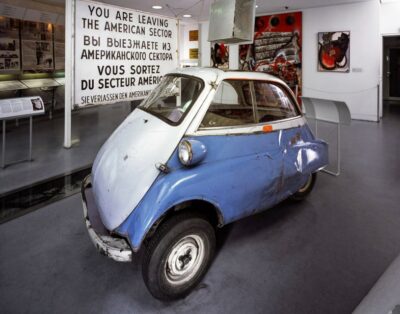
Skip-the-Line: Berlin Wall Museum at Checkpoint Charlie
Read our review →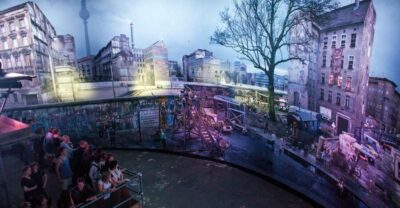
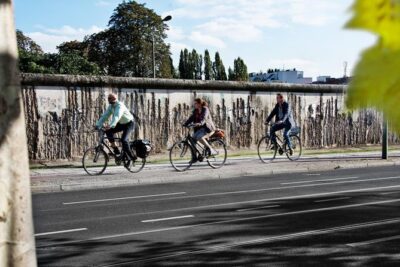
Guided Bike Tour of the Berlin Wall and Third Reich
Read our review →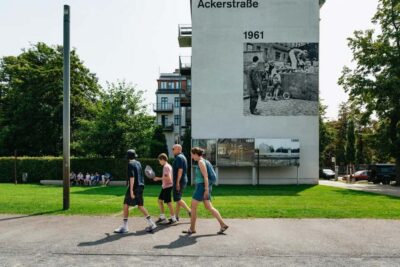
Cold War, Berlin Wall, Spies and the East Side Gallery
Read our review →Browse the lists this tour appears in