
Reviewed · BERLIN WALL TOURS
THE WALL: asisi Panorama Berlin Ticket
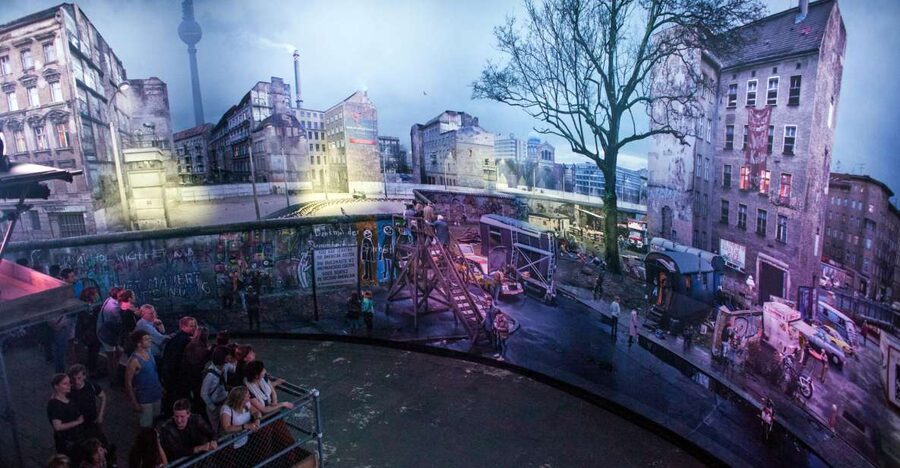
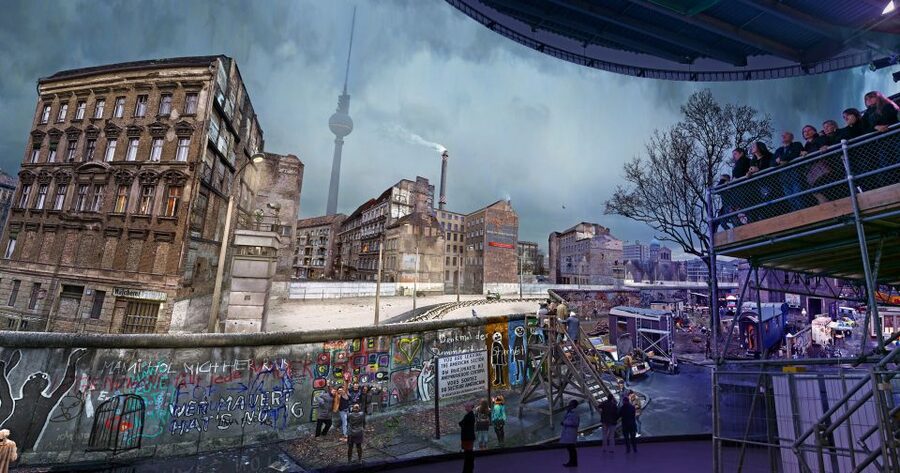
The most striking part of the asisi Panorama is its scale. From a 4-meter-high viewing platform, you look across a huge artistic scene of Kreuzberg in the 1980s, with the Berlin Wall cutting through ordinary life. It is not a conventional museum display. You stand above the picture and watch a neighborhood where daily routines and grim border controls existed only steps apart.
I like the personal detail and the clear visual layout. Private stories and photographs give the political subject a human face, while the scene itself lets you see West Berlin’s SO 36, the Death Strip, and the border facilities in one view. The main drawback is that this is a compact, self-guided experience, so you will need to read and interpret some of the German context yourself.
Key points to know before you go
- A huge 1980s Berlin scene: See Kreuzberg on a fictional autumn day, with everyday life set beside the Wall and border zone.
- Two useful viewpoints: Look down from the 4-meter platform, then study details from ground level.
- Personal stories add weight: Private photographs and individual accounts make the political story easier to grasp.
- Three-room visit: The exhibition is small but carefully arranged, with the panorama, supporting material, and a film about artist Yadegar Asisi.
- No guide included: English translation options are offered, but a guided explanation is not part of the ticket.
- Good value at $16: A day ticket gives you time to look closely without the cost of a full guided tour.
Seeing the Berlin Wall from above
The asisi Panorama presents a made-up autumn day in 1980s Kreuzberg. That detail matters. You are not looking at an abstract diagram of the Wall or a simple collection of old photographs. You are placed in a familiar neighborhood, where homes, streets, people, and border structures share the same view.
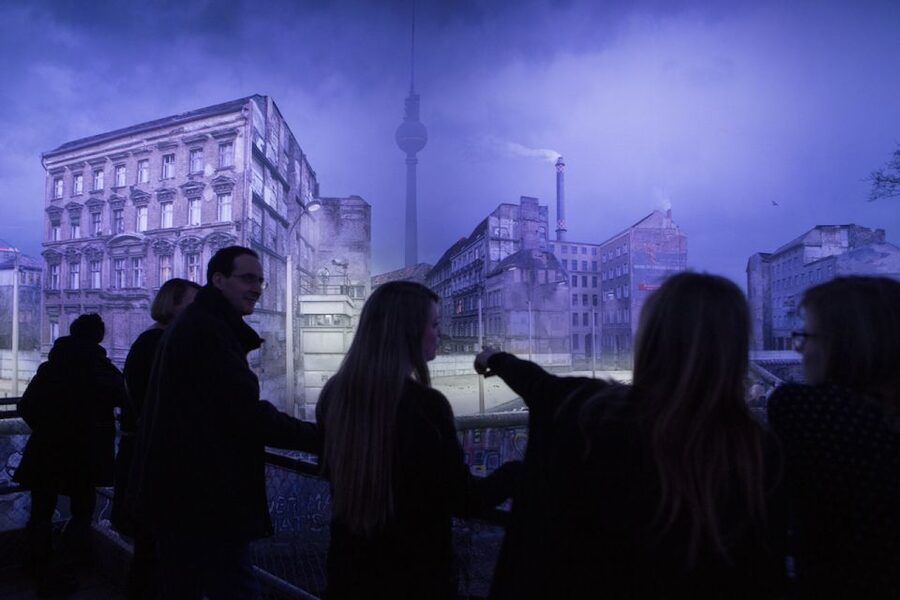
From the raised platform, the scene takes on its full scale. You can see how close West Berlin’s alternative SO 36 district was to East Berlin, yet how complete the separation remained. The Wall was physically narrow compared with the fear and control surrounding it, and the panorama makes that contrast easy to understand.
I like the way the scene joins the ordinary and the threatening. A neighborhood can appear lived-in and almost routine, but the Death Strip and border facilities remind you that this was not an ordinary street boundary. The effect is strongest when you stop trying to take in everything at once and focus on small areas below.
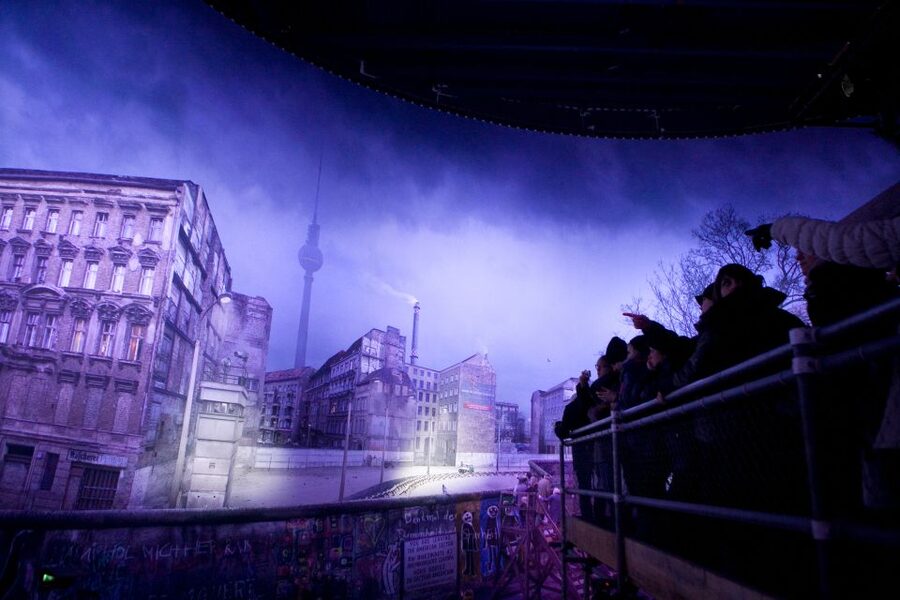
Allow yourself time to scan slowly. Look from the platform first, then move closer at ground level. One of the useful features of the visit is that the lower viewpoint gives you a different relationship with the artwork. From above, you understand the full setting. From below, individual details become easier to pick out.
The artwork is enormous enough to surprise you. Its size is one reason the visit feels more like entering a scene than viewing a flat image. You are still looking at an artistic representation, not standing at an original Wall site, but the height and scale help create a strong sense of place.
More Berlin Wall tours in Berlin:
- Skip-the-Line: Berlin Wall Museum at Checkpoint Charlie
★ 4.1 · 2,041 reviews - Cold War, Berlin Wall, Spies and the East Side Gallery
★ 5.0 · 1,024 reviews - Berlin: Guided Bike Tour of the Berlin Wall and Third Reich
★ 4.7 · 499 reviews
A neighborhood caught between two worlds
The panorama focuses on life in the shadow of the Wall rather than only on famous political events. That makes it useful if you already know the broad outline of Berlin’s division but want to picture how it shaped daily routines.
The view of SO 36 is especially important. The district is shown as an alternative part of West Berlin, close to East Berlin but separated from it by a hard border. The contrast helps you understand that the Wall was not placed in a distant industrial zone. It ran through the city and beside homes, streets, and communities.
You also get a view of the border facilities and the so-called Death Strip. These features give the panorama its darker edge. The exhibition does not treat the Wall as a backdrop for a colorful period scene. It keeps the control system in view, even as it shows people going about their business.
The fictional autumn setting gives the work a specific mood. The changing light and seasonal details help make the scene feel like a moment rather than a diagram. At the same time, you should remember that the day is invented. This is an artist’s reconstruction designed to communicate atmosphere and human experience, not a documentary photograph of one exact date.
That distinction is worth keeping in mind as you look. The panorama is most useful when you treat it as an interpretation supported by historical detail. It helps you picture the world of divided Berlin, but it does not replace a museum devoted to the full political history of the Wall.
Three rooms, with more than one way to look
The exhibition is arranged across three rooms, and the compact format works well for a short visit in central Berlin. The main panorama is the reason to come, but the supporting material gives you a better way to read what you have seen.
Begin with the main scene and take in the broad view. The raised platform gives you the clearest sense of the city’s division. You can then return to details on the ground floor, where the scale of the artwork becomes easier to study.
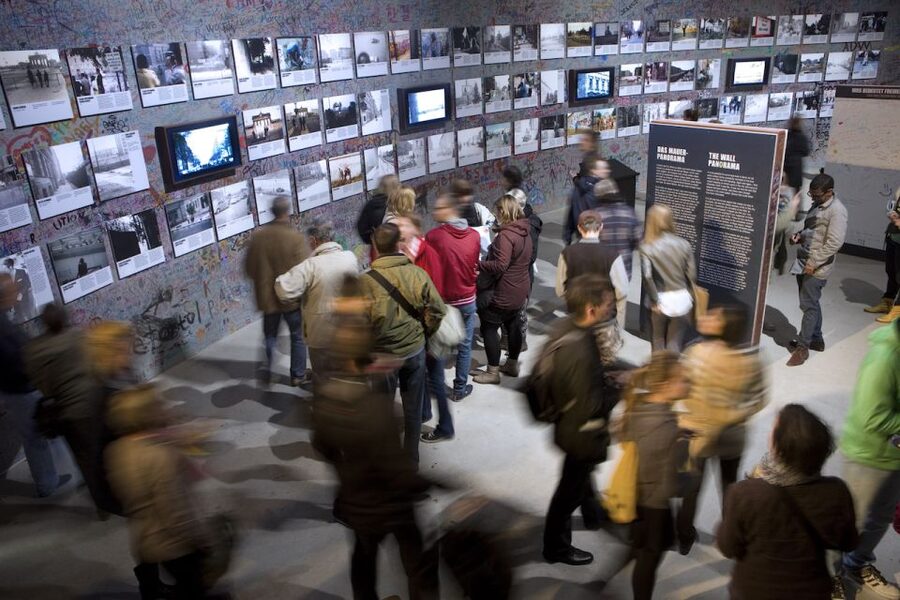
The personal photographs and private stories are among the most valuable parts of the display. They move the subject away from walls, checkpoints, and political labels and toward individual lives. If you have only a basic understanding of Berlin’s divided past, these smaller stories can help make the subject less remote.
A documentary about artist Yadegar Asisi is shown as part of the exhibition. It follows the process from his early ideas through the creation of the panorama. Watch it if you want to understand how such a large work was planned and built. It is especially useful after seeing the main artwork, since you will recognize the challenge of turning a historical setting into one large scene.
Some visitors have enjoyed the artwork so much that they returned for a second visit. That makes sense if you like visual detail. On a first visit, you may concentrate on the overall effect. A later look can reveal smaller elements you missed from the platform or ground floor.
What the sound and translation options add
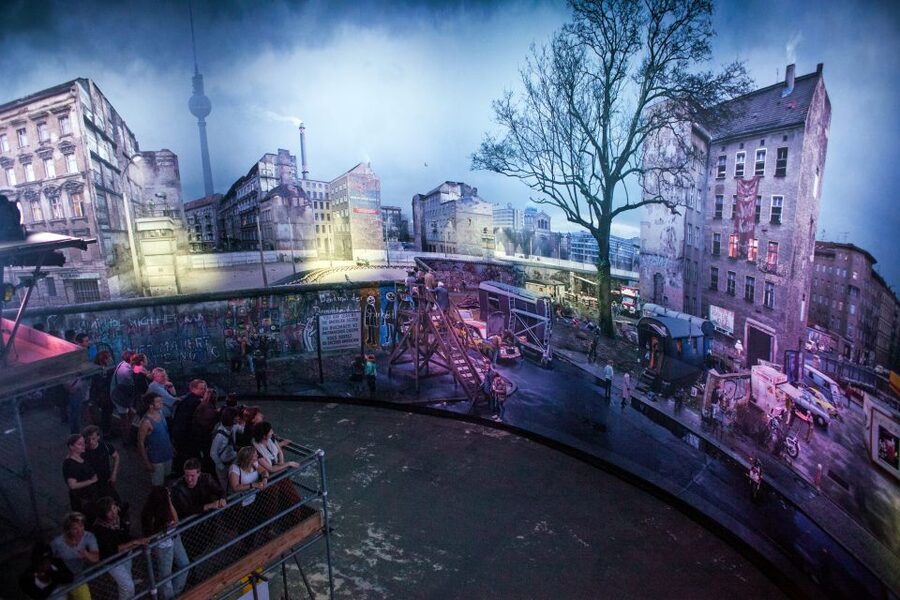
The visual scale does much of the work, but sound also contributes to the experience. The display includes noises from the surrounding area, helping the scene feel less like a silent painting. That sound layer adds to the tension between normal city life and the presence of the Wall.
You should not expect a fully guided audio tour from the ticket. A guide is not included, and the supplied information says English translation options are offered. That is helpful for English speakers, though the exact amount of translated material may affect how much historical explanation you receive in your preferred language.
If you want every German detail explained, this may feel a little light. One visitor specifically found the installation more enjoyable with a guide to explain German aspects. On the other hand, the visual design makes the central idea fairly easy to follow without one.
The free key folder with extra information is a useful small addition. Keep it with you as you move through the rooms. It can help you connect the personal material and border structures with the larger scene.
Other Berlin experiences to weigh up
- Berlin: Berlin Story Bunker Entry Ticket
★ 4.6 · 6,759 reviews - Berlin: Illuseum Berlin Entrance Ticket
★ 4.1 · 3,970 reviews - Berlin: Madame Tussauds Admission Ticket
★ 4.6 · 3,941 reviews - Berlin: Natural History Museum Entrance Ticket
★ 4.6 · 3,382 reviews
How long to stay and how to plan the visit
The ticket is valid for one day, and the admission is designed for a flexible visit rather than a fixed tour. You can check available starting times when booking, and the ticket allows you to skip the ticket line.
No exact visit length is stated, so I would plan this as a focused museum stop rather than a full-day attraction. The three-room layout makes it suitable for a gap between other Berlin sights, but the large artwork rewards a slower look. If you rush through the platform, photographs, and film, you will miss much of what makes the visit worthwhile.
A useful plan is:
- Start with the panorama from the raised platform.
- Walk through the display and examine the lower-level details.
- Spend time with the personal photographs and stories.
- Watch the film about Yadegar Asisi near the exit.
- Use the free key folder to review information before moving on.
The experience can also work well after visiting another Berlin Wall site. One visitor found it especially meaningful after spending the morning at Checkpoint Charlie. The exhibition gives you an artistic view of life beside the Wall, while a surviving section of the original Wall nearby can provide a more direct physical connection to the city’s past.
Do not confuse the asisi Panorama with a preserved section of the Wall. The panorama is an artwork. Its value comes from showing the surrounding life and emotional pressure of the border, not from presenting original Wall masonry.
Is $16 a fair price?
At $16 per person, the ticket is fairly priced for a central Berlin cultural stop. You receive admission to the panorama, the supporting rooms, the documentary, and a free information folder. You are also buying a full-day ticket rather than a timed guided walk, which gives you flexibility.
The value depends on how you use it. If you spend only a few minutes taking a photograph and leave, the price may feel high for a small exhibition. If you study the panorama from both levels, read the personal material, and watch the film, you get a more substantial visit.
There is also a group rate available on site for groups of 10 or more. That may make the experience more attractive for a large party. A guided tour is not included, so you are not paying for live commentary or a specialist guide.
The ticket can be canceled up to 24 hours in advance for a full refund, and you can reserve now and pay later. Those terms are useful if your Berlin plans are still shifting. Pets are not allowed, so make arrangements before arriving if you are traveling with an animal.
Who will get the most from this panorama?
I would recommend the exhibition to first-time Berlin visitors who want a clear introduction to the Wall without committing to a long guided tour. The visual approach is easy to enter, and you can understand the basic situation even if your knowledge of divided Berlin is limited.
It also suits people who enjoy art installations, photography, and historical reconstruction. The scene is not simply a history lesson. Its power comes from the way it joins scale, sound, personal images, and the details of a neighborhood.
Families and mixed-interest groups may find it useful because the visit is compact and does not require a long lecture. The main panorama gives you something immediate to look at, while the supporting material offers more depth for those who want it.
I would be more cautious if you want original artifacts, a detailed political timeline, or extensive guided interpretation. This is not the best single stop for a full study of the Cold War or the fall of the Wall. It is better at showing what it felt like to live close to the barrier.
The experience may also be less satisfying if you have already seen it and expect a major new exhibition on a return visit. The artwork itself remains the focus. Still, its scale and small details can justify another look for visitors who enjoy visual works.
My verdict on the asisi Panorama Berlin
You should book this experience if you want to understand the Wall as part of a neighborhood, not just as a famous political symbol. The huge panorama, raised viewing platform, personal photographs, and surrounding sounds create a clear picture of ordinary life under extraordinary pressure.
I especially like it as an early Berlin stop. It gives you useful context before you visit Checkpoint Charlie or a remaining section of the original Wall. Just remember that it is self-guided, compact, and artistic rather than a complete museum of Berlin’s divided past.
For $16, it is a sensible choice if you take your time and watch the film at the end. If you prefer a live guide or want extensive German historical explanation, look for a guided alternative as well. For everyone else, this is a focused and visually powerful way to spend part of a day in Berlin.
FAQ
Where is the asisi Panorama Berlin located?
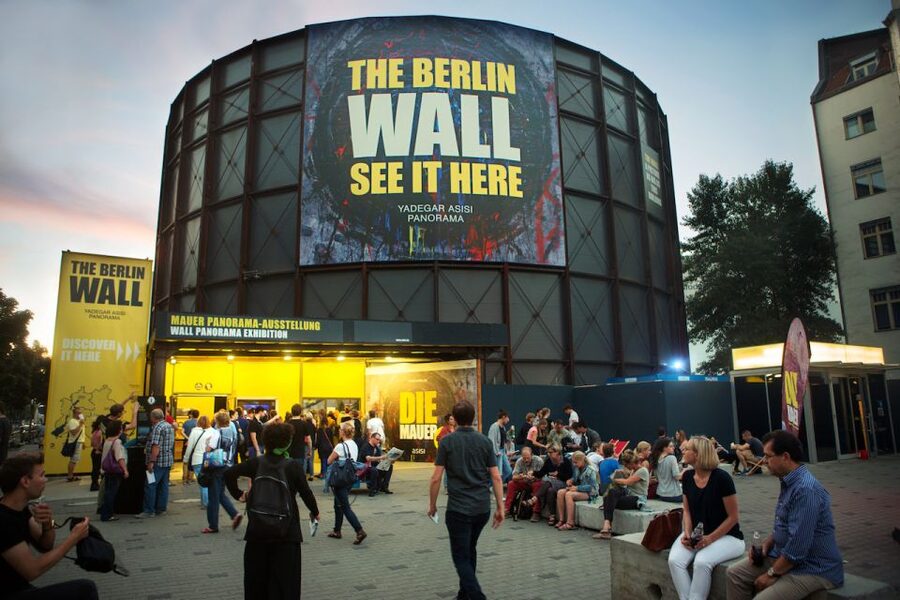
The asisi Panorama Berlin is at Friedrichstraße 205, 10117 Berlin, Germany.
What does the panorama show?
It shows a fictional autumn day in 1980s Kreuzberg, including everyday life in West Berlin’s SO 36 district, East Berlin nearby, the Wall, the Death Strip, and border facilities.
How high is the visitor platform?
The visitor platform is 4 meters high.
Is a guided tour included?
No. The ticket includes admission to the asisi Panorama but not a guided tour.
Are English translation options available?
English translation options are offered at the exhibition.
How long is the ticket valid?
The ticket is valid for one day.
Can I cancel the booking?
Yes. You can cancel up to 24 hours in advance for a full refund. You can also reserve now and pay later.
Newest Berlin reviews
- Where It All Began: Berlin’s Queer & Trans History Tour★ 4.9 · 6 reviews
- Understanding Kreuzberg: The roots of local (sub)culture★ 4.9 · 11 reviews
- Berlin: guided canoe | kayaktour★ 4.1 · 7 reviews
- Private Potsdam City Tour in an authentic vintage van★ 5.0 · 14 reviews
- Warnemünde Shore Excursion: Private Sachsenhausen and Berlin Tour★ 5.0 · 12 reviews
- Ultimate E-Bike Tour of Berlin with Beer Garden Stop★ 5.0 · 4 reviews
- In the Forbidden City – Potsdam Walking Tour★ 5.0 · 17 reviews
- Private Walking Tour of Potsdam and Sanssouci★ 5.0 · 24 reviews
Berlin Wall Tours, compared.
Skip-the-Line: Berlin Wall Museum at Checkpoint Charlie
Read our review →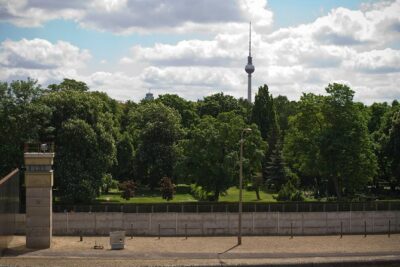
Cold War, Berlin Wall, Spies and the East Side Gallery
Read our review →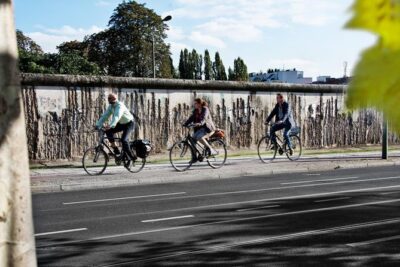
Guided Bike Tour of the Berlin Wall and Third Reich
Read our review →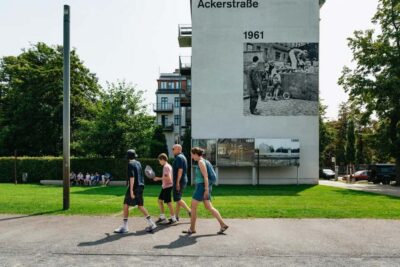
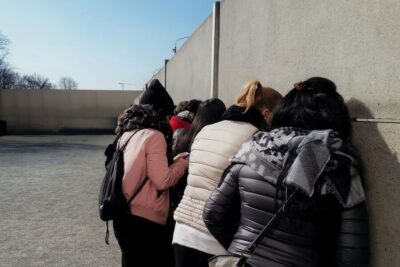
Cold War, Berlin Wall, Spies and the East Side Gallery
Read our review →Browse the lists this tour appears in