
Reviewed · BERLIN NEIGHBORHOOD TOURS
Berlin: Gay Berlin Out in Schöneberg Walking Tour
Berlin’s Schöneberg is not simply a nightlife district. It was one of Europe’s earliest centers of organized gay life, and this walk shows you where that story unfolded. You’ll trace the former clubs around Nollendorfplatz, hear about the 1920s rights movement, and see how the neighborhood survived persecution and found new life after the 1960s. I especially like the use of archive pictures and texts, which help you picture places that no longer exist, and the way the tour includes lesbian, trans, intersex, and gender-nonconforming stories instead of focusing only on famous gay men.
The guide, Tobias, brings a personal connection, an easy sense of humor, and a large store of local stories. The main drawback is practical: this is a 2.5-hour outdoor walk, so cold, rain, or tired feet can affect the experience. The route includes pauses, but you should dress for the weather and expect history rather than a sightseeing parade of preserved buildings.
Key points to know before you book
- Schöneberg’s vanished clubs come first: Visit former sites linked with the Hollandais club, Kleist Casino, Nationalhof, and El Dorado.
- The 1920s are central: Learn how Berlin’s gay community organized, socialized, and pushed for legal change before the Nazis came to power.
- Christopher Isherwood’s Berlin appears in real places: Stop outside his former home on Nollendorfstraße and connect his writing with the neighborhood around you.
- The route reaches beyond gay male history: Schwerin Straße introduces the area’s lesbian quarter, while the wider walk includes trans, intersex, and gender-nonconforming figures.
- Tobias shapes the experience: His style mixes facts, personal anecdotes, archive material, humor, and time for questions.
- The price is modest for a private-feeling history lesson: At $23, the tour offers 2.5 hours with a live guide, with food and drinks not included.
Schöneberg before the tour begins
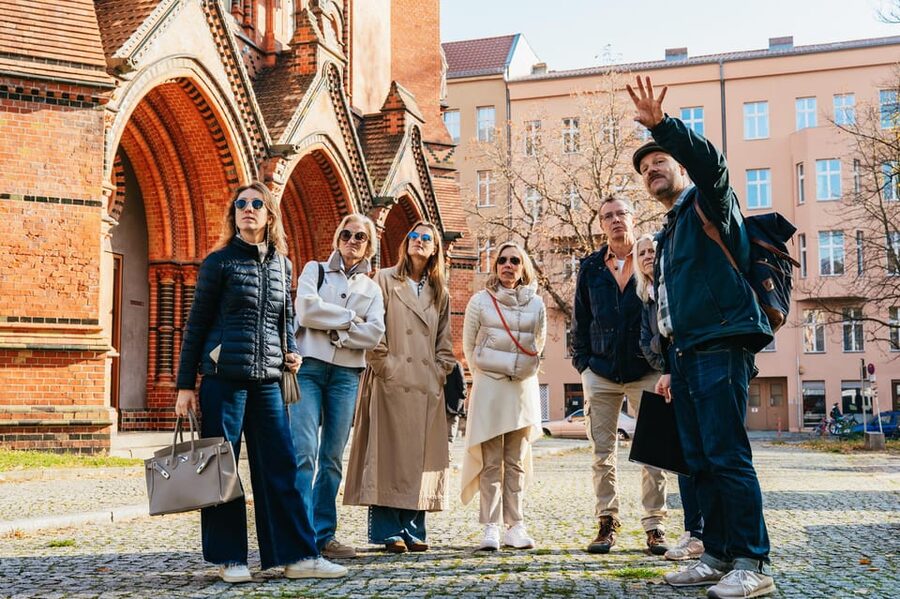
The walk centers on Nollendorfplatz, in the Berlin district of Schöneberg. This is a good area to explore on foot, with streets that still show the mix of cafés, shops, restaurants, bars, apartments, and nightlife that has long made it a home for LGBTQIA+ communities.
You are not visiting a preserved historic quarter with every old club still intact. Much of the story is about places that have disappeared, changed names, or been replaced. That can sound less exciting than entering a famous building, but it is also the point. Berlin’s queer past survives in street corners, addresses, plaques, photos, written accounts, and the continued life of the neighborhood.
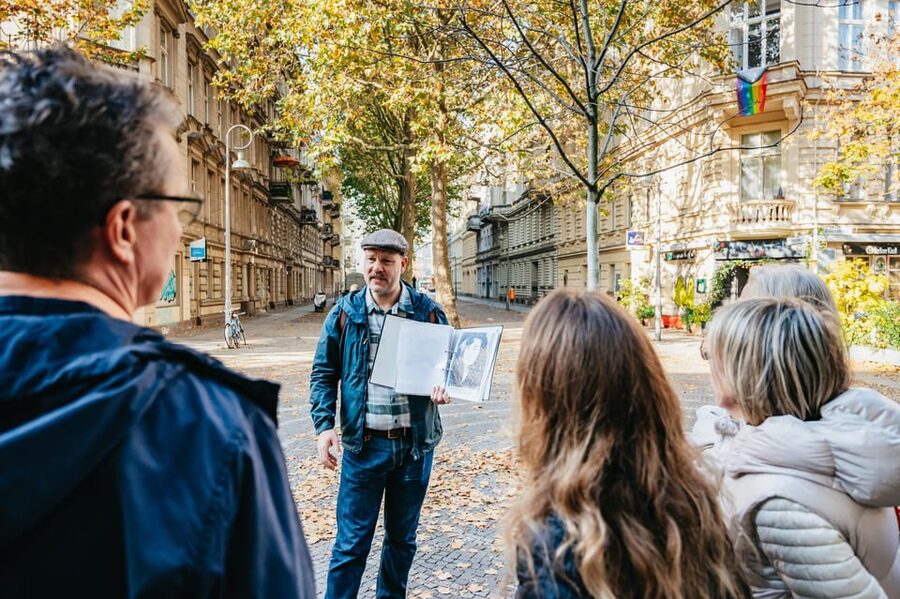
Tobias uses visual material to fill in those gaps. Archive photos and text allow you to compare today’s streets with their earlier appearance. This matters because the former cabarets and meeting places are often easier to understand when you can see the people, signs, and rooms that once occupied them.
The tour is offered in English or German. Tobias’s English is described as fluent, and the style is conversational rather than stiff. You can ask questions along the way, and the walk includes opportunities to pause, sit, and take in the surroundings.
More queer history tours in Berlin:
- Berlin’s Gay, Lesbian, and Queer Scene Small-Group Walking Tour
★ 4.5 · 66 reviews - Queer Berlin Walking Tour
★ 4.7 · 64 reviews - Where It All Began: Berlin’s Queer & Trans History Tour
★ 5.0 · 27 reviews
Nollendorfplatz and the former Nationalhof
The first major theme is Schöneberg as a center of gay life between the end of World War I and the early 1930s. Berlin’s interwar years brought a rare mix of social freedom, political organizing, entertainment, and public debate. The city had clubs, cabarets, publications, and meeting places where queer people could find one another and form a community.
The Nationalhof was one of the key locations in that story. It is presented as a heart of the early gay rights movement, not merely as an old nightlife address. Here, the walk connects social life with political action and explains how people began to demand recognition and legal change.
That distinction gives the tour more weight. You are not just hearing about parties and famous personalities. You are learning how ordinary gathering places could support a wider movement, and how much courage was required to build that movement in a society that still imposed serious legal and social limits.
The former Hollandais club and Kleist Casino add more detail to this picture. These sites help explain the network of clubs and venues around Nollendorfplatz. Some stops may feel visually ordinary because the original interiors are gone. Tobias’s stories and images do the work that surviving architecture cannot.
Motzstraße and the El Dorado cabaret
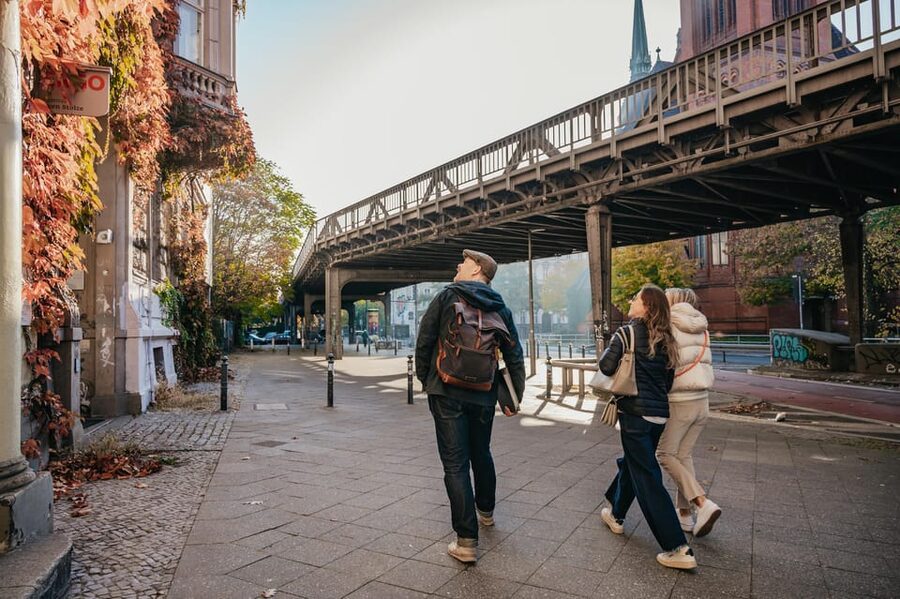
Motzstraße brings the interwar entertainment scene into sharper focus. The former El Dorado cabaret club was one of the best-known names connected with Berlin’s queer nightlife. You visit its former location and learn what made such places important beyond their role as venues.
Cabarets offered performance, spectacle, and a chance to experiment with identity. They also created meeting points where people could see lives and styles that were rarely accepted in more formal public settings. At the same time, these places existed within a city that could be welcoming in one moment and dangerous in another.
This is where the tour’s balance matters. Interwar Berlin is sometimes reduced to a story of endless freedom, but that version leaves out the threats and restrictions. The tour presents the excitement of the period while keeping sight of its limits, especially the short time available before the Nazi rise to power.
You will not be watching a cabaret performance, and the old El Dorado is not presented as a functioning attraction. Instead, you stand at the site and use the surrounding street as a starting point for understanding the people who once gathered there. I find that approach more useful than a quick photo stop because it explains the place’s role in the wider story.
From public life to persecution
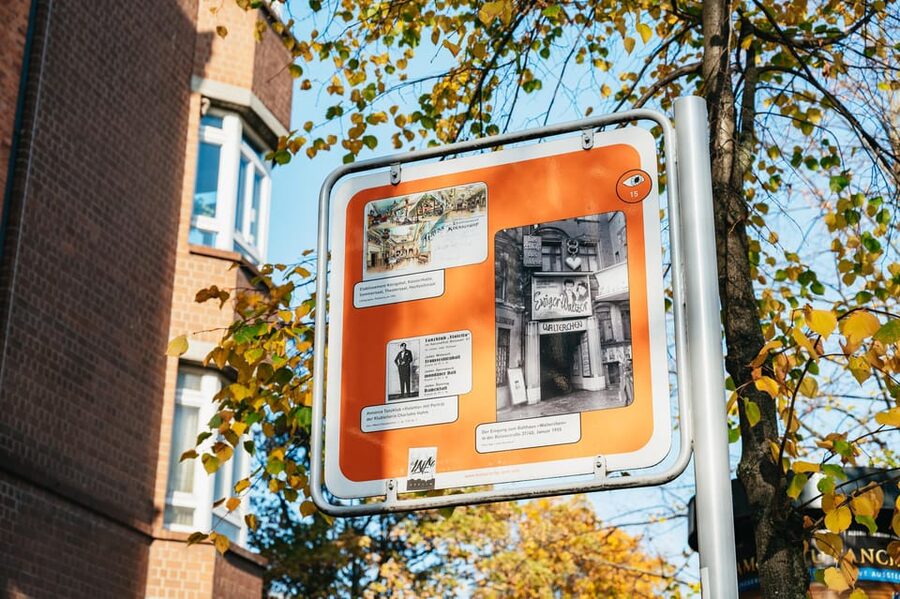
The tour’s historical arc becomes more serious when it moves from the promise of the 1920s to the destruction that followed. Berlin’s queer scene did not simply fade away because tastes changed. The Nazi accession to power brought persecution, fear, and the collapse of the public spaces and political work that had grown around them.
This part requires attention. The walk is lively, but the subject is not always light. Tobias is praised for handling sensitive material with care, and the use of individual stories helps keep the history human rather than abstract.
You hear about people who shaped the movement and about the structures that allowed a community to form. The result is a reminder that rights can be won, lost, and won again. Schöneberg’s streets become evidence of both possibility and danger.
For visitors who know Berlin mainly through its Cold War division, museums, and grand monuments, this is a useful change of focus. The tour shows another side of the city’s past, one built through clubs, friendships, publications, activism, and personal courage.
More neighbourhood tours in Berlin:
- Berlin: Hidden Backyards Guided Walking Tour
★ 4.8 · 5,360 reviews - Berlin: Spree Boat Tour to Müggelsee
★ 4.6 · 1,973 reviews - Berlin: Alternative Bike Tour of Kreuzberg & Friedrichshain
★ 4.7 · 548 reviews - Berlin: Mitte Culinary Food Tour
★ 4.5 · 447 reviews
Christopher Isherwood on Nollendorfstraße
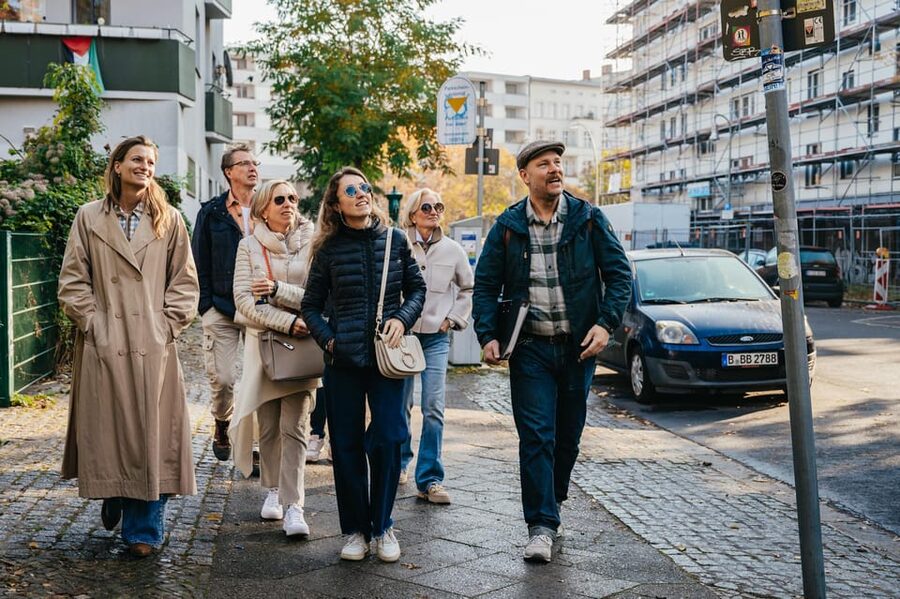
The stop at Christopher Isherwood’s former home gives the story a literary connection. Isherwood’s Berlin writing helped carry the city’s queer world to a large international audience, and his work later became important to the Gay Liberation movement.
Seeing the address on Nollendorfstraße adds a physical reference to a writer whose work is often discussed in broad cultural terms. You can place his life within the same streets as the clubs, cafés, and apartments that shaped his view of Berlin.
The guide does not treat Isherwood as the only person who matters. That is important. Famous writers can draw attention to a neighborhood, but they are only part of its story. The tour uses Isherwood as a doorway into the period while also bringing in activists, performers, residents, and less familiar figures.
If you have read his Berlin novels or seen adaptations of his work, this stop will likely carry extra weight. If you have not, you can still follow the basic connection between literature, place, and the public image of queer Berlin.
Schwerin Straße and the lesbian quarter
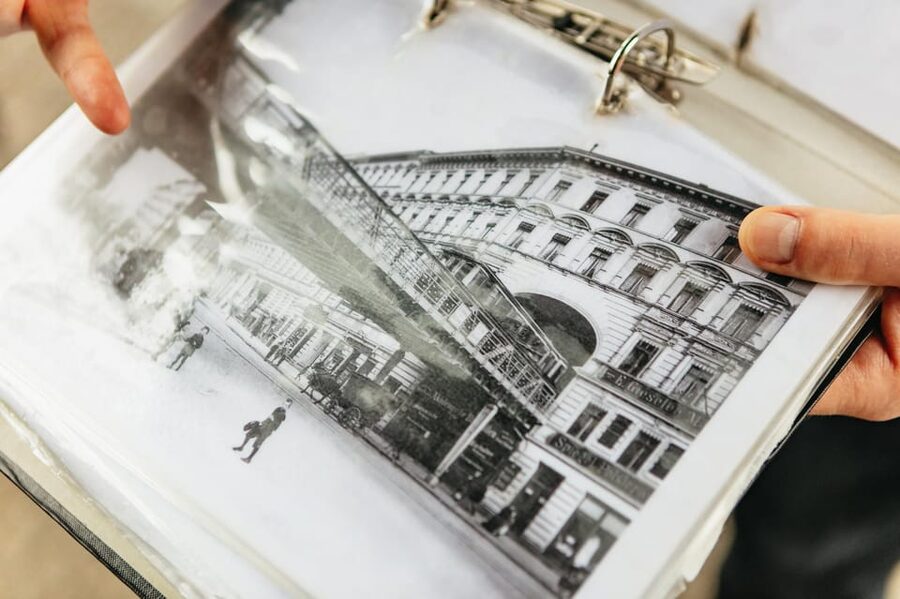
One of the tour’s strongest features is its attention to women’s history. The route passes through the lesbian quarter on Schwerin Straße, showing that Schöneberg’s queer past was not only a story of male clubs and male writers.
This section broadens the picture of how people found one another and built social networks. Lesbian history is often harder to see in conventional city tours, so a stop that gives it a clear place on the route is valuable.
The tour also includes trans, intersex, and gender-nonconforming stories. That wider range makes the walk more useful for anyone who wants to understand LGBTQIA+ history as a connected but not identical set of experiences.
You should not expect a full academic survey of every group or decade in 2.5 hours. What you get is a route that makes a deliberate effort to avoid a narrow version of queer history. Tobias’s personal anecdotes and the visual material help make these subjects easier to discuss without turning the walk into a lecture.
Eisenacher Straße and Schöneberg today
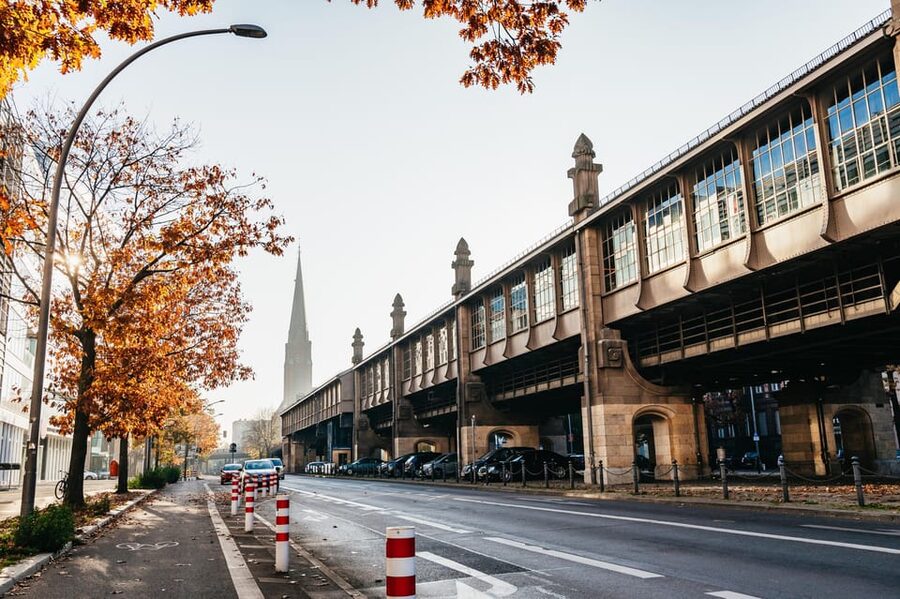
Eisenacher Straße brings the story into the present. The street still reflects the varied life of Schöneberg’s queer neighborhood, so this part is not only about what used to be there. You see how the area continues to function as a place for LGBTQIA+ life, business, culture, and community.
That present-day link keeps the tour from becoming a memorial walk. Berlin’s queer districts have changed, and not every old venue remains. The neighborhood’s identity is still visible, but it is mixed with ordinary residential life and the wider changes that affect any central Berlin district.
Tobias also points out architecture, street art, cafés, shops, and local details. These observations help you read the streets as a living part of Berlin instead of a backdrop for a history lesson.
The walk may finish near a queer café or bookshop, depending on the arrangement and route. Food and drinks are not included, so any stop afterward is your own expense. That is actually useful: you can continue exploring at your own pace, buy a book, have coffee, or seek out the nightlife that interests you.
Tobias as your guide
The guide can make or break a history walk, and Tobias is the main reason this experience feels personal rather than formulaic. His approach combines clear research with humor, archive material, and stories about the people connected with the neighborhood.
He is also described as patient and flexible. One group noted that he adjusted when transport delays affected their arrival, while others appreciated the pauses and comfort stops during the route. In cold weather, he has adapted the walk to help people stay warm, and in one winter outing he even offered tea.
These details matter because a 2.5-hour walk asks a fair amount from you. A guide who notices the group’s pace and comfort makes the time easier. Tobias also welcomes questions, so you can steer parts of the conversation toward literature, politics, architecture, nightlife, or current LGBTQIA+ life.
His personal connection to the community adds warmth, but the tour is not built only on personal experience. The research, visual aids, and historic locations provide the structure. That mix works well for people who want both documented history and a human voice.
Is $23 a fair price?
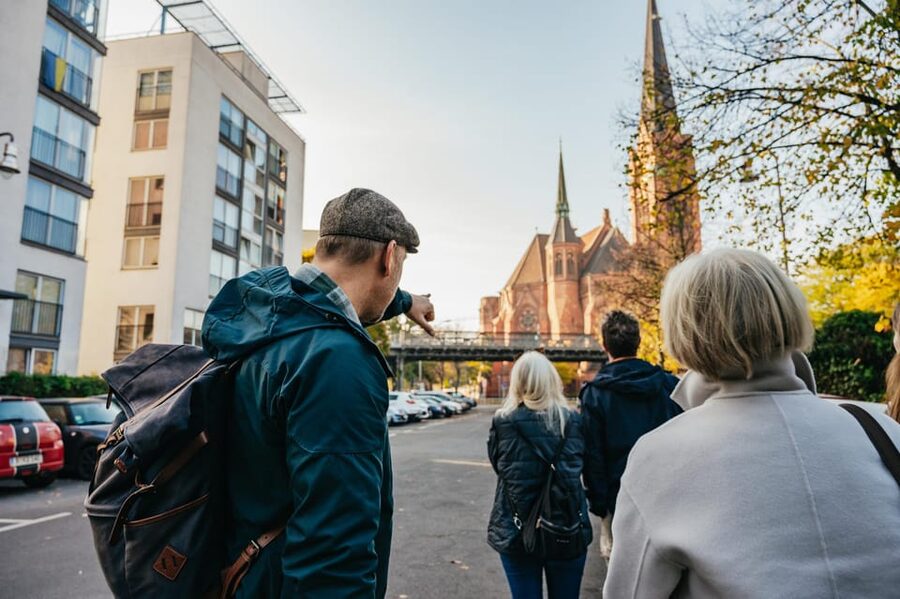
At $23 per person, this is good value if you care about social history and want more than a general city walk. You receive 2.5 hours with a live English or German guide, a focused route, archive material, and access to stories that you would be unlikely to assemble from simply walking around Schöneberg alone.
The value is less obvious if you want major monuments, interiors, or a fast list of photo stops. Several sites are former locations, so you may spend time looking at ordinary streets while listening to the past. That is not a flaw, but you should book with the right expectation.
There is no food or drink included. Since the walk is moderately long, eat beforehand or plan a café stop afterward. The tour is wheelchair accessible, though the exact meeting point and route details may vary with the option booked.
You can cancel up to 24 hours in advance for a full refund, and reserve now while paying later. Special dates, times, and meeting points can also be arranged for private groups by request.
Who will enjoy this walk most?
I would recommend it to anyone interested in queer history, Berlin social history, literature, political movements, or the way cities preserve memories after their buildings disappear. It works particularly well as an early Berlin activity because it gives you a clear sense of Schöneberg before you return later for cafés, shops, nightlife, or museums.
It is also a good choice for visitors who want a guide rather than a self-guided address list. The former clubs and homes are easier to understand when someone explains who used them, why they mattered, and what happened to the wider movement.
You do not need to identify as LGBTQIA+ to appreciate the tour. The material offers a broader lesson about public space, civil rights, persecution, and the ways minority communities create places of safety and expression.
I would think twice if you dislike walking in poor weather or prefer indoor attractions. The tour can be adapted in spirit, but much of its value comes from standing in the actual streets and seeing how the old story fits the modern neighborhood.
My call on the Gay Berlin Out in Schöneberg tour
Book this walk if you want Berlin told through the people and places that shaped its queer public life. The strongest parts are the former Nationalhof and El Dorado sites, the Christopher Isherwood stop, the attention to lesbian history, and the link between interwar Berlin and the neighborhood today.
At $23, it is a sensible buy for a focused 2.5-hour experience. Bring comfortable shoes, dress for the forecast, and leave room afterward for a café or bookshop in Schöneberg. If Tobias is leading your departure, expect a friendly guide who uses humor without losing sight of the difficult parts of the story.
FAQ
Where does the Gay Berlin Out in Schöneberg tour take place?
The walk explores the area around Nollendorfplatz in Schöneberg, Berlin. It also includes Motzstraße, Nollendorfstraße, Schwerin Straße, and Eisenacher Straße.
How long does the tour last?
The tour lasts 2.5 hours. Starting times depend on availability.
What languages are offered?
The live guide is available in English and German.
Who guides the tour?
Tobias is the guide associated with this experience. He leads the walk with historical explanations, archive images, personal anecdotes, and time for questions.
Is the tour wheelchair accessible?
Yes, the activity is listed as wheelchair accessible.
What is included in the price?
The price includes the walking tour and guide. Food and drinks are not included.
Can the meeting point and schedule be changed?
The meeting point may vary by booking option. Special dates, times, and meeting points can be arranged for a group by request, and these details should be provided when calling.
More Walking Tours in Berlin
- Discover Berlin Half-Day Walking Tour
★ 5.0 · 9,624 reviews - Berlin: Third Reich and Cold War 2 Hour Walking Tour
★ 4.9 · 6,830 reviews - Berlin: Discover Berlin Walking Tour
★ 4.9 · 5,998 reviews - Berlin’s Best: 2 Hour Walking Tour Third Reich and the Cold War
★ 5.0 · 5,486 reviews
Newest Berlin reviews
- Where It All Began: Berlin’s Queer & Trans History Tour★ 4.9 · 6 reviews
- Understanding Kreuzberg: The roots of local (sub)culture★ 4.9 · 11 reviews
- Berlin: guided canoe | kayaktour★ 4.1 · 7 reviews
- Private Potsdam City Tour in an authentic vintage van★ 5.0 · 14 reviews
- Warnemünde Shore Excursion: Private Sachsenhausen and Berlin Tour★ 5.0 · 12 reviews
- Ultimate E-Bike Tour of Berlin with Beer Garden Stop★ 5.0 · 4 reviews
- In the Forbidden City – Potsdam Walking Tour★ 5.0 · 17 reviews
- Private Walking Tour of Potsdam and Sanssouci★ 5.0 · 24 reviews
Berlin Neighborhood Tours, compared.

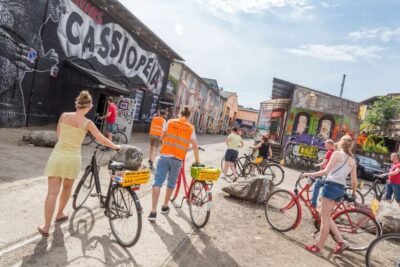
Alternative Bike Tour of Kreuzberg & Friedrichshain
Read our review →
Berlin Off-the-Beaten-Path Walking Tour: Kreuzberg, Mitte and Friedrichshain
Read our review →
Hansaviertel “The City of Tomorrow” Guided Tour
Read our review →
Browse the lists this tour appears in