
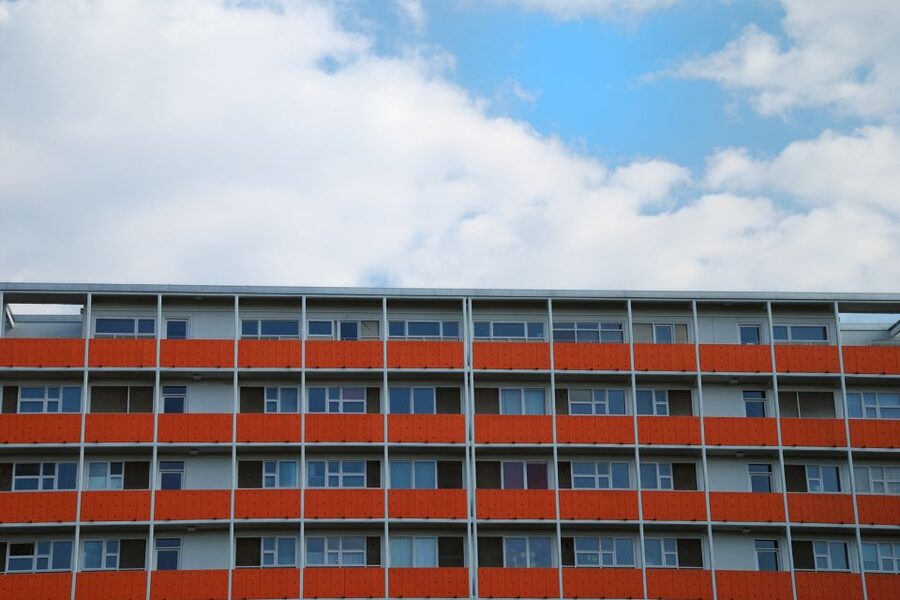
Reviewed · BERLIN NEIGHBORHOOD TOURS
Berlin: Hansaviertel “The City of Tomorrow” Guided Tour
Berlin’s Hansaviertel is a time capsule with concrete, glass, open lawns, and bold postwar ideas. This two-hour walk shows how Berlin tried to reinvent a bomb-damaged district through the International Building Exhibition of 1957, inviting architects from Germany and abroad to design a new kind of city.
I like the tour’s clear focus on architecture and its look at a lesser-known part of Berlin. I also like the way guides such as Tobias Schwabe connect individual buildings to the city’s divided and difficult past. The main drawback is simple: if modern architecture leaves you cold, two hours of postwar housing and planning may feel like a long walk.
Key points to know
- 1957 is the central date: Hansaviertel was rebuilt as a showcase for modern urban planning after wartime destruction.
- The route mixes famous and overlooked buildings: Expect the Gropius-Haus, Berlin Pavilion, Hansaplatz station, library, hospital, and private houses.
- Guides add the real value: Tobias Schwabe is known for friendly, funny, detailed explanations, and other guides may lead the walk.
- It is a two-hour walking tour: You need to be comfortable moving between sites, though the activity is listed as wheelchair accessible.
- English and German tours are available: The meeting point can vary by booking option, so check your confirmation carefully.
- The price is modest for a specialist tour: At $23 per person, it offers a useful introduction to Berlin’s postwar architecture.
Why Hansaviertel tells Berlin’s postwar story

Hansaviertel was not rebuilt as an ordinary residential quarter. It was redesigned for the International Building Exhibition of 1957, an event meant to show what modern urban life could look like after the destruction and political upheaval of the Second World War.
The planners wanted a structured, spacious city. That meant freestanding buildings, open areas, modern apartments, and a break from the tightly packed street blocks common in older parts of Berlin. The result was a district that feels very different from Mitte, Kreuzberg, or Charlottenburg.
Your guide helps you read the district as more than a collection of unusual buildings. The spacing between structures matters. The mix of apartment blocks, cultural buildings, transport, and public services reveals the full plan. Hansaviertel was intended to be a working model, not just a display of clever façades.
I find that idea especially useful because Berlin’s history is often taught through walls, checkpoints, memorials, and ruined buildings. Here, the story appears in urban planning. Architecture became part of the argument about what a new democratic city should be.
More neighbourhood tours in Berlin:
- Berlin: Hidden Backyards Guided Walking Tour
★ 4.8 · 5,360 reviews - Berlin: Spree Boat Tour to Müggelsee
★ 4.6 · 1,973 reviews - Berlin: Alternative Bike Tour of Kreuzberg & Friedrichshain
★ 4.7 · 548 reviews
Starting with the Berlin Pavilion and Müller-Rehm/Siegmann House
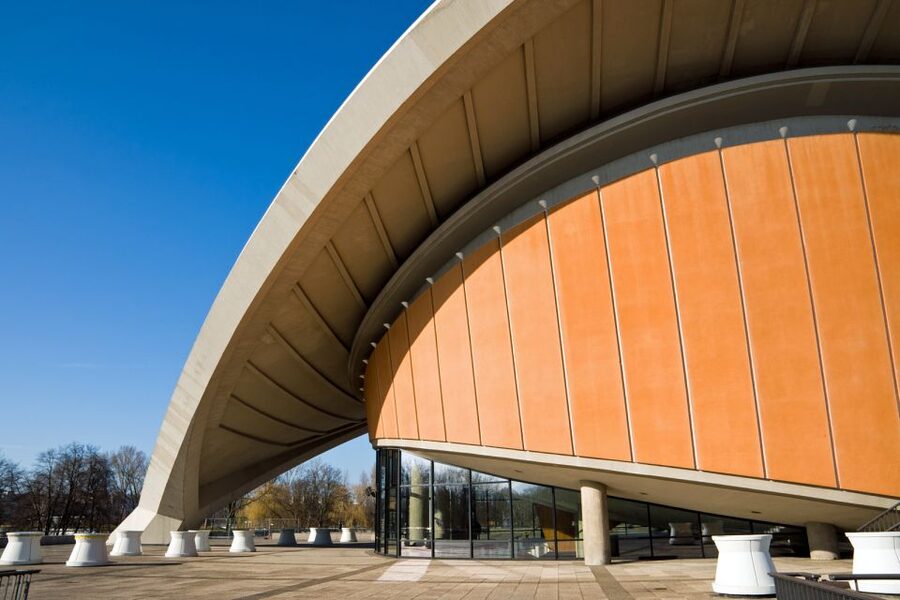
The Berlin Pavilion provides an early look at the exhibition’s purpose. It helps set up the central question of the walk: how do you build a new city after war while also presenting a fresh image of modern Germany?
The Müller-Rehm/Siegmann House adds a more personal scale. Instead of viewing Hansaviertel only through large apartment blocks, you see how individual homes fit into the wider plan. Your guide can point out design choices that are easy to miss when you walk through the district alone.
That is one of the tour’s strengths. Without explanation, a building may simply look like a dated piece of 1950s concrete. With context, its shape, position, and materials become clues to the period’s hopes and compromises.
Do not expect the Berlin Pavilion or the houses to function like a conventional museum visit. The value comes from seeing them in relation to the streets, open spaces, and other buildings around them. This is a walking tour first, with architecture interpreted on site.
The Gropius-Haus and the Swedish House
The Gropius-Haus is one of the route’s key architectural sights. Its name points to Walter Gropius, one of the major figures associated with modern design, and the building helps show the international ambition of Hansaviertel.
You will also see the Swedish House, another reminder that the 1957 exhibition drew on ideas and architects from outside Germany. The district was designed to make a statement beyond Berlin itself. It presented international modernism as a shared language for rebuilding cities.
I like this part of the walk because it keeps the focus on comparison. You are not simply told that Hansaviertel was modern. You can see different approaches placed close together, with each building making its own choices about height, shape, windows, and relation to open space.
The limitation is that architecture is experienced from the outside unless your selected tour option includes access to particular interiors. The supplied information confirms the route’s buildings and sights, but it does not promise interior entry. Plan on a street-level study of the district rather than a series of indoor visits.
Kaiser-Friedrich Memorial Church and the meaning of contrast
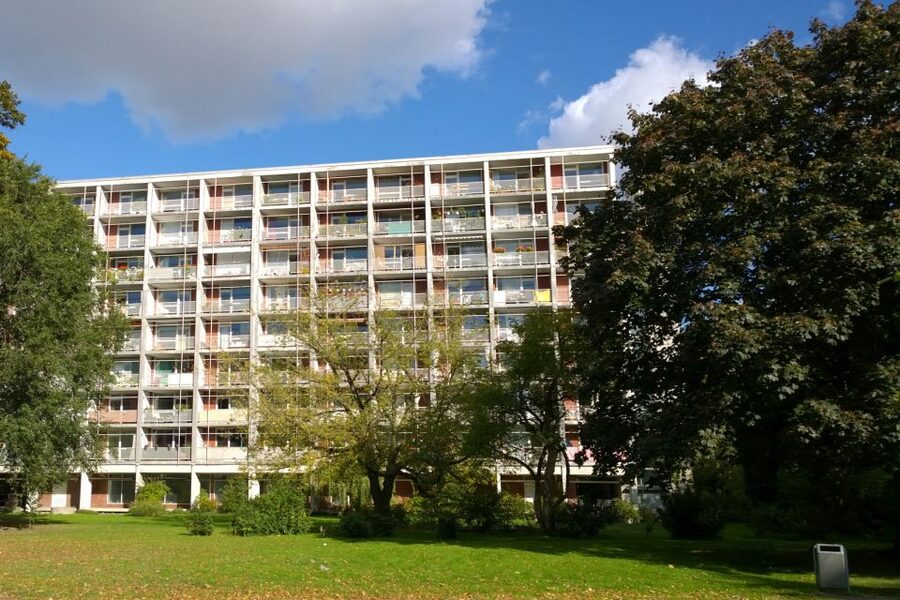
The Kaiser-Friedrich Memorial Church brings another layer to the route. A church in a modern housing district creates a useful contrast between older religious identity and postwar planning.
Hansaviertel is interesting partly because it does not erase every trace of what came before. Instead, the district places different periods beside one another. The church helps you see that rebuilding was not a clean break from Berlin’s past.
The tour also presents Berlin as a city shaped by competing ideas. Modernism promised efficiency, light, openness, and a healthier way to live. At the same time, the buildings reflect a particular era, and some visitors may find their plain materials and exposed forms severe.
Your guide’s explanation matters here. Tobias Schwabe has been praised for using humor and clear storytelling while answering questions patiently. That style suits Hansaviertel, where a dry lecture on planning theory could quickly become heavy going.
Other Berlin experiences to weigh up
- Berlin: 1-Hour City Tour by Boat with Guaranteed Seating
★ 4.3 · 16,993 reviews - Berlin: City Sightseeing Hop-On Hop-Off Bus Tour
★ 4.1 · 4,233 reviews - Potsdam: City and Castles Tour
★ 4.7 · 3,721 reviews - Berlin: 1-Hour City Sightseeing Cruise
★ 4.4 · 2,210 reviews
Hansaplatz station, library, and hospital
The U-Bahn station at Hansaplatz shows how transport was built into the district’s plan. A modern neighborhood needs more than housing, so the station helps explain how residents were meant to move through the city.
The Hansaviertel Library and Hansaviertel Hospital add everyday services to the picture. These are important stops because they keep the tour from becoming a parade of architect-designed apartment buildings. You see how the original plan addressed culture, health, transport, and daily life.
This is where the idea of a city of tomorrow becomes practical. Modern urban planning was not only about dramatic façades. It also concerned access, public institutions, and the way residents would use their neighborhood.
You might find these stops less visually striking than the Gropius-Haus or the larger housing projects. Their value is explanatory. They show how the district was intended to work as a complete community rather than as an open-air architecture display.
Van den Broek House and Schwippert House
The Van den Broek House and Schwippert House bring the route back to individual architectural statements. Named designers and distinct buildings allow you to compare different solutions within the same postwar project.
This variety is a good reason to take the tour with a guide rather than simply walk Hansaviertel on your own. The buildings can look similar at a glance, especially if you are not familiar with 1950s design. A guide can explain who designed each structure and what made its approach different.
The route does not treat Hansaviertel as a perfect success story. Its importance comes from the ambition of the project and the way it reflects the period’s debates. You are looking at a neighborhood built to represent progress, but also at a design experiment that has aged.
That balance makes the walk more useful than a simple list of architectural names. You can admire the ideas while still asking how well they served residents over time.
The Academy of Art as a cultural finish
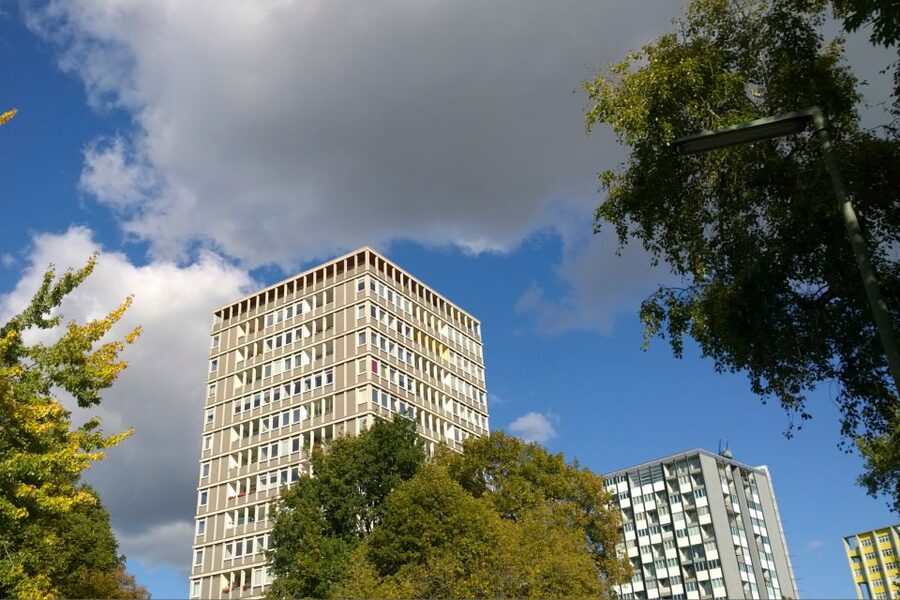
The Academy of Art gives the tour a strong cultural element. Hansaviertel was planned with more than homes and transport in mind. The arts were part of the vision for a modern city.
This stop also broadens the story beyond construction. The district was meant to support public life, not just provide efficient accommodation. The Academy connects the built environment to culture, education, and Berlin’s wider artistic identity.
The exact order of stops can vary, and the meeting point may change with the option you book. That is worth checking before you set out, especially if you are arranging the walk around another appointment. The advertised duration is two hours, so the route should fit comfortably into a morning or afternoon plan, but you should still allow time to reach the starting point.
How the guide shapes the experience
The strongest part of this tour is the guide’s interpretation. Tobias is repeatedly described as personable, enthusiastic, funny, and well prepared. Mr. Schwabe is also named in the feedback, so Tobias Schwabe appears to be a key guide for this experience, though your guide may differ.
That human element matters. Hansaviertel does not offer the instant drama of the Brandenburg Gate or the Berlin Wall. Its interest builds slowly through details: why a building is positioned where it is, how postwar planning reflected political ideas, and what the 1957 exhibition was trying to prove.
A good guide also helps connect Hansaviertel with Berlin as a whole. The tour is not limited to architecture. It covers the city’s wartime damage, postwar rebuilding, international influences, and changing public identity.
You can ask questions during the walk. One long-standing strength of Tobias’s guiding style is patience with questions, which is useful if you want more than prepared commentary. If you prefer to take photographs and listen quietly, the tour should still work, but its real value comes from the explanations.
Is $23 a fair price?
At $23 per person, I consider this a good-value specialist walk. You are paying for two hours with a live guide and access to a focused subject that is easy to miss on a general Berlin tour.
The price makes the most sense if you care about architecture, city planning, German history, or the way Berlin rebuilt itself after the war. It is less compelling if your main goal is famous monuments or dramatic interiors.
A private architectural guide could cost much more, while a self-guided walk would give you the freedom to move slowly but not the same context. At this price, Hansaviertel becomes an affordable way to add a serious, focused topic to a Berlin visit.
The tour also has a practical advantage for repeat visitors and Berlin residents. Hansaviertel can remain unexplored even after several years in the city. A five-star rating across 219 reviews suggests strong satisfaction, but the more useful point is what the activity offers: a clear route, a specialist subject, and a guide who can make the buildings readable.
Who should take this walk?
I would choose this tour for:
- Architecture fans, especially those interested in 1950s modernism
- Visitors who have already seen Berlin’s major central sights
- Students and design professionals looking at postwar urban planning
- History-minded visitors who want to understand reconstruction through buildings
- Berlin residents who have never explored Hansaviertel
- Anyone who prefers a quieter district to the city’s main tourist routes
I would think twice if you dislike walking, want a major museum or monument, or need a tour packed with interior access. The pace is described as leisurely, but it remains a two-hour outdoor walk, and the supplied information does not specify seating, interior visits, or group size.
The activity is listed as wheelchair accessible, which is important for many visitors. Still, because the route includes multiple outdoor sites and the meeting point may vary, confirm the exact arrangements when booking if you have particular mobility needs.
Tours are offered in English and German. The option to organize tours from specific points at particular times may help with planning, but you need to check which arrangements apply to your chosen booking.
Should you book the Hansaviertel tour?
Book it if you want Berlin beyond the standard checklist. The Hansaviertel tour gives you a close look at a district built around the idea of a new city, then shows how that idea fits into Berlin’s painful past.
I especially recommend it for anyone who enjoys buildings with a story. You will see the Berlin Pavilion, Müller-Rehm/Siegmann House, Gropius-Haus, Kaiser-Friedrich Memorial Church, Hansaplatz station, the library, hospital, Van den Broek House, Schwippert House, and Academy of Art, but the real reward is understanding how these pieces were meant to work together.
Skip it only if modern architecture is not your thing or if your Berlin schedule is already too tight for a two-hour walk. For everyone else, $23 buys a thoughtful route and a useful new way to read the city.
FAQ
How long is the Hansaviertel tour?
The walking tour lasts two hours.
How much does the tour cost?
The listed price is $23 per person.
Which languages are available?
The live tour guide is available in English or German.
Who may guide the tour?
Tobias Schwabe is a named guide associated with the experience. The guide can vary depending on the date and booking option.
Where does the tour meet?
The meeting point may vary depending on the option booked. Tours can also be organized from specific points at certain times.
Is the tour wheelchair accessible?
Yes, the activity is listed as wheelchair accessible.
Which buildings are included?
The route includes the Berlin Pavilion, Müller-Rehm/Siegmann House, Gropius-Haus, Kaiser-Friedrich Memorial Church, Swedish House, Hansaplatz station, Hansaviertel Library, Hansaviertel Hospital, Van den Broek House, Schwippert House, and Academy of Art.
What is the main historical focus?
The tour explains how Hansaviertel was redesigned for the International Building Exhibition of 1957 and how the district reflected modern urban planning after the war.
Can I cancel the booking?
You can cancel up to 24 hours in advance for a full refund. A reserve-now, pay-later option is also available.
Newest Berlin reviews
- Where It All Began: Berlin’s Queer & Trans History Tour★ 4.9 · 6 reviews
- Understanding Kreuzberg: The roots of local (sub)culture★ 4.9 · 11 reviews
- Berlin: guided canoe | kayaktour★ 4.1 · 7 reviews
- Private Potsdam City Tour in an authentic vintage van★ 5.0 · 14 reviews
- Warnemünde Shore Excursion: Private Sachsenhausen and Berlin Tour★ 5.0 · 12 reviews
- Ultimate E-Bike Tour of Berlin with Beer Garden Stop★ 5.0 · 4 reviews
- In the Forbidden City – Potsdam Walking Tour★ 5.0 · 17 reviews
- Private Walking Tour of Potsdam and Sanssouci★ 5.0 · 24 reviews
Berlin Neighborhood Tours, compared.

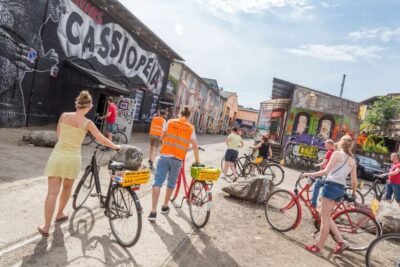
Alternative Bike Tour of Kreuzberg & Friedrichshain
Read our review →
Berlin Off-the-Beaten-Path Walking Tour: Kreuzberg, Mitte and Friedrichshain
Read our review →

Browse the lists this tour appears in