
Reviewed · BERLIN THIRD REICH TOURS
Third Reich Berlin: Hitler and WWII Walking Tour
Berlin’s most chilling sights are often plain patches of pavement, office buildings, and quiet memorials. This three-hour Third Reich walk connects those ordinary-looking places to Hitler’s rise, the machinery of Nazi rule, the persecution of Jews, and the final Soviet assault on Berlin. You finish near the Topography of Terror and Checkpoint Charlie, with a much clearer sense of how the city’s center became the heart of a dictatorship.
I like two things here. First, the route gives you context instead of isolated monuments: the Reichstag fire, Goebbels’ propaganda office, Göring’s Air Ministry, the bunker, and the Soviet memorial all fit into one story. Second, the guides make a real difference. Maria, RU, Chris, Tom, Paul, Ciarán, and others have been praised for clear explanations, strong storytelling, and patient answers. The main drawback is simple: you are outside for three hours, walking briskly in a group of up to 25, so cold weather and tired feet can dull the experience.
Key points to know before you book
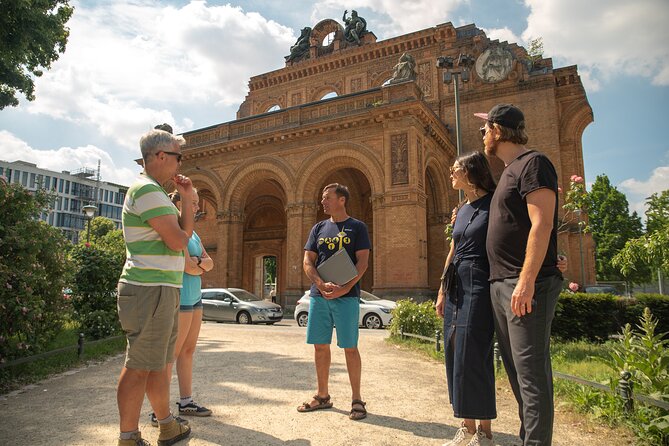
- Hitler’s bunker is a location, not an underground attraction: You see the site above ground and learn what happened there in April 1945.
- The route links Nazi power to the Holocaust: The walk includes the Holocaust Memorial, the Trains to Life, Trains to Death memorial, Wilhelmstrasse, and the former SS and Gestapo headquarters.
- You cover about 5,000 steps: Comfortable shoes and weatherproof clothing matter, especially in winter.
- The guides are the main strength: Names praised for clear, engaging delivery include Maria, RU, Chris, Tom, Paul, Ciarán, Jamie G, Hannah, Tina, and Callam.
- The price is modest for a three-hour guided walk: At about $24.07 per person, the value comes from the historical links and places you could easily miss alone.
- The walk ends near Checkpoint Charlie: You can continue sightseeing in central Berlin after the tour.
Why this walking tour works in Berlin
Berlin’s Nazi-era sites are spread across the government district and central neighborhoods. Many have been demolished, repurposed, or reduced to a small plaque. If you explore alone, you may pass the former Reich Air Ministry without realizing what it was, or reach the bunker site and find only a nondescript area beside modern buildings.
A guide supplies the missing connections. You learn how the Nazi government used architecture, propaganda, police power, and military planning together. You also hear about the people who resisted, including Henning von Tresckow, Hans Oster, and Claus von Stauffenberg.
The route is not just about Hitler. It covers daily life under dictatorship, air raids, the erosion of civil rights, the Lebensraum policy, and the system that led to war and the Holocaust. That wider frame makes the walk useful for anyone who wants more than a collection of famous names.
The subject is grim, and the best guides treat it seriously without turning the tour into a lecture. Paul has been praised for balancing difficult material with accessible storytelling. Ciarán is noted for clear explanations and a comfortable pace, while Callam made a point of checking that the group understood the material. Those qualities matter when the topic includes mass murder, state terror, and the destruction of democracy.
More Third Reich history tours in Berlin:
- Berlin: Third Reich and Cold War 2 Hour Walking Tour
★ 4.9 · 6,830 reviews - Berlin’s Best: 2 Hour Walking Tour Third Reich and the Cold War
★ 5.0 · 5,486 reviews - Berlin: Third Reich, Hitler, and WWII Walking Tour
★ 4.9 · 1,133 reviews
Starting at Friedrichstrasse and the route into Nazi Berlin
The tour begins at a central meeting point listed as Reichstagufer 17, with Friedrichstrasse Station identified at the start of the route. Arrive 15 minutes early. The opening talk gives you a map of the places ahead and explains how the government quarter became the center of Nazi power.
This first orientation is useful because the walk covers a lot of ground. You are not simply moving from one monument to the next. You are following the political and military story of Berlin, ending with the collapse of the regime in 1945.
One early stop is the Trains to Life, Trains to Death memorial. It recalls the deportation of Berlin’s Jewish population to concentration camps. The memorial’s power comes from its directness: trains became a tool of forced removal, and ordinary transport was turned into part of the machinery of murder.
The stop is short, about 10 minutes, but it provides an important human focus. The tour does not leave the Holocaust as an abstract chapter at the end of a political story. You encounter the consequences of Nazi policy along the way.
The Reichstag, where democracy was broken
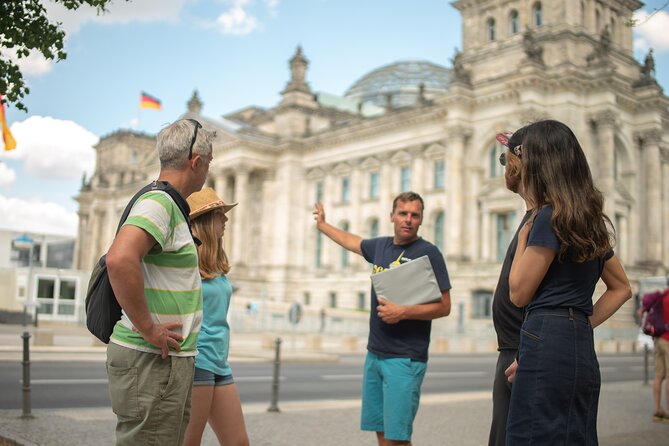
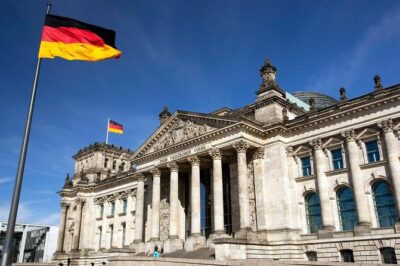
The Reichstag is one of Berlin’s most important political landmarks, but its Nazi-era story is more complicated than the familiar glass dome and grand facade suggest.
In 1933, fire damaged the building. Hitler’s government used the event to suspend civil liberties and crush political opposition. The fire helped the Nazis dismantle democratic safeguards while presenting repression as a response to an emergency.
Your guide explains how this moment fits into Hitler’s rise. That is one of the strongest reasons to take the walk with a guide. The building itself cannot tell you how legal measures, fear, propaganda, and political pressure combined to destroy democracy.
The Reichstag also appears later in the story. During the Battle of Berlin in 1945, Soviet forces fought to capture it, and the Soviet flag was raised above the building. The scene became a symbol of Nazi Germany’s defeat.
You spend about 15 minutes here. Admission to the building is not included, and this experience is an exterior walking tour, so do not expect a visit inside the dome.
Soviet memory at the Tiergarten memorial
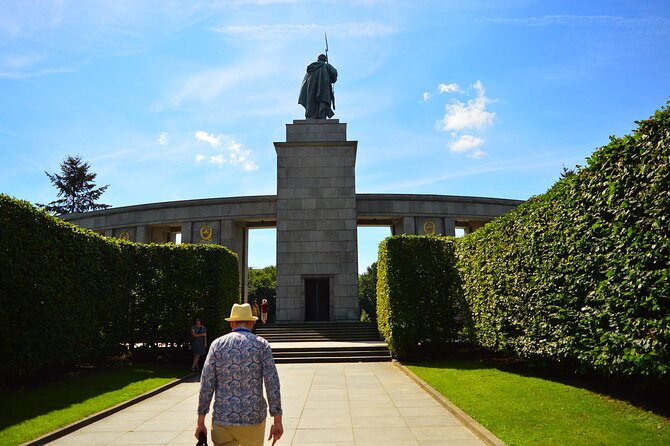
The Soviet War Memorial in Tiergarten honors Red Army soldiers killed in the Battle of Berlin. Its large soldier statue and military cemetery create a formal, imposing space in the middle of the city.
The memorial presents the Soviet victory over Nazi Germany through Soviet military symbolism. It is a useful place to discuss the human cost of the final battle, when Berlin became a battlefield and thousands of soldiers died in the last phase of the war.
This stop also helps correct a common misunderstanding. The fall of Berlin was not simply a political collapse inside government offices. It was the result of a brutal military assault through a heavily damaged city. The memorial gives that final campaign a physical setting.
You spend about 15 minutes here. Because it is outdoors, the memorial can feel especially cold and exposed in winter. Bring gloves and a warm layer, not just a coat.
Other Berlin experiences to weigh up
- Discover Berlin Half-Day Walking Tour
★ 5.0 · 9,624 reviews - Berlin: Discover Berlin Walking Tour
★ 4.9 · 5,998 reviews - Berlin: Hidden Backyards Guided Walking Tour
★ 4.8 · 5,360 reviews - Berlin: Alternative Berlin Walking Tour
★ 4.6 · 1,204 reviews
Brandenburg Gate and the use of symbols
The Brandenburg Gate is one of Berlin’s best-known sights, now linked with reunification and the end of the Cold War. During the Nazi period, it was used as a backdrop for rallies and propaganda displays.
That change in meaning is worth hearing about. The gate did not belong to the Nazis, but the regime used its familiar image to suggest authority, order, and national power. Political movements often borrow old symbols and place them inside a new story. Berlin lets you see that process in real space.
The stop lasts about 10 minutes. It is also a good point to take in how close many of the city’s key sites are. You can move from a famous landmark to a memorial or former government office within minutes, but the historical meanings are very different.
Art, architecture, and Nazi power
The Akademie der Künste provides a brief look at the relationship between culture and dictatorship. The tour discusses Albert Speer, Hitler’s chief architect and later armaments minister, and the monumental classical style promoted by the Nazi regime.
The point is not that every artist or institution worked directly for the Nazis. It is that art and architecture could be used to project power, obedience, and a carefully controlled image of the state.
This is a short stop, around 10 minutes, but it adds balance to a route otherwise focused on government, police, and military buildings. You see how the regime tried to shape public feeling through grand design as well as speeches and force.
The Holocaust Memorial and the limits of simple answers
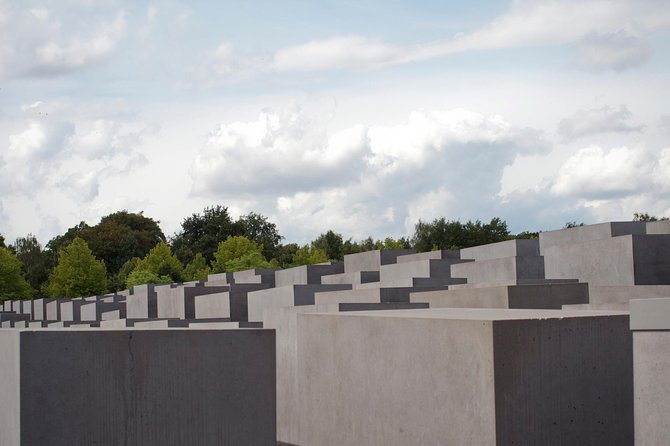
The Memorial to the Murdered Jews of Europe is a field of 2,711 concrete slabs, or stelae, set at varying heights. The paths rise and fall between them, and the space can feel disorienting.
You are given about 10 minutes here. That is enough for an introduction, but not enough for a full visit to the memorial’s underground information center. If you want to study the names, biographies, and family stories in more detail, plan a separate visit.
The memorial is powerful partly because it avoids a simple statue or single heroic image. It leaves room for reflection, but the guide’s explanation helps place it in the larger story of Nazi persecution and the Holocaust.
This is one point where the tone of the tour matters. The subject calls for care, and the strongest guides keep the presentation factual and respectful. The walk deals with painful material, so it may not suit anyone looking for a light sightseeing outing.
Hitler’s bunker and the last days of the regime
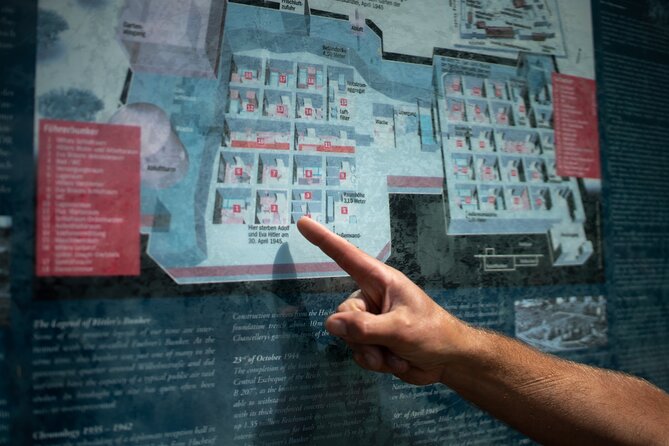
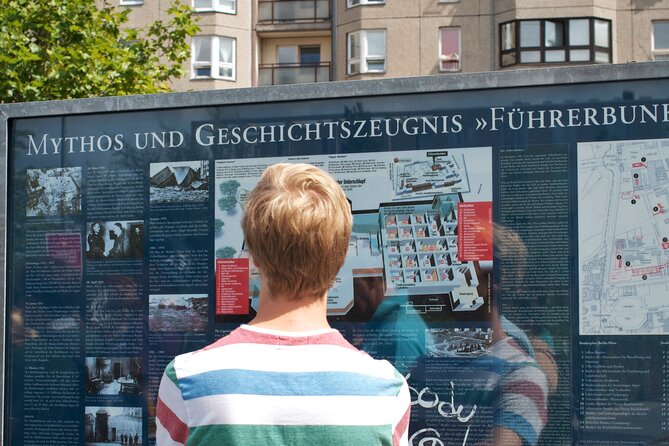
At the Führerbunker site, you stand above the place where Hitler spent his final days. The original New Reich Chancellery, designed by Albert Speer, once occupied the area nearby. The bunker itself is no longer an attraction you can enter.
That absence is part of the point. There is no preserved command room, dramatic entrance, or underground museum here. The location is intentionally ordinary, and without a guide you might not recognize it at all.
The tour explains Hitler’s final days and death in April 1945, along with the collapse of the government around him. One guide, Eran, was praised for revealing the bunker location only after the group reached the relevant sign, a simple approach that made the moment more striking.
Expect roughly 10 minutes at the site. Keep your expectations realistic: this is a lesson at a location, not a bunker tour.
Wilhelmstrasse and the machinery of government
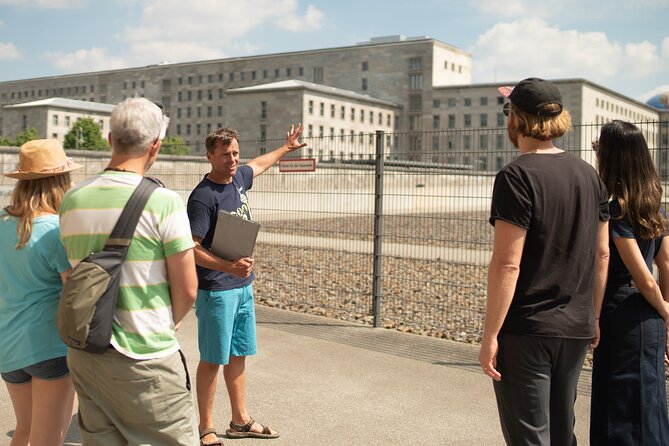
Wilhelmstrasse was the administrative core of Nazi Berlin. Offices connected with the Reich Chancellery, Foreign Ministry, and Propaganda Ministry were located along this area. Major decisions about war, persecution, and occupation were made behind these walls.
Today, much of the original setting has changed. Some buildings were destroyed, others were reused, and modern development can make the area look unremarkable. The guide’s job is to point out what once occupied the space and explain who worked there.
The route also discusses Goebbels’ propaganda headquarters. Goebbels used speeches, media, and carefully staged public events to maintain support for the regime and shape how Germans understood the war.
This is where the tour’s focus on connections pays off. Hitler’s bunker was the final command center, but the dictatorship depended on ministries, staff, police offices, military planners, and propaganda workers. Wilhelmstrasse helps you see that Nazi rule was a system, not the work of one man alone.
Göring’s Air Ministry and the Topography of Terror
On Niederkirchnerstrasse, you see Hermann Göring’s former Air Ministry, also known as the Reich Air Ministry. The building housed the Luftwaffe administration and reflected Göring’s position as head of the Nazi air force and one of Hitler’s closest officials.
The building’s size and formal design communicate authority, but the important lesson is what happened inside. Military planning and air operations were managed from offices like this, linking Berlin’s grand architecture to the war across Europe.
The final major stop is the Topography of Terror, located at the former SS and Gestapo headquarters. Its exhibitions examine how these organizations enforced repression, persecution, and mass murder. Photographs, documents, and personal accounts show how terror became an organized part of government.
The walking tour ends here, near Checkpoint Charlie. The museum is a natural place to continue your study, though a full museum visit requires more time than the 10-minute tour stop.
Pace, group size, and practical comfort
The tour lasts about three hours and may cover roughly 5,000 steps. The pace has been described as brisk but manageable, though this is not the right choice if you need frequent long rests or dislike walking between stops.
There is no hotel pickup. You make your own way to the central meeting point, and the end is close to public transportation and Checkpoint Charlie. The experience is offered in English, with a maximum group size of 25.
Wear comfortable shoes. In winter, layer up, and bring something warm to drink if you like. A short coffee stop may occur, but it should not be treated as a guaranteed part of the tour.
The mobile ticket is convenient, and service animals are allowed. Most people can take part, but the outdoor format means the weather will shape your comfort. Cold, wind, rain, or ice can make three hours feel much longer.
What the $24.07 price delivers
At about $24.07 per person, this is a good buy if you want a guided introduction to Nazi Berlin. You get three hours with a local guide, a carefully connected route, and access to historical interpretation that would be difficult to assemble on your own.
The value is not in paid admission. Most stops are viewed from public spaces, and the Reichstag interior is not included. You are paying for the route design, explanations, answers to questions, and the ability to locate sites that can otherwise seem invisible.
The guide quality is important. Maria has been praised for warmth and breadth, RU for tying the Nazi story together, and Chris for delivering a large amount of information in a short time. Tom, Jim, Pete, Jamie G, Hannah, Tina, Paul, Ciarán, and Callam have also been singled out for strong storytelling, clear explanations, humor, or patience.
You cannot usually choose a specific guide when booking, so treat those names as examples of the standard you should hope for, not a promise of who will lead your group.
Who should take this tour
I would choose this walk if you are interested in World War II, Nazi Germany, modern European politics, or the fragility of democracy. It also works well on a first Berlin visit because it gives you a map of the central government district and points out places you might otherwise overlook.
Families with older teenagers may find it useful. One parent reported that a 15-year-old stayed engaged, especially because the guide connected events to larger lessons about democracy and civic responsibility.
The tour is less suitable if you want to enter historic buildings, visit an intact bunker, or spend long periods at each memorial. It is also a poor match for anyone who wants a relaxed sightseeing stroll. The route is serious, brisk, and mostly outdoors.
Free cancellation is available if you cancel at least 24 hours before the start time. Changes or cancellations inside that window are not accepted for a refund.
Should you book the Third Reich Berlin walk?
Book it if you want the city’s Nazi-era sites explained as one connected story. The route covers the Reichstag, Brandenburg Gate, Holocaust Memorial, Hitler’s bunker site, Wilhelmstrasse, the Air Ministry, the Soviet memorial, and the Topography of Terror, all for about the cost of a casual meal.
Skip it if you need an indoor experience, have difficulty walking for three hours, or prefer to read quietly at museums. For most history-minded visitors, though, the combination of locations, serious subject matter, and strong guide-led storytelling makes this one of the better-value ways to understand central Berlin.
FAQ
How long is the Third Reich Berlin walking tour?
The tour lasts approximately three hours.
What language is the tour offered in?
The tour is offered in English.
Where does the tour begin?
The listed meeting point is Reichstagufer 17, 10117 Berlin. The route information identifies Berlin Friedrichstrasse Station as the opening stop, so check your booking confirmation for the exact meeting instructions.
Where does the tour end?
The tour ends at the Topography of Terror on Niederkirchnerstraße 8, very close to Checkpoint Charlie.
Is Hitler’s bunker open to enter?
No. The tour takes you to the location above Hitler’s former bunker and explains the final days there. The bunker is not presented as an underground attraction.
Is admission to the Reichstag included?
No. The tour visits the Reichstag area, but admission to the building is not included.
How large can the group be?
The maximum group size is 25 people.
Should I arrive early?
Yes. You should arrive 15 minutes before the scheduled start time.
Can I cancel for a full refund?
Yes, if you cancel at least 24 hours before the experience begins. Cancellations or changes made less than 24 hours before the start time are not refunded or accepted.
Newest Berlin reviews
- Where It All Began: Berlin’s Queer & Trans History Tour★ 4.9 · 6 reviews
- Understanding Kreuzberg: The roots of local (sub)culture★ 4.9 · 11 reviews
- Berlin: guided canoe | kayaktour★ 4.1 · 7 reviews
- Warnemünde Shore Excursion: Private Sachsenhausen and Berlin Tour★ 5.0 · 12 reviews
- Ultimate E-Bike Tour of Berlin with Beer Garden Stop★ 5.0 · 4 reviews
- Private Potsdam City Tour in an authentic vintage van★ 5.0 · 14 reviews
- In the Forbidden City – Potsdam Walking Tour★ 5.0 · 17 reviews
- Private Walking Tour of Potsdam and Sanssouci★ 5.0 · 24 reviews
Berlin Third Reich Tours, compared.


Berlin’s Best: 2 Hour Walking Tour Third Reich and the Cold War
Read our review →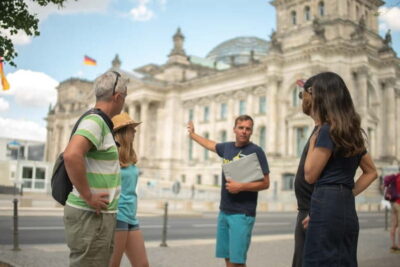
Berlin Third Reich Sites: Half-Day Walking Tour
Read our review →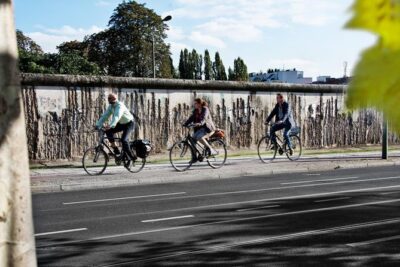
Guided Bike Tour of the Berlin Wall and Third Reich
Read our review →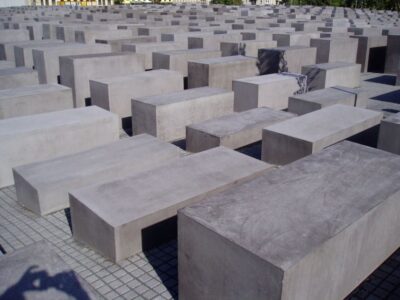
Hitler’s Germany: Berlin During the Third Reich & WWII
Read our review →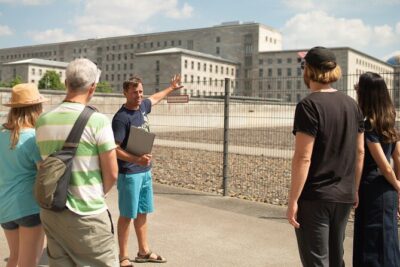
Private Walking Tour Berlin Third Reich Hitler and World War II
Read our review →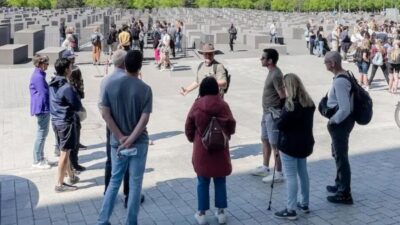
Hitler’s Berlin The Rise & Fall Guided Walking Tour
Read our review →Browse the lists this tour appears in