
Reviewed · BERLIN THIRD REICH TOURS
Berlin: Hitler’s Berlin The Rise & Fall Guided Walking Tour
Berlin’s Nazi past becomes clearest when you walk the ground where decisions were made. This 150-minute route links the Reichstag, Hitler’s bunker site, former terror headquarters, war memorials, and places of remembrance into one steady story, from the destruction of democracy in 1933 to Germany’s defeat in 1945.
I like two things here. First, the tour explains how dictatorship took hold instead of treating Berlin as a string of disconnected sights. Second, the guides, including Scott, Hannah, Matt, and Mark, are praised for answering questions clearly and keeping the subject human without turning it into a lecture. The main drawback is simple: this is an outdoor walking tour, so rain, cold, heat, and tired feet can affect the experience.
Key points at a glance
- A full 1933 to 1945 timeline: You follow the Nazi rise, repression, war, and collapse in a sensible order.
- The bunker site with context: The unmarked location becomes meaningful through explanation, rather than through a visible building.
- Memorials handled with care: The Holocaust Memorial and Sinti and Roma memorial are places for reflection, not quick photo stops.
- A useful mix of politics and war: The route connects government, propaganda, terror, military defeat, and daily life.
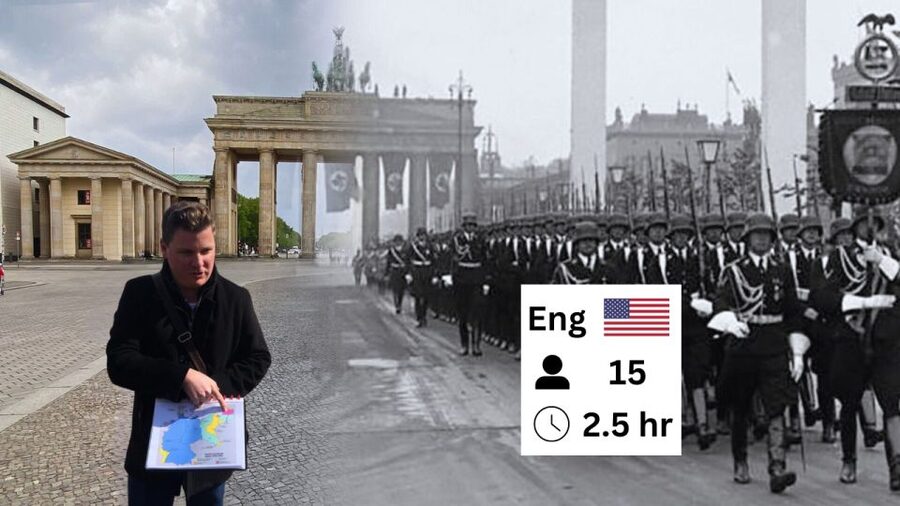
- Historic images improve the walk: Then & Now photographs and maps help you picture a city changed by war.
- Practical outdoor format: Bring comfortable shoes, water, and weather protection. Museum entry is not included.
Why this Berlin history walk works
Many Berlin history walks give you famous locations and a few dramatic stories. This one aims for a larger explanation. You begin with the political route to power, move through the machinery of repression, and finish near the former headquarters of the Gestapo and SS.
That structure matters. Nazi Germany did not appear fully formed overnight. The guide explains how legal authority was weakened, how power was gathered, how propaganda shaped public life, and how terror made opposition dangerous. You also look at why Jewish people were targeted and how persecution became systematic.
I especially like that the tour includes more than military history. You hear about government and ideology, but also about fear, propaganda, repression, and ordinary life under the regime. That gives you a better sense of how a dictatorship worked day by day, not just how it fought a war.
The subject is heavy, and the route does not try to make it light. Still, the best guides keep the tone clear and approachable. Scott is repeatedly praised for his calm delivery and command of detail. Hannah is noted for bringing events to life through personal stories and for presenting more than one angle. Matt is described as friendly, easy to follow, and willing to spend time on questions.
More Third Reich history tours in Berlin:
- Berlin: Third Reich and Cold War 2 Hour Walking Tour
★ 4.9 · 6,830 reviews - Berlin’s Best: 2 Hour Walking Tour Third Reich and the Cold War
★ 5.0 · 5,486 reviews - Third Reich Berlin: Hitler and WWII Walking Tour
★ 5.0 · 3,301 reviews
Starting at Brandenburg Gate
Meet at the Tourist Office beside Brandenburg Gate and look for the blue umbrella. This is a practical meeting point, but it can be busy, so arrive with enough time to locate the guide before the walk begins.
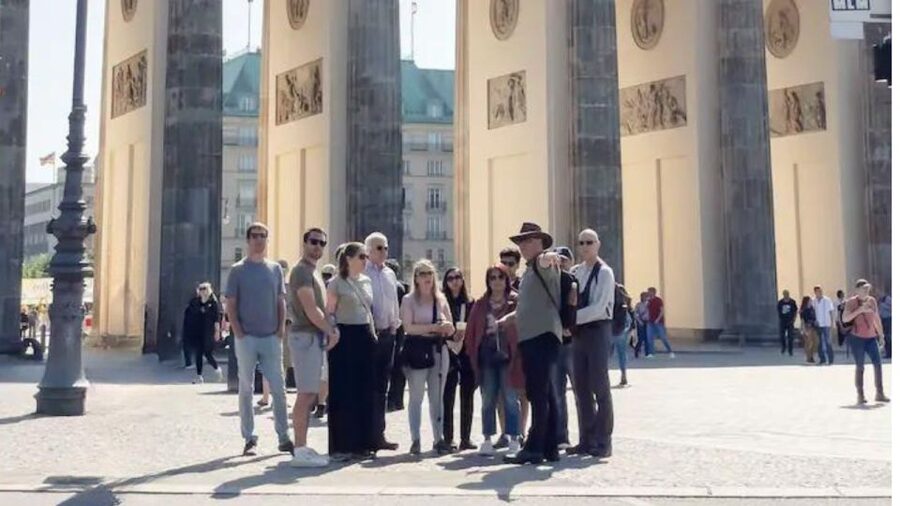
Brandenburg Gate gives the tour a strong opening. It is one of Berlin’s most recognizable monuments, yet here it is used to discuss a city where democracy, dictatorship, war, division, and reunification all meet. You begin to see the gate not just as a photograph backdrop, but as part of Berlin’s political story.
The first stop lasts about 10 minutes. You have time for a short visit, photographs, and an introduction to the route. The guide sets out the basic timeline, which helps you follow the more complicated stops later.
The Sinti and Roma memorial
The walk continues to the Memorial to the Sinti and Roma Victims of National Socialism. This stop is important because it widens the story beyond the persecution of Jewish people, while keeping the focus on Nazi racial policy and mass murder.
Expect about 10 minutes with the guide. That is not long, so you should listen closely and save questions for the pauses between stops if the group is moving on. The memorial is a quiet place, and the tour treats it as a place of thought rather than a landmark to rush through.
For many people, this is one of the less familiar locations on the route. It adds needed breadth to the tour and shows how Nazi persecution affected several targeted communities.
The Reichstag and the end of democracy
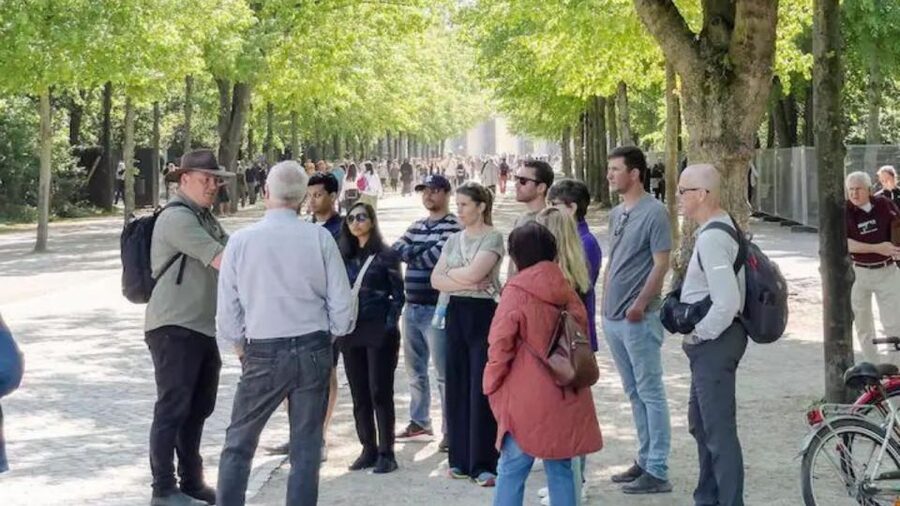
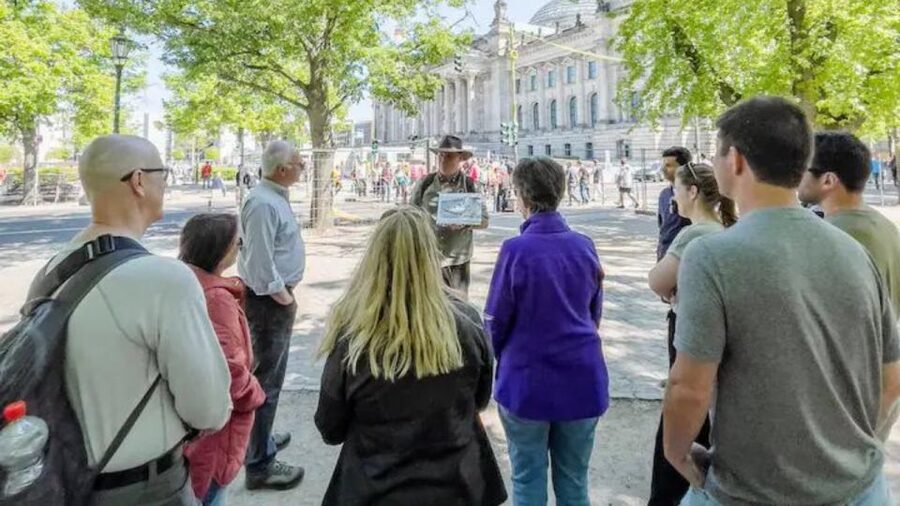
At the Reichstag, you spend about 20 minutes. The building is a major symbol of German democracy, but its place in the Nazi story is complicated. The guide connects the site to the collapse of parliamentary government and the political changes that allowed Hitler to consolidate authority.
This is where the tour’s wider method becomes useful. Instead of simply saying that Hitler became dictator, you examine the steps that made dictatorship possible. The Reichstag helps turn an abstract political process into something tied to a real place in Berlin.
You will not be taking an indoor tour of the building. The experience is outdoors, and access to museum exhibitions is not included. That is worth knowing if you expect a visit inside the Reichstag. The value here is the explanation at the site itself.
Other Berlin experiences to weigh up
- Berlin: Reichstag, Dome and Government District Guided Tour
★ 4.7 · 18,288 reviews - Berlin: Government District around the Reichstag Guided Tour
★ 4.7 · 8,447 reviews - Berlin: Hidden Backyards Guided Walking Tour
★ 4.8 · 5,360 reviews - Berlin: 1-Hour Boat Tour with Bilingual Live Guide
★ 4.7 · 3,629 reviews
Soviet War Memorial in Tiergarten
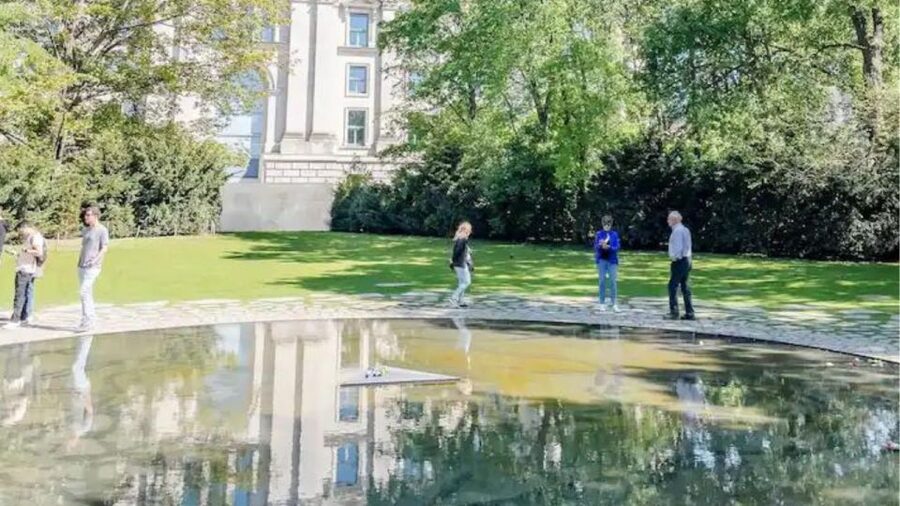
The Soviet War Memorial in Tiergarten receives around 20 minutes. It brings the final phase of the war into view and gives the guide a place to explain the Battle of Berlin, the Soviet advance, and the immense cost of the fighting in 1945.
This is one of the tour’s more military-focused stops. It balances the earlier political story by showing where Nazi rule ended in practical terms: through defeat, destruction, and occupation. The memorial also reminds you that Berlin’s final battle was not a distant event. It happened in the city streets and left a physical mark on the capital.
You have time for photographs and guided sightseeing here. Because the route remains outdoors, the stop can also provide a useful pause before moving on.
The Holocaust Memorial
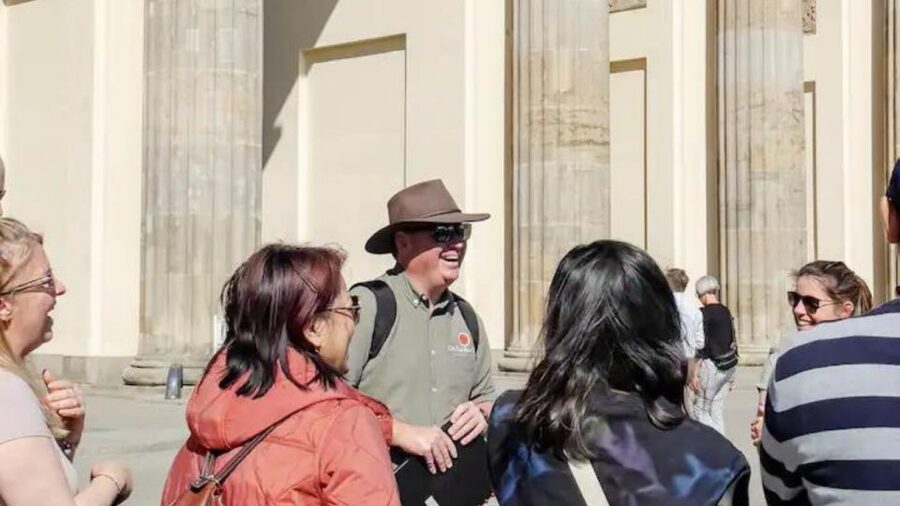
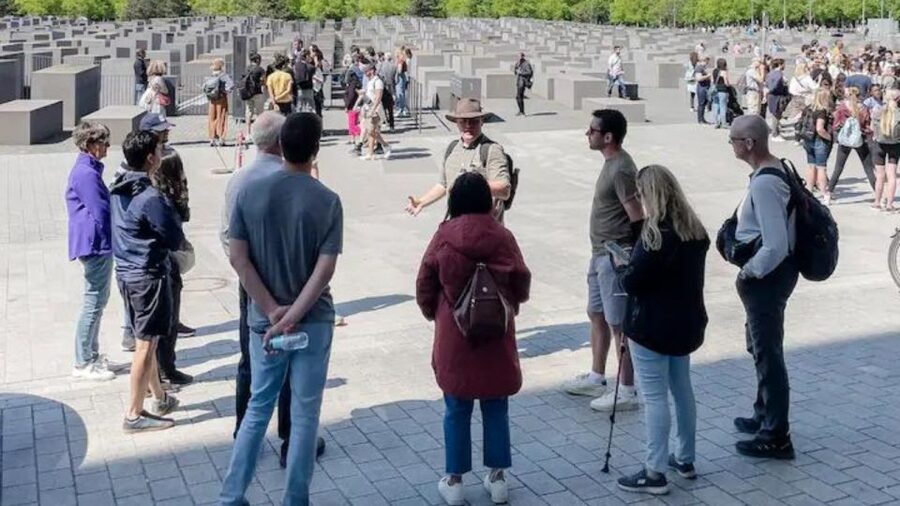
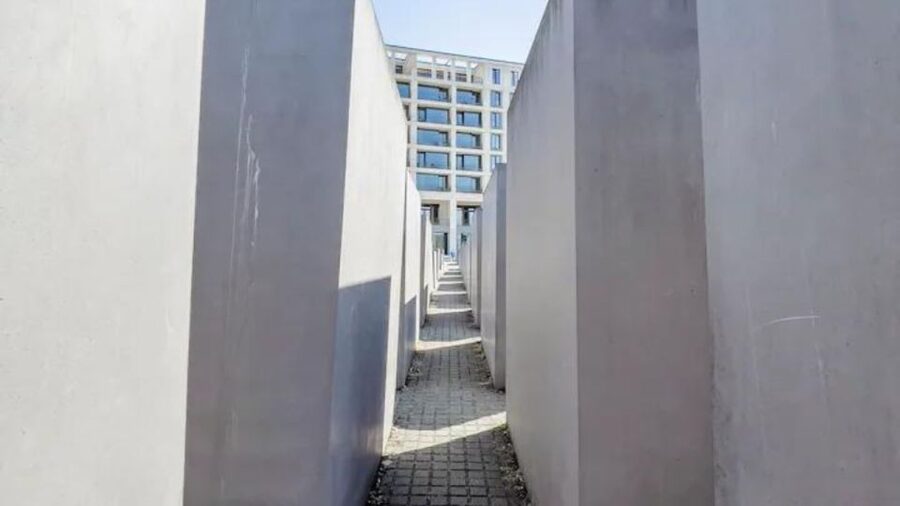
The Memorial to the Murdered Jews of Europe is given about 20 minutes. The field of concrete blocks is deliberately open to interpretation, but the guide helps place it within the wider story of exclusion, deportation, and murder.
This is a stop where you should expect a quieter tone. The memorial is not a museum with a long indoor visit on this route. Instead, the guide provides context, then gives you space to look and think.
I value the fact that the tour does not isolate the memorial from the political story. You connect the site to the earlier discussion of power, law, propaganda, and repression. That makes the memorial more than a solemn pause. It becomes part of the explanation of how persecution moved from official policy to mass murder.
Hitler’s bunker site
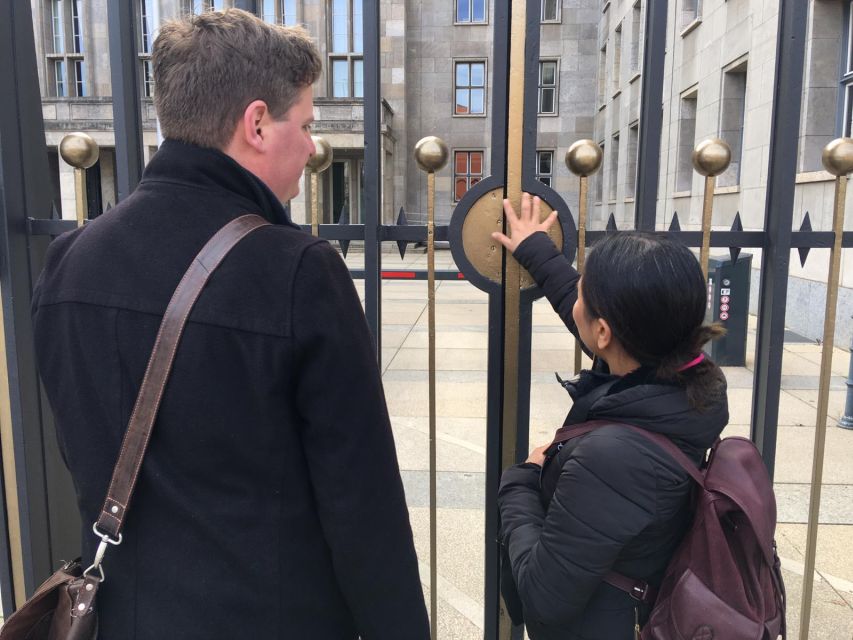
The former location of Hitler’s bunker is often surprising. There is no dramatic underground chamber open for inspection, and the site itself is not a conventional attraction. You stop for about 15 minutes while the guide explains what happened there during the final days of the war.
This is a case where the story matters more than the scenery. The bunker site marks the point at which the Nazi regime collapsed in Berlin, but the ordinary appearance of the location also shows how little physical evidence may remain at a place of enormous historical importance.
Your guide uses the stop to explain the war’s final days and the end of Hitler’s rule. The Then & Now photographs are especially helpful here, since they allow you to compare wartime images with the modern city around you.
Johann Georg Elser Memorial
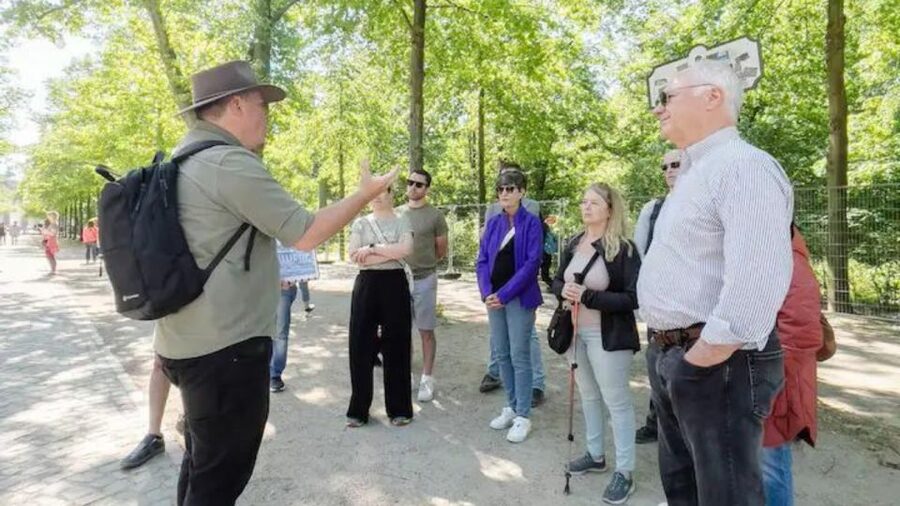
The Johann Georg Elser Memorial takes about 10 minutes. Elser attempted to kill Hitler in 1939, before the war had reached its later stages. His story gives the tour a chance to discuss resistance and the risks faced by people who opposed the regime.
This stop is valuable because it prevents the story from becoming too simple. Nazi Germany was not without opposition, but resistance was dangerous, fragmented, and often unsuccessful. Elser’s memorial shows that some people recognized the threat early, even though their efforts did not bring the regime down.
The stop also shifts the mood slightly. After the memorials to victims and the bunker site, you look at one individual’s decision to act. The guide can connect personal courage to the larger political setting without turning the story into a heroic shortcut.
The German Finance Ministry and Nazi power
The German Finance Ministry receives a shorter stop of about five minutes. It may not seem as immediately dramatic as the bunker or Holocaust Memorial, but it helps keep the focus on government and administration.
A dictatorship depends on offices, officials, money, laws, and paperwork as well as speeches and soldiers. A brief explanation here can show how the regime operated through institutions and how Berlin’s government buildings formed part of the machinery of rule.
This is also a good reminder that not every stop is a major photo opportunity. Some are included because they add a piece to the explanation. If you prefer a tour made only of headline sights, this stop may feel modest. If you want to understand how power functioned, it earns its place.
Topography of Terror and the nerve centre of repression
The tour ends at the Topography of Terror, near the former Gestapo and SS headquarters. You spend around 15 minutes with the guide, making this a final stop rather than a full museum visit.
The location represents the administrative centre of Nazi terror. Here, the guide draws together the main threads of the walk: political control, policing, persecution, propaganda, and the enforcement of fear. It is a fitting place to finish because the tour has moved from the public face of government to the systems that crushed opposition and organized repression.
The outdoor tour does not include entry to the indoor exhibition. If you want the museum experience as well, plan a separate visit when you have more time. Finishing here also gives you a useful option: you can continue exploring the site independently instead of being rushed through an indoor collection.
What the guides add
This experience depends heavily on the person holding the blue umbrella. The guide needs to explain politics, ideology, military events, and human suffering without losing the thread. The feedback from past bookings points to a consistent strength: guides such as Scott, Hannah, Matt, Mark, Jörg, and Ben make difficult material understandable and invite questions.
Scott is often singled out for his clear delivery, friendly manner, and ability to keep people engaged while walking. Hannah is praised for heartfelt stories and for taking time to offer different perspectives. Matt is described as personable, precise, and willing to continue beyond the scheduled time when questions warrant it.
That does not mean every guide will have the same style. Some may be more conversational, while others may focus more tightly on dates and political detail. The common promise is an academic background in WWII history and a specialist approach rather than a general city tour.
The use of historic maps and Then & Now photographs is a real benefit. Berlin has changed so much that it can be hard to picture wartime streets from modern buildings alone. Visual comparisons help you connect the present city to the events being discussed.
Walking, weather, and accessibility
The route lasts 150 minutes and includes considerable walking. Wear shoes you can comfortably use for a couple of hours, and bring water. A rain jacket, umbrella, or other weather protection is sensible because the tour runs outside and personal umbrellas are not supplied.
Past tours have continued through poor weather, so do not count on perfect conditions. The open format can be rewarding on a clear day, but cold, rain, or heat will affect how much attention you can give to the history.
The experience is listed as wheelchair accessible. Still, because it is a walking route across central Berlin, anyone who needs specific mobility details should confirm the current conditions before booking.
There is no hotel pickup, public transport, food, or drink included. You need to reach Brandenburg Gate on your own and make your own way onward from the Topography of Terror.
Is $47 a fair price?
At $47 per person, this is not the cheapest way to see central Berlin. You can walk past several of these sites for free. The question is whether you want help understanding what you are seeing.
I think the price is reasonable if you value a trained guide, a small-group setting, historic images, and a connected explanation of the years from 1933 to 1945. You are paying for interpretation, not admission tickets. The route covers a lot of ground and brings together sites that might otherwise feel scattered.
The value is weaker if you already know the political and military story well and prefer to explore at your own pace. You may also want to budget extra time for the Topography of Terror exhibition, since that indoor visit is not part of the tour.
Free cancellation up to 24 hours before the start and reserve-now, pay-later booking make it easier to fit into a changing Berlin schedule. Those policies are useful, but the main value still comes from the guide.
Who should book this tour?
I would choose this tour for a first visit to Berlin when you want a clear introduction to Nazi Germany without spending a full day in museums. It suits adults, older children, students, and anyone who wants politics and military history explained together.
It is also a good pick for people who already know the basics but want to connect locations. Several guides are comfortable with detailed questions, and past participants with a solid background in WWII still found room to learn more.
I would be cautious about booking it for anyone who dislikes walking, struggles in poor weather, or expects a dramatic bunker interior. The tour is serious, outdoors, and dependent on listening. It is not a theatrical show.
Should you book it?
Book it if you want clear historical structure, thoughtful memorial visits, and a guide who can connect Berlin’s buildings to the choices made inside them. The Reichstag, Holocaust Memorial, bunker site, and Topography of Terror each mean more when you understand how they fit together.
Skip it if you only want photographs, indoor exhibits, or a short sightseeing loop. For most visitors interested in Berlin’s Nazi past, though, $47 buys a useful framework for the city, plus enough detail to make your later museum visits more meaningful.
FAQ
How long is the Hitler’s Berlin tour?
The tour lasts 150 minutes, or two and a half hours.
Where does the tour begin?
Meet at the Tourist Office at Brandenburg Gate. Look for the guide carrying a blue umbrella.
Where does the tour finish?
The walk finishes at the Topography of Terror.
What language is the tour offered in?
The live guided tour is offered in English.
Is the tour indoors or outdoors?
It is an outdoor walking tour. Access to indoor museum exhibitions is not included.
Which places are included on the route?
The route includes Brandenburg Gate, the Memorial to the Sinti and Roma Victims of National Socialism, the Reichstag, Soviet War Memorial Tiergarten, the Holocaust Memorial, Hitler’s bunker site, the Johann Georg Elser Memorial, the German Finance Ministry, and the Topography of Terror.
Is the tour wheelchair accessible?
The activity is listed as wheelchair accessible.
What should I bring?
Wear comfortable shoes and dress for the weather. Bring a water bottle and your own umbrella or walking stick if you need one. Food, drinks, public transportation, and hotel pickup are not included.
More Walking Tours in Berlin
- Discover Berlin Half-Day Walking Tour
★ 5.0 · 9,624 reviews - Berlin: Discover Berlin Walking Tour
★ 4.9 · 5,998 reviews - Berlin: Alternative Berlin Walking Tour
★ 4.6 · 1,204 reviews - Berlin: Third Reich, Hitler, and WWII Walking Tour
★ 4.9 · 1,133 reviews
Newest Berlin reviews
- Where It All Began: Berlin’s Queer & Trans History Tour★ 4.9 · 6 reviews
- Understanding Kreuzberg: The roots of local (sub)culture★ 4.9 · 11 reviews
- Berlin: guided canoe | kayaktour★ 4.1 · 7 reviews
- Private Potsdam City Tour in an authentic vintage van★ 5.0 · 14 reviews
- Warnemünde Shore Excursion: Private Sachsenhausen and Berlin Tour★ 5.0 · 12 reviews
- Ultimate E-Bike Tour of Berlin with Beer Garden Stop★ 5.0 · 4 reviews
- Private Walking Tour of Potsdam and Sanssouci★ 5.0 · 24 reviews
- Potsdam Highlights – Private sightseeing tour by minibus★ 5.0 · 3 reviews
Berlin Third Reich Tours, compared.
Berlin’s Best: 2 Hour Walking Tour Third Reich and the Cold War
Read our review →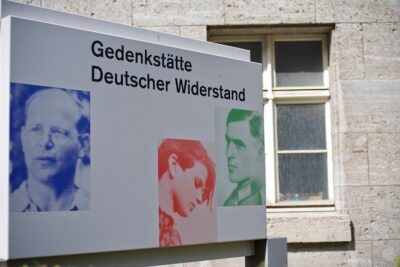
Third Reich Berlin: Hitler and WWII Walking Tour
Read our review →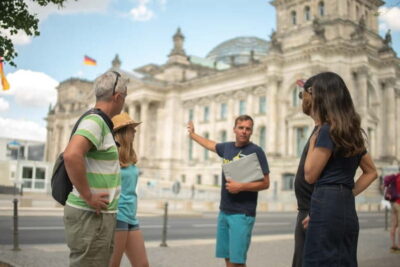

Berlin Third Reich Sites: Half-Day Walking Tour
Read our review →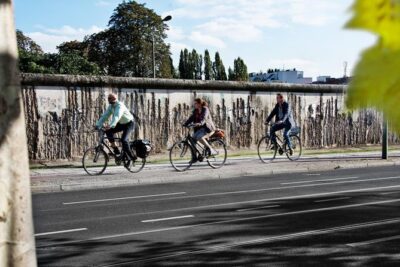
Guided Bike Tour of the Berlin Wall and Third Reich
Read our review →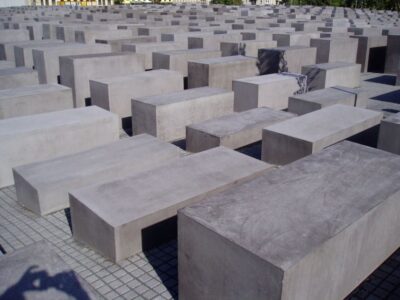
Hitler’s Germany: Berlin During the Third Reich & WWII
Read our review →
Private Walking Tour Berlin Third Reich Hitler and World War II
Read our review →Browse the lists this tour appears in