
Reviewed · BERLIN THIRD REICH TOURS
Private Walking Tour Berlin Third Reich Hitler and World War II
Berlin’s wartime story is scattered across the city, and this private tour ties the pieces together. You’ll move from the Soviet Memorial and Wilhelmstraße to the Führerbunker site, Holocaust Memorial, Reichstag, and lesser-known places such as the T4 memorial. The setting becomes your classroom.
I like the private format, which lets your guide adjust the pace and focus. I also like the human scale: guides such as Daniel, Jimmy, Emma, Jasper, Simon, and Georgia have been praised for clear explanations, personal stories, and good work with children. The main drawback is the cost, $192.97 per person, and the route covers a lot of ground in only three to four hours.
Key points at a glance
- Hotel pickup and drop-off: Start and finish with less guesswork, though you should confirm the exact meeting details before the day.
- Twelve major stops: The route links Nazi government sites, resistance memorials, Holocaust remembrance sites, and battlefield locations.
- Private English-speaking guide: Your guide can answer questions, change the pace, and avoid places you have already seen.
- A serious but varied route: Expect the Holocaust, Nazi repression, resistance, euthanasia program, wartime destruction, and postwar remembrance.
- Good for families and history fans: Guides have tailored visits for children, older visitors, and people with different levels of background knowledge.
- Mostly exterior viewing: Several stops are brief outdoor explanations, while the Topography of Terror and Resistance Memorial Center offer more substantial indoor material.
Berlin’s Nazi past, explained on the streets
This is not a museum-only outing. You see the places where government offices operated, where books were burned, where resistance took shape, and where Hitler spent his final days. That physical connection matters in Berlin, where much of the original architecture has disappeared or been rebuilt.
The route also puts Nazi rule into a wider frame. You learn about the Battle of Berlin, the Holocaust, political repression, the German resistance, and the later effort to create memorials and teach the past. Guides can also connect the Third Reich to World War I, the Cold War, and modern Berlin, depending on your interests.
The private setup is the strongest reason to choose this experience. A guide can slow down when your children have questions, move past a place you have already visited, or spend more time on the July 20 resistance attempt if that is your main interest. Daniel was praised for meeting a group at its hotel, asking what it wanted to see, and building the day around those interests. Emma, Jimmy, Oren, and others were also noted for adjusting the pace and content.
You should still expect a serious history lesson rather than a light sightseeing walk. The material includes mass murder, deportation, state violence, and the murder of disabled people under the Nazi euthanasia program. That is the point of the tour, but it may not suit very young children or anyone seeking a relaxed introduction to Berlin.
More Third Reich history tours in Berlin:
- Berlin: Third Reich and Cold War 2 Hour Walking Tour
★ 4.9 · 6,830 reviews - Berlin’s Best: 2 Hour Walking Tour Third Reich and the Cold War
★ 5.0 · 5,486 reviews - Third Reich Berlin: Hitler and WWII Walking Tour
★ 5.0 · 3,301 reviews
Soviet Memorial Tiergarten: victory and sacrifice
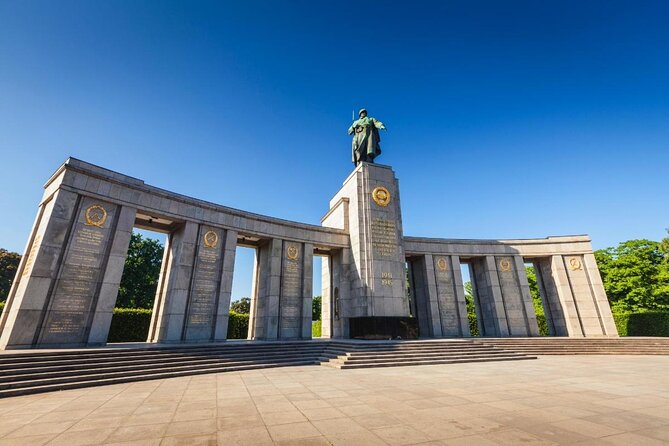
The first stop is the Soviet Memorial in Tiergarten, opened in 1949 to honor Soviet soldiers killed in the Battle of Berlin. Its large statue shows a soldier holding a sword and shield, a direct symbol of military victory and sacrifice.
Your guide explains how Soviet forces defeated Nazi Germany and why this memorial matters to both Soviet and German history. The visit is scheduled for about 10 minutes, so think of it as a sharp introduction rather than a long stop.
The memorial also gives you an early reminder that Berlin’s wartime story has more than one national viewpoint. The Soviet victory ended Hitler’s regime, but the later Soviet role in East Germany adds another layer that a good guide can explain.
Wilhelmstraße and the Detlev-Rohwedder-Haus
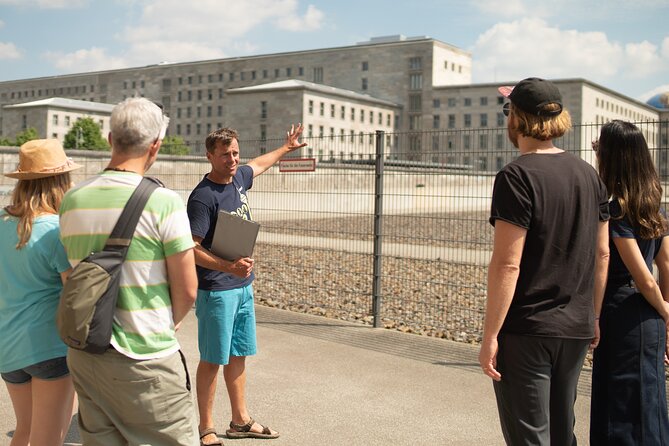
The Detlev-Rohwedder-Haus on Wilhelmstraße once served as the Reichsbank headquarters and later housed Hermann Göring’s Ministry of Aviation. Your guide uses the building to explain how the Nazi state managed money, government administration, and military policy.
The building later became the German Federal Treasury. That change of use is useful context: Berlin’s government buildings did not simply vanish after 1945. Many continued to serve the new state, even as the city tried to face what had happened inside them.
The nearby Wilhelmstraße was the core of Nazi government. Ministries, offices, parades, and propaganda events helped turn the avenue into a working center of dictatorship. The scheduled 20 minutes here gives you time to connect the architecture with the machinery of power.
One practical point: this is largely an exterior history lesson. If you want to study the buildings in detail, take notes during the tour and return later at your own pace.
Topography of Terror: documents from the machinery of repression
The Topography of Terror is one of the most important stops on the route. The indoor and outdoor exhibitions occupy the former grounds of the SS and Gestapo headquarters, making the location itself part of the lesson.
Here you encounter photographs, official documents, and personal testimonies about political repression and state terror. The focus is not only on Hitler and senior officials. You also learn how the system worked against dissenters and how ordinary institutions helped enforce Nazi policy.
The tour allows about 20 minutes here. That is enough for an introduction, but not enough to read every panel or study the full exhibition. One useful plan is to return the next day, as Simon’s guidance encouraged one group to do. Use the private tour for orientation and context, then come back for a longer visit if the material grips you.
This stop can be especially valuable if you know the names and dates but want to understand the process of repression. The exhibition helps turn an abstract subject into a record of people, orders, arrests, and consequences.
Other Berlin experiences to weigh up
- Discover Berlin Half-Day Walking Tour
★ 5.0 · 9,624 reviews - Berlin: Discover Berlin Walking Tour
★ 4.9 · 5,998 reviews - Berlin: Hidden Backyards Guided Walking Tour
★ 4.8 · 5,360 reviews - Berlin: Alternative Berlin Walking Tour
★ 4.6 · 1,204 reviews
Bendlerblock and the German resistance
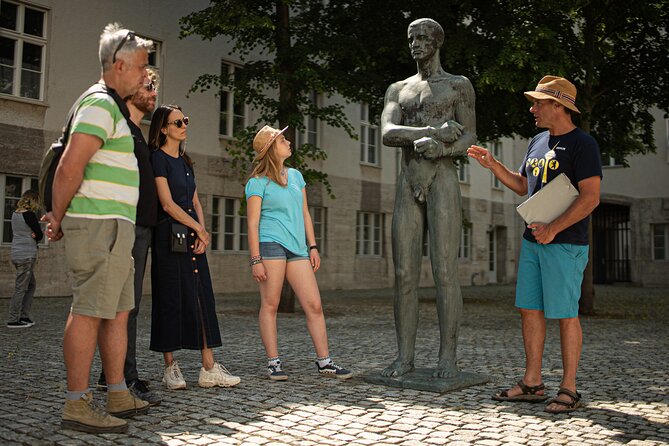
At the German Resistance Memorial Center in the Bendlerblock, the focus shifts from Nazi power to opposition against it. The exhibits cover several resistance movements, with special attention to Claus von Stauffenberg and the July 20, 1944 attempt to kill Hitler.
Your guide explains the motives, risks, and consequences faced by people who opposed the regime. The site is not a simple story of heroes and villains. Resistance came from different political and religious positions, and people made difficult choices under a dictatorship.
The visit lasts about 20 minutes. That is enough to understand why the Bendlerblock matters and to hear the main story, but you may want extra time inside if resistance history is a priority.
I find this stop valuable because it prevents the tour from presenting Germans only as followers or perpetrators. It also raises a question that remains relevant: what does moral courage look like when opposition carries a deadly price?
Bebelplatz and the loss of free expression
Bebelplatz is linked to the Nazi book burning of May 10, 1933. Thousands of books labeled un-German were destroyed here, in a public act of censorship and intimidation.
The square is framed by major buildings including the State Opera House and Humboldt University. Beneath the paving, an underground memorial shows empty bookshelves. You may not notice it at first, which makes your guide’s explanation important.
The scheduled stop is about 10 minutes. The visit is brief, but the idea is powerful: the destruction of books was not an isolated student spectacle. It showed how the Nazi regime attacked free thought, culture, and public debate at the start of its rule.
This is a good place to ask your guide how propaganda and censorship worked together. It also offers a change of pace from military events and gives younger visitors a clear way into the subject.
The Reichstag and the abuse of democracy
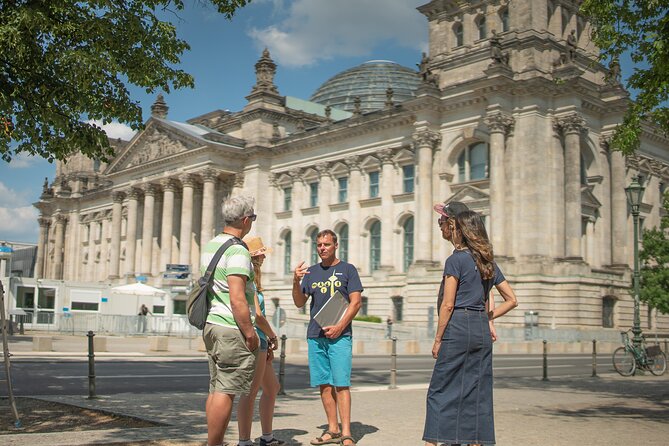
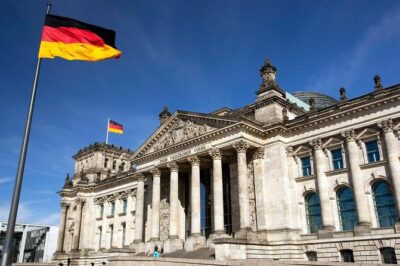
The Reichstag was completed in 1894 and later became central to the Nazi seizure of power. Your guide explains the 1933 Reichstag Fire and how the Nazis used it to suppress political opposition and strengthen their control.
The building was badly damaged during World War II and later restored as a symbol of democratic government. That contrast is the point of the visit. The Reichstag is not only a war relic. It also represents the effort to build a different political future after dictatorship.
You spend about 15 minutes here, and admission is not included. The experience described here focuses on the building’s exterior and its Nazi-era role. If you want to visit the dome or interior, treat that as a separate plan and check entry arrangements independently.
The Holocaust Memorial: space for reflection
The Memorial to the Murdered Jews of Europe consists of 2,711 concrete slabs arranged across a broad grid. The slabs vary in height, and walking among them can feel disorienting as the ground changes around you.
Your guide explains the memorial’s design and places it in the context of Nazi persecution and the murder of European Jews. The memorial does not tell the whole story through a long written display. Instead, its form creates a physical experience of uncertainty and loss.
The official stop lasts about 15 minutes. That is enough to explain the design and historical purpose, but you should not rush your own response. This is one place where a quiet pause matters more than another fact.
The memorial is near the former Führerbunker site, so the route places remembrance of the victims close to the location used by Nazi leadership. That contrast is sobering and helps keep the focus on the human cost rather than on Hitler alone.
The Führerbunker site and the final days of the regime
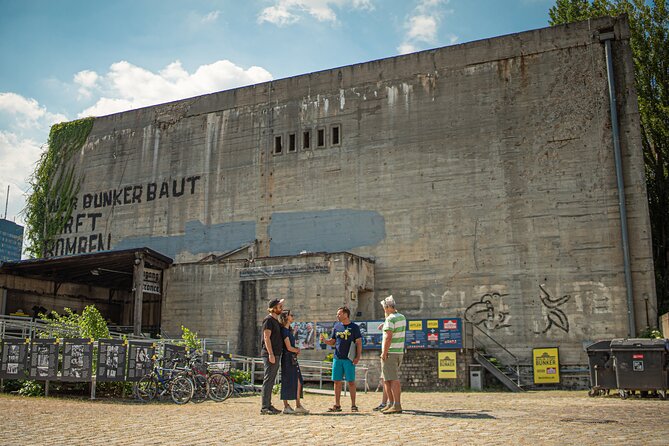
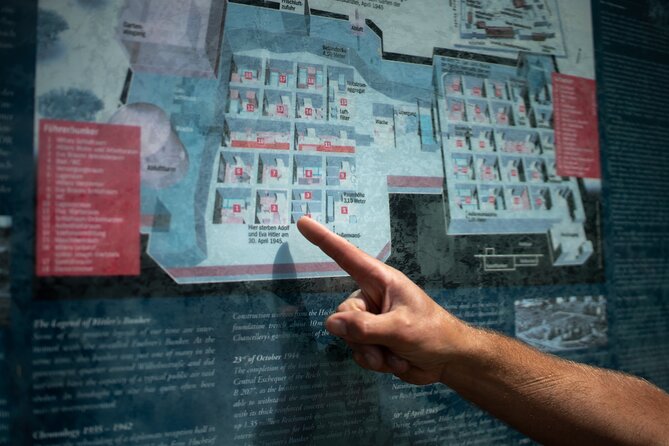
You do not enter the Führerbunker. You stand above the former site, where Adolf Hitler spent the final months of World War II as Soviet forces closed in on Berlin.
The original structure was largely destroyed after the war. A 10-minute explanation covers the bunker’s layout, the decisions made there, and the atmosphere of collapse among the Nazi leadership.
This stop requires a clear-eyed guide. The aim is not to make the bunker dramatic or turn Hitler into a celebrity. Its value is in showing the end result of totalitarian rule: isolation, denial, military ruin, and human suffering.
The location is easy to miss without context. There is no grand surviving entrance to explain what happened below, so your guide’s narration does most of the work.
Anhalter Bahnhof and the story of deportation
Anhalter Bahnhof was once one of Berlin’s major railway terminals. During the Nazi era, the station was connected with the deportation of Jewish people to concentration camps.
Only part of the former station remains, with its damaged façade offering a striking reminder of wartime destruction. The guide connects the railway’s everyday function with the way transportation became part of mass persecution.
This is a brief 10-minute stop, but its focus on individual families makes it particularly painful. Railways can seem impersonal when discussed in military terms. Here, the subject becomes departures, separation, and people being forced from their homes.
The location also shows why Berlin’s physical remains need explanation. What you see today is incomplete, and without a guide it would be easy to miss the connection between the station and deportation.
The T4 memorial and the Nazi euthanasia program
At Tiergartenstraße 4, a memorial marks the Nazi euthanasia program. The campaign targeted people with disabilities and mental illnesses, labeling them unworthy of life and murdering them in an organized system.
The guide explains the victims, the program’s methods, and the ethical questions raised by medical professionals and government officials taking part in mass murder. The memorial’s design and information panels help you understand how discrimination can move from language and policy to physical violence.
This 10-minute stop is one of the route’s most important additions. Many visitors know about the Holocaust but have less awareness of the murder of disabled people. Including the T4 memorial gives you a wider view of Nazi persecution and the groups targeted by the regime.
The subject is difficult, especially for families. A private guide can judge the pace better than a large group, but you should still prepare children for serious material.
Moltkebrücke and the Battle of Berlin
At Moltkebrücke, your guide recounts the fighting of April 1945, when Soviet troops crossed the bridge during the assault on Berlin. The bridge became a route into the city during the final battle.
The stop lasts about 10 minutes and focuses on strategy, nearby fighting, and the changing fortunes of the war. Unlike the memorials devoted to victims or resistance, this location helps you picture how the battle reached Berlin’s streets.
The bridge is also a useful reminder that the end of the regime was not peaceful. The city’s liberation from Nazi control came through fierce combat, destruction, and occupation.
What the private format changes
A private tour is not automatically better than a group tour, but here it solves several real problems. You can ask direct questions without losing the guide’s attention, and your guide can adapt the route to your background.
That flexibility has practical value. Daniel adjusted a visit for people who had already seen some sites. Georgia created a route from a hotel meeting point, while other guides worked at a pace that suited families and children. One group covered about 10,000 steps, so you should be ready for a full outing even though the tour includes short explanations at many stops.
Guides praised in the supplied feedback include Daniel, Jimmy, Emma, Jasper, Simon, Georgia, Oren, Tobi, Martin, Ariel, Callum, Maria, Xavier, Artie, and Mikhaïl. Specific guide assignment is not guaranteed, but the range of names shows that the experience is delivered by a team rather than one fixed historian.
A guide’s background can shape the discussion. Some bring family or personal connections to World War II and the Holocaust, while others focus on teaching, political history, or Berlin’s changing cityscape. If a particular topic matters to you, mention it when booking or at the start.
Price, pace, and practical value
At $192.97 per person, this is a major expense, especially for a large family. The price makes more sense for a small private group that wants a tailored history lesson and hotel pickup rather than a basic orientation walk.
You are paying for the guide’s time, the private format, and the ability to connect sites spread across Berlin. Hotel pickup and drop-off also remove some planning, though the tour still covers enough ground that you should wear comfortable shoes and dress for the weather. It operates in all weather conditions.
Food and drinks are not included. The tour is offered in English, uses a mobile ticket, and is near public transportation. Most people can take part, but the length, outdoor exposure, and serious subject matter are worth considering before you book.
Free cancellation is available if you cancel at least 24 hours before the start time. Last-minute cancellations or changes inside that window are not accepted.
Who should book this Berlin history tour?
I would choose this tour if you have limited time in Berlin but want more than a quick list of Nazi-era landmarks. It suits history fans, families with older children, and first-time visitors who want a guide to connect places that might otherwise seem unrelated.
It is also a good choice for people who have already seen central Berlin but want a clearer explanation of the Third Reich, the Holocaust, and the war’s final days. The route can be adjusted, and guides have included Cold War context or broader German history when it helped.
I would hesitate if you dislike walking, want long museum visits, or prefer a light sightseeing tour. The scheduled stops are often only 10 to 20 minutes, and the route cannot give every site the time it deserves. Think of it as a guided framework for Berlin’s wartime story, not a substitute for spending half a day inside each museum.
Should you book it?
Book it if you value personal attention and want Berlin’s difficult history explained at the actual places where it unfolded. The strongest benefits are the private pace, hotel pickup, broad route, and guides who can turn a long list of sites into a coherent story.
For the best value, arrive with two or three subjects you want covered, such as the resistance, Holocaust remembrance, the Battle of Berlin, or the T4 program. If you have more time, return to the Topography of Terror and the Holocaust Memorial after the tour for a slower visit.
Skip it if $192.97 per person feels too high or if you want a relaxed city walk. For a small group seeking a serious, flexible introduction to Berlin under Hitler and during World War II, this is a strong use of one morning or afternoon.
FAQ
How long does the private Berlin Third Reich tour last?
The tour lasts approximately three to four hours.
What language is the tour offered in?
The tour is offered in English.
Is hotel pickup included?
Yes. Hotel pickup and hotel drop-off are included.
Is this a private tour?
Yes. Only your group participates in the private activity.
What is included in the price?
A professional guide, hotel pickup, and hotel drop-off are included. Food and drinks are not included.
Does the tour enter the Reichstag or Führerbunker?
The provided tour details describe a visit to the Reichstag focused on its Nazi history, with admission not included. At the Führerbunker stop, you stand above the former site because much of the original structure was destroyed.
Can I cancel for a full refund?
Yes, if you cancel at least 24 hours before the experience starts. Cancellations or changes made less than 24 hours before the start time are not accepted for a refund.
Newest Berlin reviews
- Where It All Began: Berlin’s Queer & Trans History Tour★ 4.9 · 6 reviews
- Berlin: guided canoe | kayaktour★ 4.1 · 7 reviews
- Understanding Kreuzberg: The roots of local (sub)culture★ 4.9 · 11 reviews
- Private Potsdam City Tour in an authentic vintage van★ 5.0 · 14 reviews
- Warnemünde Shore Excursion: Private Sachsenhausen and Berlin Tour★ 5.0 · 12 reviews
- Ultimate E-Bike Tour of Berlin with Beer Garden Stop★ 5.0 · 4 reviews
- In the Forbidden City – Potsdam Walking Tour★ 5.0 · 17 reviews
- Private Walking Tour of Potsdam and Sanssouci★ 5.0 · 24 reviews
Berlin Third Reich Tours, compared.
Berlin’s Best: 2 Hour Walking Tour Third Reich and the Cold War
Read our review →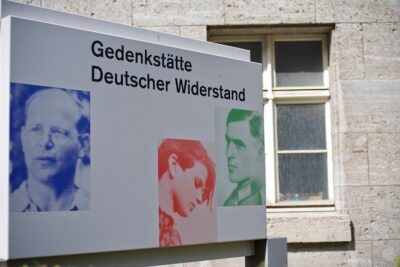
Third Reich Berlin: Hitler and WWII Walking Tour
Read our review →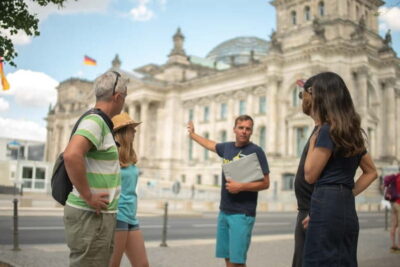
Berlin Third Reich Sites: Half-Day Walking Tour
Read our review →
Guided Bike Tour of the Berlin Wall and Third Reich
Read our review →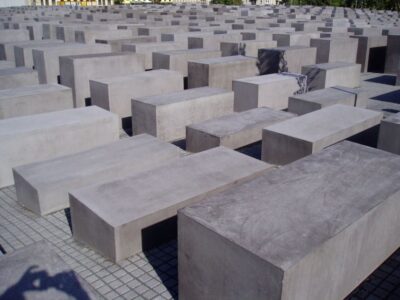
Hitler’s Germany: Berlin During the Third Reich & WWII
Read our review →
Hitler’s Berlin The Rise & Fall Guided Walking Tour
Read our review →Browse the lists this tour appears in