
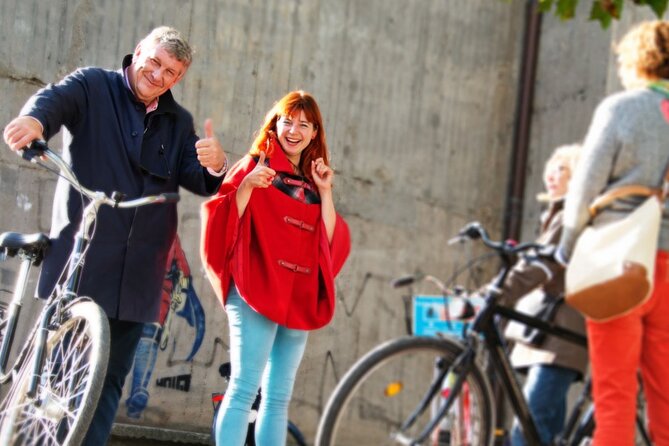
Reviewed · KREUZBERG TOURS
Berlin: Experience the Alternative Kreuzberg on a Bike Tour
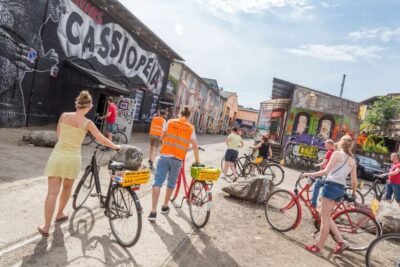
Berlin’s alternative character comes into focus once you leave the postcard sights behind. This three-hour ride moves from Nikolaiviertel through Kreuzberg and Friedrichshain, linking wall history with immigrant neighborhoods, artists’ spaces, parks, river views, and rough-edged city streets.
I like the route’s range: East Side Gallery and Oberbaum Bridge offer major Berlin sights, while places such as Das Baumhaus, Liegnitzer Straße, and Falckensteinstraße reveal a less polished city. I also like the guides’ personal approach. Jake, Bjorn, Rico, Rufus, Vincent, and Karl are all praised for clear stories, humor, and careful riding.
The main consideration is that this is as much a talking tour as a cycling tour. You stop often, and one French-language review expected more time on the bike. Also wear trousers that will not suffer from a little chain grease.
Key points
- Three hours of Berlin’s counterculture: Ride through Kreuzberg, Friedrichshain, Görlitzer Park, and Kottbusser Tor.
- History beside everyday life: Connect Berlin Wall sites with immigrant communities, squats, artists’ buildings, parks, and modern development.
- Small group format: Groups run from 4 to 15 people, allowing room for questions and guide commentary.
- Frequent stops: This is an easy-paced ride with regular breaks for stories, photos, and local context.
- All core equipment included: A bicycle and helmet are provided, with infant seats available on request.
- Good value at $42.33: The price covers about three hours, equipment, and an English or German-speaking guide, but not food or drinks.
Starting in Nikolaiviertel, then leaving postcard Berlin behind
The meeting point is Free Berlin Bike Tours & Rental at Poststraße 11, near public transportation. The advertised start time is 2:24 pm, and the ride returns to this same location after about three hours.
Nikolaiviertel is a fitting opening. It presents an older, more polished version of central Berlin before the route heads toward neighborhoods shaped by migration, division, protest, art, and rapid change. You get your bearings here, then move quickly into a side of the city that feels more lived-in.
The group size matters. With a minimum of four and a maximum of 15 people, the guide can usually keep the ride together without making every stop feel like a mass tour. Children are welcome, but they must ride with an adult. Infant seats can be provided if requested ahead of time.
More Kreuzberg tours in Berlin:
- Kreuzberg: Culinary Food Tour
★ 4.5 · 770 reviews - Berlin: Kreuzberg Guided Walking Evening Tour
★ 4.7 · 555 reviews - Berlin: Alternative Bike Tour of Kreuzberg & Friedrichshain
★ 4.7 · 548 reviews
Kreuzberg: the main subject of the ride
Kreuzberg is the heart of this experience. The district is presented not as a single theme park of graffiti and bars, but as a place where Turkish migration, political activism, old tenements, modern buildings, artists, families, and rougher street life all share limited space.
That mixture gives the guide plenty to explain. You may hear how the district changed during the Berlin Wall years, how squatting helped shape its artistic identity, and how newer investment is changing the area again. One of the strongest themes is the tension between alternative life and commercial development.
At Engelbecken, the mood shifts. This quiet spot sits among prefabricated buildings, older structures, and newer architecture. It is a useful place to pause and see how different parts of Berlin meet within a small area.
The stop at Das Baumhaus brings a more personal story. It concerns a guest worker who adapted quickly to Kreuzberg’s independent spirit and claimed a small garden structure beside the Wall. The tale captures the district’s old do-it-yourself attitude better than a grand monument could.
Squats, artists, and the politics of making space
The route includes a former squatting site that became a place for artists. Its story reaches from the early development of Berlin’s alternative scene through the 1980s and into the early 2000s.
This is one of the tour’s useful strengths. You are not simply shown a colorful wall and told that Berlin is creative. You get a sense of how buildings were taken over, defended, reused, and turned into working spaces for artists. The area’s cultural identity came from years of effort, argument, and uncertainty.
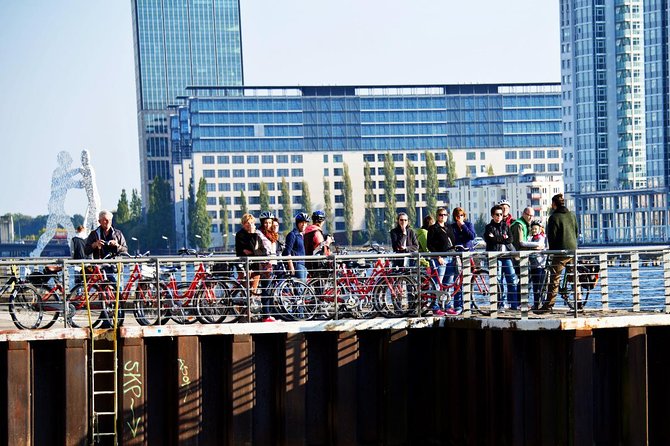
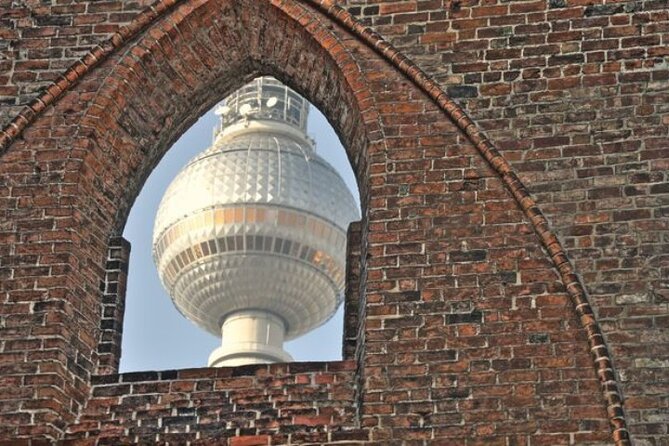
The guide may also take you near YAAM, the riverside club and cultural venue. From this area, the view brings together the TV Tower, Holzmarkt, Oberbaum Bridge, and the Spree. It is a good reminder that Berlin’s alternative districts are not isolated from the city center. They sit directly beside major new developments and famous sights.
The contrast is sharp. One minute you are hearing about improvised community spaces. The next, you are looking across the river at construction, offices, nightlife venues, and one of Berlin’s most recognizable bridges.
East Side Gallery and Oberbaum Bridge
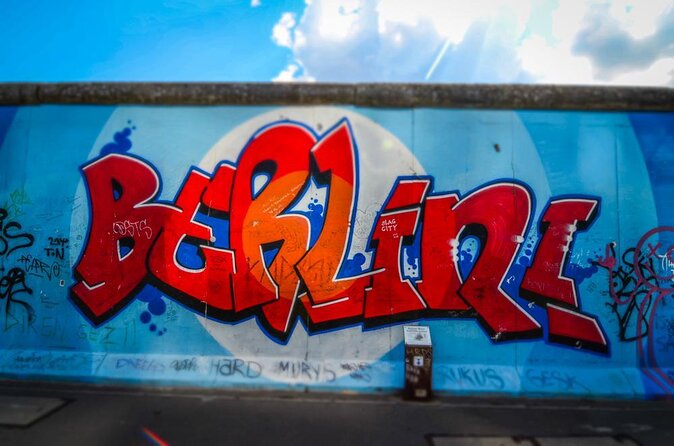
East Side Gallery is the longest remaining section of the Berlin Wall. Its painted panels are among the city’s best-known public artworks, and the wall runs beside a heavily redeveloped business quarter.
The stop is brief, around 10 minutes, so do not expect a detailed study of every mural. Instead, the guide uses the wall as a point of reference for Berlin’s divided past and its fast-changing present. You see how a former barrier now sits beside modern offices and new housing.
Oberbaum Bridge follows naturally. This red-brick bridge is one of Kreuzberg and Friedrichshain’s defining sights, and its location makes it a strong symbol of crossing from one former half of Berlin to the other.
The bridge is also a practical route marker. It links the two districts and carries traffic, trains, pedestrians, and cyclists. The tour uses it to discuss borders in a wider sense, including social and cultural boundaries that remain after the physical Wall has gone.
More alternative tours in Berlin:
- Explore Berlin: See All The Iconic Sights & Some Hidden Gems
★ 5.0 · 4,429 reviews - Berlin: Alternative Berlin Walking Tour
★ 4.6 · 1,204 reviews - Berlin: Alternative Berlin Bike Tour
★ 4.8 · 359 reviews - Private Berlin: Iconic Sights and Hidden Gems Walking Tour
★ 5.0 · 292 reviews
Osthafen and the Spree
At Osthafen, the route reaches former borderland along the Spree. The area once reflected the strict control of East Germany’s frontier. Today, it has a younger creative identity, with studios, venues, and new development around the river.
The stop helps explain why the Wall was placed where it was and why river edges mattered so much during the division of Berlin. The Spree also offers a welcome pause from traffic and dense streets.
The route includes an unusual sculpture with several possible interpretations. The official explanation is treated with some skepticism, which suits the general tone of the tour. Berlin’s public art often invites argument, and the guide appears willing to discuss competing ideas instead of presenting one neat answer.
Falckensteinstraße and Görlitzer Park
Falckensteinstraße is a strong example of Kreuzberg’s mixed character. Its buildings, people, shops, and street activity show how a neighborhood can feel urban and crowded while still offering pockets of escape.
You will likely get more from this stop if you look beyond individual sights. Notice the changes in building style, the different uses of ground-floor space, and the way older local life sits beside newer businesses. The guide’s job here is to connect what you see with the district’s wider social story.
Görlitzer Park occupies the site of a former railway station. That change from transport infrastructure to public park says a lot about Berlin’s ability to reuse difficult or unwanted spaces.
The park also brings the tour closer to the rougher side of the district. It is described as a place where alternative living and anarchy come close together, though the reality is more complicated than either label. You should expect an honest look at urban problems, not a polished presentation designed only for sightseeing.
Liegnitzer Straße and the car loft
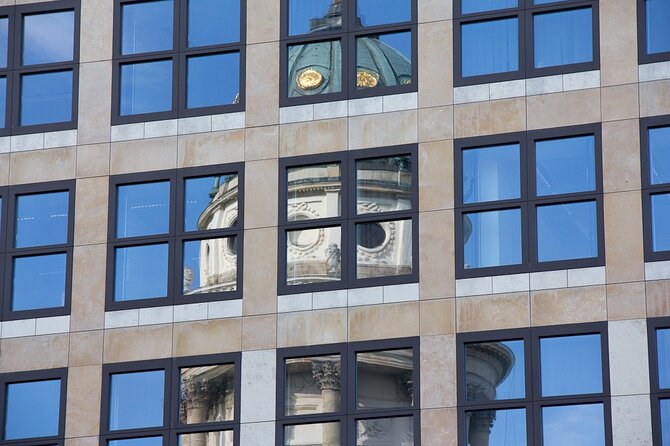
Liegnitzer Straße offers one of the tour’s most amusing contrasts. In a neighborhood associated with anarchists, artists, political activism, and informal living, you find a luxury building where residents can take cars up to their balconies.
That detail makes the point better than a long lecture about gentrification. Kreuzberg contains strong community traditions and high-end development at the same time. You can see the clash between modest streets and conspicuous wealth in a single stop.
The route then touches on the waterfront, including the Turkish market held on Tuesdays and Fridays. Food and drinks are not included, so bring money if you want to buy something during or after the ride. Since the market operates only on those two days, do not assume it will be open on your tour date.
Boule, neighborhood life, and Admiral Bridge
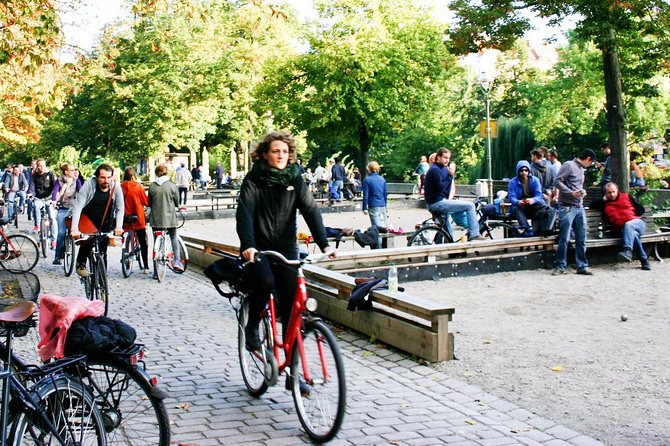
One section offers a short break in a bohemian area where people play boule and enjoy a slower pace. It is a useful counterpoint to Kottbusser Tor, because it shows that Kreuzberg is not only protest, nightlife, traffic, or rough edges.
Admiral Bridge is another social stop. In summer, people gather there for sunset, drinks, and casual conversation. You might begin an evening here, or simply watch the crowd and get a feel for how public space works in Berlin.
The tour does not reduce Kreuzberg to a slogan. It asks you to consider the district’s contradictions: alternative and commercial, relaxed and chaotic, welcoming and pressured by rising costs. That makes the ride more useful than a simple street-art circuit.
Kottbusser Tor finishes the story on a harder note
Kottbusser Tor provides a sharp final contrast. Its heavy 1970s architecture, traffic, and visible drug scene can feel far removed from the easy waterfront stops.
That contrast is intentional. The ride shows you the full range of the district rather than ending in its prettiest corner. Kotti is difficult, noisy, and visually harsh, but it is also central to understanding how Kreuzberg works as a real neighborhood.
For some people, this will be the most memorable part of the ride. For others, it may feel uncomfortable. The guide can provide context, but this is not a sanitized sightseeing route. You should come ready to see Berlin as it is, including places that do not fit a vacation brochure.
What the guides add to the route
The guide makes a major difference because the route depends on explanation. Jake is praised for detailed historical stories and personal experiences. Bjorn is described as thoughtful, positive, and particularly strong on Berlin’s alternative culture. Rico and Rufus are noted for humor, friendliness, and safe riding.
Vincent is praised for explaining Berlin’s history and community life, while Karl brings an articulate, lively approach with plenty of small facts. The guide assigned to your date will vary, and the route is designed around the individual guide’s choices.
That flexibility is part of the Free Berlin concept. Every guide designs a route, so no two rides need to follow exactly the same pattern. The benefit is a more personal outing. The tradeoff is that the precise emphasis can change, and you should not expect a rigid script.
The strongest guide qualities are clear storytelling, local perspective, and safety. Some guides have also helped explain difficult terms to people who speak Dutch, though the listed tour languages are English and German, depending on the option selected.
Pace, equipment, weather, and value
At $42.33 per person, the tour is fairly priced for about three hours of guided cycling in central Berlin. A bicycle, helmet, and professional guide are included. You are paying for the route design and the stories as much as for the bike itself.
This is not a hard athletic ride. The route includes frequent stops, and a French-language review specifically described it as manageable for most people while wishing for more cycling and fewer explanations. If you want a fast ride with long stretches of uninterrupted pedaling, this may feel slow.
If you want to understand the city while moving through it, the pace works well. Cycling lets you cover more ground than walking, while the regular stops prevent the ride from becoming tiring.
Dress for the weather. The tour operates in all conditions, and rain has not prevented some groups from enjoying the ride. Wear shoes suitable for cycling and trousers that will not be ruined by chain marks. Food and drinks are not included, so plan separately for a snack or a market stop.
The tour is recommended for families, couples, solo visitors, and first-time Berlin visitors who want more than the historic center. It also suits repeat visitors who have already seen Brandenburg Gate, Museum Island, and the main Wall memorials.
Free cancellation is available up to 24 hours before the start time for a full refund. The activity needs a minimum number of participants, so a cancellation for low enrollment can lead to an alternative date, another experience, or a full refund.
Should you book this Kreuzberg bike tour?
Book it if you want Berlin explained through neighborhoods rather than monuments. You will see famous places such as East Side Gallery and Oberbaum Bridge, but the real value comes from the smaller stops: the former squats, riverside creative spaces, Turkish market area, car loft, park, and street corners where the district’s contradictions are visible.
Skip it if you want a fast, athletic cycling tour or a polished introduction limited to major sights. The frequent stops mean plenty of listening, and the route includes rougher urban areas that some people may find confronting.
For most visitors, I would place it early in a Berlin stay. The ride gives you a useful map of Kreuzberg and Friedrichshain, introduces the city’s post-Wall changes, and may point you toward places you will want to revisit on foot later.
FAQ
How long is the bike tour?
The tour lasts about three hours.
Where does the tour start?
It starts at Free Berlin Bike Tours & Rental, Poststraße 11, 10178 Berlin, Germany.
Where does the tour end?
The ride returns to the same meeting point.
What is included in the price?
Use of a bicycle, a helmet, and a professional guide are included. Infant seats can be provided on request.
Is the tour offered in English?
Yes. The tour is offered in English, and German may be available depending on the option selected.
How many people can join the tour?
The minimum is four participants, and the maximum is 15.
Can children join the ride?
Yes. Children are welcome, but they must be accompanied by an adult.
More bike tours in Berlin
- Berlin: Sights and Highlights Bike Tour with a Local Guide
★ 4.8 · 2,698 reviews - Berlin Highlights 3-Hour Bike Tour
★ 5.0 · 948 reviews - Berlin City Bike Tour with Beer Garden Stop
★ 5.0 · 917 reviews - Berlin Highlights: 3-Hour Bike Tour
★ 4.9 · 809 reviews
Newest Berlin reviews
- Where It All Began: Berlin’s Queer & Trans History Tour★ 4.9 · 6 reviews
- Understanding Kreuzberg: The roots of local (sub)culture★ 4.9 · 11 reviews
- Berlin: guided canoe | kayaktour★ 4.1 · 7 reviews
- Private Potsdam City Tour in an authentic vintage van★ 5.0 · 14 reviews
- Warnemünde Shore Excursion: Private Sachsenhausen and Berlin Tour★ 5.0 · 12 reviews
- Ultimate E-Bike Tour of Berlin with Beer Garden Stop★ 5.0 · 4 reviews
- Potsdam Highlights – Private sightseeing tour by minibus★ 5.0 · 3 reviews
- In the Forbidden City – Potsdam Walking Tour★ 5.0 · 17 reviews
Kreuzberg Tours, compared.
Alternative Bike Tour of Kreuzberg & Friedrichshain
Read our review →
Berlin Off-the-Beaten-Path Walking Tour: Kreuzberg, Mitte and Friedrichshain
Read our review →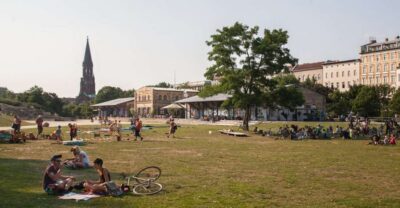
Kreuzberg Berlin: Off the Beaten Track PRIVATE Walking Tour
Read our review →
Browse the lists this tour appears in