
Reviewed · KREUZBERG TOURS
Kreuzberg: Culinary Food Tour
Kreuzberg is best understood with one hand on a fork and the other on a map. This three-hour walk links five food tastings with stories about working-class Berlin, left-wing politics, divided-city escape attempts, and the neighborhood’s famously mixed social life. Guides such as Niclas and Nike have been praised for making the subject lively and easy to follow.
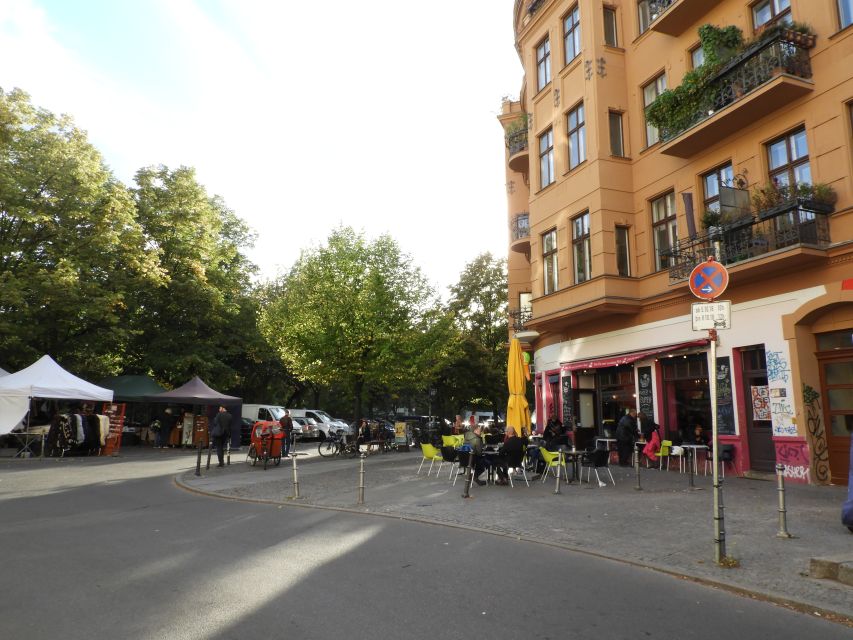
I like the route because it gives you more than a restaurant crawl. You move through Kotti, Oranienstraße, SO36, Mariannenstraße, and the canalside area around Admiralstraße, seeing ordinary streets alongside well-known landmarks. I also like the range of food, including Berlin recipes, international dishes, vegetarian sushi, döner or dürüm, currywurst, baklava, and roasted nuts.
The main consideration is pace. You are walking, stopping to eat, and listening for three hours, and the tastings may not replace a full meal. Drinks cost extra, vegan food is not available, and on rare occasions a dish may need to be eaten standing outside.
Key points before you book

- Five separate tastings replace one large meal, so expect variety rather than a standard restaurant lunch.
- Kreuzberg’s political past is central to the tour, including SO36, May Day demonstrations, GDR escape stories, and Martin Luther King’s 1964 visit.
- The route mixes famous and ordinary places, from Kottbusser Tor and Oranienstraße to backyards, side streets, and food stops.
- Vegetarian food is available, but there is no vegan option.
- Private groups can book, with a maximum of 10 people for the $589 group price.
- Guide quality matters, and names associated with the experience include Niclas and Nike, both praised for strong preparation and engaging storytelling.
Why Kreuzberg works so well for a food walk

Kreuzberg is not a neighborhood you understand from a single viewpoint. It was founded as a working-class quarter in the 19th century, later became known for immigration, housing pressure, protest movements, nightlife, and alternative culture, and now mixes old habits with new businesses.
Food makes that change easier to see. A Berlin classic can sit close to an international dish, a small sweet shop, or a modern vegetarian restaurant. The meal is not just fuel between sights. It helps explain how different communities and tastes have shaped the area.
You begin at Kotti, the familiar local name for Kottbusser Tor. The tour gives you an overview of Kreuzberg’s past before moving into the streets, so you are not simply collecting disconnected facts. You get a framework for understanding why the buildings, businesses, and people feel so different from one block to the next.
The guide also connects the past to present-day Kreuzberg. The neighborhood is presented as a meeting place for people of many backgrounds, political views, lifestyles, sexualities, and incomes. That makes the walk more useful than a list of dates. You see how social change becomes visible in daily life.
More Kreuzberg tours in Berlin:
- Berlin: Kreuzberg Guided Walking Evening Tour
★ 4.7 · 555 reviews - Berlin: Alternative Bike Tour of Kreuzberg & Friedrichshain
★ 4.7 · 548 reviews - Berlin: 2.5-Hour Walking Tour through Kreuzberg 61
★ 4.9 · 525 reviews
Kottbusser Tor and the Neues Kreuzberger Zentrum
The opening section around Kottbusser Tor sets the tone. You learn how Kreuzberg developed as a working-class neighborhood and how crowded housing once shaped ordinary life. The story of people renting an eight-hour place on a mattress, rather than a full room or apartment, gives a sharp sense of how hard housing conditions could be.
The Neues Kreuzberger Zentrum is one of the first major stops. Here you can take photographs, hear more about the area, and begin the food portion of the tour. The scheduled stop lasts about 40 minutes, making it one of the longer sections of the route.
This is a useful start because Kottbusser Tor is busy and visually confusing. A guide can point out how the area fits into Kreuzberg’s growth instead of leaving you to see only traffic, shops, and concrete. You also get an early taste of the tour’s central idea: food and social history belong together here.
Do not expect a quiet sit-down meal at every stop. The food is served at selected restaurants, but the experience is built around movement and several small portions. Arrive ready to sample, not to settle in for a long lunch.
Oranienstraße, working-class life, and five different flavors
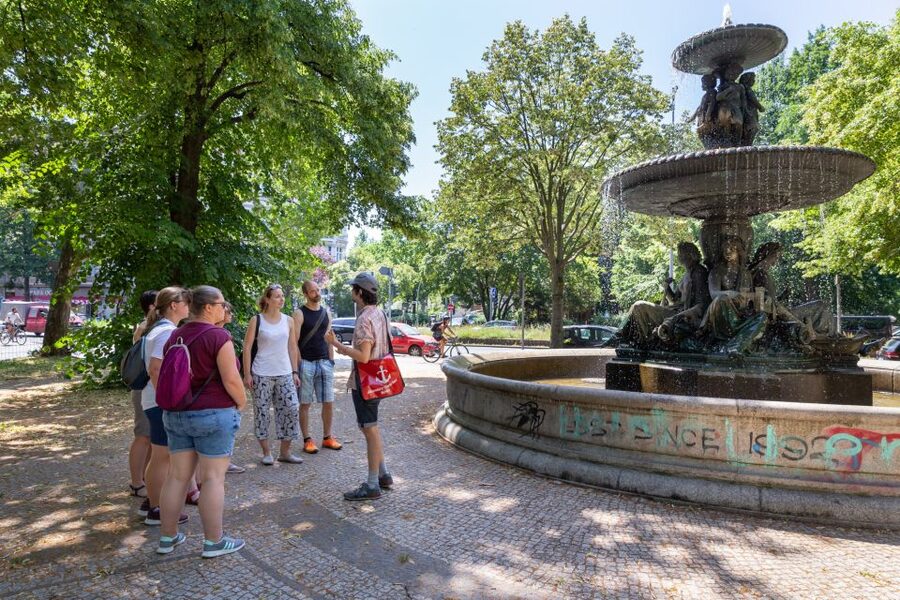
Oranienstraße is the longest part of the walk, with about an hour set aside for sightseeing, stories, walking, and food. This is where the tour’s mix of local history and neighborhood life comes into focus.
Your guide talks about Kreuzberg’s working-class roots and its left-wing tradition, including demonstrations that shaped the area’s public image. The stories are meant to connect old conflicts with the street you are standing on, rather than treating the past as something locked in a museum.
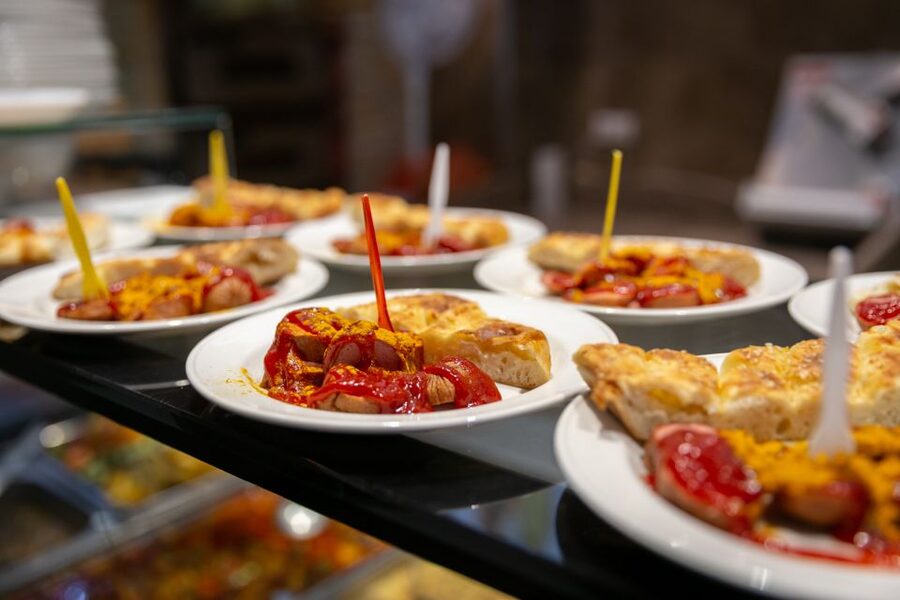
The food selection can include original Berlin recipes, intercultural crossover dishes, and international delicatessen. Specific tastings praised by the guide-led experience include döner or dürüm, currywurst, flammkuchen, baklava, vegetarian sushi, and roasted nuts in sweet and savory styles.
That range is a real strength. A single famous dish would tell you very little about Kreuzberg. Five smaller tastings let you compare familiar Berlin food with dishes shaped by migration and newer restaurant ideas.
The drawback is that the exact food stops may vary, and the supplied details do not promise a fixed menu. If you have a serious allergy or a strict diet, ask before booking. Vegetarian food is possible, but the experience does not provide a vegan option.
Rio-Reiser-Platz and the neighborhood’s creative side
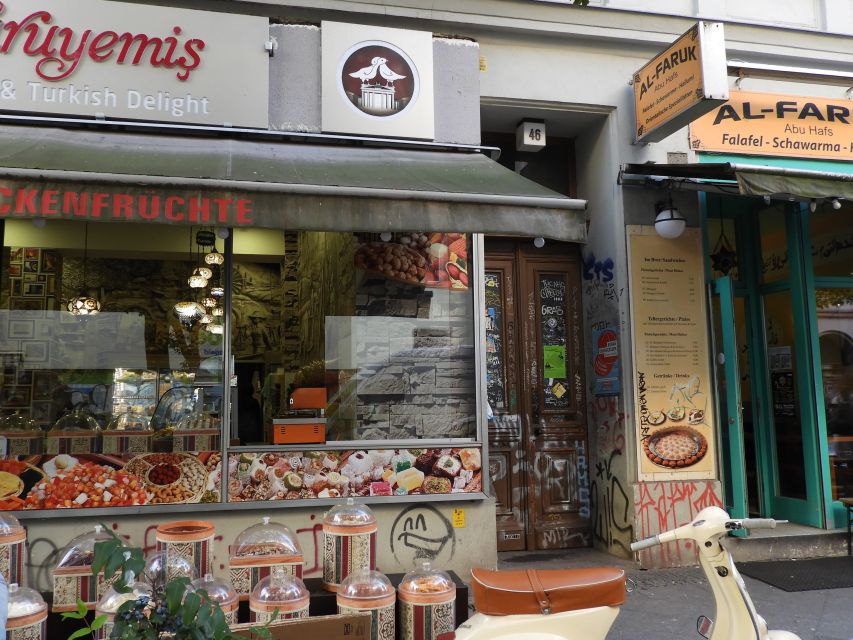
The stop at Rio-Reiser-Platz is brief, about 15 minutes, but it adds another layer to Kreuzberg’s cultural identity. You have time for photographs, a short explanation, and a tasting.
The square carries the name of Rio Reiser, a musician linked with political and alternative culture in Germany. The tour uses places such as this to show how music, protest, and neighborhood identity overlap in Kreuzberg.
Because the stop is short, you should not expect an extended visit or a long performance history. Its value is in the connection between place and public memory. Your guide can help you notice why a square name matters, then move you on to the next food and story.
More food tours in Berlin:
- Berlin Center Food Tour with 8+ Authentic Local Tastings
★ 5.0 · 1,227 reviews - Big Bus Berlin Hop-On Hop-Off Sightseeing Tour & Currywurst
★ 4.0 · 856 reviews - Berlin: Mitte Culinary Food Tour
★ 4.5 · 447 reviews - Berlin: 3-Hour Secret Food Tour
★ 4.8 · 269 reviews
Mariannenstraße and SO36
Mariannenstraße is another key section, scheduled for around 20 minutes. This part of the walk brings you closer to SO36, one of Kreuzberg’s best-known cultural references.
You hear about the area’s demonstrations, including the May Day marches that became closely tied to Kreuzberg’s public image. The stories are not presented as a polished version of Berlin. They include conflict, protest, political disagreement, and the uneasy relationship between neighborhood life and public attention.
The tour also recalls Martin Luther King’s visit to Berlin in 1964. That detail widens the view beyond local streets and shows how Kreuzberg has sometimes carried meaning far beyond the district itself.
A guide’s style matters here. One guide may tell these stories with a careful timeline, while another may lean more into colorful anecdotes. Niclas has been described as well prepared and able to provide varied information. Nike has been praised for making the tour appealing and interesting. That sort of presentation is important because the subject can become dense if delivered as a lecture.
Oranienplatz and Dresdener Straße
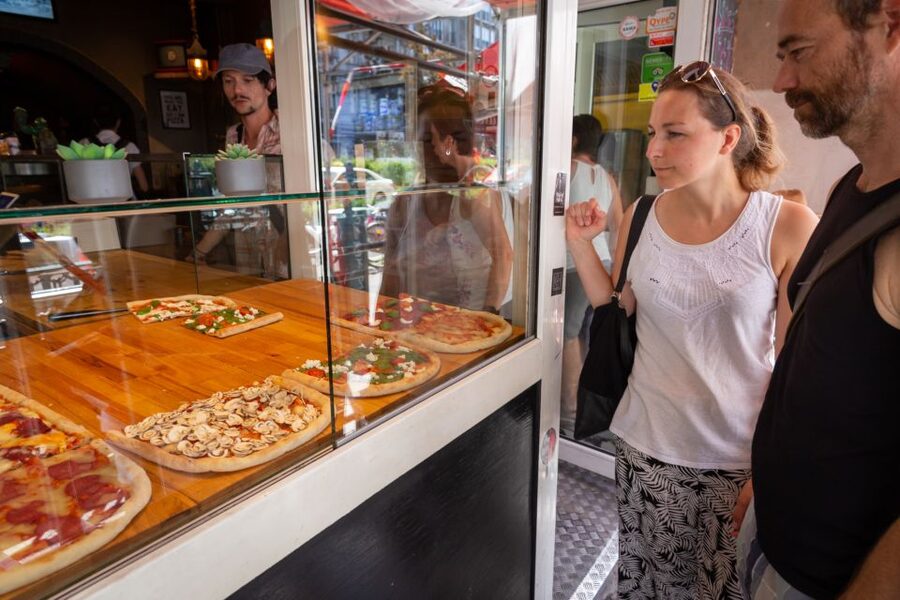
Oranienplatz is a short five-minute photo and sightseeing stop. Dresdener Straße follows with around 10 minutes of walking and guided commentary.
These short sections help connect the larger stops. You are not being driven from one restaurant to another. You walk through the neighborhood, seeing the spaces between the headline locations. That makes the experience feel more like a local district walk than a sequence of food counters.
The route also includes references to the former GDR traffic-light men, known in German as Ampelmännchen. Their distinctive figures became a familiar reminder of East Germany after reunification. On this tour, details like that help tie Berlin’s divided past to small things you can notice on the street.
You may also hear dramatic stories about attempts to escape East Germany and the figure described as Berlin’s Jack the Ripper. These are memorable subjects, but they are not the whole tour. The strongest parts use them as windows into the city’s past, then return you to Kreuzberg’s streets and present-day life.
Admiralstraße and the final stretch
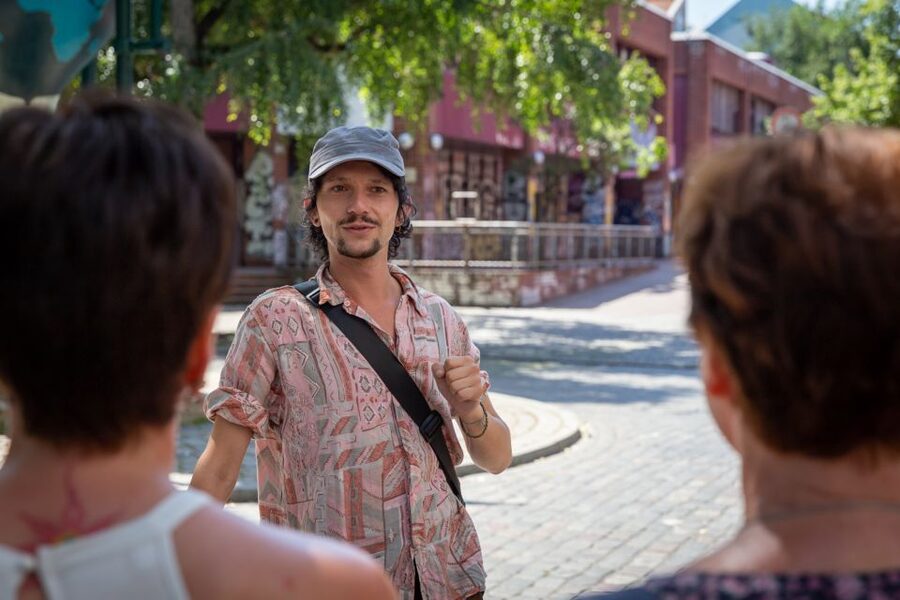
Admiralstraße is the longest final section, with about 40 minutes for photographs, walking, food, and commentary. It gives the tour room to slow down after the more concentrated historical stops.
This is a good place to think about the contrast running through the whole experience. Kreuzberg has working-class origins, a strong protest tradition, immigrant communities, nightlife, and newer food businesses. None of those elements fully explains the district by itself.
The tour ends at Grimmstraße 23, near the southern part of the route. Since you finish away from the starting point, it helps to check the final location before planning your next activity. The walk is designed as a one-way neighborhood experience rather than a return loop.
What the food is really worth
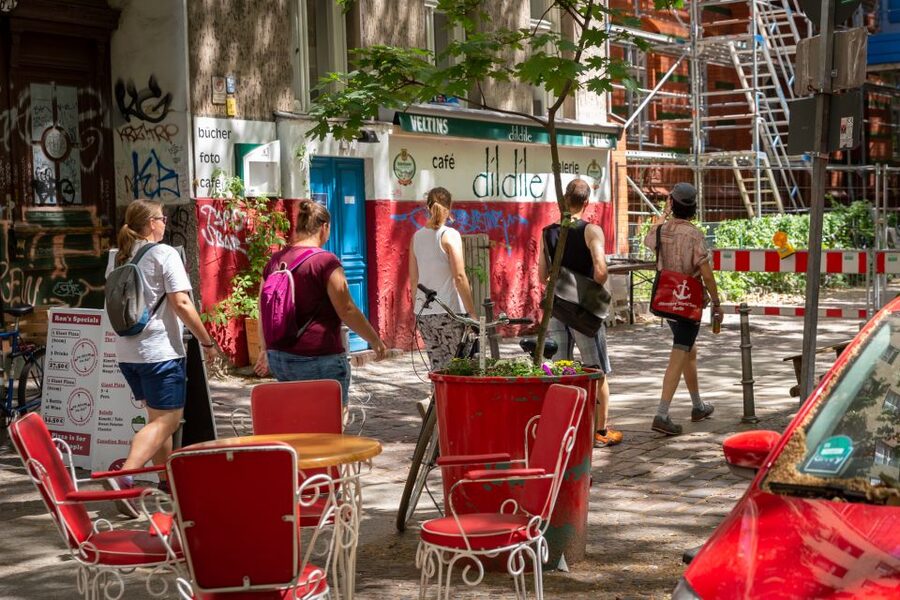
The price is $589 for a group of up to 10 people. That works out to $58.90 per person if you fill the group, though the total price remains the same for the private group rather than changing with each participant.
That is not cheap for three hours, especially since drinks are not included and the food comes as tastings. You are paying for the guide, private-group format, local interpretation, and five stops as much as for the dishes themselves.
The value improves if you are traveling with a group of friends or family who want a private outing. Ten people sharing the total can make the price reasonable for an organized introduction to Kreuzberg. For one or two people, the cost feels harder to justify unless you place a high value on a private guide and a structured cultural walk.
I would not book this expecting a full dinner. The tasting list can be generous, but the format is designed for sampling several things. Plan another meal if you have a large appetite, and budget separately for drinks.
The food choice is one of the most praised parts of the experience. The mix of döner, currywurst, flammkuchen, baklava, vegetarian sushi, and roasted nuts gives you a better sense of Kreuzberg than repeating one famous Berlin dish. The selection also makes the tour useful for a group with mixed tastes, as long as everyone is comfortable with the lack of a vegan option.
How the guide shapes the experience
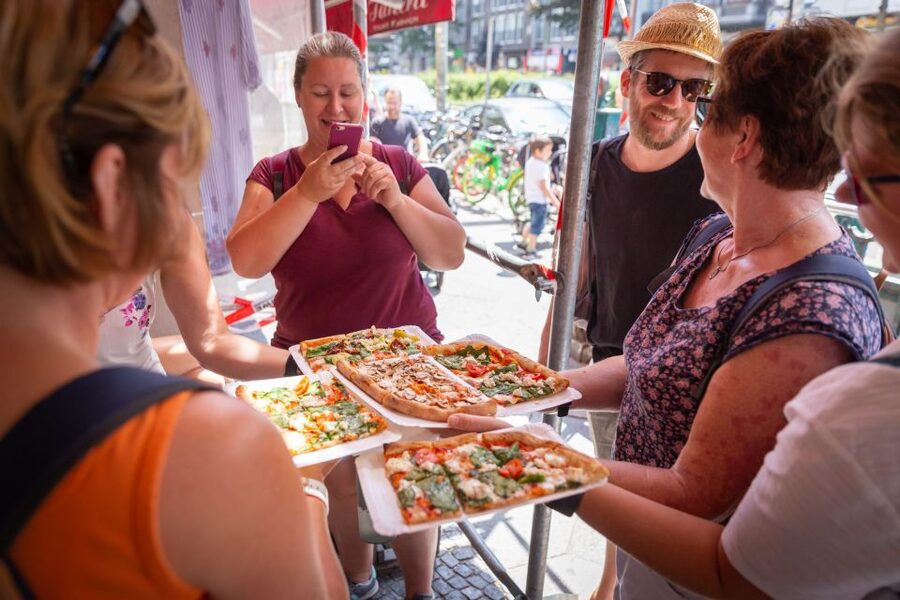
A good guide is essential on this walk. Kreuzberg has enough political references, dates, nicknames, and local figures to overwhelm you if the material is poorly organized.
The strongest guide feedback points to careful preparation, plenty of historical anecdotes, and a friendly approach. Niclas is associated with varied information and strong preparation. Nike is associated with an engaging style and a well-chosen flow of food and stories.
There is also a useful warning: not every explanation may feel equally clear or perfectly connected. One account of the walk found the food stations excellent but felt that some information was not fully consistent. The guide still made an effort to keep the group entertained, but this is a reminder that a colorful storyteller is not always the same as a precise historian.
That balance is worth knowing before you book. If you want a strict academic account of Berlin, this may feel loose in places. If you want a human guide who can connect food, anecdotes, protest, and street life, the format should suit you well.
Practical details that affect your day
The tour lasts three hours and is offered in English or German. The meeting point can vary with the option you choose, though the experience begins around Kottbusser Tor and Kotti. Confirm the exact starting point before setting out, especially because the booking choices list FightClub Casino as a starting location.
Wear comfortable shoes. The route includes several walking sections and short stops, with no promise of a seat at every food location. In exceptional cases, food may be served outside the restaurant and eaten while standing, so this is not the best choice if you need a relaxed table at each course.
Vegetarians can be accommodated, but vegans cannot. Drinks are excluded. If you prefer a private outing, a private group is available, with up to 10 people covered by the group price.
You can cancel up to 24 hours before the start for a full refund, and the reserve-now, pay-later option can help if your Berlin schedule is still moving around. Those terms are useful, but the main planning question is still the route: you finish at Grimmstraße 23 rather than returning to Kotti.
Who should book the Kreuzberg food tour
I would recommend this experience to first-time Berlin visitors who want neighborhood context without spending half a day in a museum. It also suits repeat visitors who have seen central Berlin and want food, street life, and local politics in one outing.
It works especially well for small private groups. Parents traveling with older children may find the food stops keep a history walk lively, while friends can treat it as an early evening introduction before exploring Kreuzberg’s nightlife.
I would hesitate if you need vegan food, want a formal seated meal, or dislike political and social history. I would also think twice if your budget is tight and you are comfortable finding Kreuzberg’s restaurants on your own.
Should you book it?
Book this tour if you want Kreuzberg explained through both its food and difficult past. The best reason to go is the combination of five varied tastings, a walk through SO36 and Oranienstraße, and stories that connect working-class housing, protest, divided Berlin, and modern neighborhood life.
Skip it if you mainly want a cheap meal or a fixed menu. At $589 per group, the price makes the most sense when shared among several people who value a private guide. For a full group, a vegetarian-friendly private walk with this much food and local context can be a fair Berlin splurge.
FAQ
How long does the Kreuzberg Culinary Food Tour last?
The tour lasts three hours and includes walking, guided sightseeing, and five food tastings.
Where does the tour start?
The experience begins in the Kotti and Kottbusser Tor area, but the exact meeting point can vary depending on the option booked. FightClub Casino is listed as a starting location, so confirm your meeting details before going.
Where does the tour finish?
The tour finishes at Grimmstraße 23, 10967 Berlin, Germany.
How many food tastings are included?
Five different food tastings at five distinct restaurants are included.
Is vegetarian food available?
Yes. A vegetarian option is available.
Is a vegan option available?
No. The experience does not offer a vegan option.
Are drinks included?
No. Drinks are not included in the tour price.
Can I book a private group?
Yes. A private group is available, with the stated price covering up to 10 people.
Newest Berlin reviews
- Where It All Began: Berlin’s Queer & Trans History Tour★ 4.9 · 6 reviews
- Understanding Kreuzberg: The roots of local (sub)culture★ 4.9 · 11 reviews
- Berlin: guided canoe | kayaktour★ 4.1 · 7 reviews
- Private Potsdam City Tour in an authentic vintage van★ 5.0 · 14 reviews
- Warnemünde Shore Excursion: Private Sachsenhausen and Berlin Tour★ 5.0 · 12 reviews
- Ultimate E-Bike Tour of Berlin with Beer Garden Stop★ 5.0 · 4 reviews
- In the Forbidden City – Potsdam Walking Tour★ 5.0 · 17 reviews
- Private Walking Tour of Potsdam and Sanssouci★ 5.0 · 24 reviews
Kreuzberg Tours, compared.
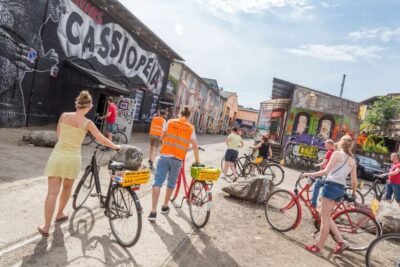
Alternative Bike Tour of Kreuzberg & Friedrichshain
Read our review →
Berlin Off-the-Beaten-Path Walking Tour: Kreuzberg, Mitte and Friedrichshain
Read our review →
Kreuzberg Berlin: Off the Beaten Track PRIVATE Walking Tour
Read our review →
Experience the Alternative Kreuzberg on a Bike Tour
Read our review →
Browse the lists this tour appears in