
Reviewed · BERLIN COLD WAR TOURS
Private Walking Tour: World War 2 and Cold War Sites in Berlin
Berlin’s past is written into ordinary streets, empty lots, government buildings, and fragments of wall. This private walking tour helps you read those clues, linking the Nazi dictatorship, the Battle of Berlin, Germany’s division, and the fall of the Berlin Wall in one moving half-day. You can focus on World War II, the Cold War, or a mix of both.
I like the private format, since your guide can spend more time on the questions that matter to you. I also like the flexible route: guides such as Hannah, Glen, Daniel, Jamie, and Maria have been praised for adjusting the pace, adding lesser-known details, and helping visitors plan the rest of their Berlin stay. The main consideration is price: at $192.97 per person, it is costly for a walking tour, especially for two people.
Key Points at a Glance
- Choose your historical focus: Build the walk around World War II, the Cold War, or both.
- See Berlin’s defining sites: The route can include the Brandenburg Gate, Reichstag, Hitler’s bunker site, Checkpoint Charlie, and sections of the Berlin Wall.
- Expect a private guide: Only your group participates, allowing for questions, pacing changes, and personal requests.
- Prepare for serious subject matter: The Holocaust Memorial, Topography of Terror, Nazi government buildings, prisons, and escape tunnels all demand thoughtful attention.
- Plan your priorities early: A three to four-hour walk cannot give every listed stop equal time.
- Hotel pickup and drop-off are included: Food and drinks are not.
Why This Berlin History Walk Works
Berlin is not a city where history sits in one tidy museum district. The Reichstag, Hitler’s bunker site, a former Nazi ministry, a Cold War border crossing, and sections of the Berlin Wall are spread across the city. On your own, you can reach these places, but you may not understand what happened at each one or how the pieces connect.
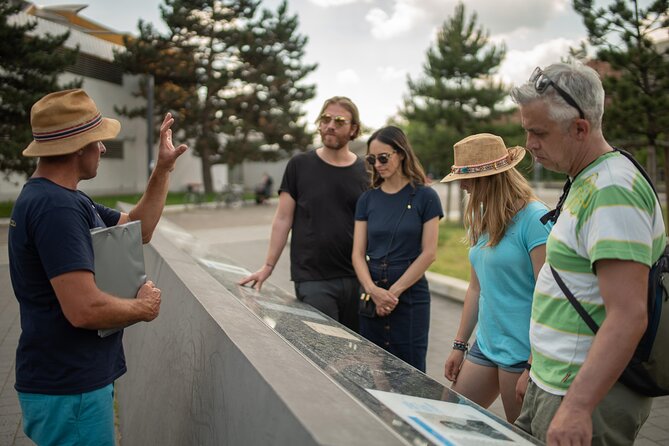
That is where a private guide earns the fee. The best guides on this tour do more than recite dates. They explain how Hitler and the Nazi Party gained power, how Berlin was reshaped under Albert Speer’s plans for Germania, how the Soviet army fought toward the capital, and how postwar division altered daily life.
The private setup also gives you room to ask basic questions without feeling rushed. If you want a clear explanation of fascism and communism, the meaning of the Berlin Wall, or why the Brandenburg Gate became a symbol of unity, you can stop and ask. If your group already knows the major events, your guide can move toward personal stories, escape attempts, architecture, or Berlin culture.
The walk is offered in English, with morning and afternoon departure choices. It lasts about three to four hours, though one account describes a three-hour version as sufficient for that group. Expect plenty of walking. Wear practical shoes, bring water, and check the weather before setting out.
More Third Reich history tours in Berlin:
- Berlin: Third Reich and Cold War 2 Hour Walking Tour
★ 4.9 · 6,830 reviews - Berlin’s Best: 2 Hour Walking Tour Third Reich and the Cold War
★ 5.0 · 5,486 reviews - Third Reich Berlin: Hitler and WWII Walking Tour
★ 5.0 · 3,301 reviews
Brandenburg Gate and the Reichstag: Starting With Symbols
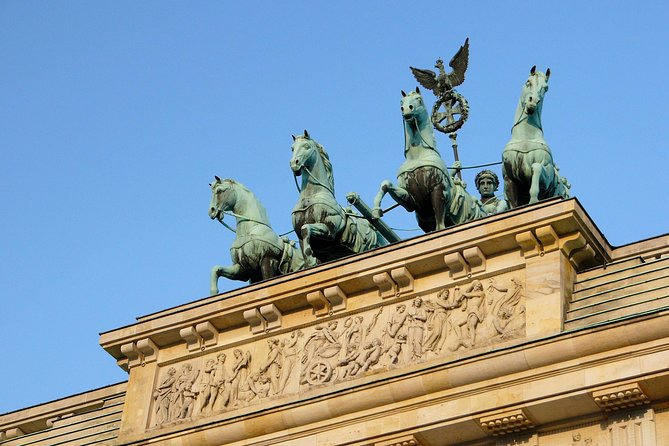
The Brandenburg Gate is an easy place to begin Berlin’s modern story. Built as a city gate, it later became a powerful symbol of division during the Cold War. Today, its meaning has shifted again, and it represents German unity and peace.
Your guide can use the gate to explain how political symbols change with the times. It is also a useful visual anchor for the rest of the tour, since several nearby sites connect Nazi rule, wartime destruction, postwar occupation, and reunification.
Nearby, the Reichstag introduces modern Germany’s parliamentary system. If your main interest is World War II, the discussion can include resistance figures such as Claus von Stauffenberg, monuments to those who opposed the Nazi regime, and the plans for a monumental Nazi capital.
The Reichstag itself is viewed from outside on this walk, and the listed stop is brief. That matters if you hope to tour the glass dome or enter the parliament building. This experience focuses on the building’s historical setting rather than an interior visit.
The Holocaust Memorial and Hitler’s Bunker Site
The Memorial to the Murdered Jews of Europe is one of the most important stops in central Berlin. Its 2,711 concrete slabs form a grid near the Brandenburg Gate. The slabs vary in height, creating an uneasy passage through the memorial.
You can walk among them and take time to think about what the memorial is trying to express. The effect is intentionally disorienting, but a guide can add the historical context needed to keep the memorial from becoming only an architectural photo stop.
An underground information center beneath the field of slabs presents personal accounts and background about the Holocaust. The walking tour lists the memorial as a free stop, but the scheduled time is short. If the information center is especially important to you, tell the guide before the tour and ask how much time can be set aside.
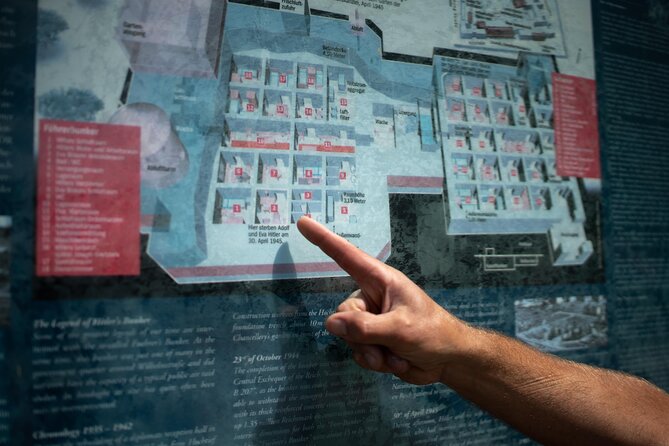
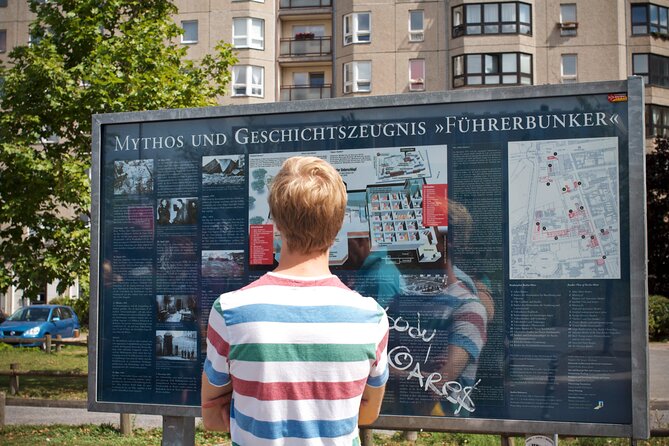
The nearby site of Hitler’s bunker is less visually dramatic. The bunker itself is not open as a visitor attraction, and the location is marked in an unassuming area. That lack of spectacle is part of the point. Your guide can explain how the Nazi leadership spent the final days of the war there and how the site later became a sensitive problem for Berlin.
This is a place where good explanation matters more than what you see. Do not expect ruins or a grand monument. Expect a discussion about the final collapse of the Nazi regime and the Battle of Berlin.
The Reich Air Ministry and Topography of Terror
The former Reich Air Ministry is one of the few major Nazi-era buildings still in use. Completed in 1936, the huge structure was linked to Hermann Göring and the Luftwaffe. Its scale and severe design were intended to project the power of the regime.
The building survived the war and later served East Germany as its Ministry of Transport. That second life gives the site unusual value. It connects the Nazi government, wartime damage, and the political system that followed in East Germany.
A short stop here works best when your guide explains what changed and what did not. The building is not presented as a museum of Nazi interiors, so your experience depends heavily on the commentary.
At the Topography of Terror, you are near the former headquarters of the SS, Gestapo, and SD. The present exhibition focuses on the people and organizations responsible for persecution and terror. This is a useful counterweight to tours that focus only on military events or Hitler’s personal story.
I would ask your guide to distinguish the different agencies and their roles. The site is especially valuable if you want to understand how repression worked through institutions, offices, records, arrests, and interrogation, rather than viewing the Nazi period only through battlefield history.
More Cold War tours in Berlin:
- Skip-the-Line: Berlin Wall Museum at Checkpoint Charlie
★ 4.1 · 2,041 reviews - Cold War, Berlin Wall, Spies and the East Side Gallery
★ 5.0 · 1,024 reviews - Berlin: Cold War Walking Tour on Berlin Wall Route
★ 4.8 · 437 reviews - Berlin: Cold War Era History Guided Bike Tour
★ 4.8 · 413 reviews
Checkpoint Charlie and the Palace of Tears
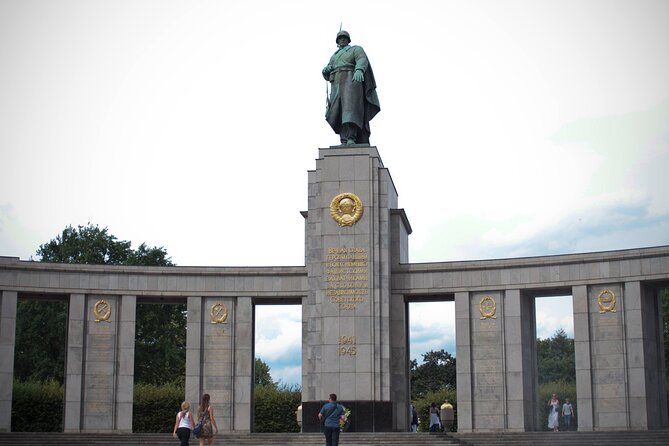
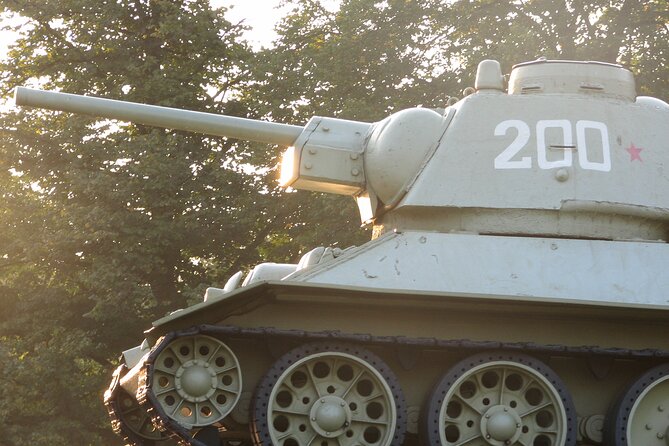
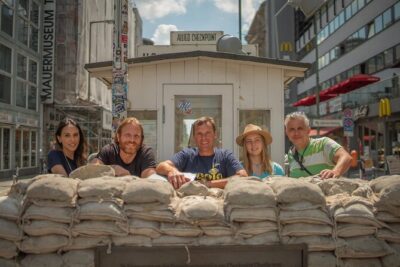
Checkpoint Charlie was the best-known crossing between East and West Berlin. In 1961, American and Soviet tanks faced each other here during a dangerous confrontation. The standoff showed how quickly Berlin could become the center of a crisis involving the world’s two superpowers.
Today, the setting is busy and commercial, and the checkpoint hut is a reconstruction. That can disappoint visitors expecting an untouched Cold War site. The historical importance remains, but the place makes more sense when your guide explains what happened around it, including escape attempts, espionage, travel restrictions, and the human cost of division.
The Palace of Tears at Friedrichstrasse Station offers a more personal view of the Cold War. From 1961 to 1989, it served as a departure hall for East Germans leaving for West Berlin. Families and friends often had to say goodbye under strict controls, sometimes without knowing when they would meet again.
The museum inside presents personal stories and the emotional effects of the border. This stop helps move the Cold War story beyond tanks, leaders, and political slogans. It shows how a divided city affected ordinary relationships.
The scheduled stop here is longer than at several central monuments, but time is still limited. If you want to read the exhibits carefully, tell your guide at the start. The itinerary is flexible, but flexibility works best when you state your priorities clearly.
Bernauer Strasse and the Berlin Wall
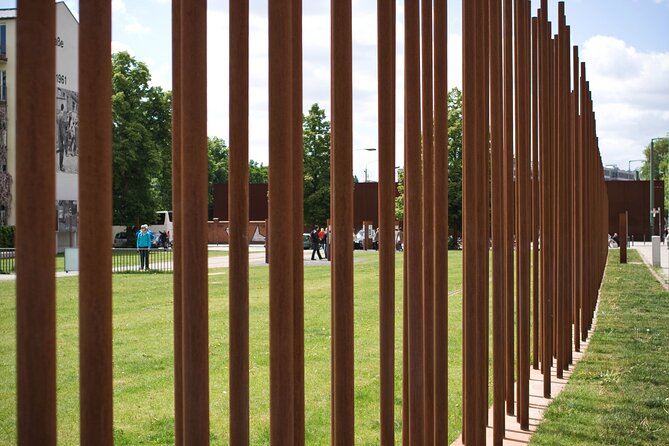
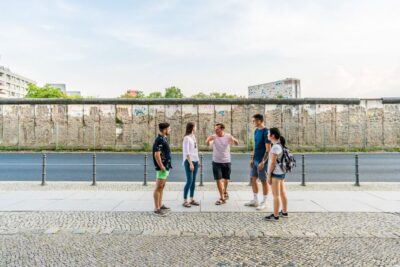
The Berlin Wall Memorial on Bernauer Strasse is one of the strongest parts of a Cold War-focused route. When the Wall went up in 1961, it cut through the street and separated neighbors. East Berlin residents found themselves trapped on one side while people in the West watched from close by.
This area also tells the story of escape. Tunnel 29 helped 29 people reach West Berlin in 1962. Tunnel 57 later helped 57 people escape through a narrow passage beneath the Wall. These numbers give a human scale to a subject that can otherwise feel abstract.
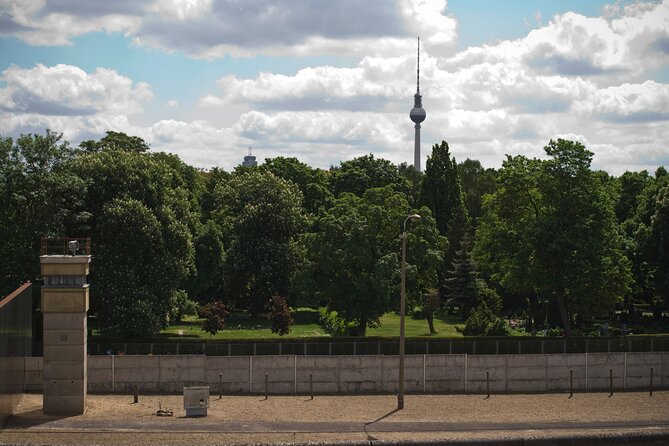
The memorial preserves sections of the Wall, a watchtower, and a documentation center. Compared with Checkpoint Charlie, Bernauer Strasse feels more substantial and less theatrical. You can better understand how the barriers were arranged and how the border affected buildings, streets, churches, and families.
The East Side Gallery offers a different mood. It is the longest remaining stretch of the Berlin Wall and a permanent open-air gallery covered with murals about freedom, justice, and peace. The art makes a striking contrast with the wall’s original purpose.
Do not assume the three to four-hour tour will include both Bernauer Strasse and the East Side Gallery. They are separate parts of Berlin, and the route must be tailored. If seeing the murals is essential, name the East Side Gallery when booking and remind your guide at the beginning.
Tempelhofer Feld and Prenzlauer Berg
Tempelhofer Feld is the former Nazi airport used by the Allies during the 1948 and 1949 Berlin Airlift. The airport no longer operates, and the huge open area is now used for recreation.
Its value is partly historical and partly spatial. You can connect the airport to the struggle over access to West Berlin, then see how the same place now serves everyday city life. The stop is listed as a short walk around the former airport, not a full airport tour.
This location may be harder to combine with all the central stops in a four-hour walk. Ask about the route before booking if Tempelhofer Feld is a priority.
In Prenzlauer Berg, the tour can include a former NKVD prison later used by the East German Stasi. The stop focuses on interrogation methods, the treatment of prisoners, and the way Germany deals with its destructive past today.
This is a less famous location than the Brandenburg Gate or Checkpoint Charlie, which is exactly why it can add depth. It shifts attention from major political events to secret police work and the experience of people held by the state.
What the Private Format Is Worth
The price is $192.97 per person. For one person, the cost is easier to justify if you want a serious history lesson and the chance to shape the route around your interests. For a couple or family, the total rises quickly, so compare it with a larger group tour or several museum admissions.
The value comes from personal attention rather than included attractions. There are no food or drink inclusions, and the listed stops do not require admission tickets. You are paying for the guide’s time, preparation, storytelling, route planning, and ability to answer questions.
The strongest reason to choose private touring is customization. You can skip sites you have already seen, focus on World War II, concentrate on the Cold War, or combine both. Guides including Jamie, Ariel, Rohan, Joerg, Klaus, Peter, and Steve have been praised for adjusting the route, helping with public transport, recommending places to eat, and matching the pace to the group.
That said, quality can vary by guide. The many excellent accounts describe clear explanations, strong historical command, enthusiasm, patience, and good pacing. One dissatisfied experience reported missed stops, no drink break, and weak explanations. This is a useful warning: confirm your desired sights before the tour, and speak up if the pace or route is not working.
Hotel pickup and drop-off are included, which is useful after a long flight or for a group with mobility concerns. The activity is described as accessible to most participants, allows service animals, and is near public transportation. It remains a walking tour, so ask about the walking distance and route when arranging your preferences.
Who Should Book This Tour
I would choose this tour for a first or second day in Berlin, especially if you want a clear framework for the city. Several hours with a good guide can help you understand what you later see at museums and memorials.
It suits you best if:
- You want World War II and Cold War history explained together.
- You prefer a private guide to a fixed group schedule.
- You have specific interests, such as resistance, Nazi architecture, the Berlin Wall, escape tunnels, or the Stasi.
- You appreciate conversation and questions rather than a simple list of dates.
- You want help shaping the rest of your Berlin visit.
It may not suit you if you dislike long walks, want extended time inside museums, or need a fixed promise that every listed stop will be covered. The route is flexible, but three to four hours is not enough for a detailed visit to all twelve locations.
Final Verdict: Book It If You Want Context
Book this private Berlin walking tour if the guide’s interpretation matters as much to you as the sights. The Brandenburg Gate and Berlin Wall are easy to photograph on your own, but understanding the political choices, personal losses, and changing meanings behind them is much harder.
Before you pay, send a short list of your top three priorities. Ask specifically about the East Side Gallery, Bernauer Strasse, Tempelhofer Feld, or the Palace of Tears if any of them are essential. With that planning, the private format can be a strong investment for history-minded visitors who want Berlin to make sense quickly.
Free cancellation is available up to 24 hours before the start time. That gives you some protection if your plans change, but changes made inside that window are not accepted.
FAQ
How long does the private walking tour last?
The tour lasts approximately three to four hours. A three-hour version may be available, depending on the route and your group’s needs.
Can I choose World War II or Cold War history?
Yes. You can request a focus on World War II, the Cold War, or a combination of both.
Is the tour private?
Yes. Only your group participates, and the guide can adjust the route, pace, and subject matter to your interests.
Is hotel pickup and drop-off included?
Yes. Hotel pickup and drop-off are included in the experience.
Is the tour offered in English?
Yes. The tour is offered in English.
Does the tour include the East Side Gallery?
The East Side Gallery is one of the possible stops, but the route is customized. Request it when booking if you want to make sure it is considered.
Are food and drinks included?
No. Food and drinks are not included.
Are admission tickets included?
The listed stops are described as free admission stops. The tour includes the professional guide, but no paid museum or attraction tickets are specified.
What is the cancellation policy?
You can cancel up to 24 hours before the experience for a full refund. Cancellations or changes made less than 24 hours before the start time are not accepted.
More Walking Tours in Berlin
- Discover Berlin Half-Day Walking Tour
★ 5.0 · 9,624 reviews - Berlin: Discover Berlin Walking Tour
★ 4.9 · 5,998 reviews - Berlin: Hidden Backyards Guided Walking Tour
★ 4.8 · 5,360 reviews - Berlin: Alternative Berlin Walking Tour
★ 4.6 · 1,204 reviews
Newest Berlin reviews
- Where It All Began: Berlin’s Queer & Trans History Tour★ 4.9 · 6 reviews
- Understanding Kreuzberg: The roots of local (sub)culture★ 4.9 · 11 reviews
- Berlin: guided canoe | kayaktour★ 4.1 · 7 reviews
- Private Potsdam City Tour in an authentic vintage van★ 5.0 · 14 reviews
- Warnemünde Shore Excursion: Private Sachsenhausen and Berlin Tour★ 5.0 · 12 reviews
- Ultimate E-Bike Tour of Berlin with Beer Garden Stop★ 5.0 · 4 reviews
- In the Forbidden City – Potsdam Walking Tour★ 5.0 · 17 reviews
- Private Walking Tour of Potsdam and Sanssouci★ 5.0 · 24 reviews
Berlin Cold War Tours, compared.
Berlin’s Best: 2 Hour Walking Tour Third Reich and the Cold War
Read our review →
Skip-the-Line: Berlin Wall Museum at Checkpoint Charlie
Read our review →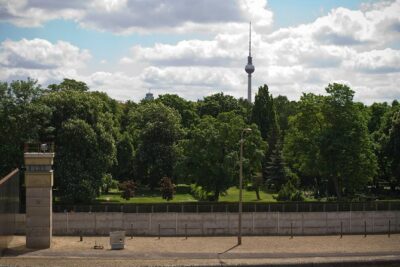
Cold War, Berlin Wall, Spies and the East Side Gallery
Read our review →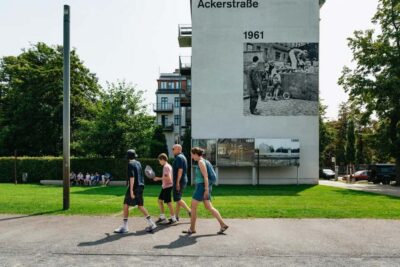

Listening Station Teufelsberg Tour with Transfer
Read our review →Browse the lists this tour appears in