
Reviewed · BERLIN COLD WAR TOURS
Karl-Marx-Allee Walking Tour: Berlin’s Socialist History
Karl-Marx-Allee was built to make East Germany look powerful, orderly, and successful. Its huge housing blocks, broad road, and ceremonial scale still make you feel small. I like the way this two-hour walk connects architecture to politics, and I like that it covers both the 1953 workers’ uprising and the quieter world of Stasi surveillance. The main drawback is that this is a history-focused walk, not a general Berlin sightseeing tour, so the subject may feel heavy for children or anyone wanting a light stroll.
I also appreciate the attention given to changing styles along the boulevard, from early postwar modernism to imposing socialist classicism. The tour costs $23, a fair price for a two-hour guided route with an English or German guide. Wear comfortable shoes, and remember that children under 10 are not suited to this activity.
Key points to know before you book
- Grand socialist-classicism blocks: See East Germany’s boldest postwar building project and learn why its scale mattered.
- The 1953 uprising: Understand how construction pressure and worker anger nearly brought down the young socialist government.
- Stasi surveillance: Hear how wiretaps, attic listening stations, and hidden police work shaped daily life behind the polished facades.
- Two different architectural visions: Compare the earlier modernist buildings with the later official style promoted by East Germany.
- Film locations: Visit places connected with The Lives of Others and The Queen’s Gambit.
- A changing boulevard: Learn how the former Stalinallee went from parade route to a focus for housing and anti-gentrification protests.
Why Karl-Marx-Allee tells East Germany’s story so well
Many Berlin history tours focus on the Wall, Checkpoint Charlie, or the Nazi period. Karl-Marx-Allee gives you another way into the city’s past. Here, politics is built into the street itself.
The boulevard began as a vast rebuilding project after the Second World War. Berlin had been badly damaged, and the new East German government needed housing, public confidence, and a visible symbol of its future. The answer was a monumental avenue lined with large apartment blocks, public spaces, shops, cafes, and restaurants.
The scale was deliberate. This was not meant to feel like an ordinary residential street. It was designed to show that socialism could rebuild a capital city with order and purpose. As you walk, the size of the buildings helps explain the message better than a classroom lecture can.
The route also exposes the gap between public image and private life. The boulevard presented an ideal of comfort and abundance, yet the state behind the facade relied on surveillance and suppression. That contrast gives the tour its real value. You are not simply looking at decorated buildings. You are asking what kind of society needed to build them, and what it demanded from the people who lived there.
More Cold War tours in Berlin:
- Berlin: Third Reich and Cold War 2 Hour Walking Tour
★ 4.9 · 6,830 reviews - Berlin’s Best: 2 Hour Walking Tour Third Reich and the Cold War
★ 5.0 · 5,486 reviews - Skip-the-Line: Berlin Wall Museum at Checkpoint Charlie
★ 4.1 · 2,041 reviews
Meeting at Frankfurter Tor and getting oriented
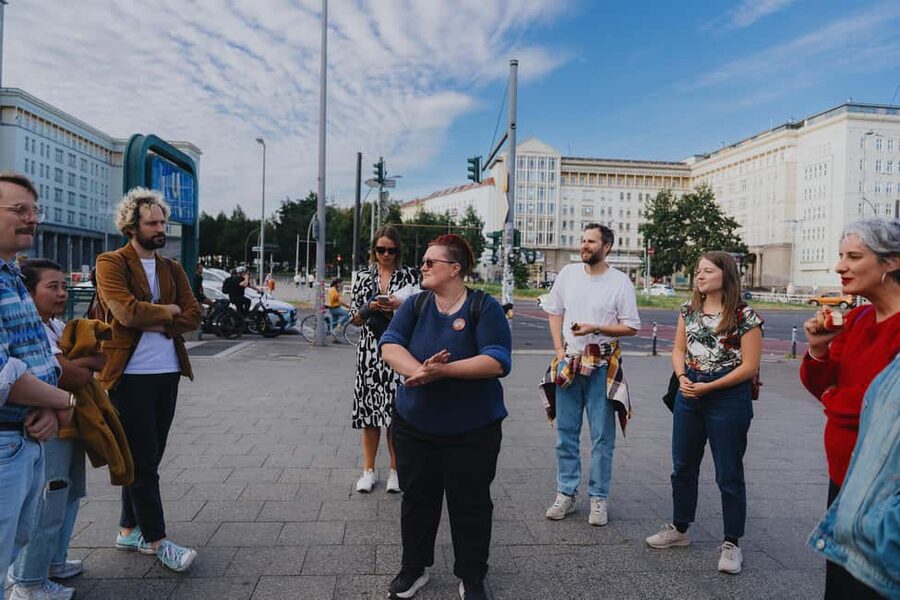
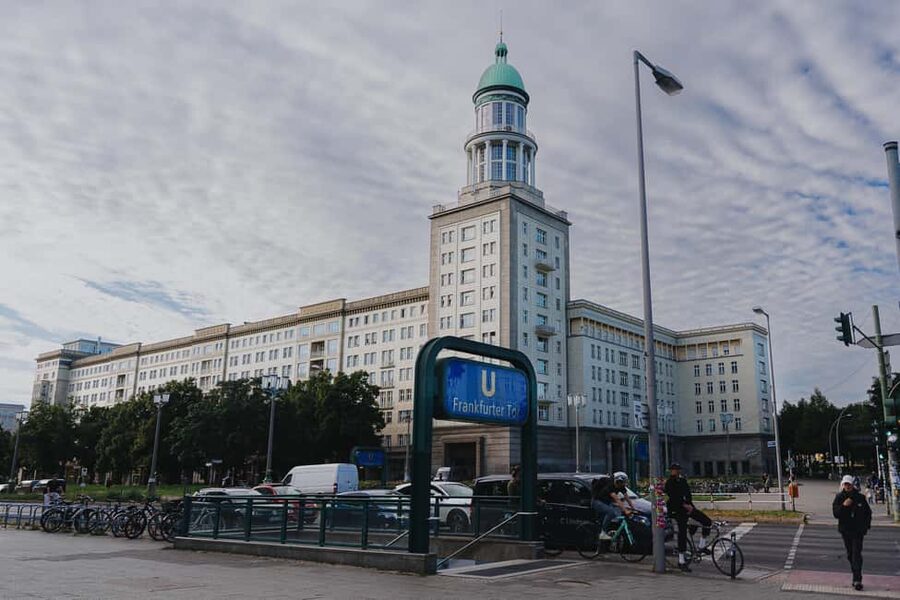
The tour begins outside the Frankfurter Tor U-Bahn station, at the corner of Warschauer Straße and Karl-Marx-Allee. Look for the guide with an orange umbrella. That detail matters in a busy city, especially if several groups gather near the station.
Frankfurter Tor is a fitting starting point because the architecture announces itself immediately. The station area places you beside the broad avenue and its monumental buildings, so you can grasp the scale before the guide fills in the political story.
The walk lasts two hours, with about 1.5 hours listed for the guided portion along Karl-Marx-Allee. That leaves a little time for meeting and movement. You should plan to remain on foot for most of the activity, so comfortable shoes are a must.
The experience is wheelchair accessible. Since the route runs through an urban public area, practical comfort still matters. Bring clothing suited to the weather and be ready for a steady walk rather than a seated museum visit.
The boulevard built to impress
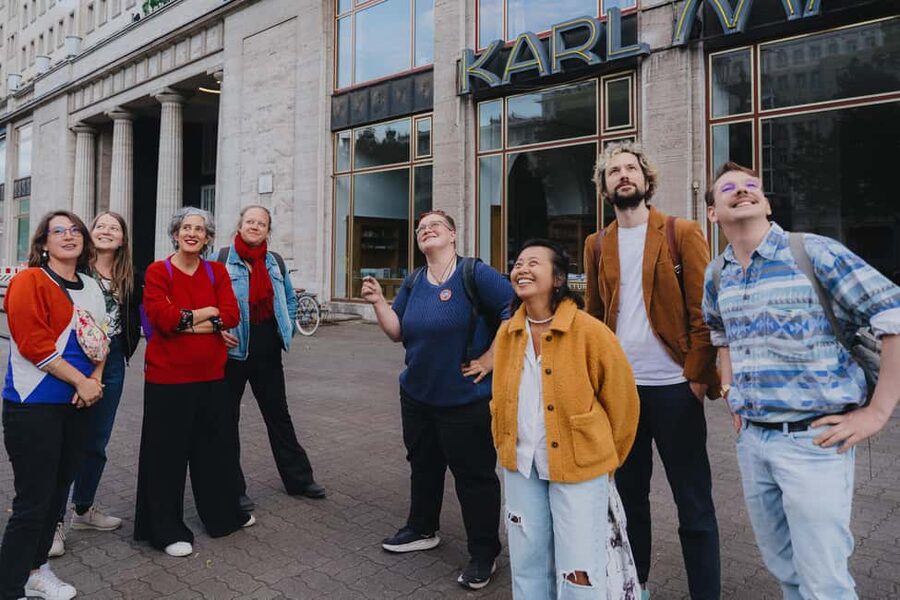
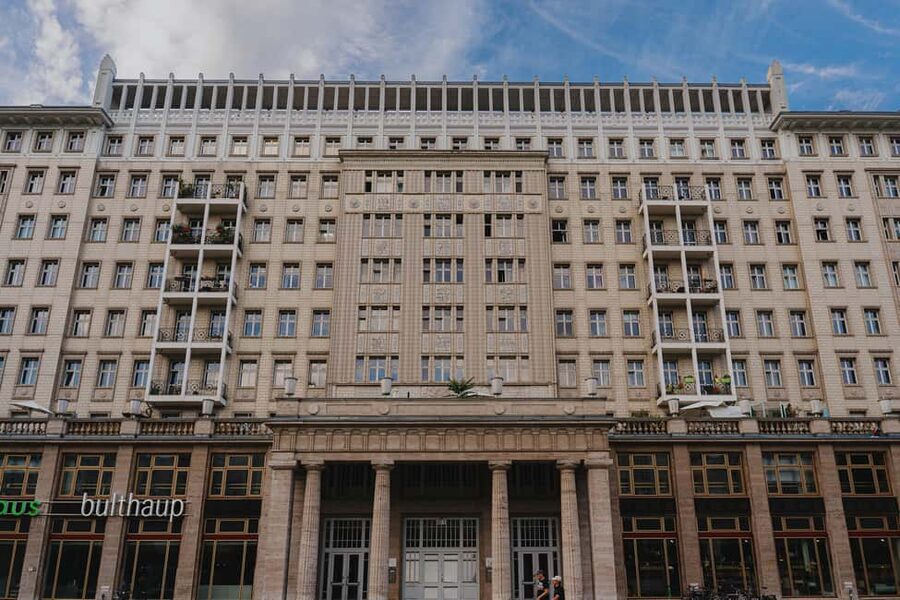
The grand buildings from the 1950s are the visual heart of the tour. Their style is often called socialist classicism, and it differs sharply from the simpler modernist architecture associated with the immediate postwar years.
The blocks were meant to look permanent, dignified, and powerful. Decorative details and monumental proportions helped the government present socialism as a serious alternative to Western capitalism. At the same time, the buildings were intended to provide housing for East Berlin residents, making the avenue both a political display and a practical reconstruction project.
I find the tension between those purposes especially interesting. The street was not only a backdrop for parades. It was also supposed to show that ordinary people could receive modern housing and access to shops, cafes, and restaurants. The best of East Berlin was concentrated here, creating an image of comfort and plenty.
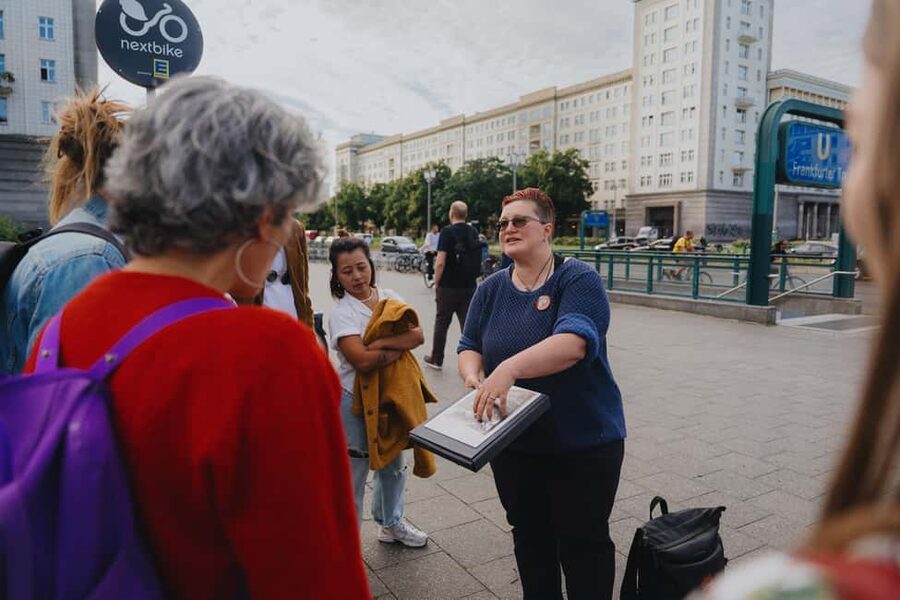
The guide helps you read those buildings as political documents. Look beyond the facades and ask why the apartments were placed here, why the avenue needed such a wide profile, and why the government invested so much effort in its appearance. The answers lead directly to the wider Cold War contest between East and West.
Earlier modernism hidden behind the trees
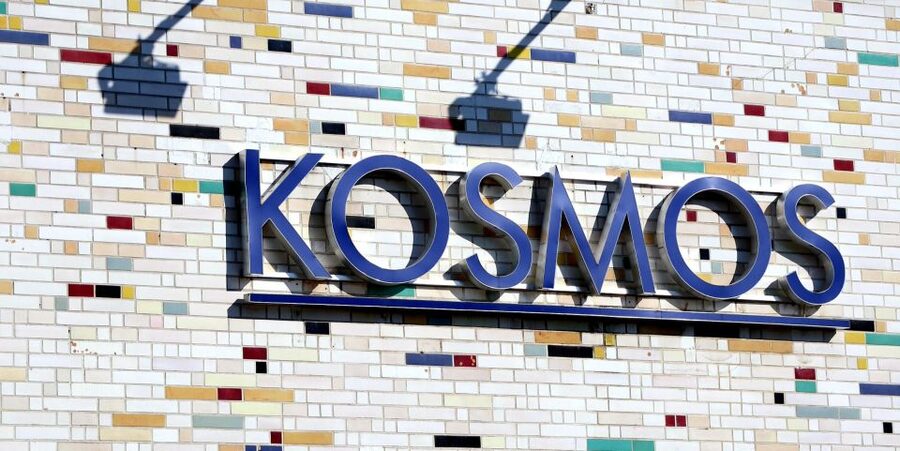
Karl-Marx-Allee is not only a row of imposing 1950s blocks. Its story reaches into the years just after the war, when architects were exploring modernist ideas for rebuilding a ruined city.
Those earlier buildings reflected a more practical and utopian vision of urban life. Their style was later rejected by the East German regime, which wanted architecture to express a different kind of socialist identity. Fast-growing poplar trees were used to hide some of the earlier modernist work from people passing along the main road.
That detail gives the walk an extra layer. The avenue was not designed all at once with one fixed idea of socialism. It changed as official taste changed. The government did not simply build housing. It used architecture to decide which values should be visible and which should fade from view.
You may find this section especially useful if you already know something about modern architecture. The tour shows how design choices were tied to political authority, not just to appearance or building technique.
More history tours in Berlin:
- Berlin: Natural History Museum Entrance Ticket
★ 4.6 · 3,382 reviews - Berlin: World Heritage Cruise to Potsdam
★ 4.5 · 1,435 reviews - Berlin Historical Highlights Walking Tour
★ 4.9 · 657 reviews - Berlin Private Complete History All Day Walking Tour
★ 5.0 · 474 reviews
The 1953 workers’ uprising
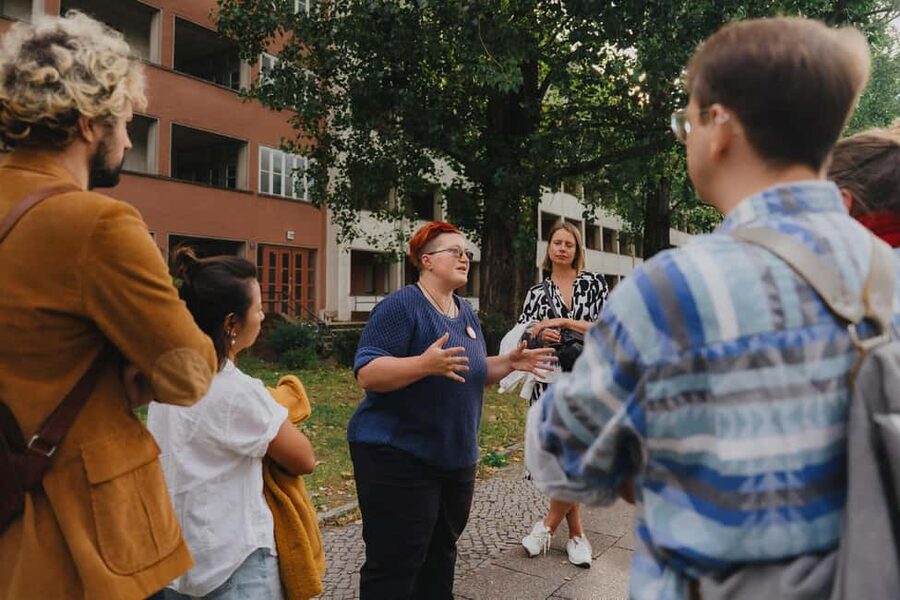
The boulevard’s construction came with a serious political cost. In June 1953, disgruntled workers began a mass uprising that nearly toppled East Germany’s new socialist government.
The tour explains how pressure connected to the rebuilding program helped fuel anger. The avenue represented national progress, but the workers involved in the project faced demands that could feel very different from the official image of prosperity. The result was a revolt that spread beyond this single street and shook the young state.
This is one of the strongest reasons to take the walk with a guide. A casual stroll can show you the buildings, but it cannot easily explain why a construction project became tied to a crisis of political survival. The guide places the uprising within the street’s physical setting, helping you see how grand state projects affected people doing the actual work.
The subject is serious, and the tour does not treat Karl-Marx-Allee as a simple success story. You get the impressive architecture and the human cost at the same time.
Daily life behind the polished facade

The boulevard offered East Berlin’s most desirable version of socialist life. Cafes, restaurants, and well-stocked shops helped create a picture of normality and affluence. For the state, these amenities were useful proof that its system could provide a good life.
But the tour also looks behind that public image. The East German secret police, known as the Stasi, used wiretaps in apartments and listening stations in attics. These tools were not designed to be visible. Surveillance worked best when it remained part of the building but outside ordinary sight.
That contrast is central to the experience. A beautifully planned housing avenue could offer comfort while also existing inside a surveillance state. The same apartment block that promised modern living could be connected to official suspicion and control.
The tour does not reduce residents to victims or pretend the architecture had no practical value. Instead, it gives you a clearer picture of the complicated bargain many people faced: improved housing and public services on one side, limited freedom and state monitoring on the other.
Film locations that make the history familiar
The route includes filming locations connected with The Lives of Others and The Queen’s Gambit. This is a useful touch, especially if you have seen either production.
Film locations can sometimes feel like a minor extra, but here they help connect the street’s formal appearance with its role in popular memory. The Lives of Others focuses on surveillance and control in East Germany, themes that fit directly with the tour’s discussion of Stasi listening operations.
The Queen’s Gambit adds another visual connection to the boulevard and its East Berlin setting. Seeing places used on screen can help you recognize how the avenue’s distinctive buildings continue to represent a particular period.
Do not book this as a film-themed tour. The main subject is socialist history and architecture. Still, these locations give the walk a familiar reference point and add variety to the political discussion.
From Stalinallee to a post-Wall housing debate

After the Berlin Wall fell, the boulevard lost much of its official importance. It was no longer the main stage for socialist parades, and the buildings began to look like leftovers from a failed political system. For a time, the avenue seemed easy to ignore.
Berlin changed again. Rising housing costs and a shortage of homes brought new attention to the area. Real estate interest replaced state ceremony, and the old boulevard became part of arguments over gentrification and the cost of living.
That final shift makes the tour feel connected to present-day Berlin. Karl-Marx-Allee is not frozen in the East German past. It remains a place where local residents debate who can afford to live in the city and what should happen to historic housing.
I like this ending because it avoids treating history as finished. The political system changed, but questions about housing, public space, and who benefits from urban development remain very current.
What $23 buys you
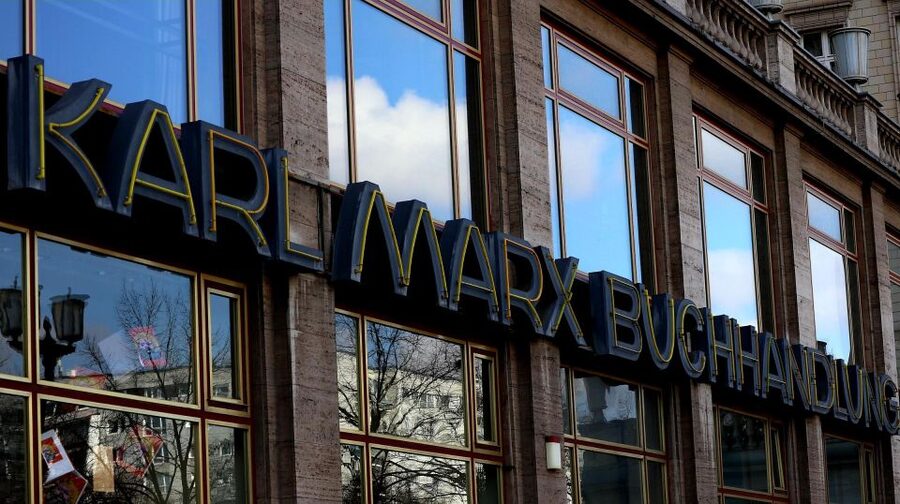
At $23 per person, this is good value if you want a focused history lesson with a live guide. You receive roughly two hours of walking, architectural interpretation, political context, and a route that links the 1950s buildings with earlier modernism, the 1953 uprising, Stasi surveillance, film locations, and modern housing protests.
The price is less attractive if you only want to admire the architecture or take photographs. You can see the boulevard without paying for a tour. The fee makes sense because the important details are not always visible from the sidewalk: the change in architectural policy, the role of the street in state propaganda, and the hidden surveillance system.
The tour is offered in English or German. Martina is one guide associated with the experience, and her approach is described as attentive to curious participants rather than rushing through a fixed script. That is useful here because the subject raises questions, and the best version of this walk depends on having room for them.
Free cancellation is available up to 24 hours before the start, and you can reserve without paying immediately. Check the available starting times when booking.
Who should take this walk
I would choose this tour if you are interested in Cold War politics, architecture, urban planning, German history, or the everyday workings of a former dictatorship. It also suits anyone who has already seen central Berlin and wants to explore a different part of the city’s story.
It is less suitable for children under 10, and the serious themes may not hold the attention of younger children. The route also asks you to walk and listen for a sustained period, so it is not ideal if you want frequent stops for food, shopping, or general sightseeing.
The tour works best early in your Berlin visit if you want context for East Germany. It also works late in a trip, after you have seen more familiar Cold War sites, because it shows how political ideas reached into housing, design, and daily routines.
Should you book the Karl-Marx-Allee walk?
Book it if you want Berlin history you can read directly from the buildings around you. The strongest parts are the link between architecture and ideology, the explanation of the 1953 uprising, and the look at Stasi surveillance behind the boulevard’s polished image.
Skip it if your priority is a relaxed architectural stroll with little political discussion. This is a serious, focused walk, and its value comes from the guide’s explanations.
For $23, I consider it a worthwhile choice for curious adults, architecture fans, and anyone trying to understand East Berlin beyond the Wall. Meet at Frankfurter Tor, watch for the orange umbrella, wear comfortable shoes, and confirm the finish point at U Strausberger Platz when you book.
FAQ
Where does the Karl-Marx-Allee walking tour begin?
It begins outside the Frankfurter Tor U-Bahn station, at the corner of Warschauer Straße and Karl-Marx-Allee.
How do I find the guide?
Look for the guide holding an orange umbrella outside the Frankfurter Tor U-Bahn station.
Where does the tour finish?
The route is listed as finishing at U Strausberger Platz. The meeting information also says the activity ends back at the meeting point, so confirm the exact finish details when booking.
How long does the tour last?
The experience lasts two hours. The guided portion along Karl-Marx-Allee is listed as about 1.5 hours.
What languages are available?
The tour is offered in English and German.
How much does the tour cost?
The price is $23 per person.
Is the tour wheelchair accessible?
Yes, the activity is listed as wheelchair accessible.
What should I bring?
Bring comfortable shoes because this is a walking tour.
Can children join the tour?
Children under 10 are not suitable for this activity.
Can I cancel for a full refund?
Yes. You can cancel up to 24 hours in advance for a full refund. You can also reserve now and pay later.
More Walking Tours in Berlin
- Discover Berlin Half-Day Walking Tour
★ 5.0 · 9,624 reviews - Berlin: Discover Berlin Walking Tour
★ 4.9 · 5,998 reviews - Berlin: Hidden Backyards Guided Walking Tour
★ 4.8 · 5,360 reviews - Third Reich Berlin: Hitler and WWII Walking Tour
★ 5.0 · 3,301 reviews
Newest Berlin reviews
- Where It All Began: Berlin’s Queer & Trans History Tour★ 4.9 · 6 reviews
- Understanding Kreuzberg: The roots of local (sub)culture★ 4.9 · 11 reviews
- Berlin: guided canoe | kayaktour★ 4.1 · 7 reviews
- Private Potsdam City Tour in an authentic vintage van★ 5.0 · 14 reviews
- Warnemünde Shore Excursion: Private Sachsenhausen and Berlin Tour★ 5.0 · 12 reviews
- Ultimate E-Bike Tour of Berlin with Beer Garden Stop★ 5.0 · 4 reviews
- In the Forbidden City – Potsdam Walking Tour★ 5.0 · 17 reviews
- Private Walking Tour of Potsdam and Sanssouci★ 5.0 · 24 reviews
Berlin Cold War Tours, compared.
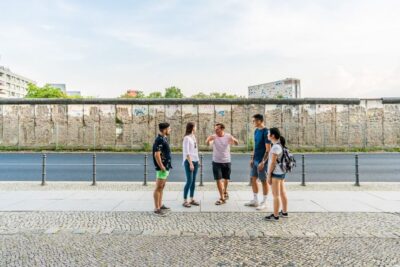
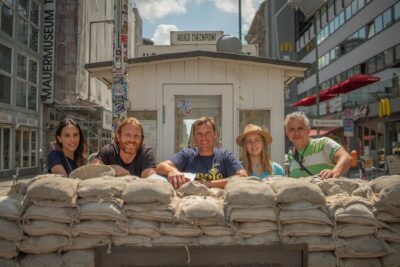
Berlin’s Best: 2 Hour Walking Tour Third Reich and the Cold War
Read our review →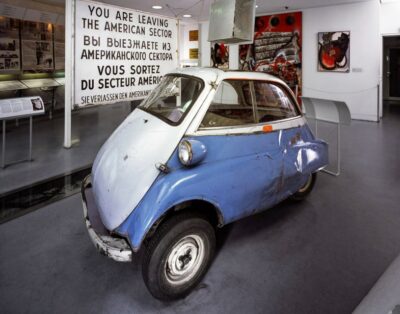
Skip-the-Line: Berlin Wall Museum at Checkpoint Charlie
Read our review →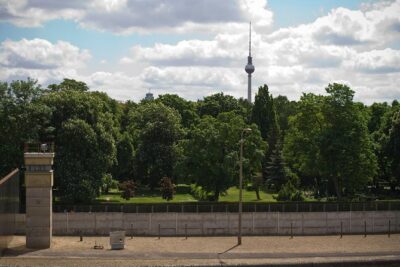
Cold War, Berlin Wall, Spies and the East Side Gallery
Read our review →

Listening Station Teufelsberg Tour with Transfer
Read our review →Browse the lists this tour appears in