
Reviewed · BERLIN COLD WAR TOURS
Berlin Cold War & World War II Third Reich Walking Tour
Berlin’s past is written into ordinary streets, empty spaces, concrete towers, and surviving fragments of the Wall. This tour connects those clues, moving from the Reichstag and the final days of Nazi Germany to border crossings, escape attempts, and the divided city of the Cold War. The strongest feature is the broad historical sweep, especially if you want Berlin’s major events explained in one long outing.
I like the chance to ask questions as you go, and I like the practical tips about restaurants, bars, books, and modern Berlin. Guides including Miguel and Arthur are described as warm, funny, and well prepared. The main drawback is scale: the listed itinerary covers a huge amount of ground, and the tour may feel more like a high-level introduction than a close study of each site.
Key points to know
- See Berlin’s wartime scars: Flak towers, battle sites, memorials, bunker locations, and Wall remains give the history a physical setting.
- Expect a long day: The tour is listed at about six hours, though some descriptions place the actual experience closer to two and a half to three and a half hours.
- Ask questions: The guides are praised for explaining follow-up questions and adding stories about real events.
- Wear proper shoes: You will walk at a steady pace, with time for drink stops, but snacks and drinks are not included.
- Plan for any weather: The tour runs in all conditions, so an umbrella and suitable clothing matter.
- Best for first-time Berlin visitors: It gives you a useful framework before you return to the museums and memorials that interest you most.
A six-hour route through Berlin’s hardest chapters
This experience aims to explain Berlin from the rise of Hitler through World War II, the Soviet occupation, the division of Germany, and the fall of the Berlin Wall. That is a lot for one day. You will not get a university seminar at every stop, but you can come away with a map of the city’s major political breaks and a better idea of where to explore next.
The listed price is $35.64 per person. For that amount, you are paying mainly for the guide’s narration and the structure of the day. There are no attraction admission charges listed, and no food or drinks are included. If your schedule is tight, this can be good value because it gathers many distant subjects into one booking.
The size can reach 100 people, which is worth considering. A large group may make it harder to hear or ask questions, though the strongest experiences described in the supplied material depended on active conversation with the guide. If possible, stay near the guide and speak up when you need clarification.
The meeting point is Generator Berlin Alexanderplatz, at Otto-Braun-Straße 65. The start time is noon, and the activity ends back at the meeting point. Confirmation is provided at booking, and free cancellation is available up to 24 hours before the start time.
More Third Reich history tours in Berlin:
- Berlin: Third Reich and Cold War 2 Hour Walking Tour
★ 4.9 · 6,830 reviews - Berlin’s Best: 2 Hour Walking Tour Third Reich and the Cold War
★ 5.0 · 5,486 reviews - Third Reich Berlin: Hitler and WWII Walking Tour
★ 5.0 · 3,301 reviews
Starting at the Reichstag and the center of power
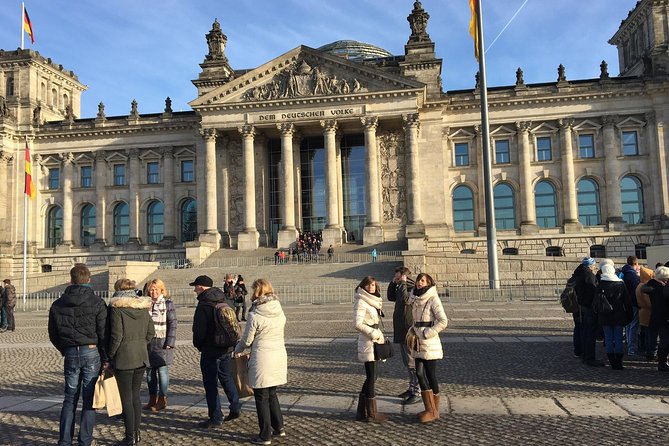
The Reichstag is a useful opening point because it anchors Berlin’s modern political story. Your guide can connect the building and surrounding government district with the larger story of Germany’s changing political systems.
The official stop lasts about 30 minutes and admission is free. Do not expect an interior visit based on the information provided. The value here is the explanation around the building, including how famous events, political figures, architecture, and later history fit together.
This is also where the guide’s style matters. The experience is designed to change with questions and conversation. Miguel is singled out for his enthusiasm and helpful city suggestions, while Arthur is praised for combining historical detail with humor. You might get a different guide, but the tour’s best quality seems to be the human explanation rather than a fixed audio script.
World War II locations, from Karlshorst to the flak tower
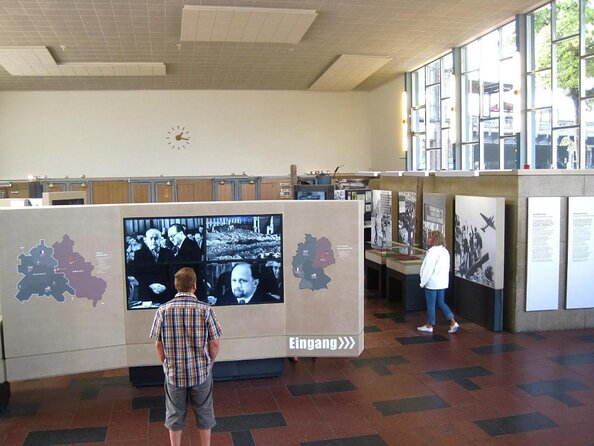
The stop at Museum Berlin-Karlshorst is listed at 30 minutes and admission is free. The site is connected with World War II history and the end of the European conflict. The tour description says the guide will explain events and urban legends along the way, giving you both documented history and the stories that have gathered around these places.
A caution is useful here. Ten listed stops do not automatically mean ten full museum visits. The timing suggests a guided look at locations, not long indoor sessions. If you want detailed exhibits, military documents, or a slower study of the war, you will need separate museum time.
Humboldthain Flak Tower offers a different kind of evidence. Instead of a polished monument, you see a large wartime structure and hear about the role of such defenses in Berlin. The listed visit is 30 minutes, with a relaxed pace and possible breaks for drinks.
I like this part of the route because it helps you notice what can otherwise look like an odd piece of concrete or a neglected ruin. Berlin does not always explain its scars with a large sign. A guide can point out why a structure matters and how the Battle of Berlin left marks on the city.
Prenzlauer Berg adds a neighborhood setting to the story. Here the focus is on battlefields and damage left from the Battle of Berlin. The stop is not presented as a single grand monument. It is more about reading the streets and spaces around you, which can make the final weeks of the war feel less abstract.
The bunker story and the final days of Nazi Germany
The Berlin Story Bunker stop deals with the site associated with Hitler’s notorious underground headquarters. The tour information describes a 30-minute visit, with stories and legends from the guide. The emphasis is on the location and its historical meaning, not on a guaranteed interior tour or a separate admission experience.
This is an emotionally heavy subject, and a good guide needs to keep the facts clear. The supplied comments describe guides who explain patiently and respond to questions, which is particularly useful at a site surrounded by myths and popular-history shortcuts.
One of the most useful lessons in Berlin is that the city’s most important Nazi sites are not always dramatic attractions. Some are marked by modest signs, ordinary buildings, or open ground. You may find the bunker stop more powerful for that reason. It asks you to picture what happened in a place that no longer looks like a movie set.
Several comments praise the tour for showing where major events happened, while also admitting that matching a historical moment to a modern street can be difficult. That is a fair warning. This tour gives you the setting and the story, but you need patience and imagination to connect the two.
More Cold War tours in Berlin:
- Skip-the-Line: Berlin Wall Museum at Checkpoint Charlie
★ 4.1 · 2,041 reviews - Cold War, Berlin Wall, Spies and the East Side Gallery
★ 5.0 · 1,024 reviews - Berlin: Cold War Walking Tour on Berlin Wall Route
★ 4.8 · 437 reviews - Berlin: Cold War Era History Guided Bike Tour
★ 4.8 · 413 reviews
Crossing into the Cold War at the Palace of Tears
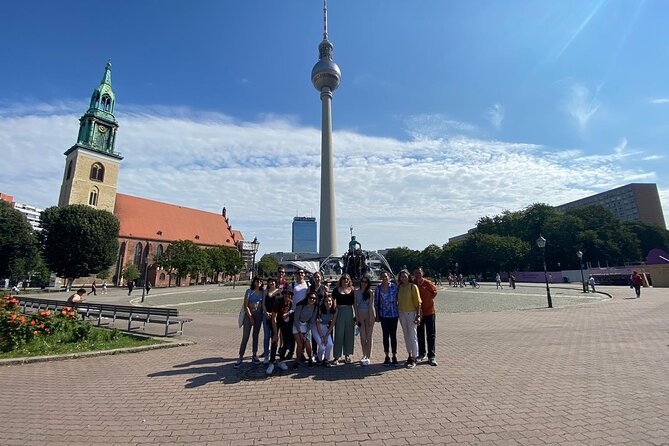
The Palace of Tears shifts the tour from Nazi Germany to divided Berlin. The stop is listed at about 20 minutes and focuses on border crossings, escape points, and East Berlin landmarks.
This is an important change in mood. World War II ended, but Berlin did not become peaceful in any simple sense. The city became a front line between political systems, with families separated and movement tightly controlled. The guide’s job is to explain what a crossing meant in daily life, not just point out where a building once stood.
The brief timing means you should expect a focused explanation rather than a long museum visit. If you are especially interested in everyday life under East German communism, make a note of the places and subjects you want to study later.
Berlin Wall Memorial and the physical border
At the Berlin Wall Memorial, the tour spends about 30 minutes looking at surviving sections and visible reminders of the former border. This is one of the clearest places to understand that the Wall was not simply a single slab of concrete. It was a controlled zone with barriers, watch points, and deadly risks for anyone trying to cross.
The guide can help explain how the border worked and why escape attempts were so dangerous. The comments supplied about this experience place strong value on stories of horror and triumph, forced conscription, and individual attempts to reach the other side.
I would pay close attention here, even if you have already seen photographs of the Wall. The memorial gives scale to the separation. It also helps you understand how the border cut through streets and neighborhoods rather than sitting in some distant military zone.
Teufelsberg and the problem of a very broad itinerary

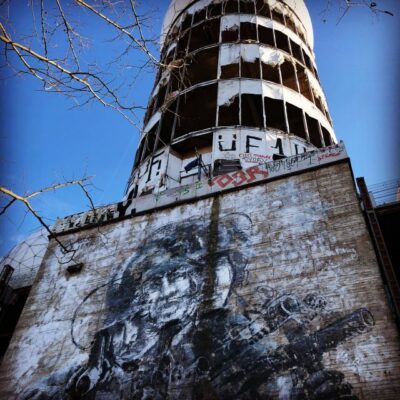
Teufelsberg is listed as another 30-minute stop, with the tour describing off-the-beaten-path Wall sights, guard towers, and other major remains. The supplied route also includes East Side Gallery and a DDR watchtower, so the exact order and transport between these locations may vary.
This is where you should read the schedule with care. The experience is called a walking tour, yet the listed sites are spread widely across Berlin. The six-hour estimate may include movement between areas, pauses, and changes in the route. The material does not specify whether public transport is included, so confirm that point before booking if you need a precise plan.
Teufelsberg can add a broader view of Berlin’s Cold War geography, but the information provided does not promise an interior visit, a set amount of time on site, or a special access arrangement. Think of it as part of the guide’s citywide story rather than a full Teufelsberg tour.
East Side Gallery and a more visible Berlin Wall
East Side Gallery is likely to feel more familiar than some earlier stops. The former Wall section is known for its painted murals, and the tour uses it to discuss the division between East and West Berlin.
The listed time is about 20 minutes. That is enough for an introduction and a few questions, but not enough to inspect every mural carefully. If the artwork matters to you, return later on your own with extra time.
The useful part of seeing East Side Gallery after the Wall Memorial is the contrast. At the memorial, the border feels controlled and dangerous. Here, the surviving concrete has become an open-air display. The same political barrier has moved from a symbol of fear to a place where people gather, photograph, and reflect.
The tour description says the guide will explain what life was like on the East Berlin side. That context is more valuable than simply taking pictures of the painted sections. Ask about daily restrictions, escape attempts, and the way the Wall shaped ordinary movement through the city.
The DDR watchtower and the last Wall stories
The final listed stop is a DDR watchtower, with about 20 minutes devoted to places where the Wall once stood and stories of escapes and forced conscription. This is a fitting close because it returns the Cold War to individual lives.
The watchtower is not just a military object. It represents the surveillance system that made the border real. Your guide can place it alongside the larger political story and the personal risks faced by people who tried to cross.
Because the tour ends back at Generator Berlin Alexanderplatz, the day closes with a return to a central modern district. That makes it easy to continue with dinner or another Berlin activity, though the exact end time may depend on the route and pace.
How the guides shape the experience
The most praised part of this tour is the guide. Miguel is described as passionate, friendly, and generous with suggestions for restaurants, bars, and books. Arthur is praised for his historical command and sense of humor. Other comments describe guides who were patient, approachable, and able to answer follow-up questions.
That matters because this subject can quickly become a list of dates and names. Real incidents and local stories help you connect the facts to the streets. You can also ask for clarification when a modern view does not seem to match the historical scene being described.
The experience is not built around a single named guide every day, so you cannot assume Miguel or Arthur will lead your departure. Still, the repeated praise for guide personality and question time gives you a useful picture of the intended format.
One comment found the tour too general and wanted more detail on individual topics. That criticism is fair. With World War II, the Third Reich, communism, the Wall, and modern Berlin all in one outing, the guide must keep moving. You should book this for orientation and storytelling, not as a specialist course on one era.
Walking comfort, weather, and group size
The tour requires moderate physical fitness. You should wear comfortable walking shoes, especially since some descriptions say the experience lasted longer than expected. Bring water and plan to buy drinks or snacks along the way, since they are not included.
Berlin weather can turn quickly. The tour operates in all weather, so dress for the forecast and carry an umbrella if rain is possible. A cloudy day will not ruin the subject matter, but wet pavement and a long outdoor route can make poor clothing a real nuisance.
A group of up to 100 people is possible. That is a large gathering for a history walk. You may get more energy and more questions, but you may also have trouble hearing at busy sites. Stay close, arrive on time, and ask the guide where the group will regroup after each stop.
Who should book this Berlin history tour
I would choose this tour if you are visiting Berlin for a short stay and want a solid first framework. It suits students, families with an interest in twentieth-century history, and anyone who wants the city’s Nazi and Cold War stories connected in one day.
It also works well for people who enjoy asking questions. The strongest comments focus on guides who could go further when someone wanted more detail. If you prefer a quiet, self-paced visit with long time at each memorial, this format may feel rushed.
At $35.64, the value is good if you use the guide to identify places you want to revisit. The price is less attractive if you expect entry to museums, refreshments, or an in-depth visit at every stop. Those extras are not included.
Should you book it?
Book this tour if you want a lively orientation to Berlin’s twentieth-century history, practical city tips, and a guide who can connect scattered remains to major events. Wear good shoes, allow for a long day, and prepare for outdoor conditions.
Skip it if your main goal is detailed museum study or a slow examination of one period. For most first-time visitors with limited time, though, the broad route, question-friendly guides, and low price make it a useful starting point for understanding Berlin beyond its postcard sights.
FAQ
How long does the Berlin Cold War and World War II tour last?
The tour is listed as approximately six hours. Some supplied descriptions refer to outings lasting about two and a half to three and a half hours, so the exact duration may vary.
What time does the tour start?
The stated start time is 12:00 pm.
Where does the tour meet?
The meeting point is Generator Berlin Alexanderplatz, Otto-Braun-Straße 65, 10178 Berlin, Germany.
Where does the tour end?
The activity ends back at the meeting point.
Is admission to the listed stops included?
The listed stops show no admission ticket charge. The included service is a local guide. Drinks, snacks, and beverages are not included.
Does the tour operate in bad weather?
Yes. The tour operates in all weather conditions, so you should dress appropriately and consider carrying an umbrella.
How large can the group be?
The activity can have a maximum of 100 people.
Can I cancel for a full refund?
You can cancel for a full refund up to 24 hours before the experience start time. Cancellations or changes made less than 24 hours before the start are not accepted for a refund.
More Walking Tours in Berlin
- Discover Berlin Half-Day Walking Tour
★ 5.0 · 9,624 reviews - Berlin: Discover Berlin Walking Tour
★ 4.9 · 5,998 reviews - Berlin: Hidden Backyards Guided Walking Tour
★ 4.8 · 5,360 reviews - Berlin: Alternative Berlin Walking Tour
★ 4.6 · 1,204 reviews
Newest Berlin reviews
- Where It All Began: Berlin’s Queer & Trans History Tour★ 4.9 · 6 reviews
- Understanding Kreuzberg: The roots of local (sub)culture★ 4.9 · 11 reviews
- Berlin: guided canoe | kayaktour★ 4.1 · 7 reviews
- Private Potsdam City Tour in an authentic vintage van★ 5.0 · 14 reviews
- Warnemünde Shore Excursion: Private Sachsenhausen and Berlin Tour★ 5.0 · 12 reviews
- Ultimate E-Bike Tour of Berlin with Beer Garden Stop★ 5.0 · 4 reviews
- In the Forbidden City – Potsdam Walking Tour★ 5.0 · 17 reviews
- Private Walking Tour of Potsdam and Sanssouci★ 5.0 · 24 reviews
Berlin Cold War Tours, compared.

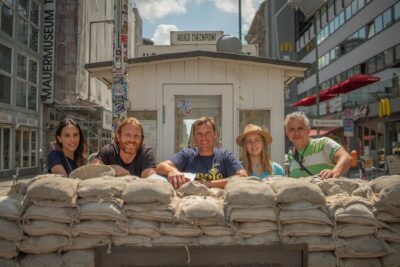
Berlin’s Best: 2 Hour Walking Tour Third Reich and the Cold War
Read our review →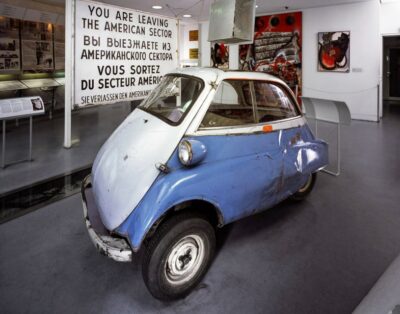
Skip-the-Line: Berlin Wall Museum at Checkpoint Charlie
Read our review →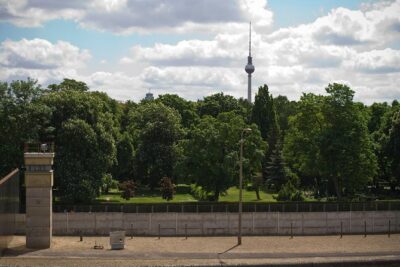
Cold War, Berlin Wall, Spies and the East Side Gallery
Read our review →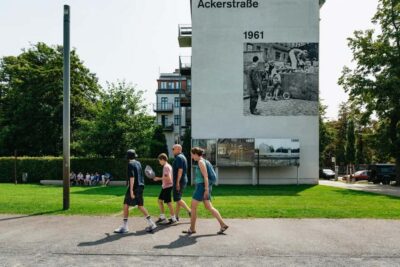

Listening Station Teufelsberg Tour with Transfer
Read our review →Browse the lists this tour appears in