
Reviewed · BERLIN COLD WAR TOURS
East Berlin: City of Shadows Walking Tour
East Berlin’s story is easiest to grasp when you move through the city itself. This three-hour walk links the Brandenburg Gate, Friedrichstrasse, the Berlin Wall memorial, the former Stasi headquarters, and Alexanderplatz, showing how grand buildings and ordinary streets were shaped by dictatorship and division.
I like the historian-led storytelling, especially the focus on daily life behind the Wall rather than only Cold War dates. I also like the visit to the Palace of Tears, a small but powerful stop where families said goodbye before crossing back into East Berlin. The main thing to consider is that the route covers long distances, so you will use public transport and pay for those tickets separately.
Key points to know before booking
- Three hours from the Brandenburg Gate to Alexanderplatz: The route moves across central Berlin and connects several major Cold War sites.
- A guide with an academic or writing background: Guides may be professors, doctoral students, historians, journalists, art critics, or published authors.
- The Palace of Tears adds a human scale: This former border crossing helps explain how political rules split families.
- Alexanderplatz tells the story of 1989: The square was the setting for mass demonstrations that helped bring East German rule to an end.
- Public transport is part of the route: You will need transport between some stops, and tickets are not included in the $153 price.
- Private or small-group formats are available: This matters if you want more time for questions about the Wall, the Stasi, or life in East Berlin.
Why this tour works best as a moving history lesson
East Berlin is not a single museum exhibit. Its Cold War story is spread across broad avenues, train stations, memorial sites, government buildings, and public squares. That is why this tour’s route makes sense. Instead of hearing about the German Democratic Republic in isolation, you follow the city’s former power structure from the Soviet presence to the border, the surveillance state, and finally the public protests that helped end Communist rule.
You begin at Unter den Linden 42, where you meet the guide. The tour itself starts near the Brandenburg Gate, an important place to begin because it once sat beside the Berlin Wall and became a symbol of the divided city. From here, the route looks at the former Soviet Embassy, a grand building constructed from the rubble of World War II.
The embassy was meant to project Soviet power and ambition. That makes it a useful first lesson in how architecture worked in East Berlin. Government buildings were not merely offices. They were public statements, designed to show authority and remind people who controlled the city.
You will not spend the entire three hours standing at one monument. The route continues through central Berlin, and the guide connects what you see today with the political system that once shaped it. That approach is especially useful if you already know the basic story of the Berlin Wall but want to understand how the city functioned before 1989.
More Cold War tours in Berlin:
- Berlin: Third Reich and Cold War 2 Hour Walking Tour
★ 4.9 · 6,830 reviews - Berlin’s Best: 2 Hour Walking Tour Third Reich and the Cold War
★ 5.0 · 5,486 reviews - Skip-the-Line: Berlin Wall Museum at Checkpoint Charlie
★ 4.1 · 2,041 reviews
The Brandenburg Gate and the Soviet message
The Brandenburg Gate is one of Berlin’s most famous sights, but its familiar appearance can make it easy to forget how tense this area once was. During the division of Berlin, the gate was close to the Wall and inaccessible as a normal passage between East and West.
The nearby former Soviet Embassy helps set the tone. Its size and formal design reflected the Soviet Union’s role in postwar Berlin. The building was created using material from the ruins left by World War II, turning destruction into a new political statement.
I find this an effective opening because it places the Cold War in the middle of the city’s older history. You are not looking at an isolated relic. You are seeing how the Soviet victory, the division of Germany, and the Communist government were written into Berlin’s streets.
Your guide will also help separate political symbolism from daily reality. A large embassy might project confidence, but ordinary East Berliners lived with travel restrictions, state surveillance, and strict immigration rules. The contrast between grand official buildings and private hardship is one of the tour’s central themes.
Friedrichstrasse and the Palace of Tears
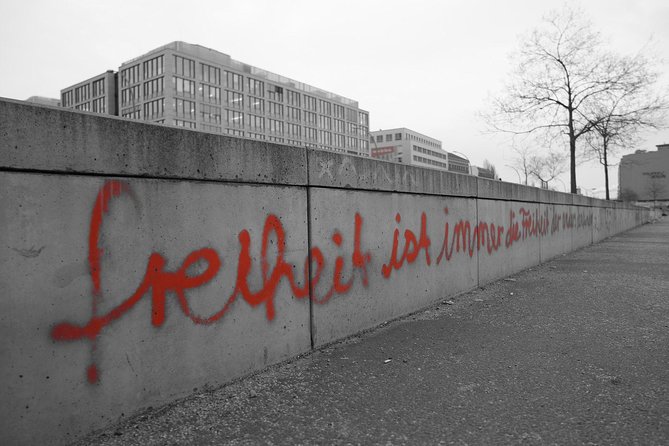
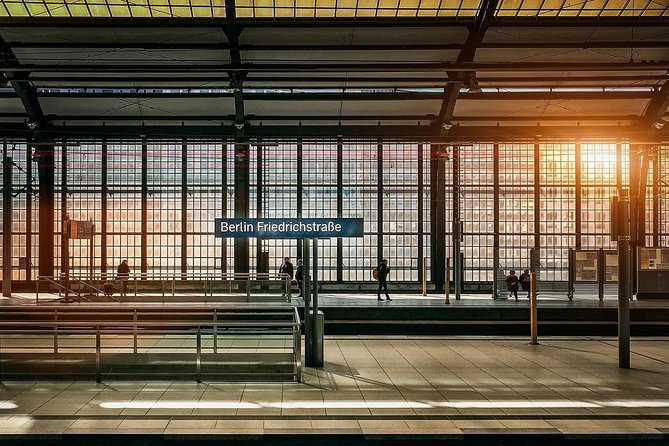
The next major stop is Friedrichstrasse train station, once one of the key crossing points between East and West Berlin. Rail stations are usually places of movement and reunion. Here, the border made the same station a place of anxiety and separation.
The building known as the Palace of Tears was an office at the station where people said goodbye after visits. East Germany’s rules controlled who could cross the border and when. Families could meet, but their time together was limited, and the return journey could be painful.
This is one of the most affecting stops because it shifts the story away from presidents, spies, and military power. You begin to understand division through personal encounters. A train departure could mean a parent leaving a child, siblings parting, or relatives returning to separate political systems.
The name Palace of Tears is mournful, but the stop does not need melodrama. The setting does much of the work. Your guide can explain the border rules and the human cost, giving context to a place that might otherwise look like just another station building.
If your interest in history centers on families and daily life, this may be the most valuable part of the route. It shows why the Cold War was not only a conflict between governments. It affected ordinary decisions, relationships, and the ability to move around your own country.
The Berlin Wall memorial and the Death Strip
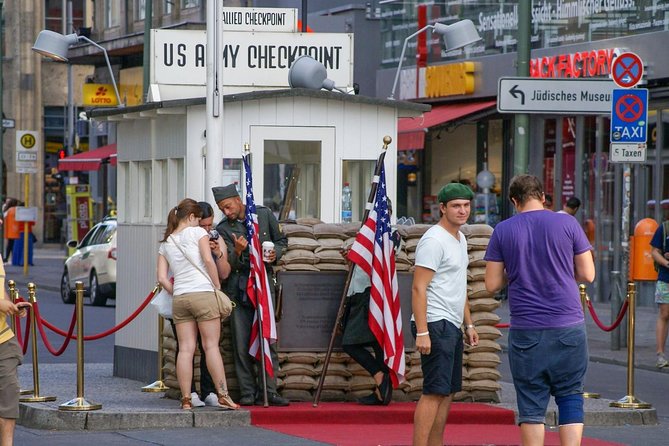
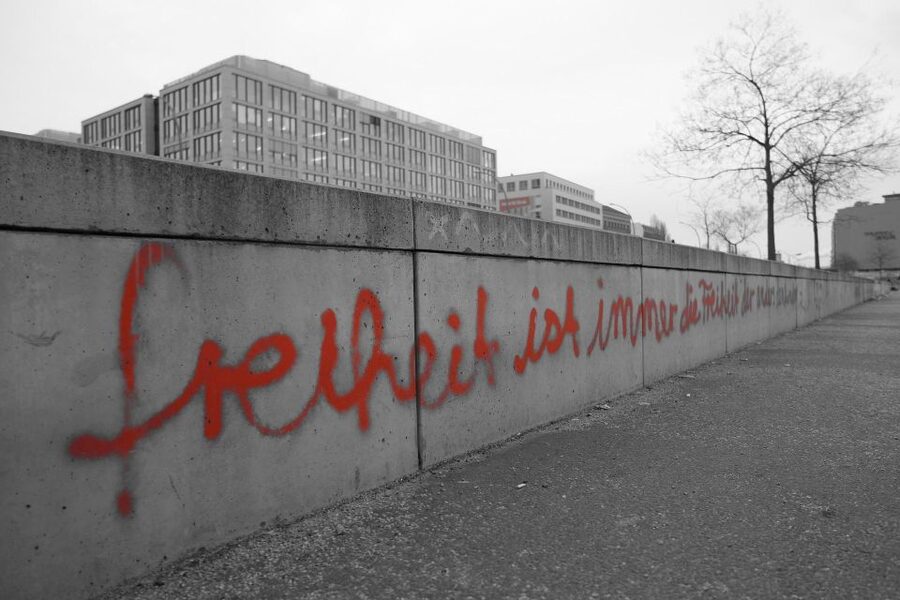
The Berlin Wall memorial offers a closer look at how the border worked. You will hear about the Wall, the area between the barriers, and the deadly risks taken by people who tried to escape East Germany.
The former Death Strip was not simply a concrete wall. It was a controlled zone designed to make crossing difficult and dangerous. Your guide will explain how the border system operated and tell stories of East Berliners whose escape attempts ended in death.
This part of the tour is sobering. It is also where the value of an experienced guide becomes clear. A Wall memorial can be crowded with information, and it is easy to focus only on the physical barrier. A historian can help you understand the system around it, including why escape attempts were so dangerous and how the border affected the surrounding city.
The memorial also helps correct a common misunderstanding. The Wall did not appear as an abstract symbol one morning and then vanish one night. It was part of a broader system of guards, regulations, surveillance, and controlled movement. Seeing the site while hearing those details gives the history a physical scale.
You should expect some walking and standing here. The route is not described as a fully indoor museum visit, so comfortable shoes and clothing suited to Berlin weather are sensible choices. One person who took the tour in cold weather found that the afternoon passed quickly, but the weather is still worth planning for.
Other Berlin experiences to weigh up
- Berlin: 1-Hour City Tour by Boat with Guaranteed Seating
★ 4.3 · 16,993 reviews - Berlin: City Sightseeing Hop-On Hop-Off Bus Tour
★ 4.1 · 4,233 reviews - Potsdam: City and Castles Tour
★ 4.7 · 3,721 reviews - Berlin: 1-Hour City Sightseeing Cruise
★ 4.4 · 2,210 reviews
The former Stasi headquarters and a culture of surveillance
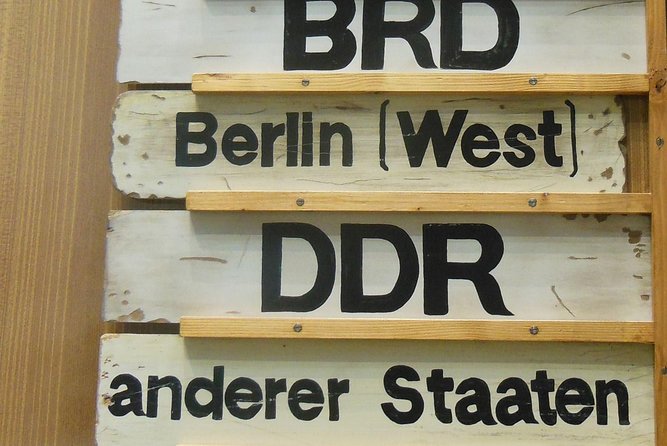
The tour then turns toward the former Stasi headquarters, one of the clearest places to discuss state surveillance. The Stasi was East Germany’s secret police, and its reach depended on more than official officers. It built a large network of informers and used detailed surveillance methods to watch citizens.
Your guide will discuss Erich Mielke, the feared Stasi leader, and explain how the organization recruited spies and developed methods for monitoring people. This is a key stop if you want to understand why many East Germans were cautious about what they said, who they trusted, and how openly they expressed opposition.
The subject can become technical, but the best part of the stop is the connection to ordinary behavior. Surveillance changes how people speak at home, at work, and even among friends. It creates suspicion without needing an officer on every corner.
The former headquarters also adds balance to the Wall story. The border prevented people from leaving, but surveillance helped control those who remained. Together, the two subjects show the pressure applied both outside and inside East German society.
The exact amount of time spent at each location can depend on the group and guide. In a private or small-group setting, you should have a better chance to ask about specific subjects, such as informers, border controls, or the relationship between the Stasi and other state institutions.
Alexanderplatz and the protests of 1989
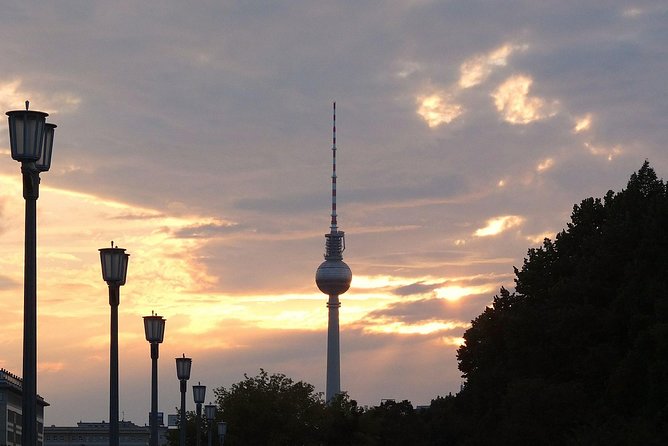
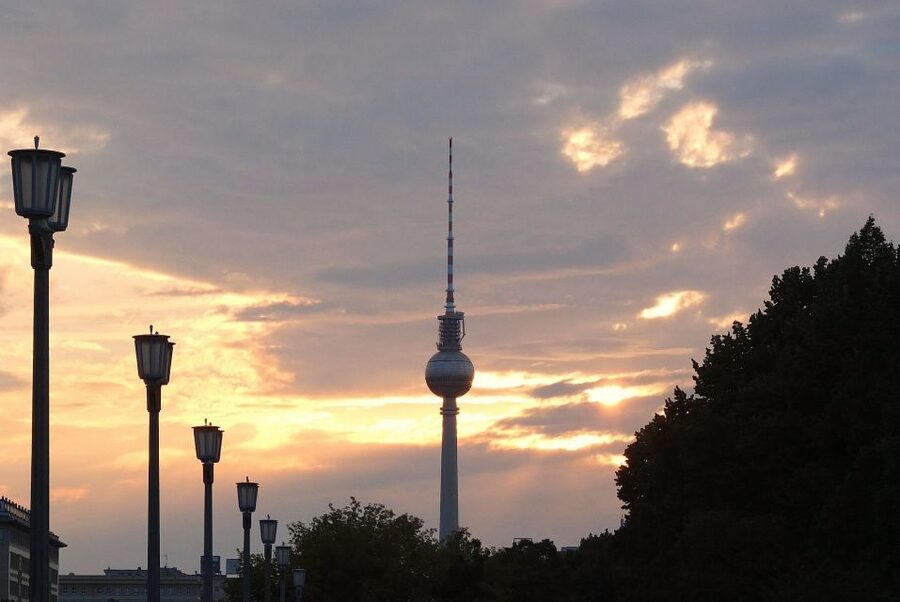
The final major stop is Alexanderplatz, rebuilt in the 1960s as the center of public life in East Berlin. Its broad design and monumental scale reflected East German pride and the government’s desire to create a modern socialist capital.
Yet Alexanderplatz became more than a showcase for the regime. In 1989, it was the setting for mass demonstrations that helped push the government toward collapse. The same public space used to display Communist success became a place where people openly challenged the system.
This gives the tour a strong ending. You move from Soviet authority and border control to public protest. The route shows that political power can shape a square, but it cannot fully control what people do there.
Alexanderplatz is still a busy urban center, which makes the historical contrast especially useful. You can look at the space as it functions today while picturing the huge demonstrations that helped end 40 years of Communist rule. The tour does not treat the fall of the Wall as a sudden, isolated event. It places 1989 at the end of a longer story of control, frustration, and organized public pressure.
What the $153 price really buys you
At $153 per person, this is not a budget walking tour. The price makes the most sense if you value a specialist guide and a carefully connected route rather than a quick overview of Berlin’s best-known sights.
The guide is the main product. The company describes its guides as professors, doctoral students, historians, journalists, art critics, or published authors. That range suggests a more serious historical approach than you might get from a general city orientation walk.
Past guides have included Martin, Mark, and Dan. One participant found Martin’s explanations of Berlin from the end of World War II through the post-1990 period especially useful. Another praised Dan for being friendly, polite, and attentive during the afternoon. These names do not guarantee who will lead your tour, but they show the kind of guide assigned in the past.
The value also comes from the route. You are not paying to see only one monument. The tour connects several locations that are spread across Berlin, then uses public transport to bridge the gaps. That saves you from planning the route yourself and gives each stop a place in the wider story.
Still, remember that transport tickets are extra. Because the distances are long, you will need public transport during the tour. Add that cost to the booking price when comparing it with other options.
The free cancellation window allows you to cancel up to 24 hours before the tour for a full refund. You can also reserve now and pay later, which helps if your Berlin schedule is still changing.
Who will get the most from this experience
I would choose this tour if you want more than photographs of the Wall. It suits you especially well if you are interested in political history, the Cold War, German reunification, or the effects of dictatorship on ordinary families.
It also works for someone who has already been in Berlin for a few months but still feels the divided city is difficult to understand. One past participant had lived in Berlin for four months and wanted a clearer picture of East Berlin. The route provided a way to connect familiar streets with the city’s former political life.
The tour may be less suitable if you want a relaxed stroll with plenty of free time for photographs. Three hours is enough to cover a lot, but the route has several stops and requires public transport. You will need to keep moving.
It is also not the best choice if you only want a general introduction to Berlin. The focus is firmly on East Germany, the Wall, the Stasi, border crossings, and the protests of 1989. That narrow focus is a strength for the right audience, but it will not cover every period or neighborhood in the city.
Practical advice for a smoother afternoon
Meet at Unter den Linden 42. Check the starting time when you book, since the tour schedule varies by availability.
Bring a valid public transport ticket or be ready to buy one. The cost is not included, and the guide will use public transport because some sites are too far apart for a practical walk.
Wear comfortable shoes. The route includes several outdoor locations, and you may spend time standing while the guide explains each site. Berlin weather can change quickly, so a coat or rain layer is sensible, especially in cooler months.
Think of questions before you arrive. Ask about daily life, border rules, the Stasi, the demonstrations, or what changed after 1989. A private or small-group tour gives you more room to shape the discussion than a large group normally would.
The tour is offered in English with a live guide. Since the route is built around explanation, the quality of the experience depends heavily on the individual guide and on how much you engage with the subject.
Should you book the East Berlin: City of Shadows Walking Tour?
Book it if you want a serious, place-based explanation of East Berlin and are willing to pay for a specialist guide. The strongest parts are the Palace of Tears, the Wall memorial, the former Stasi headquarters, and the way Alexanderplatz brings the story to 1989.
Skip it if you want a cheap, short walk or a broad survey of all Berlin history. The $153 price is substantial, public transport costs extra, and the subject matter is often somber.
For the right reader, this tour turns scattered Cold War sights into one understandable story. You leave with a clearer sense of how Soviet power, border controls, surveillance, family separation, and public protest shaped the city you see today.
FAQ
How long is the East Berlin: City of Shadows Walking Tour?
The tour lasts three hours.
Where does the tour meet?
You meet the guide at Unter den Linden 42 in Berlin, Germany.
What language is the tour offered in?
The tour is offered in English with a live guide.
What places does the tour visit?
The route includes the Brandenburg Gate area, the former Soviet Embassy, Friedrichstrasse train station and the Palace of Tears, the Berlin Wall memorial, the former Stasi headquarters, and Alexanderplatz.
Is public transportation included in the price?
No. You need to use public transport because of the distances between some sites, and transport tickets are not included.
How much does the tour cost?
The listed price is $153 per person.
Are private or small-group options available?
Yes. The tour is available as a private or small-group experience.
Can I cancel for a full refund?
Yes. You can cancel up to 24 hours in advance for a full refund. You can also reserve now and pay later.
More Walking Tours in Berlin
- Discover Berlin Half-Day Walking Tour
★ 5.0 · 9,624 reviews - Berlin: Discover Berlin Walking Tour
★ 4.9 · 5,998 reviews - Berlin: Hidden Backyards Guided Walking Tour
★ 4.8 · 5,360 reviews - Third Reich Berlin: Hitler and WWII Walking Tour
★ 5.0 · 3,301 reviews
Newest Berlin reviews
- Where It All Began: Berlin’s Queer & Trans History Tour★ 4.9 · 6 reviews
- Understanding Kreuzberg: The roots of local (sub)culture★ 4.9 · 11 reviews
- Berlin: guided canoe | kayaktour★ 4.1 · 7 reviews
- Private Potsdam City Tour in an authentic vintage van★ 5.0 · 14 reviews
- Warnemünde Shore Excursion: Private Sachsenhausen and Berlin Tour★ 5.0 · 12 reviews
- Ultimate E-Bike Tour of Berlin with Beer Garden Stop★ 5.0 · 4 reviews
- Potsdam Highlights – Private sightseeing tour by minibus★ 5.0 · 3 reviews
- In the Forbidden City – Potsdam Walking Tour★ 5.0 · 17 reviews
Berlin Cold War Tours, compared.
Berlin’s Best: 2 Hour Walking Tour Third Reich and the Cold War
Read our review →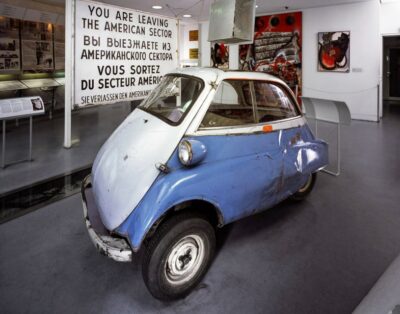
Skip-the-Line: Berlin Wall Museum at Checkpoint Charlie
Read our review →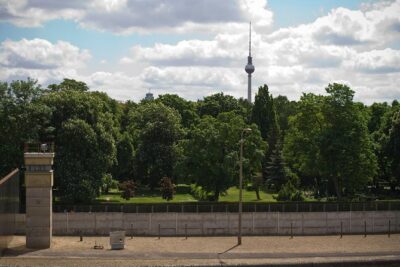
Cold War, Berlin Wall, Spies and the East Side Gallery
Read our review →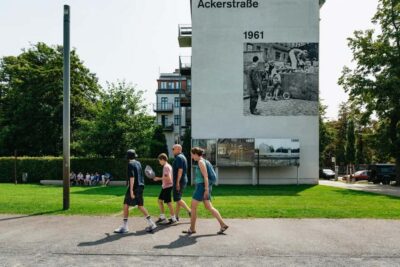

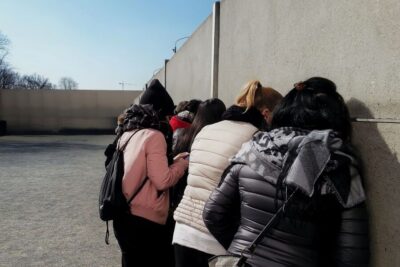
Listening Station Teufelsberg Tour with Transfer
Read our review →Browse the lists this tour appears in