
Reviewed · BERLIN WALL TOURS
Berlin: Berlin Wall and the Cold War Walking Tour
Berlin’s Wall was built in secret overnight in 1961, but Bernauer Straße shows how quickly that political act became a human disaster. Apartment entrances were cut off, neighbors were separated, and escape could mean crawling through a tunnel or running across a guarded death strip.
I like the focus on original Wall remains and the personal stories behind them. I also like the way the tour connects big Cold War subjects, such as the Stasi and ghost stations, with ordinary life in East Germany. The main consideration is that you walk for two hours and may need public transport for about 15 minutes before the memorial.
Key points at a glance
- Bernauer Straße keeps the Cold War physical: See surviving walls, barriers, a watchtower, and the former death strip.
- Escape stories give the history urgency: Learn about Tunnel 57 and the risks people took to reach West Berlin.
- Daily life matters as much as politics: Hear about spying, restricted movement, and life in the former GDR.
- The guides shape the experience: Nathan and Rebecca have been praised for clear, engaging explanations.
- The $23 price is sensible: You get a two-hour guided walk, though public transport is extra if you need it.
- Small groups and private tours are available: That can make it easier to ask direct questions and set the walking pace.
Why Bernauer Straße is the right place to study the Wall
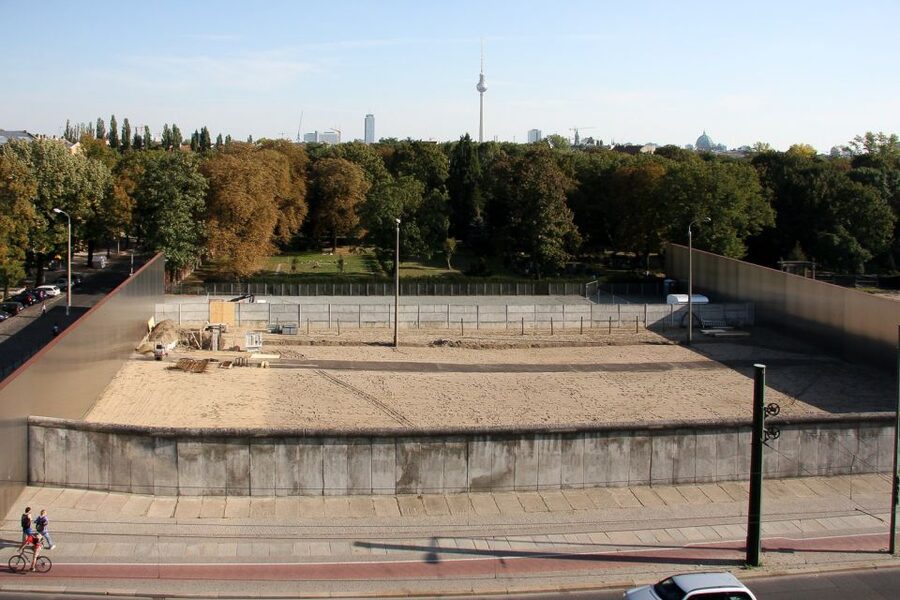
Many Berlin sights connected to the Wall are marked by a line of cobblestones or a plaque. Bernauer Straße gives you something more substantial. The memorial preserves sections of the former border system, including walls, barriers, a watchtower, and the open strip where guards once watched for escape attempts.
That physical evidence changes the way you understand the Cold War. You are not just hearing that Berlin was divided. You can see how the border occupied space, cut through streets, and controlled movement.
The street is also valuable because it connects political decisions with domestic life. The Wall did not only separate West Berlin from East Berlin. It divided neighborhoods and affected people who lived, worked, worshiped, or had family on the other side.
A guide helps you read the site. Without one, you might see concrete, grass, and preserved structures without knowing which part was the inner wall, which barriers were intended to stop vehicles, or why a particular memorial matters. The guide turns the remains into a sequence of choices, dangers, and losses.
More Berlin Wall tours in Berlin:
- Skip-the-Line: Berlin Wall Museum at Checkpoint Charlie
★ 4.1 · 2,041 reviews - Cold War, Berlin Wall, Spies and the East Side Gallery
★ 5.0 · 1,024 reviews - THE WALL: asisi Panorama Berlin Ticket
★ 4.5 · 580 reviews
A two-hour walk with a clear historical arc
The tour lasts two hours, which is enough time for a serious introduction without taking half your day. That length suits you if Berlin is a short stop or if you want a Wall tour before visiting other Cold War sites.
The exact meeting point can vary according to the option you book. One listed starting point is Starbucks at Gartenstraße 85. From there, the group may use public transport for about 15 minutes before beginning the guided portion at the Berlin Wall Memorial.
You should check the transport option carefully when booking. Public transport is not included, and you need the appropriate choice if you require a train ticket. If you already have a valid ticket, select the option intended for passengers who do not need one.
Once at Bernauer Straße, expect the main part of the experience to unfold on foot. Wear comfortable shoes and allow room in your schedule for a steady walk with regular stops. One useful sign of a good guide is the ability to adjust the pace, and Nathan has been praised for stopping when needed and adapting the walk to the group.
The Wall built overnight in 1961
One of the strongest parts of the tour is the explanation of how the Wall appeared. On August 13, 1961, East German authorities closed the border with little warning. A city that had remained divided after the Second World War was suddenly sealed in a more forceful and visible way.
At first, the border did not look like the concrete system most people picture. Streets were blocked, access points were closed, and barriers were expanded over time. The tour helps you understand this process instead of presenting the Wall as a finished object that simply appeared one morning.
That detail matters because the border was not only a structure. It was a policy enforced by police, soldiers, surveillance, and punishment. The guide places the physical remains in that larger system and explains how a government tried to prevent its citizens from leaving.
You will also hear about the former German Democratic Republic, commonly called East Germany or the GDR. The discussion covers more than shortages or political slogans. It looks at how the state shaped daily behavior and how neighbors could be encouraged to spy on one another.
Those details are uncomfortable, but they help you avoid a cartoon version of communist Berlin. The GDR was not simply a place of gray buildings and government orders. It was also a society in which people made families, worked, joked, worried, and found ways to live under surveillance.
The death strip, watchtower, and border barriers
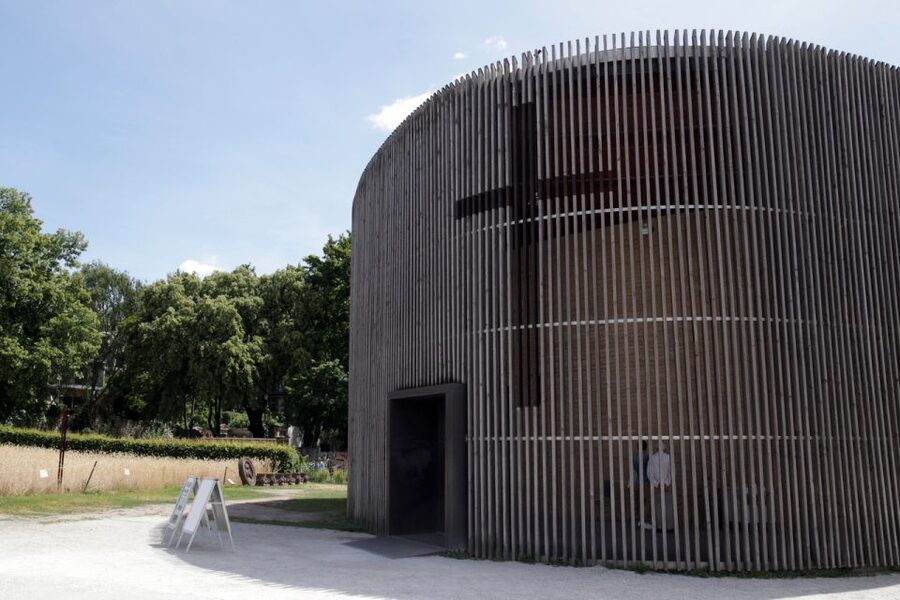
The preserved border area is the tour’s central visual experience. You can see parts of the original death strip, along with a watchtower, walls, and other barriers used to make escape difficult.
The term death strip refers to the controlled space between sections of the border. It was designed to expose anyone trying to cross, not to provide a normal route from one neighborhood to another. Looking across that open zone makes the danger easier to understand than a textbook description would.
A watchtower gives the border system a human scale. It reminds you that the Wall was watched by people, not just cameras or machines. The guide can explain how observation and armed enforcement worked together, while also discussing the people who attempted to get through.
This is where the memorial’s value becomes clear. Berlin has changed greatly since reunification, and many signs of the former East have disappeared. At Bernauer Straße, the remaining structures protect a physical record of a country that no longer exists.
Do not expect a polished sightseeing attraction in the usual sense. The memorial is serious and sometimes stark. That is part of its strength, but it may feel heavy if you are looking for a light introduction to Berlin.
More Cold War tours in Berlin:
- Berlin: Third Reich and Cold War 2 Hour Walking Tour
★ 4.9 · 6,830 reviews - Berlin’s Best: 2 Hour Walking Tour Third Reich and the Cold War
★ 5.0 · 5,486 reviews - Berlin: Cold War Walking Tour on Berlin Wall Route
★ 4.8 · 437 reviews - Berlin: Cold War Era History Guided Bike Tour
★ 4.8 · 413 reviews
Tunnel 57 and the risks of escape
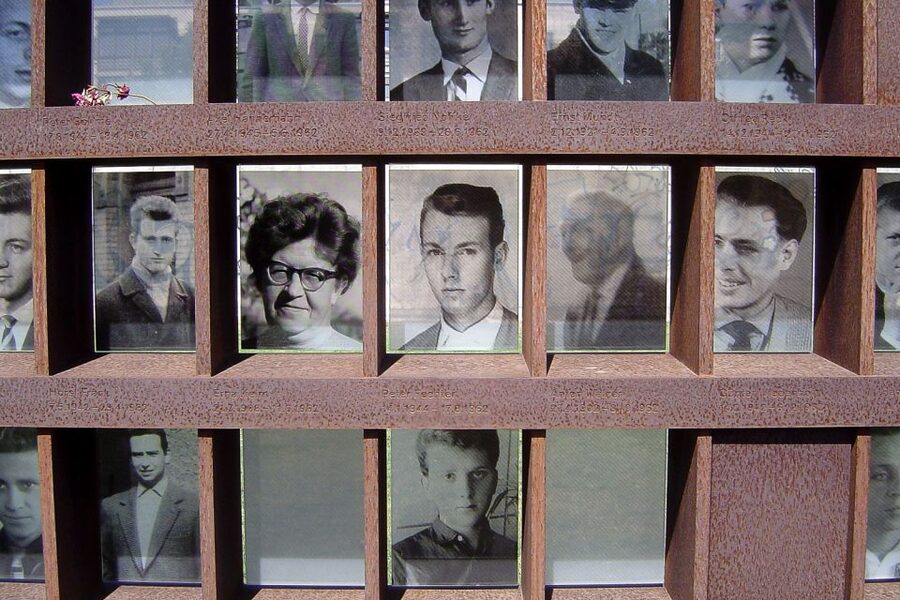
The tour includes stories of escape tunnels, especially Tunnel 57. The name refers to the number of people who escaped through it, making it one of the best-known underground escape efforts connected with the Berlin Wall.
A tunnel story brings the border down to body level. Instead of thinking only about government policy, you imagine the planning, secrecy, fear, and physical effort required to move people beneath the Wall. These attempts depended on cooperation and timing, but discovery could bring arrest or worse consequences.
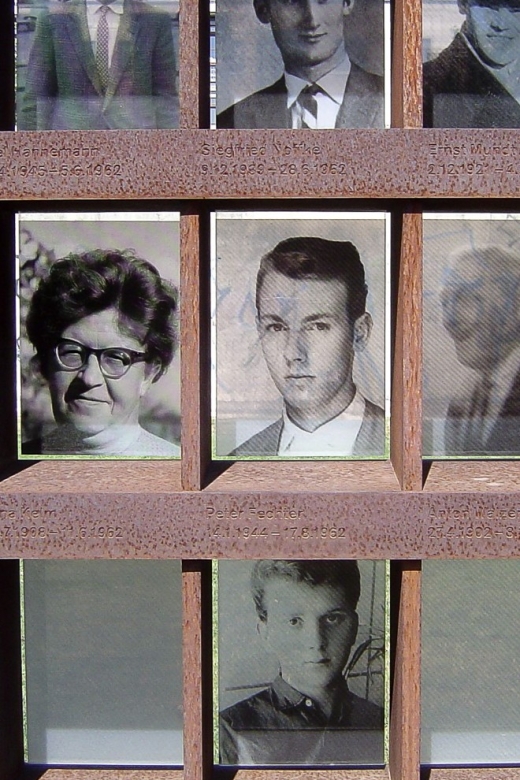
You will also hear about other daring escape attempts and about people who died trying to reach the West. The memorial honors victims of the border regime, and the guide explains what their deaths reveal about the pressure placed on East German citizens.
The escape stories should not be treated as adventure tales alone. They show why people were willing to risk imprisonment or death, but they also show how dangerous the border was. A strong guide keeps both sides in view: the courage of those who escaped and the human cost of a system built to stop them.
Ghost stations and the city beneath the city
The tour also touches on Berlin’s ghost stations. During the division of the city, some subway and train routes crossed through East Berlin while serving West Berlin passengers. Several stations were closed or heavily controlled, leaving trains to pass through darkened platforms without stopping.
That subject helps you see that the Wall was not only above ground. It reached into the transport network and affected how people moved through the city. A station could be physically close yet politically unreachable.
The ghost stations also make a useful connection between grand strategy and routine travel. For Berliners, a subway journey could reveal where the border ran, which neighborhoods were cut off, and how carefully the city had to be planned around the division.
Because the walk is centered at Bernauer Straße, this part is presented as historical context rather than a separate underground visit. You should not book the tour expecting to ride through a ghost station. You are hearing how the closed network fitted into the broader system of division.
How the guides shape the experience
The tour is offered in English or German, with an English-speaking guide included. It can be booked as a private tour or in a small group, depending on the option available.
The guide is especially important here because the site does not explain every story on its own. You want someone who can answer direct questions about the Stasi, escape attempts, border victims, and daily life in the GDR without turning the walk into a string of dates.
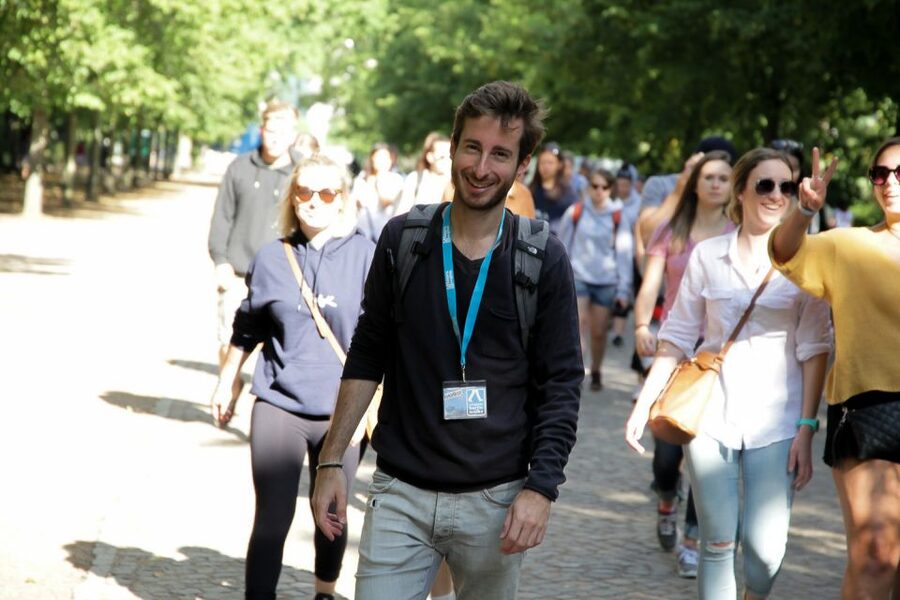
Nathan received especially strong praise for keeping the group engaged and showing clear care for the subject. Rebecca was also praised for being informative. Those comments suggest that the provider has guides who can make a difficult topic accessible without reducing it to a dry lecture.
The tour can also respond to your interests. One guide adapted the walk to a slower pace and made an extra stop after learning that a participant wanted to try Hackepeter, a German dish of seasoned raw minced pork. That small detail shows the benefit of a personal guide: the day does not have to feel mechanically fixed.
If you choose a private tour, the chance to ask more questions should be greater. A small group may give you a good balance between personal attention and the energy of learning with others. The exact group size depends on the option you select.
Is $23 a fair price?
At $23 per person, this is a reasonable price for a two-hour guided walk through one of Berlin’s most important historical sites. You are paying for a live guide, interpretation of the memorial, and a focused explanation of subjects that can be hard to piece together alone.
The value is strongest if you are new to Berlin’s Cold War history. A self-guided visit can show you the remains, but it may not explain why the border took this form, how the escape tunnels worked, or how the GDR controlled daily life.
The price does not include public transport. That is a modest extra cost, but it matters if you are comparing this tour with an experience that begins directly at the memorial. Check the starting option before booking so you know if a train ticket is required.
The score of 4.7 from 12 ratings is encouraging, though the sample is not large. The comments consistently praise the guides for being informative, engaging, and flexible. That is more useful here than a long list of generic compliments because the quality of the storytelling will shape your understanding of the memorial.
Who will get the most from this walk?
I would choose this tour if you want a focused introduction to Berlin’s division and reunification. It suits first-time visitors, students of twentieth-century history, and anyone who wants more than a quick photo beside a remaining piece of concrete.
It is also a good fit for families with older children or teenagers who can handle serious subjects. The stories of escape tunnels and divided neighborhoods can give younger visitors a clear way into the history, though the memorial’s discussion of deaths and state control may require some preparation.
You should think twice if you dislike walking, want a purely scenic tour, or already know the Wall Memorial in detail. Two hours is not long enough to cover every part of Berlin’s Cold War story, and the tour does not replace visits to every related museum or memorial.
The experience is available in German as well as English. If language matters to your group, select carefully at booking. Private and small-group options are worth considering if you have many questions or want the guide to adjust the pace.
Practical details before you book
The tour offers free cancellation up to 24 hours before the start, and you can reserve now while paying later. Starting times depend on availability, so check the date that suits your schedule.
The meeting point may vary by booking option, with Gartenstraße 85 listed as one possible starting place. Read the specific meeting instructions carefully rather than assuming every departure begins at the memorial.
Bring a valid public transport ticket if your selected option requires one and does not include it. Since the tour includes walking and outdoor memorial spaces, comfortable shoes are sensible. You may also want extra time afterward if the subject leaves you wanting to visit another Berlin history site.
Should you book the Berlin Wall walking tour?
Book it if you want human stories attached to real Wall remains. The preserved death strip, watchtower, barriers, Tunnel 57, ghost stations, and accounts of border victims give the walk substance beyond a basic city tour.
At $23, it offers good value for a two-hour introduction, especially with a strong guide such as Nathan or Rebecca. Choose the transport option carefully, expect a serious tone, and select a private or small-group format if personal questions matter to you.
Skip it if you want a quick photo stop or a broad tour of all Berlin sights. For understanding how the Wall changed ordinary lives, however, Bernauer Straße is one of the clearest places in the city to begin.
FAQ
How long does the Berlin Wall and Cold War Walking Tour last?
The tour lasts two hours, including the guided visit to the Berlin Wall Memorial.
Where does the tour meet?
The meeting point can vary by the option booked. One listed starting point is Starbucks at Gartenstraße 85.
Is public transport included?
No. The tour uses public transport, and you should select the correct booking option based on whether you need a train ticket or already have one.
What languages are available?
The tour is available in English and German.
What can I see at the Berlin Wall Memorial?
You can see original sections of the death strip, a watchtower, walls, barriers, and memorials connected with people who died trying to cross the border.
Can I cancel for a refund?
Yes. You can cancel up to 24 hours in advance for a full refund.
More Walking Tours in Berlin
- Discover Berlin Half-Day Walking Tour
★ 5.0 · 9,624 reviews - Berlin: Discover Berlin Walking Tour
★ 4.9 · 5,998 reviews - Berlin: Hidden Backyards Guided Walking Tour
★ 4.8 · 5,360 reviews - Third Reich Berlin: Hitler and WWII Walking Tour
★ 5.0 · 3,301 reviews
Newest Berlin reviews
- Where It All Began: Berlin’s Queer & Trans History Tour★ 4.9 · 6 reviews
- Understanding Kreuzberg: The roots of local (sub)culture★ 4.9 · 11 reviews
- Berlin: guided canoe | kayaktour★ 4.1 · 7 reviews
- Private Potsdam City Tour in an authentic vintage van★ 5.0 · 14 reviews
- Warnemünde Shore Excursion: Private Sachsenhausen and Berlin Tour★ 5.0 · 12 reviews
- Ultimate E-Bike Tour of Berlin with Beer Garden Stop★ 5.0 · 4 reviews
- In the Forbidden City – Potsdam Walking Tour★ 5.0 · 17 reviews
- Private Walking Tour of Potsdam and Sanssouci★ 5.0 · 24 reviews
Berlin Wall Tours, compared.
Skip-the-Line: Berlin Wall Museum at Checkpoint Charlie
Read our review →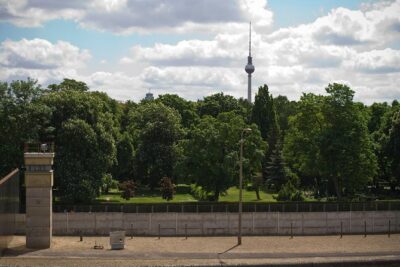
Cold War, Berlin Wall, Spies and the East Side Gallery
Read our review →
Guided Bike Tour of the Berlin Wall and Third Reich
Read our review →
Browse the lists this tour appears in