
Reviewed · BERLIN THIRD REICH TOURS
Berlin Third Reich Sites: Half-Day Walking Tour
Berlin’s Nazi past is scattered across the city, and this tour connects the pieces with a sensible route. You begin near Hackescher Markt and finish outside the Reichstag, passing Jewish sites, former government offices, memorials, and wartime ruins along the way. The route saves you from hunting down each place on your own, while the guide explains how the sites fit together.
I like the way the tour links political power with human cost. You hear about Hitler and the Nazi Party, but you also stop at places tied to Jewish Berlin, Sinti and Roma communities, homosexual victims, resistance, and the Soviet victory. The four-hour format leaves your afternoon free, though you should expect steady walking and a difficult subject handled at close range.
- An efficient four-hour route: Start at Hackescher Markt and end at the Reichstag, with ten historical stops between them.
- More than Hitler and military history: The tour includes Jewish Berlin, Sinti and Roma persecution, homosexual victims, resistance, and the Soviet role.
- Strong guide element: Guides such as Peter, Glen, Hannah, Tom, James, and Jonathan have been praised for clear explanations and thoughtful answers.
- Mostly outdoor sightseeing: The stops are explained from the street, so the experience depends heavily on the guide rather than museum access.
- Good value at $21.77: The price covers a professional English-speaking guide and four hours of walking. You pay about €3.80 extra for the required AB Zone transport ticket.
- Prepare for serious walking: Wear comfortable shoes and bring clothing for rain, cold, or heat. The tour runs in all weather.
Why This Route Helps You Understand Nazi Berlin
Berlin can make the Third Reich period feel strangely invisible. Buildings were destroyed, renamed, rebuilt, or put to new use. A former Nazi office may now house a government department, while a railway ruin or empty patch of ground carries the memory of deportation.
That is why I find a guided route useful here. The guide gives you the missing connections: how the Nazi Party gained power in 1933, how the dictatorship operated, how persecution became mass murder, and how Berlin looked during the final battles of 1945.
The tour is not a museum visit with long indoor stops. It is a moving history lesson, delivered on streets and at memorials. Your guide may use old photographs and visual reference points to show how places looked before wartime destruction and postwar rebuilding.
The group can include up to 25 people. That is not a private walk, but it is small enough for questions, and the strongest part of the experience is the conversation. Guides are expected to speak fluent English, and the best ones combine facts with clear answers rather than simply reciting dates.
Starting at Hackescher Markt and the Jewish Quarter
Meet at Neue Promenade 3 near Hackescher Markt S-Bahn station at 10:00 a.m. The opening section introduces Adolf Hitler, the Nazi Party, and the political conditions that led to dictatorship between 1933 and 1945.
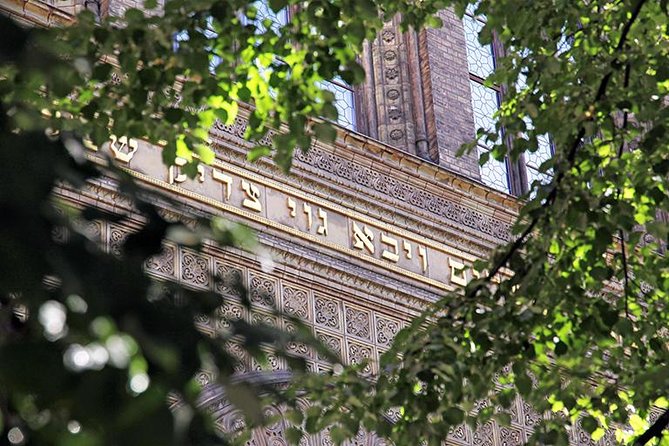
The first stops are the Museum Blindenwerkstatt Otto Weidt and the New Synagogue, home of the Centrum Judaicum. Each receives only about five minutes in the stated schedule, so think of these as carefully chosen outdoor explanations rather than full museum visits.
The Otto Weidt site points toward the experience of Jewish Berlin under Nazi rule. It also reminds you that individual choices mattered during a period when state offices, police agencies, and ordinary institutions were used to isolate and persecute Jewish people.
The New Synagogue helps place that persecution within the life of Berlin’s Jewish community. The tour does not treat Jewish history as a short chapter before moving on to military events. It gives the community a visible place in the story of the city.
If you want time inside the synagogue or the Otto Weidt museum, plan a separate visit. The walking tour gives you context, but the schedule does not allow a full museum exploration at these stops.
More Third Reich history tours in Berlin:
- Berlin: Third Reich and Cold War 2 Hour Walking Tour
★ 4.9 · 6,830 reviews - Berlin’s Best: 2 Hour Walking Tour Third Reich and the Cold War
★ 5.0 · 5,486 reviews - Third Reich Berlin: Hitler and WWII Walking Tour
★ 5.0 · 3,301 reviews
Anhalter Bahnhof and the Reality of Deportation
The ruined Anhalter Bahnhof is one of the tour’s most affecting locations. Once a major railway station, it became connected with the deportation of many of Berlin’s Jewish residents to concentration camps.
The remaining structure is a powerful physical reminder of wartime destruction, but the guide’s explanation is what gives the site its weight. You are not simply looking at a ruined building. You are learning how an ordinary piece of city infrastructure became part of a system of persecution and removal.
This is also a good example of why a guide improves the route. On your own, you might photograph the dramatic facade and move on. With historical context, you understand why the station matters and how public places became involved in Nazi crimes.
The stop is brief, about five minutes in the stated schedule. That keeps the group moving, but it also means you may want to return later if you need more quiet time.
The Topography of Terror and Nazi State Power
The next major stop is the Topography of Terror, built on the former Prinz-Albrecht-Strasse, where the SS and Gestapo headquarters once operated. Here the tour shifts from the consequences of persecution to the machinery that made it possible.
Your guide explains how these institutions worked and how terror was organized through state offices, police power, and political control. This is one of the most important stops because it helps you see Nazism as a system, not simply as the work of one dictator or a few dramatic speeches.
The tour allows about 15 minutes here, longer than at most other stops. That makes sense. The site needs explanation, and the museum itself contains much more material than a walking tour can cover.
Admission is not included as a separate museum visit, but the listed tour stops are free. If you want a fuller examination of the documents and exhibits, return independently when you have more time.
The subject is grim, and the presentation should be treated seriously. Guides praised for this tour have been described as sensitive without becoming vague, and that balance matters. You want clear facts, but you also want the human cost kept in view.
The Former Aviation Ministry and the Limits of a Military Story
The former Ministry of Aviation gives you a look at the administrative side of Nazi power and the history of the German Luftwaffe. The guide explains the building’s former role and places it within the wider story of war and dictatorship.
This stop is useful because it moves the tour beyond memorials and victim sites. You see how government offices supported military policy and how the Nazi state turned bureaucracy into an instrument of war.
The stated visit lasts around ten minutes. As with the other stops, you hear the history from outside rather than taking a dedicated interior tour. If architecture and government buildings interest you, pay attention to how the guide connects the surviving structure to the period.
The tour also discusses the consequences of Nazi rule for Jewish people and for Sinti and Roma communities. That broader focus is important. Nazi persecution did not affect only one group, and the route makes space for several communities whose suffering is often left out of a basic World War II tour.
More half-day trips in Berlin:
- Discover Berlin Half-Day Walking Tour
★ 5.0 · 9,624 reviews - Potsdam Half-Day Walking Tour from Berlin
★ 4.5 · 398 reviews - Berlin Private Half-Day Walking Tour: Discover the German Capital’s History
★ 5.0 · 244 reviews - From Berlin: Potsdam Half-Day Guided Tour
★ 4.6 · 167 reviews
Resistance at the Johann Georg Elser Sculpture
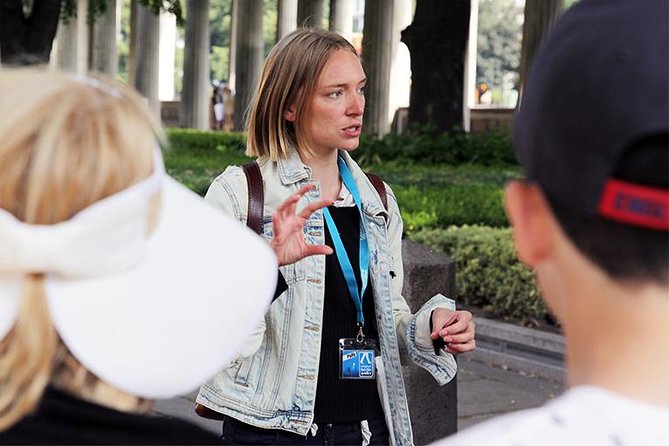
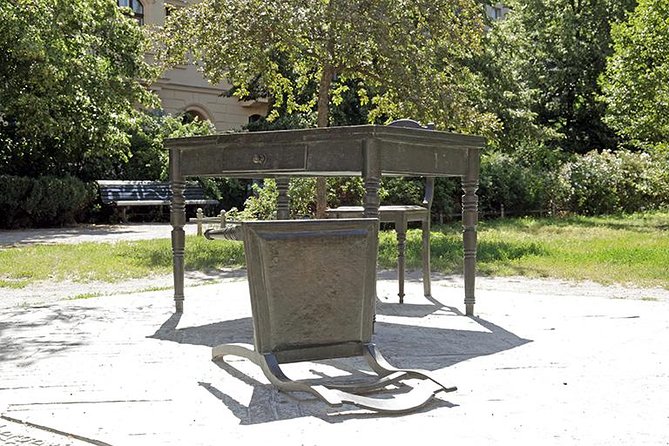
The Johann Georg Elser Sculpture marks an attempt to kill Hitler. The stop lasts about five minutes, but it introduces the important subject of German resistance.
Many visitors arrive with a simple picture of German society during the dictatorship: leaders giving orders and everyone else obeying. Elser’s story complicates that picture. It shows that opposition existed, even though resistance was dangerous and often isolated.
This brief stop works best as part of the wider route. The tour has already shown how Nazi institutions gained power. Here, you consider the people who tried to challenge that power.
The guide can also help separate popular myths from the historical record. Ask questions if you want to understand the wider setting of the assassination attempt, but keep in mind that this is not a dedicated Elser tour.
The Holocaust Memorial and Other Groups Targeted by the Regime
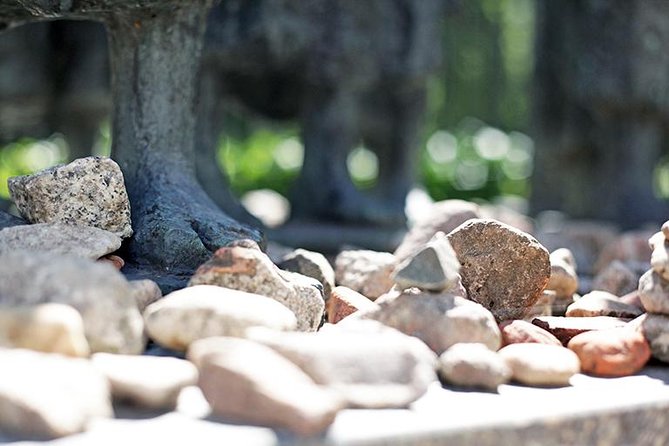
The Memorial to the Murdered Jews of Europe is one of Berlin’s most recognizable sites. The field of concrete slabs can feel abstract at first, but the guide explains its purpose and gives the memorial a place within the city’s memory of genocide.
You will have about ten minutes here. That is enough for an explanation and a short look around, but not enough for an extended personal visit. I would treat the guided stop as an introduction, then return later if you want to walk through the memorial alone or visit its information center.
Nearby, the Monument to Homosexuals Persecuted Under the National Socialist Regime expands the tour’s focus again. The Nazi regime persecuted homosexual people, and the memorial ensures that this part of the story is not lost among the larger symbols of the war.
The route’s attention to Jewish victims, Sinti and Roma communities, and homosexual victims gives you a more complete picture of Nazi persecution. It also shows how modern Berlin chooses to remember different groups in public space.
The Soviet Memorial and the Final Approach to the Reichstag
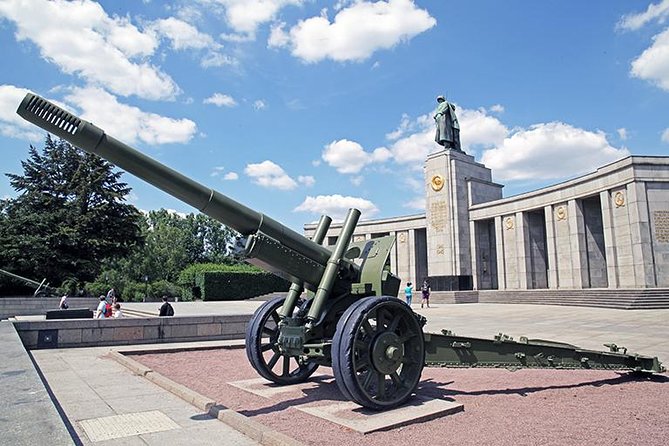
The Soviet Memorial in Tiergarten brings the war’s final phase into view. The guide explains the purpose and history of the site, including the Soviet role in the defeat of Nazi Germany.
This stop can help you understand how Berlin remembers victory from a perspective different from the Western Allied story. It also provides a bridge to the final stop, the Reichstag.
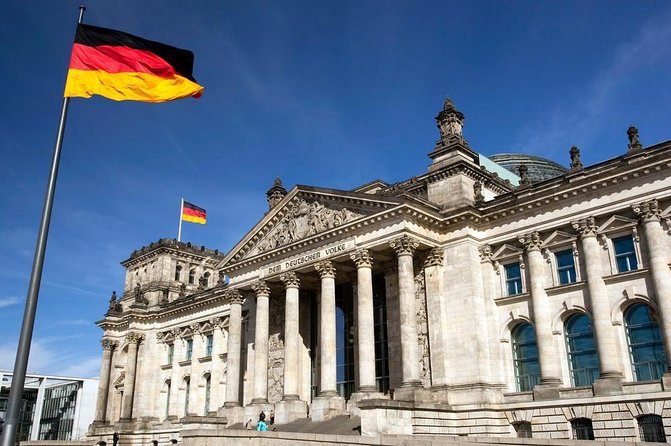
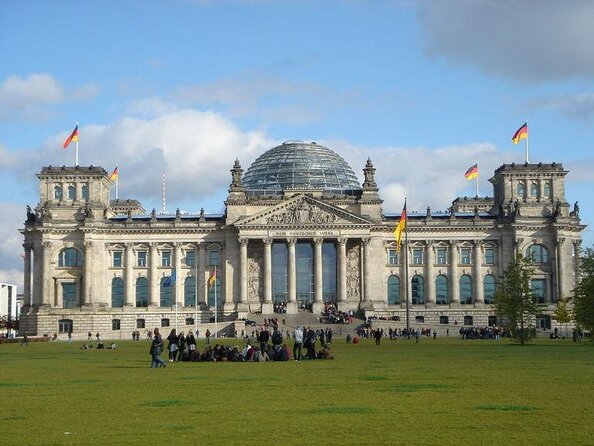
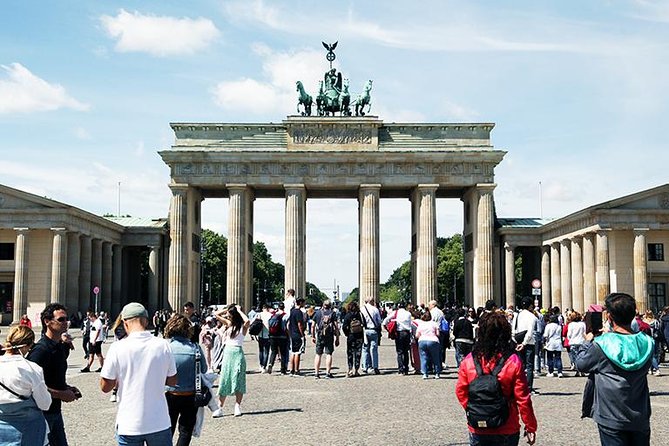
The tour ends at the Reichstag Building, Germany’s parliament. The site connects the beginning and end of the Nazi period in Berlin. The Nazis came to power in 1933, and the building area became part of the final struggle in 1945.
The guide explains the Reichstag’s place in those events during about ten minutes outside. This is not a tour of the parliament interior, and the experience does not include entry to the dome. Still, finishing here gives the route a strong sense of direction: from political takeover to military collapse.
The ending at Platz der Republik is practical, too. You can continue exploring central Berlin, find lunch, visit another museum, or make your own way to the Reichstag area for a separate booking if one is available.
How Good Is the Value at $21.77?
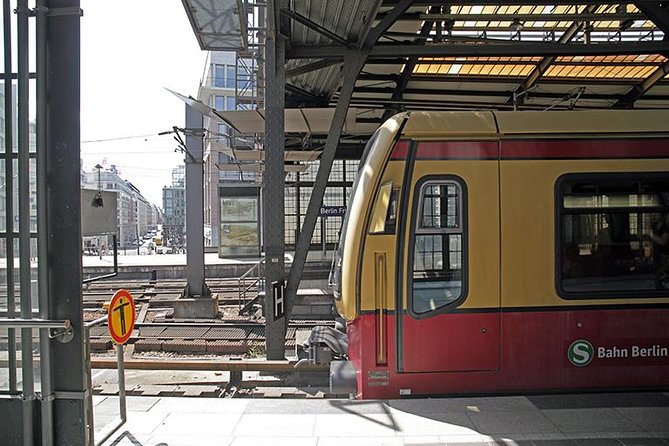
At $21.77 per person, this is an inexpensive way to get four hours of guided history in central Berlin. You also need an AB Zone public transport ticket, listed at about €3.80 and available at the starting station.
The price makes the tour especially useful if you are visiting Berlin for a short stay. You cover a wide area, get a clear historical framework, and still have most of the day left. Hiring a private guide would cost far more, while doing the route alone would require research, navigation, and careful planning.
The tradeoff is that the tour moves quickly. Ten stops in four hours means some locations receive only a short explanation. You are paying for the route and the guide’s interpretation, not for long visits inside museums.
I would call it strong value for first-time visitors, students, families with older teenagers, and anyone who wants a clear starting point for further study. It is less suitable if you want long periods of silence at memorials or detailed museum time at every stop.
Walking Conditions, Group Size, and Guide Style
Wear comfortable shoes. The tour is manageable for most people, but the route covers several parts of central Berlin and involves standing outdoors. One person with foot problems and another recovering from leg surgery found the walk workable, but your own comfort level matters.
The activity operates in all weather. Berlin rain, wind, or cold can make a serious four-hour tour feel longer, so bring suitable clothing. There is no promise of indoor shelter at each stop.
Guide quality shapes the experience. The strongest guides bring both command of the subject and a calm, approachable manner. Names praised for their teaching and clear delivery include Peter, Glen, Rohan, Tom, Gregor, Eran, Anja, Hannah, Benjamin, Rebecca, James, Johnathan N, and Jono N.
That does not mean you can select one of these guides when booking. It does tell you what kind of guide the company aims to provide: someone who can handle difficult questions, keep a group moving, and explain history without losing sight of individual lives.
The subject can be emotionally heavy. Guides have been praised for using well-timed humor when appropriate, but this is not a light sightseeing walk. Come ready to listen, think, and ask respectful questions.
Who Should Book This Berlin Walking Tour?
Book it if you want a clear introduction to Nazi Berlin and prefer learning through places rather than a classroom or a long museum visit. The route covers political power, Jewish life and persecution, resistance, military administration, memorial culture, and the final days of the war.
It also suits you if you have only a few days in Berlin. The efficient route gives you a useful map of the city’s major Third Reich sites, then lets you decide which places deserve a return visit.
Families with teenagers can use the tour as a starting point for discussions about dictatorship, propaganda, resistance, and remembrance. The guides are expected to answer questions from different age groups, and several have been praised for keeping younger participants involved.
You may want another experience if your main goal is to enter historic buildings, spend long periods at memorials, or focus on a single topic such as Jewish Berlin or the military history of World War II. This tour gives you breadth and context, not a slow, specialist study of one site.
Should You Book It?
I would book this tour for the route, the low price, and the guide’s role in making scattered sites understandable. The most valuable part is not any single monument. It is the connection between a railway station, police headquarters, government offices, memorials, and the Reichstag.
Go in with comfortable shoes, a charged phone, weatherproof clothing, and realistic expectations about the pace. You will see many places from outside and may want to return to the Topography of Terror or Holocaust Memorial afterward.
If you want an efficient, serious introduction to Berlin’s Third Reich sites, this is a smart choice. If you need extensive museum time or a private, unhurried conversation, choose a smaller or more specialized tour instead.
FAQ
Where does the tour begin?
The tour begins at Neue Promenade 3, near Hackescher Markt S-Bahn station in Berlin.
What time does the tour start?
The scheduled start time is 10:00 a.m.
Where does the tour end?
The tour ends at Platz der Republik 1, outside the Reichstag Building.
How long does the walking tour last?
The tour lasts approximately four hours.
Is public transportation included?
No. You need an AB Zone transport ticket, listed at approximately €3.80 per person. It is available from the station at the meeting point.
Is the tour offered in English?
Yes. The tour is offered in English and includes a professional English-speaking guide.
What happens if it rains?
The tour operates in all weather conditions, so dress appropriately for the forecast. Service animals are allowed, and the activity is near public transportation.
More Walking Tours in Berlin
- Berlin: Discover Berlin Walking Tour
★ 4.9 · 5,998 reviews - Berlin: Hidden Backyards Guided Walking Tour
★ 4.8 · 5,360 reviews - Berlin: Alternative Berlin Walking Tour
★ 4.6 · 1,204 reviews - Berlin: Third Reich, Hitler, and WWII Walking Tour
★ 4.9 · 1,133 reviews
Newest Berlin reviews
- Where It All Began: Berlin’s Queer & Trans History Tour★ 4.9 · 6 reviews
- Understanding Kreuzberg: The roots of local (sub)culture★ 4.9 · 11 reviews
- Berlin: guided canoe | kayaktour★ 4.1 · 7 reviews
- Private Potsdam City Tour in an authentic vintage van★ 5.0 · 14 reviews
- Warnemünde Shore Excursion: Private Sachsenhausen and Berlin Tour★ 5.0 · 12 reviews
- Ultimate E-Bike Tour of Berlin with Beer Garden Stop★ 5.0 · 4 reviews
- In the Forbidden City – Potsdam Walking Tour★ 5.0 · 17 reviews
- Private Walking Tour of Potsdam and Sanssouci★ 5.0 · 24 reviews
Berlin Third Reich Tours, compared.
Berlin’s Best: 2 Hour Walking Tour Third Reich and the Cold War
Read our review →
Third Reich Berlin: Hitler and WWII Walking Tour
Read our review →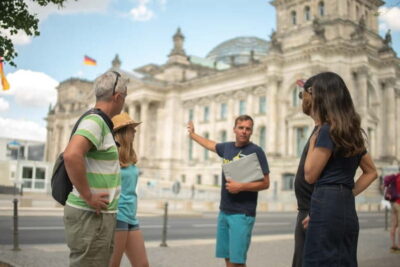
Guided Bike Tour of the Berlin Wall and Third Reich
Read our review →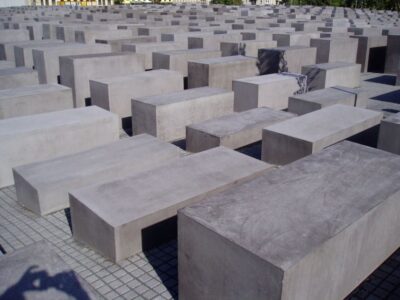
Hitler’s Germany: Berlin During the Third Reich & WWII
Read our review →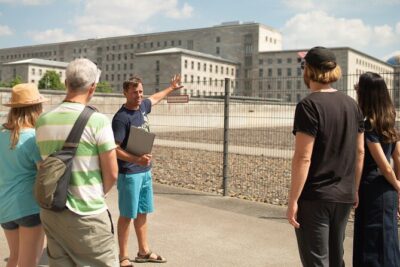
Private Walking Tour Berlin Third Reich Hitler and World War II
Read our review →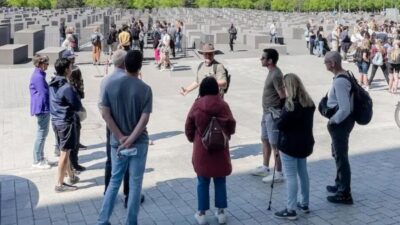
Hitler’s Berlin The Rise & Fall Guided Walking Tour
Read our review →Browse the lists this tour appears in