
Reviewed · BERLIN THIRD REICH TOURS
Third Reich Berlin Walking Tour with a French-Speaking Guide
Berlin’s Nazi past is easier to understand when you follow it through real streets, buildings, and personal stories. This French-language walking tour links the German Resistance Memorial, a deportation railway station, Jewish community sites, and the workshop of Otto Weidt, who tried to protect blind and deaf Jewish workers.
I like the clear route from Potsdamer Platz to Hackescher Markt, and I like the balance between political history and individual lives. The French-speaking presentation is another major plus, especially if you want more than a translated summary. The main caution is that this is a serious subject, and the walking, train ride, and outdoor stops require moderate fitness.
Key points before you book
- A three-hour route connects resistance and persecution: You move from Operation Valkyrie to Jewish Berlin, deportation sites, and individual acts of courage.
- The tour is conducted in French: Guides such as Julie explain both major events and personal stories in a clear, lively way.
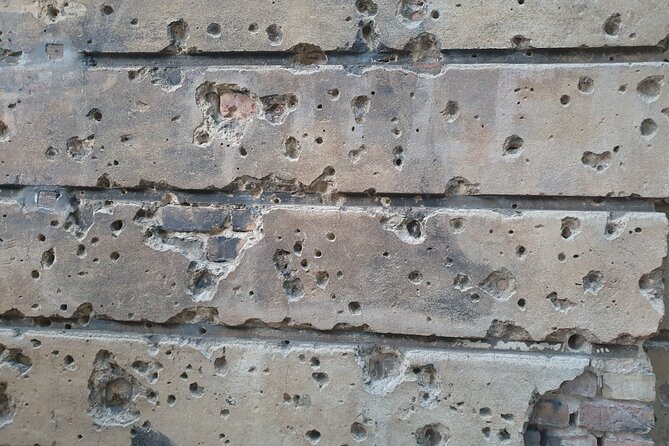
- Anhalter Bahnhof adds a stark physical reminder: A ruined section of the former station marks one of the departure points for Jewish deportations.
- The Jewish Quarter portion is more than a quick photo stop: Auguststrasse and Grosse Hamburger Strasse reveal schools, orphanages, detention sites, and cemetery history.
- The group can reach 24 people: That keeps the price moderate, though the experience may feel less personal than a private walk.
- You need an AB public transport pass: Transportation is not included, and the route uses a train between stops.
Why this French walking tour works
At $31.99 per person, this is a reasonably priced way to spend three hours with a professional local guide in central Berlin. You are paying for a focused route, French-language interpretation, and the context that ties separate memorials together.
That last part matters. Berlin has many Nazi-era sites, but they do not always explain themselves. A memorial may mark a resistance plot, a station may look like a ruin, and a street may appear ordinary. The guide’s job is to connect those places so you understand what happened there and why it still matters.
The strongest praise for this experience centers on the guide’s delivery. The French comments describe a presentation that is lively and clear, combining major events with individual destinies. Julie is singled out by name, so if she is leading your departure, you can expect a style that aims to make a difficult subject understandable without turning it into a dry lecture.
You should also know what this is not. It is not a relaxed sightseeing walk with a few historical notes added. The topic is Nazi persecution, deportation, resistance, and the destruction of Berlin’s Jewish community. The tone should be respectful, and some stops may feel emotionally heavy.
More Third Reich history tours in Berlin:
- Berlin: Third Reich and Cold War 2 Hour Walking Tour
★ 4.9 · 6,830 reviews - Berlin’s Best: 2 Hour Walking Tour Third Reich and the Cold War
★ 5.0 · 5,486 reviews - Third Reich Berlin: Hitler and WWII Walking Tour
★ 5.0 · 3,301 reviews
Starting at Potsdamer Platz and meeting Varian Fry
The walk begins at Potsdamer Platz 10 at 10:00 in the morning. Potsdamer Platz is a practical starting point because it places you in central Berlin and near several important sites connected with the city’s twentieth-century history.
The first point of interest is a memorial to Varian Fry, the American journalist who helped people escape Nazi persecution. The tour uses his story as an opening reminder that opposition to the regime came from many directions, including people who took personal risks to help others.
This is a useful beginning because it avoids presenting the period as a simple story of powerful officials and helpless victims. You start with a person who acted. From there, the route moves toward a much larger question: how did Germans oppose Nazism from inside the system?
Your guide will set the historical frame here, then lead the group on foot toward the Bendlerblock. Wear shoes you can use comfortably for several hours. The tour is not described as strenuous, but it includes outdoor walking and multiple stops.
The German Resistance Memorial and Operation Valkyrie
The first major stop is the German Resistance Memorial Center at the Bendlerblock. You have about 50 minutes here, making it the longest single stop on the route.
The Bendlerblock is closely linked with Operation Valkyrie, the failed attempt to overthrow Adolf Hitler in July 1944. The resistance memorial now honors Germans who opposed and fought against Nazism, so the focus is broader than the Valkyrie plot alone.
This is one of the tour’s strongest sections. You get a place, an event, and a group of people whose decisions carried enormous personal risk. The guide can explain how the resistance developed and how the planned coup unfolded, while also placing it within the larger Nazi dictatorship.
I like that the route gives this stop real time. Fifty minutes allows the guide to explain the site rather than simply point at a plaque and move on. If you are interested in German resistance, military opposition, or the moral choices faced by people inside the regime, this part may be the tour’s main reward.
Do not expect the memorial to provide a light or easy introduction. The subject is betrayal, courage, failure, and execution. It also raises a difficult point that a good guide should address carefully: resistance existed, but it did not represent the position of all Germans.
Anhalter Bahnhof and the route of deportation
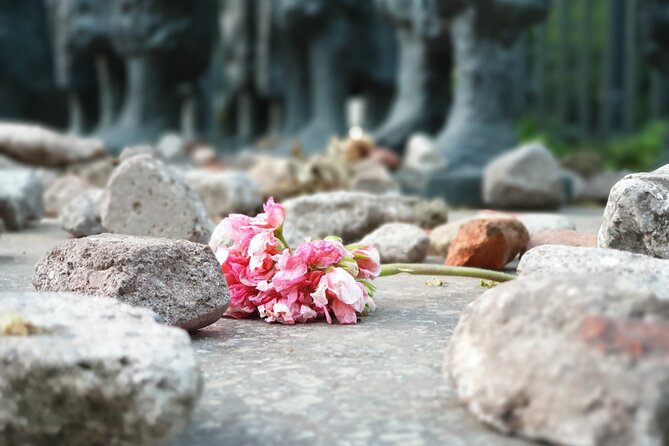
The tour then reaches Anhalter Bahnhof, where about 10 minutes are allotted. Much of the old station disappeared, but a ruined original section remains.
This was one of the places from which Berlin’s Jews were deported. The physical remains are limited, yet that can make the stop more unsettling, not less. You are looking at a fragment of a railway station while learning how ordinary transport infrastructure became part of a system of persecution and mass deportation.
The stop is short, and that is sensible. The main value comes from the guide’s explanation rather than from a large museum display. You will not spend a long period exploring the station itself.
From Anhalter Bahnhof, the group takes a train to Berlin’s Jewish Quarter. Public transportation is not included, so you should buy a Berlin public transport day card for zones AB before the tour. This is an important practical detail. The tour price looks simple, but your total cost includes the transit pass and any food or drinks you purchase along the way.
Other Berlin experiences to weigh up
- Berlin: Reichstag, Dome and Government District Guided Tour
★ 4.7 · 18,288 reviews - Berlin: Government District around the Reichstag Guided Tour
★ 4.7 · 8,447 reviews - Berlin: Hidden Backyards Guided Walking Tour
★ 4.8 · 5,360 reviews - Berlin: 1-Hour Boat Tour with Bilingual Live Guide
★ 4.7 · 3,629 reviews
Entering Berlin’s Jewish Quarter at Neue Synagoge
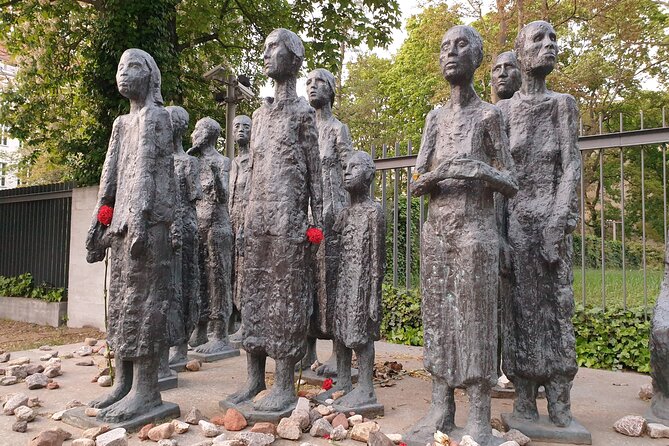
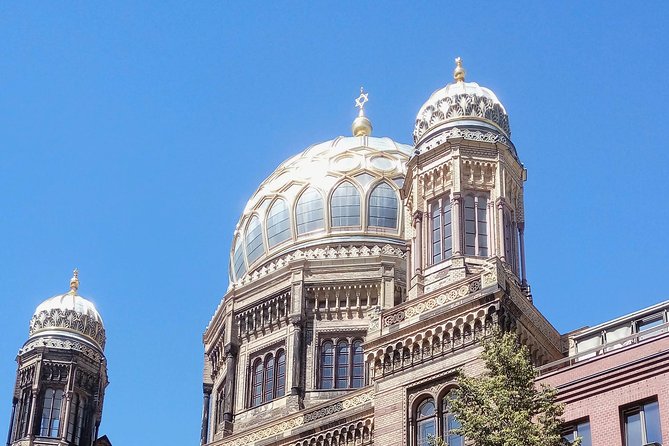
The next part of the walk moves into Berlin’s Jewish Quarter, beginning at Stiftung Neue Synagoge Berlin, Centrum Judaicum. The scheduled discussion here lasts about 15 minutes.
The guide will explain the Jewish community in the nineteenth and twentieth centuries, along with the history of the synagogue. This gives the tour needed context before it turns more directly to Nazi persecution.
That context matters. If you begin with deportations alone, it is easy to see Jewish life only through the destruction brought by the Nazi regime. Learning about the community’s earlier development helps you understand that Berlin’s Jewish population was not a brief or marginal presence. It was part of the city’s civic, cultural, and religious life.
The visit is described as a stop for explanation rather than an extended museum visit. If you want a long indoor visit or a detailed synagogue tour, this experience may feel too brief. Its purpose is to place the Jewish Quarter within the wider walk.
Auguststrasse, schools, and children caught in the persecution
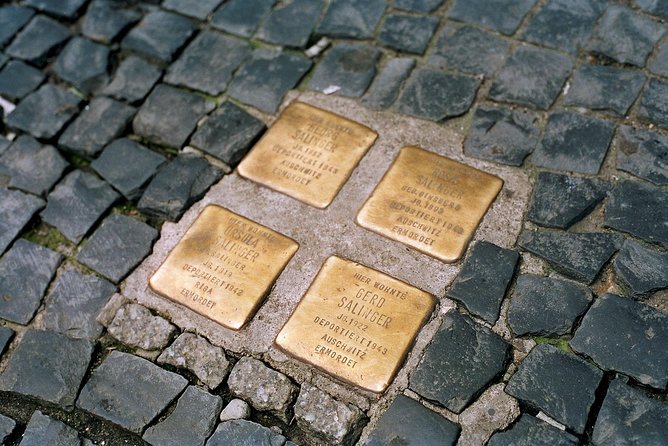
On Auguststrasse, the guide discusses institutions that once operated along the street, including a school for Jewish girls and an orphanage during the Nazi period. You spend about 20 minutes here.
This section should appeal to anyone who wants the history brought down to a human scale. Schools and orphanages are not abstract political locations. They point to children, education, family life, and the ways persecution reached into daily routines.
The street itself is also a reminder that difficult history often sits beside normal city life. You may be walking through an urban setting that looks unremarkable, while the guide explains how Jewish institutions were restricted, threatened, and drawn into the machinery of Nazi rule.
I appreciate this stop because it widens the story beyond famous leaders and military plots. It shows the effect on community institutions, not only on people who appeared in major political events.
Grosse Hamburger Strasse and the Sammellager
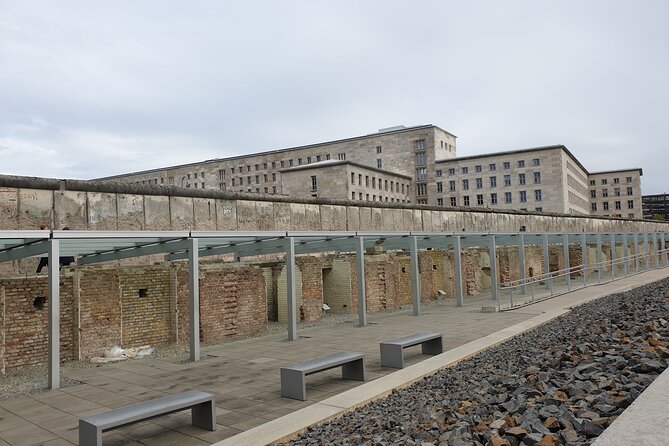
The walk continues to Grosse Hamburger Strasse, with about 30 minutes for the old Jewish cemetery and a former Sammellager. A Sammellager was a detention or assembly point where Jews were held before deportation.
This is one of the route’s most important stops because it brings together several layers of Jewish Berlin. The old cemetery connects the area with the community’s earlier life. The detention site shows how that community was later subjected to forced removal.
The contrast is painful, but it helps you understand the scale of what was lost. The guide can place the cemetery, the street, and the detention point within the larger story of Berlin’s Jewish population.
You should prepare for an outdoor explanation rather than a conventional museum visit. There is no admission charge listed for the stop, and the emphasis is on the location itself and the guide’s account. A quiet, attentive group will get more from it than a rushed sightseeing crowd.
The 30-minute timing is useful here. It gives enough space for a careful explanation while keeping the full route within three hours.
Otto Weidt’s workshop and a story of courage
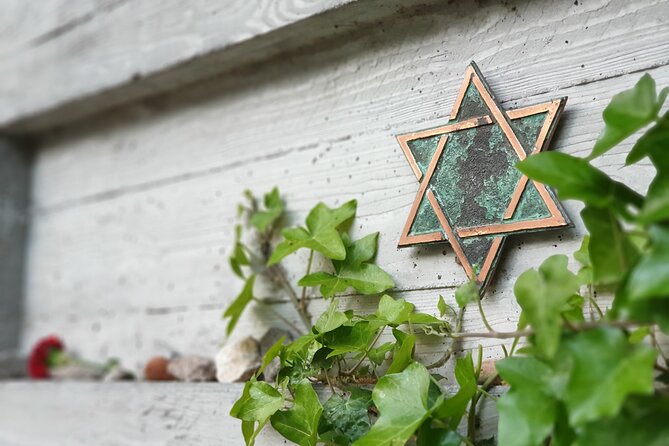
The final major stop is the Museum Blindenwerkstatt Otto Weidt, where you spend about 20 minutes. Otto Weidt ran a small factory that made brooms and brushes and employed mainly blind and deaf Jewish workers during the Second World War.
The museum tells how Weidt tried to protect the people who worked for him. That makes this stop different from the resistance memorial. At the Bendlerblock, you hear about organized opposition and a planned attempt to remove Hitler. Here, you encounter a smaller workplace and a person trying to shield employees from persecution.
The story is compelling because it focuses on practical courage. Weidt did not operate on the scale of a military organization. He used his position as an employer to help people who were especially vulnerable, and the museum preserves that human-sized story.
I would not expect 20 minutes to cover every detail of the workshop or its workers. Still, the stop gives the tour an appropriate final note. After discussing institutions, deportations, and organized resistance, you finish with a story about one person trying to protect others.
The experience ends near Hackescher Markt, next to the S-Bahn station. This is a convenient finish if you want to continue exploring Berlin or return to your accommodation by public transportation.
What the route leaves out, and what to confirm
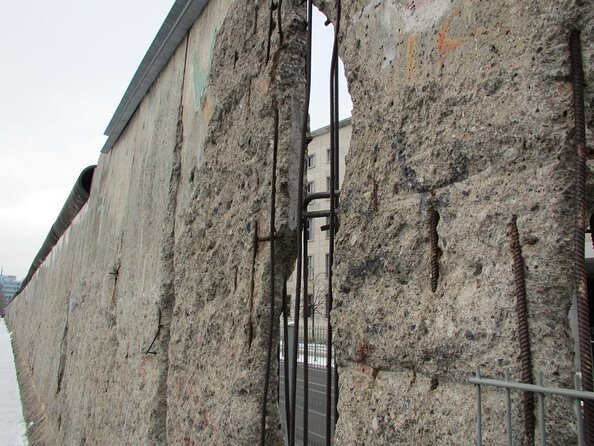
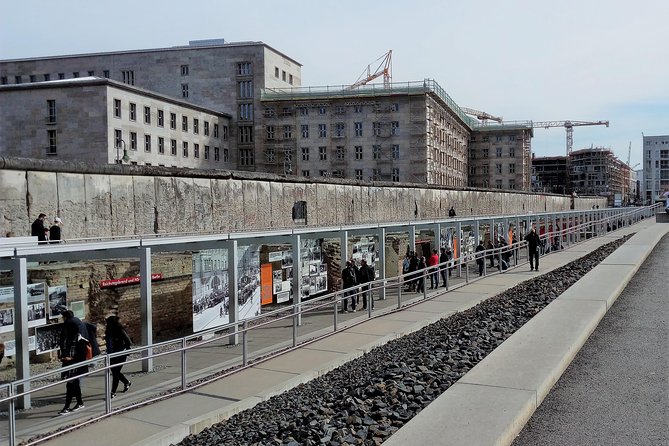
The general description of the experience refers to the Topography of Terror, one of Berlin’s major Nazi-era documentation centers. The detailed sequence of stops provided for this tour does not list it as a stop. The route instead specifies the German Resistance Memorial Center, Anhalter Bahnhof, the Jewish Quarter, and the Otto Weidt museum.
That difference is worth checking before you book. If the Topography of Terror is essential to your plans, ask Vive Berlin Tours whether the tour includes it on your date or whether it is only part of the broader subject description.
This is not a criticism of the route itself. The listed walk already has a clear focus and a strong progression. It simply helps you avoid expecting a museum visit that may not be part of the actual three-hour schedule.
Group size, language, and physical demands
The maximum group size is 24 people. That is small enough for a walking tour to function well, but it is not an intimate private walk. If everyone gathers closely and listens, the guide should be able to keep the route moving and explain each place clearly. A larger group can make questions and street crossings less smooth.
The tour is offered in French, which is its defining feature. You should choose it if you are comfortable following historical explanations in French and want to discuss the subject in that language. The praise for the presentation emphasizes clarity and a lively style, not just factual information.
The activity operates in all weather conditions. Bring clothing suited to Berlin’s forecast, since much of the experience takes place outside. You should also be comfortable with several hours of walking and a train transfer. The stated fitness requirement is moderate.
Service animals are allowed, and the route is near public transportation. No food or drinks are included, so plan around the three-hour start and finish. You may want water, especially in warm weather, but the supplied details do not specify a scheduled meal or refreshment break.
Is $31.99 good value?
At $31.99, the tour offers solid value if you want a guided French-language introduction to Nazi Berlin. The price includes the local guide, professional guide service, and local taxes. It does not include public transportation, food, or drinks.
The best value comes from the route’s connections. You could visit some of these locations independently, but you would need to research the sites, work out the order, and understand how they relate to one another. The tour puts them into a single morning and adds a French-speaking explanation.
The price is less attractive if you already know Berlin’s Nazi history well or plan to spend extensive time at museums on your own. It is also not the right choice if you prefer a private guide, a slower pace, or a tour focused mainly on architecture.
The experience is booked about 16 days ahead on average, so you should not wait until the last minute if your Berlin dates are fixed. Free cancellation is available if you cancel at least 24 hours before the 10:00 a.m. start. Changes or cancellations inside that window are not accepted for a refund.
Who should book this walk?
I would recommend this tour to French-speaking visitors who want a focused first look at Berlin’s Nazi period. It suits you especially well if you value clear explanations, personal stories, and a route that combines memorials with real urban locations.
It is also a good fit for visitors who have already seen Berlin’s main landmarks and want a more serious history walk. The route does not treat the period as a distant chapter. It shows how resistance, Jewish community life, deportation, and individual courage were tied to streets and buildings in the modern city.
Families with older teenagers may find the subject valuable, but the material is difficult. Parents should decide if their children are ready for discussions of persecution and deportation.
You may want to skip it if you are looking for a light morning activity, dislike walking in poor weather, or need a tour with no extra transportation cost. Confirm the Topography of Terror question before booking if that museum is a priority.
With a 4.9 rating from 59 reviews and a 100 percent recommendation rate, the experience has a strong record. The most useful takeaway is not the number alone. It is the repeated emphasis on a clear, lively presentation that joins major historical events with personal lives.
FAQ
How long does the Third Reich Berlin walking tour last?
The tour lasts approximately three hours.
What time and where does the tour start?
It starts at 10:00 a.m. at Potsdamer Platz 10, 10785 Berlin, Germany.
Where does the tour end?
The tour ends at Hackescher Markt, 10178 Berlin, near the Hackescher Markt S-Bahn station.
Is public transportation included?
No. The route includes a train ride from Anhalter Bahnhof to Berlin’s Jewish Quarter, and you should buy a Berlin public transportation day card for zones AB.
Is the tour conducted in French?
Yes. The tour is led by a French-speaking guide.
Can I cancel for a full refund?
Yes, if you cancel at least 24 hours before the experience’s start time. Cancellations or changes made less than 24 hours in advance are not accepted for a refund.
More Walking Tours in Berlin
- Discover Berlin Half-Day Walking Tour
★ 5.0 · 9,624 reviews - Berlin: Discover Berlin Walking Tour
★ 4.9 · 5,998 reviews - Berlin: Alternative Berlin Walking Tour
★ 4.6 · 1,204 reviews - Berlin: Third Reich, Hitler, and WWII Walking Tour
★ 4.9 · 1,133 reviews
Newest Berlin reviews
- Where It All Began: Berlin’s Queer & Trans History Tour★ 4.9 · 6 reviews
- Understanding Kreuzberg: The roots of local (sub)culture★ 4.9 · 11 reviews
- Berlin: guided canoe | kayaktour★ 4.1 · 7 reviews
- Private Potsdam City Tour in an authentic vintage van★ 5.0 · 14 reviews
- Warnemünde Shore Excursion: Private Sachsenhausen and Berlin Tour★ 5.0 · 12 reviews
- Ultimate E-Bike Tour of Berlin with Beer Garden Stop★ 5.0 · 4 reviews
- In the Forbidden City – Potsdam Walking Tour★ 5.0 · 17 reviews
- Private Walking Tour of Potsdam and Sanssouci★ 5.0 · 24 reviews
Berlin Third Reich Tours, compared.

Berlin’s Best: 2 Hour Walking Tour Third Reich and the Cold War
Read our review →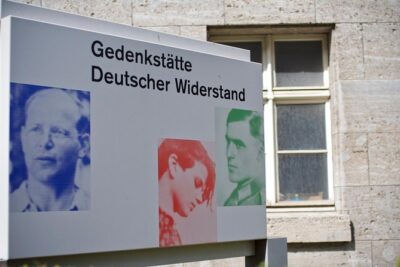
Third Reich Berlin: Hitler and WWII Walking Tour
Read our review →

Berlin Third Reich Sites: Half-Day Walking Tour
Read our review →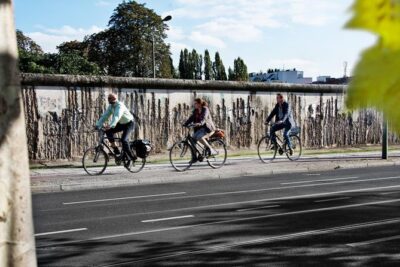
Guided Bike Tour of the Berlin Wall and Third Reich
Read our review →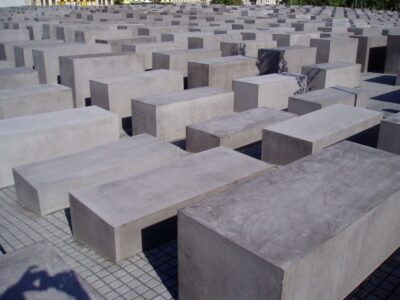
Hitler’s Germany: Berlin During the Third Reich & WWII
Read our review →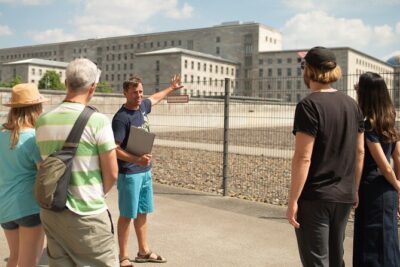
Private Walking Tour Berlin Third Reich Hitler and World War II
Read our review →Browse the lists this tour appears in