
Reviewed · BERLIN THIRD REICH TOURS
Berlin: The Time of National Socialism Walking Tour
Berlin’s most famous sights take on a darker meaning on this two-hour walk through Nazi-era Berlin. You begin at Brandenburg Gate, pass the Reichstag and Soviet War Memorial, then reach the Holocaust Memorial, Hitler’s former bunker site, and the Topography of Terror.
I like the small group limit of 10, which gives you room to ask questions. I also like the way the route links grand government buildings with less obvious traces, such as the Johann Georg Elser Memorial and wartime offices. The main drawback is simple: this is a serious, information-heavy walk in all weather, and the listed live tour language is German.
Key points to know before booking
- Brandenburg Gate begins the story: See how a symbol of Berlin was used for Nazi propaganda marches.
- Carlo and Carlos are named guides: The most praised guides are described as lively, attentive, and generous with historical detail.
- The route covers both famous sights and lesser-known sites: You visit the Reichstag, Hitler’s bunker location, the Elser Memorial, and former Nazi administrative centers.
- The Soviet War Memorial includes actual wartime weapons: T-34 tanks and artillery remain on view in Tiergarten.
- The tour finishes at the Topography of Terror: You can continue your visit at this documentation center after the guided walk.
- Cold or wet weather will not cancel the outing: Wear proper walking clothes, since the tour runs in all weather and on public holidays.
Why this route gives Berlin more meaning
Berlin can feel like a city rebuilt in layers. A grand square may mark a democratic capital today, while the same place once served a dictatorship. This tour helps you read those layers in sequence rather than seeing each monument as an isolated stop.
The route focuses on the years of National Socialism, the Second World War, the German Resistance, and the physical remains of the Nazi government. That focus matters. You are not getting a general Berlin sightseeing walk with a few wartime facts added on. The entire two hours follows how power was displayed, organized, challenged, and eventually destroyed.
I especially like the balance between major landmarks and sites that are easier to miss. Brandenburg Gate and the Reichstag are familiar. The Johann Georg Elser Memorial and the former government buildings near the Topography of Terror require more explanation. Together, they show both the public face of the regime and the machinery behind it.
The small group format should help here. With no more than 10 participants, you are less likely to lose the guide in a crowded square. The guides named in the feedback, Carlo and Carlos, are praised for answering questions and explaining the setting with energy. One attendee described a tour with only two people, which can happen when bookings are light, but you should plan for the advertised maximum of 10.
More Third Reich history tours in Berlin:
- Berlin: Third Reich and Cold War 2 Hour Walking Tour
★ 4.9 · 6,830 reviews - Berlin’s Best: 2 Hour Walking Tour Third Reich and the Cold War
★ 5.0 · 5,486 reviews - Third Reich Berlin: Hitler and WWII Walking Tour
★ 5.0 · 3,301 reviews
Starting at Pariser Platz and Brandenburg Gate
Meet the guide at the exit of S+U Brandenburger Tor station, exit B, in the direction of Pariser Platz and Straße des 17. Juni. Look for the GetYourGuide, You in Berlin flag. Starting at the station is practical because you do not need to search for a café, hotel, or street corner.
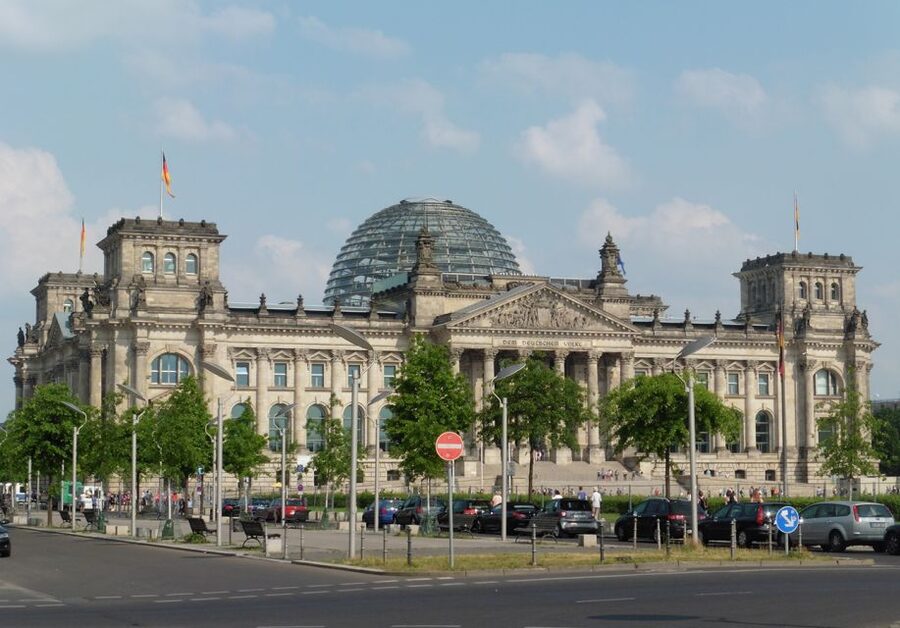
Pariser Platz provides the first lesson in how Berlin’s public spaces were used during the Nazi period. From here, Brandenburg Gate becomes more than a postcard backdrop. The guide explains how the gate was used for propaganda marches during National Socialism, giving you a clear example of architecture serving political theater.
This opening stop is useful for first-time visitors because the setting is easy to recognize. It also gives the tour a strong visual beginning. You can see the famous gate while learning how mass spectacle helped the regime project power.
Do not expect an interior visit at Brandenburg Gate. The experience is a walking commentary around the site, and the value comes from the historical framing.
The Reichstag and the transfer of power
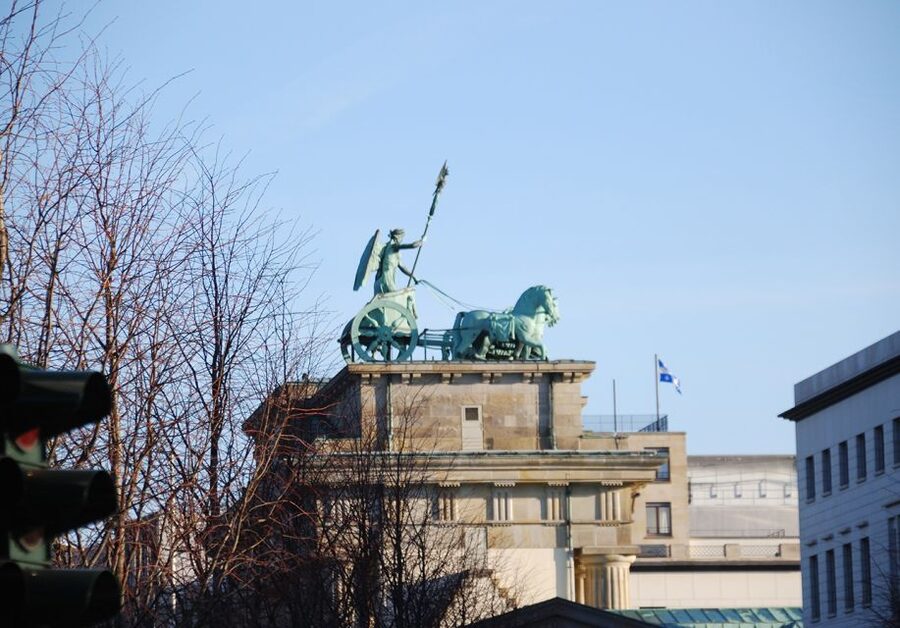
From Brandenburg Gate, the walk continues to the Reichstag, now the seat of the German Parliament. The tour connects this building with the rise of the Nazi Party, the NSDAP, and Adolf Hitler’s assumption of power in 1933.
That connection is one of the route’s most useful features. You see a working symbol of modern German democracy while learning about the political collapse that allowed dictatorship to take control. The contrast is not treated as a loose historical footnote. It forms part of the tour’s main question: how did Berlin’s government center become linked to one of the darkest periods in German history?
The Reichstag is mainly a sightseeing stop on this route, so you should not expect a parliamentary interior tour or a visit to the dome. If you want to go inside, that would need to be arranged separately. Here, the guide keeps the attention on the building’s role in the story of 1933.
Soviet tanks in Tiergarten
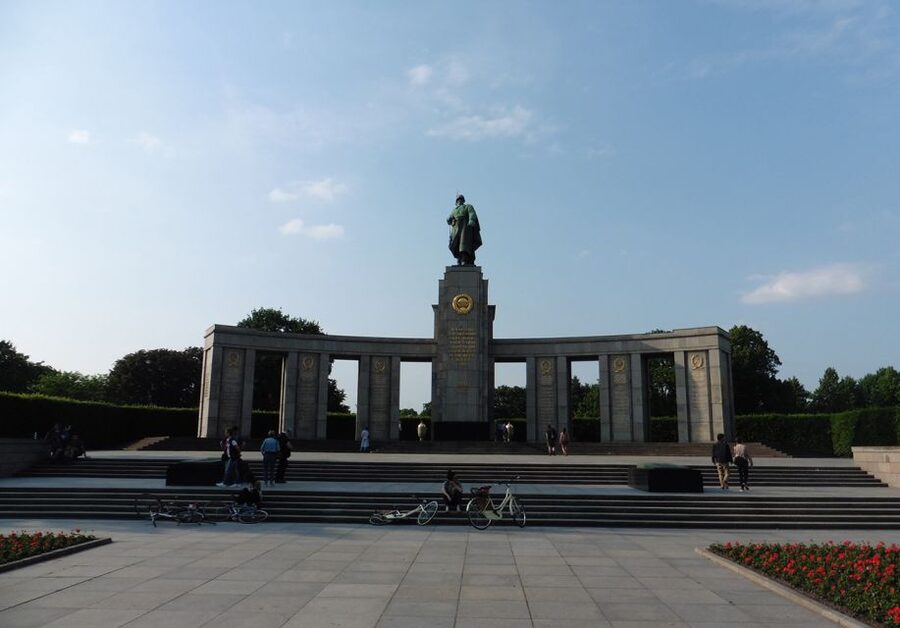
Next comes the Soviet War Memorial in Tiergarten. This memorial includes Soviet T-34 tanks and artillery from the Second World War, making the military history unusually concrete. You are not only hearing about the final phase of the war. You can see large pieces of wartime equipment preserved at the site.
The stop adds a different viewpoint to the tour. Brandenburg Gate and the Reichstag show power through architecture and government. The Soviet memorial points to the military defeat of Nazi Germany and the cost of the war.
Tiergarten also offers a change of pace from the hard urban surfaces around Pariser Platz. Still, remember that this is a walking tour rather than a bus ride. You will be outside throughout the experience, and the guide specifically advises suitable clothing. One January tour took place in icy conditions, with the guide helping the group move safely. That is a useful warning: winter weather can affect your comfort even when the tour goes ahead.
Other Berlin experiences to weigh up
- Discover Berlin Half-Day Walking Tour
★ 5.0 · 9,624 reviews - Berlin: Discover Berlin Walking Tour
★ 4.9 · 5,998 reviews - Berlin: Hidden Backyards Guided Walking Tour
★ 4.8 · 5,360 reviews - Berlin: Alternative Berlin Walking Tour
★ 4.6 · 1,204 reviews
The Holocaust Memorial and the human cost
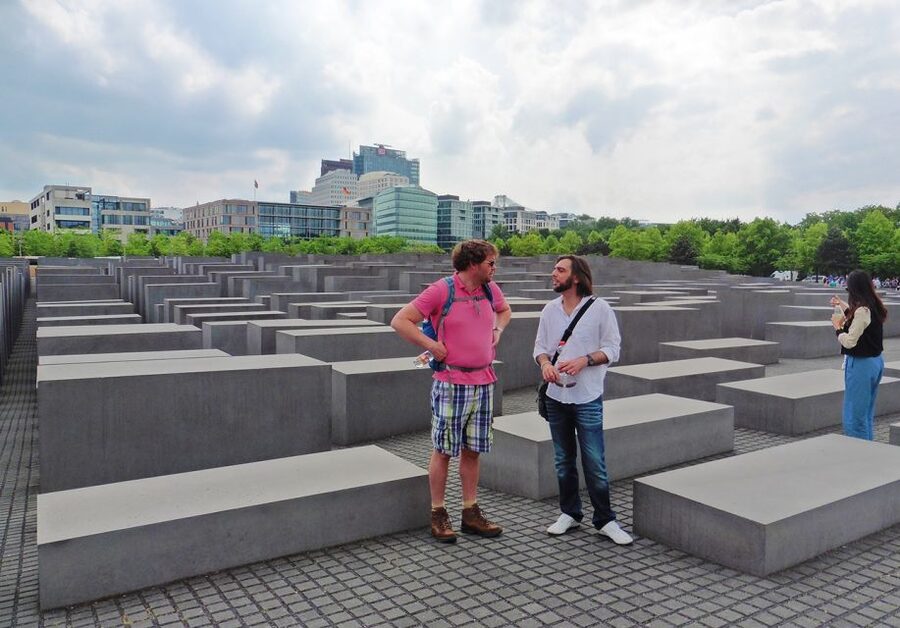
The route then reaches the Memorial to the Murdered Jews of Europe, commonly called the Holocaust Memorial. This is the emotional center of the walk for many people, though the guide’s role is to provide historical context rather than turn the site into a theatrical performance.
The memorial makes the scale and seriousness of the Holocaust part of the city center itself. Its location near the former government district also helps connect the murder of Europe’s Jews with the institutions and political power operating nearby.
Give yourself time to take in the memorial quietly. The tour is only two hours, so the guide will need to keep moving, but this stop may feel more personal and reflective than the earlier architectural sites.
The subject matter makes the tour better suited to visitors who want an adult history discussion. The supplied feedback also indicates that the walk can work well for teenagers and young adults, especially when they are interested in history. Parents should still consider how their children respond to difficult wartime subjects.
The bunker site and Hitler’s former government center
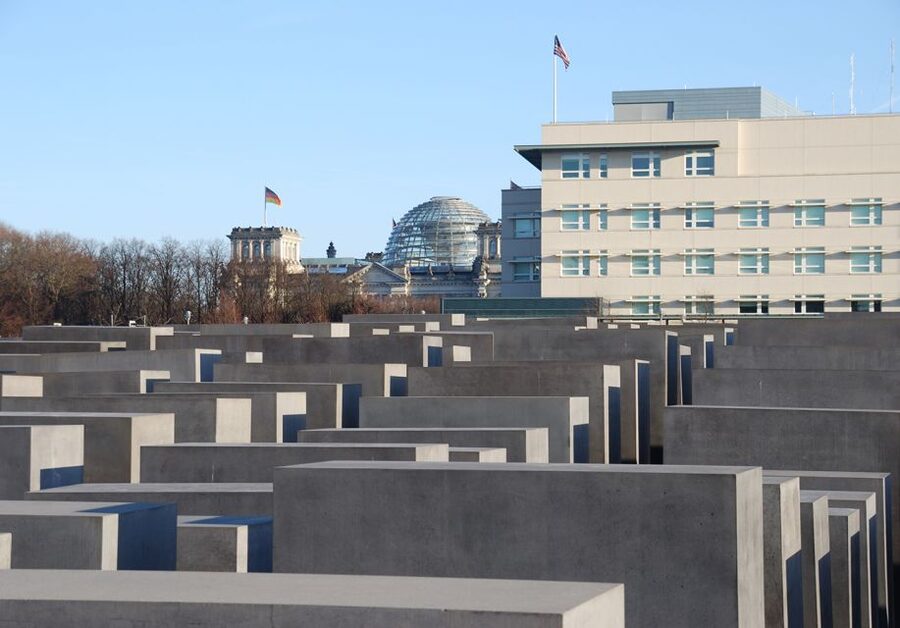
The walk continues to the location of Adolf Hitler’s bunker and the New Reich Chancellery. The key point is that you are visiting a location, not a preserved bunker interior. The tour explains what was once there and how this area functioned as part of the Nazi government center.
That absence is worth understanding before you book. There is no dramatic underground room to explore at this stop. Instead, the guide helps you picture a site that was central to the final days of the regime but is now encountered through the modern city above and around it.
This approach is historically valuable because it resists turning the bunker into a spectacle. The focus stays on the political system, the buildings, and the events connected with them. You move from the public symbols of power to the administrative core of the dictatorship.
The guide also discusses the wider government district of that period. This gives the route a useful thread: propaganda began at the monumental gate, power was asserted through government buildings, and the regime operated through a network of offices and institutions.
Johann Georg Elser and the German Resistance
The Johann Georg Elser Memorial adds an important counterpoint. The tour includes stories about German resistance to the dictatorship, and Elser represents the fact that opposition existed inside Germany before the war ended.
This stop keeps the walk from presenting the period as a story of one-way control. You learn about people who challenged the regime, along with the risks involved in doing so. That is a valuable part of the route because visitors often hear much more about Nazi institutions than about individual acts of resistance.
The memorial may be especially helpful if you already know the broad outline of the Nazi period but want a better sense of the choices made by individual Germans. The guide’s storytelling matters here. Carlo and Carlos are praised for making the material lively and for adding background beyond the basic dates and names.
Detlev-Rohwedder-Haus and the former Nazi offices
The tour also passes Detlev-Rohwedder-Haus, another stop tied to the government center of the time. The route uses this area to explain where important Nazi offices were located during the war.
The buildings and street layout are part of the evidence. You are seeing places connected with administration, policy, security, and war rather than only monuments built afterward. That makes the walk feel more like a historical investigation of the city center.
This is also where a guide adds real value. Without context, an office building can look like just another Berlin façade. With an explanation of who used the space and what happened in the surrounding district, the ordinary-looking street becomes part of the story.
Topography of Terror and the tour’s final chapter
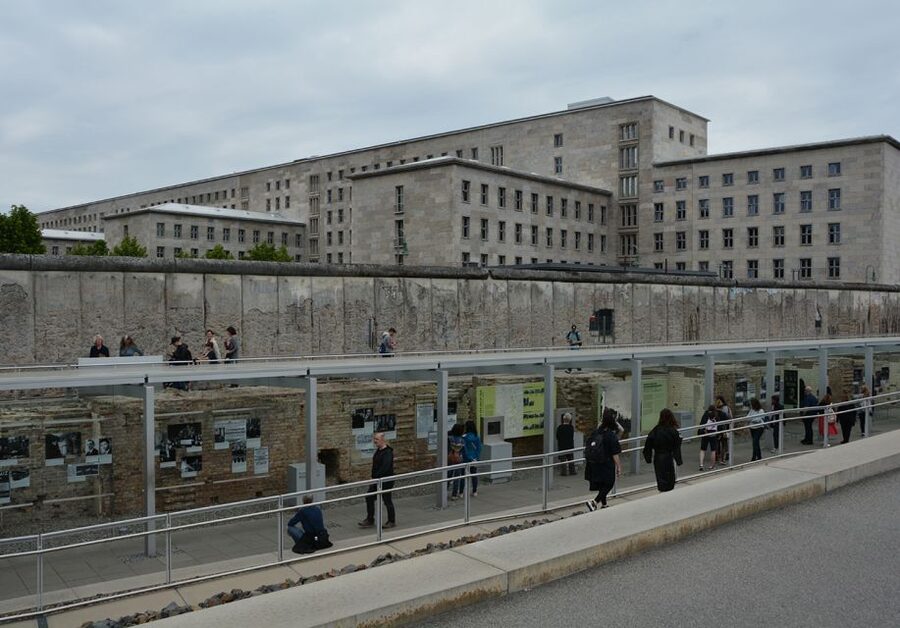
The walk finishes at the Topography of Terror Documentation Center. The site covers the former headquarters of the SS, the Secret State Police, the Reich Security Main Office, and the Reich Aviation Ministry during the Second World War.
Ending here makes sense. Earlier stops show propaganda, political power, military defeat, memorialization, resistance, and the former government district. The Topography of Terror brings those strands together through the agencies that carried out repression and managed the Nazi state.
Because the guided walk ends here, you can choose whether to continue exploring the documentation center on your own. The supplied activity information does not include a separate admission or a guided interior visit, so treat the center as the final location of the walking tour rather than assume it is part of the two-hour guided program.
The finish is also practical. You do not have to return to Brandenburg Gate. Once the tour ends, you are free to continue your Berlin sightseeing from the Topography of Terror area.
How much value do you get for $43?
At $43 per person, this is not the cheapest way to walk between central Berlin landmarks. You can see Brandenburg Gate, the Reichstag exterior, and the Holocaust Memorial without paying for a guide.
The value lies in the connections. You are paying for a certified guide, a focused route, historical explanation, and the chance to ask questions in a group limited to 10 people. If you tried to research every stop yourself, you would need several sources and still might miss how the sites fit together.
I consider the price reasonable if this is a subject you genuinely want to understand. It is less convincing if you only want quick photographs of central Berlin or prefer to explore silently at your own pace. Two hours is long enough for a serious introduction, but not long enough to cover every wartime site in the city.
The strongest value comes when you treat the tour as a foundation for later visits. The guide can point you toward places and subjects worth exploring afterward. One attendee received further Berlin tips at the end, and the route itself naturally leads to the Topography of Terror documentation center.
Language, group size, and physical comfort
The activity information identifies the live tour language as German. The highlights also describe the guide as multilingual, but you should confirm the language available when booking if you do not speak German comfortably. Do not assume that an English tour is guaranteed.
The group is limited to 10 people, a useful size for a city walk with several serious discussion points. The tour is wheelchair accessible, though the route is outdoors and conditions can change with weather. Wear shoes and clothes suited to walking, and bring protection from rain or cold.
The tour runs in all weather and on public holidays. That is convenient for a packed Berlin schedule, but it means you should not count on postponement because of rain, cold, or a holiday crowd. In winter, icy pavement can make the walk slower and less comfortable.
Free cancellation is available up to 24 hours before the start, and you can reserve now and pay later. Those terms help if your Berlin plans are still shifting.
Who should book this Berlin history walk?
I would choose this tour if you want Berlin’s Nazi period explained through actual locations rather than presented as a classroom lecture. It suits first-time visitors who want historical structure and returning visitors who already know the main sights but want more context.
It is also a good match for families with older children and teenagers who can handle difficult subjects. The route includes the Holocaust Memorial, Nazi government offices, Hitler’s bunker site, and stories of resistance. That is serious material, not light sightseeing.
You may prefer a different activity if you want a broad overview of Berlin, an English-language tour without checking first, or a tour with extensive indoor visits. This is a focused outdoor walk, and its impact depends on your willingness to listen carefully and think about difficult history.
Should you book it?
Book it if you want to understand how Berlin’s central buildings and memorials connect to National Socialism, the Second World War, and German resistance. The route is well chosen, the group is small, and the named guides Carlo and Carlos bring the subject to life with clear explanations and thoughtful answers.
Skip it if you only have time for casual sightseeing, dislike walking in poor weather, or need a confirmed language other than German. For the right audience, $43 buys more than a list of landmarks. It gives you a framework for seeing Berlin with sharper eyes.
FAQ
Where does the tour meet?
Meet the guide at the exit of S+U Brandenburger Tor station, exit B, in the direction of Pariser Platz and Straße des 17. Juni. Look for the GetYourGuide, You in Berlin flag.
Where does the tour finish?
The tour finishes at the Topography of Terror Documentation Center.
How long does the walking tour last?
The tour lasts two hours.
What language is the tour conducted in?
The listed live tour language is German. The activity information also describes the guide as multilingual, so confirm the available language when booking if German is not suitable for you.
How large is the group?
The tour is a small-group experience limited to 10 participants.
Is the tour wheelchair accessible?
Yes. The activity is listed as wheelchair accessible.
Does the tour run in bad weather?
Yes. The tour takes place in all weather conditions and on public holidays. You should wear suitable clothes for an outdoor walking tour.
Which major sites are included?
The route includes Pariser Platz, Brandenburg Gate, the Reichstag, the Soviet War Memorial in Tiergarten, the Holocaust Memorial, the Johann Georg Elser Memorial, Detlev-Rohwedder-Haus, and the Topography of Terror.
Can I cancel the booking?
You can cancel up to 24 hours in advance for a full refund. You can also reserve now and pay later.
Newest Berlin reviews
- Where It All Began: Berlin’s Queer & Trans History Tour★ 4.9 · 6 reviews
- Understanding Kreuzberg: The roots of local (sub)culture★ 4.9 · 11 reviews
- Berlin: guided canoe | kayaktour★ 4.1 · 7 reviews
- Ultimate E-Bike Tour of Berlin with Beer Garden Stop★ 5.0 · 4 reviews
- Private Potsdam City Tour in an authentic vintage van★ 5.0 · 14 reviews
- Warnemünde Shore Excursion: Private Sachsenhausen and Berlin Tour★ 5.0 · 12 reviews
- In the Forbidden City – Potsdam Walking Tour★ 5.0 · 17 reviews
- Private Walking Tour of Potsdam and Sanssouci★ 5.0 · 24 reviews
Berlin Third Reich Tours, compared.
Berlin’s Best: 2 Hour Walking Tour Third Reich and the Cold War
Read our review →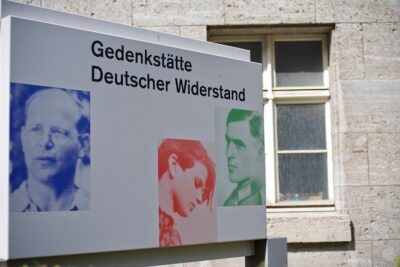
Third Reich Berlin: Hitler and WWII Walking Tour
Read our review →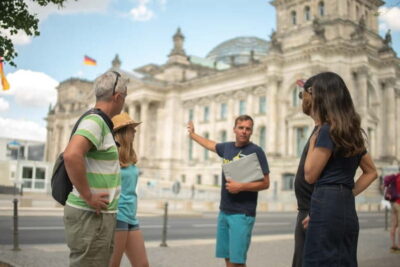

Berlin Third Reich Sites: Half-Day Walking Tour
Read our review →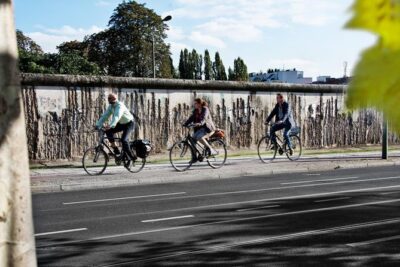
Guided Bike Tour of the Berlin Wall and Third Reich
Read our review →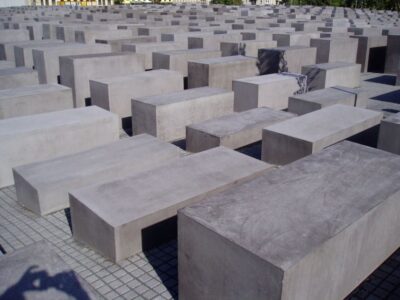
Hitler’s Germany: Berlin During the Third Reich & WWII
Read our review →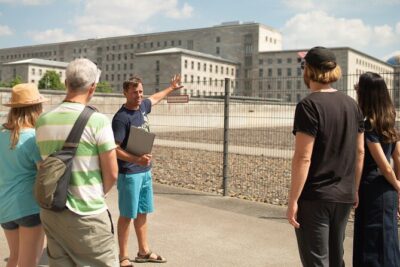
Private Walking Tour Berlin Third Reich Hitler and World War II
Read our review →Browse the lists this tour appears in