
Reviewed · BERLIN THIRD REICH TOURS
Berlin: Hitler and the Third Reich – a private walking tour
The most sobering stop comes near the end, when you stand above the unmarked site of Hitler’s bunker, where the Nazi regime collapsed in its final days. There is no dramatic entrance or preserved room here. That plainness is the point, and a good guide helps you understand what happened without turning the place into a shrine.
I like the route’s clear story, moving from the Nazi government district to the Holocaust Memorial and then to the former SS and Gestapo headquarters. I also like the private format, especially with a guide such as Stefan Knoll, who uses old photographs to show how these streets looked during the Third Reich. The main drawback is time: two hours is tight for such a large subject, and you will see sites from the outside rather than enter paid attractions.
Key points at a glance
- The bunker site gives the tour a stark finish: You see where Hitler spent his last days, though little remains above ground.
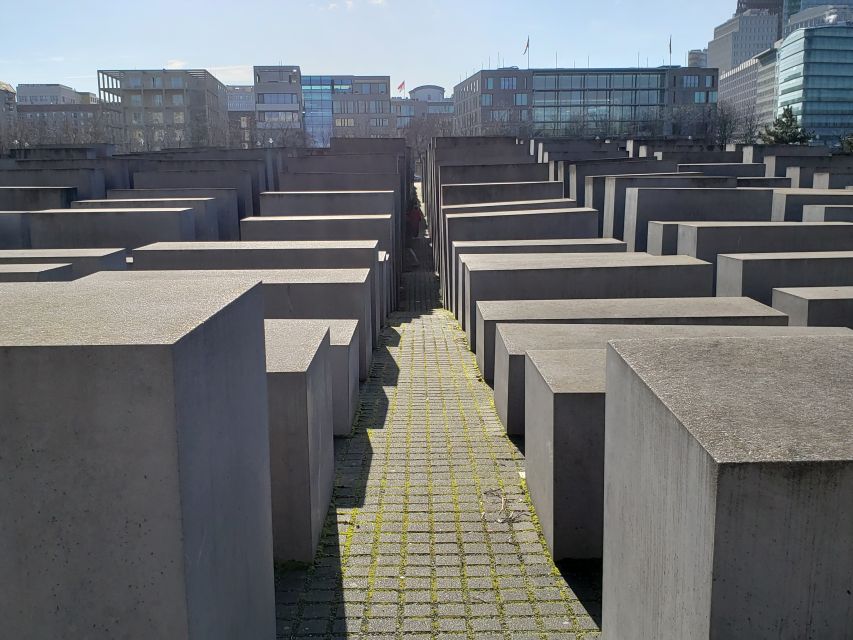
- The 2,710 concrete steles of the Holocaust Memorial: You can walk through the memorial while your guide explains its purpose and design.
- A private guide keeps the history focused: Ask questions and shape the discussion around your own interests.
- The former Nazi government district connects the sites: The route includes the New Reich Chancellery site, the former Reich Aviation Ministry, and former SS and Gestapo locations.
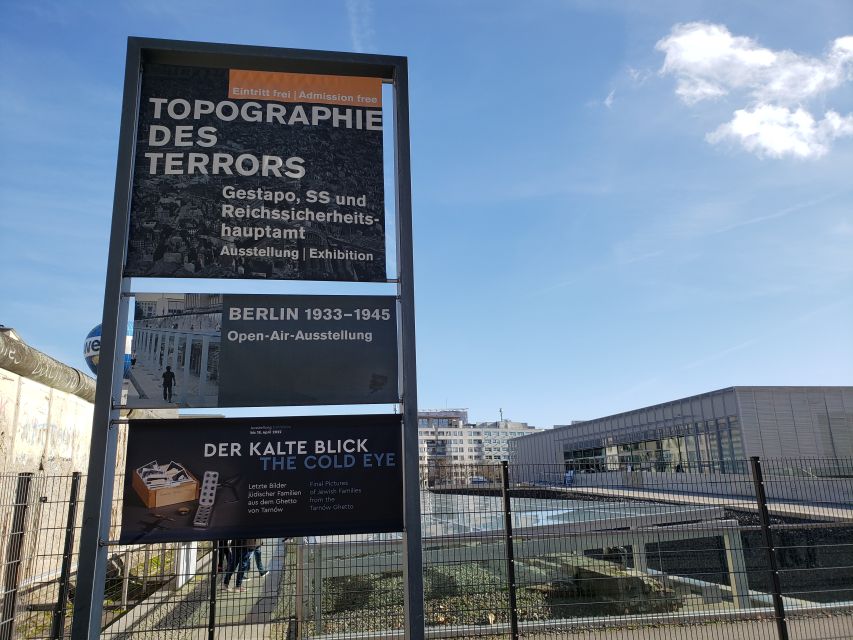
- The Topography of Terror adds original documentation: The open-air exhibition sits on the former site of the Secret State Police and SS buildings.
- The $22 price is strong for a private walk: You pay for the guide, not museum entry, transport, or hotel pickup.
Starting at the Brandenburg Gate
Meet your guide in front of the tourist information center at the Brandenburg Gate. Look for a sign with your name. This is a sensible meeting point because the gate is easy to recognize, but it can be busy, so arrive with enough time to find the correct side of the monument.
The Brandenburg Gate also gives the tour a useful starting frame. You are not simply beginning at a famous photo stop. You are standing at one of Berlin’s best-known symbols, then following the city’s political story through the Nazi period, the Cold War, and reunification.
Your guide speaks either English or German. Stefan Knoll is named among the guides associated with this experience, and the available feedback points to his clear explanations, pleasant manner, and strong use of historical photographs. Those pictures matter in Berlin. Many Nazi-era buildings were destroyed, rebuilt, or given new uses, so a visual comparison can make an ordinary modern street easier to read.
More Third Reich history tours in Berlin:
- Berlin: Third Reich and Cold War 2 Hour Walking Tour
★ 4.9 · 6,830 reviews - Berlin’s Best: 2 Hour Walking Tour Third Reich and the Cold War
★ 5.0 · 5,486 reviews - Third Reich Berlin: Hitler and WWII Walking Tour
★ 5.0 · 3,301 reviews
The Soviet War Memorial in leafy Tiergarten
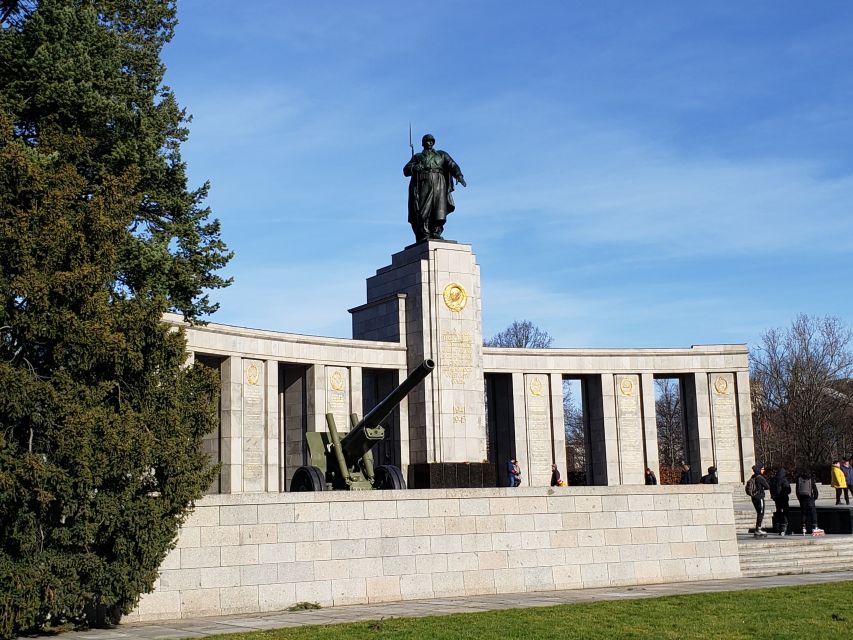
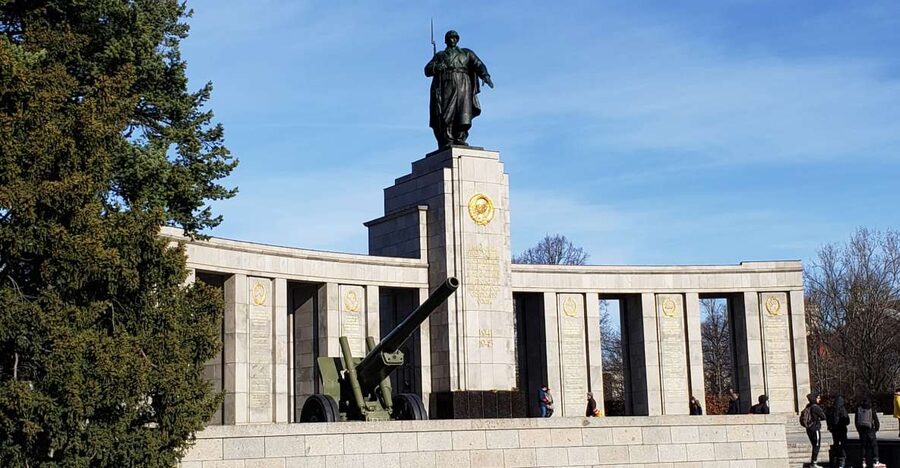
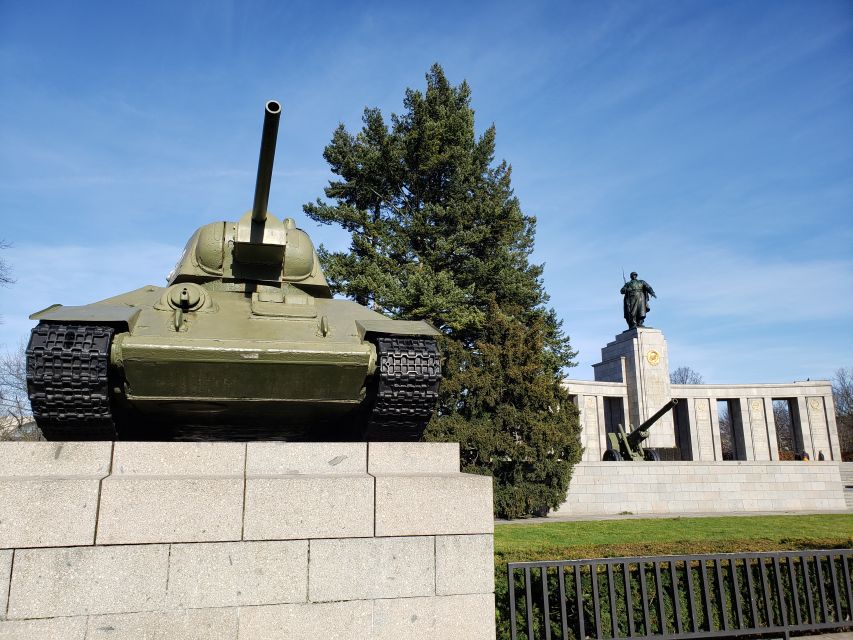
The walk first reaches the Soviet War Memorial in Tiergarten. Its scale is hard to miss. The tall central structure rises above the trees, creating a sharp contrast with the surrounding greenery.
This stop broadens the story beyond Hitler and the Nazi Party. It helps explain the Soviet role in the defeat of Nazi Germany and reminds you that Berlin’s postwar identity was shaped by competing political powers. The memorial is not tucked inside a museum. You encounter it outdoors, as part of the city itself.
The setting also provides a little breathing room early in the walk. The subject is grim, and the route covers several serious sites in quick succession. A short pause here can help you take in the size and political weight of the memorial before moving back toward the former Nazi government district.
The main limitation is that the tour does not list an interior visit or a long stop at the memorial. You should expect guided interpretation and an exterior view, not a full museum treatment.
Reading the former Nazi government district
From the Brandenburg Gate area, the guide leads you through places connected with the National Socialist government. The former New Reich Chancellery is part of this section, as is the former Reich Aviation Ministry, built for Hermann Göring.
These locations help you picture how power worked under the Nazi regime. The government was not an abstract idea floating above the city. It occupied offices, ministries, and formal buildings, all arranged within the capital. Walking between them makes the machinery of government feel physical and local.
This is also where a private tour earns its keep. A guide can point out what you are looking at and explain what has changed. Some buildings survive in altered form, while other sites are marked only by signs, open space, or modern construction. Without context, you might walk past them without realizing their connection to the regime.
The route also touches on the former site of the Propaganda Ministry. That is a useful reminder that Nazi control depended not only on police and military power, but also on public messaging, censorship, and the shaping of daily information.
You will not enter every building. Entrance fees are not included, and the experience is designed as a walking tour of sites rather than an indoor museum circuit. If you want to study architectural details or see extensive original objects, allow separate time for Berlin’s museums and documentation centers.
Walking through the Holocaust Memorial
The Memorial to the Murdered Jews of Europe is one of the tour’s most important stops. It consists of 2,710 concrete steles arranged across a large open area near the Brandenburg Gate.
You can walk into the grid and experience how the space changes as the blocks rise and fall around you. From the edges, the memorial appears orderly. Inside, sightlines narrow and the ground shifts. The design gives you room to think without filling the site with statues or long written explanations.
Your guide can provide the historical setting and explain how the memorial fits into Berlin’s public memory. That context is valuable because the memorial’s meaning is not obvious from a quick photograph. It asks you to move through it, not just look at it.
Please treat this stop with care. It is a memorial to murdered people, not a playground or a shortcut. The open design means ordinary city life continues around it, but the subject remains solemn.
The memorial can take only a few minutes if you stay at the edge, or longer if you walk through the blocks and listen closely. On a two-hour tour, the guide will need to keep the group moving. If you want more time here, ask whether you can linger briefly or return independently after the walk.
The route also includes the memorial dedicated to the murdered Roma and Sinti. That broadens the focus and makes clear that Nazi persecution targeted more than one group. It is an important inclusion in a tour that could otherwise narrow its attention too heavily to Hitler’s headquarters and military history.
Other Berlin experiences to weigh up
- Discover Berlin Half-Day Walking Tour
★ 5.0 · 9,624 reviews - Berlin: Discover Berlin Walking Tour
★ 4.9 · 5,998 reviews - Berlin: Hidden Backyards Guided Walking Tour
★ 4.8 · 5,360 reviews - Berlin: Alternative Berlin Walking Tour
★ 4.6 · 1,204 reviews
Standing above Hitler’s bunker site
The former bunker site is perhaps the most frequently misunderstood stop in Berlin. You do not descend into a preserved underground complex. You stand above the location where the bunker once existed, in an ordinary-looking area with no grand monument announcing it.
That lack of spectacle is useful. It keeps the focus on the facts rather than on fascination with Hitler. The guide explains how the site relates to the final days of the regime and the end of the Third Reich. You gain a clear sense of location without turning the bunker into a tourist attraction.
For me, this is where the tour’s movement from grand public buildings to a largely absent site becomes most effective. The regime presented itself through imposing architecture and ceremony. At the end, its central headquarters is reduced to a location beneath the ground, with the city continuing above it.
The stop is brief by necessity. There is no listed entrance, preserved room, or major display here. If you expect a dramatic ruin, you may find the visit anticlimactic. If you want a grounded explanation of what happened and where, it works well.
The former SS and Gestapo headquarters
The walk continues to the area that once held the SS and Secret State Police buildings. These organizations were central to Nazi terror, surveillance, and political repression.
Today, the site is associated with the Topography of Terror documentation center. An open-air exhibition presents material connected with the former buildings and the institutions that operated there. This gives the final part of the walk a documentary focus instead of leaving you with only architectural remains.
The location is especially useful because it connects ideology to enforcement. Earlier stops show government offices and public symbols. Here, the story turns toward the agencies that carried out persecution and maintained control.
The outdoor setting also changes how you receive the information. You are standing at the original location rather than viewing every object in a distant museum. At the same time, the tour does not promise a full indoor visit or admission to every exhibition area. Check the available time on the day if you want to explore the documentation center in detail after the guided walk.
The tour ends at the Topography of Terror. That is a practical finish because you can continue learning there on your own, assuming opening hours and access suit your plans. It also leaves you near central Berlin rather than returning you to the Brandenburg Gate.
A short route with a large subject
Two hours is enough to create a strong outline, but not enough to cover every part of Nazi Berlin at length. The walk moves through several locations, so comfortable shoes are essential. Bring water and wear clothing suited to the weather because the experience takes place outdoors.
The route also involves an emotional shift from one difficult subject to another. You will hear about Nazi government, propaganda, persecution, the SS and Gestapo, the Holocaust, and the regime’s final collapse. That is a lot to absorb in one sitting.
I would use this tour as an introduction, not as your only study of the period. It gives you a map of key locations and explains how they fit together. You can then decide which places deserve a second, slower visit.
The private format helps with the pace. You are not tied to a large group’s questions, and you can ask for clarification when a date, building, or organization is unclear. A private tour is also useful for families or mixed-interest groups because the guide can adjust the explanation, though the subject matter is serious and may not suit very young children.
What the $22 price includes
At $22 per person, the tour offers good value if you want a private guide rather than a large group walk. The price includes the guide and the private walking tour. It does not include hotel pickup, drop-off, or admission to attractions.
That distinction matters. You are paying for explanation, route planning, and access to a local person who can connect scattered sites. You are not paying for transportation or a museum ticket.
For a solo visitor, the private price may be less appealing than joining a larger shared tour. For two or more people, it becomes easier to justify, especially if you care about asking questions or setting the pace. The ability to focus on your own interests can make a short tour more useful than a longer but crowded alternative.
The listed cancellation policy allows a full refund when you cancel at least 24 hours ahead. You can also reserve and pay later, which helps if your Berlin schedule is still shifting.
Who will get the most from this walk
This tour suits you if you want a clear introduction to Nazi Berlin and prefer real locations over a lecture indoors. It is also a good fit if you want to understand how the former government district, memorials, bunker site, and Topography of Terror relate to one another.
History students, first-time Berlin visitors, and travelers who want a serious orientation can all benefit. The guide-led explanations are particularly helpful at locations where little remains to see.
You should consider another plan if you want long museum visits, extensive time at each memorial, or a tour centered on military equipment and battlefield details. The route is about political power, state terror, memory, and place. It is not a museum admission package.
The walk is listed as wheelchair accessible, but you should still be prepared for an outdoor city route and ask the provider about current conditions if you have specific mobility needs. Bring water, wear comfortable shoes, and dress for Berlin weather.
Should you book this private Berlin history walk?
Book it if you want a compact, serious introduction to the Third Reich in Berlin, especially with a private guide who can use historic photographs and answer questions. The strongest parts are the connected route, the Holocaust Memorial, the stark bunker location, and the Topography of Terror finish.
Skip it if you expect to enter the bunker, tour several major buildings inside, or spend a full afternoon at each site. For $22 per person, the value is in the guide’s interpretation and the efficient route, not in included admissions.
I would choose this as an early Berlin activity, then return to the places that interest you most. It gives you the city’s difficult history in a form you can understand on foot, without pretending that two hours can tell the whole story.
FAQ
Where does the tour start?
Meet your guide at the Brandenburg Gate, in front of the tourist information center. The guide will hold a sign with your name.
Where does the tour finish?
The tour ends at the Topography of Terror documentation center.
How long does the walking tour last?
The tour lasts two hours.
Is the tour private?
Yes. It is offered as a private group walking tour.
What languages are available?
The live guide is available in English or German.
Are attraction entrance fees included?
No. The price includes the guide and private walking tour, but entrance to attractions is not included.
Newest Berlin reviews
- Where It All Began: Berlin’s Queer & Trans History Tour★ 4.9 · 6 reviews
- Understanding Kreuzberg: The roots of local (sub)culture★ 4.9 · 11 reviews
- Berlin: guided canoe | kayaktour★ 4.1 · 7 reviews
- Private Potsdam City Tour in an authentic vintage van★ 5.0 · 14 reviews
- Warnemünde Shore Excursion: Private Sachsenhausen and Berlin Tour★ 5.0 · 12 reviews
- Ultimate E-Bike Tour of Berlin with Beer Garden Stop★ 5.0 · 4 reviews
- In the Forbidden City – Potsdam Walking Tour★ 5.0 · 17 reviews
- Private Walking Tour of Potsdam and Sanssouci★ 5.0 · 24 reviews
Berlin Third Reich Tours, compared.
Berlin’s Best: 2 Hour Walking Tour Third Reich and the Cold War
Read our review →
Third Reich Berlin: Hitler and WWII Walking Tour
Read our review →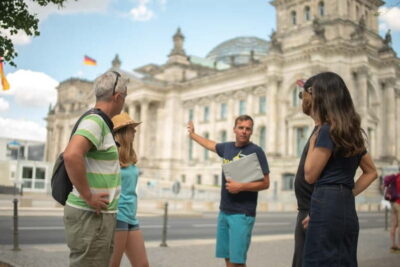

Berlin Third Reich Sites: Half-Day Walking Tour
Read our review →
Guided Bike Tour of the Berlin Wall and Third Reich
Read our review →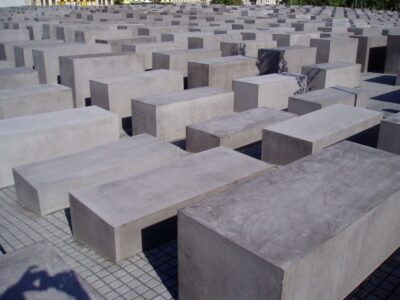
Hitler’s Germany: Berlin During the Third Reich & WWII
Read our review →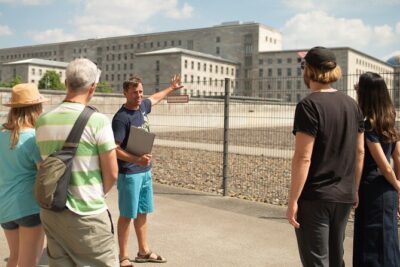
Private Walking Tour Berlin Third Reich Hitler and World War II
Read our review →Browse the lists this tour appears in