
Reviewed · BERLIN THIRD REICH TOURS
Berlin Half-Day World War II Walking Tour
Berlin’s wartime story is spread across the city, and this four-hour walking tour tries to connect the key sites in one afternoon. You’ll move from the former Third Reich capital to the Battle of Berlin, then on to places tied to the Cold War and the Berlin Wall.
I like the efficient route and the local guide’s stories, which can turn scattered monuments into a clear timeline. I also like the low price, $35, for a guided overview that includes major places such as the Reichstag, Brandenburg Gate, Checkpoint Charlie, and the Wall.
The main caution is the meeting point. One published complaint says the customer arrived at Generator Berlin Alexanderplatz but was told only free tours operated there. That is a serious warning, so confirm the exact meeting instructions and operator before setting out.
Key points to know before booking
- Four hours covers a lot of ground: You’ll see major Nazi-era and Cold War sites in one half-day.
- The route begins at Alexanderplatz: Meet at Generator Berlin Alexanderplatz, Otto-Braun-Straße 65, at 12:00 p.m.
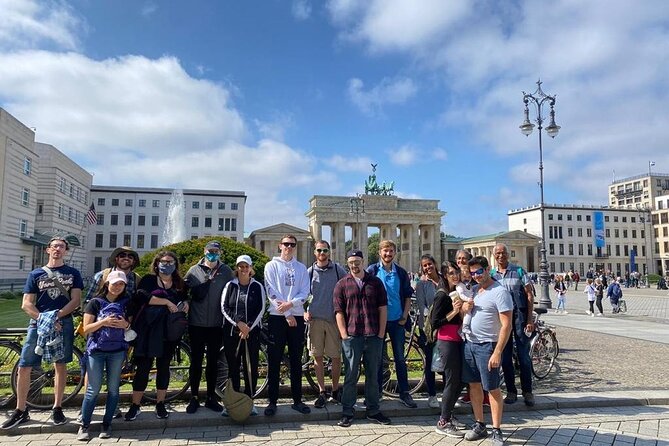
- The finish is at Brandenburg Gate: This puts you near several central sights for further exploring.
- The tour is history-focused: Expect discussion of the Battle of Berlin, the Third Reich capital, Hitler’s bunker site, and the Berlin Wall.
- Public transportation costs extra: The tour price does not include transit where it is needed.
- Check the meeting details carefully: A published complaint reports confusion at the starting location, despite the stated tour arrangements.
A fast route through Berlin’s wartime past
This is not a single-museum visit. It is a city walk built around places where political decisions, military events, and everyday life collided. That format can work well in Berlin because the evidence is often outside, mixed into modern streets and public squares.
Your guide is meant to provide the connecting thread. Instead of studying a map and arranging several separate stops, you follow one route and hear local stories along the way. The quality of that experience will depend heavily on the guide’s command of the subject and ability to keep a large group together.
The tour is advertised for about four hours, beginning at noon. That makes it useful on a short stay, especially if you want a historical orientation before exploring museums on your own. It is also a fairly demanding block of time for anyone who dislikes long walks or prefers a slow visit at each site.
The listed capacity is up to 100 people. That is a potentially large group, and it matters. You may hear the guide well in an open square, but a crowd of that size can make questions, photographs, and street crossings less personal. If the group is smaller on your date, the experience should feel easier to manage.
More Third Reich history tours in Berlin:
- Berlin: Third Reich and Cold War 2 Hour Walking Tour
★ 4.9 · 6,830 reviews - Berlin’s Best: 2 Hour Walking Tour Third Reich and the Cold War
★ 5.0 · 5,486 reviews - Third Reich Berlin: Hitler and WWII Walking Tour
★ 5.0 · 3,301 reviews
Alexanderplatz to the former Third Reich capital
The starting point at Generator Berlin Alexanderplatz is practical, since it is near public transportation. You should arrive with enough time to locate the meeting area and identify the guide. The supplied information does not provide a guide’s name, a distinctive sign, or a phone contact, so do not assume that any free walking-tour leader at the location is connected with this paid experience.
From Alexanderplatz, the route introduces Berlin as the former capital of the Third Reich. That framing matters because the tour is not only about battlefield events. It also looks at how the city functioned as the center of Nazi government, military planning, propaganda, and wartime control.
You may find the first part more useful if you already know the basic sequence of events: Hitler’s rise, the Second World War, the destruction of much of Berlin, and the division that followed. If those subjects are new to you, the guide’s timeline should help place later stops in context.
The Reichstag and the Battle of Berlin
The Reichstag is one of Berlin’s most recognizable buildings, but its importance goes beyond the familiar dome and broad lawn. It represents the German state and became a powerful symbol during the final battle for Berlin. The tour uses the site as part of its discussion of the city’s wartime collapse and the Soviet advance.
You should expect an exterior historical explanation rather than a dedicated interior visit. The supplied details do not include admission to the Reichstag, dome reservations, or time inside the building. If entering the Reichstag is important to you, treat that as a separate plan.
The Battle of Berlin section is likely to be among the tour’s strongest subjects. The fighting in 1945 transformed Berlin from a political capital into a ruined battlefield. A guide can help you understand that the final days were not just a dramatic military episode. They also brought civilian suffering, destruction, and the end of Nazi rule.
The tour also lists a Russian-German War Museum. The supplied information does not explain its exact location, opening hours, or whether admission is included. Ask the guide what you will see there and whether the visit is an exterior stop or an entry visit. That distinction can affect the pace of the afternoon.
Flak towers and the physical remains of war
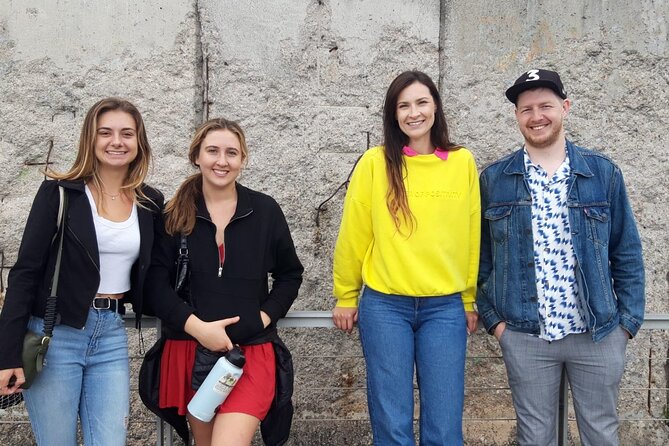
Flak towers were massive defensive structures built during the Second World War. Their presence gives a sense of the scale of Berlin’s wartime preparations and the effort put into protecting the city from air attack.
The itinerary names a flak tower but does not specify which one or promise interior access. That means you should think of it as a historical point on the route, not automatically as a museum visit. A short explanation at the site can still be worthwhile, especially if you want to understand how military buildings shaped the city.
Berlin often requires this kind of reading between the lines. A modern street may now look ordinary, while a guide points out what once occupied the same space. You will get more from the stop if you listen for what changed, what survived, and what was rebuilt after 1945.
More half-day trips in Berlin:
- Discover Berlin Half-Day Walking Tour
★ 5.0 · 9,624 reviews - Berlin Third Reich Sites: Half-Day Walking Tour
★ 5.0 · 835 reviews - Potsdam Half-Day Walking Tour from Berlin
★ 4.5 · 398 reviews - Berlin Private Half-Day Walking Tour: Discover the German Capital’s History
★ 5.0 · 244 reviews
Hitler’s bunker site and the limits of what remains
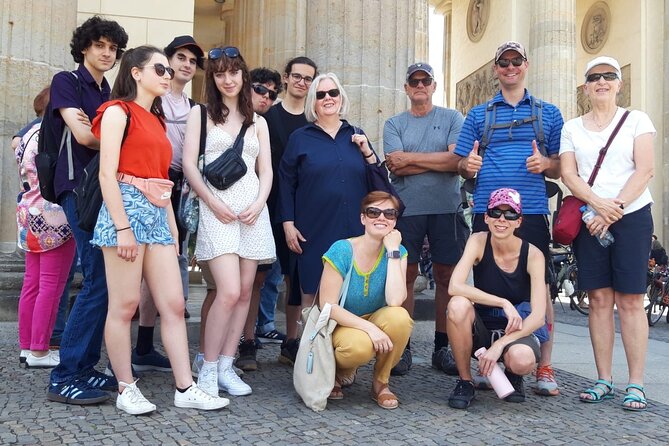
The site of Hitler’s bunker is one of the tour’s most important stops, but it is also easy to misunderstand. There is no advertised public bunker interior here. The historical value lies in the location and in learning what happened during the final days of the regime.
The site is not presented as a grand memorial. That restraint can be useful. You are asked to confront a place tied to dictatorship and mass destruction without turning it into a shrine. The guide’s explanation is therefore important, since the physical setting alone may not tell you much.
Expect this stop to be more about interpretation than visible architecture. The supplied details do not identify a memorial installation, a museum ticket, or an underground visit. If you want extensive information about Nazi leadership, wartime planning, or the Holocaust, you may need to add a museum visit elsewhere in Berlin.
Prenzlauer Berg and a wider view of Berlin
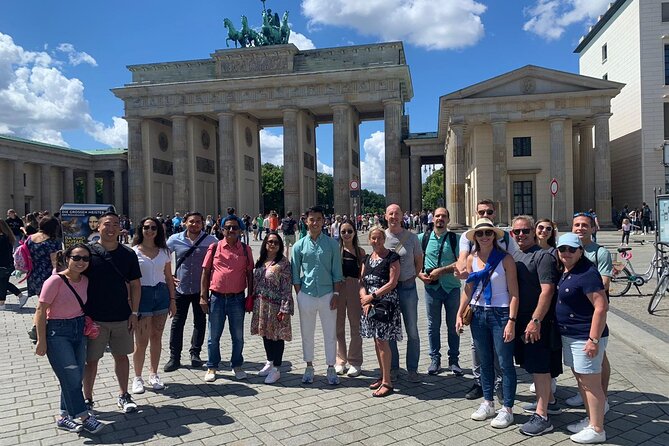
Prenzlauer Berg appears in the route, though the tour details do not say exactly which streets or sites you will visit there. The neighborhood gives the walk a broader city view beyond government buildings and battle sites.
Its inclusion may help show that Berlin’s wartime story belongs to the whole city, not only to the central monuments. Still, because the route description gives no named stop in Prenzlauer Berg, you should not book this expecting a detailed neighborhood tour. Think of it as one part of a moving historical route.
This is also where the walking pace may become important. You will cover several districts and major landmarks in about four hours. Wear comfortable shoes, keep water with you, and be ready for outdoor conditions. Those are simple steps, but they make a long city walk much easier.
Checkpoint Charlie and the Berlin Wall
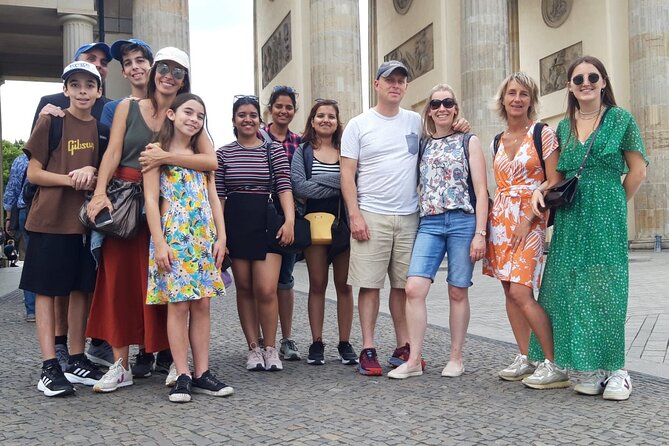
Checkpoint Charlie connects the Nazi-era story to Berlin’s divided postwar period. The crossing point became a major symbol of the Cold War, and it helps explain how the city was split between different political systems after the war.
The stop is likely to be busy and highly photographed. You may find the modern setting more commercial than the historical subject suggests. That contrast is part of the lesson: famous political sites can become tourist scenery, even when the events connected to them were tense and dangerous.
The Berlin Wall Memorial offers a different kind of experience. It is intended to show the division more clearly, including the barriers and the human cost of a city cut in two. The tour also mentions the East Side Gallery, known for its large murals painted on a remaining section of wall.
These two Wall-related stops can complement each other. The memorial focuses on division and remembrance, while the East Side Gallery presents the wall as a public canvas and cultural symbol. The details do not confirm how much time you will spend at each place, so you may need to return independently if you want a slow look at the artwork or memorial grounds.
Brandenburg Gate gives the walk a clear ending
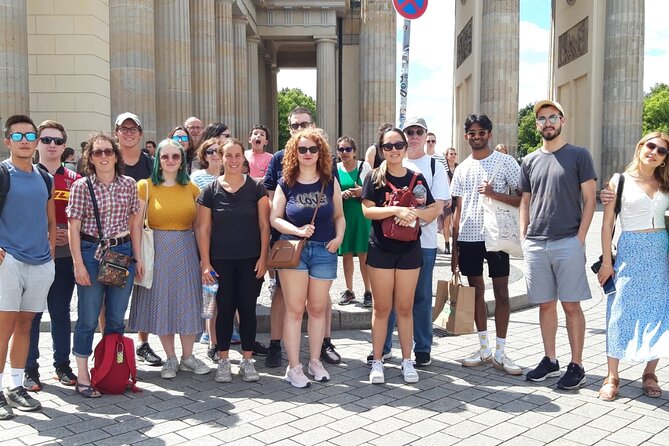
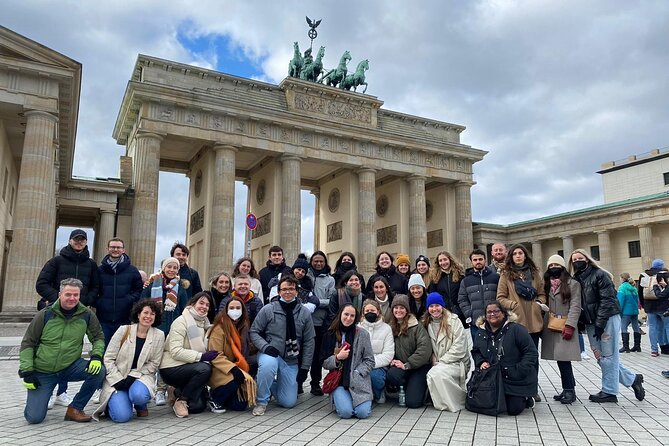
The tour ends at Brandenburg Gate, one of Berlin’s essential landmarks. Its position makes it a useful final stop because you can continue to the nearby Reichstag, Holocaust Memorial, Tiergarten, or central government district afterward.
The gate has carried several political meanings over time. Seeing it at the end of a route that covers dictatorship, war, occupation, division, and reunification gives the afternoon a natural closing point.
That ending is also practical. You are not returned to the starting point, so plan your next activity from central Berlin rather than Alexanderplatz. The stated end point is Brandenburger Tor, 10117 Berlin.
Is $35 good value for four hours?
At $35, the tour is priced as an affordable overview rather than a specialist private visit. I see the strongest value in the route design. You can reach many major historical sites without spending hours researching connections between them.
The guide is included, while public transportation is not. Since the details say transportation may be needed, keep money or a valid transit option available. The exact transport costs are not provided, so your total price will be a little higher if the route uses buses, trams, or trains.
The value falls if you want long visits inside museums, detailed archival interpretation, or a small-group experience. There is no museum admission listed, and the maximum group size is 100. You are paying mainly for direction, context, and efficient sightseeing.
A published rating of 4.6 from 48 ratings, with a 92 percent recommendation figure, suggests that the experience has generally performed well. Still, the single detailed complaint about the tour not being available at the advertised meeting place cannot be ignored. Confirm the booking, location, and operator before the day of the tour.
Who will get the most from this walking tour?
I would choose this tour if you have limited time in Berlin and want a clear introduction to the city’s Second World War and Cold War landmarks. It also suits you if you prefer hearing stories while walking instead of reading several guidebooks before arrival.
It is less suitable if you need guaranteed museum entry, extensive time at each memorial, or a quiet, highly personal guide experience. A group of up to 100 can feel crowded, and the route covers enough ground that some stops may be brief.
History students, first-time visitors, and anyone interested in the Battle of Berlin should find the subject matter useful. Families can participate according to the supplied information, but the themes are serious and may not suit young children.
Practical details that matter
The tour begins at 12:00 p.m. at Generator Berlin Alexanderplatz, Otto-Braun-Straße 65, 10178 Berlin, and finishes at Brandenburg Gate. The duration is approximately four hours.
A mobile ticket is provided, and confirmation is issued at booking. The tour is near public transportation, but transit is not included where it applies.
Most people can participate according to the supplied information. The maximum listed group size is 100. Free cancellation is available if you cancel at least 24 hours before the local start time. Cancellations or changes inside that window are not eligible for a refund.
Should you book the Berlin WWII walking tour?
Book it if you want an inexpensive, time-saving introduction to Berlin’s wartime sites and are comfortable with a long walk and a potentially large group. The route includes an impressive range of subjects: the Reichstag, the Battle of Berlin, Hitler’s bunker site, flak towers, Checkpoint Charlie, the Berlin Wall, East Side Gallery, and Brandenburg Gate.
I would not book without first confirming the meeting instructions. The conflicting account at Generator Berlin Alexanderplatz is the one major practical concern. Once that point is settled, this tour offers a sensible way to get your bearings in Berlin’s difficult, important history before exploring the city on your own.
FAQ
How long is the Berlin World War II walking tour?
The tour lasts approximately four hours.
What time does the tour start?
The stated start time is 12:00 p.m.
Where does the tour begin?
It begins at Generator Berlin Alexanderplatz, Otto-Braun-Straße 65, 10178 Berlin, Germany.
Where does the tour end?
The tour ends at Brandenburg Gate, 10117 Berlin, Germany.
Which Berlin sights are included?
The route includes or discusses the Reichstag, the Battle of Berlin, a Russian-German War Museum, a flak tower, Prenzlauer Berg, Hitler’s bunker site, Checkpoint Charlie, the Berlin Wall Memorial, East Side Gallery, Brandenburg Gate, and other Berlin landmarks.
Is public transportation included?
No. Public transportation is not included where it is needed.
What is the cancellation policy?
You can receive a full refund if you cancel at least 24 hours before the experience start time. Cancellations and changes made less than 24 hours before the start time are not accepted for a refund.
More Walking Tours in Berlin
- Berlin: Discover Berlin Walking Tour
★ 4.9 · 5,998 reviews - Berlin: Hidden Backyards Guided Walking Tour
★ 4.8 · 5,360 reviews - Berlin: Alternative Berlin Walking Tour
★ 4.6 · 1,204 reviews - Berlin: Third Reich, Hitler, and WWII Walking Tour
★ 4.9 · 1,133 reviews
Newest Berlin reviews
- Where It All Began: Berlin’s Queer & Trans History Tour★ 4.9 · 6 reviews
- Understanding Kreuzberg: The roots of local (sub)culture★ 4.9 · 11 reviews
- Berlin: guided canoe | kayaktour★ 4.1 · 7 reviews
- Private Potsdam City Tour in an authentic vintage van★ 5.0 · 14 reviews
- Warnemünde Shore Excursion: Private Sachsenhausen and Berlin Tour★ 5.0 · 12 reviews
- Ultimate E-Bike Tour of Berlin with Beer Garden Stop★ 5.0 · 4 reviews
- In the Forbidden City – Potsdam Walking Tour★ 5.0 · 17 reviews
- Private Walking Tour of Potsdam and Sanssouci★ 5.0 · 24 reviews
Berlin Third Reich Tours, compared.

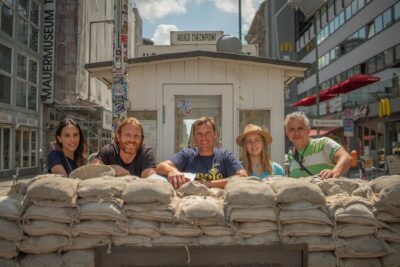
Berlin’s Best: 2 Hour Walking Tour Third Reich and the Cold War
Read our review →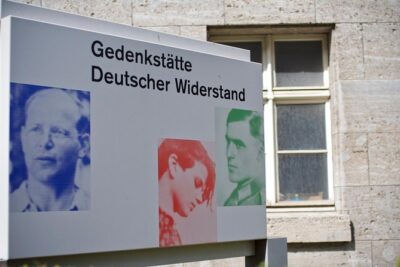
Third Reich Berlin: Hitler and WWII Walking Tour
Read our review →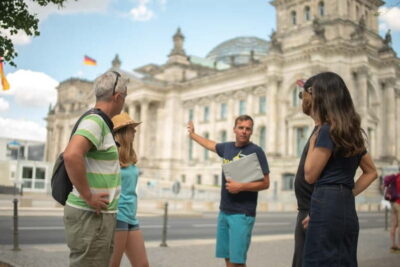

Berlin Third Reich Sites: Half-Day Walking Tour
Read our review →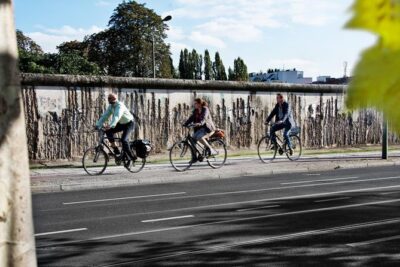
Guided Bike Tour of the Berlin Wall and Third Reich
Read our review →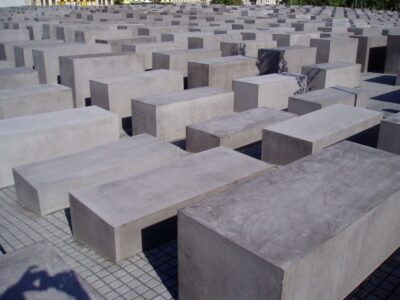
Hitler’s Germany: Berlin During the Third Reich & WWII
Read our review →
Private Walking Tour Berlin Third Reich Hitler and World War II
Read our review →Browse the lists this tour appears in