

Reviewed · WALKING TOURS
Berlin: walking tour about Charité
Berlin’s Charité began as an 18th-century plague house and grew into one of Europe’s most important university hospitals. This two-hour walking tour connects that long story with doctors such as Rudolf Virchow, Robert Koch, Emil von Behring, and Ferdinand Sauerbruch. The most unusual stop is the Animal Anatomical Theatre, Berlin’s oldest surviving teaching building, tucked away in a backyard.
I like the tour’s clear sense of place. You walk along Luisenstraße and across the university campus instead of sitting through a general lecture, and the changing streets help explain how medicine developed alongside Berlin. I also like the mix of famous breakthroughs and uncomfortable chapters, including the Charité’s cooperation with the Nazi regime.
The main drawback is simple but important: you do not enter the Charité Bed House or the hospital grounds. The tour is in German, and the Animal Anatomical Theatre can close at short notice for private events or on public holidays.
Key points to know before booking
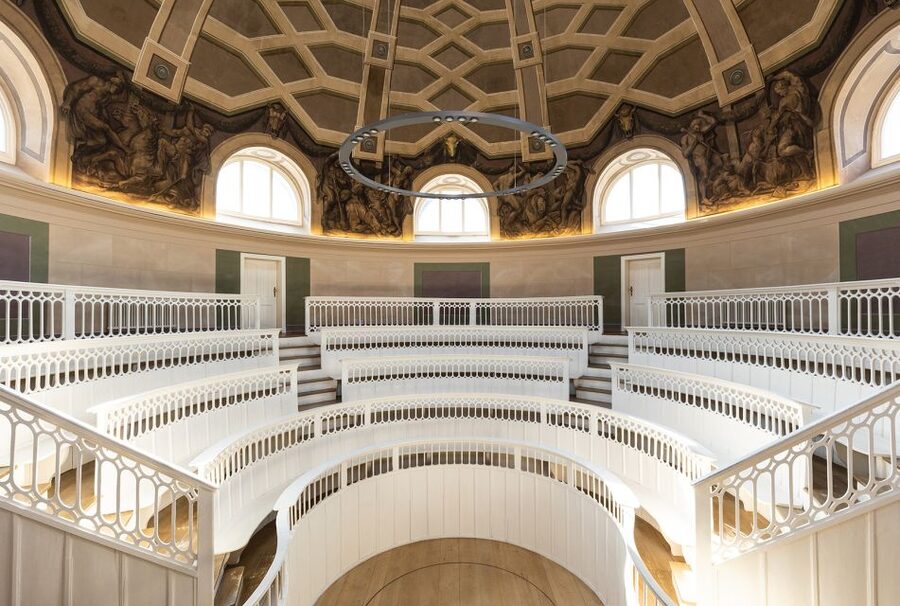
- A plague house became a major university hospital: The tour traces the Charité from its 18th-century beginnings to its modern medical role.
- Four major doctors anchor the story: Rudolf Virchow, Emil von Behring, Robert Koch, and Ferdinand Sauerbruch all feature in the walk.
- The hospital is viewed from outside: Group tours cannot enter the Charité Bed House or Campus Mitte.
- The Animal Anatomical Theatre is the unusual finale: This old teaching building is visited indoors, when open.
- The darker side is included: You hear about medical figures and institutions working with the Nazi regime.
- The practical format is compact: The tour lasts two hours, costs $27 per person, and starts and ends at Charité Tower.
From plague house to medical powerhouse

The best reason to take this tour is that the Charité is not treated as a single hospital building. You get a long view of an institution shaped by disease, research, teaching, politics, and war.
The story begins in the 18th century, when the Charité was established as a plague house. That origin matters. It places the institution in a period when authorities were trying to control epidemics with limited scientific tools and a strong fear of contagion. From there, the Charité developed into a university hospital with a major role in European medicine.
I like this kind of starting point because it gives the later names and discoveries a setting. Instead of hearing a list of doctors and Nobel Prize winners, you can follow how a place changed as medicine changed around it.
The tour also makes room for contradiction. Berlin medicine produced major scientific advances, yet the same institution and its doctors were not separate from the moral failures of German history. The discussion of cooperation with the Nazi regime keeps the visit from becoming a simple parade of great men.
That balance is useful if you want more than a postcard version of science. You will hear about achievement, but also about responsibility and the damage that can follow when medical authority serves a brutal government.
Other Berlin experiences to weigh up
- Discover Berlin Half-Day Walking Tour
★ 5.0 · 9,624 reviews - Berlin: Third Reich and Cold War 2 Hour Walking Tour
★ 4.9 · 6,830 reviews - Berlin: Discover Berlin Walking Tour
★ 4.9 · 5,998 reviews
Meeting at Charité Tower and seeing the hospital from outside
The tour starts in front of the Charité Tower at the crossroads of Schumannstraße, Charitéplatz, and Charitéstraße. Arrive early enough to find the meeting point, since the tour begins on time.
The first major sight is the Charité Bed House. You view it from outside rather than going in. This is not a minor technical detail. The building is an active hospital, with hygiene and protection rules, so it is not set up as a normal sightseeing stop.
If you expect to tour hospital wards, historic interiors, or medical exhibits inside the Bed House, adjust your expectations before booking. This experience is a street-based historical walk, not an indoor hospital tour.
Still, the exterior stop helps you connect the past with the institution you see today. The Charité is not only an old name from a textbook. It remains a working hospital, and that modern function limits what a group can access.
From here, the guide sets the historical frame. You learn how the hospital grew from a facility connected with epidemic control into a center for teaching and research. The walk then moves away from a single building and into the surrounding streets.
Luisenstraße and the doctors who changed medicine

The route continues along Luisenstraße and across the university campus. This section gives the tour its walking rhythm. You are not standing in one room while dates pile up. Instead, the guide uses the route to connect people, buildings, and episodes in Berlin’s medical past.
Several major figures provide the main threads:
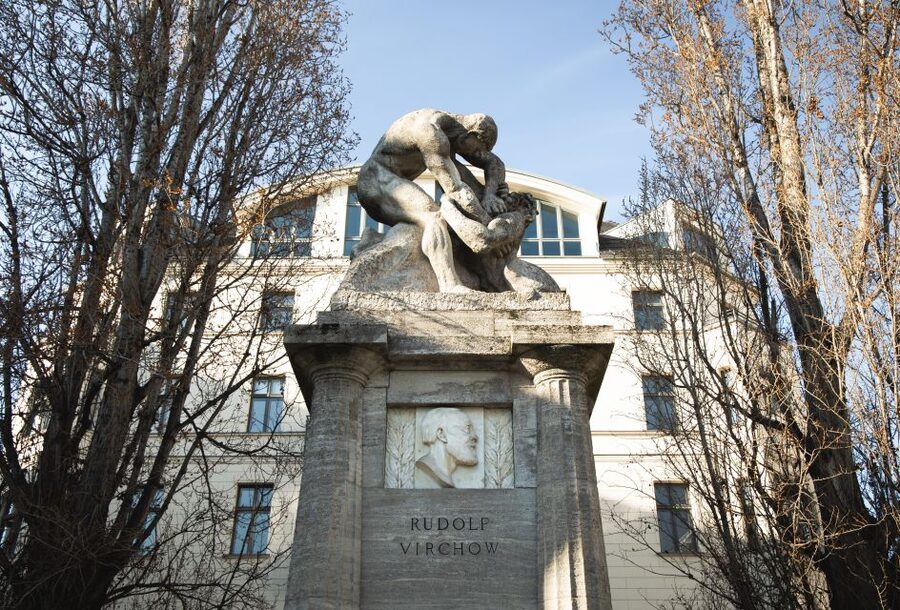
- Rudolf Virchow is presented as one of Berlin’s leading physicians and scientists.
- Emil von Behring is included among the important medical figures linked with the city.
- Robert Koch represents the era of major scientific work on disease.
- Ferdinand Sauerbruch brings the story into modern surgical medicine.
These names are familiar to anyone interested in medicine, but the value here is the setting. You hear about them while moving through the area where medical teaching and research developed. The guide can place their work within the institution’s broader growth rather than treating each person as an isolated biography.
The tour also refers to Nobel Prize winners and other major scientists. That should appeal to you if the history of research is more interesting than a standard sightseeing route. You will not simply collect famous names. The focus is on how Berlin’s medical world gained influence and how its experts shaped ideas about disease, surgery, and teaching.
The phrase life and death fits this tour better than a polished museum label. Hospitals deal with both, and the Charité’s story includes illness, discovery, treatment, failure, and loss. The subject matter can be serious, so this is not the best choice if you want a light walk with only amusing anecdotes.
The medicine temple in a backyard
The most distinctive stop is the Animal Anatomical Theatre, also described as a mysterious medicine temple. It is Berlin’s oldest surviving teaching building, and its position in a backyard makes it easy to miss if you are exploring the area on your own.
The building matters for two reasons. First, it shows how medical education once took place. Second, it gives you an interior stop after much of the tour has unfolded outdoors. That change of setting helps bring the teaching side of the Charité story into focus.
The name Animal Anatomical Theatre may sound unusual, but the attraction is not presented as a modern hospital display. It is an old teaching building with its own place in Berlin’s medical past. The tour uses it to show how doctors and students studied anatomy and passed medical knowledge on to the next generation.
I would treat this visit as the tour’s most valuable piece of access. You cannot go inside the Charité Bed House or onto the hospital grounds with the group, but you can enter this historic teaching building when it is open.
There is one catch. The theatre can adjust its opening hours at short notice for closed events, and it is closed on public holidays. If this stop is your main reason for booking, check the date carefully and keep in mind that the interior visit is subject to those operating conditions.
A different sort of day out in Berlin:
- Berlin: Reichstag, Dome and Government District Guided Tour
★ 4.7 · 18,288 reviews - Berlin: 1-Hour City Tour by Boat with Guaranteed Seating
★ 4.3 · 16,993 reviews - Berlin: Boat Tour Along the River Spree
★ 4.4 · 11,252 reviews - Berlin: Hop-on Hop-off Bus Tour with Live Commentary
★ 4.3 · 8,579 reviews
The Nazi era and the harder questions
A useful historical tour must explain more than success. This one includes the dark period when doctors collaborated with the Nazi regime.
That subject changes the tone of the walk, but it belongs in the story. The Charité’s importance gave its doctors and researchers influence, and influence can be used well or badly. Learning about the institution during the Nazi era helps you see that medical progress does not automatically equal moral progress.
I appreciate that the route includes this material alongside the Nobel winners and famous scientists. It avoids the easy habit of presenting medicine as a steady march toward improvement. In reality, institutions carry the values and failures of the societies around them.
You should be ready for a serious discussion rather than a cheerful science talk. The supplied information does not give the exact length or detail of this portion, so you should not book expecting a full museum-style investigation of Nazi medical crimes. Still, its inclusion gives the two-hour walk more weight.
For visitors interested in Berlin’s 20th-century history, this may be one of the strongest reasons to choose the tour. It links medical history with the political history of the city, showing how professional institutions can become involved in events far beyond their laboratories and wards.
What $27 buys you in two hours
At $27 per person, the tour sits in a reasonable range for a focused two-hour walk with a live guide and an indoor historic stop. You are paying for interpretation, not admission to the hospital itself.
The value depends on your interests. If you enjoy doctors’ biographies, the history of science, and Berlin’s less obvious stories, the price is fair. You get a structured route, a guide in German, and access to the Animal Anatomical Theatre when it is open.
If you mainly want to see the inside of the modern Charité, the value is weaker because the hospital buildings and grounds are off limits to group tours. You are also not buying a broad Berlin sightseeing tour. The subject stays closely tied to medicine and the Charité.
The two-hour length works well for a specialized topic. It is long enough to cover the institution’s origins, major figures, Nazi-era history, and the teaching building without taking up an entire afternoon. You can fit it beside other central Berlin plans, though the exact starting times depend on the date you select.
The tour ends back at the meeting point near Charité Tower. That makes the route easy to plan around, since you do not need to arrange transport from a distant final stop.
Who will get the most from this walk
I would recommend this tour most strongly to:
- People interested in the history of medicine and hospitals
- Students or professionals curious about famous doctors and medical research
- Visitors who want a less familiar side of Berlin
- Anyone interested in the links between science, politics, and society
- German-speaking visitors who prefer a guided historical walk
- Repeat visitors who have already covered Berlin’s main monuments
The tour may also suit you if you like places that are still part of daily city life. The Charité is not only a preserved monument. It is a functioning medical institution, and the limits on access make sense in that context.
I would hesitate to recommend it if you need English guiding, since the stated tour language is German. I would also skip it if you want extensive indoor access to the hospital or a large collection of medical objects. The experience is about stories, streets, buildings, and context.
The route includes material about life and death, the Nazi era, and the history of disease. Families with older children may find it worthwhile, but the subject is not framed as a playful attraction. The information provided does not specify an age recommendation, so use your judgment based on your group.
Practical details that affect your visit
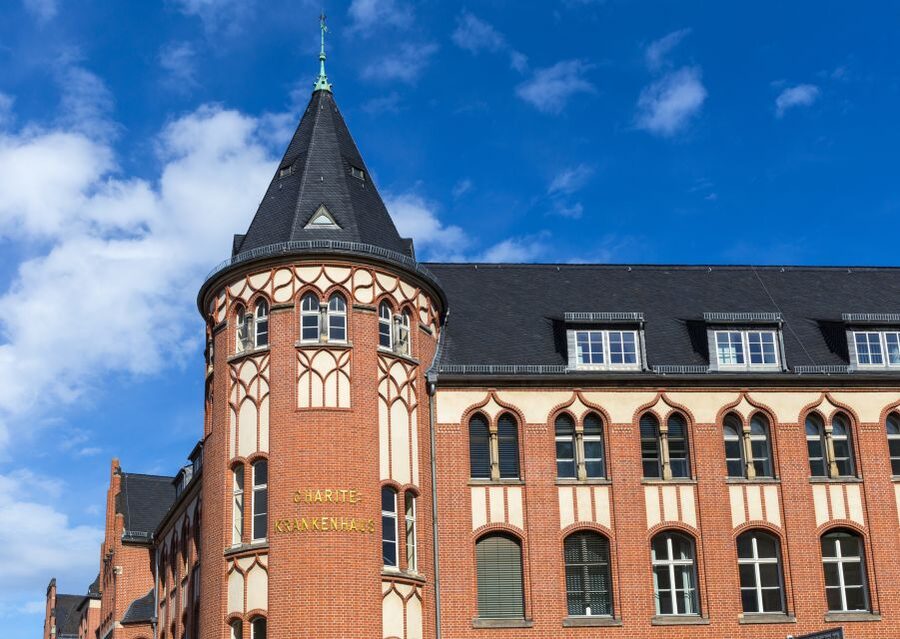
The tour lasts two hours and starts in front of Charité Tower at the Schumannstraße, Charitéplatz, and Charitéstraße crossroads. Since the guide begins on time, allow a little extra time to locate the exact spot.
It starts and ends at the same meeting point. You will walk along Luisenstraße and across the university campus, so comfortable shoes are sensible, though the total route length is not specified.
The tour is conducted in German. No other language is listed, so do not assume translation or multilingual commentary will be available.
The Charité Bed House is viewed only from outside. The hospital grounds at Campus Mitte are also closed to group tours. The indoor stop is the Animal Anatomical Theatre, but public holidays and private events can affect access.
You can cancel up to 24 hours before the tour for a full refund, and the reserve-now, pay-later option keeps you from paying at the time of booking. These policies are useful if your Berlin schedule is still shifting, but they do not change the main practical point: confirm the date and opening conditions if the theatre is essential to you.
Should you book the Charité walking tour?
Book it if you want a focused, thoughtful look at Berlin through medicine. The combination of a plague-house origin, famous physicians, Nobel Prize winners, Nazi-era history, and the Animal Anatomical Theatre gives the walk a strong structure.
Do not book it expecting to enter the modern hospital or wander freely around Campus Mitte. You will see the Bed House from outside, then spend the tour on public streets, the university area, and the historic teaching building.
For $27, I think the tour offers good value to German-speaking visitors with a real interest in medical history. The 4.4 rating from 537 reviews also points to a generally solid experience, while the one available review detail, Medizinische Hintergründe, fits the tour’s main appeal: the medical background is the reason to come.
FAQ
Where does the Charité walking tour start?
It starts in front of the Charité Tower at the crossroads of Schumannstraße, Charitéplatz, and Charitéstraße.
How long does the tour last?
The tour lasts two hours. Starting times vary, so check availability for your chosen date.
Is the tour offered in English?
The stated tour language is German. No English-language option is listed.
Can I enter the Charité Bed House?
No. The Bed House is viewed from outside because it is an active hospital with protection and hygiene regulations.
Can the group enter the Charité hospital grounds?
No. Charité Campus Mitte is not accessible for group tours.
Will I go inside any historic building?
Yes. The tour visits the Animal Anatomical Theatre, Berlin’s oldest surviving teaching building, from the inside. It is closed on public holidays and may change its opening hours for closed events.
Newest Berlin reviews
- Where It All Began: Berlin’s Queer & Trans History Tour★ 4.9 · 6 reviews
- Understanding Kreuzberg: The roots of local (sub)culture★ 4.9 · 11 reviews
- Berlin: guided canoe | kayaktour★ 4.1 · 7 reviews
- Ultimate E-Bike Tour of Berlin with Beer Garden Stop★ 5.0 · 4 reviews
- Private Potsdam City Tour in an authentic vintage van★ 5.0 · 14 reviews
- Warnemünde Shore Excursion: Private Sachsenhausen and Berlin Tour★ 5.0 · 12 reviews
- In the Forbidden City – Potsdam Walking Tour★ 5.0 · 17 reviews
- Private Walking Tour of Potsdam and Sanssouci★ 5.0 · 24 reviews
Walking Tours, compared.


Berlin’s Best: 2 Hour Walking Tour Third Reich and the Cold War
Read our review →
Third Reich Berlin: Hitler and WWII Walking Tour
Read our review →

Browse the lists this tour appears in