
Reviewed · BERLIN WALL TOURS
2.5-Hour Berlin Wall and Memorial Sites Walking Tour
Berlin’s Wall story becomes clearest when you walk its old route, not when you view it from a tour bus. This 2.5-hour afternoon walk follows the former border from Bornholmer Strasse, where the Wall opened in 1989, toward Nordbahnhof, passing memorials, tunnels, old escape routes, and sections of the former death strip.
I like two things right away: the small group of no more than 12 keeps the guide close, and the route links famous sights with lesser-known Wall traces that are easy to miss alone. The guide also adds personal context, including stories from life under the Wall. The main consideration is physical: you’ll be walking for most of the afternoon, with no transport between stops.
Key points to know before you book
- Start where the Wall opened: The tour begins at the Square of November 9, 1989, beside the former Bornholmer Strasse border crossing.
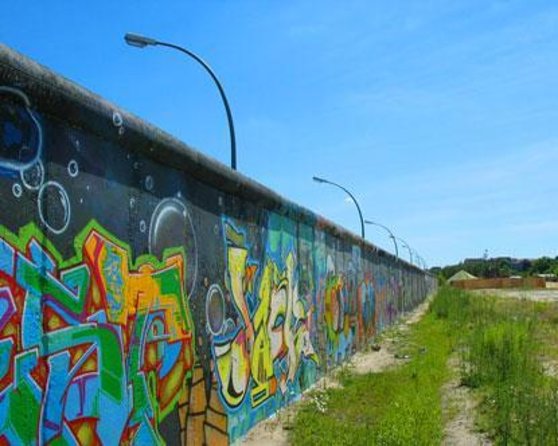
- Follow the old border on foot: The route traces the former death strip toward Nordbahnhof rather than treating each memorial as an isolated stop.
- See Bernauer Strasse’s major memorials: Expect the Berlin Wall Memorial, Church of Reconciliation, tunnel sites, and a viewing platform.
- Hear Cold War history in context: Your guide explains Berlin and Germany’s 28-year division as you move through the actual places involved.
- Keep the afternoon free: The tour starts at 3:00 pm and lasts about two and a half hours, ending at Berlin-Nordbahnhof.
- Plan for a walking outing: Food, drinks, hotel pickup, and transport to the meeting point are not included.
Starting at Bornholmer Strasse, where the border opened
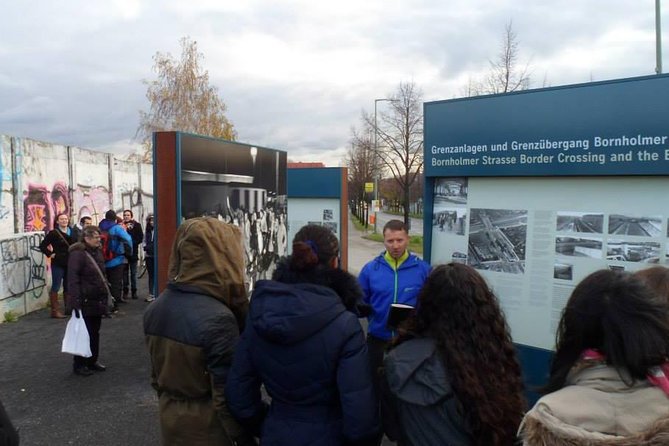
Your meeting point is Bornholmer Strasse 75A, at the Square of November 9, 1989. This is a fitting place to begin because the location is tied directly to the night the Berlin Wall began to fall.
The tour does not start with a general city walk or a long ride out to the sights. You meet on historic ground and begin following the old boundary almost at once. That gives the afternoon a clear purpose: you are walking through the places where Berlin’s division was built, enforced, crossed, and finally broken.
The former border crossing at Bornholmer Street is the first major stop. It helps you picture how controlled movement once was between East and West Berlin. Today, the most important part of the visit is the setting and the guide’s explanation. The Wall is no longer an active barrier here, so the story depends on knowing what occupied the space and why the crossing mattered.
The guide explains the 28-year Cold War division of Berlin and Germany along the way. That approach is more useful than receiving all the dates at the start. Each part of the route gives the political story a physical reference, from border controls to escape attempts and the former death strip.
More Berlin Wall tours in Berlin:
- Skip-the-Line: Berlin Wall Museum at Checkpoint Charlie
★ 4.1 · 2,041 reviews - Cold War, Berlin Wall, Spies and the East Side Gallery
★ 5.0 · 1,024 reviews - THE WALL: asisi Panorama Berlin Ticket
★ 4.5 · 580 reviews
Reading the Wall’s less obvious traces
One reason I like this tour is that it does not limit the walk to the best-known surviving sections. The route includes traces that may be familiar to local residents and documented by the city, but are easy for a first-time visitor to pass without noticing.
The Ulbricht Curve and Schwedter Way are examples of these quieter stops. They are not presented as grand monuments. Instead, they help you understand how the Wall’s course bent through the city and how the border occupied ordinary streets and open spaces.
That matters because Berlin’s Wall is not one continuous structure today. It appears in fragments: a preserved section here, a line in the pavement there, an information panel somewhere else. A guide can connect those pieces and show you how the old border ran through the modern city.
The route also includes the Gleim tunnel. Escape tunnels are among the most gripping parts of the Wall story, but they can be hard to understand from a map or a brief museum caption. Stopping at a tunnel site gives you a concrete place to connect with the risks involved in trying to cross beneath the border.
You should not expect every site to look exactly as it did before 1989. Much of Berlin has changed. The value is in learning to read the remaining clues and understanding how the Wall’s presence shaped the streets around them.
Berlin Wall Park and the old death strip
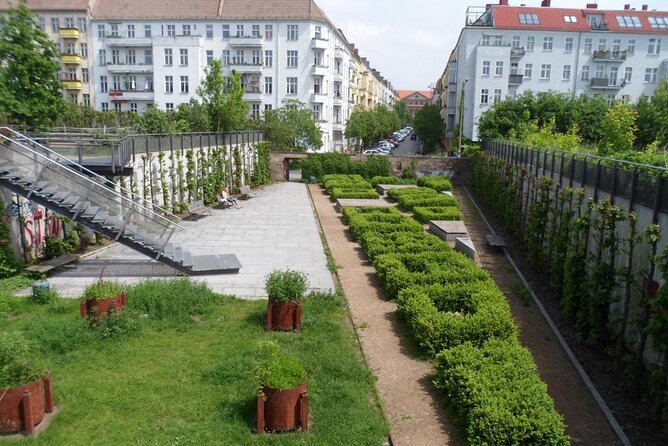
The walk continues through Berlin Wall Park, where the former border zone becomes easier to see as a broad urban space rather than a single wall. Your guide uses the route to explain the death strip, the controlled area between sections of the border system that made escape so dangerous.
This is one of the strongest reasons to choose a walking tour. From a train window or a quick photo stop, you might see a wall fragment. On foot, you can grasp the scale of the former border and how it cut across neighborhoods.
The park also offers a pause during the route. Food and drinks are not included, so do not count on a tour meal, but the built-in break gives you time to catch your breath and take in the setting. Since the tour begins at 3:00 pm, the pause can also be useful if you have spent the earlier part of the day sightseeing.
The pace is likely to suit people who prefer explanation over rushing. Still, this is not a short, flat museum visit. You will be outside and moving for much of two and a half hours. A moderate level of physical fitness is required, and comfortable shoes make sense.
Bernauer Strasse, where the Wall divided daily life
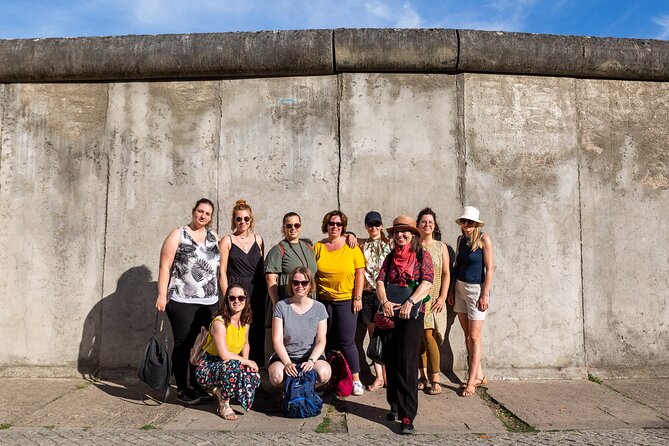
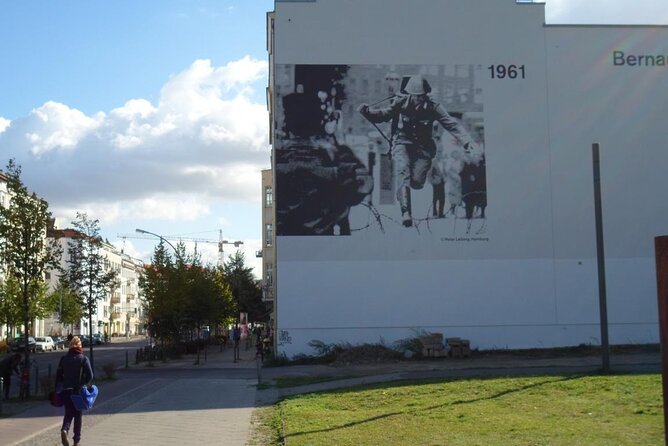
Bernauer Strasse is the emotional center of the route. The Berlin Wall Memorial here preserves a section of the former border and helps explain how the barrier affected homes, streets, churches, and families.
The tour includes the Bernauer Street tunnel as well. That stop brings the escape story into sharper focus. Tunnels required planning, secrecy, labor, and enormous personal risk. The guide’s role is important here because the physical remains alone cannot explain how these efforts worked or why the border authorities treated them as such a threat.
You also visit the Church of Reconciliation. The church became caught in the path of the Wall and is now part of the memorial story. Its inclusion shows that the border was not placed in an empty strip of land. It cut through an existing neighborhood and changed how people worshipped, lived, visited relatives, and moved around their own city.
At the Berlin Wall Memorial’s viewing platform, you get a better sense of the border’s full layout. A wall fragment by itself can be striking, but a raised view helps you understand the relationship between the outer wall, inner wall, watch areas, and open space between them.
This is also the point where the tour’s main subject becomes more than political history. You can see how a government decision became a daily fact of life for people living beside it.
Other Berlin experiences to weigh up
- Discover Berlin Half-Day Walking Tour
★ 5.0 · 9,624 reviews - Berlin: Third Reich and Cold War 2 Hour Walking Tour
★ 4.9 · 6,830 reviews - Berlin: Discover Berlin Walking Tour
★ 4.9 · 5,998 reviews - Berlin’s Best: 2 Hour Walking Tour Third Reich and the Cold War
★ 5.0 · 5,486 reviews
Ending at Nordbahnhof and the ghost-station story
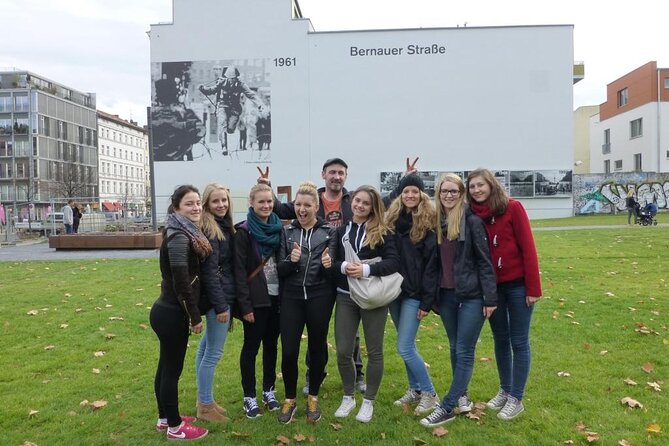
The walk ends at Berlin-Nordbahnhof, at Invalidenstrasse 131. This was once known as a ghost train station, a term used for stations in East Berlin that trains from West Berlin passed through without stopping.
That ending works well because it adds another form of division to the story. The Wall did not only block streets and separate neighborhoods. It also changed how the city’s underground railway operated. Stations that might have been useful connections became sealed or heavily controlled spaces.
Nordbahnhof is a practical endpoint as well as a historical one. You finish near public transport rather than returning to the starting point. The tour does not include transport from the end, but arriving at a train station makes it easier to continue exploring or head back to your accommodation.
Because the route moves in one direction, you avoid spending the final part of the afternoon retracing your steps. Be sure you understand that the starting point and ending point are different before booking.
What the guide adds to the walk
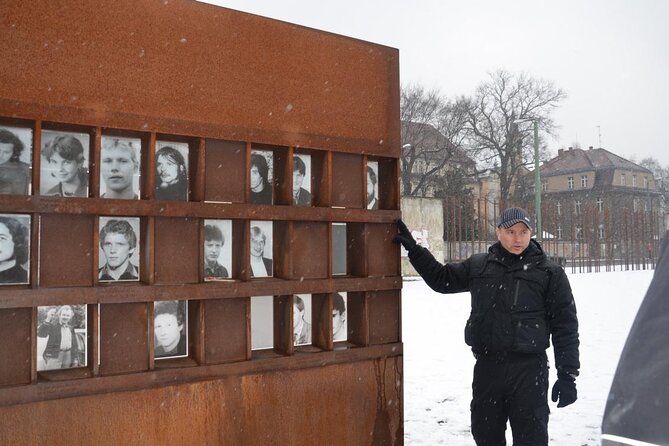
The strongest praise for this experience centers on the guide’s explanations. You are told things along the route that you might not learn by walking between memorials on your own. That includes local details, lesser-known Wall traces, and personal stories connected to life around the divided city.
One especially useful feature is the guide’s personal connection to the subject. A guide who knows the Wall through lived experience can explain how it affected ordinary routines, not just international politics. The available information does not provide the guide’s name, so you should not book expecting a particular named guide.
The group limit of 12 is important. A small group makes it easier to hear on city streets and gives you a better chance to ask questions at stops. It also avoids the feel of a large procession moving from plaque to plaque.
The guide is described as both local and professional, but this is still a walking tour, not a private tour. You share the route with other people, and the experience depends partly on group pace and interest. The small maximum keeps that trade-off reasonable.
Is $25.45 good value?
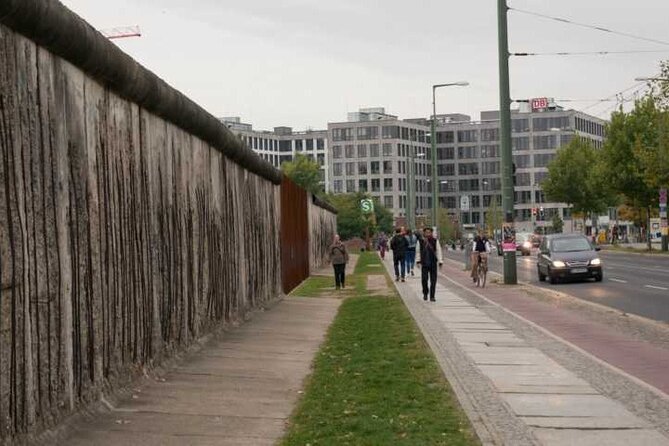
At $25.45 per person, this is a modestly priced way to spend an afternoon in Berlin. The value comes less from admission tickets and more from the route, interpretation, and time saved in finding the Wall sites yourself.
Many Berlin Wall locations are free to visit, including outdoor memorial areas. If you are happy to research the route, use public transport, and read the memorial signs independently, you can spend less money. But you may miss the links between Bornholmer Strasse, the tunnels, the death strip, Bernauer Strasse, and Nordbahnhof.
For this price, I see the tour as a good choice for a first visit to Berlin or for anyone who wants a clear introduction to the Wall. It is also useful if you have limited time and want one organized route through several related sites.
The tour is commonly booked well ahead, with an average booking time of 43 days in advance. That does not mean you must reserve that early, but it is a useful warning for a popular travel period. If the date and 3:00 pm start fit your plans, booking ahead is sensible.
The booking includes a mobile ticket and a local professional guide. It does not include meals, drinks, hotel pickup, or transport to the starting point. You need to reach Bornholmer Strasse on your own and make your own plans after arriving at Nordbahnhof.
Who should choose this Berlin Wall tour?
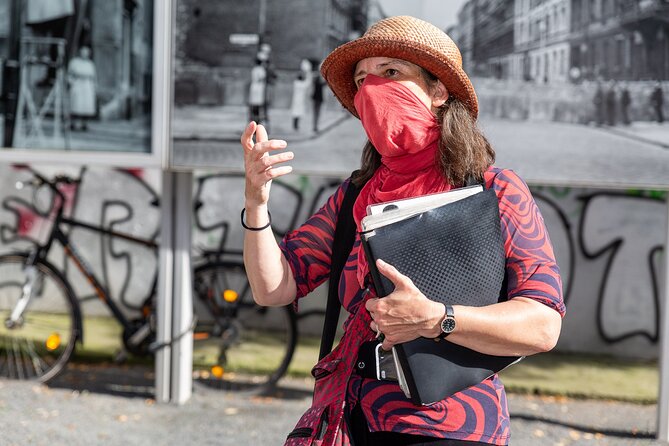
I would choose this walk if you want the Wall explained as a connected story rather than as a series of isolated photo stops. It suits history-minded visitors, first-time Berlin visitors, and anyone who prefers a guide’s context to a self-guided route.
It also works well for people interested in the human side of the Cold War. The tunnel sites, Church of Reconciliation, former border crossing, and ghost station each show a different effect of the Wall on everyday life.
You may want a different option if you dislike extended walks, need a fully accessible route, or prefer indoor museums. The information provided only says that a moderate fitness level is needed, so you should contact the provider before booking if you have mobility concerns.
Families with older children and teenagers may find the physical places easier to understand than a book or lecture. Younger children may struggle with the length and serious subject matter, especially if they are not interested in history.
The afternoon time also matters. A 3:00 pm start leaves your morning free for Museum Island, the Reichstag area, or another Berlin activity. Since the tour lasts until roughly 5:30 pm, you can plan dinner afterward, but allow extra time if the group moves slowly or questions run long.
Should you book it?
Book this tour if you want a compact, guided route through Berlin’s Wall memorials, with enough time to hear the story behind each place. The combination of Bornholmer Strasse, the former death strip, tunnel sites, Bernauer Strasse, the Church of Reconciliation, the viewing platform, and Nordbahnhof gives you a strong two-and-a-half-hour introduction.
I especially like the small group, the one-way route, and the emphasis on overlooked Wall traces as well as famous memorials. At $25.45, it offers fair value for the guide’s time and the structure it brings to a subject that can otherwise feel scattered.
Skip it if you want a very short sightseeing stop, a private tour, or a museum-based experience. For most visitors who can comfortably walk for two and a half hours and want the Berlin Wall explained in place, this is a sensible booking.
FAQ
Where does the Berlin Wall walking tour start?
The tour starts at Bornholmer Strasse 75A, 10439 Berlin, Germany, at the Square of November 9, 1989.
What time does the tour begin?
The stated start time is 3:00 pm.
Where does the tour end?
The tour ends at Berlin-Nordbahnhof, Invalidenstrasse 131, 10115 Berlin.
How long does the tour last?
The walking tour lasts approximately 2 hours and 30 minutes.
What sights are included?
The route includes the former Bornholmer Strasse border crossing, the Ulbricht Curve, Schwedter Way, Gleim tunnel, Berlin Wall Park, the Bernauer Street tunnel, the Church of Reconciliation, the Berlin Wall Memorial viewing platform, and Nordbahnhof.
Is food or transportation included?
No. Food, drinks, hotel pickup, hotel drop-off, and transportation to and from the attractions are not included.
Newest Berlin reviews
- Where It All Began: Berlin’s Queer & Trans History Tour★ 4.9 · 6 reviews
- Understanding Kreuzberg: The roots of local (sub)culture★ 4.9 · 11 reviews
- Berlin: guided canoe | kayaktour★ 4.1 · 7 reviews
- Private Potsdam City Tour in an authentic vintage van★ 5.0 · 14 reviews
- Warnemünde Shore Excursion: Private Sachsenhausen and Berlin Tour★ 5.0 · 12 reviews
- Ultimate E-Bike Tour of Berlin with Beer Garden Stop★ 5.0 · 4 reviews
- In the Forbidden City – Potsdam Walking Tour★ 5.0 · 17 reviews
- Private Walking Tour of Potsdam and Sanssouci★ 5.0 · 24 reviews
Berlin Wall Tours, compared.
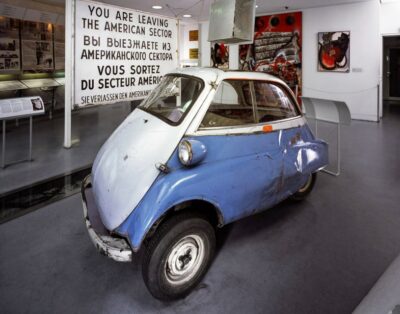
Skip-the-Line: Berlin Wall Museum at Checkpoint Charlie
Read our review →
Cold War, Berlin Wall, Spies and the East Side Gallery
Read our review →
Guided Bike Tour of the Berlin Wall and Third Reich
Read our review →
Browse the lists this tour appears in