
Reviewed · BERLIN COLD WAR TOURS
Private Taxi Tour through Berlin East and West and Kiez 4-6h
Berlin makes the most sense when you see both halves in one sweep. This private taxi tour crosses old West Berlin, the former border zone, historic East Berlin, and the lively districts beyond it, tying grand Prussian buildings to war, dictatorship, division, and reunification. I like the door-to-door pickup and the chance to reach far-flung sights without changing trains. I also like the short walks at Brandenburg Gate, Checkpoint Charlie, the Berlin Wall, and the Humboldt Forum rooftop, where the city opens up below you.
The main trade-off is pace. A tour lasting 2.5 to 5 hours cannot give every one of the many listed stops equal time. Some are drive-bys, and the route may feel packed if you want long museum visits or quiet time at memorials. The tour is led by Gunter, who also drives, so you get a personal guide rather than a separate driver and guide team.
Five things to know before booking
- You see East and West Berlin in one ride: The route links Kurfürstendamm, KaDeWe, Potsdamer Platz, Checkpoint Charlie, Museum Island, Alexanderplatz, Karl-Marx-Allee, and East Side Gallery.
- Gunter provides the history while driving: His account connects Prussian Berlin, Nazi rule, wartime destruction, the divided city, and the peaceful revolution of 1989.
- Short walks break up the driving: You leave the SUV at Brandenburg Gate, Checkpoint Charlie, the Topography of Terror, the Holocaust Memorial area, and East Side Gallery.
- The private SUV saves effort: Hotel or private accommodation pickup inside the S-Bahn-Ring is included, along with air conditioning, Wi-Fi, parking, and leather seats.
- The Humboldt Forum rooftop is included: This is the one named entry ticket, and it gives you a strong city view near the end of the historic center portion.
- English and German are available: Bring a working mobile phone for SMS or WhatsApp coordination with the driver.
Why a private taxi makes sense in Berlin
Berlin is too spread out for a short walking tour to show the whole story. The main sights stretch from Charlottenburg and the Tiergarten in the west to Alexanderplatz, Karl-Marx-Allee, and East Side Gallery in the east. A private car lets you cover that distance without spending much of your limited sightseeing time underground.
You sit in a luxury SUV with air conditioning, leather seats, Wi-Fi, and a raised view through the windows. The description says the rear area is private from the outside, which gives you a little peace while Gunter explains what you are passing. Parking fees are included, another useful detail in a city where stopping near major sights can be awkward.
Pickup and drop-off are included at addresses inside the Berlin S-Bahn-Ring. You do not need to wait outside. Gunter sends a message when he is on the way and again when he arrives, so you can remain indoors until the SUV is ready.
The route is private, but it is not completely improvised. Gunter has a prepared circuit of major sights, with room for the personal feel of a private outing. That balance is helpful if your group includes children, older relatives, or anyone who cannot manage several hours of walking.
More Cold War tours in Berlin:
- Berlin: Third Reich and Cold War 2 Hour Walking Tour
★ 4.9 · 6,830 reviews - Berlin’s Best: 2 Hour Walking Tour Third Reich and the Cold War
★ 5.0 · 5,486 reviews - Skip-the-Line: Berlin Wall Museum at Checkpoint Charlie
★ 4.1 · 2,041 reviews
West Berlin begins with boulevards, shops, and Cold War clues
The western section starts around Steinplatz and moves along Kurfürstendamm, Berlin’s famous shopping boulevard. You pass the Kaiser Wilhelm Memorial Church, the Europa-Center, KaDeWe, Nollendorfplatz, and the former Esplanade hotel area. These stops show the confident, commercial side of West Berlin, a city that developed under a capitalist system while sitting inside East Germany.
The Kaiser Wilhelm Memorial Church is especially useful as a visual marker. Its damaged tower recalls the war, while the newer church beside it reflects postwar rebuilding. You may only pass by, so do not expect an interior visit, but the brief view helps set the tone.
KaDeWe and Kurfürstendamm are not just shopping references. They show the role West Berlin played as a showcase city during the Cold War. Gunter’s running explanation is important here because a street of department stores and cafés does not reveal its political setting on its own.
The drive then moves through the Tiergarten side of the city, passing the Bendlerblock, the German Resistance Memorial, the Neue Nationalgalerie, and the Berlin Philharmonie. The Bendlerblock connects to the German resistance against Hitler, while the nearby resistance memorial gives that subject a more direct focus.
At the Neue Nationalgalerie and Philharmonie, the theme shifts to modern architecture and postwar cultural life. These are primarily photo and drive-by stops. You will see the buildings and hear about their place in Berlin, but you should not plan on an art collection or concert during this tour.
Potsdamer Platz shows the city rebuilt from nothing
Potsdamer Platz is one of the clearest places to understand Berlin’s physical break with the past. Before the war, it was a major urban junction. After wartime destruction and decades beside the Wall, much of the area was cleared and left in the border zone.
The former strip between the front and rear sections of the Berlin Wall was about 80 meters wide here. Today, the Sony Center, Mercedes-Benz Quarter, hotels, offices, entertainment venues, and apartments fill the area. The contrast is sharp, and it explains why modern Berlin can feel less like a single old city and more like several eras placed side by side.
The route includes a short walk near the Abgeordnetenhaus and Martin-Gropius-Bau, followed by about 10 minutes at the Topography of Terror. The latter sits beside a surviving section of the Wall and the former headquarters of Nazi security organizations. This is one of the more serious stops, so expect a concise explanation rather than a full museum visit.
Niederkirchnerstraße, the Memorial to the 17 June 1953 Uprising, and the Wall remains add another layer. The 1953 uprising began with workers in East Germany and was suppressed by Soviet forces. Even a short roadside explanation can make later stops in East Berlin easier to understand.
Checkpoint Charlie is brief but important
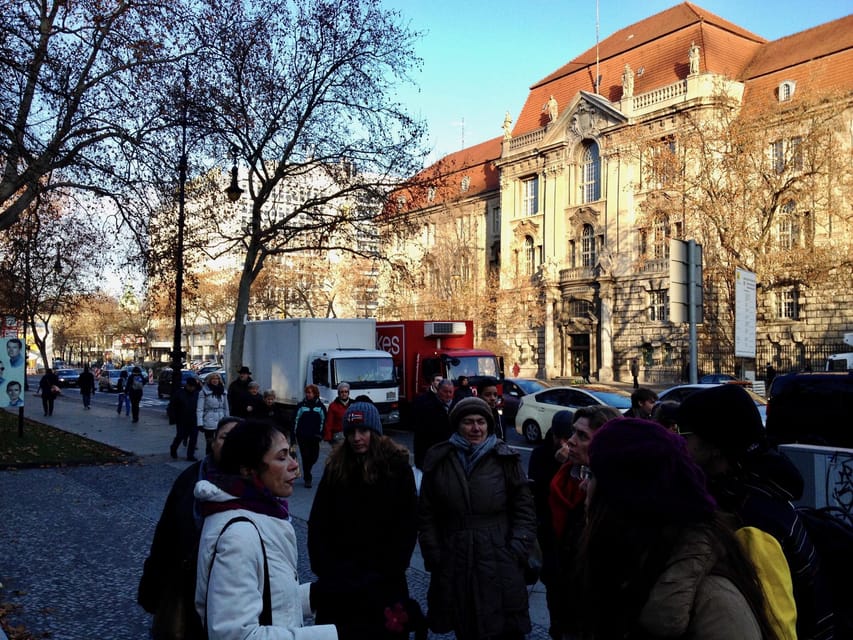
At Checkpoint Charlie, you leave the car for about 10 minutes with a guided explanation. The guardhouse replica and tourist displays can feel theatrical, but the location itself mattered. This was one of the best-known crossing points between East and West Berlin, used by Allied personnel, diplomats, and others with permission to cross.
I would treat this as a historical orientation stop, not a quiet memorial. The surrounding streets are busy, and the visit is short. Still, it gives you a clear reference point before the route turns into the old East Berlin center.
From here, the car passes Ribbeck House, the Neuer Marstall, Nikolaiviertel, the Red Town Hall, the TV Tower, Hackesche Höfe, Haus Schwarzenberg, Sophienkirche, and the Jewish cemetery on Große Hamburger Straße. These places show the older city core and the layered life of East Berlin.
Nikolaiviertel offers a reconstructed old-town feel near the Spree. The Red Town Hall and TV Tower then shift the view toward the East German state. Hackesche Höfe and Haus Schwarzenberg point to Berlin’s courtyards, art spaces, and changing street culture. Since most are drive-bys, listen closely and note which ones you may want to return to on foot.
Other Berlin experiences to weigh up
- Berlin: Private Reichstag and Glass Dome Tour
★ 4.8 · 2,226 reviews - Berlin Private Complete History All Day Walking Tour
★ 5.0 · 474 reviews - Private Walking Tour Berlin Third Reich Hitler and World War II
★ 5.0 · 360 reviews - Private Berlin: Iconic Sights and Hidden Gems Walking Tour
★ 5.0 · 292 reviews
Museum Island and the Humboldt Forum rooftop
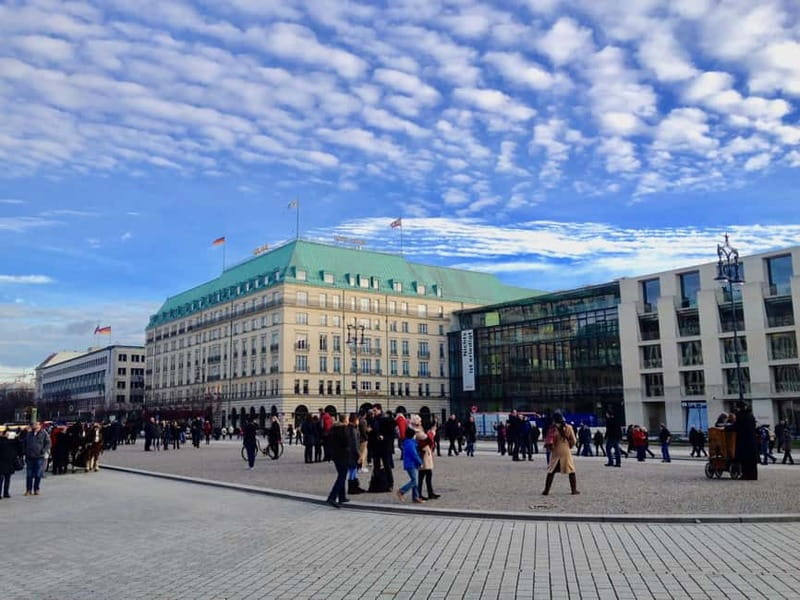
Museum Island is one of the densest cultural areas in Berlin. The route passes the Bode Museum, Pergamon Museum, Neues Museum, Alte Nationalgalerie, Berlin Cathedral, Lustgarten, and the German Historical Museum. You also pass Neue Wache, Humboldt University, Bebelplatz, the State Opera, Friedrichswerdersche Kirche, and the rebuilt Bauakademie area.
This is a lot to absorb from a vehicle. You can photograph the exteriors, but the tour does not include general museum admission. The Pergamon Museum and other collections require separate planning, and the availability of individual buildings can change. Think of this section as a guided introduction that helps you decide where to spend a later day.
Bebelplatz is a particularly meaningful short stop. It is connected with the Nazi book burning of 1933, and the square sits beside some of Berlin’s finest classical buildings. The contrast between elegant architecture and political violence is typical of the city.
The included entry is for the Humboldt Forum rooftop. You walk for about 20 minutes in this area, and the rooftop view gives you a useful map of central Berlin. You can look toward the cathedral, Museum Island, the Spree, the historic center, and newer buildings beyond it. Bring a jacket because the rooftop can be windy, and carry a small bottle of water.
Alexanderplatz and Karl-Marx-Allee reveal East Berlin’s design
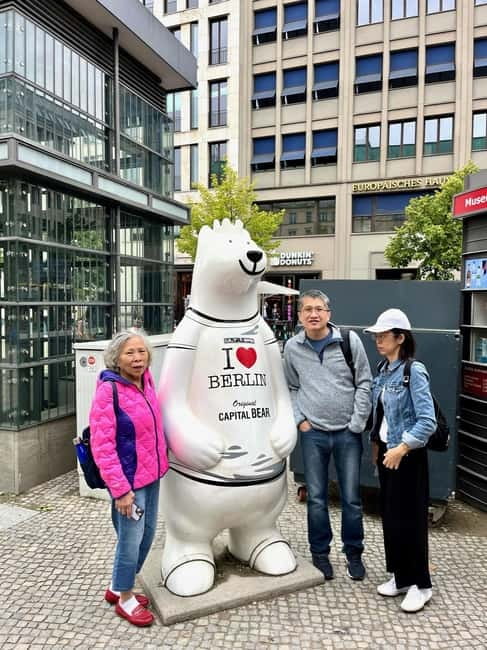
After the historic center, the route moves toward Alexanderplatz and Karl-Marx-Allee. The TV Tower remains the visual anchor at Alexanderplatz, while the broad avenue of Karl-Marx-Allee shows the scale and style favored by East Germany.
You pass Kino International and Café Moskau, two recognizable buildings from the socialist period. Their monumental design was meant to project confidence and modernity. The avenue feels very different from the narrow streets around Museum Island or the commercial polish of Kurfürstendamm.
This is where the car is especially useful. The broad distances and large blocks are tiring to cover on foot, yet they make more sense when seen in sequence. The guide can point out how East Berlin used architecture, boulevards, and public buildings to express a different political system from West Berlin.
East Side Gallery and Oberbaum Bridge bring the story forward
The route continues past Ostbahnhof to East Side Gallery, where you get about 10 minutes to walk along the Wall. This is one of the more accessible Wall stops because the surviving section is covered with murals. It connects political history with the art and street culture associated with post-1989 Berlin.
The visit is short, so you will not see every mural in detail. If the Wall is a major reason for your trip, return later with more time. On this tour, the value is seeing the Wall in context, after passing the former death strip, Checkpoint Charlie, the central government area, and East Berlin’s planned avenues.
The drive across or near Oberbaum Bridge provides a scenic view of the Spree and the old border area. Schlesisches Tor, Oranienstraße, and SO36 then show a more informal side of Kreuzberg, with streets shaped by migration, music, nightlife, and alternative culture. Most of this section is seen from the SUV, but it helps explain why Berlin’s identity is not limited to monuments.
Brandenburg Gate, Pariser Platz, and the government quarter
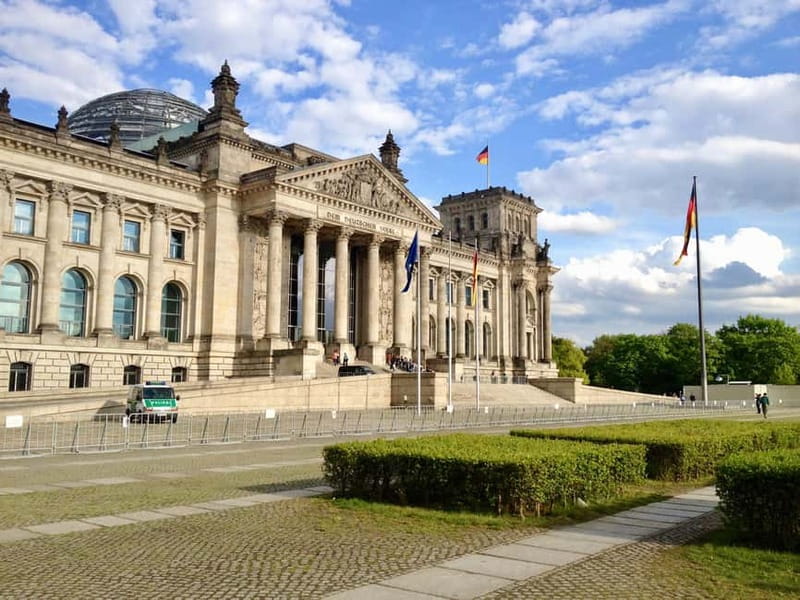
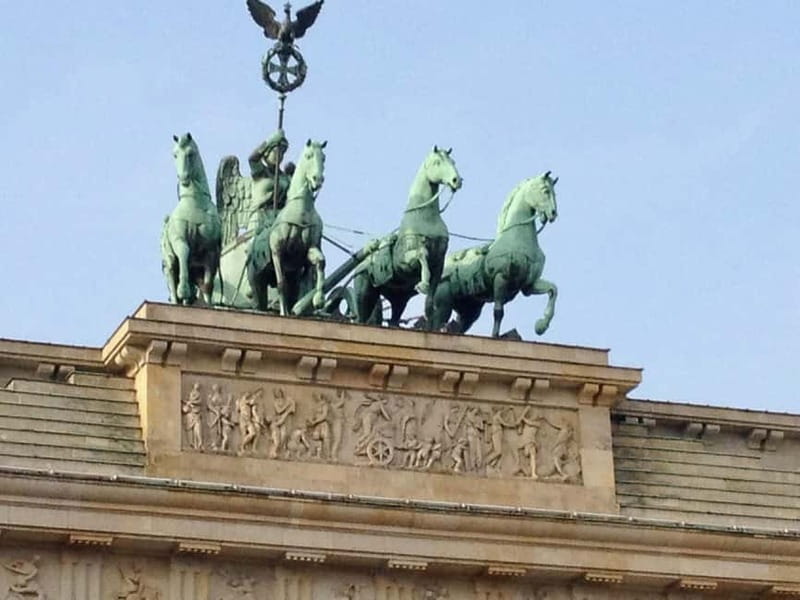
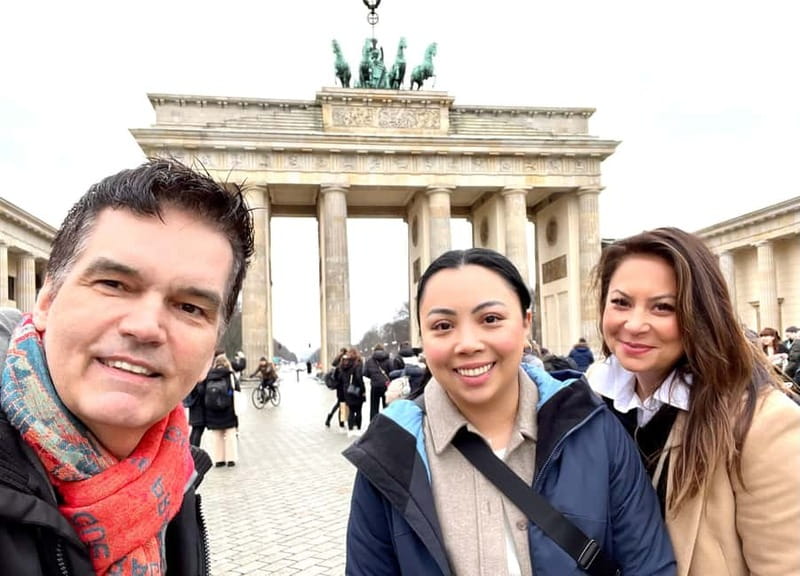
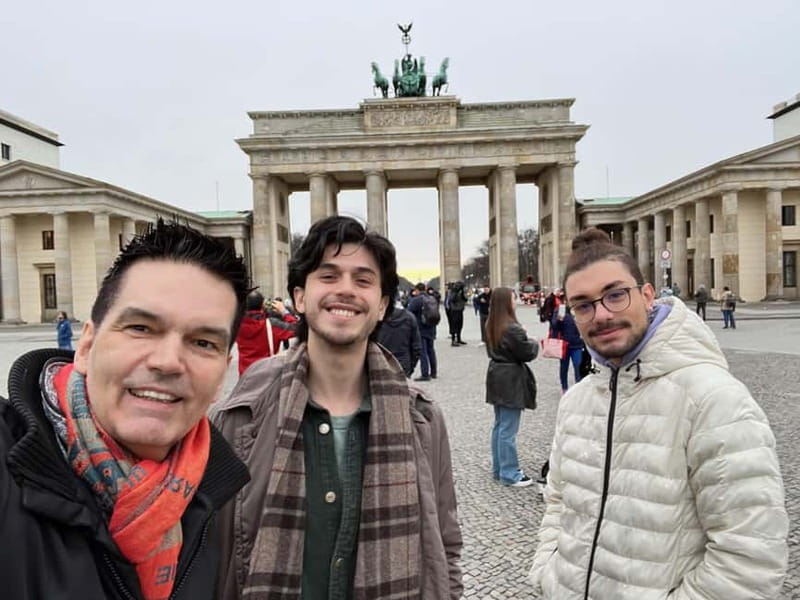
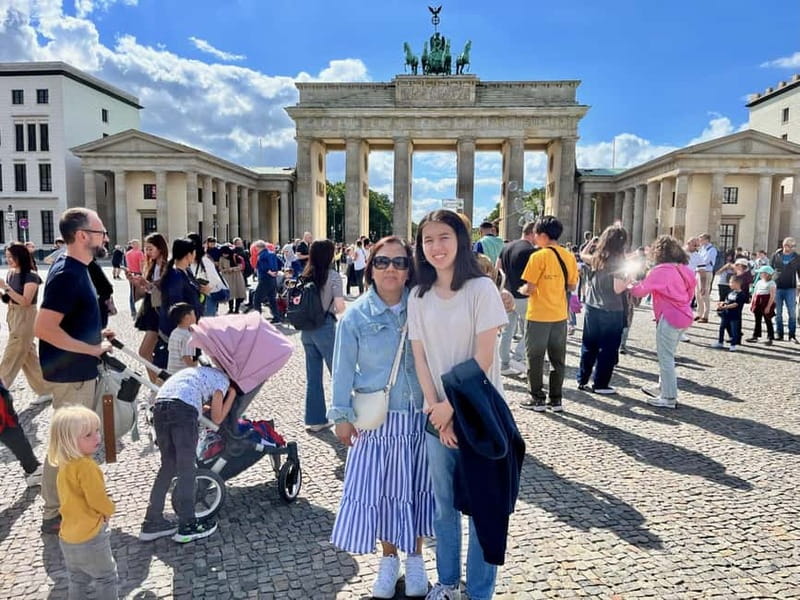
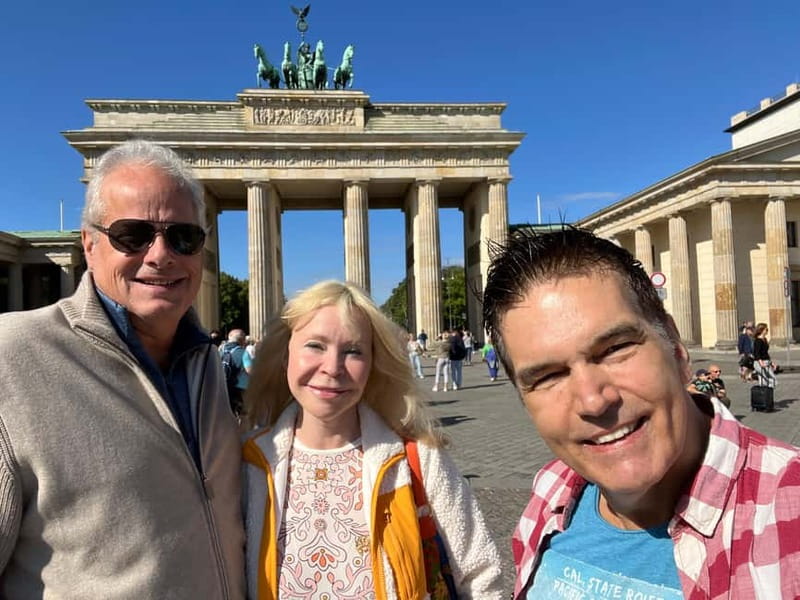
The central route returns to Pariser Platz and Brandenburg Gate, with a guided walk of about 15 minutes. This is one of the strongest stops because the gate has served as a Prussian entrance, a Nazi-era symbol, a Cold War backdrop, and a reunification image.
The gate stood in the border zone during the division of Berlin, but there was no crossing point here. Nearby, you pass the US, French, and Russian embassies, Hotel Adlon, the Reichstag, Paul-Löbe House, the Chancellery, and Berlin Hauptbahnhof. These buildings show how the former border area became the center of the reunited German government.
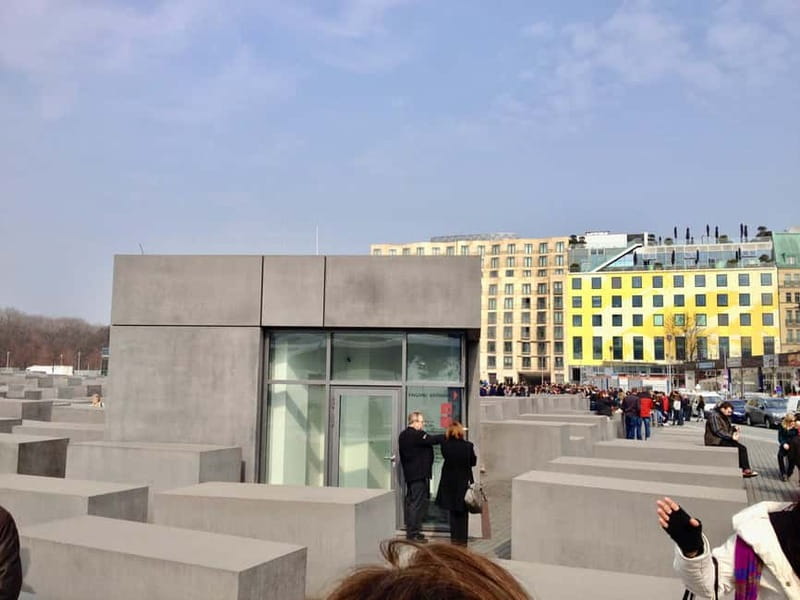
The Holocaust Memorial and the former Führerbunker site are also included as photo or sightseeing stops. The memorial deserves quiet attention, even though the visit may be brief. The bunker site is marked without a grand monument, which makes the explanation more important than the view itself.
The route also includes Gendarmenmarkt, the French Cathedral, the German Cathedral, Friedrichstraße, and the State Opera. Gendarmenmarkt is one of the city’s most polished squares, while Bebelplatz and the nearby university buildings add political and intellectual history. These places reward a second visit if you want time for photographs or interiors.
Tiergarten closes the loop through modern Berlin
The final part passes the Reichstag area, Bellevue Palace, the Victory Column, Tiergarten, the Landwehr Canal, Berlin Zoo, and Zoologischer Garten station before returning toward Steinplatz. Bellevue Palace is the German president’s official residence, while the Victory Column provides another strong visual marker in the park.
Tiergarten gives you a break from stone buildings and traffic. You see the park, canal, government district, and zoo area as parts of one central zone. The route closes the circle by returning to the western neighborhoods where it began.
Depending on the selected duration and traffic, some stops will be more detailed than others. The published time range is 2.5 to 5 hours, so ask at booking how much time is planned for your chosen start. A five-hour version should feel less rushed than the shortest option, especially if you want the walks and rooftop visit.
Price, comfort, and who gets the most value
At $124 per person, the tour costs more than a day of public transport but includes a private vehicle, pickup and drop-off inside the S-Bahn-Ring, parking, Wi-Fi, a licensed guide-driver, and the Humboldt Forum rooftop ticket. For a small private group, that can be fair value, especially if some people in your party tire easily or do not want to navigate Berlin’s large transit system.
The value is strongest for first-time visitors who want a citywide framework. It is also a good fit for families and multigenerational groups. One family outing included grandparents and two girls aged 10 and 12, with the history explained in a way the children could follow. Another guest specifically appreciated that a grandmother could learn a great deal without spending the day walking.
The tour is less suited to someone who wants long museum sessions, extensive time at the Wall, or a slow photography walk. It is also not ideal if you need a guide in a language other than German or English. One Portuguese-speaking guest found translating from English tiring, so choose your language carefully.
Wheelchair users can join if they can transfer into the vehicle and bring a foldable or small wheelchair. Airport pickup is possible for an extra fee of about 50 euros, but the city pickup is the better fit for this sightseeing route. Food and drinks are not included, so bring water and plan any meal separately.
Free cancellation is available up to 24 hours before the tour, and you can reserve while paying later. A working mobile number for SMS or WhatsApp is required, particularly because pickup instructions depend on those messages.
Should you book this Berlin tour?
Book it if you want Berlin’s major districts connected into one clear story, with minimal walking and a private pace. Gunter’s personal explanations, the SUV comfort, the included rooftop, and the mix of East and West make this a useful first look at a complicated city.
Skip it if you prefer to spend hours inside museums or explore one neighborhood slowly. For the best balance, choose the longer five-hour option, wear comfortable shoes for the short walks, bring a jacket for the rooftop, and keep the rest of your day open for the place that catches your interest most.
FAQ
How long does the private taxi tour last?
The tour lasts between 2.5 and 5 hours. Starting times and the available duration can vary, so check the selected option when booking.
Where does pickup take place?
Pickup and drop-off are included at hotels or private accommodations within Berlin’s S-Bahn-Ring. Pickup outside that area costs an additional regular taxi fare.
Is airport pickup available?
Yes, airport pickup is possible for an additional fee of about 50 euros. A different welcome or farewell tour may be more suitable for a dedicated airport transfer.
How will I know when the driver arrives?
Gunter sends a text message when he is heading to your address and another message after arriving. You need a working mobile phone number that can receive SMS or WhatsApp messages.
What languages are offered?
The tour is available in German and English.
Is the tour private?
Yes. The experience is for a private group, with the guide also serving as the taxi driver.
Is the Humboldt Forum rooftop included?
Yes. Entry to the Humboldt Forum rooftop is included in the price.
Are other museum tickets included?
No. Entry tickets other than the Humboldt Forum rooftop are not included.
Is the tour wheelchair accessible?
It is accessible for wheelchair users who can enter the vehicle. The wheelchair must be foldable or small enough to fit.
What should I bring?
Bring a jacket because the rooftop can be windy, a small bottle of water, and an umbrella if rain is expected. You should also bring a working mobile phone for pickup messages.
Newest Berlin reviews
- Where It All Began: Berlin’s Queer & Trans History Tour★ 4.9 · 6 reviews
- Understanding Kreuzberg: The roots of local (sub)culture★ 4.9 · 11 reviews
- Berlin: guided canoe | kayaktour★ 4.1 · 7 reviews
- Warnemünde Shore Excursion: Private Sachsenhausen and Berlin Tour★ 5.0 · 12 reviews
- Ultimate E-Bike Tour of Berlin with Beer Garden Stop★ 5.0 · 4 reviews
- Private Potsdam City Tour in an authentic vintage van★ 5.0 · 14 reviews
- In the Forbidden City – Potsdam Walking Tour★ 5.0 · 17 reviews
- Private Walking Tour of Potsdam and Sanssouci★ 5.0 · 24 reviews
Berlin Cold War Tours, compared.
Berlin’s Best: 2 Hour Walking Tour Third Reich and the Cold War
Read our review →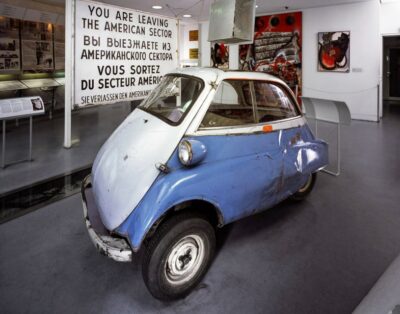
Skip-the-Line: Berlin Wall Museum at Checkpoint Charlie
Read our review →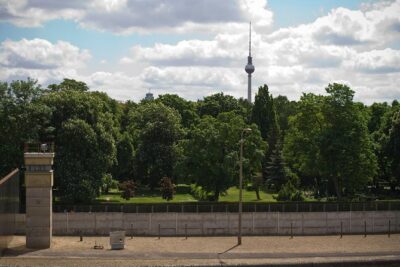
Cold War, Berlin Wall, Spies and the East Side Gallery
Read our review →
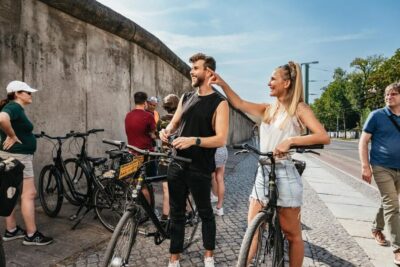
Listening Station Teufelsberg Tour with Transfer
Read our review →Browse the lists this tour appears in