
Reviewed · WALKING TOURS
An Introduction to Berlin Walking Tour
Berlin’s story comes at you in layers on this three-hour historical walking tour. You move from Prussian power and Napoleon’s march through the Brandenburg Gate to the Nazi book burning at Bebelplatz, the Berlin Wall, and the divided city of the Cold War. It is a brisk lesson in how political ideas can shape streets, monuments, and daily life.
I like the way the route connects the grand landmarks to the forces behind them, especially the Reichstag’s glass dome and the Holocaust Memorial. I also like the range of guides: professors, doctoral students, historians, journalists, art critics, and published authors. The main consideration is pace. You cover a lot of ground, and one or two public transport rides are needed.
Key points at a glance
- Potsdamer Platz begins the Wall story: See how a former border wasteland became a modern business district.
- The Reichstag sparks a democracy discussion: Connect the 1933 fire with the later glass dome and its message of openness.
- The route follows Berlin’s royal spine: Walk Unter den Linden, passing major museums, theaters, and monuments.
- Bebelplatz faces the Nazi past directly: Learn how the 1933 book burning fits into Hitler’s rise.
- Alexanderplatz shows East Berlin’s ambitions: See the communist-era square and its famous TV Tower.
- Checkpoint Charlie closes the loop: Finish at the Cold War crossing point where the East German border opened in 1989.
Why this Berlin tour works as a city introduction
Berlin can feel scattered at first. Its major sights belong to different eras, and the distance between them can make the city’s story hard to follow. This route gives you a clear thread: Prussia created a military power, the German Empire expanded Berlin’s importance, the Nazis turned the capital into the center of dictatorship, and the Cold War split the city in two.
You also get a look at present-day Berlin. The city is not treated only as a museum of disasters. The tour considers how Berlin has faced its past while becoming a capital associated with multiculturalism, tolerance, and creativity.
That broad approach is the tour’s real value. You are not simply checking off the Brandenburg Gate and Reichstag. You are learning why those places mattered at different times, and why the same street can carry several conflicting meanings.
The guide is central to the experience. The tour is offered in English, with private and small-group formats available. The guide team includes academics and working writers, and Dr. Martin Sauter is specifically named in two highly positive bookings. His style was praised for strong subject knowledge and an individual approach, though the exact guide depends on availability.
Other Berlin experiences to weigh up
- Discover Berlin Half-Day Walking Tour
★ 5.0 · 9,624 reviews - Berlin: Third Reich and Cold War 2 Hour Walking Tour
★ 4.9 · 6,830 reviews - Berlin: Discover Berlin Walking Tour
★ 4.9 · 5,998 reviews
Starting at Potsdamer Platz and the former Wall
The meeting point is Cafe Einstein at Unter den Linden 42, a central address that puts you close to Berlin’s grand historic core. From there, the route begins at Potsdamer Platz, now a major business and commercial center.
That modern setting is useful because it hides what was once here. During Berlin’s division, the area lay beside the Wall and the East German border zone. It became part of the so-called Death Strip, a heavily controlled space that cut through the city.
You follow the former Wall line toward the Tiergarten. This is not just a walk beside a fragment of concrete. The guide places the border in the wider city, helping you picture how the division cut across streets and neighborhoods. Potsdamer Platz also introduces a theme that returns throughout the tour: Berlin repeatedly rebuilds itself, sometimes by preserving reminders and sometimes by replacing almost everything around them.
The route covers substantial ground. Wear practical shoes, and remember that the listed price does not include public transport. You will use transit once or twice because some important sites are too far apart for a comfortable walk. If you do not have a Berlin transport pass, the guide helps you buy a ticket at the first station.
The Holocaust Memorial and the Reichstag
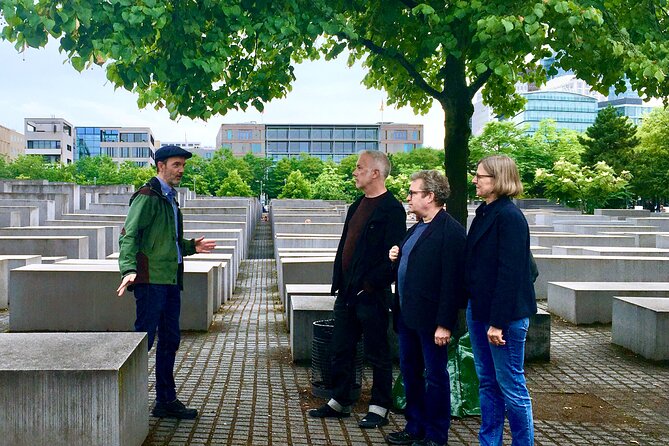
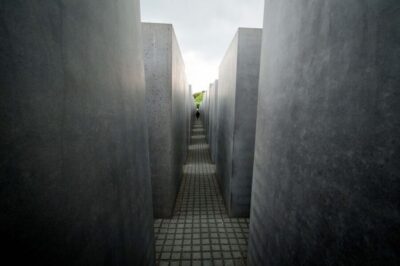
The Holocaust Memorial is one of Berlin’s most striking modern sites. Its field of concrete blocks creates an uneasy, changing experience as you walk through it. The tour uses the memorial to discuss how Germany remembers the murder of Europe’s Jews and how public memorials shape the city.
Expect a serious stop, not a quick photo pause. The design invites questions, and the guide can give the memorial a place within Berlin’s wider effort to confront Nazi crimes. The information provided does not promise an indoor museum visit, so think of this as an outdoor discussion and site visit.
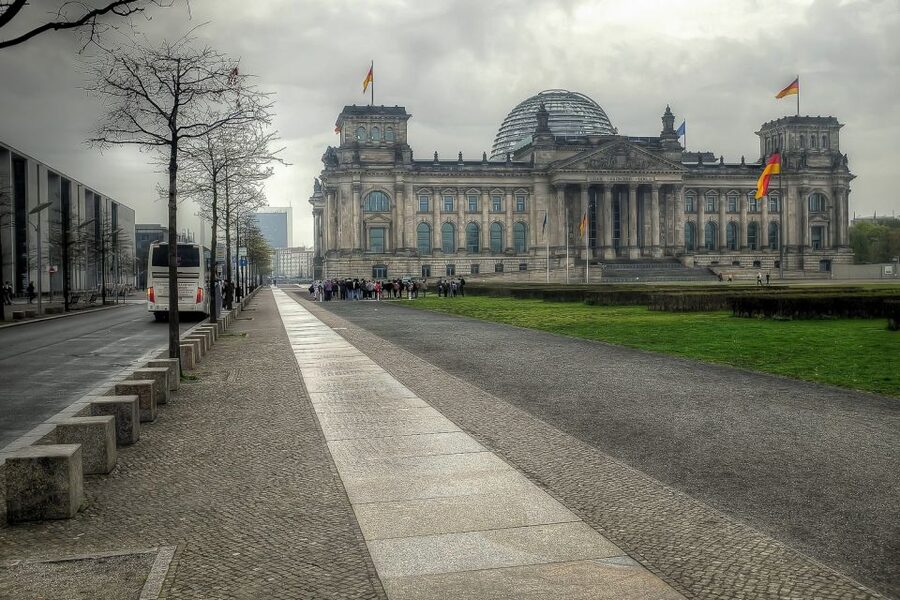
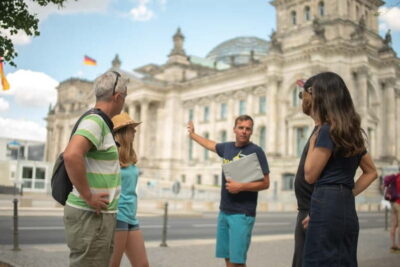
Nearby, the Reichstag brings another major chapter into view. The building was damaged by fire in 1933, and the Nazi government used the event as a reason to suspend civil liberties and arrest political opponents. That moment helps explain how the dictatorship tightened its grip.
The later glass dome, designed by Norman Foster in 1992, creates a sharp contrast. Its walkways look down into the parliamentary chamber, and the design raises questions about transparency, public oversight, and reunification. You will discuss whether the cupola represents a new democratic direction for Germany.
The Reichstag is especially rewarding if you want ideas, not just architecture. The stop links a historic building to two very different political systems. Access inside the dome is not listed as part of this three-hour tour, so do not assume you will enter it. The focus is on the exterior and the discussion surrounding its symbolism.
Walking through the Brandenburg Gate
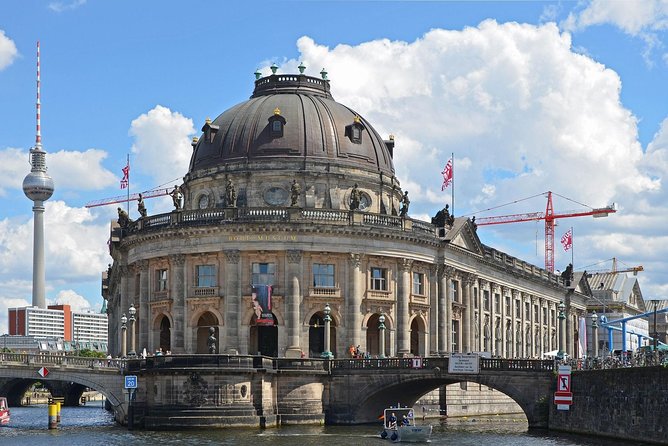
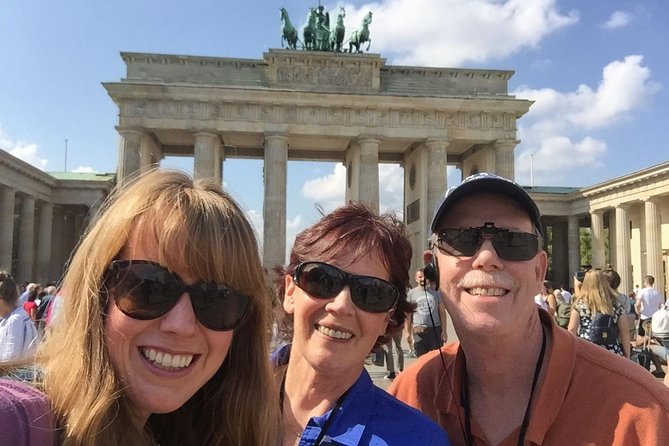
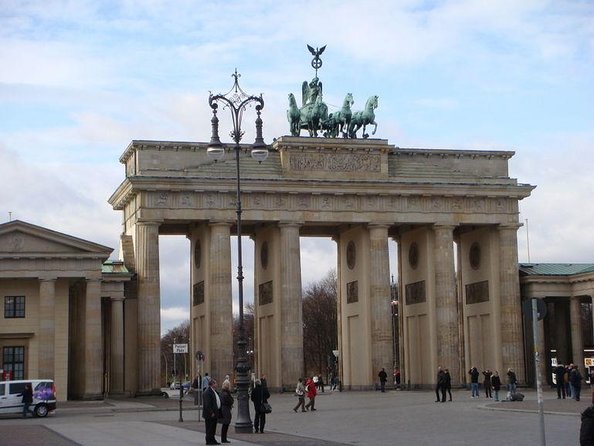
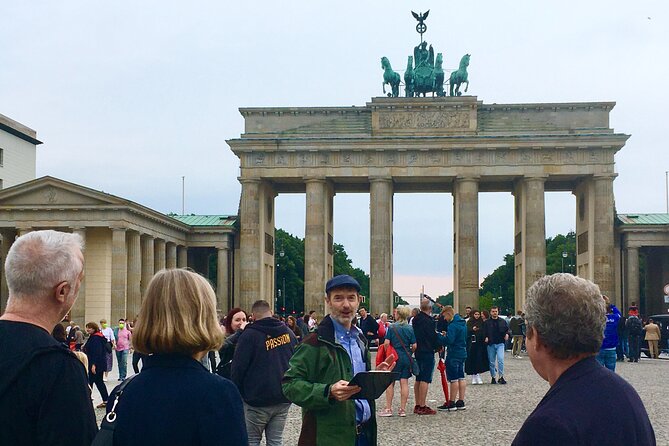
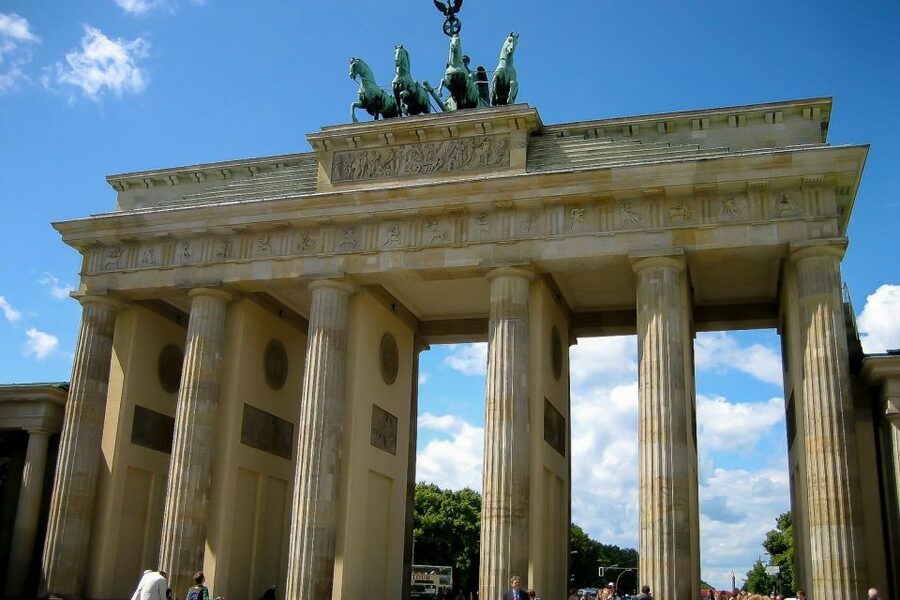
The Brandenburg Gate is one of Berlin’s most recognizable landmarks, but its importance goes far beyond its appearance. The tour follows Napoleon’s footsteps through the gate and uses that episode to explain how the French Revolution helped stir German nationalism.
This is a good example of the tour’s long time frame. You begin with Nazi and Cold War Berlin, then reach back to the forces that helped shape Prussia and later Germany. The gate becomes a marker of changing power: royal entrance, Napoleonic trophy, Cold War symbol, and reunification icon.
You will not get a detached list of dates. The guide connects the gate to the political mood of Europe and to the growth of national identity. That context matters because later German history did not appear from nowhere. The tour presents militarism and nationalism as ideas with roots in earlier centuries.
A different sort of day out in Berlin:
- Berlin: Reichstag, Dome and Government District Guided Tour
★ 4.7 · 18,288 reviews - Berlin: 1-Hour City Tour by Boat with Guaranteed Seating
★ 4.3 · 16,993 reviews - Berlin: Boat Tour Along the River Spree
★ 4.4 · 11,252 reviews - Berlin: Hop-on Hop-off Bus Tour with Live Commentary
★ 4.3 · 8,579 reviews
Unter den Linden and Frederick the Great
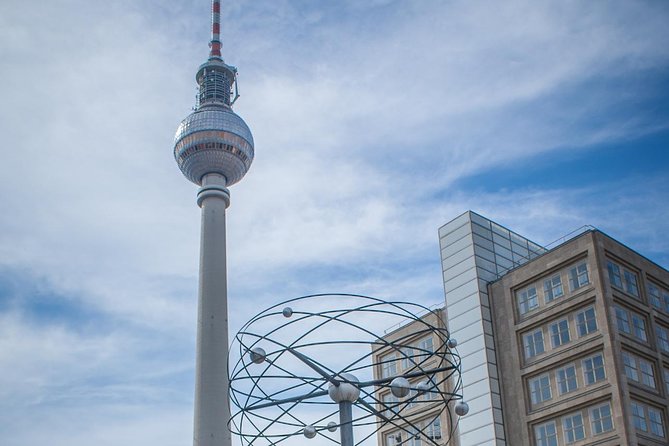
From the Brandenburg Gate, you continue along Unter den Linden, Berlin’s royal boulevard. Palaces, museums, and theaters line this historic route, making it one of the best places to see how Berlin presented itself as a capital of power and culture.
The stop at the equestrian statue of Frederick the Great focuses on the Prussian king sometimes called the Poet King. His role helps explain the tension at the heart of Prussia: it valued music, philosophy, and culture, while also building a formidable military state.
That balance is important. Berlin was not shaped by soldiers alone. The city also developed institutions that made it a major cultural center. The guide uses Frederick to discuss both sides of Prussia’s identity and how those qualities influenced the German Empire that followed.
Unter den Linden is also one of the most walkable stretches of the route. You pass several major sights in a compact area, but the number of stops can make the commentary feel dense. If you prefer a slow architectural walk with long pauses, a private tour may suit you better than a small group.
Bebelplatz and the Nazi rise to power
Bebelplatz is one of the tour’s most difficult stops. It was the site of the 1933 Nazi book burning, an event that showed the regime’s attack on free thought and political opposition.
Here, the guide moves from cultural repression to Adolf Hitler’s rise and the consequences that followed. The value of the stop is its setting. This was not an isolated event far from everyday life. It happened in the heart of Berlin, among the institutions and public spaces that represented German culture.
Bebelplatz also deepens the earlier discussion at the Reichstag. The Reichstag fire and the book burning belong to the same larger pattern: the removal of civil liberties, the silencing of opponents, and the control of public life.
This section is not light sightseeing. You should expect a serious tone and direct discussion of genocide, dictatorship, and the damage caused by propaganda. For many people, that honesty is a major reason to choose this tour.
Museum Island and Berlin as a cultural capital
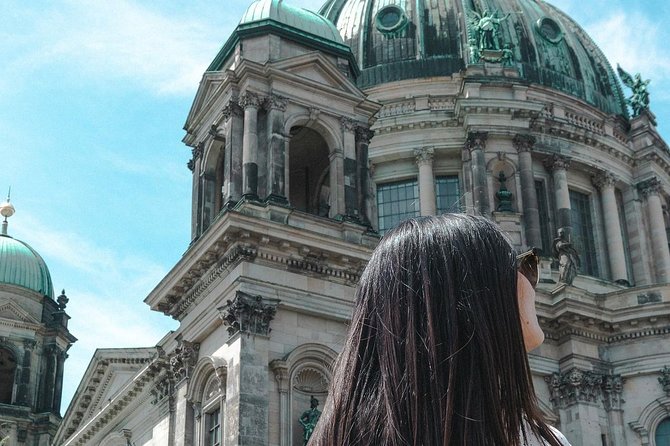
Crossing Museum Island shifts the focus from political power to art and culture. Berlin developed into a major cultural center during the 19th century, and this part of the route is sometimes described as Berlin’s answer to the Louvre.
The tour does not list museum admissions as part of the experience, so you should treat Museum Island as an outdoor orientation rather than a museum tour. That can be useful on a first visit. You get a sense of the area, hear how Berlin built its cultural reputation, and can return later with a better plan.
If you want detailed time inside the collections, this tour will not replace a dedicated museum visit. Its strength is the connection between the museums, the royal boulevard, and the political ambitions of the city.
Hackescher Markt and the courtyards of old Berlin
Hackescher Markt provides a smaller-scale change of mood. The area offers a glimpse of pre-war Berlin and a chance to walk through a network of courtyards.
These courtyards help you see a side of the city that grand avenues cannot show. The route briefly moves away from royal buildings and government monuments to reveal more intimate urban spaces. It is a useful reminder that Berlin’s story includes ordinary neighborhoods as well as dramatic state events.
The amount of time here may depend on the guide and group pace. Three hours is not enough for a long neighborhood wander and a full political history at every stop. Still, this section gives the itinerary variety and prevents the day from becoming one long chain of monumental buildings.
Alexanderplatz and the East German city
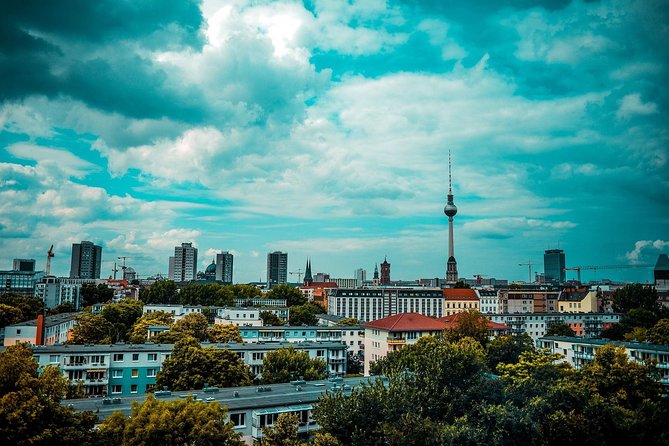
Alexanderplatz offers a sharp contrast to Unter den Linden. Once a historic square, it was rebuilt by East Germany in the 1960s as a communist showplace. Futuristic government structures, apartment blocks, and the famous TV Tower expressed a different vision of the modern city.
The contrast is easy to read on foot. Prussian Berlin often presents power through royal avenues and monuments. East Berlin used broad spaces, modernist buildings, and large civic symbols. Alexanderplatz lets you discuss how architecture can serve political ideals.
The TV Tower is especially useful as a visual marker. It belongs to the skyline and to the memory of East Berlin, giving the Cold War section a strong physical reference point. Again, this is an exterior discussion rather than a tower visit.
For anyone interested in the former East Germany, Alexanderplatz is one of the most useful parts of the route. It shows that the communist government did not simply preserve old Berlin. It actively rebuilt the center to express its own identity.
Ending at Checkpoint Charlie
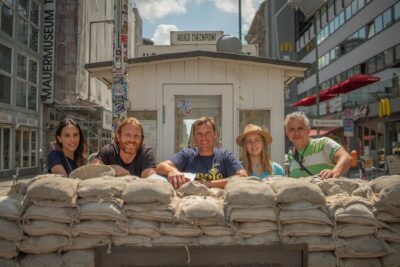
The final stop is Checkpoint Charlie, the famous crossing point between East and West Berlin. In 1989, thousands of East Germans crossed the border as the Cold War came to an end.
Finishing here gives the tour a natural closing point. You have followed Berlin from Prussian state-building through Nazi dictatorship and communist division to reunification. Checkpoint Charlie also brings the story into the present, since the old East and West divisions still affect how Berlin understands itself.
The site can feel more commercial and crowded with displays than other historical locations, but its importance is clear. The guide helps separate the actual border history from the modern presentation around it. That context is useful if you want more than a quick photograph at the guardhouse.
Price, pace, and the value of a historian guide
At $135 per person, this is not a budget walk. The value depends on how much you want from the history and whether you choose a private or small-group format.
You are paying for three hours with an English-speaking guide trained as a professor, doctoral student, historian, journalist, art critic, or published author. You are also getting a route that links sites spread across central Berlin, with help using public transit when necessary.
For a first visit, the price can make sense if you want a strong framework for the city. Afterward, you can return to the Reichstag, Museum Island, or Checkpoint Charlie with a clearer understanding of what you are seeing. The experience is less useful if you mainly want unstructured time, museum entry, or a relaxed stroll.
The two available booking comments connected Dr. Martin Sauter with an individual tour style and strong subject knowledge. One booking took place just after the early COVID period, when Berlin was unusually quiet. That detail is not a promise about current conditions, but it does suggest that the guide can adapt the experience to the setting and the group.
The tour permits free cancellation up to 24 hours before departure, and you can reserve now and pay later. Confirmation arrives within 48 hours, subject to availability. Those terms help if your Berlin schedule is still shifting.
Who should book this tour?
I would choose this tour if you want Berlin’s major sights explained as parts of one political story. It suits first-time visitors, history-minded couples, and anyone who wants a serious guide rather than a quick orientation walk.
It is also a good fit if you value a small group or private format. You can ask more questions and may get a more individual pace, especially at the Holocaust Memorial, Reichstag, or Bebelplatz.
I would think twice if you dislike long walks, difficult subjects, or public transit during a tour. The route covers a lot in three hours, and the Nazi period, genocide, and Cold War division receive substantial attention. You will also need to budget for one or two Berlin transit rides unless you already have a suitable pass.
At $135, this is best viewed as a guided history lesson spread across the city, not simply a sightseeing walk.
Should you book it?
Book it if you want to understand how Berlin’s landmarks connect across 300 years. The route gives you Prussian power, Nazi repression, the Wall, East German urban planning, and reunification in one well-shaped session.
Skip it if your priority is entering museums, visiting the Reichstag dome, or moving at a very slow pace. For everyone else, the combination of an academic guide, central landmarks, and honest discussion of Berlin’s past makes this a useful first-day introduction.
FAQ
How long is the Berlin walking tour?
The tour lasts three hours.
What language is the tour offered in?
The live tour guide speaks English.
Where does the tour meet?
The meeting point is Cafe Einstein, Unter den Linden 42, 10117 Berlin, Germany.
Where does the tour finish?
The route finishes at Checkpoint Charlie.
Does the tour include public transportation?
No transport ticket is included, but you will need to use public transport once or twice because some sites are too far apart to walk comfortably.
How much does Berlin public transportation cost for this tour?
A Berlin Transit One Way Tarif AB ticket costs 2.80 EUR, or 1.70 EUR with the senior discount. A day ticket costs 7 EUR, or 4.70 EUR with the senior discount.
Are transport tickets included in the $135 price?
No. The tour price does not include a transport ticket.
Is the tour private or shared?
Private and small-group options are available.
Can I cancel for a full refund?
Yes. You can cancel up to 24 hours in advance for a full refund.
Newest Berlin reviews
- Where It All Began: Berlin’s Queer & Trans History Tour★ 4.9 · 6 reviews
- Understanding Kreuzberg: The roots of local (sub)culture★ 4.9 · 11 reviews
- Berlin: guided canoe | kayaktour★ 4.1 · 7 reviews
- Warnemünde Shore Excursion: Private Sachsenhausen and Berlin Tour★ 5.0 · 12 reviews
- Ultimate E-Bike Tour of Berlin with Beer Garden Stop★ 5.0 · 4 reviews
- Private Potsdam City Tour in an authentic vintage van★ 5.0 · 14 reviews
- In the Forbidden City – Potsdam Walking Tour★ 5.0 · 17 reviews
- Private Walking Tour of Potsdam and Sanssouci★ 5.0 · 24 reviews
Walking Tours, compared.
Berlin’s Best: 2 Hour Walking Tour Third Reich and the Cold War
Read our review →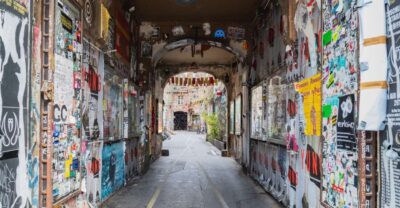
Third Reich Berlin: Hitler and WWII Walking Tour
Read our review →
Browse the lists this tour appears in