
Reviewed · BERLIN WALL TOURS
Berlin: Guided Bike Tour of the Berlin Wall and Third Reich
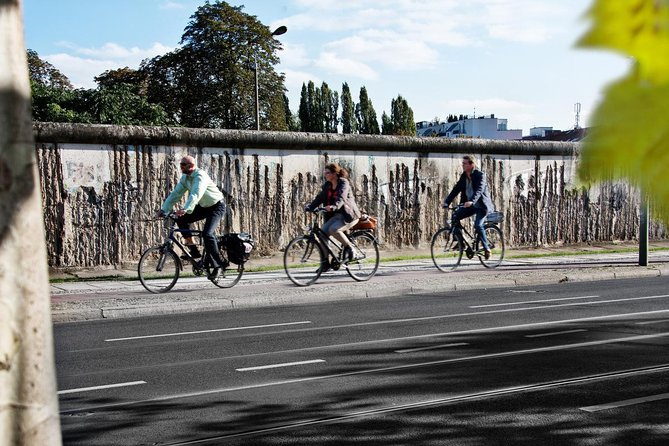
Berlin’s past makes more sense when you follow it on two wheels. This three-hour ride covers about 15 kilometers, linking Nazi-era sites, Berlin Wall remains, former ghost stations, bunkers, and quiet side streets that are easy to miss from a bus.
I like the small-scale feel of a bike tour, and I like that the route can change according to the guide and group. Guides such as Juliet, Jake, Bjorn, Martin, and Dominick have been praised for making serious subjects human, often adding personal stories about life in Berlin before reunification.
The main drawback is that this is a history tour with real cycling, not a gentle sightseeing loop. You cover a lot of ground, but some stops are brief, and the flexible route means you cannot count on seeing every listed site on every departure.
Key points to know before you book
- About 15 kilometers by bike: You cover far more ground than on foot, mostly on side streets and bike paths.
- Nazi and Cold War history together: The route connects bunker remains, the former Führerbunker site, the Berlin Wall, escape routes, and ghost stations.
- A flexible route: Free Berlin guides design the tour themselves, so the exact stops may vary.
- A human approach: Guides may discuss daily life in divided Berlin and, in some cases, personal family experiences.
- Bikes, helmets, and rain gear included: Helmets are available on request, and waterproof ponchos are provided if needed.
- Good value at $40: The price includes the bike, guide, and three hours of sightseeing, though an e-bike costs more through the senior booking option.
Starting in Nikolaiviertel, Berlin’s oldest quarter
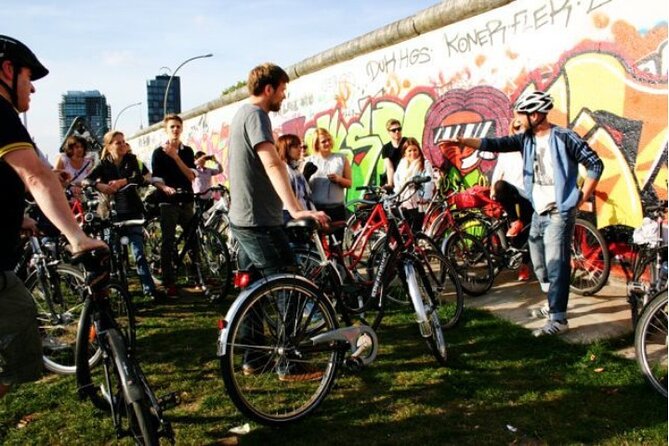
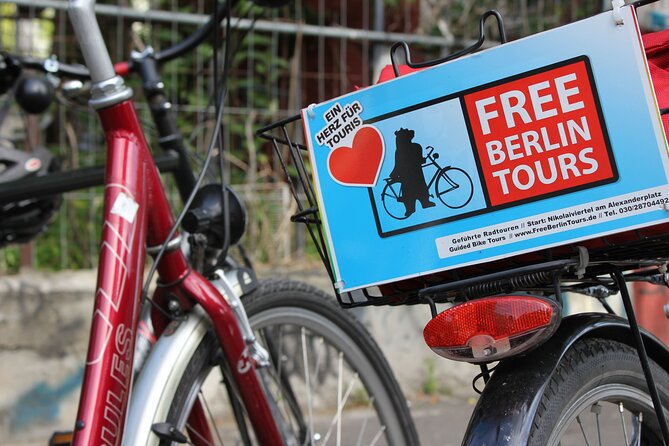
You meet at the Free Berlin office in the courtyard entrance at Poststraße 11. Look for the Free Berlin sign. The meeting point is in Nikolaiviertel, about a five-minute walk from the TV Tower, which makes it easy to reach from central Berlin.
The setting is a useful introduction. Nikolaiviertel is tied to Berlin’s early beginnings, while the nearby TV Tower belongs to the city’s East German chapter. In a few minutes, you are already surrounded by reminders that Berlin’s story is not one single story. It is a stack of different cities built over one another.
At the office, you choose from the available bikes. The rental bikes have baskets and are checked regularly by a certified mechanic. That matters on a three-hour ride, since a poorly adjusted bike can turn a good history tour into a test of patience.
Helmets are available if you request one. Large luggage can also be left with the operator during the tour if arranged in advance. If you want an e-bike, book the senior option, which is priced to include electric assistance. The provider will then know to prepare one for you.
The group may be private if you select that option. Otherwise, the size can vary. One successful arrangement described a small group of only a few people after another tour did not run, so you may find the experience quite personal rather than crowded.
More Third Reich history tours in Berlin:
- Berlin: Third Reich and Cold War 2 Hour Walking Tour
★ 4.9 · 6,830 reviews - Berlin’s Best: 2 Hour Walking Tour Third Reich and the Cold War
★ 5.0 · 5,486 reviews - Third Reich Berlin: Hitler and WWII Walking Tour
★ 5.0 · 3,301 reviews
Why a bike works so well for Berlin history
Berlin is spread out. The important sites from the Nazi period and the Cold War are not all gathered around one square. A walking tour can explain one district well, but it cannot easily connect distant Wall sections, former border areas, bunkers, and out-of-the-way streets in three hours.
A bike solves that problem. You can move between sites quickly, stop at places where a bus cannot, and see how neighborhoods change from one section of the former border to another. The ride is also active without being presented as a race.
Most of the route uses side streets and bike paths. That keeps the focus on the city rather than on heavy traffic, though you should still be comfortable cycling in an urban setting. The supplied information does not promise a flat or effortless ride, so anyone who rarely cycles should consider the three-hour duration before booking.
The ride covers about 15 kilometers. That is enough to make the tour feel substantial, but not so much that you spend the whole time pedaling. You stop for explanations along the way, though the exact balance depends on the guide and the group.
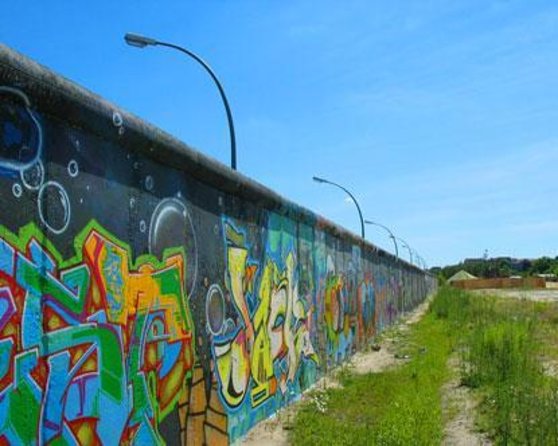
Following the former Wall through everyday Berlin
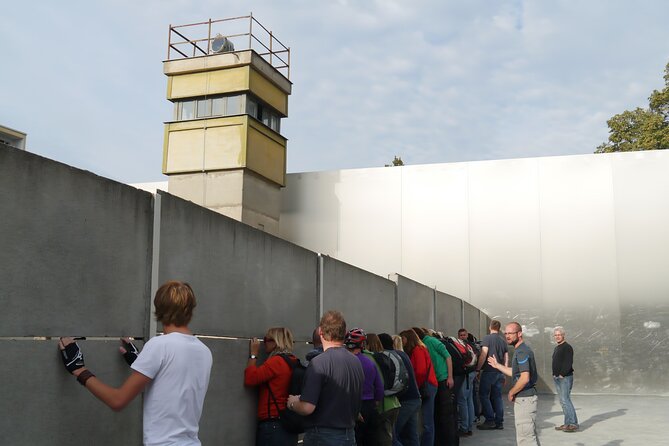
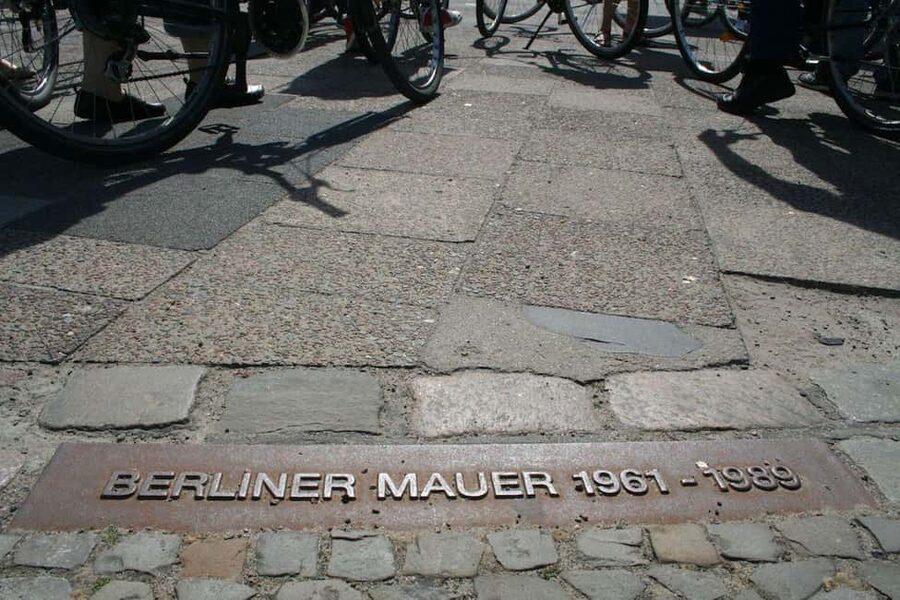
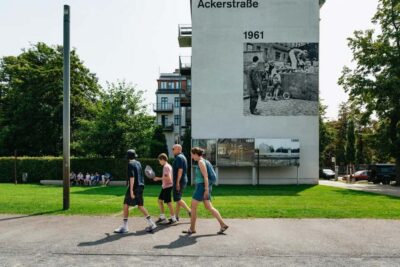
The Berlin Wall is often presented through famous photographs and major memorials. This tour takes a broader view. You follow parts of the former border and see how the old borderland has been used since reunification.
That change of use is one of the most useful parts of the ride. The border was once a place of fences, watch systems, patrols, and danger. Today, sections have been absorbed into streets, paths, buildings, and ordinary city life. Cycling helps you notice the distance between the political meaning of the Wall and the way the land functions now.
You also hear about daily life in divided Berlin. This shifts the subject away from dates and government policy and toward practical questions. How did people move around? What did the border mean for work and family? What did it feel like to live in a city split by a fortified line?
Several guides have been praised for this human approach. Dominick, for example, connected the major events to the people who lived through them. Another guide, identified as Peter, was a former East Berliner who brought direct personal perspective to the tour. Bjorn has also shared family experiences from Berlin’s final decades of division.
Those personal details are valuable, but they will vary by guide. You should expect a live presentation rather than a fixed script. That can make the tour feel more natural, although it also means the depth and emphasis may differ from one departure to another.
Ghost stations and the hidden mechanics of a divided city
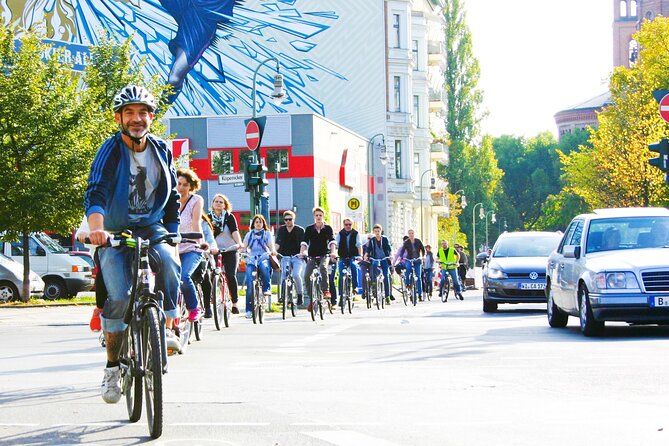
The tour explains the former ghost stations, a particularly striking part of Cold War Berlin. These were stations in East Berlin that trains from West Berlin passed through without stopping. They were closed or heavily controlled because of the divided border.
You do not just hear that the city was split. You learn how the division affected the transport system beneath the streets. A subway map could look simple, yet trains, platforms, and entrances were shaped by political fear and security concerns.
This is the kind of subject that benefits from a guide. A sign or surviving wall section cannot fully explain how an entire transit network functioned under division. The guide can connect the physical remains with the stories of escape attempts, restricted movement, and the strange experience of passing through places you could not enter.
The tour may not linger at every location. One of the practical trade-offs is breadth. You see many parts of Berlin, but you may get only a short explanation at some stops. If you want a long, museum-style discussion of one subject, a dedicated museum visit will give you more time.
If you want a broad first look at the city’s divided past, the bike format is stronger. You get the connections between locations, not just isolated displays.
More Berlin Wall tours in Berlin:
- Skip-the-Line: Berlin Wall Museum at Checkpoint Charlie
★ 4.1 · 2,041 reviews - Cold War, Berlin Wall, Spies and the East Side Gallery
★ 5.0 · 1,024 reviews - THE WALL: asisi Panorama Berlin Ticket
★ 4.5 · 580 reviews - Berlin: Cold War Walking Tour on Berlin Wall Route
★ 4.8 · 437 reviews
Nazi-era Berlin, bunkers, and the Germania plan
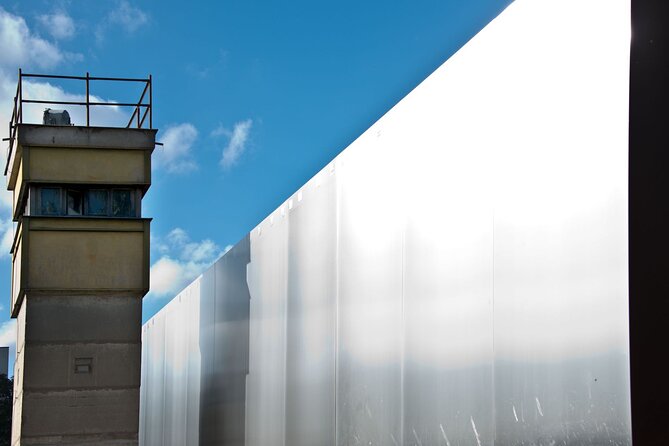
The Nazi section of the tour deals with difficult material. You see remains of a large bunker and hear about Germania, the planned transformation of Berlin into the monumental capital of a Nazi empire.
The value here is not simply seeing concrete. The remains help show the scale and physical reality of the period, while the discussion of Germania explains the regime’s plans for reshaping the city. The tour places those ambitions beside what actually remains, including damaged structures, altered streets, and sites that have been absorbed into modern Berlin.
You also learn why it is no longer possible to enter Hitler’s Führerbunker. The location is not presented as an accessible underground attraction. The site has been covered and changed, and the tour explains its present condition rather than offering entry.
This is important for setting expectations. If you want to see an intact bunker interior, this tour does not promise that. Its approach is to explain the place, the events linked to it, and why the site is not open for exploration.
The subject matter can be grim. That is appropriate, but families with young children should think about how much detail suits them. The tour covers war, dictatorship, persecution, escape attempts, and the human cost of division. The guides are described as engaging and sometimes funny, but the historical content remains serious.
Guides make the biggest difference
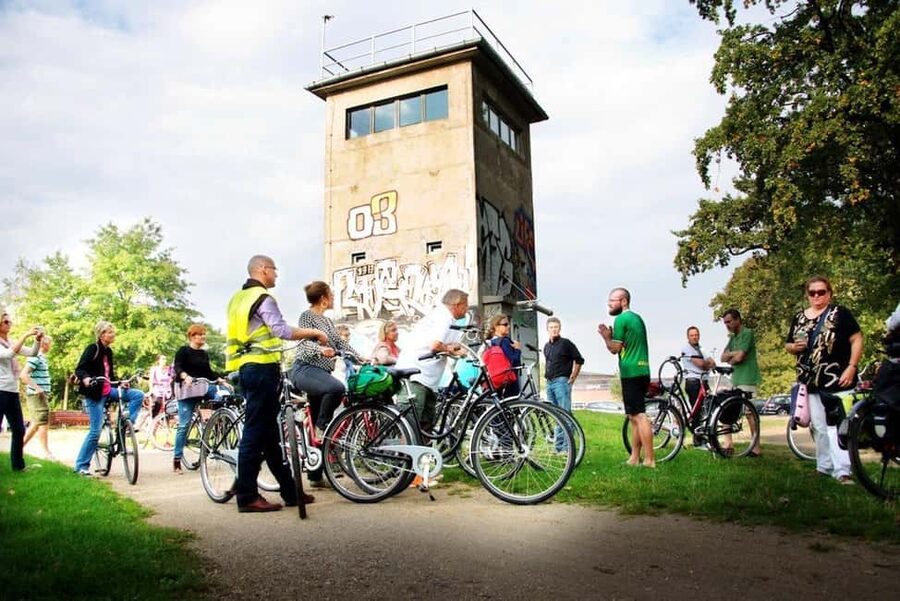
The guide is the heart of this experience. The available guides include Juliet, Jake, Bjorn, Simone, Dominick, Martin, Celine, Faima, and others, depending on the date and language. Tours are offered in English, German, and French.
Juliet has been described as friendly, personable, and especially strong at explaining Berlin’s complicated past. Jake has led tours in poor weather while keeping the group moving and interested. Martin has been praised for his humor and for taking visitors to less obvious places.
Celine has welcomed questions and shared information in a warm, open way. Faima has brought visible enthusiasm for Berlin, while Simone has been praised for her passion when explaining the Wall. These comments point to a consistent strength: the tour depends on a guide who can turn physical sites into understandable stories.
You should not book this expecting a recorded narration or an identical route every time. The Free Berlin concept gives guides room to design the tour. That is good if you value conversation and local interpretation. It is less ideal if you have a strict checklist of landmarks.
The guide can also adjust the pace to some extent. The information does not promise a fully customized route for every group, so it is wise to tell the guide at the start if you have a particular interest in the Wall, Nazi architecture, escape stories, or East Berlin life.
Weather, clothing, and physical effort
Rain does not automatically stop the tour. Waterproof ponchos are available, and one guide has been praised for handling very wet conditions. Still, you should dress for three hours outdoors. In winter, warm clothing and gloves are especially important.
The cycling is described as manageable even for people who are not regular riders, but it is still a physical activity. You will be on a bike for about 15 kilometers, with stops along the route. If you are comfortable with that distance, the tour should feel active rather than punishing.
The basket is useful for small personal items. Large luggage may be stored with the operator if you request it, which is helpful when you are going directly from a hotel or train connection.
An e-bike is available through the senior booking option. This is worth considering if you are concerned about stamina, although the supplied details do not specify the exact extra cost or whether every bike size is available on every departure.
Is $40 a fair price?
At $40 per person, the price is sensible for a three-hour guided experience. You are paying for the bike, the guide, the route planning, and the ability to cover about 15 kilometers without arranging transport between sites.
The comparison that matters is not just bike rental. A rental bike alone will not explain ghost stations, the Wall’s former border zone, the bunker remains, or the history of daily life in divided Berlin. The guide adds the meaning that connects these places.
The value is strongest if this is your first Berlin history tour. You can see a wide range of locations and use the ride to decide which subjects deserve a longer museum visit later. The value is lower if you already know the city well and want extended time at a small number of sites.
A 4.7 out of 5 average from 499 ratings also suggests a strong level of satisfaction, especially with the guides, route, and quality of the bicycles. The occasional limitation is clear: you may want more time at individual stops, and the flexible route means no single set itinerary is guaranteed.
You can cancel up to 24 hours ahead for a full refund, and you can reserve without paying immediately. Those terms make it easier to fit the tour into a changing Berlin schedule.
Who should book this Berlin bike tour?
I would choose this for a first or second visit to Berlin, especially if you want history with movement rather than a room-by-room museum visit. It suits couples, families with older children, and small groups who enjoy asking questions and covering ground.
It is particularly useful for anyone trying to understand how the Nazi period and Cold War fit into the shape of modern Berlin. The tour does not treat those eras as separate chapters. It shows how the same streets were repeatedly redesigned, divided, damaged, and reused.
You should think twice if you dislike cycling, need a fully predictable route, or want long visits at every stop. The group also needs to be ready for serious material, including dictatorship, war, escape attempts, and the realities of life behind the Wall.
If you book, arrive at the Poststraße 11 courtyard entrance early enough to find the Free Berlin sign, request a helmet if you want one, and tell the operator in advance if you need an e-bike or luggage storage. Wear layers, bring gloves in cold weather, and accept that the guide may adjust the route.
Should you book it?
Book this tour if you want a lively, well-informed introduction to Berlin’s Nazi and Cold War past and like the idea of seeing the city from a bicycle. The best reason to choose it is the combination of distance, personal storytelling, and access to side streets that buses cannot reach.
Skip it if your main goal is to enter bunker interiors or spend a long time at one memorial. For most visitors, though, $40 is a fair price for three hours of guided cycling, provided you are comfortable with the distance and the flexible itinerary.
FAQ
Where does the Berlin bike tour start?
Meet at the Free Berlin office in the courtyard entrance of the building at Poststraße 11. Look for the Free Berlin sign in Nikolaiviertel, about five minutes on foot from the TV Tower.
Where does the tour end?
The tour ends back at the meeting point at Poststraße 11.
How long is the activity?
The tour lasts three hours. Check the available dates for the starting times.
How far do you cycle?
The route covers about 15 kilometers. It mainly uses side streets and bike paths.
Is a bicycle included?
Yes. Bike rental is included in the tour price, and the rental bikes have baskets.
Is a helmet provided?
A bike helmet is available if you request one.
Can I take an e-bike?
Yes. To request an e-bike, book the senior option. The adjusted price includes the e-bike, and the provider will know that you have requested one.
What languages are available?
The live guide can lead the tour in German, English, or French.
Can I cancel or pay later?
You can cancel up to 24 hours before the activity for a full refund. You can also reserve now and pay later.
More bike tours in Berlin
- Berlin: Sights and Highlights Bike Tour with a Local Guide
★ 4.8 · 2,698 reviews - Berlin Highlights 3-Hour Bike Tour
★ 5.0 · 948 reviews - Berlin City Bike Tour with Beer Garden Stop
★ 5.0 · 917 reviews - Berlin Highlights: 3-Hour Bike Tour
★ 4.9 · 809 reviews
Newest Berlin reviews
- Where It All Began: Berlin’s Queer & Trans History Tour★ 4.9 · 6 reviews
- Understanding Kreuzberg: The roots of local (sub)culture★ 4.9 · 11 reviews
- Berlin: guided canoe | kayaktour★ 4.1 · 7 reviews
- Private Potsdam City Tour in an authentic vintage van★ 5.0 · 14 reviews
- Warnemünde Shore Excursion: Private Sachsenhausen and Berlin Tour★ 5.0 · 12 reviews
- Ultimate E-Bike Tour of Berlin with Beer Garden Stop★ 5.0 · 4 reviews
- In the Forbidden City – Potsdam Walking Tour★ 5.0 · 17 reviews
- Private Walking Tour of Potsdam and Sanssouci★ 5.0 · 24 reviews
Berlin Wall Tours, compared.
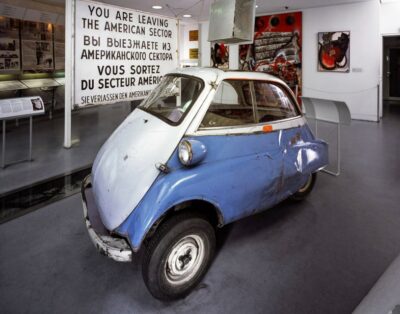
Skip-the-Line: Berlin Wall Museum at Checkpoint Charlie
Read our review →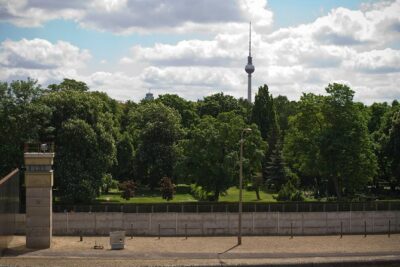
Cold War, Berlin Wall, Spies and the East Side Gallery
Read our review →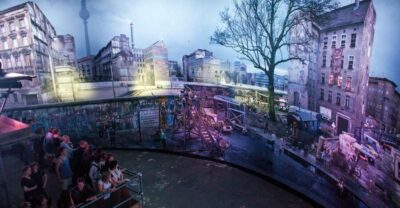
Cold War, Berlin Wall, Spies and the East Side Gallery
Read our review →Browse the lists this tour appears in