
Reviewed · WALKING TOURS
Berlin: Guided Walking Tour in English
Berlin makes more sense when you walk through its history in order. This 2.5-hour tour begins at Alexanderplatz and moves west through medieval Berlin, the Prussian era, Nazi Germany, the Cold War, and reunification. Instead of seeing isolated sights, you connect them into one clear story.
I like two things here. First, the route includes major landmarks without trying to cram in every corner of the city. Second, guides such as J.R., Jule, Ru, and Will have been praised for making the past engaging while sharing practical advice for the rest of your stay. The main drawback is the walking distance and the fact that food, drinks, and hotel pickup are not included.
Key points at a glance
- A chronological route: Start with Berlin’s medieval roots, then follow its story through monarchy, dictatorship, division, and reunification.
- A strong first-day orientation: Alexanderplatz, Museum Island, Checkpoint Charlie, and Brandenburg Gate help you understand central Berlin quickly.
- Several major sights from the outside: You see the TV Tower, Berlin Cathedral, Gendarmenmarkt, the Wall, and the former bunker site, but this is not an interior museum tour.
- A guide-led history lesson: J.R., Jule, Ru, and Will have each been praised for clear explanations, good energy, and useful local tips.
- A walk with a serious middle section: The route includes Hitler’s former bunker site and the Berlin Wall, so expect difficult history as well as grand buildings.
- Good booking flexibility: The tour costs $31 per person, is wheelchair accessible, and allows cancellation up to 24 hours before departure for a full refund.
Why this Berlin walk works as an introduction
Berlin can be confusing at first. Its old center is spread across several districts, and the grand buildings often sit beside empty spaces or modern construction. A guided walk gives those gaps meaning.
This route has a useful shape. You begin near Alexanderplatz, on the eastern side of the historic center, and finish at Brandenburg Gate in the west. Along the way, the city’s story unfolds in a sensible sequence. You see where medieval Berlin began, how the Hohenzollern rulers reshaped it, how Nazi power left scars, and how the Berlin Wall split the city before Germany reunited.
I especially like that the tour does not treat Berlin as a collection of pretty façades. The route includes attractive squares and grand architecture, but it also pauses at places tied to dictatorship, war, and division. That balance matters. Berlin is not just a capital of museums and monuments. It is a city where recent history remains close to the surface.
The $31 price is fair for a live, English-speaking walk lasting two and a half hours. You are paying for structure and explanation rather than entry tickets. If you want to go inside the museums or climb the TV Tower, you will need separate plans and extra time.
Other Berlin experiences to weigh up
- Berlin: Reichstag, Dome and Government District Guided Tour
★ 4.7 · 18,288 reviews - Berlin: Government District around the Reichstag Guided Tour
★ 4.7 · 8,447 reviews - Berlin: Hidden Backyards Guided Walking Tour
★ 4.8 · 5,360 reviews
Starting beside the Red Town Hall
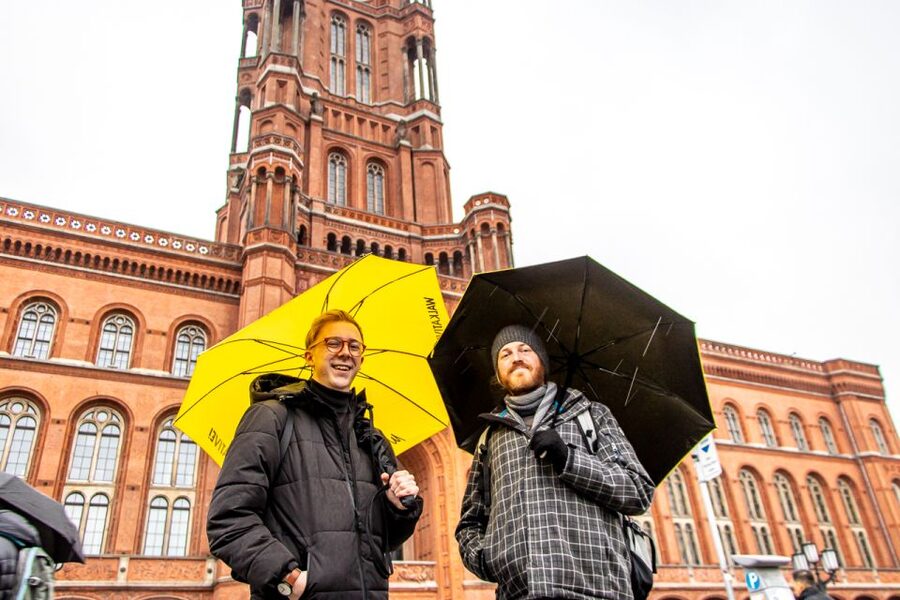
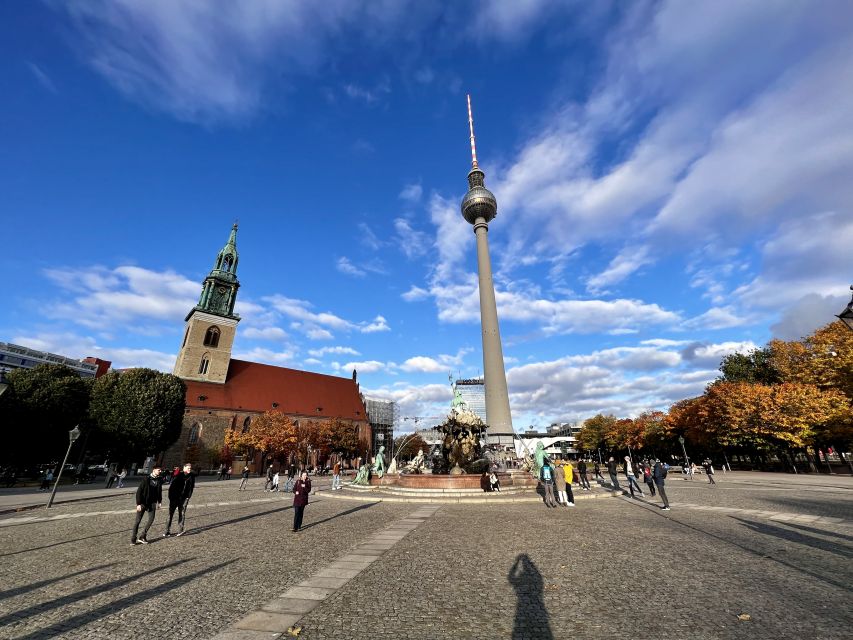
The meeting point is in front of the Red Town Hall, or Rotes Rathaus, close to the TV Tower and Neptune Fountain. Arrive about 10 minutes early. This is practical advice, not a formality, since central Berlin has several large public squares and landmarks that can look alike when you are hurrying.
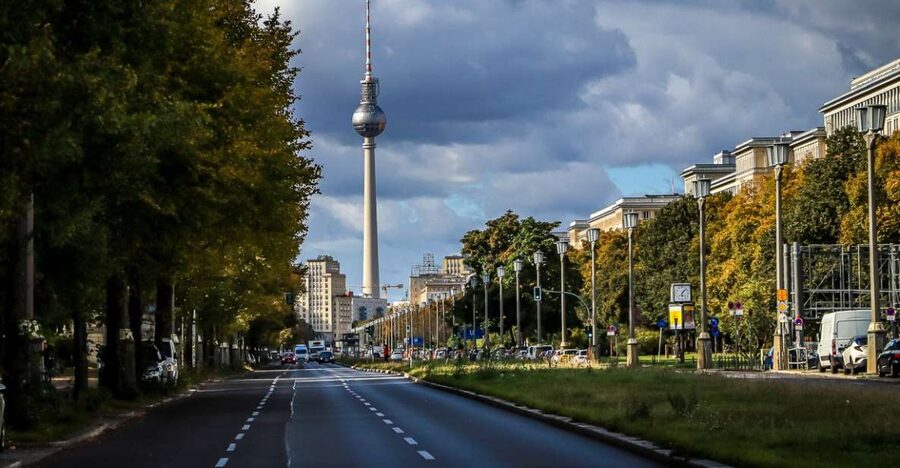
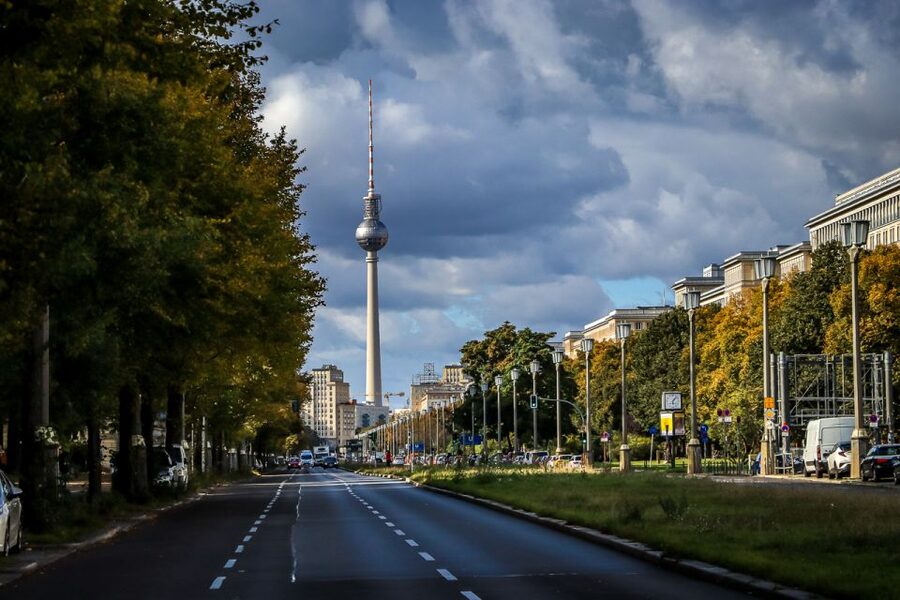
The start gives you a quick sense of Berlin’s changing identity. Alexanderplatz is linked with the former East Berlin, while the Red Town Hall and nearby Neptune Fountain help introduce the older city. You will also see the TV Tower, one of Berlin’s clearest modern symbols.
Your guide sets up the chronological method here. Rather than beginning with the best-known Nazi or Cold War landmarks, the walk starts with the smaller medieval settlement that existed before Berlin became a capital. That choice helps you see the city as a place with a long past, not only as a stage for twentieth-century events.
The opening area is also useful for orientation. If you are staying in central Berlin, you can return to Alexanderplatz by train, tram, or on foot. The tour does not include hotel pickup, so plan your route to the meeting point before you leave.
Medieval Berlin and the reconstructed Royal Palace
From Alexanderplatz, the walk moves toward the oldest part of Berlin. The original medieval town was small by modern standards, and that modest beginning makes the later size and power of the capital easier to understand.
You then pass the reconstructed former Royal Palace of the Hohenzollern. Its rebuilding has been controversial, and that controversy is part of what makes the site interesting. The building raises a basic question about Berlin: how should a city rebuild places tied to monarchy, war, destruction, and national identity?
A guide is valuable here because the building can be easy to treat as just another grand landmark. Instead, you get context about the Hohenzollern rulers and the role of the palace in Berlin’s development. You also see how modern Berlin continues to debate the meaning of its past.
Do not expect a long interior visit at this point. The focus is on the outdoor route and the story that connects one site to the next. If you want to explore the palace building on your own, allow separate time after the walk.
Museum Island and the view of Berlin Cathedral
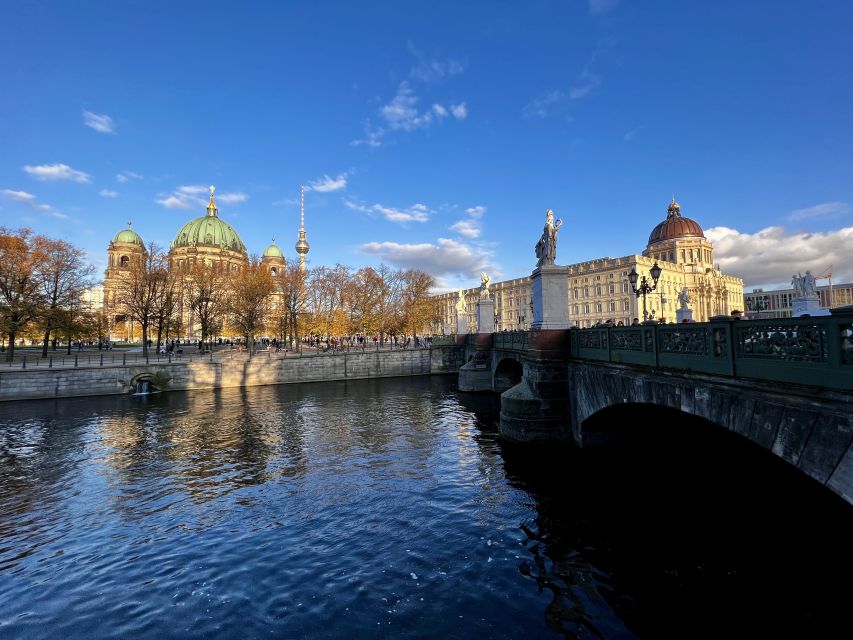
The next section reaches Museum Island, one of Berlin’s most memorable open spaces. The tour gives you time to enjoy the setting and the view toward Berlin Cathedral.
This is one of the most pleasant pauses on the route. After the busy feel of Alexanderplatz, the broad spaces around the museums and cathedral give you room to look around. The buildings show the ambition of Berlin as a royal and cultural capital, while the open area makes the city easier to read from a distance.
I like this stop because it offers more than a photo opportunity. Museum Island is also a useful marker for planning the rest of your visit. If you want to see Berlin’s museums, you can note the entrances and return later with more time. This walking tour does not include museum admission, so it works best as an introduction rather than a substitute for an inside visit.
The cathedral view is particularly helpful for first-time visitors. It gives you a fixed point in the center, and the guide can explain how the nearby institutions fit into Berlin’s political and cultural story. Bring weather-appropriate clothing, since this is an outdoor tour with no promise of shelter during every stop.
A different sort of day out in Berlin:
- Berlin: 1-Hour City Tour by Boat with Guaranteed Seating
★ 4.3 · 16,993 reviews - Berlin: Boat Tour Along the River Spree
★ 4.4 · 11,252 reviews - Discover Berlin Half-Day Walking Tour
★ 5.0 · 9,624 reviews - Berlin: Hop-on Hop-off Bus Tour with Live Commentary
★ 4.3 · 8,579 reviews
Humboldt University and the central streets
After Museum Island, the route passes Humboldt University and continues through the central streets. This is where the tour shifts from large open spaces to a more compact urban walk.
The university helps show Berlin as a center of learning and public life. The surrounding streets then bring you closer to the formal heart of the city, where institutions, squares, and monuments sit close together. You may find this section less immediately dramatic than Museum Island or Brandenburg Gate, but it gives the walk a steady rhythm.
A good guide can make these transitions matter. J.R. was praised for combining stories with practical hints for the following days, and Will received similar praise for making the tour both informative and enjoyable. Those small bits of advice can be useful early in a Berlin visit, when you are still working out which areas deserve more of your time.
The route is not designed as a race. Still, two and a half hours is a fixed window, so some stops will be explanations from the pavement rather than long pauses. Wear comfortable shoes and be ready to walk at a steady pace.
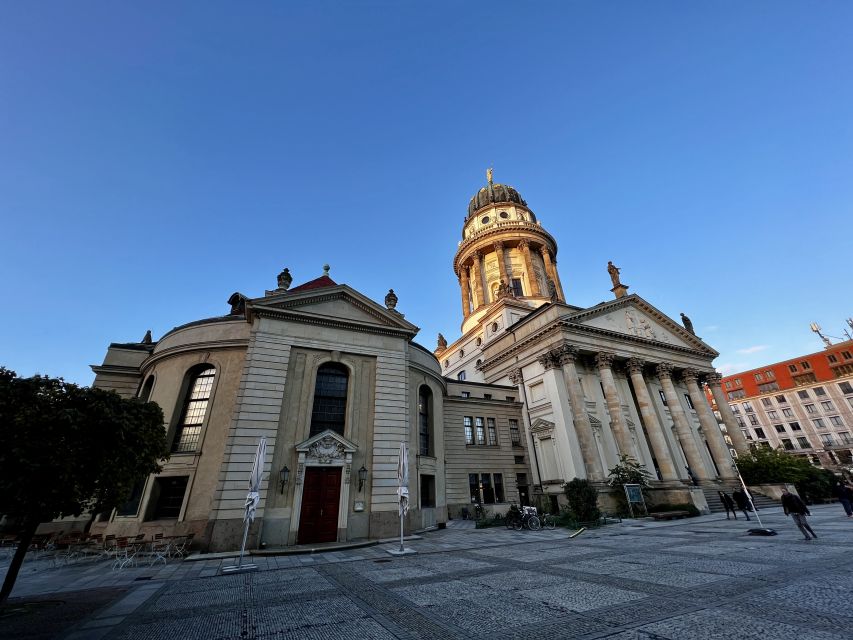
Gendarmenmarkt, Berlin’s elegant square
Gendarmenmarkt is often considered one of Berlin’s prettiest squares, and it provides a welcome change of mood. The space is more formal and visually balanced than many parts of central Berlin.
This stop shows the capital at its polished best. Grand buildings surround the square, and the overall design reflects the city’s ambition during its royal and later national periods. It is a good place to pause and take in the architecture without the heavy subject matter that comes later.
The square also helps explain why a chronological route is useful. Berlin’s history is not only a series of disasters. It includes periods of artistic, political, and architectural ambition. Seeing Gendarmenmarkt between the university area and the Wall gives you a fuller picture of the city.
The tradeoff is simple. You get an outdoor introduction, not an in-depth architectural study. If this is the sight that interests you most, use the tour to note it and return later for a slower look.
Checkpoint Charlie and the Berlin Wall
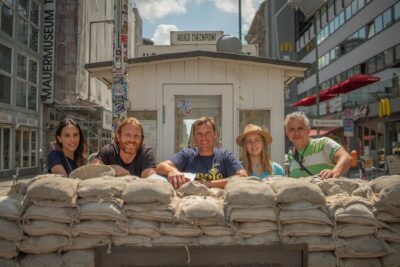
The mood becomes more serious at Checkpoint Charlie. Here, the guide explains the Berlin Wall and the division of the city during the Cold War.
Checkpoint Charlie is one of Berlin’s best-known names, but it can be hard to understand without context. The surviving traces and modern presentation do not always show the scale of the former border. A guide helps you picture how the division affected daily life and how this crossing became an international symbol.
This is an important part of the walk because it connects physical space with political history. You are not simply looking at where a wall once stood. You are learning how Berlin became two cities and why the border mattered far beyond Germany.
Keep your expectations realistic. The tour includes the Checkpoint Charlie area, but it is not described as a full Berlin Wall memorial visit. If you want a deeper look at the Wall, plan a separate visit to a dedicated memorial or museum. This walk gives you the framework so that a later visit makes more sense.
The former bunker site and Berlin’s darkest chapter
The route then passes the location where Hitler’s former bunker stood. This is one of the most difficult stops, partly because there is little conventional monumentality to admire.
That lack of a grand memorial is meaningful. The site prompts questions about how Berlin should mark the crimes of the Nazi period without turning a place of destruction into a shrine. Your guide explains the location as part of the larger story of Nazi Germany and the final days of the regime.
I appreciate that this stop is woven into the route rather than treated as a dramatic spectacle. The subject requires a serious tone, and the chronological approach helps you understand how Berlin moved from monarchy and national ambition to dictatorship and war.
You may want a short break after this section, especially if you are walking in cold weather or traveling with children. A December tour received praise for being mindful of the cold, but weather remains a real factor. Dress in layers and check the forecast before setting out.
Brandenburg Gate and the meaning of the finish
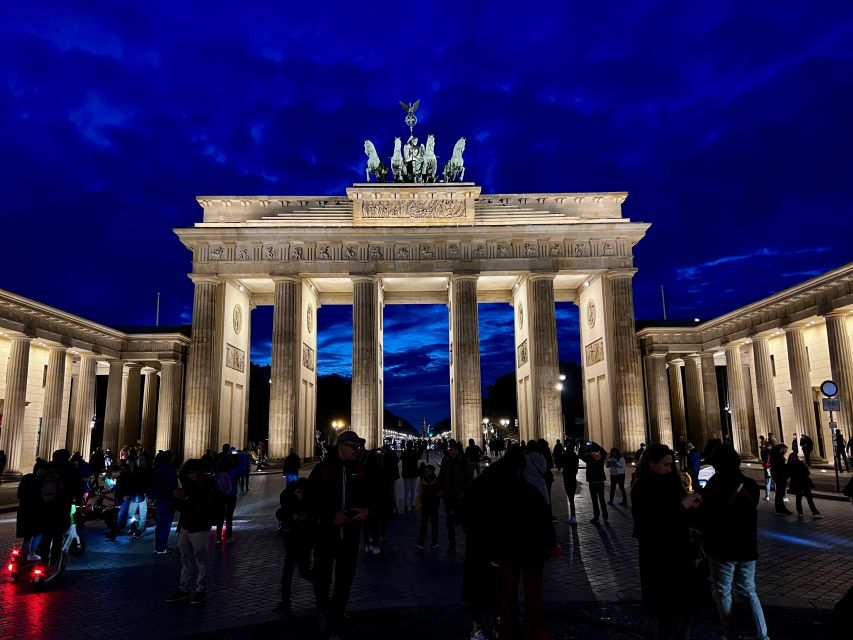
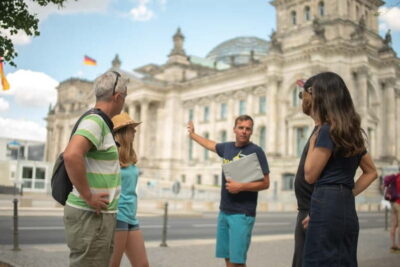
The final stop is Brandenburg Gate. Its classical archways make a strong visual ending, but the gate’s real importance comes from how its meaning changed over time.
It began as a grand entrance and later became a symbol tied to division. Today it represents German and European unity. Ending here gives the walk a clear final point: Berlin has moved from a small medieval settlement through royal rule, dictatorship, war, division, and reunification.
This is also a useful place to continue your sightseeing. From Brandenburg Gate, you can orient yourself toward other central landmarks, though this tour itself ends here. Take a moment to look back on the route. You have crossed a large part of the historic center and seen how different periods overlap in the modern city.
A strong final stop matters. Instead of ending at a random street corner, the tour finishes with a sight that sums up the city’s twentieth-century story. You leave with a better sense of why Berlin’s central spaces feel both grand and unsettled.
What the $31 price includes
The $31 fee covers the reservation and the guide’s payment. The activity is described as a general pay-as-you-wish tour, but in this booking the listed amount covers those costs. You do not need to plan a separate payment for the guide.
That makes the price easier to judge. You receive a live English-speaking guide, a carefully arranged route, and two and a half hours of explanation. You do not receive food, drinks, museum tickets, or transport.
For a first visit, I consider the value strongest if you want an overview before choosing which places to revisit. The walk helps you spend later sightseeing time wisely. It is less useful if you prefer to move slowly, take many photographs, or enter several buildings during one outing.
The tour has a 4.9 rating from 18 reviews, with repeated praise for the guides’ clear explanations and engaging delivery. J.R. was singled out for entertaining history and practical advice. Jule received warm praise for helping participants understand the city by walking it, while Ru was noted for adapting well to cold weather. Will was also praised for making the experience informative and enjoyable.
Those names do not guarantee who will lead your departure, but they give you a sense of the guiding style to expect: active, conversational, and focused on making Berlin understandable.
Who should book this walk
This tour suits first-time visitors who want a broad sense of central Berlin in one outing. It is also useful for anyone who likes history presented in a clear order rather than as disconnected facts.
You should book it if you enjoy walking, want an English-speaking local guide, and plan to visit museums or memorial sites on your own afterward. It can also work well early in your stay, since the route covers places you may want to revisit and the guides may offer practical ideas for the next few days.
Think twice if you want a relaxed stroll with long café breaks. There is no food or drink included, and the published route does not promise a restroom stop. One participant specifically wished the booking information had explained that point more clearly, so plan ahead before meeting the group.
The tour is wheelchair accessible, but the route still takes place outdoors across city streets and public spaces. Check the start time, arrive early, and contact the provider if you need more information about the exact route conditions.
Final verdict: a strong history-first choice
I would book this tour if I were arriving in Berlin and wanted the city to make sense quickly. The chronological route is its best feature. You move from medieval Berlin to the Hohenzollern palace, Museum Island, Gendarmenmarkt, the Wall, the former bunker site, and finally Brandenburg Gate without losing the thread.
The $31 cost is reasonable for a live guide and a well-planned overview. Just remember that this is an outdoor introduction, not a museum tour, food outing, or slow architectural walk.
Choose it for clear history, useful orientation, and a direct look at Berlin’s major turning points. Skip it only if you already know central Berlin well or prefer to explore at your own pace. For most first-time visitors, it is a practical way to get your bearings before spending the rest of your trip on deeper visits.
FAQ
How long does the Berlin walking tour last?
The tour lasts 2.5 hours.
What language is the tour conducted in?
The live tour guide speaks English.
Where does the tour meet?
The meeting point is in front of the Red Town Hall, or Rotes Rathaus, near the TV Tower and Neptune Fountain.
Where does the tour finish?
The walk finishes at Brandenburg Gate.
What sights are included on the route?
The route includes Alexanderplatz, the TV Tower area, medieval Berlin, the reconstructed former Royal Palace of the Hohenzollern, Museum Island, Berlin Cathedral, Humboldt University, Gendarmenmarkt, Checkpoint Charlie, the location of Hitler’s former bunker, and Brandenburg Gate.
Is the tour wheelchair accessible?
Yes, the activity is listed as wheelchair accessible.
What does the price include, and can I cancel?
The $31 price covers the reservation fee and the guide’s payment. Food and drinks, as well as hotel pickup, are not included. You can cancel up to 24 hours before the activity for a full refund.
Newest Berlin reviews
- Where It All Began: Berlin’s Queer & Trans History Tour★ 4.9 · 6 reviews
- Understanding Kreuzberg: The roots of local (sub)culture★ 4.9 · 11 reviews
- Berlin: guided canoe | kayaktour★ 4.1 · 7 reviews
- Private Potsdam City Tour in an authentic vintage van★ 5.0 · 14 reviews
- Warnemünde Shore Excursion: Private Sachsenhausen and Berlin Tour★ 5.0 · 12 reviews
- Ultimate E-Bike Tour of Berlin with Beer Garden Stop★ 5.0 · 4 reviews
- In the Forbidden City – Potsdam Walking Tour★ 5.0 · 17 reviews
- Private Walking Tour of Potsdam and Sanssouci★ 5.0 · 24 reviews
Walking Tours, compared.

Berlin’s Best: 2 Hour Walking Tour Third Reich and the Cold War
Read our review →
Third Reich Berlin: Hitler and WWII Walking Tour
Read our review →
Browse the lists this tour appears in