
Reviewed · BERLIN COLD WAR TOURS
Berlin: Muro,Guerra Fría y Museo de la Stasi
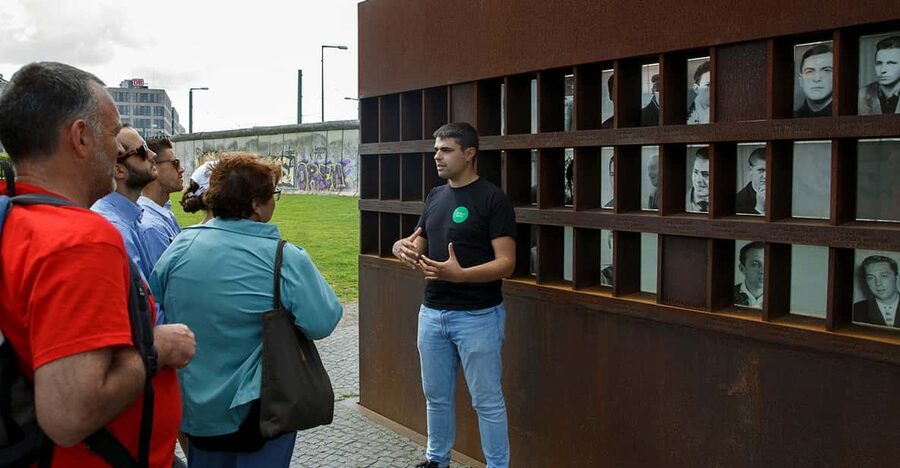
Berlin’s Cold War story is easiest to understand when you see the places where it happened. This four-hour Spanish-language tour links the Berlin Wall and Death Strip with Bernauer Strasse, Frankfurter Allee, former ghost stations, and the Stasi Museum. I like that it moves beyond the famous wall photos and shows how division shaped ordinary city life. I also like that guides such as Jordi and Constantino bring plenty of specific stories and invite questions.
The main drawback is practical: the $41 price does not include Berlin public transport, and you need an AB ticket for the day. Also, the Stasi Museum entrance is included, but the tour does not promise a private guided visit inside the museum itself. That distinction matters if you expect the guide to accompany you through every room.
Key points at a glance
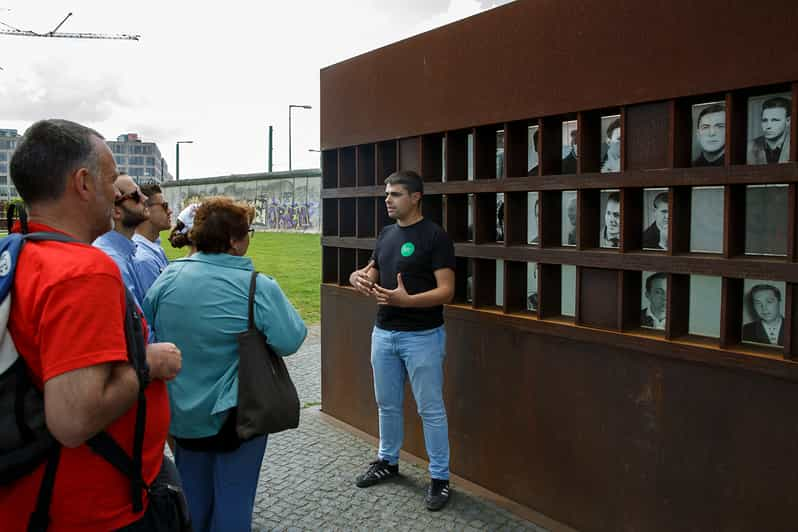
- Four hours of Cold War history in Spanish: The tour covers several parts of Berlin rather than focusing on one wall section.
- Bernauer Strasse gives the clearest wall story: See surviving wall structures, the former Death Strip, and the human cost of division.
- The Stasi Museum adds the surveillance angle: Learn how East Germany’s secret service monitored and controlled the population.
- Frankfurter Allee shows East Berlin’s planned face: This broad avenue helps explain the public image of the socialist capital.
- Former ghost stations reveal a divided underground: Berlin’s subway system was affected by the border too.
- Budget for an AB transport ticket: The tour price covers the Spanish guide, but not the required public transport.
Why this tour works for understanding divided Berlin
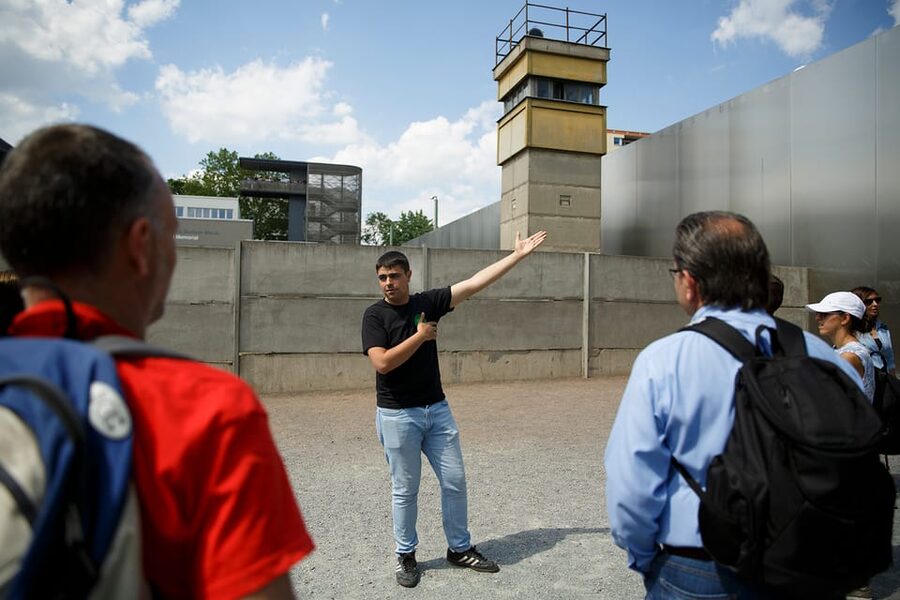
The Berlin Wall is easy to treat as a photo stop. You see a strip of concrete, take a picture, and move on. This tour gives that concrete a setting and a purpose. It explains why the wall was built, what the Death Strip meant, how Berliners tried to cross it, and why the border finally opened.
I like the way the route connects political decisions with daily life. A wall is an abstract idea until you learn how it split streets, families, workplaces, and transport lines. The former ghost stations make that point especially well. An underground train system that once served one city became part of the machinery of separation.
The tour is conducted in Spanish, which makes it a good choice if you want to follow a serious subject without working through it in a second language. The subject includes surveillance, escape attempts, repression, and loss, so a clear guide matters. Feedback about Constantino describes an enthusiastic guide who fills the route with anecdotes. Jordi is also praised for his competence, detail, and engagement.
That guide-led storytelling is the main reason to book rather than simply visit wall sites alone. Berlin has many memorials, plaques, and surviving fragments. Without context, you can miss what you are looking at.
More Cold War tours in Berlin:
- Berlin: Third Reich and Cold War 2 Hour Walking Tour
★ 4.9 · 6,830 reviews - Berlin’s Best: 2 Hour Walking Tour Third Reich and the Cold War
★ 5.0 · 5,486 reviews - Skip-the-Line: Berlin Wall Museum at Checkpoint Charlie
★ 4.1 · 2,041 reviews
Alexanderplatz is the easy starting point
The meeting point is beside the only entrance to the Fernsehturm, Berlin’s television tower, at Alexanderplatz. Look for the green flag marked tours en español, between the television tower and Alexanderplatz railway station, beside Espresso House.
This is a practical place to meet because the tower and station are hard to miss. Give yourself enough time to find the correct side of the tower. Alexanderplatz is large, and the directions depend on locating the tower entrance rather than a small street address.
Starting here also places you in an area that changed sharply after the Cold War. The tower was a major symbol of East Berlin, designed to project modernity and state confidence. The tour then moves into the more difficult questions behind that public image.
The supplied information does not give a fixed departure time, so check the available start times when booking. Since the route uses public transport, arriving early is sensible. You need a Berlin AB transport card for the day, and that cost is separate from the tour.
Bernauer Strasse and the Death Strip
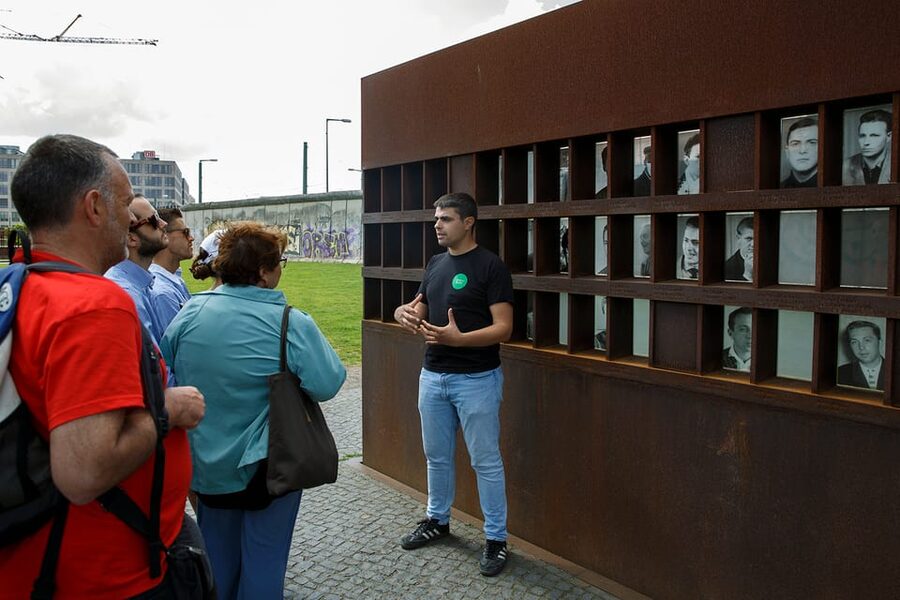
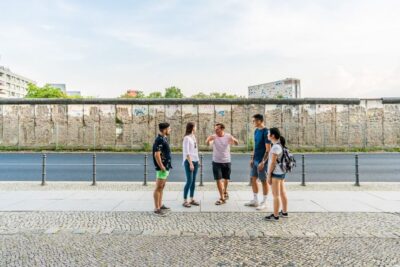
Bernauer Strasse is one of the most important stops because the wall did not simply run through empty land. It cut directly through a lived-in neighborhood. The memorial area preserves sections of the border system and helps you understand the space between East and West Berlin.
Here, you can see what remains of the wall and the former Death Strip. The term refers to the controlled border zone between barriers, not just a single concrete wall. That difference is important. The border included layers of security and open space designed to expose escape attempts.
This is also where the tour explains the ingenious ways some Berliners tried to cross the wall. The supplied details do not promise a particular escape tunnel or building interior, so you should expect stories and preserved sites rather than a guaranteed visit to every famous escape location.
I find Bernauer Strasse valuable because it combines physical remains with the human story. You are not just looking at a monument. You are considering how a street, a building, or a church could become part of an international border.
The stop may be emotionally demanding. The subject includes deaths, failed escapes, and the pressure placed on people who lived under a closed border. If you prefer light sightseeing, this is not that kind of outing. If you want Berlin explained honestly, it is essential.
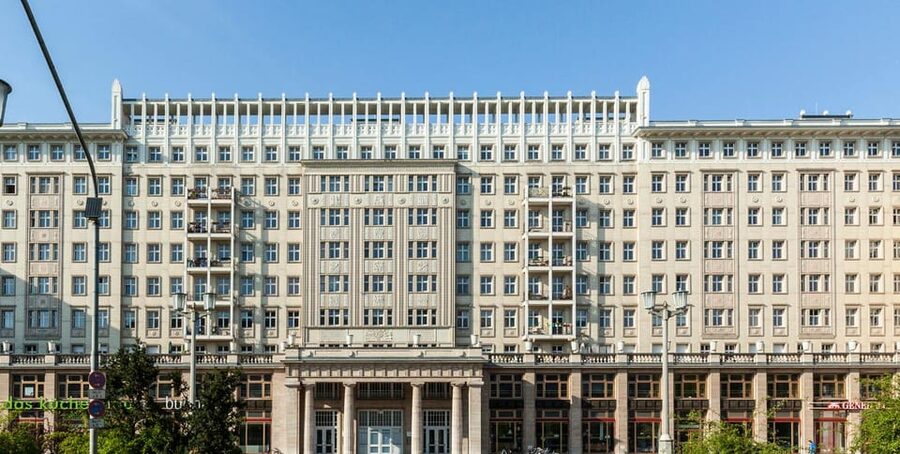
Frankfurter Allee and the public face of East Berlin
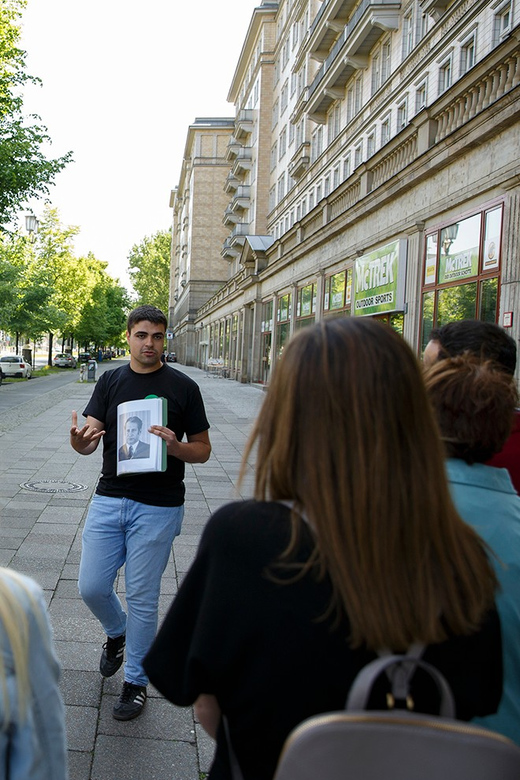
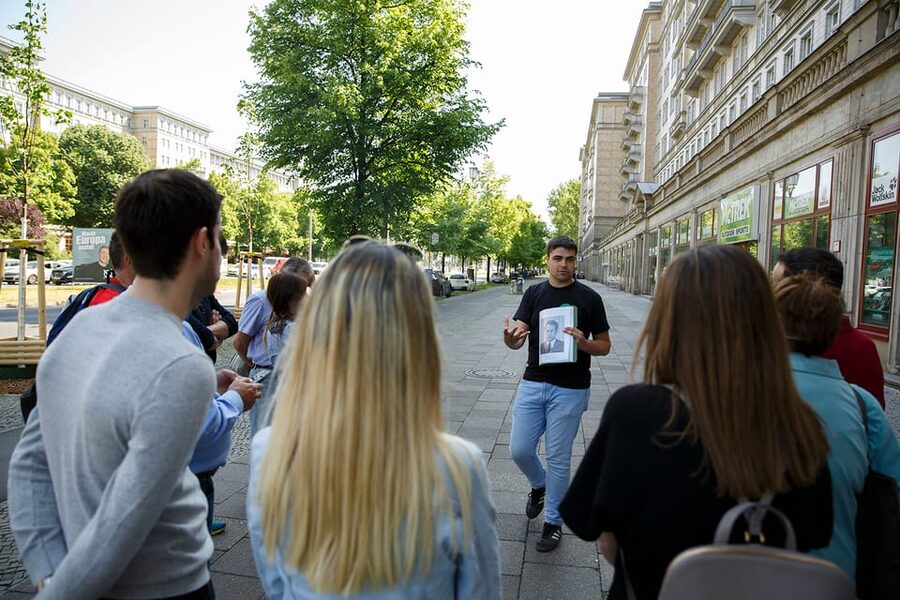
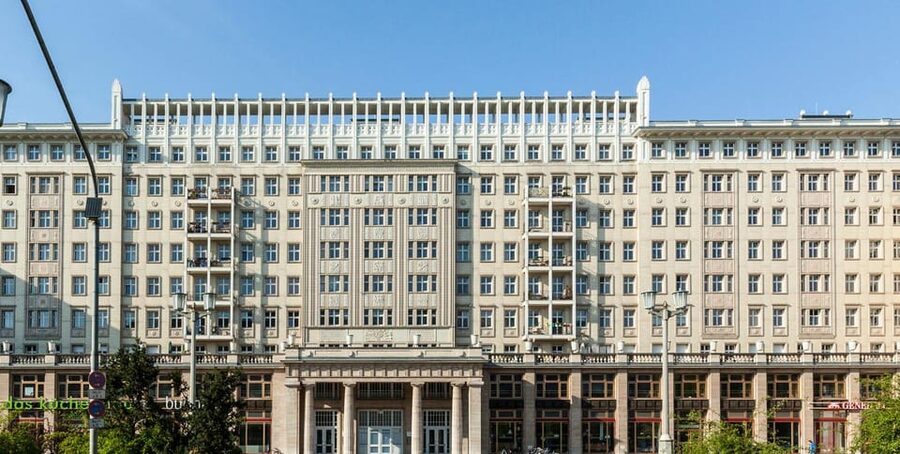
The tour also visits Frankfurter Allee, one of the major avenues associated with East Berlin. A broad avenue can tell you a great deal about how a government wanted its capital to look and function.
Here, the focus is not only on the wall. You get a wider view of the former East German city, including its planned public spaces and political image. This helps balance the darker parts of the tour. Berlin during the Cold War was not only a place of barriers and secret police. It was also a functioning capital with grand avenues, public buildings, and a state determined to shape how people saw their country.
The tour’s description does not list every building or stop along Frankfurter Allee, so the exact time spent there may vary. Still, its inclusion is useful. It shows that Cold War Berlin had more than one visual language: the guarded border, the official avenue, the railway network, and the private lives taking place behind them.
I would pay close attention to the guide here. This is the sort of stop that can seem ordinary until someone explains why the avenue mattered. A strong guide turns a wide road into evidence of a political system.
A different sort of day out in Berlin:
- Berlin: Reichstag, Dome and Government District Guided Tour
★ 4.7 · 18,288 reviews - Berlin: 1-Hour City Tour by Boat with Guaranteed Seating
★ 4.3 · 16,993 reviews - Berlin: Boat Tour Along the River Spree
★ 4.4 · 11,252 reviews - Discover Berlin Half-Day Walking Tour
★ 5.0 · 9,624 reviews
Former ghost stations beneath the city
Berlin’s underground lines were caught in the division too. Some stations became known as ghost stations because trains passed through without allowing passengers to enter or leave. The tour explores these former ghost stations as part of the city’s Cold War transport story.
This is one of the more unusual features of the route. Most visitors think of the wall above ground, but the border also affected what happened below it. The underground became a reminder that Berlin’s separation reached into the basic systems of urban life.
You should understand the wording carefully. The information says the tour explores former ghost stations, but it does not specify that you will enter every station or receive access to areas normally closed to the public. Expect an explanation of these places as part of the route, with public transport playing a role.
That public transport element is both a strength and a cost. You get a sense of Berlin as a connected city that was forced into separation. At the same time, you must buy the required AB ticket, so the final cost is a little higher than the headline price.
The Stasi Museum and everyday surveillance
The Stasi Museum gives the tour its clearest look at state control. The Stasi was East Germany’s secret service, and the museum examines the methods it used to monitor the population.
The museum is housed in the former headquarters of the Ministry for State Security, according to the experience’s focus on the Stasi’s control system. The supplied information specifically promises entrance to the museum, allowing you to see the setting connected with that bureaucracy rather than hearing about it only from the street.
The museum visit matters because it shifts the story from the visible wall to the invisible pressure behind it. The border kept people from leaving, while surveillance helped the state watch those who stayed. You can think of the tour as having two halves: the physical division of Berlin and the social control that supported it.
One practical point deserves emphasis. The price includes entry to the Stasi Museum, but the description does not say that the guide provides a fully guided museum tour. One person who booked the experience expected a guided museum visit and found the itinerary different from that assumption. I would clarify this before booking if museum interpretation is your main reason for coming.
The museum may also feel denser than the outdoor stops. Four hours is enough to introduce the subject, but not enough to cover every document, room, and surveillance method in detail. If you want to read everything, plan to return on your own.
How the guide shapes the day
This tour depends heavily on the guide. Cold War Berlin is not difficult because there are no sights. It is difficult because there are so many layers: Nazi Germany, postwar occupation, the creation of East and West Germany, the wall, escape attempts, surveillance, and reunification.
A good guide keeps those layers in order. The comments about Constantino point to an enthusiastic style with plenty of anecdotes. Jordi is praised for being competent, engaged, and willing to explain the wall in detail. One German participant also found the tour highly informative and learned new things about the country’s past.
Those details suggest a tour that works best when you ask questions. You can ask for clarification about the wall, the underground stations, the Stasi, or what changed after the border came down. The experience specifically includes discussion of why the wall fell and how Berlin developed afterward.
The tone is serious but not necessarily dry. A guide who uses personal anecdotes can help you see how large political events affected ordinary people. Still, guide quality can vary by departure, and the named guides are not guaranteed for every date. Book this for the Spanish-language subject and route first, with the individual guide as a welcome bonus.
What the $41 price really covers
At $41 per person, the tour is fairly priced if you want a structured introduction to Cold War Berlin. You are paying for four hours with a Spanish-speaking guide, access to several locations, and Stasi Museum admission.
The value is strongest for first-time visitors who would otherwise spend much of the day piecing together separate sites. Bernauer Strasse, Frankfurter Allee, former ghost stations, and the Stasi Museum are not one compact attraction. Public transport connects them, and a guide supplies the thread.
The price is less attractive if you already know Berlin’s Cold War story well or plan to visit the museum and memorial independently. You will still need the AB transport ticket, and food and drinks are not included. Treat the advertised price as the starting point, not the complete out-of-pocket cost.
Four hours is a useful length. It is long enough to move beyond a quick wall photograph, but short enough to fit into a day of sightseeing. Because the topic is serious, the schedule also gives you a broad introduction without asking you to spend an entire day in museums and memorials.
Who should book this experience
I would recommend it to Spanish-speaking visitors who want history explained in context rather than collected as isolated sights. It suits adults, students, and anyone curious about how political division shaped transport, architecture, neighborhoods, and personal freedom.
It is also a good choice if you have limited time in Berlin. The route gives you several Cold War touchpoints in one outing, including the Bernauer Strasse memorial and Stasi Museum.
You may prefer another plan if you want a leisurely museum visit. The four-hour route has several subjects to cover, and the museum portion may not satisfy someone who wants to read every display. You should also be comfortable using public transport during the tour and paying separately for the AB ticket.
The tour is listed as wheelchair accessible, but the route uses public transport and includes multiple locations. If you have specific mobility needs, confirm the practical route details before booking.
Practical details before you reserve
You can cancel up to 24 hours in advance for a full refund, and the booking option allows you to reserve now and pay later. These policies are useful if your Berlin schedule is still changing.
The tour is offered in Spanish with a live guide. Food and drinks are not included, so bring what you need for four hours. The meeting point is at Alexanderplatz, beside the Fernsehturm entrance, near Espresso House and the railway station.
Most important, buy the Berlin AB transport ticket before setting out. The tour does not include it, and the information specifically says a one-day AB card is necessary.
Should you book the Berlin Cold War tour?
Book it if you want a serious, Spanish-language explanation of Berlin’s division, especially if Bernauer Strasse and the Stasi Museum are high on your list. The route combines physical remains, transport history, state surveillance, and the eventual fall of the wall in one manageable four-hour outing.
Skip it if you want a fully guided museum tour, a slow visit to one site, or a tour with no extra transport cost. For most Spanish-speaking first-time visitors, though, the combination of strong storytelling, several meaningful locations, and a $41 base price makes this a useful way to understand the city beyond its postcard images.
FAQ
What language is the tour conducted in?
The live tour guide speaks Spanish, and the experience is designed for Spanish-speaking visitors.
How long does the tour last?
The tour lasts four hours.
What places are included?
The route includes sections of the Berlin Wall and former Death Strip, Frankfurter Allee, the Bernauer Strasse Wall Memorial, former ghost stations of the underground lines, and the Stasi Museum.
Is the Stasi Museum entrance included?
Yes. Entrance to the Stasi Museum is included in the tour.
Is public transportation included?
No. You must buy a Berlin AB transport ticket separately. A one-day AB card is necessary for the tour.
Where is the meeting point?
Meet beside the only entrance to the Fernsehturm at Alexanderplatz, between the television tower and Alexanderplatz railway station, beside Espresso House. Look for a green flag marked tours en español.
Can I cancel the booking?
Yes. You can cancel up to 24 hours in advance for a full refund. You can also reserve now and pay later.
Newest Berlin reviews
- Where It All Began: Berlin’s Queer & Trans History Tour★ 4.9 · 6 reviews
- Understanding Kreuzberg: The roots of local (sub)culture★ 4.9 · 11 reviews
- Berlin: guided canoe | kayaktour★ 4.1 · 7 reviews
- Private Potsdam City Tour in an authentic vintage van★ 5.0 · 14 reviews
- Warnemünde Shore Excursion: Private Sachsenhausen and Berlin Tour★ 5.0 · 12 reviews
- Ultimate E-Bike Tour of Berlin with Beer Garden Stop★ 5.0 · 4 reviews
- In the Forbidden City – Potsdam Walking Tour★ 5.0 · 17 reviews
- Private Walking Tour of Potsdam and Sanssouci★ 5.0 · 24 reviews
Berlin Cold War Tours, compared.
Berlin’s Best: 2 Hour Walking Tour Third Reich and the Cold War
Read our review →
Skip-the-Line: Berlin Wall Museum at Checkpoint Charlie
Read our review →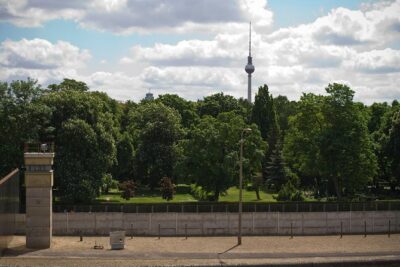
Cold War, Berlin Wall, Spies and the East Side Gallery
Read our review →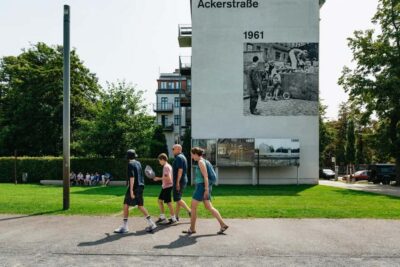

Listening Station Teufelsberg Tour with Transfer
Read our review →Browse the lists this tour appears in