
Reviewed · WALKING TOURS
An Introduction to Berlin Walking Tour
Berlin’s past is packed into this three-hour walk and transit tour, from Prussian kings and military power to the divided city of the Cold War. You’ll see the Reichstag, Brandenburg Gate, Museum Island, Potsdamer Platz, the Holocaust Memorial, and more, with a historian tying the pieces together.
I like the small maximum of eight people, which gives your guide room to answer questions and adjust the pace. I also like the route’s range: you get grand monuments, a quiet memorial, a rebuilt square, and the everyday courtyards of Hackescher Markt. The catch is that the $156.53 price does not include public transportation, food, or drinks, so this is an expensive three hours once you add your transit ticket.
Key points to know before booking
- Eight major Berlin sights: The route covers the Reichstag, Brandenburg Gate, Museum Island, Potsdamer Platz, Unter den Linden, Tiergarten, the Holocaust Memorial, and Hackescher Markt.
- A history-first experience: The tour connects Prussian militarism with Berlin’s later 20th-century conflicts and its modern democratic identity.
- Small-group attention: The group is limited to eight people, a useful size for questions and conversation.
- Public transport is part of the plan: Some gaps are too far to walk, so you need a Berlin transit ticket or help buying one at the first station.
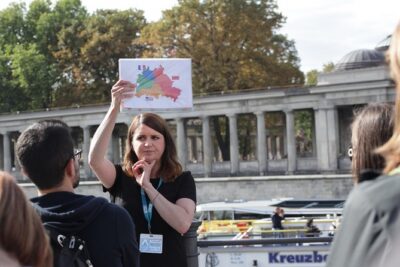
- Experienced guides: Guides include professors, doctoral students, journalists, and enthusiastic local hosts. A guide named Dan has also led the route.
- A fast but broad introduction: Three hours gives you a strong first look, but not enough time to enter the major museums or tour the Reichstag dome.
What this three-hour Berlin tour is really about
This is not just a walk from one postcard view to another. The route gives you a quick way to read Berlin through its changing political centers.
You begin near Unter den Linden, the grand boulevard that links the former City Palace area with Brandenburg Gate. From there, the tour moves through government buildings, royal institutions, memorials, Cold War scars, and a lively district shaped by pre-war Berlin.
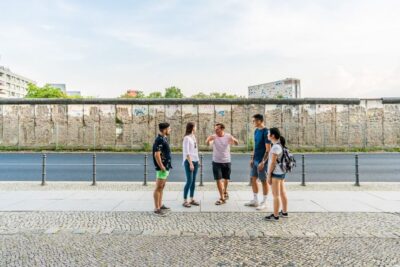
That sequence matters. Berlin can feel scattered at first. One moment you are looking at a formal Prussian avenue, and the next you are facing the empty space where the Wall once divided the city. A guide helps you connect those places instead of treating them as unrelated stops.
The focus is especially useful if you want to understand how early Prussian militarism influenced Berlin in the 19th and 20th centuries. You also get the political story behind the city’s modern symbols, including the Reichstag dome and Brandenburg Gate.
The tour is offered in English and lasts about three hours. It is designed for a small group capped at eight people, so you are not trying to hear a lecture over a crowd.
Other Berlin experiences to weigh up
- Discover Berlin Half-Day Walking Tour
★ 5.0 · 9,624 reviews - Berlin: Third Reich and Cold War 2 Hour Walking Tour
★ 4.9 · 6,830 reviews - Berlin: Discover Berlin Walking Tour
★ 4.9 · 5,998 reviews
Reichstag Building: a modern symbol of open government
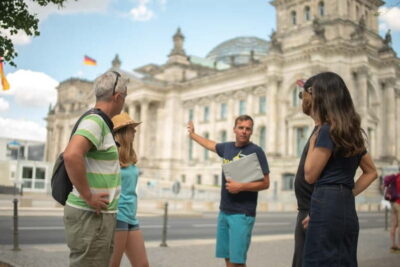
The first stop is the Reichstag, home of the Bundestag, Germany’s lower house of parliament. You spend about 15 minutes here, with free admission to the exterior stop.
The building is important for two reasons. First, it represents Germany’s national legislature. Second, its glass dome, designed by Norman Foster in the 1990s, has become a visual sign of modern Germany’s commitment to democratic government.
The transparent dome is not just a striking piece of architecture. It also gives the building a different message from the heavy imperial structures nearby. Your guide can place that contrast within Berlin’s broader story of monarchy, dictatorship, division, and reunification.
Do not expect to enter the dome during this tour. The supplied schedule lists the Reichstag as a brief stop with free admission, not as a booked interior visit. If seeing the dome from inside matters to you, plan that separately.
Brandenburg Gate: from royal entrance to Cold War stage
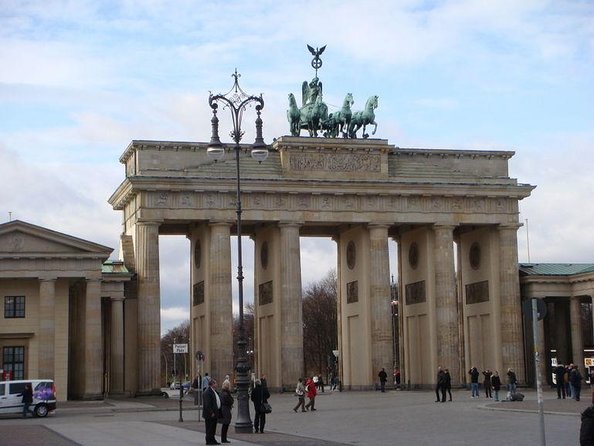
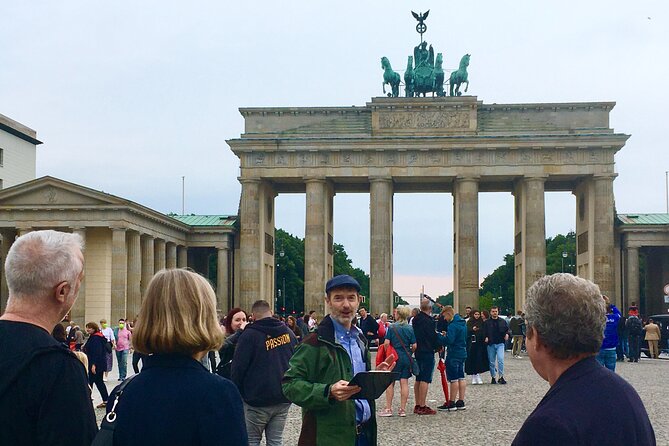
The Brandenburg Gate receives about 20 minutes. Built in the 18th century on the orders of Prussian king Frederick William II, it began as a neoclassical monument linked to royal power.
Its later story is far bigger than its original purpose. Napoleon passed through after his victory, and Ronald Reagan delivered his Cold War speech here. The gate became tied to the division of Berlin and later to the city’s reunification.
This is one of the places where a guide adds real value. The gate is easy to photograph, but its meaning changed with every political era. You can look at the same columns and see a Prussian royal monument, a symbol used during Germany’s troubled 20th century, and a public stage for democratic reunification.
The area can be busy, and 20 minutes passes quickly. Still, the stop works well as an introduction to Berlin’s habit of reusing old symbols for new political purposes.
Museum Island: five museums, one powerful setting
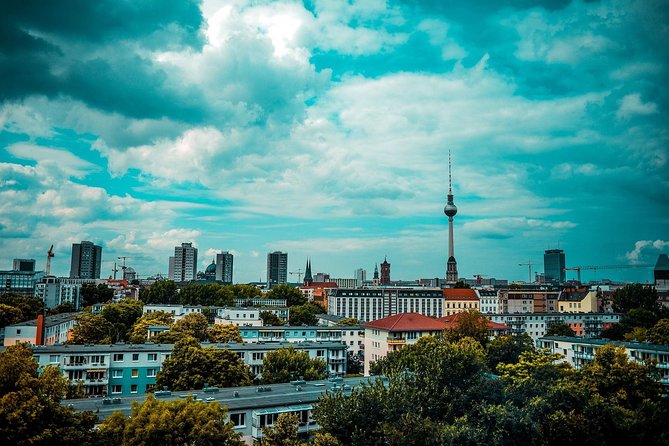
Museum Island gets about 25 minutes. The island sits on the Spree in central Berlin and contains five major museums built under Prussian rulers.
The named institutions include the Pergamon Museum, the Neues Museum, and the Alte Nationalgalerie. The important point for this tour is not an interior museum visit. It is the island’s role as a planned center of art, scholarship, and royal cultural ambition.
You will see several museum buildings from the outside and learn how they fit into Berlin’s old center. This is a useful orientation stop if you plan to return for a museum day.
Allow yourself more time later if you want to visit the collections. Twenty-five minutes is enough to understand the setting, but not enough to explore even one large museum properly. The tour gives you the framework, then you decide which building deserves a longer visit.
A different sort of day out in Berlin:
- Berlin: Reichstag, Dome and Government District Guided Tour
★ 4.7 · 18,288 reviews - Berlin: 1-Hour City Tour by Boat with Guaranteed Seating
★ 4.3 · 16,993 reviews - Berlin: Boat Tour Along the River Spree
★ 4.4 · 11,252 reviews - Berlin: Hop-on Hop-off Bus Tour with Live Commentary
★ 4.3 · 8,579 reviews
Unter den Linden: Berlin’s ceremonial spine
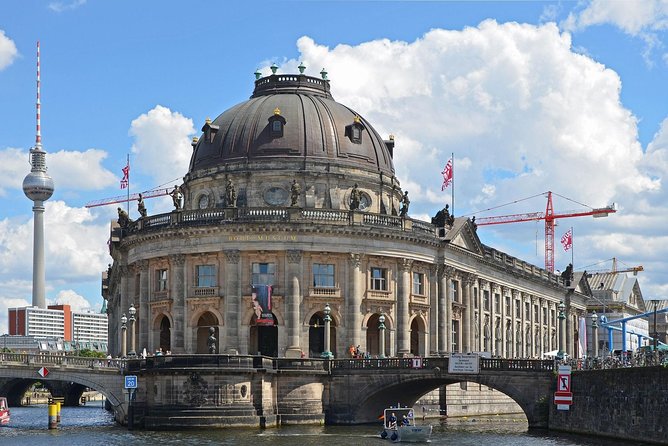
The tour spends about 30 minutes along Unter den Linden, the boulevard named for the linden trees lining it. It runs from the former City Palace area toward Brandenburg Gate and was Berlin’s answer to Paris’s Champs-Élysées.
This is one of the best places to see how Berlin expressed power through urban planning. The broad avenue links royal, military, cultural, and political institutions. Its scale tells you that the city was built to project authority.
The stop is also a good chance to slow down and look at the city as a whole. Rather than focusing on one monument, you see how the boulevard organizes the center.
The amount of time here is generous compared with some of the shorter stops, but the experience remains a walking overview. You will not examine every building in detail. Instead, you will learn why the avenue matters and how it fits into Berlin’s development.
Tiergarten: a pause in the middle of the city
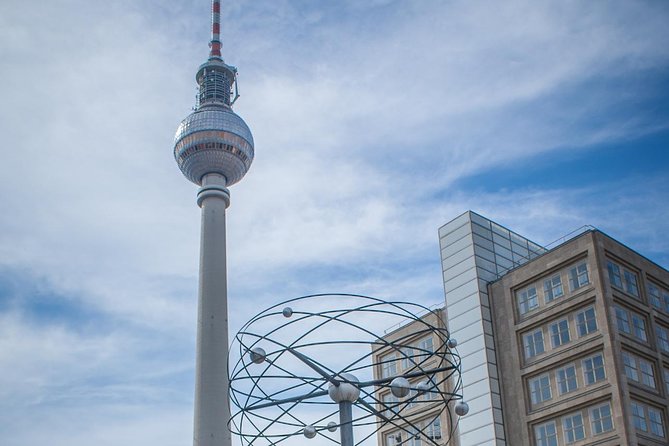
The tour gives Tiergarten about 10 minutes. Berlin’s best-known inner-city park contains formal gardens and grand statuary, offering a softer break from the stone avenues and political monuments.
This short stop helps you understand the city’s physical balance. Berlin’s center is not only government buildings and memorials. It also includes a large green park woven into the central districts.
Ten minutes is enough for a brief look, not a proper park visit. If you enjoy gardens, walking paths, or statues, return on your own. During the tour, treat Tiergarten as a quick change of mood and a chance to reset before the more serious memorial stop.
The Holocaust Memorial: a place for quiet reflection
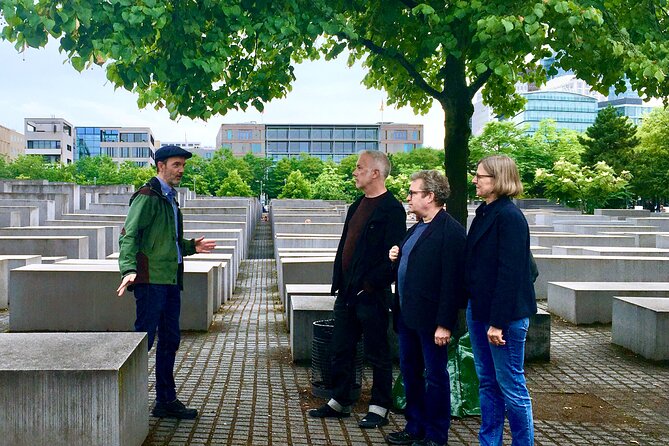
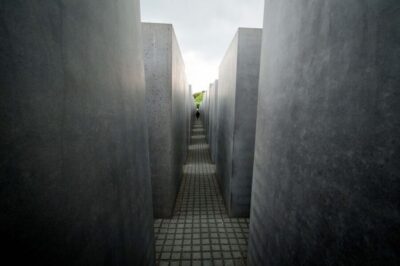
The Memorial to the Murdered Jews of Europe receives about 10 minutes. Designed by Peter Eisenman and opened in 2005, it contains 2,711 concrete slabs of different heights.
The layout forms a powerful, solemn space that you can enter and walk through. The changing height of the slabs alters your sense of direction and scale. It is not a conventional monument with a long written explanation. The experience depends heavily on the physical space.
Your guide can provide historical context, but this is also a stop where you should allow some silence. Ten minutes may feel short, yet the memorial’s design makes a brief visit meaningful.
Treat the memorial with care. This is not simply another photo stop. The route places it near the end of its central Berlin section, after you have learned about government, war, division, and political power. That context gives the site added weight.
Potsdamer Platz: a square rebuilt after the Wall
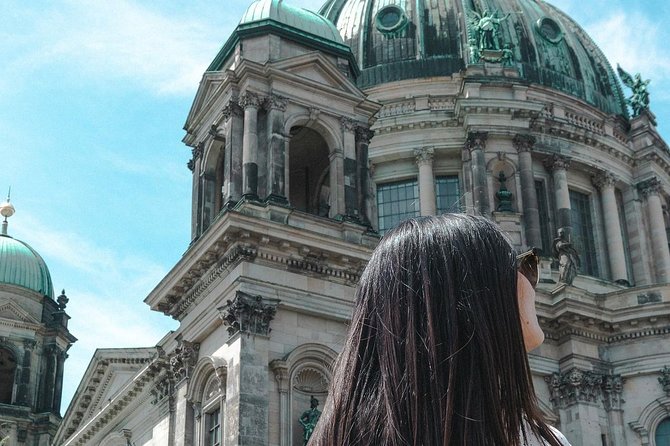
Potsdamer Platz gets about 15 minutes. Once a major urban center, it was transformed after the fall of the Berlin Wall into a district filled with entertainment, restaurants, and shops.
The attraction here is the contrast between absence and reconstruction. Berlin’s division left many central areas cut off or damaged. After reunification, Potsdamer Platz became a visible sign of the city’s attempt to rebuild and reconnect.
This stop will suit you if you want to see modern Berlin alongside its older monuments. It also gives the tour a practical urban angle. You are not only hearing about the Wall as a political boundary. You are seeing a former divided zone turned into a place for daily city life.
Fifteen minutes is enough for an explanation and a look around. It is not enough for shopping, eating, or exploring the surrounding buildings, so save those activities for after the tour.
Hackescher Markt: courtyards and pre-war Berlin
The final named stop is Hackescher Markt, with about 15 minutes in the schedule. The square offers a look at preserved Art Nouveau courtyards from pre-war Berlin.
This stop changes the tone again. After royal avenues, parliament, memorials, and Cold War sites, you see a more intimate side of the city. The courtyards help show how Berlin’s history survives in ordinary urban spaces, not only in official monuments.
The area also gives you a useful finish because it is associated with restaurants and city life. A guide named Dan has left a small group at a delicious Italian restaurant for lunch, so you can ask your guide for a food suggestion at the end. That is not included, but it makes the stop practical as well as scenic.
How public transportation affects the route
The route is not a continuous three-hour walk. Some attractions are too far apart, so you will use public transportation a few times.
That is important when planning your day. Wear comfortable shoes, but do not assume you can simply walk from every stop. If you already have a Berlin visitor transit pass, bring it. If not, the suggested options are:
- A Berlin AB one-way ticket: 2.80 euros
- A senior one-way fare: 1.70 euros
- A Berlin AB day ticket for one person: 7 euros
- A senior day ticket: 4.70 euros
If you cannot buy a ticket in advance, the guide can help you purchase one at the first metro station. That support is useful if Berlin’s fare zones or ticket machines are unfamiliar.
The day ticket may make sense if you plan to continue sightseeing after the tour. If you only need the rides connected with this experience, compare the total cost of one-way tickets. The exact number of rides can vary with the route on the day.
Is $156.53 a fair price?
At $156.53 per person, this is not a budget sightseeing walk. The price needs to be judged against the small group and the guide’s background, not against the number of places you photograph.
You are paying for a three-hour explanation of Berlin’s political and architectural story, led by a historian or another guide described as a professor, doctoral student, journalist, or enthusiastic local host. The group limit of eight is the biggest practical advantage. You can ask questions without waiting behind a large tour group, and the guide has more room to adjust the discussion.
The price is easier to justify if you want context and personal attention. It is harder to justify if you only want quick introductions to the sights or plan to visit Berlin’s museums and monuments independently.
Remember to add public transportation. Food, drinks, hotel pickup, and hotel drop-off are not included. The meeting point is Unter den Linden 42, and the tour finishes in Berlin rather than returning to a listed hotel.
Who will get the most from this experience?
I would choose this tour for a first or second day in Berlin, especially if you want the city’s major sites explained before exploring them on your own.
It suits you if:
- You enjoy architecture and urban history.
- You want a guide who can connect Prussian rule, 20th-century conflict, and modern democracy.
- You prefer a group of eight or fewer.
- You are comfortable using public transportation during a guided route.
- You want a broad introduction rather than long museum visits.
- You have questions and value direct conversation with a guide.
An architecture fan may get particular value from the route. The combination of the Reichstag’s modern glass dome, the neoclassical Brandenburg Gate, Museum Island’s formal cultural buildings, and the rebuilt Potsdamer Platz creates a strong visual study of Berlin.
You may want something else if you need hotel pickup, dislike switching between walking and transit, or want extended time inside museums. This is an overview, not a full-day historical expedition.
Booking, cancellation, and practical details
Confirmation is provided at booking, and the tour operates near public transportation. Most people can participate.
Free cancellation is available up to 24 hours before the scheduled start time for a full refund. Cancellations or changes made less than 24 hours before the start time are not accepted for a refund, and the cut-off follows local Berlin time.
The tour is offered in English. Since it covers several outdoor sites, check the weather before leaving and allow time to reach Unter den Linden 42. The group may move at a steady pace, with short stops rather than long periods at one site.
Should you book this Berlin walking tour?
Book it if you want a compact, serious introduction to Berlin’s past and value a guide who can explain why the city looks the way it does. The small group, broad route, and historian-led format make it more useful than a simple monument checklist.
Skip it if you want the lowest-cost way to see the sights, or if your priority is entering the Reichstag dome and spending hours inside Museum Island’s museums. For everyone else, the tour offers a smart first look, provided you budget for transit and accept that three hours means breadth over depth.
FAQ
How long is the Berlin walking tour?
The tour lasts approximately three hours.
What language is the tour offered in?
The tour is offered in English.
How large is the tour group?
The maximum group size is eight travelers.
Where does the tour start?
The tour starts at Unter den Linden 42, 10117 Berlin, Germany.
Does the tour include transportation between attractions?
No. You need to use Berlin public transportation between some stops, and transit tickets are not included. The guide can help you buy a ticket at the first metro station if needed.
Are food and drinks included?
No. Food and drinks are not included.
Can I cancel for a full refund?
Yes. You can cancel at least 24 hours before the experience start time for a full refund. Cancellations or changes made less than 24 hours before the start time are not accepted for a refund.
Newest Berlin reviews
- Where It All Began: Berlin’s Queer & Trans History Tour★ 4.9 · 6 reviews
- Understanding Kreuzberg: The roots of local (sub)culture★ 4.9 · 11 reviews
- Berlin: guided canoe | kayaktour★ 4.1 · 7 reviews
- Private Potsdam City Tour in an authentic vintage van★ 5.0 · 14 reviews
- Warnemünde Shore Excursion: Private Sachsenhausen and Berlin Tour★ 5.0 · 12 reviews
- Ultimate E-Bike Tour of Berlin with Beer Garden Stop★ 5.0 · 4 reviews
- Potsdam Highlights – Private sightseeing tour by minibus★ 5.0 · 3 reviews
- In the Forbidden City – Potsdam Walking Tour★ 5.0 · 17 reviews
Walking Tours, compared.
Berlin’s Best: 2 Hour Walking Tour Third Reich and the Cold War
Read our review →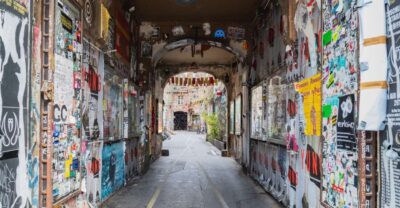
Third Reich Berlin: Hitler and WWII Walking Tour
Read our review →
Browse the lists this tour appears in