
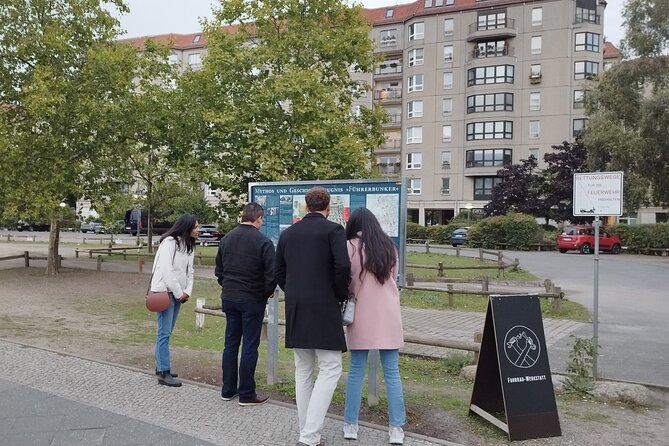
Reviewed · WALKING TOURS
Private Walk with Berlin Tour Guides (Din EN 15565)-Taylor Made
Berlin’s past is packed into a surprisingly small central area, and this private walk gives you a practical way to connect the major pieces. You can begin at the Fernsehturm, pass Museum Island and Bebelplatz, then follow Berlin’s divided past from Checkpoint Charlie to the Wall, Brandenburg Gate, and Reichstag. I like the private format and the freedom to choose between walking, a bike, rickshaw, or minivan. I also like that you can set the pace and ask for extra stops instead of following a fixed script.
The main consideration is price: at $175.07 per person, this makes the most sense for a small group that values personal attention. Transportation is not included, and the full central route can take about six hours on foot, so your legs, schedule, and chosen vehicle matter.
Key points to know before booking
- A private route, not a fixed group outing: Your guide adjusts the sights to your interests, time, and pace.
- Nine central Berlin highlights: The route can include Museum Island, Bebelplatz, Gendarmenmarkt, Checkpoint Charlie, the Topography of Terror, the Holocaust Memorial, Brandenburg Gate, and the Reichstag.
- Several ways to get around: You may choose a bike, rickshaw, minivan, or walking route, though private transportation is not included in the price.
- Useful at the start of your stay: The guide can help you shape the rest of your Berlin plans.
- Levent is specifically praised: A published five-star note names Levent as accommodating and well prepared.
- Flexible length: Book for about two hours for a focused introduction, or use up to six hours for the central sights plus additional interests.
Why a private Berlin route can work so well
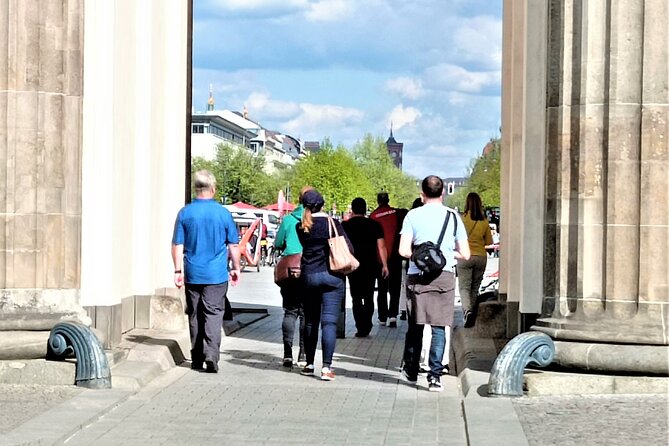
Berlin is not a city where every important sight sits in one tidy old town. The city’s story is spread across royal avenues, war memorials, former border crossings, government buildings, and surviving sections of the Wall. A private guide helps connect those places instead of leaving you to assemble the story from separate visits.
This experience is especially useful if you are visiting Berlin early in your trip. The guide can explain the main districts and help you decide what deserves a longer visit later, such as a museum, gallery, or the East Side Gallery. You can also request a route focused on standard landmarks, lesser-known places, or a mix of both.
The English-language service is private, so only your own group participates. That matters when someone in your party wants to pause, ask questions, take photos, or skip a stop. A fixed group tour rarely gives you that freedom.
The advertised price is $175.07 per person. Value depends heavily on group size and length. For one or two people on a short outing, it is a sizeable expense. For a larger private group, the per-person cost may feel more reasonable, particularly if you want a custom route and hotel pickup rather than a standard group schedule.
Other Berlin experiences to weigh up
- Discover Berlin Half-Day Walking Tour
★ 5.0 · 9,624 reviews - Berlin: Third Reich and Cold War 2 Hour Walking Tour
★ 4.9 · 6,830 reviews - Berlin: Discover Berlin Walking Tour
★ 4.9 · 5,998 reviews
Choosing between walking, bike, rickshaw, and minivan
The tour offers four basic ways to cover Berlin: walking, bike, rickshaw, or minivan. The right choice depends on how much ground you want to cover and how much time you have.
Walking is the most direct way to experience the central districts. You can stop whenever something catches your eye, and the distances between many of the central sights make sense on foot. The tradeoff is stamina. Covering most of the listed highlights by walking can take around six hours.
A bike lets you cover more ground while retaining an outdoor feel. It may suit you if you want the central landmarks plus extra stops, but the supplied details do not specify bike type, rental arrangements, or any added fee. Confirm those details before booking.
A rickshaw is a practical choice if you want a moving view of the city without walking the entire route. It can be useful for a short introduction or for anyone who prefers to limit the physical effort. Ask exactly what the vehicle covers, since private transportation is not included.
A minivan gives you the easiest way to link distant stops and reduce walking. Again, the price does not include private transportation, so clarify the arrangement and cost before the tour begins. Pickup and drop-off at your Berlin hotel are offered, but transport details should be settled in advance.
Fernsehturm and Museum Island: Berlin’s royal center
The route begins at the Berliner Fernsehturm, the tall television tower that marks the former East Berlin skyline. The planned stop here is brief, about five minutes, and admission to the tower is not included. Think of it as a starting point and photo opportunity, not a tower visit.
From there, the route passes the Red Town Hall, Marien Church, and Neptune’s Fountain before reaching Museum Island. These short views help set up the city’s older civic and royal center.
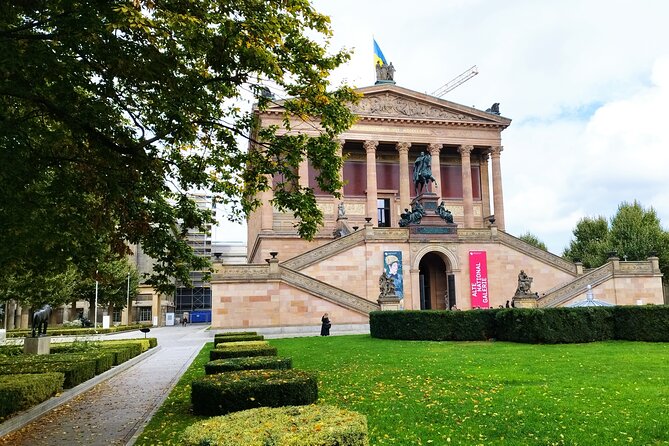
Museum Island is a UNESCO World Heritage Site and one of Berlin’s most important museum areas. The complex includes the Altes Museum, Neues Museum, Alte Nationalgalerie, Bode-Museum, and Pergamonmuseum. The supplied route allows about ten minutes, which is enough to understand the setting and photograph the buildings, but not enough for an interior museum visit.
That distinction matters. Admission is free for the stop itself, but the museums are separate attractions. If you want to see Egyptian objects in the Neues Museum, classical art in the Altes Museum, or works associated with the other institutions, plan another visit and check current opening details independently.
Unter den Linden runs through this former royal quarter. The boulevard provides a strong link between the island and the grand buildings farther west. You get a useful sense of how Berlin’s rulers shaped the center, even during a short stop.
Bebelplatz and the warning beneath the square
After Museum Island, the route reaches the Forum Fridericianum and Bebelplatz. The surrounding buildings include the State Opera, Humboldt University, the State Library, and St. Hedwig’s Cathedral, identified here as Berlin’s first Catholic church.
Bebelplatz is also the site of the 1933 Nazi book burning. About 25,000 books were burned there, and a memorial beneath the square recalls the event. The memorial is easy to miss if you do not know where to look, which is one reason a guide adds real value at this stop.
You get roughly ten minutes here. That is enough for an introduction and a pause at the memorial, but anyone wanting a longer discussion of National Socialism should ask for extra time. The subject deserves more than a quick photograph.
A different sort of day out in Berlin:
- Berlin: Reichstag, Dome and Government District Guided Tour
★ 4.7 · 18,288 reviews - Berlin: 1-Hour City Tour by Boat with Guaranteed Seating
★ 4.3 · 16,993 reviews - Berlin: Boat Tour Along the River Spree
★ 4.4 · 11,252 reviews - Berlin: Hop-on Hop-off Bus Tour with Live Commentary
★ 4.3 · 8,579 reviews
Gendarmenmarkt and the city’s grand public face
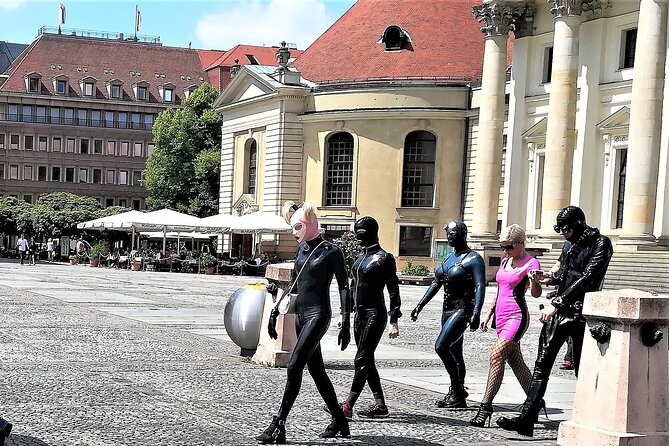
Gendarmenmarkt follows as one of the most impressive squares in central Berlin. The former Royal Concert Hall sits between the German Dom and French Dom, creating a formal ensemble that feels very different from the more difficult memorial sites earlier in the route.
The stop is planned for about ten minutes and does not require an admission ticket. It works well as a visual pause in a route that otherwise deals heavily with war and dictatorship. You can take in the architecture, hear how the square changed over time, and ask the guide to explain the buildings around it.
Because the tour is private, you can choose whether to spend longer here or move on quickly. That flexibility is useful if your interests lean toward political history rather than architecture.
Checkpoint Charlie and the Berlin Wall story
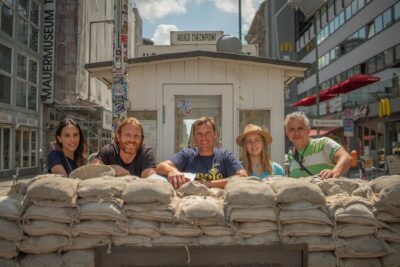
Checkpoint Charlie is one of Berlin’s best-known former border crossings. During the Cold War, it marked a passage between the American and Soviet sectors and became a major symbol of the divided city. The route allows about ten minutes.
The location is important, but it can feel more like a busy city stop than a preserved historical site. The original border crossing is no longer intact in the way many first-time visitors expect. A guide can help separate the surviving historical meaning from the modern presentation.
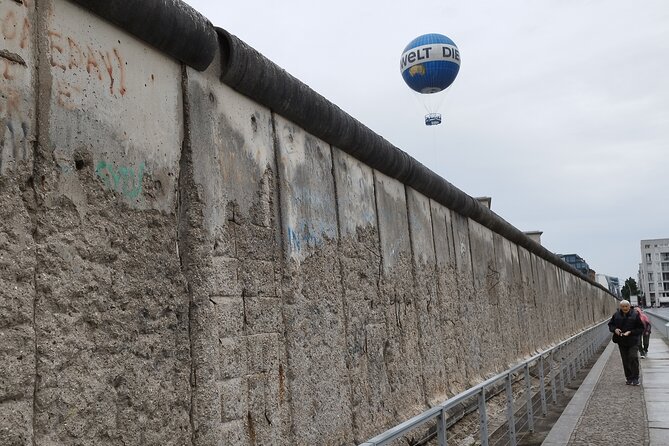
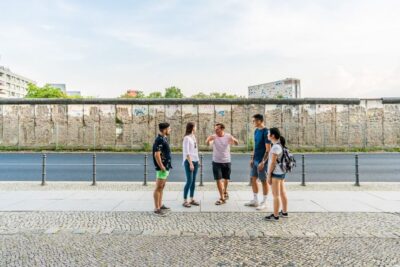
The next stop, the Topography of Terror, adds needed context. Along the former border strip, you see original sections of the Berlin Wall and reach a documentation center on National Socialism. The site occupies the former headquarters area of the SS and Gestapo.
Only five minutes are allocated in the outline, so treat this as an orientation stop unless you arrange more time. The documentation center deserves a proper visit if you want to study the period in detail. The combination of the Wall remains and the former Nazi headquarters makes this part of the route especially useful: Berlin’s twentieth-century history is not reduced to one era.
The Holocaust Memorial and Brandenburg Gate
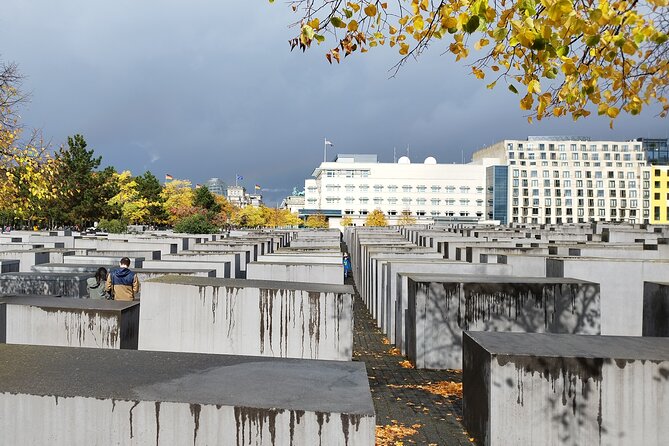
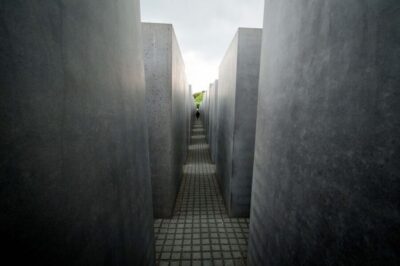
The Memorial to the Murdered Jews of Europe consists of 2,711 concrete slabs and commemorates the murder of more than six million Jews under National Socialism. The route gives you about ten minutes here.
The memorial is best experienced by walking among the slabs rather than simply viewing them from the edge. The ground changes as you move inward, and the atmosphere becomes more enclosed. Do not treat it as a standard photo stop. Give yourself a quiet moment, and follow the guide’s explanation about its purpose and design.
The nearby Brandenburg Gate is one of Berlin’s defining landmarks. It once marked a gateway into the city and later became a powerful symbol of division and reunification. The tour uses the gate as the point where you leave the former Eastern side of central Berlin and move toward the government district.
You will also pass the Memorial to the Murdered Sinti and Roma. It is easy to overlook when the Brandenburg Gate draws attention, but its inclusion gives the route a broader and more accurate view of Nazi persecution.
The Reichstag and Germany’s modern government district
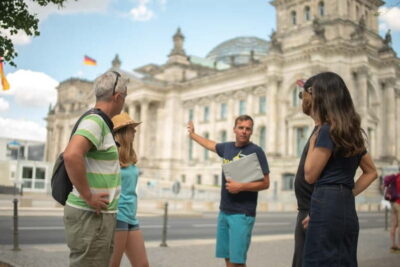
The final listed stop is the Reichstag Building, completed in the late nineteenth century and opened in 1897. It served as a parliament building and suffered damage during World War II. After German Parliament moved from Bonn to Berlin in 1998, the restored building became one of the clearest symbols of modern German government.
The glass dome is one of the building’s most recognizable features. This tour includes an exterior visit and about ten minutes at the stop. Admission is not included, and the supplied details do not promise entry to the dome, so arrange a separate visit if you want to go inside.
The Reichstag is near the Chancellery and other government buildings. That makes the end of the tour a good place to discuss how the reunified capital functions today, after the route has already covered monarchy, dictatorship, division, and reunification.
How much time should you book?
Two hours gives you a quick introduction. You will need to limit the number of stops and keep moving, especially if you want more than exterior views. This length suits a short layover or a first look before a separate museum visit.
Four hours offers a better balance. You can cover many of the major central landmarks, stop for photographs, and allow the guide to explain the most important sites without turning the outing into a race.
Six hours is the best choice if you want most of the central highlights on foot. The pickup notes specifically indicate that seeing the main historical sights by walking can take about six hours. You can also use the longer booking to add hidden or less familiar places, the East Side Gallery, museums, or galleries.
Your own interests should guide the choice. Someone focused on architecture may want more time at Museum Island and Gendarmenmarkt. Someone focused on twentieth-century Germany may prefer longer stops at the Wall, Topography of Terror, Holocaust Memorial, and government district.
Pickup, meeting details, and practical limits
Hotel pickup is offered, and the route ends back at the meeting point. At pickup, you discuss your interests, available time, pace, and the distances you can reasonably cover. That conversation is important, so arrive ready to say what matters most to you.
The tour is offered in English and includes a licensed guide. Service animals are allowed, and the experience is near public transportation. Most people can participate, though the walking option may be demanding over six hours.
Private transportation is not included. That point is easy to miss because the experience offers a minivan, bike, and rickshaw as possible ways to travel. Ask how your chosen vehicle is arranged and what extra cost applies before confirming the plan.
Free cancellation is available if you cancel at least 24 hours before the start time. Changes or cancellations made within 24 hours are not accepted for a refund.
Is this private Berlin tour worth booking?
Book it if you want a flexible introduction to Berlin, especially at the beginning of your visit. It suits a family, couple, or small group that prefers a personal route over a fixed schedule and wants help connecting Berlin’s many historical chapters.
The strongest feature is the custom planning. You can focus on major sights, ask for lesser-known stops, or use the guide to shape the rest of your stay. Levent is specifically praised for being accommodating, so if you are able to request a guide, that name is worth noting.
Skip it if you prefer an inexpensive group walk, want long interior visits at museums, or dislike sorting out transport costs separately. The $175.07 per-person price is easier to justify for a group using the guide for several hours than for a short two-hour outing for one or two people.
For the best value, book early in your Berlin stay, choose at least four hours, and make a short list of your priorities before pickup. That turns a broad sightseeing route into a useful private introduction rather than a hurried checklist.
FAQ
How long does the private Berlin tour last?
The experience lasts approximately 2 to 6 hours. The exact duration depends on your interests, pace, chosen sights, and the distances you want to cover.
Is hotel pickup available?
Yes. Pickup and drop-off at your Berlin hotel are offered, and the activity ends back at the meeting point.
Which sights can be included?
The route can include the Fernsehturm, Museum Island, Bebelplatz, Gendarmenmarkt, Checkpoint Charlie, the Topography of Terror, the Holocaust Memorial, Brandenburg Gate, and the Reichstag Building.
Can I choose how we travel?
Yes. The available options are walking, bike, rickshaw, or minivan. Private transportation is not included, so confirm the arrangement and any additional cost before the tour.
Is admission to the museums or Reichstag included?
No. Admission tickets are not included for the listed stops. The tour provides guided exterior visits and photo stops, while museum or interior visits need to be arranged separately.
Is the tour private and what language is offered?
Yes. Only your group participates, and the tour is offered in English with a licensed guide.
Newest Berlin reviews
- Where It All Began: Berlin’s Queer & Trans History Tour★ 4.9 · 6 reviews
- Berlin: guided canoe | kayaktour★ 4.1 · 7 reviews
- Understanding Kreuzberg: The roots of local (sub)culture★ 4.9 · 11 reviews
- Private Potsdam City Tour in an authentic vintage van★ 5.0 · 14 reviews
- Warnemünde Shore Excursion: Private Sachsenhausen and Berlin Tour★ 5.0 · 12 reviews
- Ultimate E-Bike Tour of Berlin with Beer Garden Stop★ 5.0 · 4 reviews
- In the Forbidden City – Potsdam Walking Tour★ 5.0 · 17 reviews
- Private Walking Tour of Potsdam and Sanssouci★ 5.0 · 24 reviews
Walking Tours, compared.
Berlin’s Best: 2 Hour Walking Tour Third Reich and the Cold War
Read our review →
Third Reich Berlin: Hitler and WWII Walking Tour
Read our review →
Browse the lists this tour appears in