
Reviewed · BERLIN WALL TOURS
Private Cold War Berlin: Espionage, Berlin Wall, a Divided City
Berlin’s Cold War story is most powerful when you move from the Wall’s physical remains to the rooms where people were watched, questioned, and separated from family. This private tour links those places, from Bernauer Strasse and its escape tunnels to Checkpoint Charlie and the protest at Alexanderplatz.
I like the private format, which lets your guide adjust the pace and explain difficult subjects without rushing through a crowd. I also like the human focus: stories of divided families, daring escapes, Stasi pressure, and ordinary people who gathered to demand change. The drawback is that this is a lot of ground and history in only three to four hours, so some stops are brief.
Key points to know before booking
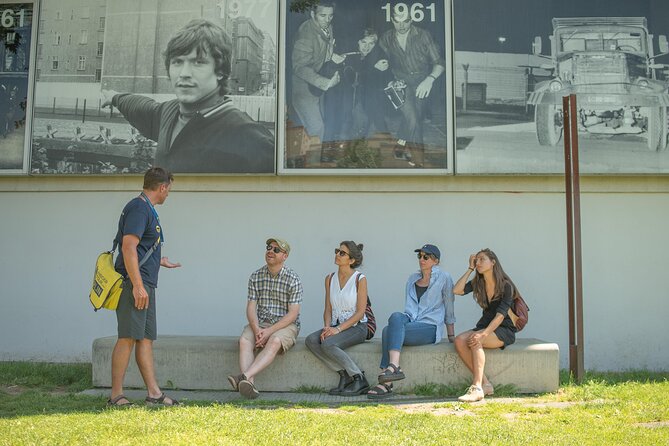
- Bernauer Strasse brings the Wall’s human cost into focus, with preserved sections, the Chapel of Reconciliation, and stories of escape tunnels.
- A private English-speaking guide keeps the tour personal, with guides such as Tina and Toni known for clear storytelling and calm explanations.
- Seven Cold War locations create a broad picture, from border crossings and spy activity to surveillance and peaceful protest.
- Hotel pickup and drop-off add value, especially when your group wants a private outing without arranging every connection.
- The tour is active, so expect plenty of walking and dress for Berlin weather.
- At $191.44 per person, the price makes the most sense for people who value a private guide and focused historical context.
Why this private Cold War tour works
Berlin’s Cold War sites are spread across the city, and each one tells a different part of the story. One place shows the Wall itself. Another explains the emotional border crossing between East and West. Others reveal surveillance, imprisonment, spy exchanges, and the protests that helped bring the system down.
I like this structure because it avoids treating the Wall as a single monument. You see the concrete barrier, but you also learn how it shaped daily life. Families were split. Neighbors lived under watch. People risked prison or death to leave. The final stops show that the division ended not only through international pressure, but also through public resistance inside East Germany.
This is a private activity, so only your group takes part. That matters here. Cold War history often brings up hard questions, and you can ask for clarification when a date, name, or political detail is unclear. The guides Tina and Toni are specifically associated with the tour. Tina is described as a natural storyteller, while Toni can offer the unusual perspective of having been a child during the Cold War.
The tour lasts about three to four hours. That is enough time for a strong overview, but not enough to study every museum display or linger at every location. Think of it as a guided introduction with several outdoor stops, not a full museum day.
More Berlin Wall tours in Berlin:
- Skip-the-Line: Berlin Wall Museum at Checkpoint Charlie
★ 4.1 · 2,041 reviews - Cold War, Berlin Wall, Spies and the East Side Gallery
★ 5.0 · 1,024 reviews - THE WALL: asisi Panorama Berlin Ticket
★ 4.5 · 580 reviews
Bernauer Strasse and the escape tunnels
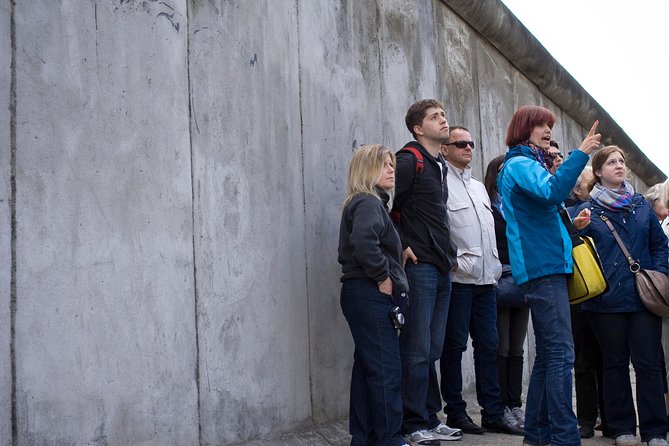
The tour begins at the Memorial of the Berlin Wall on Bernauer Strasse, one of the best places in Berlin for understanding how the Wall altered a real neighborhood. When the barrier went up, entrances, streets, and family connections were cut apart. The site preserves a section of the Wall and includes the Chapel of Reconciliation.
The chapel gives this stop a quieter mood than the better-known checkpoint sites. Here, the story is less about Cold War theater and more about people who found themselves trapped on the wrong side of a new border. Your guide explains how the Wall affected families and communities, not only governments.
Escape attempts add another layer. You hear about Tunnel 57 and Tunnel 29, underground routes used by East Berliners trying to reach the West. Tunnel 29 famously helped 29 people escape in 1962. These accounts show the courage, planning, and danger involved in leaving East Germany.
Allow yourself to pay attention to the physical setting here. The Wall was not an abstract line on a map. It ran beside homes, streets, and places of worship. The memorial makes that plain.
The stop is listed at about 40 minutes, the longest single visit on the route. That is sensible. Bernauer Strasse needs time because it combines preserved remains, memorial features, escape stories, and personal accounts. If you want only one place that explains the Wall’s effect on ordinary life, this is likely the most useful stop.
Tränenpalast and the pain of crossing
At Friedrichstrasse, the Tränenpalast offers a different view of division. This former border crossing became known as the Palace of Tears because families often had to say goodbye there when relatives crossed into West Berlin.
The emotional power comes from the contrast between a routine border procedure and the personal cost behind it. A crossing could mean a permitted visit, but it could also mean a painful farewell with no clear promise of another meeting. The museum explains border controls and the experiences of people passing through.
The site also connects to espionage. Border crossings were places where spies attempted to move between East and West, sometimes using careful methods to avoid detection. Your guide can place those spy stories beside the experiences of ordinary people, showing how the same border served both official travel and covert operations.
The scheduled visit is about 20 minutes. That is enough for an explanation and a focused look, but it is short if you want to examine every exhibit. If museum displays matter most to you, note that the tour includes several sites, so you may want to return to the Tränenpalast on your own.
East Side Gallery and the Wall after 1989
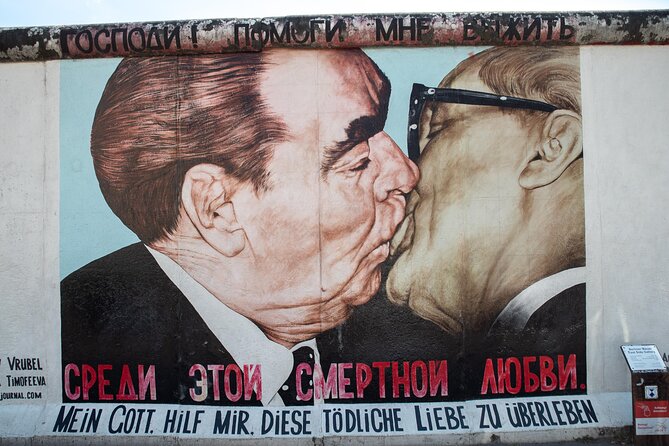
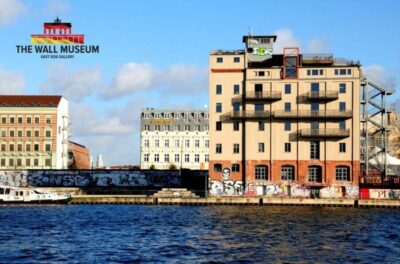
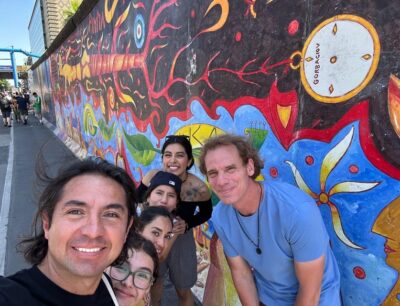
The East Side Gallery presents the Wall after its political meaning changed. This 1.3-kilometer section was painted by artists from around the world after the Wall fell in 1989. The murals express hope, freedom, and the excitement of reunification.
It is easy to treat the gallery as a colorful photo stop, but the guide helps connect the paintings to the events that made them possible. You are looking at a former instrument of control that became an outdoor art site. That change reflects Berlin’s shift after reunification.
The art is also a reminder that the Wall has several identities. It was a barrier, a danger zone, a political symbol, and later a public canvas. I like that the tour places East Side Gallery after the more sobering Bernauer Strasse stop. You first see what the Wall did, then how Berlin chose to remember and reinterpret it.
The visit lasts about 20 minutes. Since the gallery stretches a long way, you will not study every mural in that time. The stop works best as a guided introduction to the artwork and its connection to the city’s political change.
More Cold War tours in Berlin:
- Berlin: Third Reich and Cold War 2 Hour Walking Tour
★ 4.9 · 6,830 reviews - Berlin’s Best: 2 Hour Walking Tour Third Reich and the Cold War
★ 5.0 · 5,486 reviews - Berlin: Cold War Walking Tour on Berlin Wall Route
★ 4.8 · 437 reviews - Berlin: Cold War Era History Guided Bike Tour
★ 4.8 · 413 reviews
The Stasi headquarters and a culture of surveillance
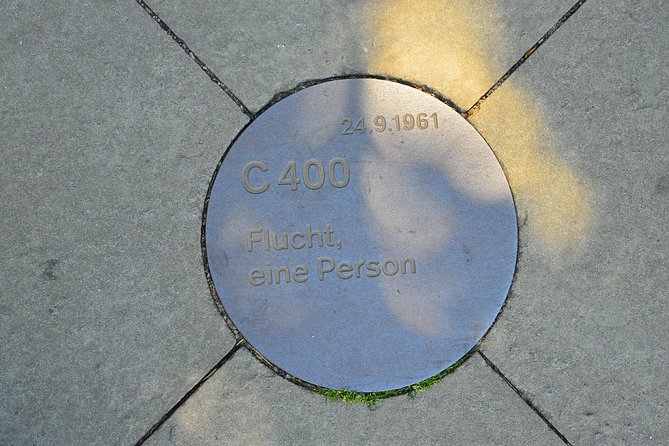
The Stasimuseum takes you into the machinery of East German state control. The former headquarters is now a museum, and the subject is more unsettling than the Wall’s visible concrete.
Your guide explains how the Stasi used hidden cameras, wiretapping, informants, and other surveillance methods. The system depended not only on professional officers, but also on ordinary citizens who supplied information. That detail helps explain why surveillance affected relationships, workplaces, and families.
You also learn about interrogation and harassment. The point is not simply to list spy tools. It is to understand how constant uncertainty could limit speech and behavior. A person did not need to be arrested to feel the pressure of the system.
The stop is scheduled for about 25 minutes. That is a tight window for a museum with such a serious subject. You will get the main framework and examples, but you will not have time to read every panel at length. If you prefer a slower museum visit, treat the guided stop as an orientation and plan a separate return.
Checkpoint Charlie and Cold War drama
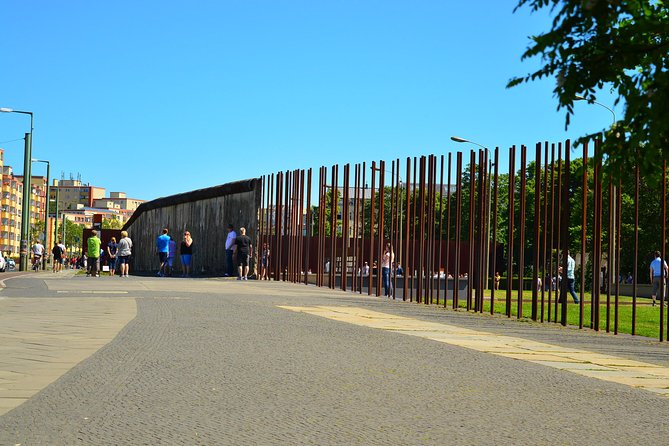
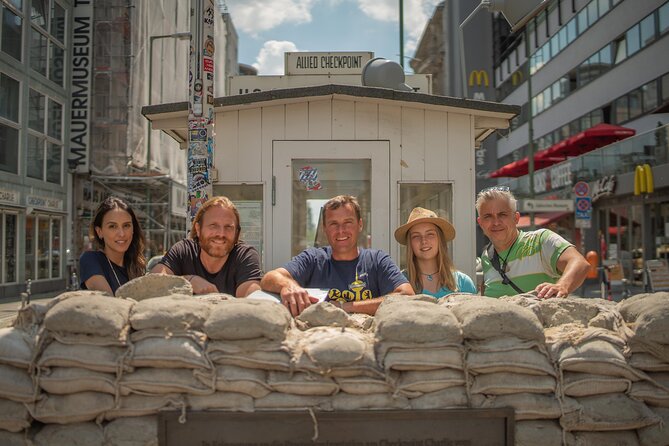
Checkpoint Charlie is Berlin’s most famous Cold War crossing point, and also one of its most packaged tourist locations. The tour helps put the site’s familiar name into context.
This was a border crossing between East and West Berlin and the setting for tense moments between American and Soviet forces. The Berlin Crisis of 1961 brought the city close to a dangerous confrontation. Your guide explains the standoffs, escape attempts, spy exchanges, and the role of the crossing in everyday life.
Checkpoint Charlie is valuable because it links global politics with personal risk. Decisions made by major powers shaped what happened at this street crossing, but individuals still tried to get through it, across it, or around it.
The stop lasts about 15 minutes. That is enough for the main story and the location itself, but the surrounding area can feel commercial compared with Bernauer Strasse. The tour’s explanation is especially useful here because it separates the serious history from the modern presentation around the site.
An admission ticket to the museum is not included. The tour information lists the stop as free, so check what your guide plans to cover outside and what you would need to pay for if you want a separate museum visit.
Fröbelstrasse and the prison system
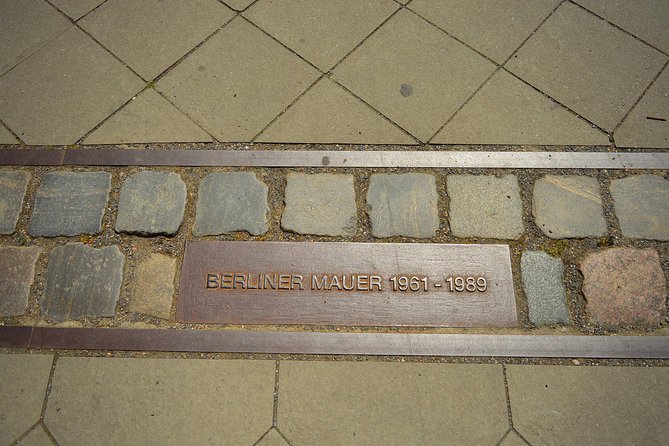
In Prenzlauer Berg, the tour turns to a less familiar site: the corner of Fröbelstrasse, associated first with an NKVD prison and later with a Stasi prison.
The Soviet NKVD used the prison after the Second World War for political prisoners, suspected spies, and people viewed as enemies of the state. After East Germany was established, the Stasi took over. The change in authority did not end the site’s role in detention and repression.
This stop matters because it shows that Cold War control was not limited to the Wall or border crossings. Prisons formed part of the system used to silence opposition and punish people considered dangerous to the state.
The visit is about 15 minutes, so expect an explanation of the site rather than an extended indoor experience. The location may be less immediately striking than Checkpoint Charlie, but it adds useful context. You see how Soviet and East German authorities used detention as a tool of political control.
Alexanderplatz and the protest that changed Berlin
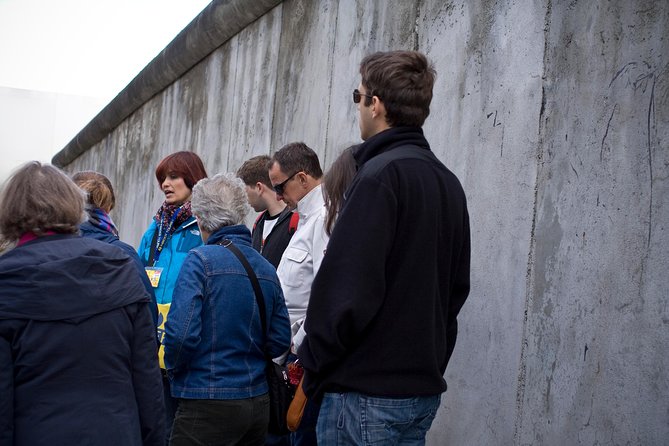
The final stop is Alexanderplatz, where the tour looks at the peaceful resistance that helped end East Germany’s rule. On November 4, 1989, more than half a million East Berliners gathered here to demand change.
That crowd is one of the clearest links between public action and the fall of the Wall. The tour also points out Cold War landmarks, including the Television Tower and Red City Hall. The tower represented East German power, while the square became a place where opposition could be seen and heard.
You learn about Stasi surveillance in the area as well. Alexanderplatz therefore carries two meanings: it was a place watched by the state and a place where people gathered in large numbers to challenge it.
The stop lasts about 15 minutes. It is a strong closing point because it shifts the story from fear and control to public pressure and political change. Still, you should not expect a long exploration of the square or its buildings. The value lies in the historical explanation.
Price, pace, and practical value
At $191.44 per person, this is not a budget walking tour. Its value depends on your group size and what you want from a guide. A private outing is more costly than a public group tour, but you receive hotel pickup and drop-off, a professional guide, and a route built around seven major Cold War locations.
The price makes more sense for a small group that wants a private schedule and direct questions. It is also useful if you would otherwise spend time arranging transport between Bernauer Strasse, the central sites, Prenzlauer Berg, and Alexanderplatz.
The route is active. The description specifically suits people who can handle a walking tour, and the overall timing leaves little room for long rests. One guide has accommodated physical limitations, but you should explain your needs when booking rather than assume the route can be changed. Pickup and drop-off help, but they do not remove the walking involved at the sites.
Hotel pickup and return are included, while food and drinks are not. Plan to eat before or after the tour. The activity runs in all weather, so wear suitable shoes and clothing. Berlin can be unpleasant when rain or cold catches you without warning.
You can cancel for a full refund up to 24 hours before the start time. Changes or cancellations inside that window are not accepted for a refund.
Who should book this tour?
Book it if you want the Cold War explained through places rather than a lecture alone. It suits first-time Berlin visitors who need a clear framework, and repeat visitors who want to connect sites they may have seen separately.
I would especially recommend it to people interested in political history, espionage, personal stories, and the experience of life in East and West Germany. Tina’s storytelling style may appeal to you if you prefer history delivered through individual accounts. Toni’s childhood perspective can add a personal angle that a standard textbook cannot provide.
You may want something else if you prefer long museum visits, a slow walking pace, or a narrow focus on only one part of Berlin’s divided past. The tour covers a great deal, and its short stops favor breadth over extended study.
Final call: a strong private introduction to divided Berlin
I would book this tour if your priority is a clear, human account of Berlin’s Cold War years, with hotel transport and a private guide included. Bernauer Strasse gives you the Wall’s personal cost, the Tränenpalast adds the pain of separation, the Stasi sites explain surveillance, and Alexanderplatz shows how public protest helped bring change.
The main caution is time. You will see seven important locations in three to four hours, but several visits last only 15 or 20 minutes. Book it as a well-organized introduction, then return on your own to the museum or memorial that speaks to you most.
FAQ
How long does the private Cold War Berlin tour last?
The tour lasts approximately three to four hours.
Is hotel pickup included?
Yes. Hotel pickup and hotel drop-off are included.
Is this a private tour?
Yes. Only your group participates in the activity.
What language is the tour offered in?
The tour is offered in English.
Is this mainly a walking tour?
Yes. It is an active walking tour, so suitable footwear and weather-appropriate clothing are important.
Which Berlin Wall site does the tour visit?
It visits the Memorial of the Berlin Wall on Bernauer Strasse, including a preserved section of the Wall and the Chapel of Reconciliation.
Does the tour cover Cold War escape tunnels?
Yes. The guide discusses Tunnel 57 and Tunnel 29, including the escape of 29 people through Tunnel 29 in 1962.
Does the tour visit the Stasi Museum?
Yes. The route includes the Stasimuseum at the former Stasi headquarters.
Are food and drinks included?
No. Food and drinks are not included.
Can I cancel for a full refund?
Yes, if you cancel at least 24 hours before the experience start time. Cancellations made less than 24 hours before the start time are not refunded.
Newest Berlin reviews
- Where It All Began: Berlin’s Queer & Trans History Tour★ 4.9 · 6 reviews
- Berlin: guided canoe | kayaktour★ 4.1 · 7 reviews
- Understanding Kreuzberg: The roots of local (sub)culture★ 4.9 · 11 reviews
- Private Potsdam City Tour in an authentic vintage van★ 5.0 · 14 reviews
- Warnemünde Shore Excursion: Private Sachsenhausen and Berlin Tour★ 5.0 · 12 reviews
- Ultimate E-Bike Tour of Berlin with Beer Garden Stop★ 5.0 · 4 reviews
- In the Forbidden City – Potsdam Walking Tour★ 5.0 · 17 reviews
- Private Walking Tour of Potsdam and Sanssouci★ 5.0 · 24 reviews
Berlin Wall Tours, compared.
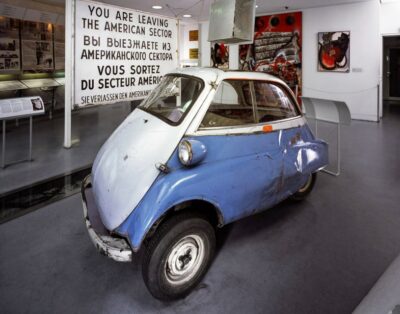
Skip-the-Line: Berlin Wall Museum at Checkpoint Charlie
Read our review →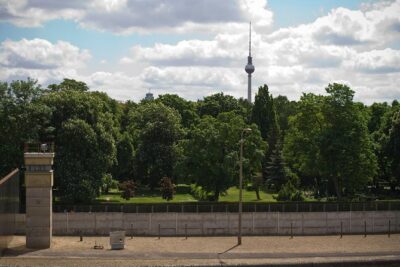
Cold War, Berlin Wall, Spies and the East Side Gallery
Read our review →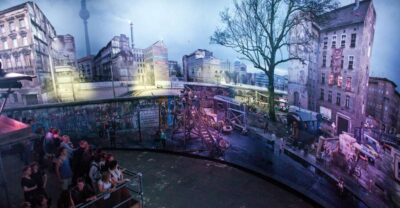
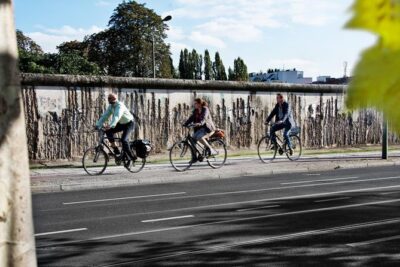
Guided Bike Tour of the Berlin Wall and Third Reich
Read our review →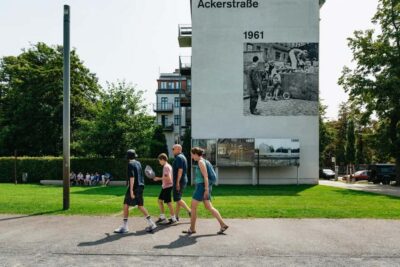
Browse the lists this tour appears in