
Reviewed · BERLIN NEIGHBORHOOD TOURS
Berlin: Neukölln Walking Tour
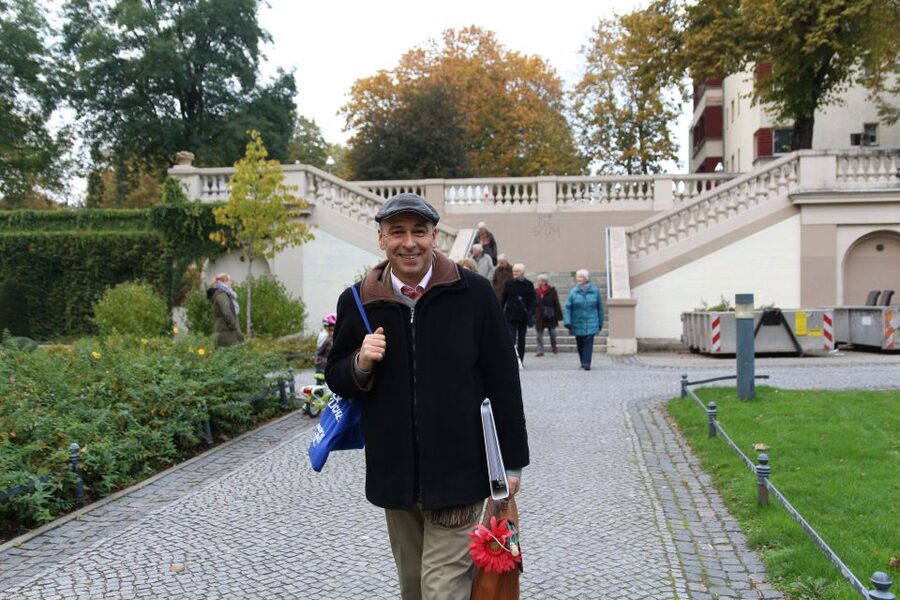
Neukölln’s best stories are often tucked behind ordinary streets. This private walk with Reinhold Steinle takes you past old housing, local characters, a David Bowie connection, and the elegant Körner Park, a surprising neo-Baroque garden surrounded by city buildings. I like the focus on places that many visitors miss, and I like that Steinle explains how Neukölln has changed over the past decade. The main drawback is that the tour is conducted in German and is not suitable for people with mobility impairments.
I especially like the personal tone. Steinle has been described as an ambassador for Neukölln, and his storytelling includes figures such as Will Meisel, a scandal-linked erotic dancer, and an eccentric gravel-pit owner. You also receive a written summary and tips for further exploring the district, useful extras after a compact 90-minute walk.
Key points
- Körner Park is the grand finale: See one of Berlin’s most important neo-Baroque gardens amid Neukölln’s older buildings.
- Reinhold Steinle leads the walk: His approach combines local pride, historical detail, and entertaining anecdotes.
- The route reaches beyond standard Berlin sights: Visit the Ilsenhof housing complex from the 1920s and see an archaeological discovery from 1912.
- Neukölln’s recent changes get proper attention: The tour connects older stories with the district’s transformation over the last ten years.
- David Bowie appears in the local story: You learn how the musician is linked to this part of Berlin.
- It is a private group tour: The $70 price covers up to six people, making the cost easier to justify when shared.
Why Neukölln rewards a closer look
Neukölln is often reduced to a few easy labels: immigrant neighborhoods, nightlife, rising rents, and a changing social scene. This walk offers a more careful picture. You move through a district with older residential buildings, planned housing, garden design, local personalities, and traces of Berlin’s past.
That matters because Neukölln does not present its story in one grand monument. Its character is spread across courtyards, streets, apartment blocks, parks, and small historical clues. A guide can connect those pieces in a way that is hard to do on your own during a short visit.
The tour also gives attention to the last ten years. That is useful if you want to understand present-day Neukölln rather than only hear about Berlin’s imperial or wartime past. Steinle’s goal is clearly to show the district’s positive sides while still acknowledging its changes and contradictions.
You should expect a neighborhood walk rather than a parade of famous attractions. The reward is context. The compromise is that some stops may be meaningful mainly because of the story attached to them, not because they look spectacular at first glance.
More neighbourhood tours in Berlin:
- Berlin: Hidden Backyards Guided Walking Tour
★ 4.8 · 5,360 reviews - Berlin: Spree Boat Tour to Müggelsee
★ 4.6 · 1,973 reviews - Berlin: Alternative Bike Tour of Kreuzberg & Friedrichshain
★ 4.7 · 548 reviews
Meeting Reinhold Steinle at Leuchtstoff Kaffeebar
The tour begins at Leuchtstoff Kaffeebar, at Siegfriedstraße 19, 12051 Berlin. This gives you a clear, specific starting point in Neukölln, rather than a vague meeting instruction somewhere near a station or landmark.
Reinhold Steinle leads the experience in German. His style, based on the available descriptions of the walk, is energetic and personal. He brings in anecdotes about former residents and local personalities, and he does not treat the district as a collection of dry dates.
That style will suit you if you enjoy a guide who tells stories with feeling and a touch of humor. It may suit local residents as well as first-time visitors. One review specifically noted that even people who have lived in Neukölln for decades can notice things they had previously overlooked after taking this walk.
The private format is another advantage. Your group can include up to six people, so you are not listening from the back of a large crowd. You can ask questions and follow the guide’s pace more easily than on a standard city tour.
The guide speaks German only. That is the most important practical consideration before booking. If you do not understand German well enough to follow a spoken history walk, the experience will lose much of its value.
The old streets and Neukölln’s changing identity
The opening part of the walk introduces Neukölln through its background and recent changes. You learn how the area has developed and what has been happening over roughly the past decade.
The supplied details do not give a fixed street-by-street route, so you should not expect a precise list of every corner before you arrive. Instead, think of this as a guided reading of the neighborhood. Steinle points out features that can seem ordinary until their purpose or past is explained.
That approach is particularly useful in Berlin, where a plain apartment building may relate to housing policy, migration, war damage, local industry, or postwar reconstruction. Neukölln’s story is not presented as a museum display. It is visible in the district itself.
The guide also covers the Glory Halls of Neukölln, an element of local history that may be unfamiliar to many visitors. You learn who Will Meisel was and how individual lives fit into the broader story of the neighborhood.
The anecdotes sound like an important part of the walk. The stories include a scandal-tinged erotic dancer and an eccentric gravel-pit owner, which gives the tour a more human scale. These are the sorts of details that can make a district memorable long after you have forgotten a list of construction dates.
I like that the tone is not purely celebratory. Steinle is known for showing Neukölln’s strengths, but the tour also deals with change. You get a sense of a place that has been shaped by different groups and different eras, not a polished version designed only for sightseeing.
The Ilsenhof and Berlin housing from the 1920s
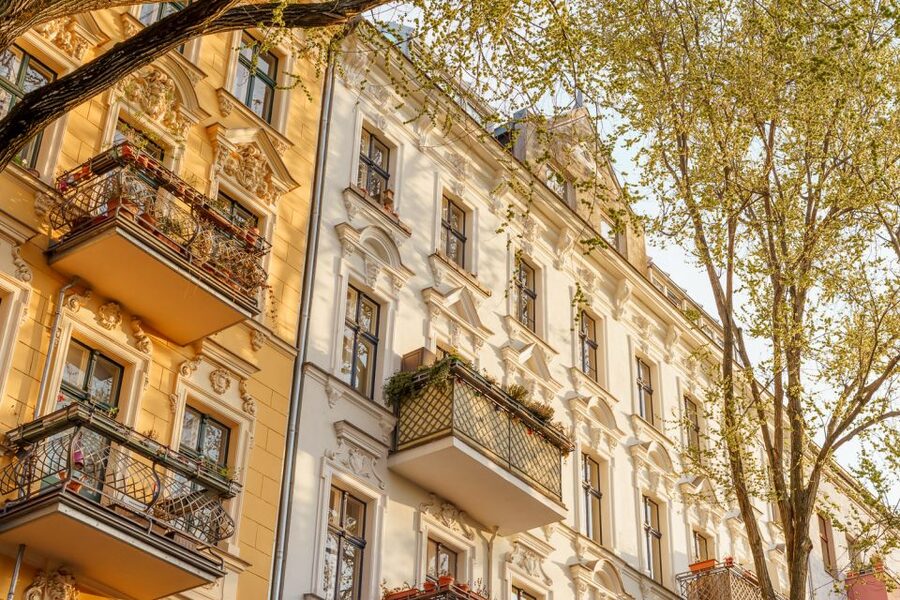
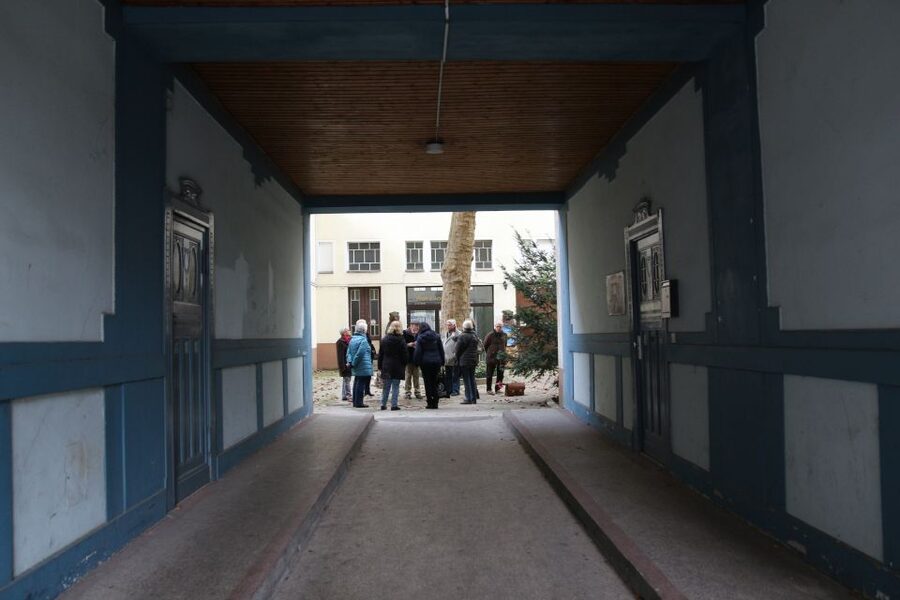
One of the planned stops is the Ilsenhof, a residential complex from the 1920s. This is a useful pause in the route because it moves the discussion from colorful personalities to the physical design of everyday life.
A 1920s housing complex can tell you a great deal about how Berlin tried to provide homes during a period of major social and political change. Here, the value comes from seeing the buildings in their neighborhood setting while Steinle explains their background.
The Ilsenhof is not presented as a grand palace or a famous museum. That is precisely why it belongs on this kind of walk. You are looking at housing, the kind of place that shaped daily life for ordinary residents. A guide can help you notice layout, scale, and planning choices that you might otherwise pass without a second glance.
This stop also helps prepare you for Körner Park. The route is not simply a sequence of unrelated points. It moves from the district’s old buildings and residential history toward one of its most formal green spaces.
Because the entire tour lasts 90 minutes, the stop will be relatively focused. You will not receive an exhaustive study of Berlin housing policy. You will get a concise explanation tied to what you can see on the spot.
Other Berlin experiences to weigh up
- Discover Berlin Half-Day Walking Tour
★ 5.0 · 9,624 reviews - Berlin: Third Reich and Cold War 2 Hour Walking Tour
★ 4.9 · 6,830 reviews - Berlin: Discover Berlin Walking Tour
★ 4.9 · 5,998 reviews - Berlin’s Best: 2 Hour Walking Tour Third Reich and the Cold War
★ 5.0 · 5,486 reviews
The 1912 archaeological discovery
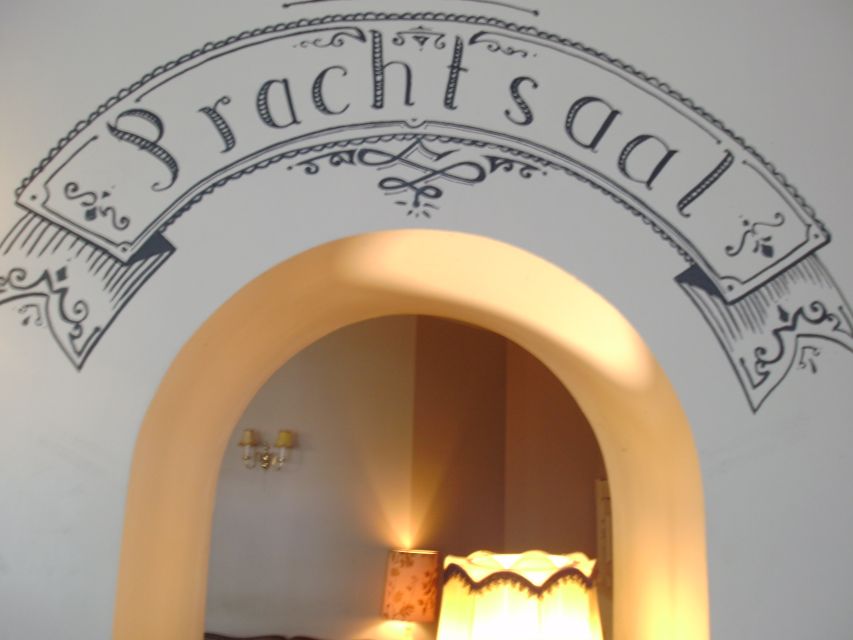
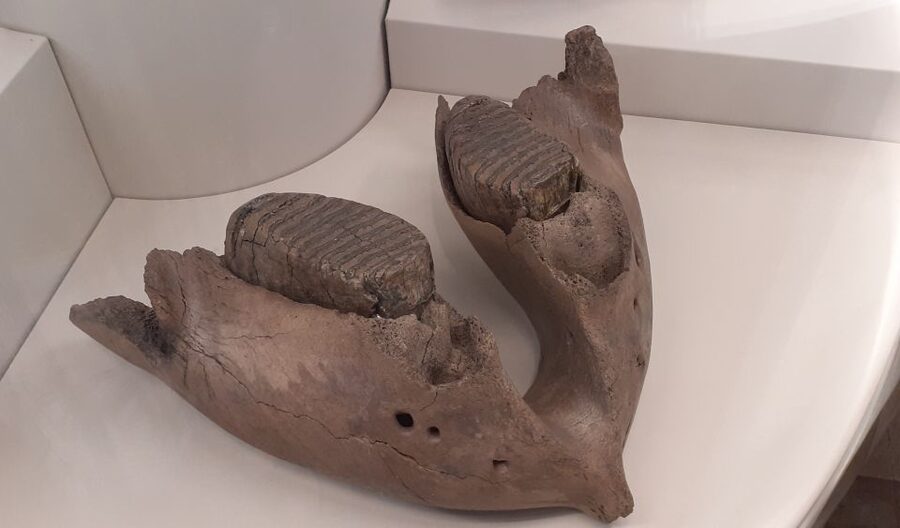
On the way to Körner Park, Steinle points out an archaeological discovery from 1912. This is one of the route’s more unexpected details.
The information provided does not identify the exact object or site, so I would not book the tour expecting a major archaeological attraction. The value is in the surprise: an ordinary-looking urban route contains evidence that reaches further back than the district’s modern buildings.
That kind of discovery adds depth to the walk. Neukölln is not only a story of twentieth-century housing and recent change. Its ground has its own past, and the 1912 find gives Steinle a chance to show how Berlin’s earlier layers can turn up in modern surroundings.
This is also a good example of why a private guide can help. Without background, an archaeological clue may be easy to miss or dismiss. With an explanation, it becomes part of the district’s larger story.
Körner Park, the tour’s visual highlight
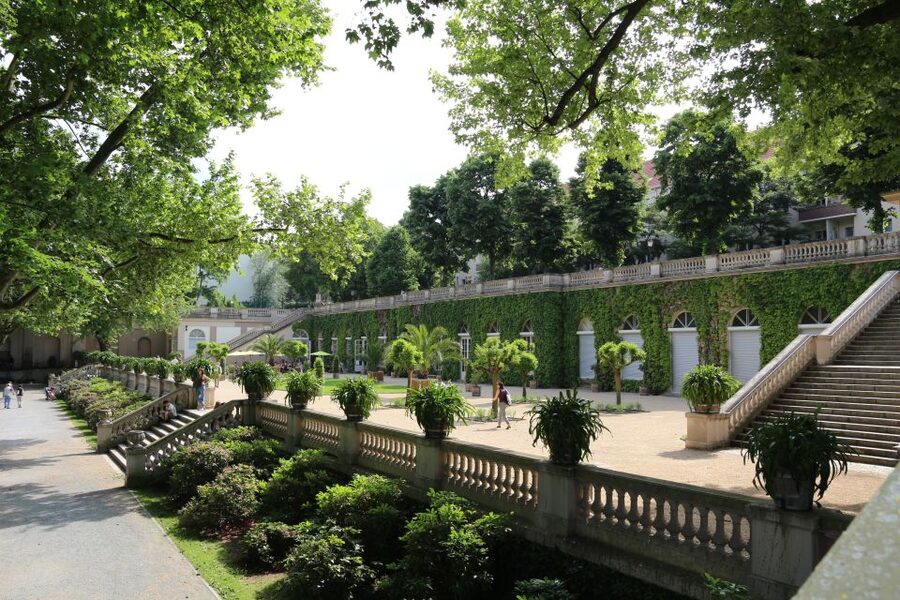
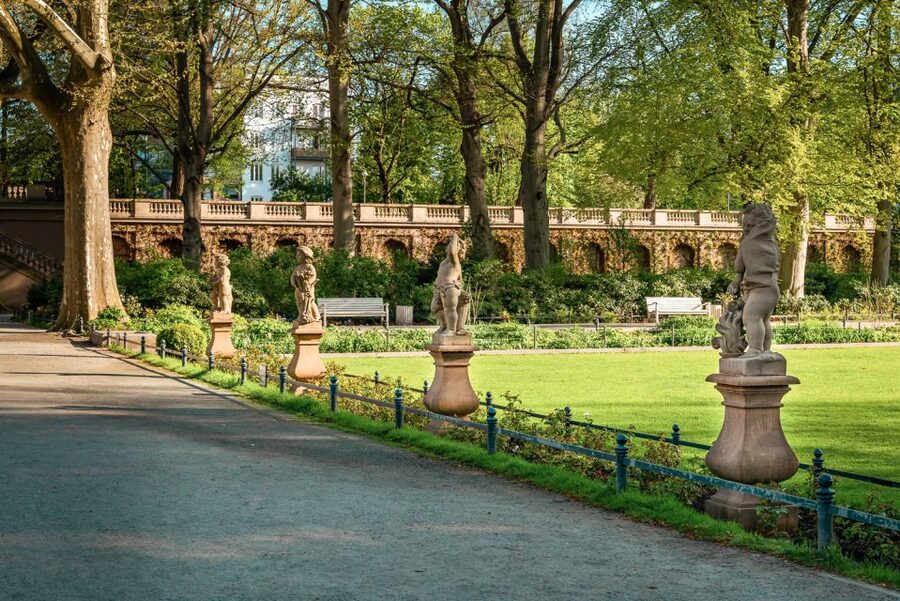
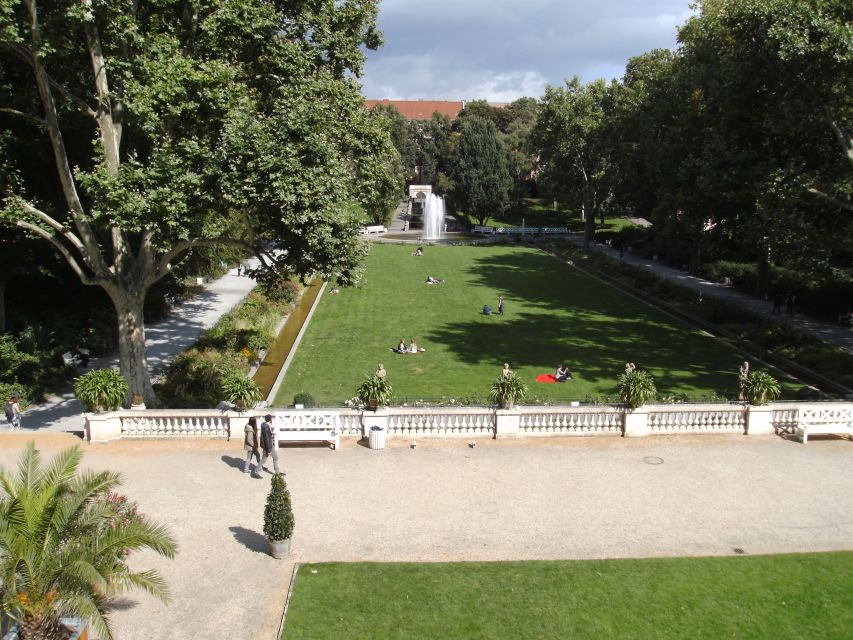
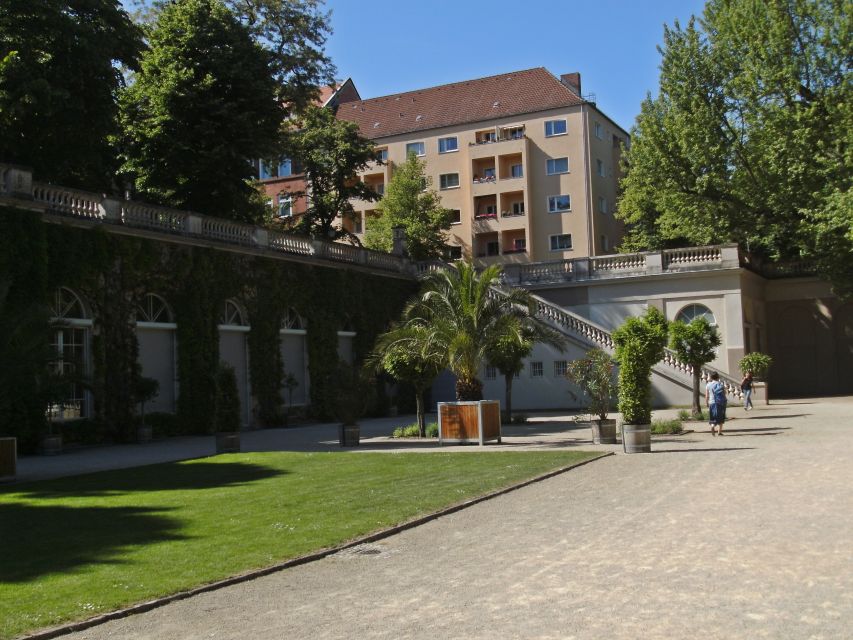
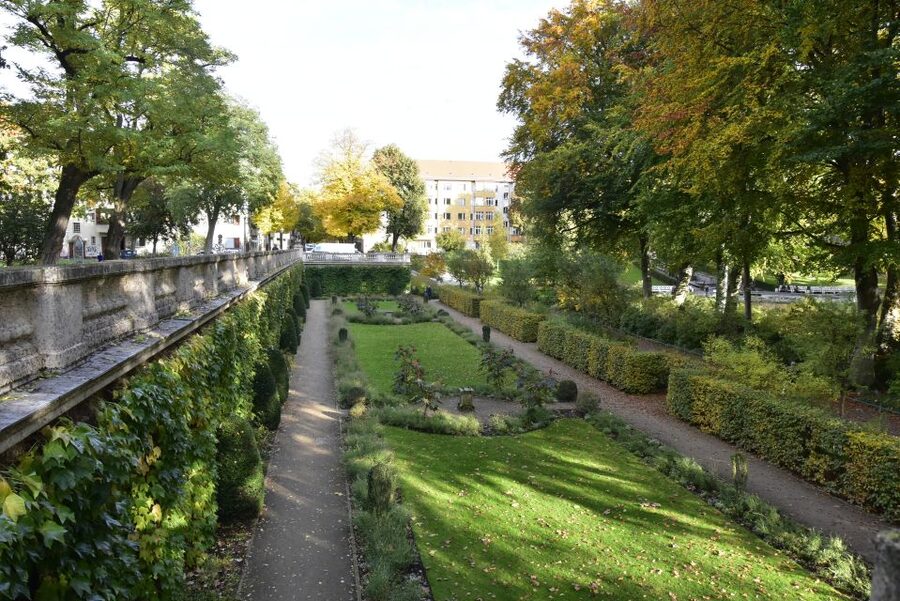
Körner Park is the main attraction of the walk. It is described as one of Berlin’s most important neo-Baroque gardens, and its location makes the contrast especially striking: formal garden design in the middle of Neukölln’s older urban fabric.
This is the point where the tour shifts from social and local history to architecture and garden design. Neo-Baroque gardens are planned spaces, shaped by symmetry, ornament, and carefully controlled views. Körner Park offers that formal character while remaining part of a working city neighborhood.
I like the setting because it gives you a sharp Berlin contrast. You can move through apartment-lined streets and then encounter a garden with a very different visual language. The park is not isolated from the district. Its surroundings are part of the experience.
The tour’s wording calls Körner Park the highlight, and that makes sense for a 90-minute route. A compact walk benefits from a clear finish, especially when the final stop is visually memorable. Steinle can explain why the garden matters instead of leaving you to admire it without context.
Keep your expectations measured. This is not a full-day garden visit, and the tour does not promise extensive time for sitting, photography, or independent exploration. The park is one stop within a neighborhood walk, not the only purpose of the outing.
Still, it may be the moment that changes your view of Neukölln. The district can appear at first to be defined by ordinary city blocks. Körner Park shows another side, one that is formal, carefully designed, and easy to miss if you only follow the usual Berlin sightseeing route.
The David Bowie connection
The walk also explains Neukölln’s link to David Bowie. The information provided does not specify the exact location or the precise nature of the connection, so you should see this as one chapter in the tour rather than a dedicated Bowie pilgrimage.
That distinction is useful. Berlin tours often lean heavily on famous names, but here Bowie is one part of a broader local story. You learn how an internationally known figure connects with the district, then return to the less famous people, buildings, and events that give Neukölln its own identity.
If you are interested in Berlin’s music history, this detail adds a welcome thread. If Bowie is not a major interest, it should not dominate the experience. The tour appears to use the connection as a way into the city’s cultural past, not as a substitute for learning about Neukölln itself.
The guide’s storytelling style seems well suited to this sort of link. A name such as Bowie can attract attention, while the surrounding anecdotes keep the focus on the neighborhood.
What the $70 private price really means
The listed cost is $70 per group of up to six people. That is a group price, not a per-person price, so the value changes sharply depending on the size of your party.
For six people, the cost works out to about $11.67 per person. For four people, it is $17.50 each. For two people, it is $35 each, and a solo participant pays the full group price. The private format makes the price easier to justify for a family or group of friends, but less attractive if you are traveling alone.
You are paying for a focused walk with a live guide, a private setting, local stories, a written summary at the end, and tips for further places to see. The written material is a useful touch because a 90-minute history walk can contain more names and connections than you will remember.
The tour is also reasonably compact. You do not have to give up half a day, yet you still receive a guided introduction to a district that standard Berlin itineraries often skip. I see the strongest value for visitors who have already seen central Berlin and want a more local subject.
Free cancellation up to 24 hours before the start and the option to reserve now and pay later add flexibility. They do not change the experience itself, but they make it easier to fit into a shifting Berlin schedule.
Who should book this Neukölln walk
I would recommend this tour to you if you:
- Understand German well enough to follow a live history talk.
- Prefer local districts to major headline attractions.
- Enjoy stories about people as much as stories about buildings.
- Want a private experience for a small group.
- Like seeing how a neighborhood has changed in recent years.
- Are interested in architecture, urban housing, garden design, or Berlin personalities.
- Have already visited the central sights and want a different side of the city.
It is less suitable if you want a fast list of famous landmarks, a multilingual tour, or a route designed for people with limited mobility. The activity is specifically marked as unsuitable for people with mobility impairments, so that should be treated as a firm planning point.
You should also remember that the route’s appeal depends on explanation. If you prefer to explore parks and buildings independently, some stops may feel modest. If you like having a guide point out what you would otherwise miss, the format makes much more sense.
Practical details before you go
The meeting point is Leuchtstoff Kaffeebar, Siegfriedstraße 19, 12051 Berlin. Check the start time when booking because several starting times may be available.
The walk lasts 90 minutes. Wear comfortable shoes and plan for an outdoor neighborhood route. No special ticket is required for the walk, and the experience is private for your group of up to six people.
At the end, Steinle provides a written summary of the main points. You also receive suggestions for other places and activities worth seeing, which can help you continue exploring Neukölln after the guide leaves.
The tour is offered in German only. Cancellation is free up to 24 hours in advance, and you can reserve without paying immediately. Those policies are useful, but the language and mobility requirements matter more when deciding if the walk suits you.
Should you book it?
Book this Neukölln walk if you want an informed, personal introduction to a part of Berlin that rewards attention rather than speed. Reinhold Steinle’s strongest asset appears to be his enthusiasm for the district, backed by stories about Will Meisel, local characters, the Ilsenhof, David Bowie, and the changes of the last decade.
The best reason to go is the combination of overlooked details and Körner Park’s unexpected formal beauty. The main reasons to hesitate are the German-only format, the mobility limitation, and the fact that the $70 price is much better for a group than for one person.
For a small party that enjoys local history and storytelling, I think the tour offers very good value. For a solo visitor seeking Berlin’s biggest sights, spend your time elsewhere. For everyone in between, this is a smart way to see how much history can hide in a neighborhood that many itineraries pass by.
FAQ
Where does the Neukölln Walking Tour meet?
The tour meets at Leuchtstoff Kaffeebar, Siegfriedstraße 19, 12051 Berlin.
How long does the tour last?
The walking tour lasts 90 minutes.
What language is the tour conducted in?
The live tour guide speaks German.
Is the tour private?
Yes. The tour is for a private group of up to six people.
How much does the tour cost?
The price is $70 per group of up to six people.
What is the main highlight of the route?
The main highlight is Körner Park, described as one of Berlin’s most important neo-Baroque gardens.
Is the tour suitable for people with mobility impairments?
No. The activity is listed as unsuitable for people with mobility impairments.
Can I cancel the booking?
Yes. You can cancel up to 24 hours in advance for a full refund. You can also reserve now and pay later.
Newest Berlin reviews
- Where It All Began: Berlin’s Queer & Trans History Tour★ 4.9 · 6 reviews
- Understanding Kreuzberg: The roots of local (sub)culture★ 4.9 · 11 reviews
- Berlin: guided canoe | kayaktour★ 4.1 · 7 reviews
- Private Potsdam City Tour in an authentic vintage van★ 5.0 · 14 reviews
- Warnemünde Shore Excursion: Private Sachsenhausen and Berlin Tour★ 5.0 · 12 reviews
- Ultimate E-Bike Tour of Berlin with Beer Garden Stop★ 5.0 · 4 reviews
- Potsdam Highlights – Private sightseeing tour by minibus★ 5.0 · 3 reviews
- In the Forbidden City – Potsdam Walking Tour★ 5.0 · 17 reviews
Berlin Neighborhood Tours, compared.

Alternative Bike Tour of Kreuzberg & Friedrichshain
Read our review →
Berlin Off-the-Beaten-Path Walking Tour: Kreuzberg, Mitte and Friedrichshain
Read our review →


Hansaviertel “The City of Tomorrow” Guided Tour
Read our review →Browse the lists this tour appears in