
Reviewed · BERLIN COLD WAR TOURS
Berlin: Karl-Marx-Allee 2-Hour Tour
Karl-Marx-Allee is Berlin’s grand socialist boulevard, a nearly two-kilometer stretch where architecture carries the story. This two-hour walking tour takes you from the monumental towers of Frankfurter Tor to apartment blocks, cinemas, plazas, and wartime remnants that are easy to miss without context. I like that the route treats the avenue as both a city-planning project and a record of political change.
I especially like the mix of big architectural set pieces and smaller details, including arcades, old posters, historical photographs, and tucked-away artwork. Guides such as Tobias bring energy and clear historical explanation to the walk. The main drawback is simple: you spend two hours outdoors, and the meeting point can vary by the option you book, so check the details carefully before setting out.
Key points to know before you book
- Frankfurter Tor’s twin towers provide the tour’s most recognizable architectural moment.
- Karl-Marx-Allee changed names three times, moving from Frankfurter Allee to Stalinallee and then to its current name.
- Arcaded apartment blocks show how housing became part of the grand socialist city plan.
- Kosmos cinema and Hochhaus an der Weberweise reveal the boulevard’s cultural and residential ambitions.
- Strausberger Platz served as a gateway toward the socialist city center.
- Historical photos, posters, and artwork help connect the buildings with everyday life and political change.
Why Karl-Marx-Allee deserves two hours
Berlin has plenty of famous streets, but Karl-Marx-Allee asks you to look at the city in a different way. This is not a route of medieval lanes or royal palaces. It is a broad, carefully planned boulevard built to express the ideals of East Germany after the Second World War.
The avenue was first known as Frankfurter Allee. It later became Stalinallee, then took the name Karl-Marx-Allee. Those changes are not a minor naming detail. They trace the political shifts of the city and show how public spaces can be revised when governments and official beliefs change.
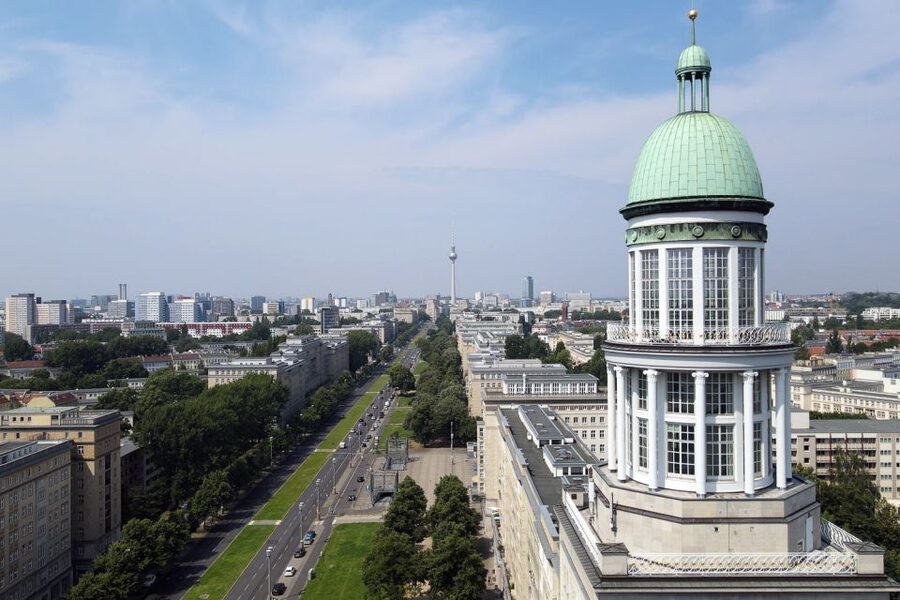
At nearly two kilometers long, the boulevard is the largest monument in Berlin. That description makes more sense once you see its scale. The buildings were planned as a unified urban statement rather than as unrelated blocks that happened to sit beside one another.
I find a guided walk especially useful here because the avenue can seem repetitive at first glance. Wide spaces and long rows of buildings do not always explain themselves. A guide helps you notice how the towers, apartment blocks, plazas, cinema, and surviving fragments fit together.
More Cold War tours in Berlin:
- Berlin: Third Reich and Cold War 2 Hour Walking Tour
★ 4.9 · 6,830 reviews - Berlin’s Best: 2 Hour Walking Tour Third Reich and the Cold War
★ 5.0 · 5,486 reviews - Skip-the-Line: Berlin Wall Museum at Checkpoint Charlie
★ 4.1 · 2,041 reviews
Frankfurter Tor and the boulevard’s grand entrance
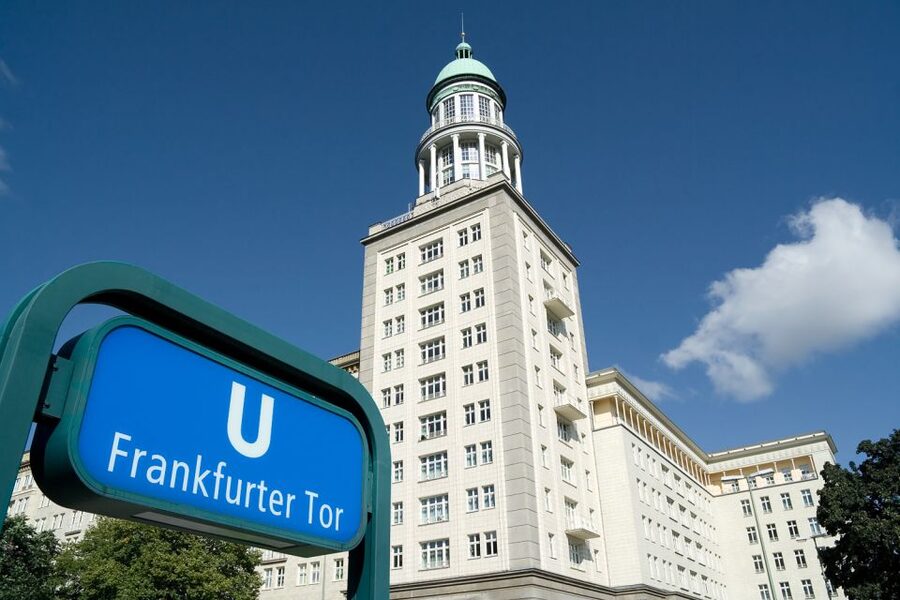
Frankfurter Tor is the clearest architectural symbol on the route. Its distinctive towers frame the broad avenue and give the area a ceremonial feel. They are the kind of buildings that make you stop, look up, and understand at once that this street was meant to impress.
The towers are more than decorative bookends. They help define the scale of the boulevard and mark a transition into the planned socialist city. Your guide can explain how the surrounding buildings were designed to work together, rather than treating each structure as an isolated landmark.
I like starting with a sight this powerful because it gives the rest of the tour a visual reference point. As you move along the avenue, you can compare the grand towers with the more practical apartment buildings, cultural sites, and residential details farther along.
The open space around Frankfurter Tor also helps you appreciate the planning. This was not a narrow street squeezed between older buildings. It was designed for a different kind of city life, one that placed public ceremony, organized housing, and monumental architecture side by side.
Arcades and the everyday side of socialist housing
The apartment buildings in Friedrichshain are among the most useful stops for understanding what Karl-Marx-Allee was supposed to do for ordinary life. Their arcades soften the heavy scale of the avenue and create a repeated rhythm along the facades.
These buildings were not simply backdrops for political theater. They were homes. That matters because the boulevard’s story is partly about housing, not only ideology. A guide can point out how the apartments fit into the larger plan and how their design differs from the monumental sections nearby.
I like this part of the route because it brings the grand story down to street level. Instead of looking only at towers and plazas, you get to consider the people who lived behind the facades and used the arcaded spaces as part of daily life.
The architecture may appeal most to people who enjoy modernist planning, post-war rebuilding, or the way governments use housing to express social goals. If your main interest is Berlin’s older imperial or medieval center, this section may feel less immediately familiar, but that difference is part of its value.
Kosmos cinema and the cultural life of the avenue
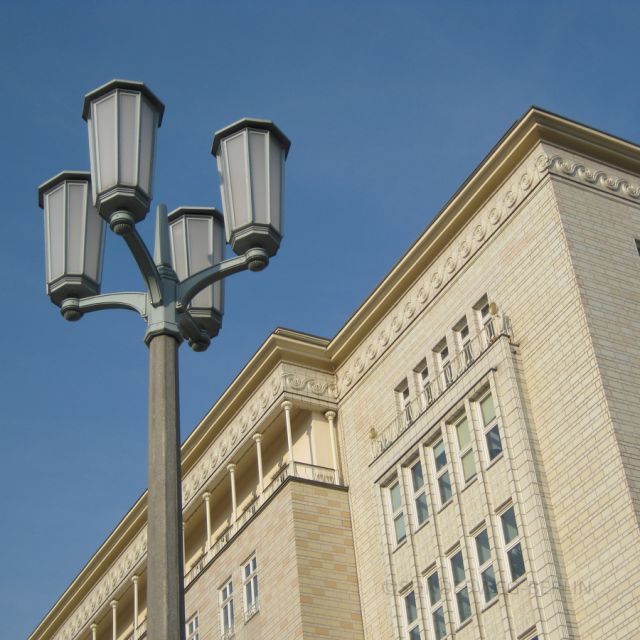
The Kosmos cinema, designed by Josef Kaiser, adds an important cultural layer to the walk. Karl-Marx-Allee was planned as more than a route for government parades or a collection of apartment blocks. Places such as the cinema gave the boulevard a social and cultural role.
A cinema tells you something about how the city’s planners imagined leisure. Housing, shopping, public space, and entertainment were all part of the same urban project. That makes Kosmos a useful stop for seeing the avenue as a functioning neighborhood, not merely a political monument.
The building also provides a change of pace. After the long lines of residential architecture, a cinema gives you a chance to think about film, public culture, and how entertainment fit into East German life.
The tour does not promise a screening or interior visit, so you should approach Kosmos as an architectural and historical stop. Its value comes from the explanation around the building and its place within the boulevard’s larger plan.
More two-hour experiences in Berlin:
- Berlin: 2-Hour Lake Oberhavel Cruise from Tegel
★ 4.4 · 577 reviews - Berlin 2-Hour Segway Tour
★ 4.6 · 238 reviews - East Berlin and the Berlin Wall 2-Hour Walking Tour
★ 5.0 · 228 reviews - Berlin: Backyards of Berlin 2-Hour Tour
★ 4.7 · 163 reviews
Hochhaus an der Weberweise and the changing skyline
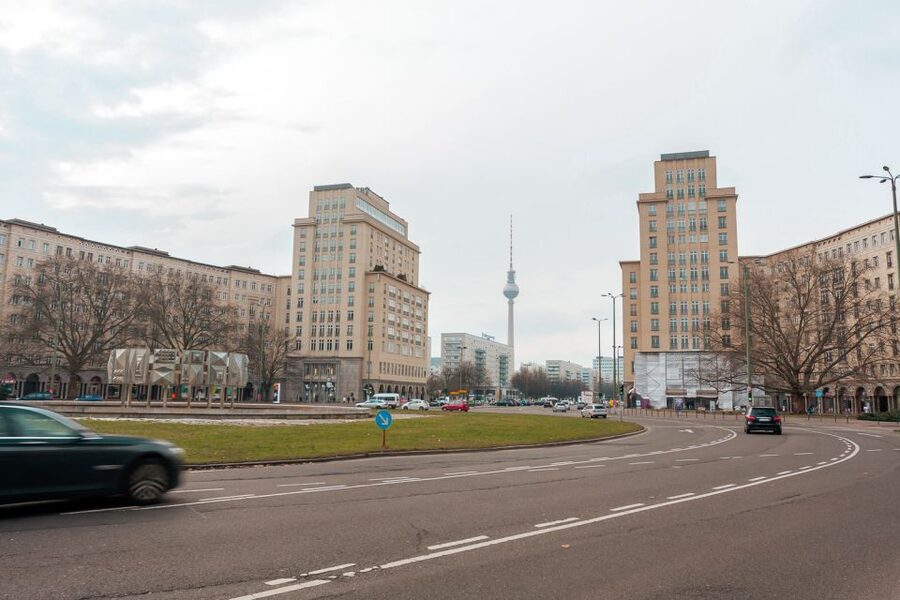
The high-rise building known as Hochhaus an der Weberweise offers another view of Berlin’s post-war building program. It helps show that Karl-Marx-Allee was not designed in one single architectural language from end to end.
For me, this is one of the more useful stops because it complicates the easy picture of socialist architecture. The boulevard includes monumental forms, residential blocks, arcades, and high-rise construction. Together, they show different attempts to solve the practical and symbolic problems of rebuilding a major capital.
Your guide can help you compare the high-rise with the lower apartment buildings and the more formal towers at Frankfurter Tor. Looking at those differences makes the street easier to read. You are not just seeing buildings from one period. You are seeing a sequence of ideas about density, prestige, housing, and modernity.
This is also where a guide’s visual material can help. Historical photographs and old posters give you a sense of how the buildings and spaces were presented at the time, rather than leaving you to judge everything only by its present appearance.
The Church of the Resurrection and the marks of war
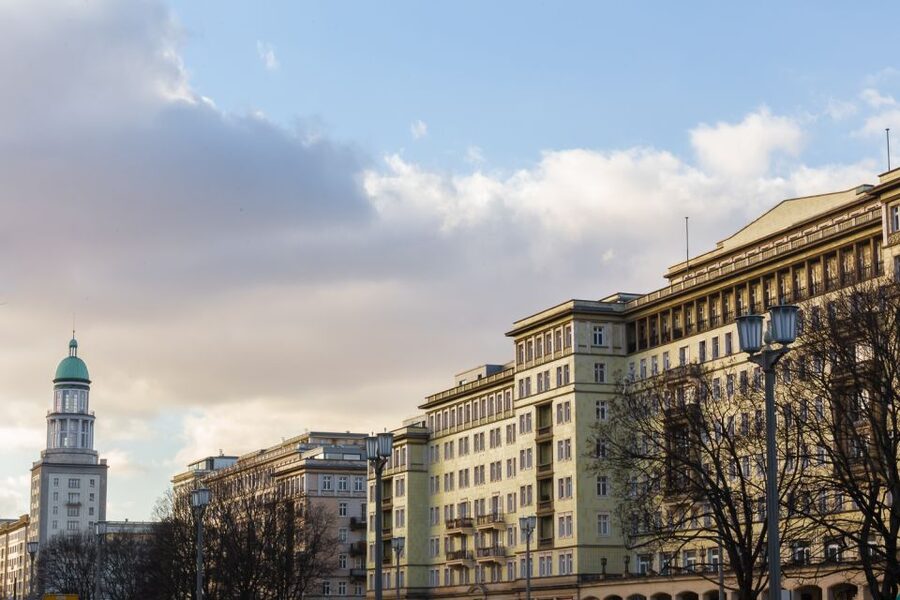
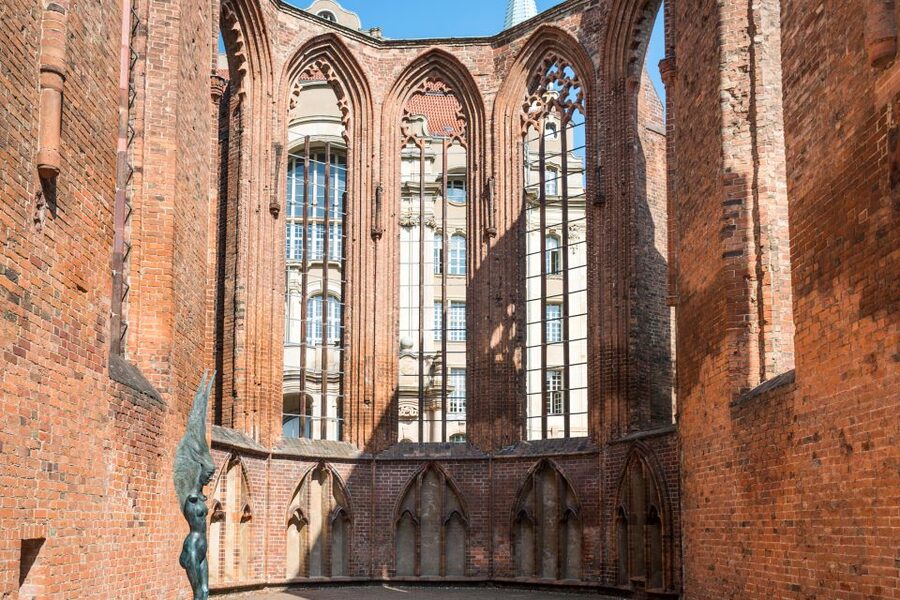
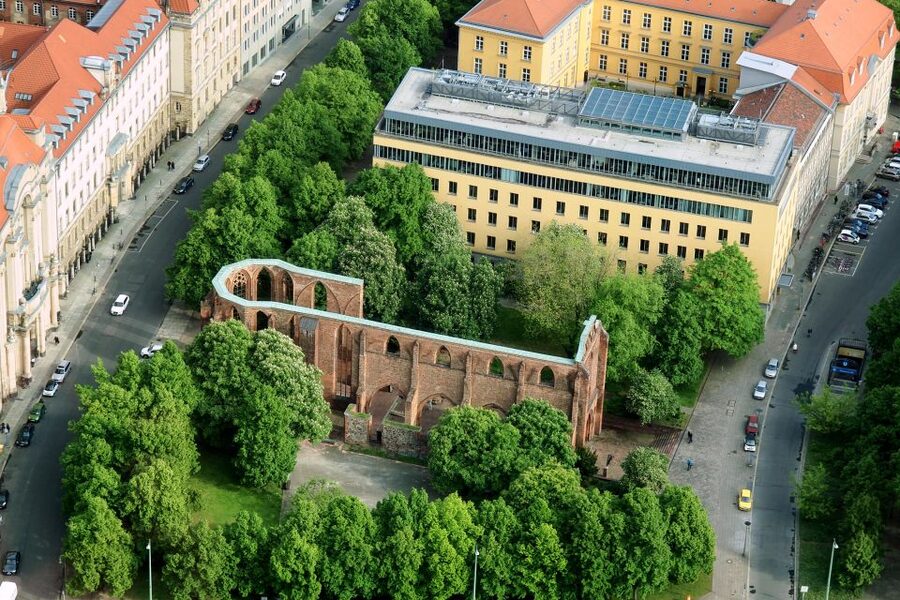
The partial ruins of the Church of the Resurrection provide a sharp contrast to the planned architecture around Karl-Marx-Allee. Instead of a complete building designed to project a new future, you encounter a surviving fragment connected to the destruction of war.
That contrast gives the tour emotional weight without requiring a dramatic presentation. The church ruins remind you that the monumental boulevard was created in a city marked by conflict, loss, rebuilding, and political division.
I appreciate stops like this because they keep the story from becoming too tidy. The avenue can look deliberate and controlled, but the surrounding area also carries evidence of what came before. A ruined structure beside planned housing makes Berlin’s layered past visible in a single walk.
The site may be less visually grand than Frankfurter Tor, but it is historically important. You get a better sense of the old city that was damaged or altered as the post-war capital took shape.
Strausberger Platz and the gateway to the socialist city center
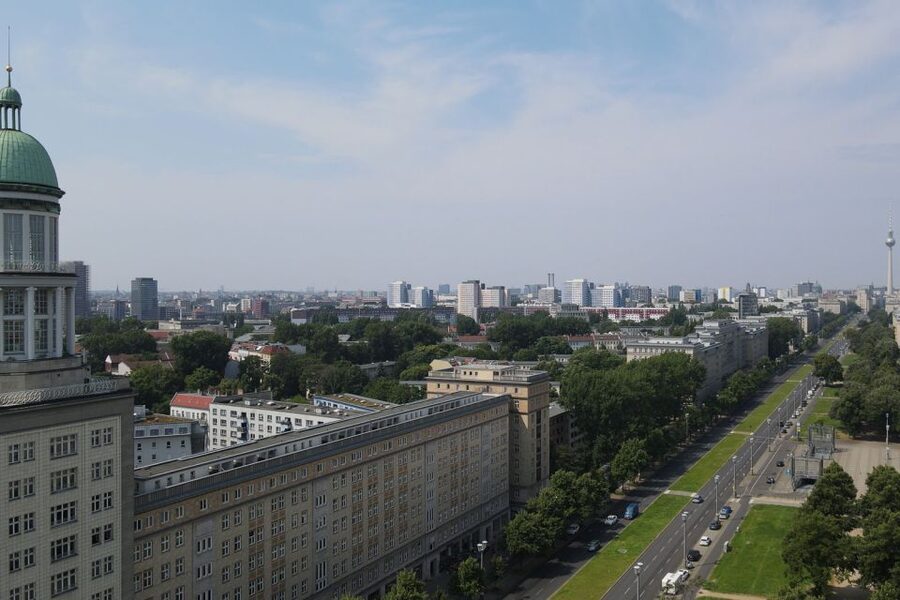
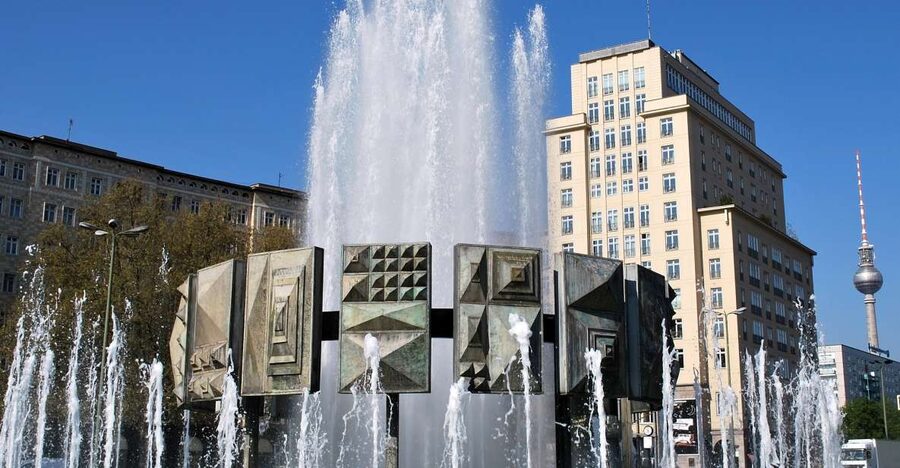
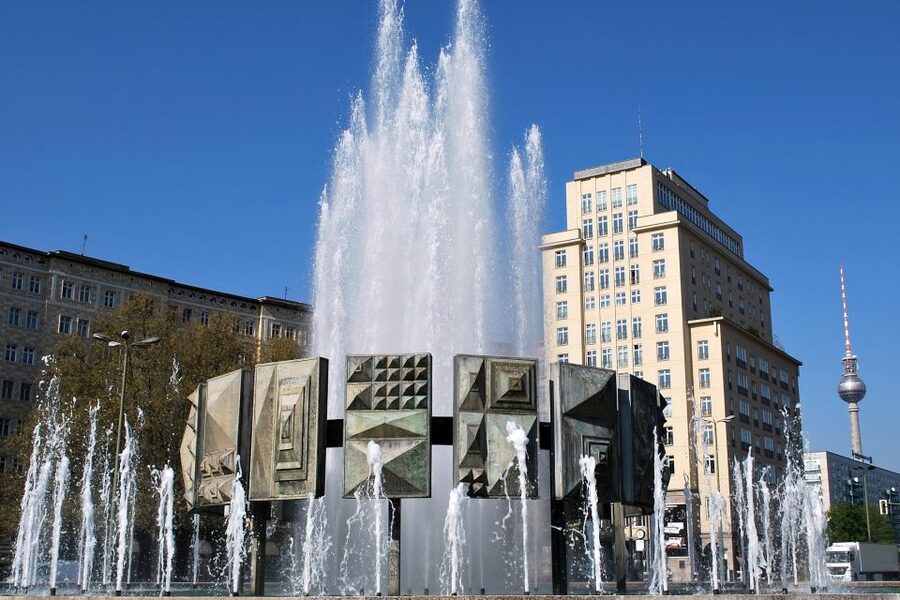
Strausberger Platz is one of the tour’s strongest urban spaces. Its distinctive high-rise buildings served as a gateway toward the socialist city center, giving the plaza a clear role in the larger design.
A gateway is not only a physical marker. It tells you how planners wanted people to enter and understand the city. Strausberger Platz helped create a transition from one section of the avenue to another, using height, spacing, and formal building placement to shape the experience.
I like this stop because it lets you see Karl-Marx-Allee as a carefully staged sequence. Frankfurter Tor makes a bold first impression, the apartment blocks reveal the residential side, Kosmos adds culture, and Strausberger Platz helps tie the whole plan together.
The plaza is also a good place to pause and look back. From there, the relationship between the high-rises and the long boulevard becomes clearer. Your guide can explain why the buildings were placed as they were and how the space was meant to function as a gateway.
What the guide adds to the buildings
The architecture is strong enough to see on your own, but the tour’s real value lies in the explanations. The route includes historical photographs, old posters, local anecdotes, artwork, and parts of the area that you might otherwise pass without noticing.
Tobias is named in several particularly positive accounts, and his approach is described as passionate, communicative, and full of historical detail. Other departures may have different guides, so you should not assume Tobias will lead every tour. Still, the guide-led format is clearly central to the experience.
I would pay attention to the small visual comparisons. Look at how monumental facades differ from residential arcades. Notice how a cinema sits within a housing district. Compare a ruined church with the newer urban plan. These details help you understand the boulevard as a complete idea rather than a row of isolated sights.
The best guides also explain the political language without turning the walk into a lecture. You get the key facts about the name changes and socialist planning, but you also hear the human and cultural details that make the place easier to picture.
Is $23 a fair price?
At $23 per person, this is a reasonable price for a two-hour guided walk, particularly if you have a serious interest in architecture, Berlin’s divided past, or urban planning. You are paying for interpretation rather than admission to a major interior attraction, so the value depends on how much you want context.
A self-guided walk along Karl-Marx-Allee costs nothing, but it also leaves you to research the buildings, political changes, and historical connections. With this tour, the guide provides a clear route and helps you spot details that may not be obvious from the pavement.
The price feels strongest if you use the tour as an introduction, then return to one or two favorite sections on your own. You can spend the walk learning how the boulevard works, then take your time later with photographs and closer looks.
It is less useful for anyone who wants a short list of postcard sights. The tour is about understanding a district. If you prefer interiors, museum collections, or a fast-moving overview of all Berlin, another activity may suit you better.
Timing, language, and practical planning
The tour lasts two hours and is offered with a live guide in German or English. Check the available starting time when you book, since departures may vary.
The meeting point can also vary depending on the option selected. Do not assume you should head straight to Frankfurter Tor without checking your confirmation. That small bit of planning can prevent a rushed start.
This is a walking tour, with no hotel pickup or drop-off included. Wear comfortable shoes and dress for the weather. The route is built around outdoor architecture and public spaces, so rain, cold, or strong sun will affect your enjoyment.
The walk is a good fit for a morning or afternoon when you want a focused activity rather than a full-day commitment. Two hours is long enough to cover the principal buildings but short enough to combine with other Berlin plans.
You can cancel up to 24 hours before the tour for a full refund, and the reserve-now, pay-later option gives you some flexibility while finalizing your schedule.
Who should take this Karl-Marx-Allee tour?
I would recommend it most strongly to you if you enjoy:
- Architecture and post-war city planning
- Berlin’s East German period
- Political history connected to public spaces
- Photography, especially large-scale urban scenes
- Walking tours with visual material and anecdotes
- Places that feel different from Berlin’s historic center
It also works well for repeat visitors who have already seen Brandenburg Gate, Museum Island, and the Reichstag. Karl-Marx-Allee shows another Berlin, one shaped by reconstruction and socialist planning rather than Prussian power or contemporary government.
Families with older children and teenagers may find the changing names and contrasting buildings useful because the street makes political history visible. Younger children may find two hours of architecture less engaging unless they already enjoy buildings or city stories.
I would be more cautious if you have limited mobility or dislike extended outdoor walks, since the experience is entirely described as a walking tour and no accessibility details are provided. Ask the provider before booking if you need specific arrangements.
Should you book it?
Book this tour if you want to understand why Karl-Marx-Allee matters, not merely photograph Frankfurter Tor. The strongest parts are the connections between the buildings: the arcades and housing, Kosmos cinema, Hochhaus an der Weberweise, the Church of the Resurrection ruins, and Strausberger Platz all make more sense as parts of one post-war plan.
At $23, the tour offers solid value for a focused two-hour history and architecture walk. I would choose it especially if you have already covered Berlin’s better-known landmarks and want a less predictable, more revealing side of the city.
Skip it if your time in Berlin is very short and you want only major landmarks, or if bad weather would make a long outdoor walk unpleasant. For everyone else, this is a practical way to read one of Berlin’s most important streets with help from a guide who can turn imposing buildings into a clear story.
FAQ
How long does the Karl-Marx-Allee tour last?
The walking tour lasts two hours.
How much does the tour cost?
The listed price is $23 per person.
What languages are available?
The live tour guide can lead the experience in German or English.
Is hotel pickup included?
No. Hotel pickup and drop-off are not included.
Where does the tour meet?
The meeting point may vary depending on the option you book. Check the details for your selected departure.
What places are included on the route?
The tour covers Frankfurter Tor, the arcaded apartment buildings in Friedrichshain, Kosmos cinema, Hochhaus an der Weberweise, the partial ruins of the Church of the Resurrection, and Strausberger Platz.
What is the story behind Karl-Marx-Allee’s name?
The boulevard changed from Frankfurter Allee to Stalinallee and later received its current name, Karl-Marx-Allee.
Can I cancel the tour?
Yes. You can cancel up to 24 hours in advance for a full refund. You can also reserve now and pay later.
Newest Berlin reviews
- Where It All Began: Berlin’s Queer & Trans History Tour★ 4.9 · 6 reviews
- Understanding Kreuzberg: The roots of local (sub)culture★ 4.9 · 11 reviews
- Berlin: guided canoe | kayaktour★ 4.1 · 7 reviews
- Private Potsdam City Tour in an authentic vintage van★ 5.0 · 14 reviews
- Warnemünde Shore Excursion: Private Sachsenhausen and Berlin Tour★ 5.0 · 12 reviews
- Ultimate E-Bike Tour of Berlin with Beer Garden Stop★ 5.0 · 4 reviews
- In the Forbidden City – Potsdam Walking Tour★ 5.0 · 17 reviews
- Private Walking Tour of Potsdam and Sanssouci★ 5.0 · 24 reviews
Berlin Cold War Tours, compared.
Berlin’s Best: 2 Hour Walking Tour Third Reich and the Cold War
Read our review →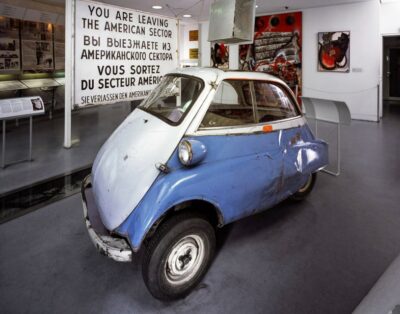
Skip-the-Line: Berlin Wall Museum at Checkpoint Charlie
Read our review →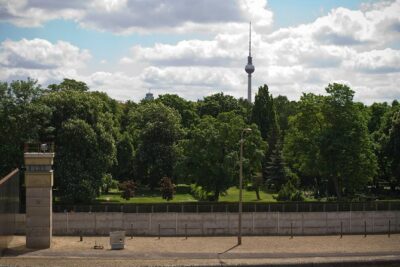
Cold War, Berlin Wall, Spies and the East Side Gallery
Read our review →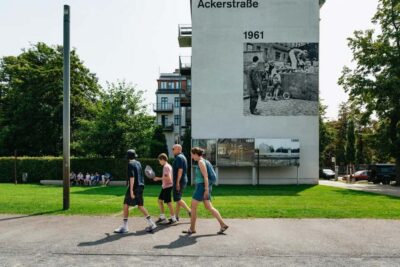
Listening Station Teufelsberg Tour with Transfer
Read our review →Browse the lists this tour appears in