
Reviewed · BERLIN WALL TOURS
Berlin: Guided Bike tour of the Berlin Wall and Third Reich
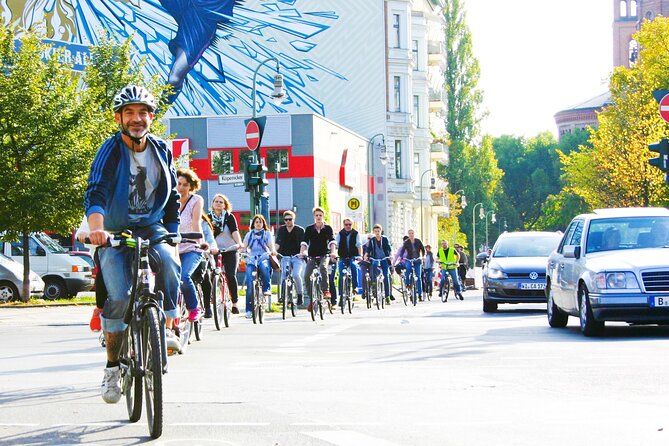
Berlin’s past makes more sense when you see how its pieces fit together. This three-hour ride links the Berlin Wall, Nazi-era sites, memorials, government buildings, and neighborhoods that were split, bombed, rebuilt, and reshaped. You cover more ground than you could on foot, while still stopping often for stories and discussion.
I like the local guide approach and the way each guide adds a personal angle. Paul, a native of West Berlin, has explained life before and after reunification, while guides such as Simon, Juliette, Theo, Simone, and Peter have been praised for clear storytelling, careful cycling, and thoughtful answers. I also like the easy pace, with comfortable bikes, helmets, baskets, and regular stops.
The main thing to understand is that this is not a fixed checklist tour. The Free Berlin concept lets each guide create a route around the main subject, so you may not visit every advertised stop. That freedom can produce a better ride, but if Checkpoint Charlie, the Holocaust Memorial, or the Reichstag is essential to your plans, tell the guide at the start.
Key points to know before you book
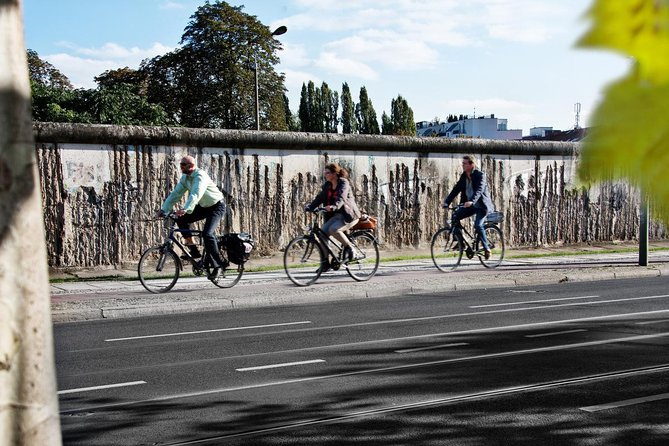
- A three-hour history ride: Expect a broad tour of Berlin’s Wall and Nazi-era past rather than long visits inside museums or buildings.
- The route can change: Guides design their own version of the ride, and weather, road closures, city events, or group needs can affect the stops.
- About 13 kilometers at an easy pace: The city is mostly flat, but you still need to feel comfortable cycling on streets and in bike lanes.
- Small groups, in theory: The group size is listed as 4 to 15 people, with occasional splitting into smaller groups when numbers are higher.
- Good for families: Children are welcome, and infant seats can be provided if requested ahead of time.
- English-language access: Checkpoint Charlie is specifically included only on the English version, so select the correct language when booking.
Why a bike works so well for Berlin’s divided past
Berlin is spread out, and its most important historical sites do not sit in one compact district. A walking tour can explain a wall segment well, but it cannot easily connect that segment with a flak tower, a former escape route, the Reichstag, Hitler’s bunker site, and the government quarter.
A bike lets you follow those connections. You see how the Wall cut through ordinary streets, parks, cemeteries, canals, and rail corridors. You also notice the city’s changing texture as you ride from old Berlin to postwar border zones and modern government buildings.
The pace is meant to be manageable rather than athletic. One family covered about 13 kilometers with children aged 10, 14, and 17, with frequent breaks and an easy rhythm. Berlin’s flat streets help, although riding in traffic can feel daunting at first. Guides are expected to keep the group together, wait at red lights, and give instructions at busy points.
The included city bike, helmet, and basket or basket carriage make the practical side simple. You can carry a water bottle, light jacket, or small bag without putting everything on your back. Food and drinks are not included, so bring water and eat before or after the ride.
More Third Reich history tours in Berlin:
- Berlin: Third Reich and Cold War 2 Hour Walking Tour
★ 4.9 · 6,830 reviews - Berlin’s Best: 2 Hour Walking Tour Third Reich and the Cold War
★ 5.0 · 5,486 reviews - Third Reich Berlin: Hitler and WWII Walking Tour
★ 5.0 · 3,301 reviews
Starting in Nikolaiviertel, Berlin’s reconstructed old center
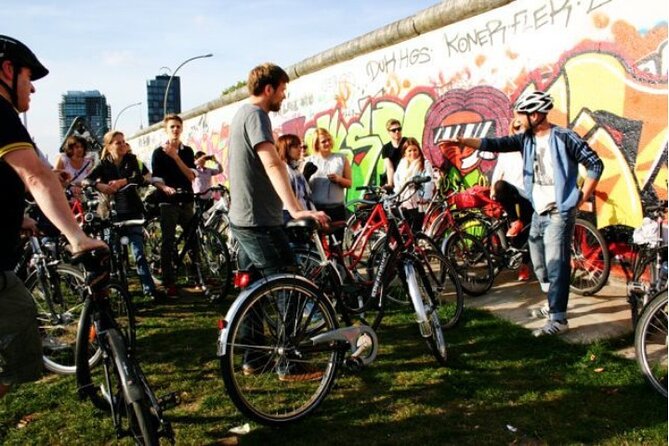
The ride begins at Poststraße 11 in Nikolaiviertel, close to the city center and public transportation. This district is presented as Berlin’s only genuine old town, though its present appearance needs some explanation.
Much of Berlin was destroyed during the Second World War, and Nikolaiviertel was rebuilt after the war. That makes it a useful opening lesson: even the places that look old may carry a complicated modern story. Your guide sets up the question of what survived, what was restored, and what was reconstructed after the bombing.
The stop is short, about 10 minutes, so treat it as an introduction rather than a full architectural visit. It gives you a useful starting point before the ride turns toward the city’s Jewish history and the Nazi period.
Neue Synagoge and the story of civil courage
The next stop is the Neue Synagoge, home of the Centrum Judaicum. You do not go inside, and the stop lasts about five minutes, but the story attached to the building is powerful.
Your guide explains how a police officer helped protect the synagogue during the November 1938 attacks known as Kristallnacht, or the Night of Broken Glass. The point is not to turn one act of courage into a simple feel-good story. Instead, it gives you a specific example of someone choosing to resist official persecution when many institutions failed to protect Jewish citizens.
This is one of the tour’s strengths. The history is tied to a building and a decision made on a particular night. You are not only hearing dates and political labels. You are looking at a place where choices had real consequences.
Wall memorials and the physical meaning of division
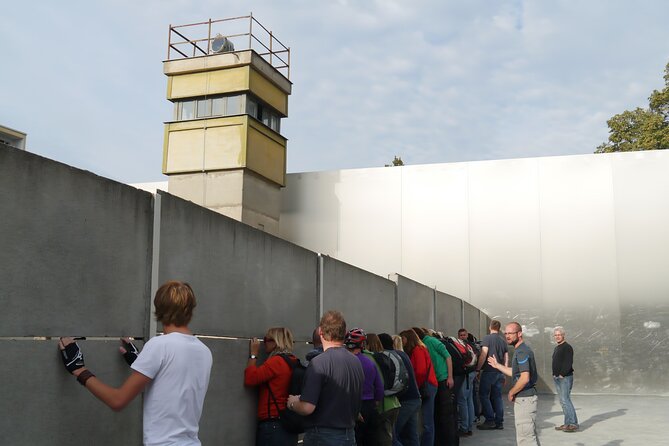
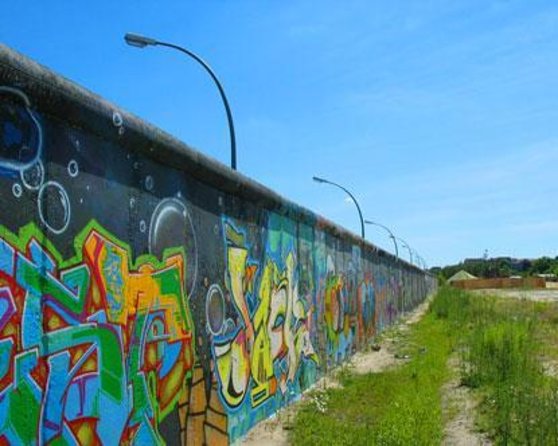
The Berlin Wall section is the heart of the ride. At the Berlin Wall Memorial, your guide explains how the Wall worked as a system of barriers, watch areas, open death strips, and controlled crossings. The aim is to help you picture what the border meant to people living beside it for 28 years.
This is more useful than seeing a short surviving slab of concrete in isolation. At the memorial, you can better understand the width and force of the border system, along with the way it divided streets, homes, families, and daily routines.
The stop itself is listed at about 10 minutes, so it is not enough for a full museum visit. If the Wall is your main reason for booking, plan to return independently for more time. One important practical lesson from the route is that the advertised Wall stop may be replaced by another site that the guide feels better suits the group.
Mauerpark follows naturally. Once part of the border zone, it now represents the city’s use of former divisions as public space. The park is known for its Sunday flea market and free-expression culture, but the tour focuses on the contrast between its past and present.
You get only about 10 minutes here. That is enough to understand the change in the site’s role, but not enough to explore the market or linger. If you visit on Sunday, set aside separate time for the flea market.
More Berlin Wall tours in Berlin:
- Skip-the-Line: Berlin Wall Museum at Checkpoint Charlie
★ 4.1 · 2,041 reviews - Cold War, Berlin Wall, Spies and the East Side Gallery
★ 5.0 · 1,024 reviews - THE WALL: asisi Panorama Berlin Ticket
★ 4.5 · 580 reviews - Berlin: Guided Bike Tour of the Berlin Wall and Third Reich
★ 4.7 · 499 reviews
Humboldthain and the Nazi-era structures left behind
Humboldthain Flak Tower adds a darker layer to the ride. The tower was built as a major anti-aircraft position and air-raid shelter during the Nazi period. Its scale shows how military planning reached into ordinary city neighborhoods.
The stop also connects architecture with ideology. Nazi construction was not only about decoration or grand public buildings. It involved massive defensive structures that shaped the city and remained after the regime fell.
The tour highlights the panoramic view and the chance to discuss the building’s purpose. The listed stop is about 10 minutes, so do not expect a long climb or extended time at the top as part of the standard ride. The value here comes from the explanation and the contrast between the tower’s military past and its present place in the city.
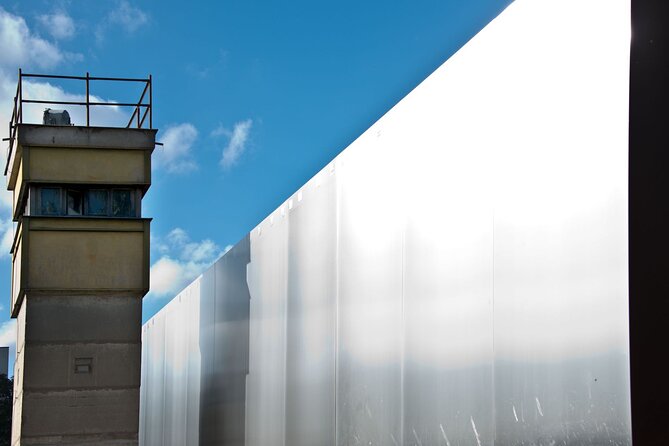
At the Günter Litfin Memorial, the focus shifts to the human cost of the Wall. The preserved watchtower commemorates Günter Litfin, identified here as the first person shot at the Wall. The five-minute stop is brief, but it puts a name and a life beside the larger story of border deaths.
That kind of pause matters. Walls and checkpoints can sound abstract when discussed only as political structures. A named person makes the danger immediate.
Invalidenfriedhof and the escape stories of the border
Invalidenfriedhof was a burial place for Prussian military figures, but the Wall cut directly through the cemetery. Its location near former checkpoints and the canal made it part of the geography of escape attempts and border control.
This stop is also about the strange ways political borders interrupt older places. Graves, paths, and family connections were separated by a barrier that had nothing to do with the original purpose of the cemetery.
The stop lasts about five minutes, so the guide’s explanation does most of the work. It is a useful place to ask questions about escape routes, canals, and the physical details of crossing from East to West Berlin. If you prefer history that connects politics to ordinary spaces, this is one of the more revealing sections.
Spreebogenpark, the Reichstag, and Hitler’s planned capital
At Spreebogenpark, you get a broad view of Germany’s government district. The stop looks beyond the buildings in front of you and asks what Berlin might have become under Hitler’s plans.
Your guide discusses Albert Speer and the proposed Great Hall, a giant structure intended to hold 180,000 people. The idea is useful because it shows the scale of Nazi architectural ambition and the way buildings were meant to express power.
The Reichstag stop follows with a discussion of Hitler’s rise to power and Germany’s democratic development. You view the building from outside rather than going in. That distinction matters if you are hoping to visit the dome. This experience does not include Reichstag admission, and five minutes is enough for context but not an interior visit.
The modern government quarter also makes the discussion more pointed. You are looking at the institutions of present-day democracy while hearing how the earlier democratic system was weakened and destroyed. That contrast is one of the strongest reasons to see these sites together.
Holocaust memorials and the former Führerbunker site
The ride includes discussion of several memorials connected to groups targeted during the Holocaust, leading to the Memorial to the Murdered Jews of Europe near Brandenburg Gate. The memorial’s field of concrete slabs is large, spare, and intentionally open to interpretation.
The stop lasts about 10 minutes. Your guide may invite the group to discuss how the space feels and what its design suggests. You have time to walk among the slabs, but not enough for an extended visit or the underground information center.
The memorial works best when you allow yourself a few quiet minutes rather than treating it as another photo stop. Its scale and form are difficult to absorb quickly, and the tour’s short schedule means you may want to return later.
The nearby Führerbunker site offers a very different kind of memorial experience. Hitler spent his final weeks there and died by suicide in 1945. Today, you see a parking area and ordinary urban surroundings, not a dramatic ruin or museum entrance.
The guide explains why the bunker is not presented as a shrine. This is an important part of Berlin’s approach to difficult sites: the location is marked with information, but the structure is not turned into a spectacle.
Checkpoint Charlie and the Cold War finish
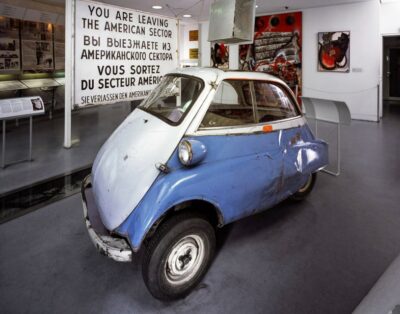
On the English-language version, the route includes Checkpoint Charlie. This was the best-known border crossing between the American and Soviet sectors, and the site became one of the Cold War’s most famous flashpoints.
Your guide explains how a confrontation here brought the United States and Soviet Union into direct tension, with fears that the dispute could grow into a much wider war. The stop is about 10 minutes.
Be realistic about what you will see. Present-day Checkpoint Charlie is a busy central attraction, and the tour does not promise an extensive museum visit. The value is in understanding why this particular crossing mattered and how the Cold War divided Berlin after the Nazi era had ended.
Because this stop appears only on the English option, check the language carefully before paying. If it is a must-see, mention it to your guide at the beginning, especially since routes can change.
Guides, group size, and the feel of the ride
The guide makes a major difference here because the tour depends on explanation more than admission tickets. Paul has brought a West Berlin perspective to the story of reunification. Simon has been praised for keeping the ride engaging in rain and for explaining the geography of East and West Berlin. Juliette, Theo, Simone, Peter, Jacob, Yonis, and Constantine have each been described as warm, clear, attentive, or especially good with historical detail.
That range is worth keeping in mind. You are not booking a scripted performance with exactly the same delivery every day. You are booking a guide-led route with room for personal stories and questions.
The stated group limit is 15, with a minimum of four. A group of 10 can feel manageable, and larger groups may be split into two smaller riding units. Still, a group of 12 or 15 can make city cycling slower, especially at traffic lights and busy intersections.
If you are uneasy about street riding, tell the guide. Several routes use parks and quieter sections, but some main roads and bike lanes are part of getting across Berlin. Comfortable cycling matters more than speed.
Price, timing, and who gets the best value
At $42.34 per person, the tour is fairly priced for three hours of bike use, helmet hire, and a professional English or German guide. You are paying for the route design and the links between sites, not for museum admission. Since all the listed stops are free to view from outside, the main value is the time saved and the interpretation provided while you move through the city.
I would book it early, especially since it is often reserved around 17 days ahead. The minimum group requirement means a departure may need to be changed if too few people sign up. Free cancellation is available up to 24 hours before the start time, while late cancellations and late changes are not refunded.
Dress for the weather. The ride operates in all conditions, and Berlin rain can make a three-hour outing less pleasant if you arrive without a waterproof layer. Children must be with an adult, and an infant seat can be requested.
Should you book this Berlin history bike tour?
Book it if you want a broad first look at Berlin’s divided past, prefer moving through the city to sitting in a bus, and enjoy asking questions along the way. It suits families, history-minded visitors, and anyone who wants to connect the Wall with Nazi-era sites and modern Berlin.
You may want a different plan if you need guaranteed time at every stop, want to enter the Reichstag or a museum, or expect a strictly fixed Third Reich route. The Free Berlin format is the key tradeoff: it can bring you a lively, personal ride, but it also means the exact itinerary is not guaranteed.
For the best result, tell the guide your must-see sites at the start, select the English option if Checkpoint Charlie matters, and leave separate time for the Wall Memorial and Holocaust Memorial. At $42.34, this is a strong way to get your bearings and build a historical map of Berlin, as long as you treat it as an informed overview rather than the final word on any one site.
FAQ
How long does the Berlin bike tour last?
The tour lasts approximately three hours and finishes back at the starting point.
Where does the tour start and end?
It starts at Free Berlin Bike Tours & Rental, Poststraße 11, 10178 Berlin. The ride ends back at the same meeting point.
What is included in the price?
Use of a bicycle, a helmet, and a professional guide are included. Food and drinks are not included unless specifically stated.
Is the tour offered in English?
Yes. The experience operates in English and German, depending on the option selected. Checkpoint Charlie is included only on the English version.
Is the tour suitable for children?
Yes. Children are welcome, but they must be accompanied by an adult. Infant seats can be provided on request.
How many people can join the tour?
The stated group size is between 4 and 15 participants. When numbers are higher, the group may be divided into smaller riding groups.
Can I cancel for a full refund?
You can cancel at least 24 hours before the scheduled start time for a full refund. Cancellations or changes made less than 24 hours before the start time are not refunded or accepted.
More bike tours in Berlin
- Berlin: Sights and Highlights Bike Tour with a Local Guide
★ 4.8 · 2,698 reviews - Berlin Highlights 3-Hour Bike Tour
★ 5.0 · 948 reviews - Berlin City Bike Tour with Beer Garden Stop
★ 5.0 · 917 reviews - Berlin Highlights: 3-Hour Bike Tour
★ 4.9 · 809 reviews
Newest Berlin reviews
- Where It All Began: Berlin’s Queer & Trans History Tour★ 4.9 · 6 reviews
- Understanding Kreuzberg: The roots of local (sub)culture★ 4.9 · 11 reviews
- Berlin: guided canoe | kayaktour★ 4.1 · 7 reviews
- Private Potsdam City Tour in an authentic vintage van★ 5.0 · 14 reviews
- Warnemünde Shore Excursion: Private Sachsenhausen and Berlin Tour★ 5.0 · 12 reviews
- Ultimate E-Bike Tour of Berlin with Beer Garden Stop★ 5.0 · 4 reviews
- Potsdam Highlights – Private sightseeing tour by minibus★ 5.0 · 3 reviews
- In the Forbidden City – Potsdam Walking Tour★ 5.0 · 17 reviews
Berlin Wall Tours, compared.
Skip-the-Line: Berlin Wall Museum at Checkpoint Charlie
Read our review →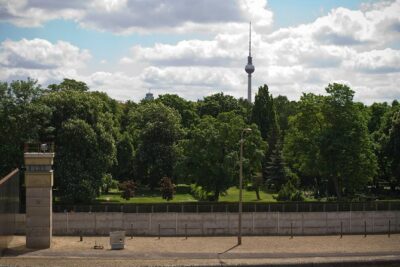
Cold War, Berlin Wall, Spies and the East Side Gallery
Read our review →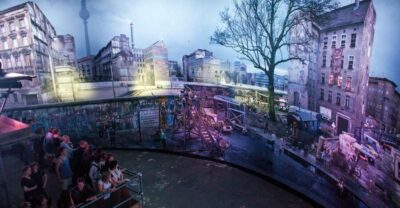
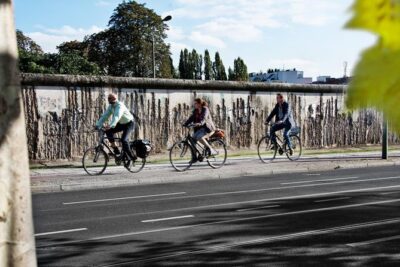
Guided Bike Tour of the Berlin Wall and Third Reich
Read our review →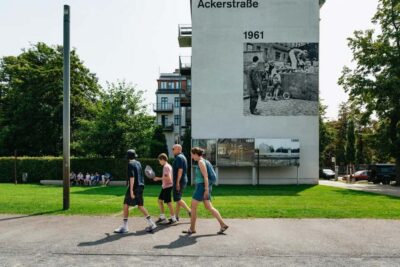
Browse the lists this tour appears in