
Reviewed · BERLIN NEIGHBORHOOD TOURS
Berlin City Walking Tour of Scheunenviertel and Hackesche Höfe in Berlin Mitte
Berlin’s past comes into focus on this walk through the Scheunenviertel, where Jewish life, wartime survival, East Berlin, and the lively 1920s all meet within a few central blocks. The route leads from Rosa-Luxemburg-Straße to the New Synagogue, with several courtyards and lesser-known corners along the way.
I like the private format, since your group can ask questions and set the pace with guide Swen Goetz. I also like the mix of big themes and small stories, from former prisoners and hiding places to bars, workshops, film locations, and apartments. The main consideration is the price: $289.95 is reasonable for a group of up to 15, but expensive for one or two people.
Key points to know before booking
- Jewish Berlin takes center stage, with a final stop at the New Synagogue and stories of Jewish life, persecution, and survival.
- The route goes beyond the famous courtyards, including Haus Schwarzenberg, Heckmannhöfe, a former workshop, and Clärchens Ballhaus.
- Swen Goetz uses photographs and anecdotes to connect today’s streets with the 1920s, wartime Berlin, and the former East Berlin.
- The private group limit is generous, making the cost easier to justify for families or larger parties.
- The walk ends at Oranienburger Straße, a useful central location for continuing your day.
- Allow some flexibility with timing, since the advertised length is about two hours, while the walk may run closer to two and a half hours.
Why this Berlin walk feels different
Many central Berlin walks move quickly from one famous building to another. This one takes a more personal route through places that can be easy to miss when you explore alone. The focus is not only on what a building looks like, but on the people who lived, worked, hid, danced, prayed, and survived there.
That makes the tour especially useful if you want more than a standard introduction to Berlin. You will hear about associations linked to former prisoners, conditions in the area a century ago, well-known bars, wartime residents, and the changes brought by decades of political upheaval.
I also like that the tour uses several time periods instead of treating Berlin as one single story. The Scheunenviertel brings the 1920s and Jewish life to the front. Haus Schwarzenberg gives you a feel for East Berlin in the 1980s. Clärchens Ballhaus recalls the atmosphere of the 1920s, while the New Synagogue adds the wider story of Jewish Berlin.
The route is private, so you are not tied to the questions or walking speed of a large group. That matters in a neighborhood where a good explanation can make a plain doorway or courtyard far more meaningful.
More neighbourhood tours in Berlin:
- Berlin: Hidden Backyards Guided Walking Tour
★ 4.8 · 5,360 reviews - Berlin: Spree Boat Tour to Müggelsee
★ 4.6 · 1,973 reviews - Berlin: Alternative Bike Tour of Kreuzberg & Friedrichshain
★ 4.7 · 548 reviews
Starting at Rosa-Luxemburg-Straße
The tour begins at Rosa-Luxemburg-Straße 41 in Berlin Mitte. From there, you head toward the Scheunenviertel, the former Jewish suburb that forms the historical heart of the walk.
The name points to an earlier time when barns and sheds occupied parts of the area. The neighborhood changed greatly over time, and war left its mark. Today, the streets combine older buildings, commercial spaces, apartments, courtyards, bars, and heavily restored facades.
Your guide places the streets in the setting of Berlin roughly a century ago. You hear about Jewish residents, local associations, famous bars, and the social conditions of the district. This is where the walk begins to show its main strength: the story is told through ordinary streets rather than only through monuments.
You should expect plenty of standing and walking while listening. The first section lasts about 45 minutes, and there is no admission charge for the stops. Comfortable shoes will make the route easier, though the supplied information does not specify a required level of fitness. Most people can take part, and children must be accompanied by an adult.
Scheunenviertel and the Berlin of the 1920s
The Scheunenviertel section is best for anyone interested in how Berlin functioned as a lived-in city. Instead of receiving only dates and architectural labels, you hear about the people who shaped the quarter and the pressures they faced.
The 1920s appear here not as a simple period of glamour. Famous bars and social life are part of the story, but so are poverty, associations, imprisonment, and the uncertain situation of Jewish residents. That balance is important. Berlin’s twenties can look glamorous in films and photographs, yet this neighborhood had many layers beneath that image.
The tour also uses small detours to add texture. One account of the walk describes photographs and anecdotes helping to explain people who lived in the district during the war and in the present day. That kind of detail is valuable because it keeps the neighborhood from becoming a museum display.
If you have seen Babylon Berlin, you may appreciate the connection to the show’s filming locations. The television reference is a starting point rather than the entire purpose of the walk. The better reason to book is the way the guide links familiar images of 1920s Berlin with less obvious streets and stories.
Haus Schwarzenberg and East Berlin memories
The next section takes you toward Hackescher Markt and Haus Schwarzenberg. The area is close to one of Berlin’s best-known courtyard complexes, but the stop gives attention to a different mood: what East Berlin could feel like in the 1980s.
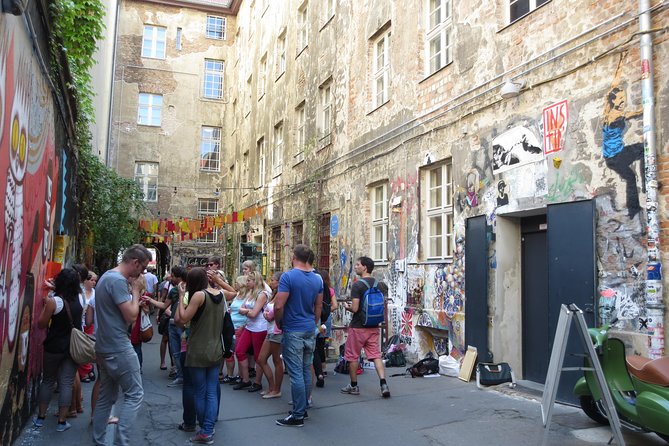
Haus Schwarzenberg is useful as a contrast to the polished parts of Mitte. You get a sense of the city before reunification, when Berlin was divided and the eastern side had a very different atmosphere from today’s central shopping and nightlife district.
The walk also visits a former workshop for blinds. According to the tour details, the site includes a hiding place that was used to conceal a Jewish family. This is one of the most powerful details on the route because it connects a practical workplace with an act of protection during a dangerous period.
You should keep your expectations sensible. This is a walking explanation, not a museum visit with a large exhibition or guaranteed interior access to every location. The value comes from seeing the places directly and hearing how they fit into the larger story.
Other Berlin experiences to weigh up
- Berlin: 1-Hour City Tour by Boat with Guaranteed Seating
★ 4.3 · 16,993 reviews - Berlin: City Sightseeing Hop-On Hop-Off Bus Tour
★ 4.1 · 4,233 reviews - Potsdam: City and Castles Tour
★ 4.7 · 3,721 reviews - Berlin: 1-Hour City Sightseeing Cruise
★ 4.4 · 2,210 reviews
Hackesche Höfe, eight courtyards with different moods
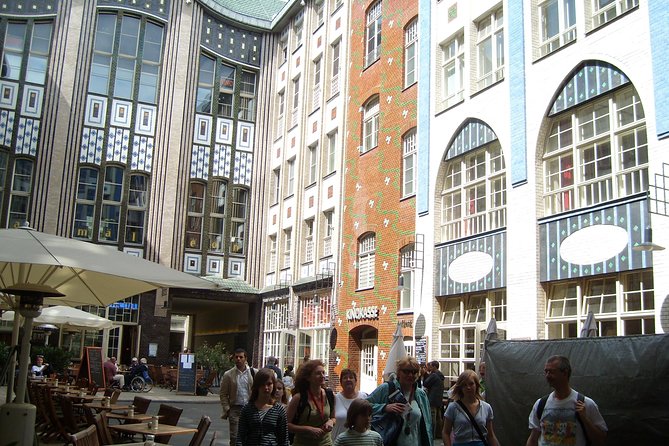
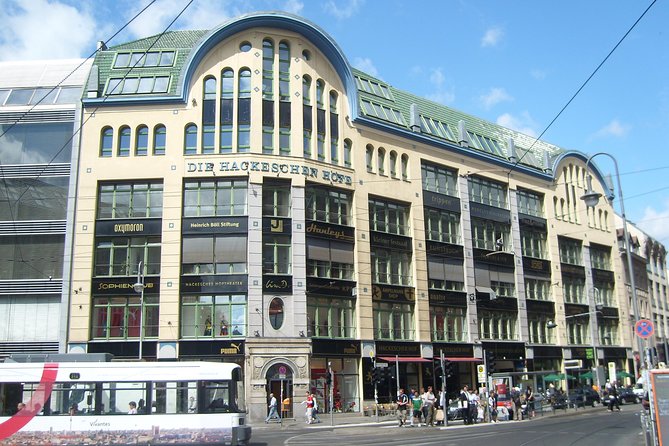
The Hackesche Höfe are the most recognizable architectural stop. The complex contains eight Art Nouveau courtyards, surrounded by apartments, shops, bars, cinemas, and other businesses. Greenery, colored facades, and carefully maintained spaces make this a pleasant part of the walk, but the courtyards are more than a photo stop.
Your guide explains how the area changed from its earlier use, when barns occupied parts of the site, into the elegant courtyard complex you see today. War and later renovation shaped what survived. Some buildings contain photographs showing stages of restoration, which can help you understand how much of the present appearance is old and how much has been repaired.
The courtyards are open during the day, while gates close in the evening. That makes the departure time worth discussing when you book. A daytime visit gives you the best chance to see the courtyards properly and find open shops or cafes.
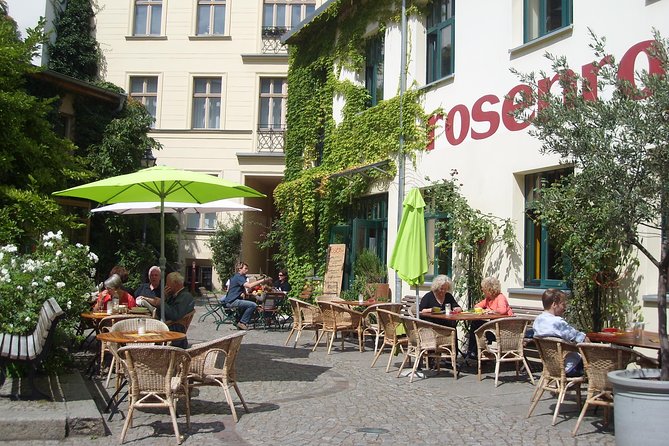
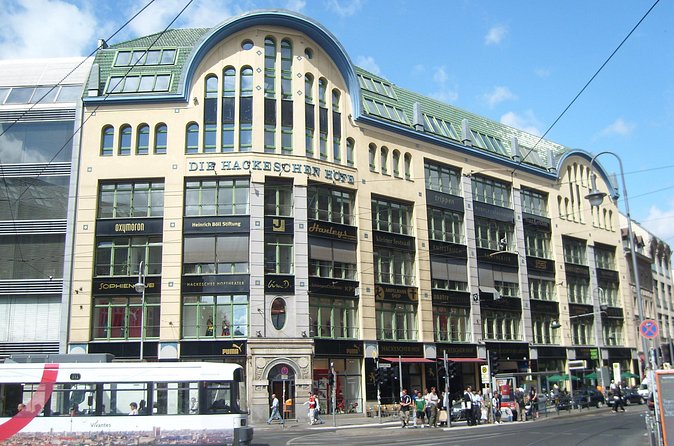
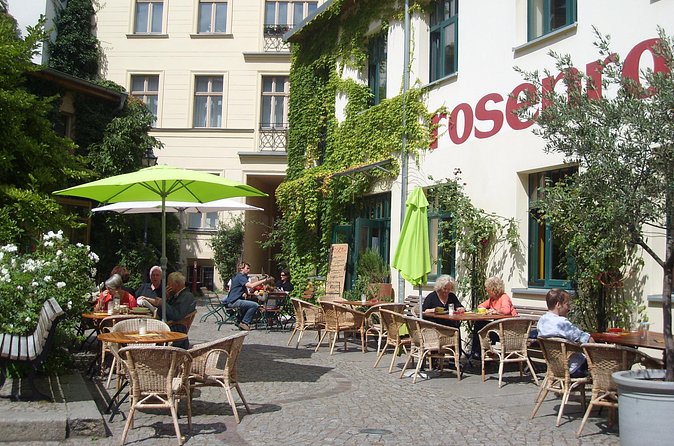
Sunday may be less useful if you want to browse businesses. Many shops can be closed, although the courtyards themselves remain the main attraction. If you want a drink afterward, Hackescher Hof at Rosenthaler Straße 40 to 41 is one nearby option. A glass of Chardonnay was priced at €5.70 in one account, while a small bottle of water cost €3.90, so you may want to check prices before ordering.
The Hackesche Höfe section lasts about 30 minutes. There is no admission ticket, and you do not need to budget extra money to enter the courtyards.
Clärchens Ballhaus and Heckmannhöfe
The final part of the walk moves toward Oranienburger Straße and the New Synagogue. Along the way, you visit Clärchens Ballhaus, a historic dance hall that retains much of its old atmosphere.
The appeal here is immediate. After hearing about Berlin in the 1920s, you enter a place where that period feels less abstract. The tour uses Clärchens Ballhaus to explain the social world of the time, giving you a sense of how people gathered and spent their evenings.
The building is not treated as a decorative relic alone. It helps connect the city’s entertainment culture with the people and neighborhoods already discussed. If you enjoy old dance halls, film locations, and places that still suggest their earlier use, this should be a highlight.
You also explore the Heckmannhöfe, another courtyard with a different character from the Hackesche Höfe. The change is useful because it shows that Berlin’s courtyards are not one repeated design. Each has its own scale, condition, and story.
The route’s use of courtyards is one of its strongest features. They create quieter spaces within central Berlin and offer a direct look at how housing, workshops, commerce, and social life once fit together. You will want time for photographs, but listen first. The explanation is what turns the courtyard from a pretty setting into part of the city’s story.
Ending at the New Synagogue
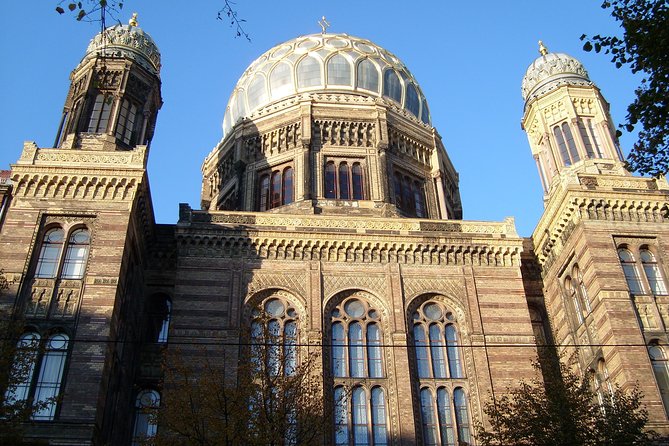
The tour ends at the Stiftung Neue Synagoge Berlin, also called the Centrum Judaicum, at Oranienburger Straße 28 to 30. The building is the natural finish for a route centered on Jewish Berlin.
By this point, the earlier stories about the Scheunenviertel, wartime survival, hidden families, and changing neighborhoods come together. The New Synagogue gives the walk a wider frame. You are not only looking at one district. You are considering Jewish life in Berlin, the destruction and persecution of the Nazi period, and the place of Jewish memory in the city today.
The supplied details do not promise entry into the synagogue museum or a guided interior visit, so you should think of this as a concluding location and explanation rather than a guaranteed museum tour. If you want to visit the institution inside, ask about opening arrangements separately.
Ending here is convenient. Oranienburger Straße is central and near public transportation, so you can continue sightseeing after the walk without returning to the starting point.
What the $289.95 group price really means
The price is $289.95 per group, with up to 15 people included. That works out well for a full family group, a group of friends, or a private organization that wants one guide for everyone. For 10 people, the cost is about $29 per person. For 15, it drops to about $19 per person.
For two people, the same price feels much less attractive. You are paying for privacy and a dedicated guide, not for admission tickets, since the listed stops are free. The value rests on the quality of the storytelling, the ability to ask questions, and the chance to shape the pace.
The tour includes a professional guide but not hotel pickup and drop-off unless that option is selected. You should give your preferred departure time when booking. Confirmation arrives at booking, and free cancellation is available if you cancel at least 24 hours before the start time.
The advertised duration is approximately two hours. One detailed account describes a walk lasting two and a half hours, so I would avoid placing a tight appointment immediately afterward. A little extra time is useful in this neighborhood, where questions and short detours add to the experience.
Who should book this private walk
I would choose this tour if you want history told through neighborhoods, courtyards, and personal stories rather than through a long sequence of major monuments.
It suits:
- Families and friend groups who can share the private cost
- First-time visitors who want useful tips for the rest of a Berlin stay
- People interested in Jewish heritage and wartime history
- Fans of Babylon Berlin and 1920s Berlin
- Visitors who enjoy architecture, courtyards, and city details
- Anyone who prefers a guide-led walk with room for questions
It may not suit you if your main goal is a formal museum visit, a fast overview of all Berlin, or a large number of interior attractions. Much of the experience happens outdoors, and the history is carried by the guide rather than by admission-based exhibits.
Swen Goetz is the named guide associated with this experience. The strongest descriptions of his approach point to clear explanations, photographs, anecdotes, and varied stops. That matters here, because the neighborhood can otherwise feel like a pleasant collection of courtyards without an obvious thread connecting them.
Should you book the Scheunenviertel and Hackesche Höfe walk?
Book it if you are traveling with a group and want a private, story-led introduction to one of Berlin’s most layered central districts. The combination of Jewish heritage, East Berlin memories, former hiding places, old dance-hall atmosphere, and Art Nouveau courtyards gives the walk a clear identity.
For a solo visitor or couple, compare the price carefully. The private format is the attraction, but the cost is harder to justify when shared by only one or two people. Also confirm the start time and allow up to two and a half hours, especially if you want to ask questions.
For the right group, this is a thoughtful way to see Berlin beyond the postcard stops. You finish at the New Synagogue with a better sense of how ordinary streets can hold several different versions of the city at once.
FAQ
How long is the Berlin walking tour?
The advertised duration is approximately two hours. You should allow extra time, since the walk may last closer to two and a half hours.
How much does the private tour cost?
The price is $289.95 per group, for up to 15 people.
What language is the tour offered in?
The tour is offered in English.
Where does the tour begin?
The meeting point is Rosa-Luxemburg-Straße 41, 10178 Berlin, Germany.
Where does the tour end?
The walk ends at Stiftung Neue Synagoge Berlin, Centrum Judaicum, Oranienburger Straße 28 to 30, 10117 Berlin.
Are admission tickets included?
The tour includes a professional guide. The listed stops have no admission charge. Hotel pickup and drop-off are not included unless that option is selected.
Can I cancel for a full refund?
Yes. You can cancel for a full refund if you cancel at least 24 hours before the experience start time. Changes or cancellations made less than 24 hours before the start are not accepted for a refund.
More Walking Tours in Berlin
- Discover Berlin Half-Day Walking Tour
★ 5.0 · 9,624 reviews - Berlin: Third Reich and Cold War 2 Hour Walking Tour
★ 4.9 · 6,830 reviews - Berlin: Discover Berlin Walking Tour
★ 4.9 · 5,998 reviews - Berlin’s Best: 2 Hour Walking Tour Third Reich and the Cold War
★ 5.0 · 5,486 reviews
Newest Berlin reviews
- Where It All Began: Berlin’s Queer & Trans History Tour★ 4.9 · 6 reviews
- Understanding Kreuzberg: The roots of local (sub)culture★ 4.9 · 11 reviews
- Berlin: guided canoe | kayaktour★ 4.1 · 7 reviews
- Warnemünde Shore Excursion: Private Sachsenhausen and Berlin Tour★ 5.0 · 12 reviews
- Ultimate E-Bike Tour of Berlin with Beer Garden Stop★ 5.0 · 4 reviews
- Private Potsdam City Tour in an authentic vintage van★ 5.0 · 14 reviews
- In the Forbidden City – Potsdam Walking Tour★ 5.0 · 17 reviews
- Private Walking Tour of Potsdam and Sanssouci★ 5.0 · 24 reviews
Berlin Neighborhood Tours, compared.

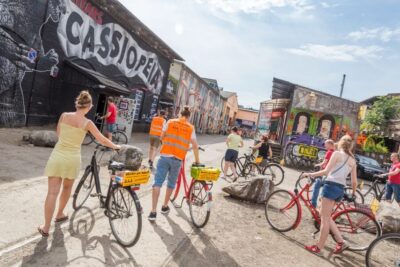
Alternative Bike Tour of Kreuzberg & Friedrichshain
Read our review →
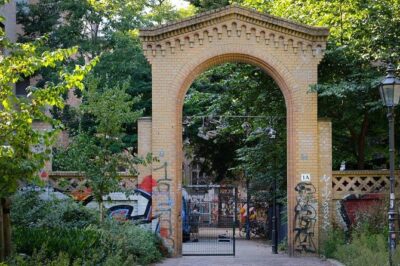
Berlin Off-the-Beaten-Path Walking Tour: Kreuzberg, Mitte and Friedrichshain
Read our review →
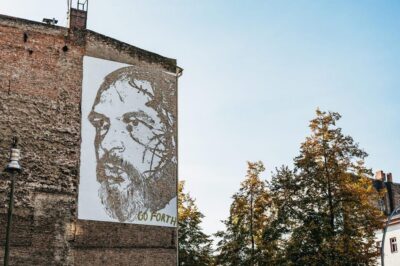
Hansaviertel “The City of Tomorrow” Guided Tour
Read our review →Browse the lists this tour appears in