
Reviewed · BERLIN WALL TOURS
The Cold War and The Wall – Private Tour with Jacob
Berlin’s Cold War story is spread across the whole city, and this private tour links the key places into one clear route. You’ll connect the Berlin Wall, escape attempts, communist rule, and reunification instead of seeing each landmark as an isolated photo stop. Jacob, also listed as Nadav Jacobs, leads the experience with room to adjust the pace and answer questions.
I like two things here. First, the tour covers more than the usual Checkpoint Charlie photo, reaching the Palace of Tears, Alexanderplatz, and the former Aviation Ministry. Second, the private setup works well for families or small groups who want direct explanations rather than a fixed public-tour script. The main consideration is pace: 10 stops in about 2 hours and 45 minutes means several visits are brief, and public transport costs extra.
Key points at a glance
- Ten Cold War-era stops: Follow the story from the Victory Column and Brandenburg Gate to the Palace of Tears and Alexanderplatz.
- A genuinely private format: Your group of up to six has its own guide, with pickup available from a Berlin hotel, apartment, train station, or airport.
- Strong personal guidance: Jacob, also named Nadav Jacobs in the tour information, provides explanations, questions, and suggestions for seeing more of Berlin on your own.
- A useful mix of famous and less obvious sites: Checkpoint Charlie shares the route with the Aviation Ministry, the Trabi Museum, and the former border-control street of Friedrichstrasse.
- Bring weather protection: The tour runs in all weather, so an umbrella or rain jacket is a sensible part of your day bag.
- Good value for a small group: At $310 per group, the price becomes more reasonable when split among several people, though public transport is not included.
Berlin’s divided story, told on the streets
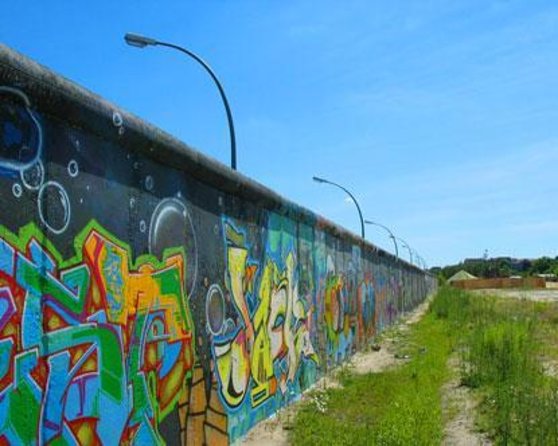
The best feature of this experience is its citywide view of the Cold War. Berlin’s division was not confined to one surviving wall segment. It shaped government buildings, roads, railway stations, public squares, cars, monuments, and the daily movement of ordinary people.
That makes the route useful if you want more than a quick look at a wall memorial. The tour covers the construction and fall of the Berlin Wall, East Germany’s 1953 uprising, border controls, escape attempts, communist ideals, the space race, and the public celebrations that followed the end of the Cold War.
I also like that the tour ends at Alexanderplatz rather than returning you to the starting point. Alexanderplatz is a major central area, so you can continue exploring after the guide leaves. The finish is practical, but note the address carefully: the end point is Alexanderplatz, 10178 Berlin.
The private format is the other major advantage. With up to six people, you can ask Jacob to explain a confusing point, slow down for a photograph, or suggest what to see next. Past feedback gives particular credit to the guide’s ability to explain the city and offer ideas for independent sightseeing. That is especially useful on a first visit, when Berlin’s many memorials and former border sites can blur together.
More Berlin Wall tours in Berlin:
- Skip-the-Line: Berlin Wall Museum at Checkpoint Charlie
★ 4.1 · 2,041 reviews - Cold War, Berlin Wall, Spies and the East Side Gallery
★ 5.0 · 1,024 reviews - THE WALL: asisi Panorama Berlin Ticket
★ 4.5 · 580 reviews
The route from the Victory Column to the 1953 uprising
The first stop is the Siegessäule, or Victory Column, on Straße des 17. Juni. The visit lasts about 15 minutes and is free.
Here, the focus is East Germany’s 1953 revolution. The stop gives the tour an important starting point because it moves beyond the familiar Wall story. You’ll hear about the uprising and the meaning of Straße des 17. Juni, a name tied to the events of 1953.
This is a short introduction rather than an extended monument visit. If you want to climb the Victory Column or spend time studying it, that is not included in the stated tour timing. I would treat this as a place for context and orientation.
From there, the tour continues to the Brandenburg Gate for about 10 minutes. The guide explains the erection and fall of the Berlin Wall, using one of Berlin’s best-known landmarks to frame the city’s division and reunification.
The Brandenburg Gate is an efficient stop because its meaning changed so sharply over time. It was a symbol near the divided border during the Cold War, and it later became one of the clearest public symbols of a united Berlin. Ten minutes will give you the core explanation and a chance to take in the setting, but not a long architectural study.
Potsdamer Platz and the open city after the Wall
Potsdamer Platz gets about 15 minutes. The subject here is the city divide and the freedom concert held after the Cold War.
This stop helps show how Berlin’s central districts were affected by the border. The tour also links the site to the sense of public freedom that followed the Wall’s fall. I find that pairing useful: you are not only hearing about a political change, but also about how people celebrated the new possibilities.
The short visit is enough for an overview. If modern architecture or the redevelopment of Potsdamer Platz interests you, you may want to return later on your own. The private tour gives you the historical frame, but it cannot spend a long time at every location while also reaching the other nine stops.
The Aviation Ministry and an escape attempt
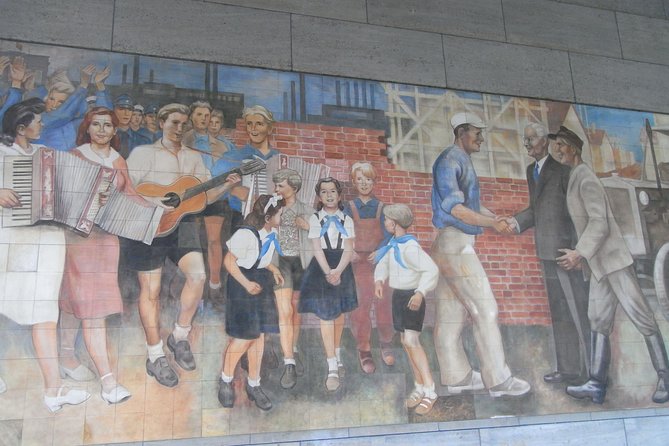
The former Aviation Ministry of Berlin is another 10-minute stop. The discussion includes Max Lingner’s communist utopia and Heinz Holzapfel’s escape attempt.
This is one of the more unusual parts of the route. Many visitors know Checkpoint Charlie, but fewer arrive with a clear idea of how government buildings and visual art expressed East Germany’s political ideals. The reference to Max Lingner brings in the official vision of communist society, while the Heinz Holzapfel escape attempt shows the personal risks created by the border.
That contrast is valuable. You see both the public message of the state and the private choices made by people who wanted to leave. Ten minutes is a tight window, so I would listen closely and ask questions while you are there.
More Cold War tours in Berlin:
- Berlin: Third Reich and Cold War 2 Hour Walking Tour
★ 4.9 · 6,830 reviews - Berlin’s Best: 2 Hour Walking Tour Third Reich and the Cold War
★ 5.0 · 5,486 reviews - Berlin: Cold War Walking Tour on Berlin Wall Route
★ 4.8 · 437 reviews - Berlin: Cold War Era History Guided Bike Tour
★ 4.8 · 413 reviews
The Trabi Museum and East German daily life
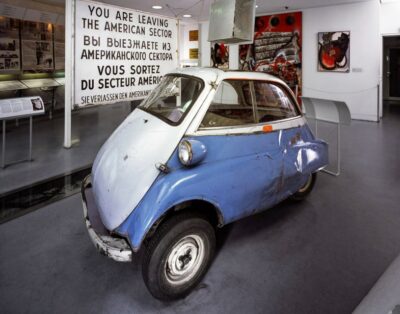
The Trabi Museum receives the longest single visit, about 30 minutes, and admission is listed as free. The subject is the East German car, the Trabant.
This stop adds everyday life to a route that could otherwise focus only on governments, border guards, and major political events. The Trabant became a familiar part of East German life, and its place in popular memory helps you picture the material side of the divided country.
I appreciate the extra time here. Thirty minutes allows more room for explanation and looking around than the 10-minute monument stops. It also gives the tour a change of pace. Instead of standing outside a landmark, you get a tangible object connected to work, travel, family life, and the limits of consumer choice in East Germany.
The information says admission is free, but the tour does not promise an extended museum program. Think of this as a focused visit tied to the Cold War story, not a full day at a transport museum.
Checkpoint Charlie and Friedrichstrasse
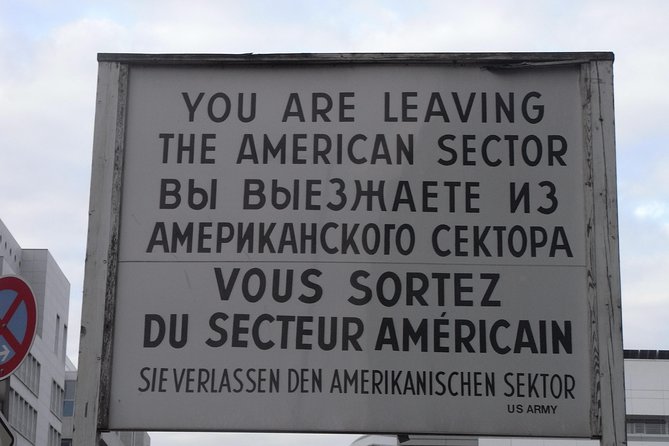
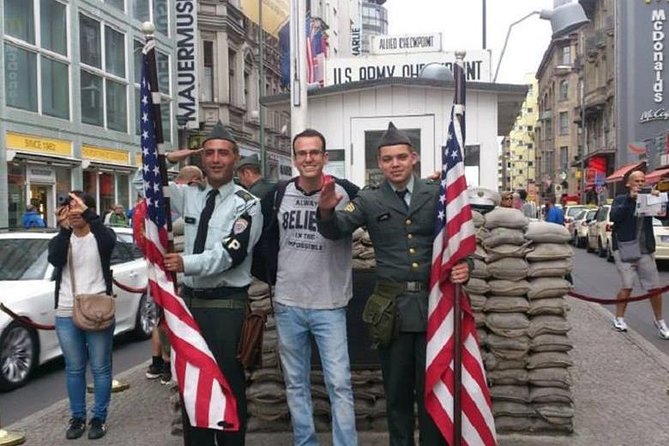
Checkpoint Charlie takes about 10 minutes. The guide presents it as the main crossing between East and West and explains its Cold War role.
This is one of the places you will likely recognize from photographs, but the context matters more than the photo itself. A guide can explain why this crossing became so important and how it fit into the larger border system. The brief stop should suit you if you want the main facts without spending a long time at a crowded landmark.
Friedrichstrasse follows for about 20 minutes. The focus is on the checkpoints along this street. That longer visit gives the route room to explain how control worked across an urban street, not only at one famous booth.
I would pay attention to the relationship between these two stops. Checkpoint Charlie is the headline site, while Friedrichstrasse broadens the picture. Together, they show that border control was part of the city’s daily structure.
Unter den Linden and the Palace of Tears
The tour then reaches Unter den Linden for about 20 minutes. This was East Germany’s main avenue leading toward the border.
The avenue provides a sense of movement through the former East Berlin. Rather than learning about a border crossing as a single point, you follow one of the major routes toward it. That makes the geography easier to understand, especially if Berlin is new to you.
The Palace of Tears receives another 20 minutes. It was the main checkpoint for citizens and a place tied to communist control.
The name alone hints at the human side of the border. This was not simply a place for official paperwork. It was connected with departures, separations, and the strain of passing between East and West. The stop should appeal to you if you want the tour to focus on how political systems affected families and personal freedom.
The route’s mix of famous places and more personal sites is one of its strongest points. Brandenburg Gate and Checkpoint Charlie help you recognize Berlin’s public symbols. The Palace of Tears gives the story a more intimate edge.
Alexanderplatz, the TV tower, and the space race
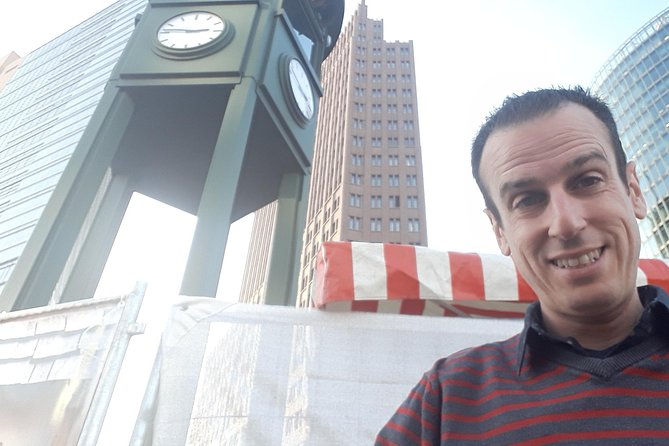
The final stop is Alexanderplatz, with about 10 minutes devoted to the TV tower and the space race.
The television tower is an unmistakable feature of Berlin’s skyline, and its connection to the space race brings in another part of the Cold War: competition in science, technology, and national prestige. The stop also works as a practical endpoint because Alexanderplatz is central and well connected.
The 10-minute visit is designed for a final explanation, not for going up the tower. If you want to visit the TV tower itself, that would be a separate plan. The tour ends at Alexanderplatz, so you can decide later how much more time to spend in the area.
What the $310 price gets you
The price is $310 per group of up to six people. For one or two people, that is a significant outlay compared with a shared walking tour. For a full group, the cost works out to about $51.67 per person before transport, which makes the private format more appealing.
You are paying for more than a walk between landmarks. The fee includes your own guide, pickup from a Berlin hotel, apartment, train station, or airport, an A3 guidance picture folder, a large subway-station map, and guide availability for questions or help with the rest of your Berlin visit.
Pickup can save time and reduce the stress of finding a starting point, especially if you have just arrived. It also gives the tour a more personal start. Still, you should confirm the pickup arrangement when booking, since the published start is simply Berlin rather than a single named address.
Public transport tickets are extra, at roughly 3 to 11 euros for a two-hour or day ticket. The exact cost depends on the ticket you use. A private van and driver are not included, but can be requested. The tour is not designed for groups larger than 10 without contacting the provider first.
Timing, weather, and who will enjoy it most
The advertised duration is about 2 hours and 45 minutes. Ten stops in that period create a brisk schedule, with visits ranging from 10 to 30 minutes. I would choose this tour if you want a strong overview and a guide who can connect the sites, not if you prefer long museum visits or slow photography stops.
You should wear comfortable shoes and bring an umbrella or rain jacket. The tour operates in all weather, and much of the experience concerns outdoor places and city streets. The stated information says it is near public transportation, and most people can participate. Service animals are allowed.
This tour suits first-time visitors who want a firm historical framework. It also suits families and small groups who prefer to ask questions freely. If you already know Berlin’s Cold War story well, the value will depend on the guide’s personal explanations and on your interest in seeing several sites efficiently.
The guide’s role is central. Feedback specifically praises Jacob and Nadav Jacobs for clear explanations, personal attention, and suggestions for future sightseeing. One person described the experience as a first look that only scratched the surface, which is a fair way to think about the tour. It can orient you to Berlin, but it cannot tell every part of the city’s story in under three hours.
Should you book the Cold War and The Wall tour?
I would book it if you are visiting Berlin for the first time, have a small group, and want the Cold War explained through real places rather than a classroom lecture. The combination of private guidance, pickup, a subway map, and a route that reaches both headline sights and less familiar locations gives the price a fair logic for up to six people.
I would think twice if you want a relaxed half-day walk, extensive indoor visits, or a tour devoted only to the Wall. The pace is quick, public transport costs extra, and several stops last just 10 minutes.
For the right group, this is a useful opening chapter to Berlin. You leave at Alexanderplatz with a clearer map of the divided city and practical ideas for what to explore next. Free cancellation is available up to 24 hours before the start time, which gives you some flexibility when planning.
FAQ
How long does the tour last?
The tour lasts approximately 2 hours and 45 minutes.
How many people can join the private tour?
The stated price covers one group of up to six people. For bookings larger than 10 people, you should contact the provider.
What does the tour cost?
The price is $310 per group of up to six people.
Is hotel pickup available?
Yes. Pickup is offered from hotels, apartments or bed-and-breakfasts, train stations, and airports in Berlin.
Are public transport tickets included?
No. Public transport tickets cost roughly 3 to 11 euros, depending on whether you choose a two-hour or day ticket.
Where does the tour finish?
The tour finishes at Alexanderplatz, 10178 Berlin.
Can I cancel for a full refund?
Yes. You can cancel at least 24 hours before the experience start time for a full refund. Cancellations or changes made less than 24 hours before the start are not refunded or accepted.
Newest Berlin reviews
- Where It All Began: Berlin’s Queer & Trans History Tour★ 4.9 · 6 reviews
- Understanding Kreuzberg: The roots of local (sub)culture★ 4.9 · 11 reviews
- Berlin: guided canoe | kayaktour★ 4.1 · 7 reviews
- Private Potsdam City Tour in an authentic vintage van★ 5.0 · 14 reviews
- Warnemünde Shore Excursion: Private Sachsenhausen and Berlin Tour★ 5.0 · 12 reviews
- Ultimate E-Bike Tour of Berlin with Beer Garden Stop★ 5.0 · 4 reviews
- In the Forbidden City – Potsdam Walking Tour★ 5.0 · 17 reviews
- Private Walking Tour of Potsdam and Sanssouci★ 5.0 · 24 reviews
Berlin Wall Tours, compared.
Skip-the-Line: Berlin Wall Museum at Checkpoint Charlie
Read our review →
Cold War, Berlin Wall, Spies and the East Side Gallery
Read our review →
Guided Bike Tour of the Berlin Wall and Third Reich
Read our review →
Browse the lists this tour appears in