
Reviewed · BERLIN WALL TOURS
Berlin Wall and Cold War Bike Tour in Small Groups
Berlin’s Wall story makes more sense when you follow it by bicycle. This 3.5-hour ride links famous places such as Brandenburg Gate and Checkpoint Charlie with less obvious traces of the old border, including a watchtower at Kieler Eck and the former exit hall known as the Palace of Tears. You cover roughly 20 kilometers, but the riding is easy enough that the history, not the exercise, remains the main event.
I like two things here. First, the route shows Berlin from several angles, rather than treating the Wall as one isolated strip of concrete. Second, the guides bring in personal stories and human detail. Giovanni, Pete, George, Monti, and Gilles are among the guides praised for clear explanations, warmth, and a gift for making a grim subject understandable. The main consideration is weather: you ride outside, and a wet or cold day can make the stops less comfortable.
Key points to know before you book
- About 20 kilometers by bike: The route covers a broad section of central Berlin without the fatigue of a full day on foot.
- Small groups capped at 15: You get a better chance to hear the guide and ask questions than on a large bus tour.
- Human stories beside major sights: The tour connects political events with daily life in East and West Berlin.
- Bikes and helmets included: You do not need to arrange a rental separately.
- Starts and finishes at Kulturbrauerei: The bike depot is in Prenzlauer Berg, at Knaackstraße 97.
- Easy for families and teens: A 12-year-old has enjoyed the tour, and the cycling adds movement to a serious history lesson.
Why a bicycle works so well for Berlin’s divided past
The Berlin Wall was not a single attraction. It cut through streets, neighborhoods, railway lines, parks, and ordinary lives. A bicycle lets you move between these fragments in a way that a museum visit cannot.
You can cover more ground than you would on foot, yet still stop often enough to look closely. The route moves from grand political symbols to quiet border remains. That change in scale matters. At one point you are looking at Brandenburg Gate, a powerful symbol of German unity. Later, you may be examining a watchtower or a surviving section of the old border zone.
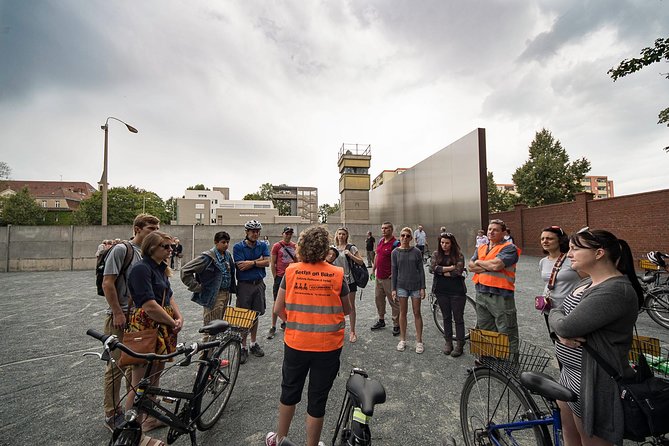
The pace also suits the subject. You are not locked into a seat while a guide points out places through a window. You stop, gather around, hear the story, then ride to the next location. Several guides have been praised for using dates and facts without turning the tour into a dry lecture. Pete, also referred to as Liverpool Pete, is especially noted for compassion and for encouraging people to consider both East and West Berlin.
This is still a history tour, so you should expect serious material. The stories include escape attempts, border controls, deaths at the Wall, and the strain of living in a divided city. The bike ride keeps the experience active, but it does not make the subject light.
More Berlin Wall tours in Berlin:
- Skip-the-Line: Berlin Wall Museum at Checkpoint Charlie
★ 4.1 · 2,041 reviews - Cold War, Berlin Wall, Spies and the East Side Gallery
★ 5.0 · 1,024 reviews - THE WALL: asisi Panorama Berlin Ticket
★ 4.5 · 580 reviews
Starting at Kulturbrauerei in Prenzlauer Berg
You meet at Berlin on Bike, the tour’s bike depot at Kulturbrauerei, Knaackstraße 97. The tour begins and ends here, which makes planning easier. You do not have to arrange a separate return transfer from the city center.
Kulturbrauerei itself is worth a look before you set off. This large former industrial complex covers about 25,000 square meters and is known for its courtyards and late 19th-century architecture. It has been protected since 1974 and is one of Berlin’s better-preserved industrial sites of its kind.
The starting point gives you an early reminder that Berlin’s past is not limited to wartime memorials. The city’s industrial growth, working neighborhoods, political division, and later cultural life all overlap here.
The bikes and helmets are included in the $43.54 price. That makes the cost reasonable if you would otherwise need to rent a bicycle, especially since the tour lasts about three and a half hours and includes a local guide. Food and drinks are not included, so bring water and plan for any snacks separately.
Brandenburg Gate and the symbols of a divided city
Brandenburg Gate is usually associated with modern German unity, but it also helps explain the geography of Cold War Berlin. The neoclassical gate sits at the western edge of Pariser Platz in Mitte. During the years of division, it was close to the Wall and became one of the most recognizable images of a city split between competing political systems.
The stop is brief, about 10 minutes, and admission is free. That timing is sensible. You get enough time to take in the setting and hear why the gate mattered without turning the opening stop into a long architecture lesson.
This is one of the tour’s major public landmarks. The later stops are more intimate, so Brandenburg Gate provides a useful starting point. It reminds you that Cold War Berlin was not only about hidden escapes and guarded crossings. It was also about the use of famous civic spaces as political symbols.
Berlin Wall Memorial and Mauerpark
The Berlin Wall Memorial gives the tour its clearest physical and emotional connection to the border. It commemorates the division of Berlin and those who died at the Wall. The stop lasts about 10 minutes, which means your guide needs to focus on the key parts rather than cover every detail.
Pay attention to how the Wall functioned as a system, not merely a concrete barrier. The border included controlled spaces, towers, patrols, and rules designed to prevent movement. The memorial helps you understand the human cost of that system.
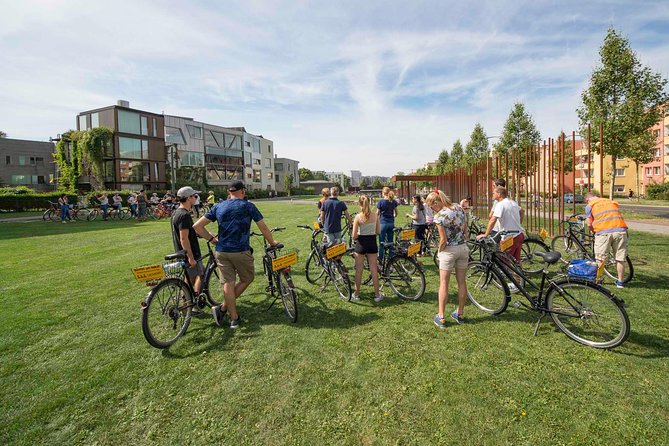
Next comes Mauerpark, whose name means Wall Park. The park occupies land tied to the former border between what were once the districts of Prenzlauer Berg and Wedding, now associated with Prenzlauer Berg and Gesundbrunnen.
The stop is listed at about five minutes, so do not expect an extended park visit. Its value is location. You are riding through a place where the border once shaped the edge of daily life, yet the present setting feels open and ordinary. That contrast is one of the strongest features of this tour.
You also get a sense of how much Berlin has changed since 1989. Some sites remain marked and solemn. Others have been absorbed into parks, streets, and neighborhoods. A guide can connect those visible changes to the older political map.
More bike tours in Berlin:
- Berlin: Sights and Highlights Bike Tour with a Local Guide
★ 4.8 · 2,698 reviews - Berlin Highlights 3-Hour Bike Tour
★ 5.0 · 948 reviews - Berlin City Bike Tour with Beer Garden Stop
★ 5.0 · 917 reviews - Berlin Highlights: 3-Hour Bike Tour
★ 4.9 · 809 reviews
KulturBrauerei and Berlin’s urban layers
Kulturbrauerei appears as both the starting point and a stop on the route. That may seem repetitive, but it gives the site two roles. At the beginning, it is a practical meeting place. In the wider story of the ride, it is an example of Berlin’s industrial and neighborhood history.
The complex is built around courtyards and distinctive brick architecture. Its protected status reflects the value of these buildings, which survived while other parts of Berlin changed dramatically.
This is a short stop, around five minutes. You will not have time for a full architectural tour, but you can appreciate the setting before or after the ride. If you arrive early, it is a good place to get oriented without adding another destination to your schedule.
The GDR watchtower at Kieler Eck
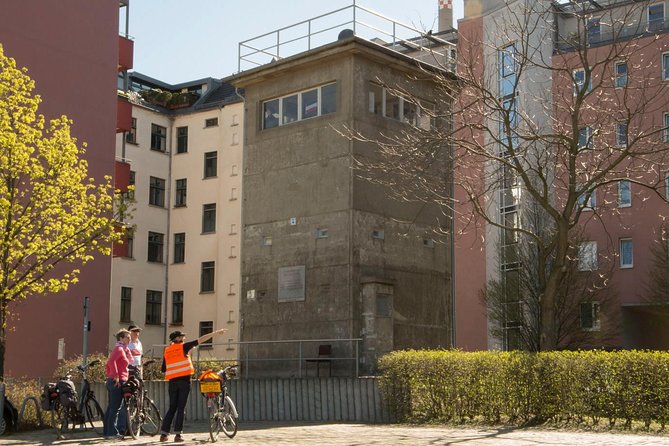
The old GDR watchtower at Kieler Eck is one of the less famous stops, and that is exactly why it earns its place. Famous landmarks can tell you what Berlin wants remembered. A remaining tower helps show how the border operated on the ground.
The visit takes about five minutes and admission is included. The tower is a compact reminder of surveillance and control. You are not simply hearing that the border was guarded. You are seeing a structure built for that purpose.
The short stop also keeps the route moving. This tour is not designed for long museum visits at every point. Instead, the guide builds a connected story from many brief encounters. If you prefer spending 30 minutes at each site, this may feel rushed. If you like seeing a wide range of locations, the rhythm works well.
Checkpoint Charlie and the problem with famous sights
Checkpoint Charlie is one of Berlin’s best-known Cold War locations. It was a crossing between the American and Soviet sectors on Friedrichstraße, linking East Berlin’s Mitte with West Berlin’s Kreuzberg.
The name carries enormous weight, but the present-day site can feel more like a city attraction than a preserved border crossing. That is why the guide’s explanation matters. You need context to understand what happened here, who could cross, and why this particular point became so important.
The tour does not treat Checkpoint Charlie as the whole Wall story. Instead, it places the crossing among memorials, neighborhoods, parks, and border remains. That approach helps you avoid the common mistake of thinking that one guardhouse or one photograph explains Berlin’s division.
This is also a good point to ask questions. Guides such as Giovanni have been praised for setting out dates and facts clearly, while Pete is noted for helping people consider the subject from more than one side. The best part of the stop is likely to be the explanation rather than the physical appearance of the crossing.
The Palace of Tears at Friedrichstraße Station
The former exit hall at Bahnhof Friedrichstraße is known in Berlin as the Palace of Tears. During the years of division, it served as the exit hall for a border crossing at the railway station.
The name comes from the farewells that took place there. Families and friends from East and West Berlin could meet, but departures were shaped by strict border rules and the knowledge that another visit might not be possible soon.
The site adds an emotional dimension to the political story. Checkpoint Charlie shows a controlled road crossing. The Palace of Tears points to the private pain created by the same system. The two locations work well together because they show how the Wall affected both governments and families.
The provided route information does not give a specific stop length here, so the guide controls the timing. Expect it to fit into the broader ride rather than function as a long standalone visit.
What the guides add to the ride
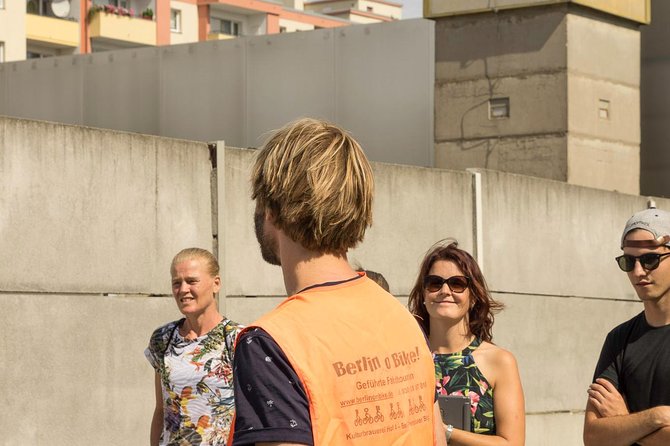
A history route is only as good as its explanations. Here, the guide’s personality matters a great deal because the stops range from major landmarks to small remains that can be easy to miss.
Giovanni has been praised for combining accurate dates with stories about the struggles of East and West Berlin. George has been described as kind and clear, with an approach that feels like a useful history lesson. Monti received praise as a guide people would happily follow again. Gilles led a French-speaking group of seven over roughly 20 kilometers, and the group appreciated his enthusiasm and command of the subject. One especially striking detail is that he experienced the Wall’s fall only days away from its anniversary, giving him a personal connection to the event.
You may be assigned a different guide. That means the tone can vary. Still, the strongest pattern is clear: the tour works best when the guide goes beyond dates and explains what life felt like on either side of the border.
If you have a question, ask it. A small group makes that easier. With a maximum of 15 people, you are not lost in a crowd, though it is not a private tour either.
Is the cycling difficult?
The cycling is described as easy, and the ride is presented as a pleasant alternative to walking. You should still be comfortable riding a bicycle for about three and a half hours, with stops along the way.
The route covers a lot of Berlin, so the bike is doing important practical work. Walking the same distance would take much longer and leave less time for the guide’s explanations. Public transport would move you quickly but would not give you the same sense of how the old border ran through the city.
Families can do well here. A 12-year-old has enjoyed the tour, and the movement can help hold the attention of a teenager who might find a long museum visit dull. The subject remains serious, so parents should decide if their children are ready for stories about the Wall and deaths at the border.
Wear clothing suited to the forecast. The tour operates in different weather conditions, but poor weather can affect comfort and may lead to cancellation. One group completed the ride in miserable weather, with the guide keeping it enjoyable and stopping when needed, but a dry day will make the experience easier.
Breaks, food, and practical planning
Food and drinks are not included. The ride is long enough that you should carry water and consider eating beforehand.
There is at least some opportunity for a break, but the route is not built around cafés, toilets, or a full meal. A previous group wanted more options for refreshments and bathroom stops, and the available break was at a fast-food-style place. You should plan with that in mind rather than count on a leisurely café visit.
The tour is offered in English and has a mobile ticket. It is near public transportation, and hotel pickup and drop-off are not included. Since you return to the bike depot, it is simple to continue your day from Prenzlauer Berg or use public transport afterward.
Free cancellation is available until 24 hours before the start time. A late cancellation is not refunded, and changes within that period are not accepted. If poor weather or an insufficient number of bookings forces cancellation, you are offered another date or experience, or a full refund.
Who should book this Berlin Wall tour?
I would choose this ride if you want a broad introduction to Berlin’s Cold War story and prefer active sightseeing to a long indoor lecture. It is especially useful early in your Berlin visit because it gives you a map of the Wall’s former route and points out places you might miss alone.
It suits families, couples, solo visitors, and curious teenagers who can manage a few hours on a bike. The small group size helps, and the guides’ storytelling appears to be the experience’s strongest feature.
I would think twice if you dislike cycling, need frequent indoor breaks, or want extensive time at each memorial. You should also avoid packing another fixed appointment immediately afterward. Weather and the length of the route can affect the pace.
At $43.54, the value is good for a guided half-day outing that includes a bicycle, helmet, and several major and minor Cold War sites. You are paying for the route and interpretation as much as for the equipment. If you would otherwise rent a bike and visit only Brandenburg Gate and Checkpoint Charlie, this tour gives you far more context for a modest increase in cost.
Should you book it?
Book it if you want Berlin’s Wall story explained through real places, personal accounts, and a manageable ride. The combination of easy cycling, a maximum of 15 people, and guides such as Giovanni, Pete, George, Monti, and Gilles makes this more useful than simply following a map between famous sights.
Skip it if rain, cold, or a long outdoor ride would spoil your day. Otherwise, this is a practical and thoughtful way to connect Berlin’s grand symbols with the quieter places where the division was lived.
FAQ
How long does the Berlin Wall bike tour last?
The tour lasts approximately 3 hours and 30 minutes.
What is the tour price?
The listed price is $43.54 per person.
What is included in the price?
A local guide, bicycle, and helmet are included.
Where does the tour start?
It starts at Berlin on Bike, Kulturbrauerei, Knaackstraße 97, 10435 Berlin, Germany.
Where does the tour finish?
The tour ends back at the meeting point.
Is the tour offered in English?
Yes. The experience is offered in English.
How large is the group?
The group has a maximum of 15 people.
What happens if the tour is canceled because of weather?
If the experience is canceled because of poor weather, you are offered a different date or a full refund.
More Cold War tours in Berlin
- Berlin: Third Reich and Cold War 2 Hour Walking Tour
★ 4.9 · 6,830 reviews - Berlin’s Best: 2 Hour Walking Tour Third Reich and the Cold War
★ 5.0 · 5,486 reviews - Berlin: Cold War Walking Tour on Berlin Wall Route
★ 4.8 · 437 reviews - Berlin: Cold War Era History Guided Bike Tour
★ 4.8 · 413 reviews
Newest Berlin reviews
- Where It All Began: Berlin’s Queer & Trans History Tour★ 4.9 · 6 reviews
- Understanding Kreuzberg: The roots of local (sub)culture★ 4.9 · 11 reviews
- Berlin: guided canoe | kayaktour★ 4.1 · 7 reviews
- Private Potsdam City Tour in an authentic vintage van★ 5.0 · 14 reviews
- Warnemünde Shore Excursion: Private Sachsenhausen and Berlin Tour★ 5.0 · 12 reviews
- Ultimate E-Bike Tour of Berlin with Beer Garden Stop★ 5.0 · 4 reviews
- In the Forbidden City – Potsdam Walking Tour★ 5.0 · 17 reviews
- Private Walking Tour of Potsdam and Sanssouci★ 5.0 · 24 reviews
Berlin Wall Tours, compared.
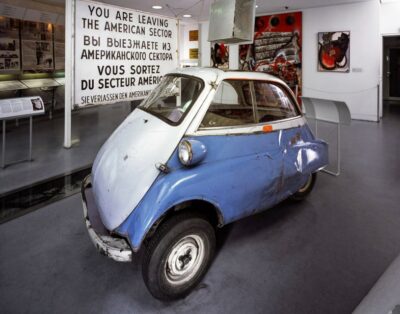
Skip-the-Line: Berlin Wall Museum at Checkpoint Charlie
Read our review →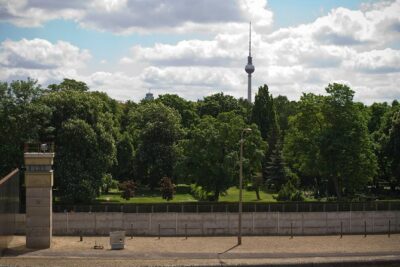
Cold War, Berlin Wall, Spies and the East Side Gallery
Read our review →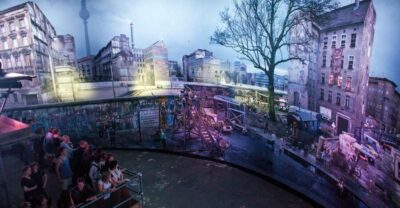
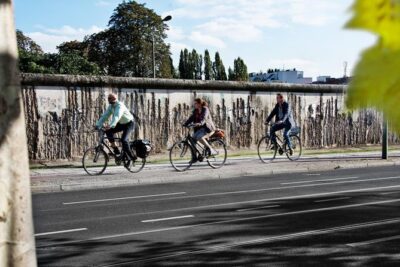
Guided Bike Tour of the Berlin Wall and Third Reich
Read our review →
Browse the lists this tour appears in