
Reviewed · JEWISH BERLIN TOURS
Private Tour: Jewish Heritage Walking Tour of Berlin
Berlin’s Jewish story is written across the city, from elegant courtyards and a grand synagogue to deportation tracks and memorials. This private tour connects those places in one serious, well-paced day, helping you understand both Jewish life before 1933 and the machinery of Nazi persecution.
I like the private format, which gives you room to ask hard questions and adjust the pace. I also like the small Otto Weidt Museum and the personal stories tied to it. The main consideration is the price, $191.62 per person, plus a Berlin AB transport ticket, which makes this a better choice for visitors who want depth than for anyone seeking a quick sightseeing walk.
Key points to know before booking
- A private guide shapes the day around your questions, with past guides including Eran, Ioana, Nikolai, Zvika, Ariel, and Asaf.
- The tour joins central Berlin with Grunewald, so you will use public transport and need a Berlin AB ticket costing 2.70 euros.
- The Otto Weidt Museum focuses on rescue and resistance, using the original workshop where Jewish workers were sheltered.
- Gleis 17 is a quiet, difficult stop, marking the railway platform used for deportations between 1941 and 1945.
- The route covers both Jewish life and Jewish persecution, rather than focusing only on memorials.
- Expect about four hours of walking and discussion, in all weather, with good shoes and suitable clothing essential.
Why this private Berlin Jewish tour matters
Berlin can feel like an open-air history book, but its Jewish past is easy to miss if you only follow the city’s major sights. A plaque, courtyard, cemetery, or memorial may look modest until you know the story attached to it.
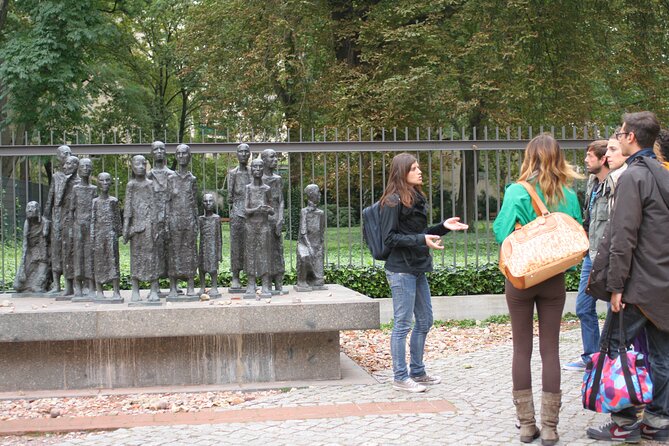
That is where a private guide earns the fee. Guides such as Eran, Ioana, Nikolai, and Zvika have been praised for explaining Jewish Berlin across several centuries, not just the years of Nazi rule. You can ask about family history, Jewish life today, the Holocaust, or the difficult moral questions that come with Berlin’s memorial culture.
The format also helps families. One guide, Nikolai, was described as patient with children aged 10 and 12, while Asaf adjusted the route when rain became a problem. That does not guarantee the same guide or exact adjustment, but it shows why a private booking can work better than a fixed group tour.
The tour is offered in English, with multilingual operation also possible in German or Hebrew. At booking, confirm the language you need.
More Jewish history tours in Berlin:
- Nazi Berlin and the Jewish Community Tour
★ 4.8 · 55 reviews - Path of Resistance: Berlin’s Hidden Holocaust Stories
★ 5.0 · 33 reviews - Jewish Berlin: Walking tour The Old Jewish Quarter (private 3 Hours tour)
★ 5.0 · 27 reviews
Hackesche Höfe: Jewish Berlin before the catastrophe
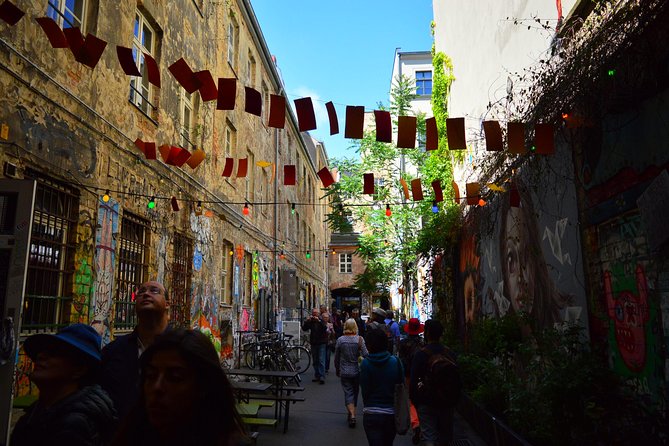
The tour begins at Hackesche Höfe, a series of linked courtyards off Rosenthaler Straße. The buildings date from the late 19th century, when this part of Berlin attracted Jewish immigrants, craftspeople, shopkeepers, and cultural figures.
You will spend about 15 minutes here, and admission is free. The stop is brief, so do not expect an extended architectural tour. Its value comes from the context your guide provides: Jewish Berlin was not a separate corner of the city, but part of daily commercial and cultural life.
Look closely at the courtyards and facades. Their polished appearance can make the past seem tidy, but the guide helps connect these spaces to the people who worked, lived, and built businesses here. This is a useful opening because it begins with ordinary life, not immediate tragedy.
The area is also a working part of central Berlin, so you get a sense of how memory and present-day city life share the same streets. That contrast continues throughout the tour.
The New Synagogue: a powerful exterior and a complicated past
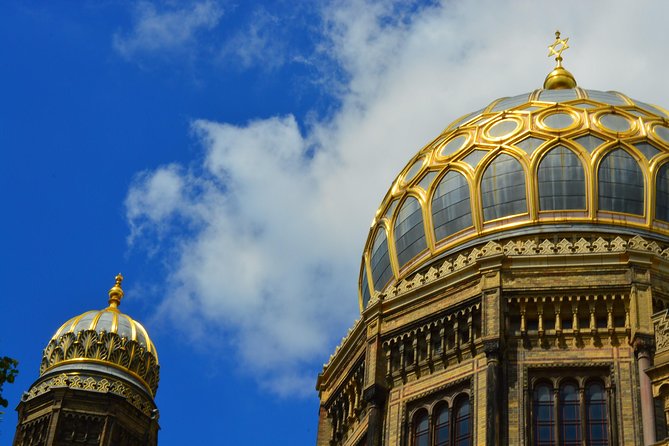
The next stop takes you to the Centrum Judaicum and the New Synagogue on Oranienburger Straße. The synagogue opened in 1866 and is known for its large dome and ornate design. The building was badly damaged during the Second World War, and the restored sections now serve as a museum and cultural institution devoted to Jewish life and memory.
The scheduled stop is about 10 minutes and admission is listed as free. Based on the timing, this part is mainly an introduction and exterior view rather than a full museum visit. If entering the exhibitions is important to you, check the day’s arrangements before booking, since a four-hour route cannot offer unlimited time at every site.
This is one of Berlin’s most recognizable Jewish landmarks, but the guide gives it meaning beyond the impressive facade. You will hear about the city’s Jewish community before the war, the destruction of Jewish institutions, and the building’s later role as a symbol of renewal.
I find this contrast useful. The synagogue is beautiful, but the tour does not treat beauty as the whole story. It asks you to consider what was lost and what it means to restore a public Jewish presence in Berlin.
The Otto Weidt Museum: the tour’s most personal stop
The Museum Blindenwerkstatt Otto Weidt is a small memorial in the original workshop of Otto Weidt, a blind brush maker who employed and protected Jewish workers during the Nazi period. You will spend around 25 minutes here, with no admission charge listed.
This may be the most affecting part of the route because the setting is intimate. Instead of a large monument, you see a workplace tied to specific people and choices. The displays explain how Weidt helped workers, including efforts involving false papers and pressure on officials.
The story is not presented as a simple tale of heroism. It also places the workers’ fear, vulnerability, and persistence at the center. That human scale makes the stop especially useful after the broader discussion of Jewish Berlin.
One past visitor called this museum particularly moving, and I understand why it has such impact. It shows that resistance could take practical forms: providing work, hiding people, using contacts, and taking risks. Give this stop your full attention. Twenty-five minutes passes quickly.
More history tours in Berlin:
- Berlin: Natural History Museum Entrance Ticket
★ 4.6 · 3,382 reviews - Berlin: World Heritage Cruise to Potsdam
★ 4.5 · 1,435 reviews - Berlin Historical Highlights Walking Tour
★ 4.9 · 657 reviews - Berlin Private Complete History All Day Walking Tour
★ 5.0 · 474 reviews
Gleis 17 in Grunewald: names, dates, and the railway system
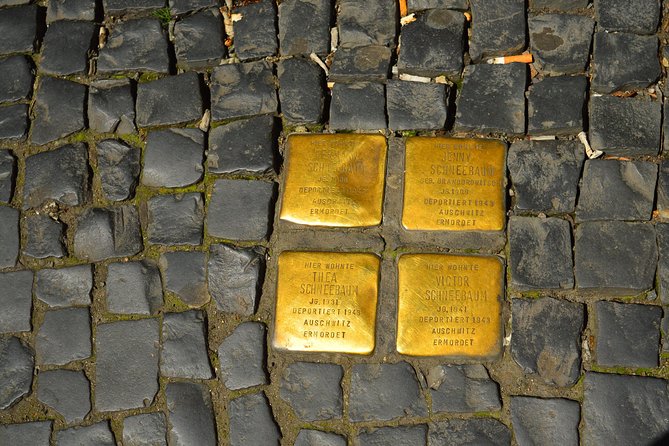
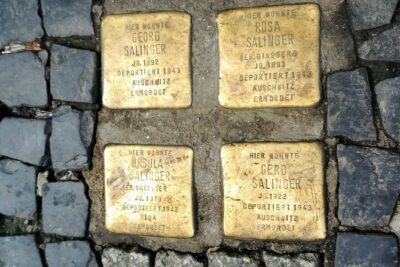
Gleis 17, or Platform 17, is at Grunewald railway station, away from the central sights. Between 1941 and 1945, thousands of Jews were forced onto trains here and deported to concentration camps and killing centers across Europe.
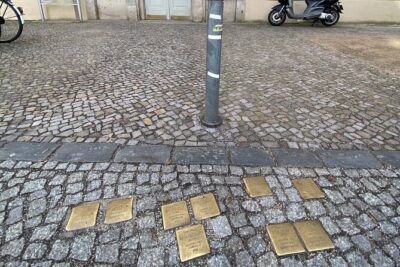
The memorial consists of metal plaques set into the ground. They record transport dates and numbers, turning an abstract account into a sequence of departures. You will have about 15 minutes at the site.
This stop requires public transport, and the Berlin AB ticket is not included. The price listed for that ticket is 2.70 euros. The transport itself is not a nuisance, since it shows how far the memorial is from the tourist center, but you should allow for movement between stops and wear shoes suited to a full day out.
Gleis 17 is not a lively sightseeing stop. It is quiet, restrained, and difficult. Your guide’s role is important here because the plaques need explanation. The place asks you to think about deportation as an organized process, carried out through schedules, platforms, and official paperwork.
The route’s movement from central Berlin to Grunewald also changes your sense of scale. The persecution was not confined to one building or neighborhood. It reached into transport systems and the wider city.
The Old Jewish Cemetery: memory in a quieter setting
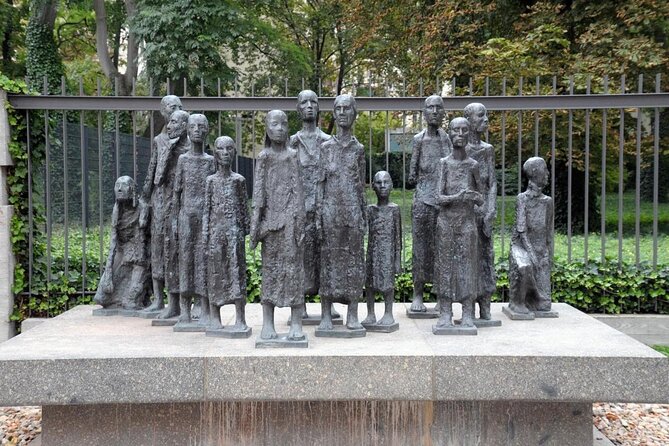
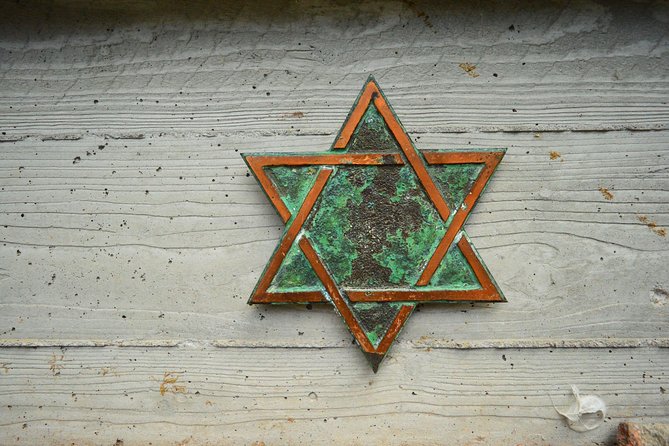
The Alter Jüdischer Friedhof offers a pause from the railway memorial and urban streets. The cemetery contains graves and memorials connected with Jewish scholars, philosophers, community leaders, and other important figures.
You will spend about 15 minutes here. The time is enough for a guided introduction and reflection, but not for an extensive examination of every grave. As with other short stops, listen for the stories your guide selects.
The cemetery helps restore the human breadth of Jewish Berlin. The tour is not only about persecution and death. It also points to the people who shaped intellectual, religious, and civic life in the city.
Expect a reflective stop rather than a major attraction with a long visitor program. Its importance lies in the atmosphere and in the way it balances the harder memorials elsewhere on the route.
Rosenstraße and the women who protested
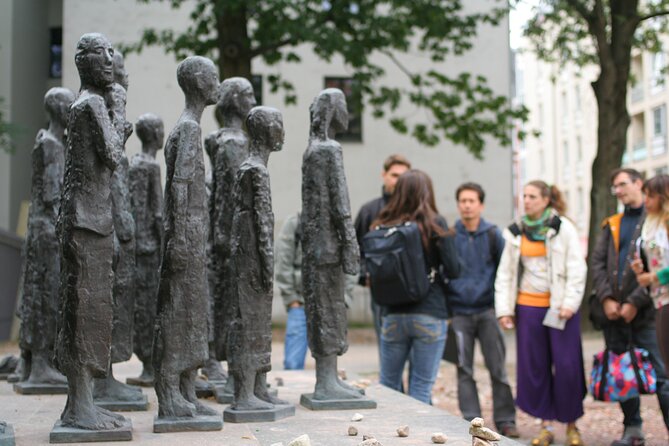
At Rosenstraße, the tour discusses the Block der Frauen memorial. In 1943, women gathered to demand the release of their Jewish husbands, who had been detained for deportation.
You will spend around 15 minutes here. The memorial marks a protest that lasted several days and shows how public resistance could emerge even under a brutal dictatorship.
This is a valuable part of the route because it complicates the usual picture of helplessness. The women did not simply wait for events to unfold. They gathered, demanded answers, and kept pressure on authorities.
Your guide can also connect this episode to the larger question of who resisted, who helped, and what risks people faced. Nikolai, Eran, and other guides have been praised for engaging directly with difficult historical questions, so this is a good moment to ask for context.
The Holocaust Memorial: an ending built for reflection
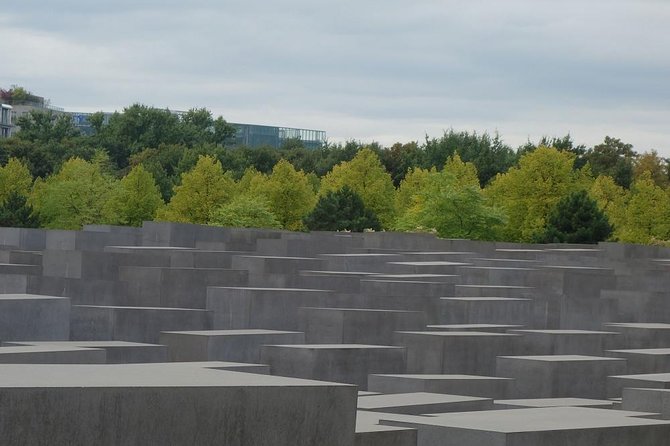
The final listed stop is Berlin’s Memorial to the Murdered Jews of Europe, the large field of 2,711 concrete slabs near the Brandenburg Gate. The blocks vary in height and sit on an uneven surface, with paths running between them.
You will have about 20 minutes here, and admission is free. The design encourages a personal response rather than offering one fixed message. As you walk among the slabs, the city seems to recede, and the changing height and narrow paths can create a feeling of uncertainty.
The memorial is powerful, but it is also open to interpretation. That makes the guide’s explanation useful, especially if this is your first visit to Berlin. The stop does not replace the historical information given elsewhere. It gives you space to process it.
Because this is the final major site, the tour ends on a solemn note. If you prefer to finish with a lighter attraction, this may feel heavy. For anyone seeking a serious understanding of Jewish Berlin, the ending is appropriate.
What the four-hour format is really like
Four hours sounds generous, but the route contains seven stops and some public transport. The listed stop times add up to roughly two hours, leaving time for travel, orientation, questions, and walking between sites.
You should expect a moderate physical effort, not a punishing hike. Good walking shoes are essential, and the tour operates in all weather, so bring clothing suited to rain, cold, or sun.
Pickup is offered, and a private guide can meet you at your hotel according to the arrangements made at booking. That is useful on a first Berlin morning, especially if you are still learning the transit system.
Still, do not assume every site receives a long interior visit. The New Synagogue stop is short, and the route is designed to connect many places rather than spend an hour in one museum. If you want a slow museum day, book a separate visit.
Is $191.62 per person good value?
At $191.62 per person, this is not a budget walk. The value depends heavily on group size and your interest in the subject.
For one or two people, the cost is substantial. For a family or small group, the private format can make more sense, particularly if you plan to ask many questions or want a guide to connect the history with your own family background. Group discounts may also be available.
You are paying for four hours of a dedicated guide, not for admission-heavy sightseeing. Most listed stops are free, and the Berlin AB ticket costs an additional 2.70 euros. The real purchase is interpretation, route planning, and the freedom to pause when a subject needs more explanation.
The consistently high rating of 4.9 from 29 ratings and full recommendation rate suggest strong satisfaction, especially with the guides. The praise centers on clear explanations, patience, flexibility, strong English, and the ability to discuss both historic and modern Jewish life.
Who should book this experience?
I would choose this tour if you want a serious introduction to Jewish Berlin and prefer conversation to a large scheduled group. It suits first-time visitors, families with older children, and anyone tracing a family connection to Berlin.
It also works for non-Jewish visitors. The subject is Jewish heritage, but the tour is equally about Berlin’s political history, civic life, resistance, memory, and the choices people made under pressure.
You may want a different plan if you dislike walking, want extensive indoor museum time, or need a low-cost overview. The route deals with deportation and murder directly, so it is not casual sightseeing.
Should you book the Jewish Heritage Walking Tour of Berlin?
Book it if you want the city’s Jewish past explained through places that range from courtyards and cemeteries to railway tracks and memorials. The private guide is the strongest reason to choose it, especially if you have family questions or want to discuss difficult subjects openly.
The best practical plan is to wear comfortable shoes, buy the AB ticket, dress for the weather, and reserve enough energy for four serious hours. Free cancellation is available up to 24 hours before the start time.
For a thoughtful first look at Jewish Berlin, this tour offers strong value despite its price. For a quick list of sights, it is more time and money than you need.
FAQ
How long does the Jewish Heritage Walking Tour of Berlin last?
The tour lasts approximately four hours.
Is the tour private?
Yes. Only your group participates, and a private guide leads the experience.
What language is the tour offered in?
The tour is offered in English. It may also be operated by a multilingual guide in German or Hebrew.
Is public transportation included?
No. A Berlin Transport AB Zone ticket is not included. The stated cost is 2.70 euros.
Are food and drinks included?
No. Food and drinks are not included.
Can I cancel for a full refund?
Yes. You can cancel up to 24 hours before the experience start time for a full refund. Changes or cancellations made less than 24 hours before the start time are not accepted for a refund.
More Walking Tours in Berlin
- Discover Berlin Half-Day Walking Tour
★ 5.0 · 9,624 reviews - Berlin: Third Reich and Cold War 2 Hour Walking Tour
★ 4.9 · 6,830 reviews - Berlin: Discover Berlin Walking Tour
★ 4.9 · 5,998 reviews - Berlin’s Best: 2 Hour Walking Tour Third Reich and the Cold War
★ 5.0 · 5,486 reviews
Newest Berlin reviews
- Where It All Began: Berlin’s Queer & Trans History Tour★ 4.9 · 6 reviews
- Understanding Kreuzberg: The roots of local (sub)culture★ 4.9 · 11 reviews
- Berlin: guided canoe | kayaktour★ 4.1 · 7 reviews
- Private Potsdam City Tour in an authentic vintage van★ 5.0 · 14 reviews
- Warnemünde Shore Excursion: Private Sachsenhausen and Berlin Tour★ 5.0 · 12 reviews
- Ultimate E-Bike Tour of Berlin with Beer Garden Stop★ 5.0 · 4 reviews
- In the Forbidden City – Potsdam Walking Tour★ 5.0 · 17 reviews
- Private Walking Tour of Potsdam and Sanssouci★ 5.0 · 24 reviews
Jewish Berlin Tours, compared.
Path of Resistance: Berlin’s Hidden Holocaust Stories
Read our review →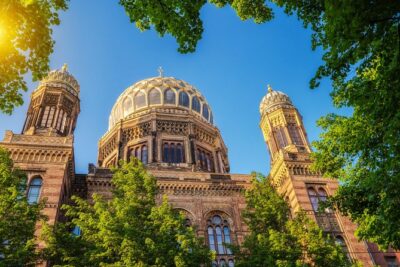
Jewish Berlin: Walking tour The Old Jewish Quarter (private 3 Hours tour)
Read our review →
Path of Resistance: Berlin’s Hidden Holocaust Stories
Read our review →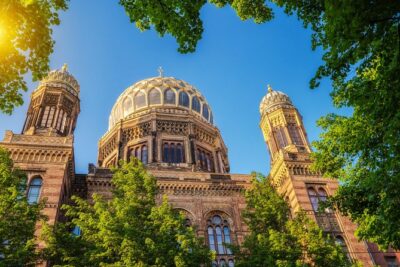
Browse the lists this tour appears in