
Reviewed · JEWISH BERLIN TOURS
In Search of Jewish Berlin Walking Tour
Berlin’s Jewish story is written into courtyards, school buildings, memorials, and grand religious architecture. This small-group walk brings those places together, moving from the Jewish community’s long presence in Berlin to the destruction of the Holocaust and the city’s continuing effort to remember.
I especially like the scholar-led format and the small maximum of 10 people. Guides such as Ioana N., Forrest, Lee, Heather, and Isabel Daniel bring academic training and personal experience in Berlin, yet the walk is built around conversation rather than a lecture. The New Synagogue and the Women’s Block memorial are also powerful, very different stops.
The main consideration is the price: $156.53 per person is a serious spend for three hours, and food, drinks, and museum admissions are not included. You are paying for a specialist guide and a carefully connected historical route, not for a full day of sightseeing.
Key points to know before you book
- A Jewish Studies scholar leads the walk, with guides drawn from professors, graduate students, and journalists.
- The route covers Berlin’s Scheunenviertel, including the New Synagogue, Auguststrasse, Hackesche Höfe, and nearby memorials.
- The group is limited to 10 people, so you can ask questions and shape the discussion.
- The Holocaust Memorial is part of the route, giving the tour a serious and emotional finish.
- The three-hour walk is in English, starts at Rosenthaler Strasse 40/41, and ends in Berlin.
- Free cancellation is available up to 24 hours before the start time, which is useful when planning a busy Berlin visit.
Why this walk gives Jewish Berlin a human scale
Berlin has no shortage of museums and memorials about the Nazi era. What this walk adds is the centuries before 1933 and the human stories between the dates. You do not look at Jewish Berlin only through the lens of destruction. You also see schools, synagogues, homes, businesses, neighborhood life, and the return of a Jewish community after the war.
The route focuses on Berlin-Mitte, especially the area once called the Spandauer Vorstadt and Scheunenviertel, or Barn Quarter. That makes the experience manageable on foot while still giving you a sense of place. You are not being moved from one distant museum to another. Streets and buildings connect the story.
I would choose this tour early in a Berlin visit if Jewish history is important to you. The guide can help you read later sights with more care, especially memorials that might otherwise seem abstract or difficult to understand.
The small group matters here. This is a subject with no shortage of dates and names, but the best moments often come when you can stop and ask a direct question. Past guides have adapted the discussion to the group, and one scheduled small group turned out to include only a couple. That is not guaranteed, but the limit of 10 keeps the format personal.
More Jewish history tours in Berlin:
- Nazi Berlin and the Jewish Community Tour
★ 4.8 · 55 reviews - Path of Resistance: Berlin’s Hidden Holocaust Stories
★ 5.0 · 33 reviews - Private Tour: Jewish Heritage Walking Tour of Berlin
★ 5.0 · 29 reviews
Starting at Rosenthaler Strasse and entering the Barn Quarter
The meeting point is Rosenthaler Strasse 40/41, in central Berlin and close to public transportation. The exact end point is given simply as Berlin, so you should think of this as a neighborhood walk rather than a tour that returns you to the start.
Your guide begins by placing Jewish life in Berlin across a long time span. One guide, Isabel Daniel, has helped visitors understand the story from its beginnings in the 12th century through the modern era. That broad time frame is important. It prevents the tour from treating Jewish Berlin as a subject that begins and ends with the Holocaust.
The Scheunenviertel is a useful setting because its streets hold several layers of Berlin life. The area around Hackescher Markt became an important center of Jewish community life, and the architecture still gives the guide plenty to point out. You will hear about the people and institutions that shaped the district, not just the buildings that survived.
Do not expect a standard sightseeing stroll with a few historical comments added along the way. The focus is Jewish Berlin, and the tone is serious. You will want comfortable shoes, since the route takes about three hours and includes several outdoor stops.
The New Synagogue and the promise of 19th-century Berlin
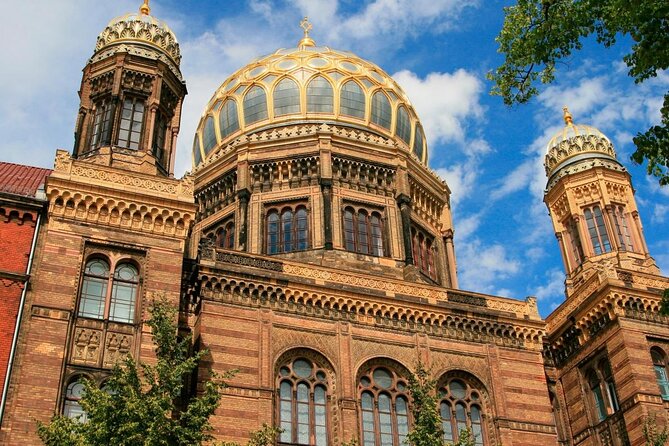
The first major stop is the Stiftung Neue Synagoge Berlin, also known as the Centrum Judaicum. Its grand architecture is one of the clearest reminders that Jewish life in 19th-century Berlin was not hidden away from the city.
The building represented Jewish participation in German society and the hope of assimilation. Its scale and design expressed confidence. That makes the site especially moving when you learn what happened to Jewish Berlin later. A building meant to symbolize belonging now also carries the memory of rupture and loss.
You spend about 20 minutes here, and admission is listed as free for the tour. That does not mean you should expect a full museum visit during the walk. The value of the stop comes from the guide’s explanation of the building, its place in the community, and the Jewish presence that is being rebuilt in Berlin today.
I like this as an early stop because it gives the entire walk a wider frame. You begin with a community asserting its place in modern Germany, not with Nazi persecution. The story becomes more complete and more unsettling as a result.
Auguststrasse and the former Jewish Girls’ School
Auguststrasse once held a group of Jewish institutions, including the Jewish Girls’ School at number 11 to 13. The school was built between 1927 and 1928 by architect Alexander Beer in the New Objectivity style.
You spend about 20 minutes in this area. The building now contains an exhibition hall and a coffee shop, both of which may interest you if you have time to return later. The tour itself is not presented as a meal stop, and food and drinks are not included, so plan to visit the café separately if it fits your schedule.
This stop helps make Jewish life more concrete. A school tells you about families, education, work, and the everyday future people expected their children to have. The building’s modern design also shows that Jewish Berlin was part of the city’s changing cultural and architectural life in the years before the Nazi period.
The guide can help you connect the school to the larger neighborhood. This is where the academic background of the guides pays off. Heather, for example, has been praised for discussing not only major memorials but also plaques, museums, and smaller traces of Jewish history. That sort of attention is useful on a street such as Auguststrasse, where the story is found in details rather than one famous monument.
Other Berlin experiences to weigh up
- Discover Berlin Half-Day Walking Tour
★ 5.0 · 9,624 reviews - Berlin: Third Reich and Cold War 2 Hour Walking Tour
★ 4.9 · 6,830 reviews - Berlin: Discover Berlin Walking Tour
★ 4.9 · 5,998 reviews - Berlin’s Best: 2 Hour Walking Tour Third Reich and the Cold War
★ 5.0 · 5,486 reviews
Hackesche Höfe and the Jewish life around Hackescher Markt
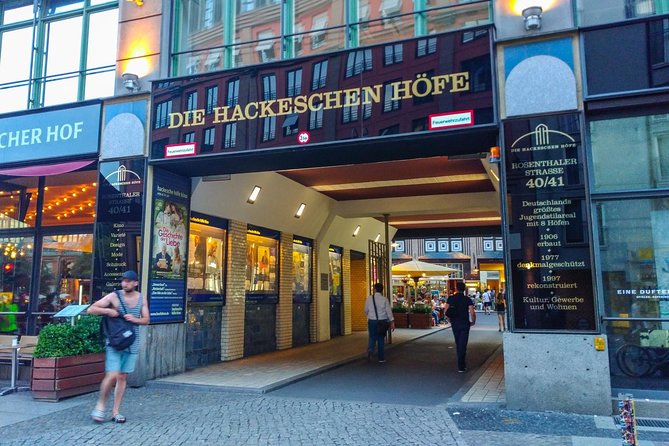
The route then reaches Die Hackeschen Höfe, a group of courtyards known for graceful architecture and central Berlin atmosphere. You spend roughly 30 minutes here, making it the longest single stop on the walk.
The courtyards are a good place to think about how a community develops around work, trade, housing, and public life. The guide discusses Jewish life around Hackescher Markt and across the Spandauer Vorstadt and Scheunenviertel. You are not simply looking at decorative façades. You are learning how the neighborhood functioned and who lived there.
This section also gives the tour a change of pace. The New Synagogue carries ceremonial weight, while Auguststrasse points toward institutions and education. The courtyards let you consider the ordinary setting of community life. That contrast keeps the tour from becoming a procession of solemn memorials.
Because Hackesche Höfe is an active part of Berlin, it can feel less quiet and reflective than a dedicated memorial. That is not a flaw, but it does mean you should listen closely to the guide. The surroundings are part of modern city life, and the historical discussion unfolds within it.
The Women’s Block and the power of a public protest
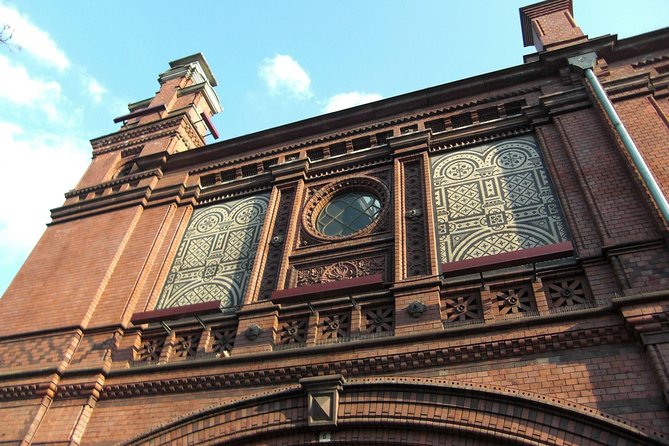
The Women’s Block memorial, known in German as Block der Frauen, is one of the most distinctive stops. It commemorates the non-Jewish wives and relatives of Jewish men arrested by the Nazis and targeted for deportation.
The memorial recalls sustained public protests by these women. That story gives you a different view of resistance under the Nazi regime. It does not turn a complicated period into a simple tale of heroes and villains, but it shows that individual people did sometimes challenge the machinery of persecution.
You spend about 20 minutes here. The site is moving because the protest was personal and public at the same time. These women were demanding the return of their husbands and relatives, and their relationship to the people being persecuted gave the protest its force.
I would pay close attention to how the guide presents this stop. It is easy to reduce any memorial to a single lesson, but a well-prepared guide can explain the event’s limits as well as its importance. The tour’s conversational format gives you room to ask about that context.
The Holocaust Memorial as the final major reflection
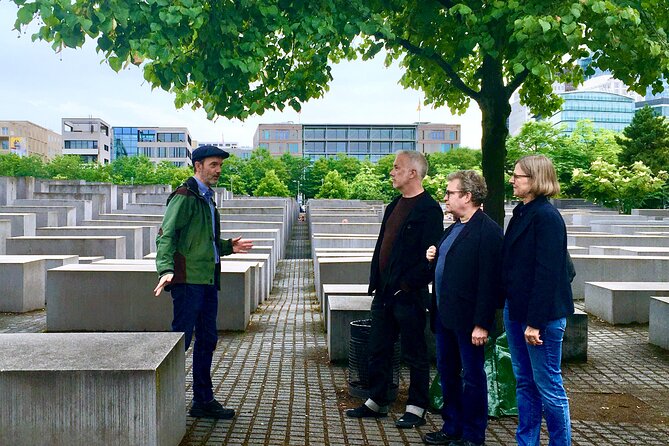
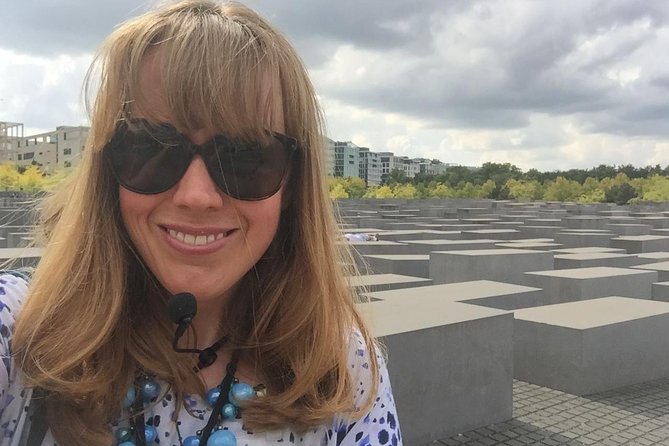
The walk ends its listed sequence at the Memorial to the Murdered Jews of Europe, usually called the Holocaust Memorial. Designed by architect Peter Eisenman, it consists of 2,711 concrete slabs arranged across a large open space.
You can walk among the slabs yourself, and the changing height and alignment create a personal, unsettled experience. The design does not offer a single viewing point or an easy explanation. Instead, it asks you to move through the space and consider what it means to represent the murder of Europe’s Jews in the heart of Berlin.
The stop lasts about 20 minutes and admission is free. The tour does not include a separate visit to the memorial’s underground Information Centre, so ask your guide if you need help understanding what is included during the walk. Based on the stated route, the focus is the outdoor memorial and its meaning.
Ending here gives the tour a sober shape. You have already learned about Jewish life, education, architecture, and resistance. The memorial then confronts you with the scale of the crime. It is a powerful ending, though not a light one. I would avoid scheduling a rushed activity immediately afterward.
What you are paying for at $156.53
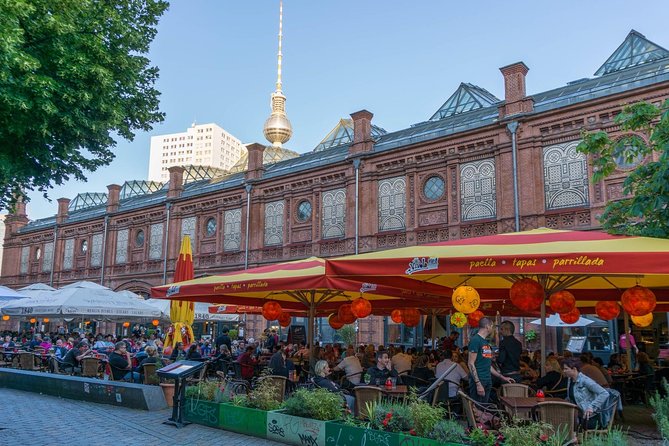
At $156.53 per person, this is priced well above a general city walking tour. The value depends on how much you want specialist attention. You are paying for about three hours with a guide who may be a professor, graduate student, or journalist, plus a group capped at 10 people.
For a visitor who wants only a quick introduction to Berlin’s main sights, the cost will probably feel high. Several major stops are free, and you could reach many of them on your own. The difference is the interpretation: the guide connects the sites, explains their historical setting, and answers questions in real time.
The strongest value comes if you have a serious interest in Jewish history, modern Germany, memorial culture, or Berlin’s neighborhoods. It also suits visitors who prefer discussion over a scripted audio tour. The guides are expected to be enthusiastic hosts and storytellers, and the strongest feedback has focused on their passion, empathy, and ability to make difficult material easy to follow.
Ioana N. has been described as having lived in Berlin for 17 years and handling sensitive subjects with care. Forrest has been praised for presenting complicated material clearly. Lee has been noted for his enthusiasm and gracious manner. Heather has been especially appreciated for her openness to questions, while Isabel Daniel has brought doctoral research on the subject to the conversation.
Guides can vary, of course. You should not book expecting one particular person unless the booking information confirms that guide for your date. You can expect the tour to be led by someone with serious academic or journalistic training.
Who should book this Berlin walk
I would recommend this experience if you want:
- A focused introduction to Jewish life in Berlin across many centuries
- A small group where you can ask detailed questions
- A guide with academic or journalistic preparation
- A route that combines surviving buildings with memorials
- A thoughtful way to visit the Scheunenviertel and Berlin-Mitte
- An English-language tour with a serious, respectful tone
I would be more cautious if you want a casual stroll, lots of free time inside museums, or a tour centered on food and shopping. The subject matter is often painful, and the final stops ask for attention and reflection.
Most people can participate, and the route is near public transportation. Since the walk lasts about three hours, comfortable footwear and a little emotional space afterward are sensible choices. Free cancellation is available until 24 hours before the start time, but changes or cancellations inside that window are not accepted.
FAQ
How long is the In Search of Jewish Berlin Walking Tour?
The tour lasts approximately three hours.
What language is the tour offered in?
The tour is offered in English.
How large is the group?
The group has a maximum of 10 people.
Who leads the tour?
The guides are professors, graduate students, or journalists with backgrounds connected to Jewish studies, history, or Berlin.
Where does the tour begin?
The meeting point is Rosenthaler Strasse 40/41, 10178 Berlin, Germany.
Which major sites are included?
The route includes the New Synagogue and Centrum Judaicum, Auguststrasse, Die Hackeschen Höfe, the Women’s Block memorial, and the Holocaust Memorial.
Is food or drink included?
No. Food and drinks are not included.
Can I cancel for a full refund?
Yes. You can cancel at least 24 hours before the experience start time for a full refund. Cancellations made less than 24 hours before the start time are not refunded.
Should you book it?
Book this tour if you want Berlin’s Jewish history explained by a specialist rather than pieced together from plaques and guidebooks. The combination of the New Synagogue, Jewish Girls’ School, Hackesche Höfe, Women’s Block, and Holocaust Memorial gives you a strong three-hour framework, and the small group makes serious questions possible.
Skip it if $156.53 feels too steep for a walking tour or if you prefer a lighter introduction to Berlin. For the right visitor, though, the price buys something a general sightseeing walk cannot: a connected, human account of Jewish Berlin, from medieval roots and modern community life to persecution, memory, and renewal.
Newest Berlin reviews
- Where It All Began: Berlin’s Queer & Trans History Tour★ 4.9 · 6 reviews
- Understanding Kreuzberg: The roots of local (sub)culture★ 4.9 · 11 reviews
- Berlin: guided canoe | kayaktour★ 4.1 · 7 reviews
- Private Potsdam City Tour in an authentic vintage van★ 5.0 · 14 reviews
- Warnemünde Shore Excursion: Private Sachsenhausen and Berlin Tour★ 5.0 · 12 reviews
- Ultimate E-Bike Tour of Berlin with Beer Garden Stop★ 5.0 · 4 reviews
- In the Forbidden City – Potsdam Walking Tour★ 5.0 · 17 reviews
- Private Walking Tour of Potsdam and Sanssouci★ 5.0 · 24 reviews
Jewish Berlin Tours, compared.
Path of Resistance: Berlin’s Hidden Holocaust Stories
Read our review →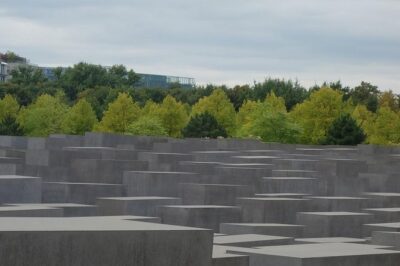
Private Tour: Jewish Heritage Walking Tour of Berlin
Read our review →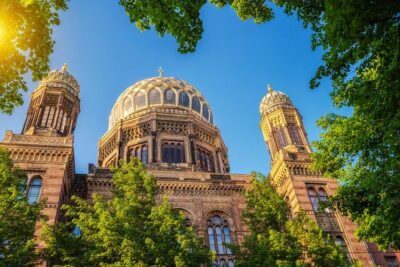
Jewish Berlin: Walking tour The Old Jewish Quarter (private 3 Hours tour)
Read our review →
Path of Resistance: Berlin’s Hidden Holocaust Stories
Read our review →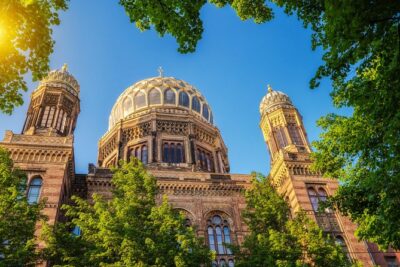

Browse the lists this tour appears in