
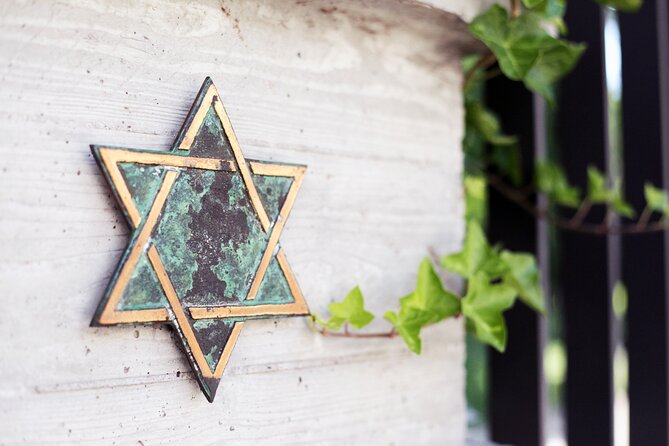
Reviewed · JEWISH BERLIN TOURS
Jewish Life in Berlin – Private Walking Tour
Berlin’s Jewish story is written in small courtyards, school sites, cemeteries, workshops, and streets rather than in one grand museum. This private walking tour connects those scattered places, moving from the 17th-century Jewish community through the Holocaust and into present-day Berlin.
I like the focus on everyday Jewish life, not only on famous memorials. I also like the personal scale: your own group of up to 15 can ask questions and spend more time on subjects that matter to you. The main drawback is that the tour is almost entirely on foot, and the route may not include the Holocaust Memorial or a full museum visit inside the New Synagogue.
Key points at a glance
- Otto Weidt’s workshop: Learn how a Berlin factory owner protected blind and deaf Jewish workers during the Nazi period.
- Former Scheunenviertel: See the streets tied to Jewish residents, schools, religious life, and forced deportation.
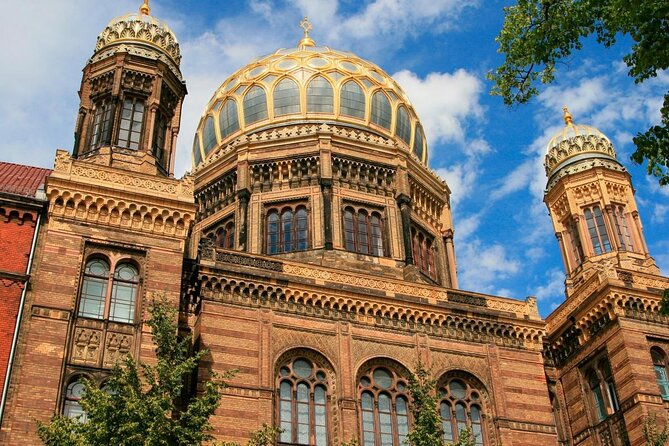
- New Synagogue finish: End at one of Berlin’s most important Jewish landmarks and the home of the Centrum Judaicum.
- Private format: Pay $355.25 for the group, not per person, with a maximum of 15 people.
- Flat city walk: The route covers many stops in about three hours, so comfortable shoes and weather-ready clothing matter.
- Strong guide element: Guides named in the feedback include Caroline, Carlos, Finn, and Marriette, with particular praise for clear, sensitive explanations.
Why this Berlin Jewish history walk is worth your time

Berlin can be hard to read at street level. A handsome courtyard may once have housed Jewish businesses. A quiet street may connect to a school, cemetery, or deportation site. Without a guide, many of these places look like ordinary Mitte.
This tour gives those locations a human frame. You hear about Moses Mendelssohn, the philosopher who helped found the first modern public school for Jewish boys, and Albert Einstein, one of Berlin’s best-known Jewish residents. You also learn about the people whose names are less familiar but whose choices mattered greatly during the Nazi era.
The route does not treat Jewish history as a single chapter that ends in 1945. It begins with the arrival of Jewish residents in the 17th century, follows the growth of the community, explains the destruction caused by Nazi persecution, and points toward Jewish life in Berlin today.
That broad time span is one of the tour’s best features. You get social history, architecture, religion, politics, and wartime history in one walk. The tradeoff is that three hours can only introduce each subject. If you want a long museum visit or a detailed study of the Holocaust, you will need to add those separately.
More Jewish history tours in Berlin:
- Nazi Berlin and the Jewish Community Tour
★ 4.8 · 55 reviews - Path of Resistance: Berlin’s Hidden Holocaust Stories
★ 5.0 · 33 reviews - Private Tour: Jewish Heritage Walking Tour of Berlin
★ 5.0 · 29 reviews
Starting at Hackescher Markt
The tour begins near Hackescher Markt, with the guide meeting you outside the Hackescher Markt S-Bahn station, described more specifically as in front of Starbucks. The supplied meeting information also gives Neue Promenade 3, 10178 Berlin, so check your confirmation carefully for the precise meeting point.
The opening talk sets the historical background. This matters because the rest of the walk assumes you understand that Jewish Berlin was not limited to one isolated quarter. Jewish residents worked, studied, worshipped, and lived across the city, even though certain streets became closely associated with Jewish life.
Hackescher Markt is a practical start because it is near public transportation and easy to reach. It is also a busy city setting, not a quiet historical site. Arrive early enough to identify the guide without rushing through the opening introduction.
Hackesche Höfe and the protest memorial
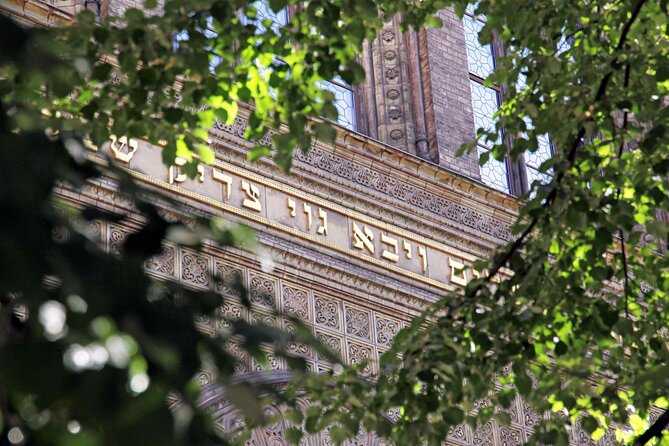
The first short stop is at Hackesche Höfe, the courtyard complex known for its architecture and central Mitte location. Here the guide explains the site’s earlier history and discusses the memorial connected with the women’s protest.
The subject is important because the tour places wartime events in the middle of ordinary city life. You are not simply looking at a memorial in isolation. You are learning how a building and its surrounding streets fit into the Jewish community and the wider history of Berlin.
The stop is brief, listed at about 10 minutes. Treat it as a scene setter rather than a full architectural visit. The courtyards can also be active commercial spaces, so your attention may shift between the guide, the buildings, and the surrounding city traffic.
Otto Weidt’s workshop and quiet resistance
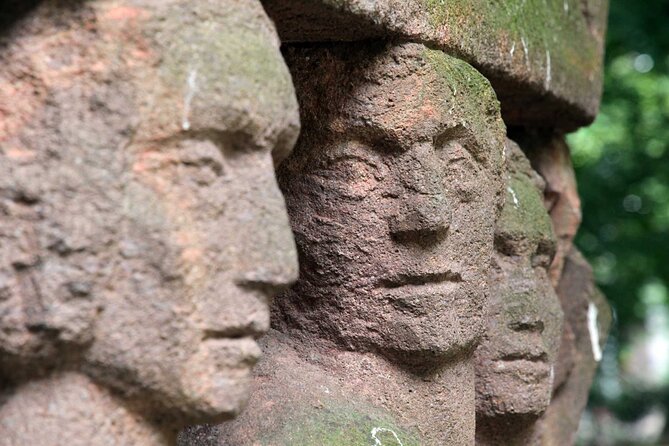
The Museum Blindenwerkstatt Otto Weidt is one of the most distinctive stops. Otto Weidt ran a workshop in the 1940s and employed blind and deaf Jewish workers. He used his position to protect them from persecution.
This stop brings the Nazi period down to the level of a workplace. Instead of hearing only about laws, armies, and political leaders, you learn about an employer trying to shield specific people. That human scale can make the period easier to grasp, while also showing how limited and dangerous individual resistance could be.
The guide explains Otto Weidt’s actions and resistance to the Nazis. The stop is listed as about 10 minutes, so do not expect a long museum session unless your booking or guide confirms otherwise. The tour description presents it as a visit to the museum, while the stop schedule emphasizes a short explanation. If this site is a major reason for booking, ask whether the walk includes entry and how much time is planned inside.
Other Berlin experiences to weigh up
- Discover Berlin Half-Day Walking Tour
★ 5.0 · 9,624 reviews - Berlin: Third Reich and Cold War 2 Hour Walking Tour
★ 4.9 · 6,830 reviews - Berlin: Discover Berlin Walking Tour
★ 4.9 · 5,998 reviews - Berlin’s Best: 2 Hour Walking Tour Third Reich and the Cold War
★ 5.0 · 5,486 reviews
Scheunenviertel and the former Jewish quarter
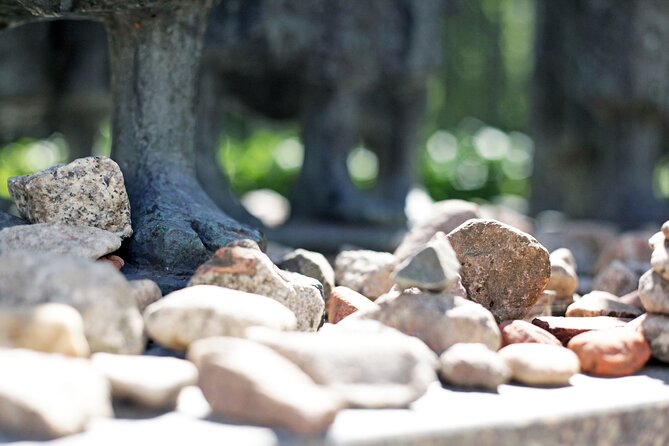
The walk continues through the Scheunenviertel, the former Jewish quarter. This is where the tour’s emphasis on daily life becomes especially useful.
You learn how the old Jewish community developed in Berlin, who lived and worked here, and how the quarter changed over time. The guide may point out traces that are easy to miss on your own. Much of the value comes from connecting present-day streets with residents who are no longer there.
Do not expect a preserved medieval quarter with every building intact. The route deals with remnants, altered buildings, and places where the meaning is carried by explanation. One piece of feedback made this point clearly: the walk brings the past to life even though only fragments remain.
That can be rewarding if you like history in an urban setting. It may feel less satisfying if you want a long list of intact historic interiors. The experience is about interpretation and context as much as sightseeing.
Sophienstraße and Sophia Church
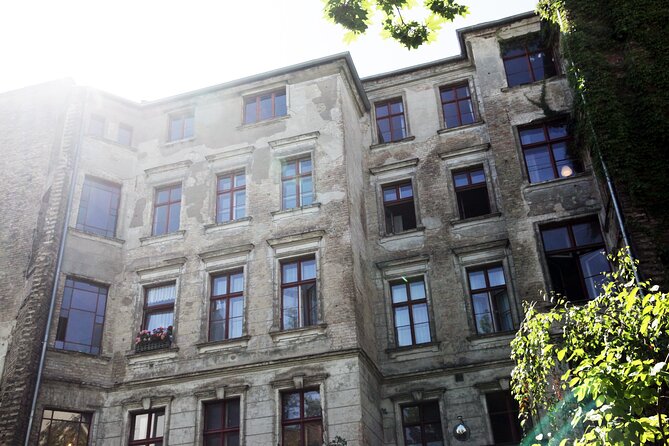
Sophienstraße gives the walk a change of pace. The guide discusses this attractive street, named after Queen Sophie, and explains its place in Berlin Mitte.
The route then reaches Sophia Church, where you hear about the church’s history and its connection with Martin Luther King. This stop broadens the walk beyond strictly Jewish sites. It shows how Jewish history sits within Berlin’s larger religious and civic story.
That wider context is useful. Jewish life did not exist apart from the rest of the city, and the surrounding Christian institutions, streets, and political structures shaped the community’s experience. Still, if you want every minute to focus on Jewish buildings, this section may feel like a detour.
The route is flat, but it involves steady walking between stops. The individual talks are short, usually around 10 minutes, yet the total outing lasts about three hours because of the distance between sites and the number of locations covered.
Grosse Hamburger Strasse: school, cemetery, and deportation
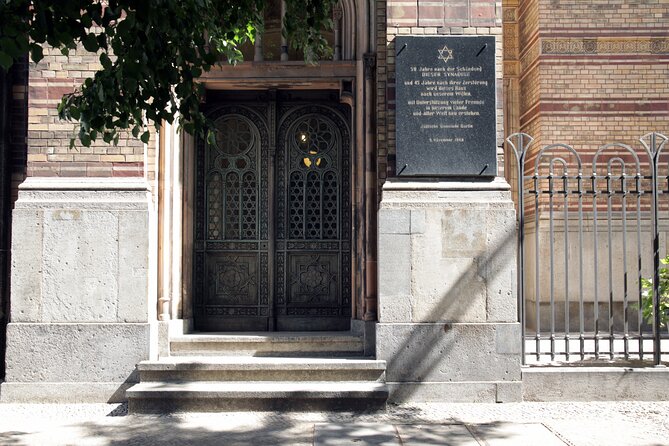
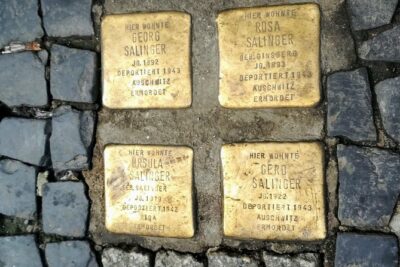
Grosse Hamburger Strasse brings several painful subjects together. The guide explains the Jewish cemetery, the Jewish school, and the deportation of Jewish residents during the Nazi era.
This is one of the places where the tour moves from community life to destruction. A cemetery and school are not just background scenery. They show the institutions a community built, while the deportation story explains how those lives were violently broken apart.
Expect the guide to handle difficult material directly. The strongest feedback about this walk focused on guides who explained Nazi propaganda, answered questions patiently, and managed sensitive subjects with care. Carlos was praised for combining facts, perspective, candid comments, and appropriate humor for a group with a wide range of ages. That balance matters on a subject that can quickly become either dry or overwhelming.
The stop is listed at about 10 minutes, so the guide will give an introduction rather than cover every detail. You may want to note the names and places that interest you, then return later with more time.
Auguststrasse and the changing neighborhood
Auguststrasse is known today for art galleries and important buildings tied to the old Jewish community. The contrast is part of the point. Berlin’s streets change use and appearance, but the earlier story does not disappear simply because current businesses occupy the buildings.
The guide explains the history of the site and its role in the Jewish community. This gives you another example of how the tour reads Berlin through layers rather than presenting a single preserved district.
Some people may find these stops less visually dramatic than the New Synagogue or a major memorial. I see their value in the connections they create. If you walked here without background, you might notice galleries and attractive streets. With the guide, you can consider who used these spaces before the war and what happened to them.
Finishing at the New Synagogue and Centrum Judaicum
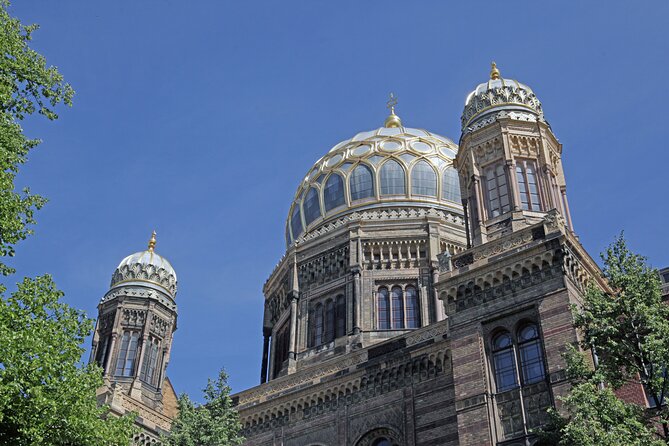
The tour ends at the New Synagogue on Oranienburger Strasse, one of Berlin’s most significant Jewish landmarks. Built in the 19th century, it served as the main synagogue of Berlin’s Jewish community and remains an important piece of late 19th-century architecture.
The guide discusses the synagogue’s history, the events of Kristallnacht in 1938, and the people who helped Jews during the Nazi period. The building gives the walk a powerful final image: a major center of Jewish life, damaged and transformed by the city’s history, yet still present as a place of remembrance and study.
Today the building is home to the Centrum Judaicum, which traces the synagogue’s history and the lives connected with it. The tour information describes the New Synagogue as a final highlight, but the listed stops show no separate admission charge and do not promise a full interior museum visit. One point to clarify before booking is whether your three hours include entry to the Centrum Judaicum or end outside the building.
This distinction matters. Some people book expecting a detailed visit to the synagogue museum and the Holocaust Memorial, but the route does not include the Holocaust Memorial, and at least one itinerary description treats the New Synagogue mainly as the closing site. If you want those places, plan extra time or confirm the scope with the provider.
What the private format adds
The price is $355.25 per group of up to 15 people. That is a high total for a three-hour walk if you are traveling alone or as a couple, but the calculation changes for a family or larger group. At 10 people, the cost works out to about $35.53 per person. At 15, it is about $23.68 per person.
The private setup gives you control that a large scheduled group may not. You can ask about family history, architecture, religious life, resistance, or the Nazi period without waiting for a crowd to move along. A good guide can also adjust explanations for children, older adults, or people who already know Berlin’s wartime history.
The guide quality is central to the value. Caroline is praised for being thoughtful and clear. Carlos is described as patient, factual, and able to keep the subject engaging. Finn, an Irish guide living in Berlin, received praise for his strong command of the material. Marriette was remembered for bringing warmth and energy to the experience.
Those individual reports do not guarantee who you will receive, but they show what to look for: clear historical framing, care with painful material, and an ability to answer questions without turning the walk into a lecture.
Walking conditions, weather, and practical planning
The tour operates in all weather, so wear shoes that can handle several hours on city streets. The route is flat, which helps, but it is still a lot of walking. Hot weather has made the walk more tiring for some groups, and heavy rain has affected the final stops.
Bring water in warm weather and dress in layers when the forecast is uncertain. A raincoat is more useful than an umbrella in crowded streets, though the tour does not provide equipment. There are no included meals or drinks, and the only listed inclusion is a professional guide.
Most people can participate, and service animals are allowed. The route is near public transportation, making it easy to reach and convenient for continuing into Berlin’s Mitte district afterward.
The tour is available with a mobile ticket. Confirmation is normally sent at booking, though reservations made within three days of the date may be confirmed within 48 hours, subject to availability. Free cancellation is available up to 24 hours before the start time. Inside that window, the amount paid is not refunded.
Who will enjoy this tour most
I would choose this walk if you want Jewish Berlin explained through streets and buildings rather than only through museum displays. It suits adults, families, and mixed-age groups who can manage a three-hour walk and want the freedom to ask questions.
It is especially useful early in a Berlin visit. The route gives you a map of Mitte and helps you recognize sites you might otherwise pass without noticing. It also works well for anyone interested in how Jewish life developed before the Holocaust, not only in the Holocaust itself.
You may want another option, or extra planning, if you need a full museum experience, a visit to the Holocaust Memorial, or extensive time inside the New Synagogue. The tour touches many subjects but cannot explore each one at length.
Should you book Jewish Life in Berlin?
Book it if you value clear storytelling at real city locations and want a private guide to connect Jewish life from the 17th century to the present. The Otto Weidt workshop, Grosse Hamburger Strasse, the Scheunenviertel, and the New Synagogue give the walk a strong arc.
Think twice if your priority is a long indoor museum visit or a route centered on Berlin’s best-known Holocaust memorials. Before paying, confirm the meeting point and ask how much time is planned inside the Otto Weidt museum and Centrum Judaicum.
For a group of several people, the flat group price can be fair. For two people, it is a splurge, but the private attention may be worth it if this history is a major reason for your Berlin visit.
FAQ
How long does the Jewish Life in Berlin tour last?
The walking tour lasts approximately three hours.
Where does the tour begin?
The guide meets the group near Hackescher Markt S-Bahn station, described as outside Starbucks. The meeting information also lists Neue Promenade 3, 10178 Berlin, Germany, so check the booking confirmation for the exact location.
Where does the tour end?
The tour ends at the New Synagogue Berlin, Centrum Judaicum, at Oranienburger Str. 28-30, 10117 Berlin.
What is included in the price?
A professional guide is included. The tour information does not list meals, drinks, or separate museum admission as included items.
How many people can join the private tour?
The price covers one private group of up to 15 people.
Does the tour visit the Holocaust Memorial?
No. The listed route does not include the Holocaust Memorial.
Can I cancel for a full refund?
Yes. You can cancel at least 24 hours before the experience starts for a full refund. Cancellations or changes made within 24 hours are not refunded.
Newest Berlin reviews
- Where It All Began: Berlin’s Queer & Trans History Tour★ 4.9 · 6 reviews
- Understanding Kreuzberg: The roots of local (sub)culture★ 4.9 · 11 reviews
- Berlin: guided canoe | kayaktour★ 4.1 · 7 reviews
- Warnemünde Shore Excursion: Private Sachsenhausen and Berlin Tour★ 5.0 · 12 reviews
- Ultimate E-Bike Tour of Berlin with Beer Garden Stop★ 5.0 · 4 reviews
- Private Potsdam City Tour in an authentic vintage van★ 5.0 · 14 reviews
- In the Forbidden City – Potsdam Walking Tour★ 5.0 · 17 reviews
- Private Walking Tour of Potsdam and Sanssouci★ 5.0 · 24 reviews
Jewish Berlin Tours, compared.
Path of Resistance: Berlin’s Hidden Holocaust Stories
Read our review →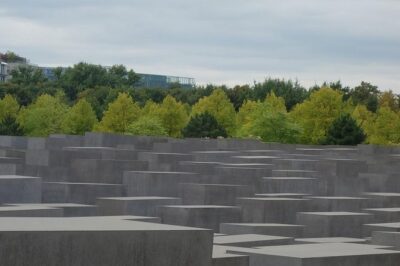
Private Tour: Jewish Heritage Walking Tour of Berlin
Read our review →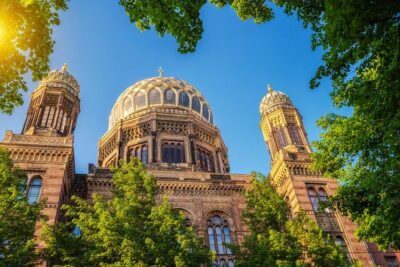
Jewish Berlin: Walking tour The Old Jewish Quarter (private 3 Hours tour)
Read our review →Path of Resistance: Berlin’s Hidden Holocaust Stories
Read our review →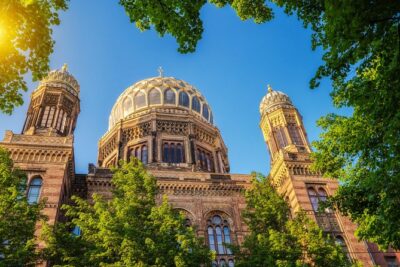

Browse the lists this tour appears in