
Reviewed · WALKING TOURS
Private 3-Hour Walking Tour of Berlin
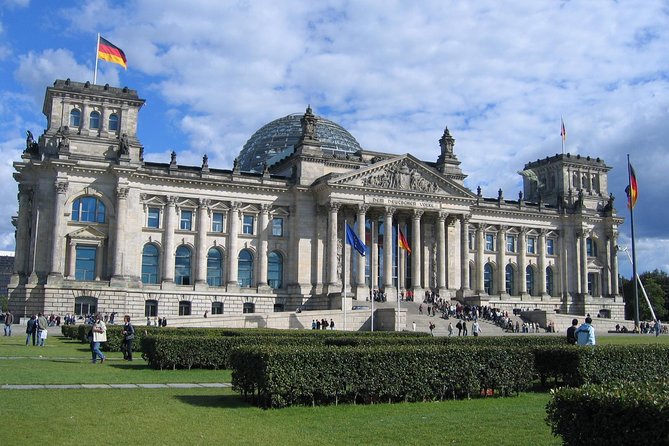
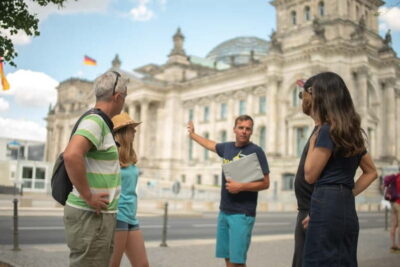
Berlin’s 20th-century story comes into sharp focus on this private walk. In three hours, you move from the Reichstag and Brandenburg Gate to Berlin Wall remnants, Checkpoint Charlie, and the former SS and Gestapo site at Topography of Terror.
I like the private format, which gives you room to ask questions and adjust the emphasis. I also like the pickup from your Berlin hotel or private residence, a useful touch when you are still learning the city’s layout. Guides such as Thomas, Tomas, and Sven are praised for clear storytelling and thoughtful handling of difficult subjects.
The main drawback is pace. There are many stops, and most are brief exterior visits. The price is also high for a walking tour unless you can share the cost with several people.
Key points to know before booking
- A private route through central Berlin: Your group receives the guide’s full attention, with some scope to shape the discussion.
- Berlin’s major symbols in one walk: The route links the Reichstag, Brandenburg Gate, Potsdamer Platz, Checkpoint Charlie, Gendarmenmarkt, and Museum Island.
- Strong focus on 20th-century history: The Wall, Nazi terror, Cold War checkpoints, and reunification all feature prominently.
- Pickup makes the start easy: Collection is offered from your hotel or private residence in Berlin.
- Most sights are viewed from outside: The tour includes free admission to the listed stops, but museum interiors and food are not included.
- Best value for a small group: At $432.55 per group, the cost works better when divided among several people.
A compact walk through Berlin’s biggest chapters
I see this tour as a city orientation with a serious historical spine. It is not built around one museum or a single period. Instead, it connects imperial Berlin, Nazi Germany, the divided city, reunification, and modern architecture in one central route.
The private setup matters here. Berlin’s story can be hard to follow when you see isolated monuments without context. A guide can explain why a building matters, how the city changed around it, and how the pieces connect. You can also stop and ask about subjects that interest you most, from the Weimar Republic to Cold War border controls.
The tour is offered in English and lasts about three hours. Since the route covers a lot of ground, wear comfortable shoes and dress for the weather. It operates in all weather conditions.
More three-hour experiences in Berlin:
- Berlin Highlights 3-Hour Bike Tour
★ 5.0 · 948 reviews - Berlin Highlights: 3-Hour Bike Tour
★ 4.9 · 809 reviews - Berlin: 3-Hour Street Art Tour
★ 4.7 · 778 reviews
Reichstag Building and the road to reunification
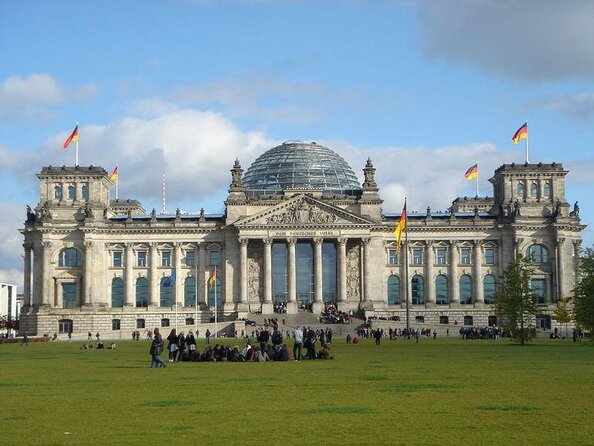
The Reichstag is a strong starting point because its past mirrors Germany’s political upheavals. Built in 1894 for the first German parliament, it later housed the Parliament of the Weimar Republic. The 1933 fire damaged much of the interior soon after Hitler came to power, and the building then lost its practical role under the Nazi regime.
After reunification, the Reichstag was restored and again became home to the German Parliament. That makes the building more than an old government structure. It links imperial Germany, democracy, dictatorship, division, and the country’s return to a united political center.
The scheduled visit here is about 10 minutes, with free admission listed. You should expect an exterior-focused introduction rather than a long indoor visit. If seeing the parliamentary interior is important to you, confirm separately what access is available, since this walk does not promise a full Reichstag visit.
Brandenburg Gate and Unter den Linden
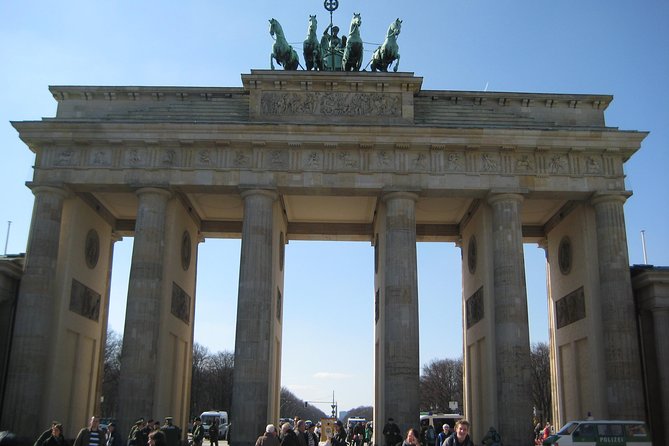
The Brandenburg Gate is Berlin’s most famous landmark and one of the clearest symbols of a once-divided city. It was built as a city gate, but its meaning changed over time. During the Cold War, it sat beside the Wall in a restricted zone. After reunification, it became an image of a newly connected Berlin.
The stop lasts about 10 minutes and costs nothing to enter. That short timing works well for photographs and a focused explanation, but you will not spend long lingering around the monument.
From here, Unter den Linden provides a useful link to older Berlin. The grand boulevard begins at the former Hohenzollern Palace site and runs toward the Brandenburg Gate. Along it are historic buildings including the Opera and the Kronprinzenpalais. This part of the route helps you see that Berlin is not only a city of Wall memorials and modern rebuilding. It also has an older royal and cultural center.
Potsdamer Platz, where old and new Berlin meet
Potsdamer Platz shows how dramatically central Berlin changed after reunification. The area now has bold modern buildings, including the Sony Center, and work by architects such as Renzo Piano, Hans Kollhoff, and Helmut Jahn.
You will also see Germany’s oldest traffic light and sections of the Berlin Wall. That combination is what makes the stop useful. In a few steps, you can look at a piece of the old border and then turn toward a large modern development built after the city was reunited.
The planned stop is about 10 minutes. You are mainly seeing the architecture and public spaces rather than entering a major attraction. If you enjoy city design, this may be one of the most interesting parts of the walk. If you prefer older monuments, the modern buildings may feel less personal than the Brandenburg Gate or Gendarmenmarkt.
Other Berlin experiences to weigh up
- Discover Berlin Half-Day Walking Tour
★ 5.0 · 9,624 reviews - Berlin: Third Reich and Cold War 2 Hour Walking Tour
★ 4.9 · 6,830 reviews - Berlin: Discover Berlin Walking Tour
★ 4.9 · 5,998 reviews - Berlin’s Best: 2 Hour Walking Tour Third Reich and the Cold War
★ 5.0 · 5,486 reviews
Topography of Terror and the Wall’s hard evidence
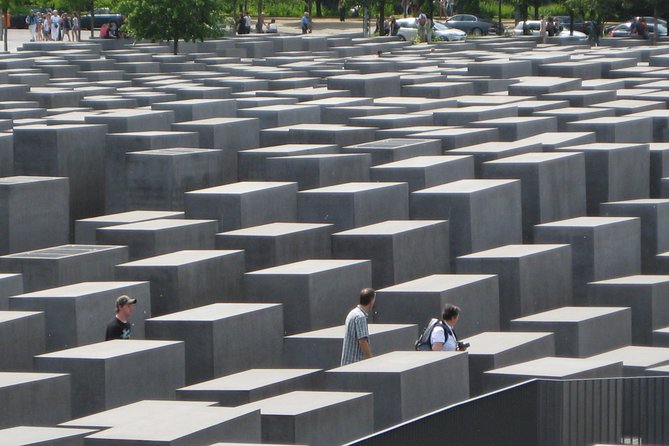
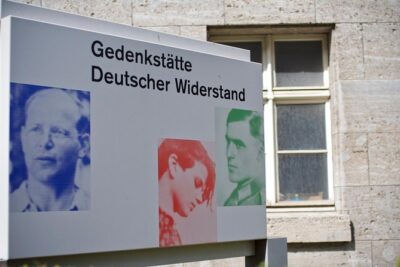
Topography of Terror occupies the former site of the SS and Gestapo headquarters. The foundations have been excavated, and a documentation center now explains the crimes connected with the Nazi security apparatus.
This is one of the most serious stops on the route. You are not simply looking at a grand building or a famous square. You are seeing a place connected with state terror, and the exposed foundations give the site a direct physical quality.
The visit is scheduled for about 15 minutes, with free admission listed. That is enough for an introduction, but not enough for a full reading of the documentation center. I would treat this stop as a doorway into the subject, not a replacement for a longer museum visit.
The tour’s strength here is the guide’s role. The subject needs care and clear explanation. The praise for guides such as Tomas and Thomas centers on their ability to tell difficult stories with intelligence and sensitivity, which is especially useful at a site like this.
Checkpoint Charlie and the divided city
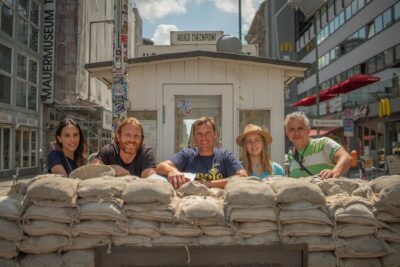
Checkpoint Charlie was the best-known crossing point of the Berlin Wall. It was used by military personnel and foreign visitors, especially Americans, who wanted to enter East Berlin during the Cold War.
The stop takes about 10 minutes. The checkpoint itself is a simple place to visit, so the value comes from understanding the rules, tensions, and symbolism attached to it. A guide can explain why this crossing became so famous and how it fit into the larger system of the divided city.
You should keep your expectations realistic. Checkpoint Charlie is a powerful name, but the current urban setting is not a preserved Cold War scene. The stop works best when you listen to the explanation and then imagine the controlled border that once divided this part of Berlin.
Together, Topography of Terror and Checkpoint Charlie give the tour a strong 20th-century focus. One deals with Nazi repression. The other shows the political division that followed the war.
Gendarmenmarkt and Berlin’s grand civic center
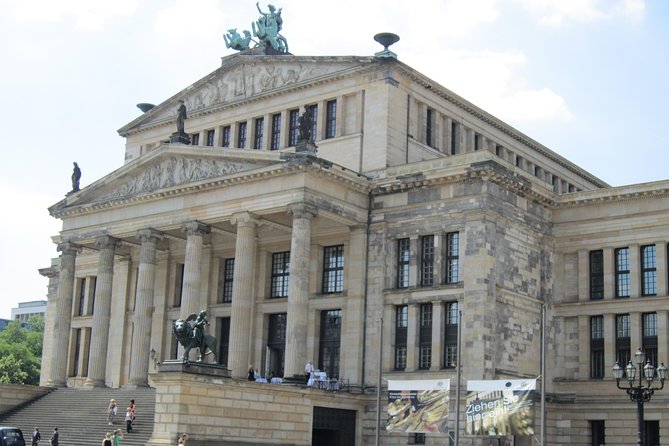
Gendarmenmarkt is introduced as Berlin’s most beautiful square, and it is certainly one of the city’s most elegant. The German Dome and French Dome face each other across the square, with Schinkel’s Konzerthaus in the center.
This stop shifts the mood from borders and political violence to architecture, music, religion, and civic design. The paired domes also show Berlin’s long connections with German and French culture.
The visit is about 10 minutes and free. That gives you time to take in the arrangement of the buildings and hear why the square matters. You may want longer for photographs, but the private format lets you ask the guide to pause if the architecture catches your interest.
Berlin Cathedral and Museum Island
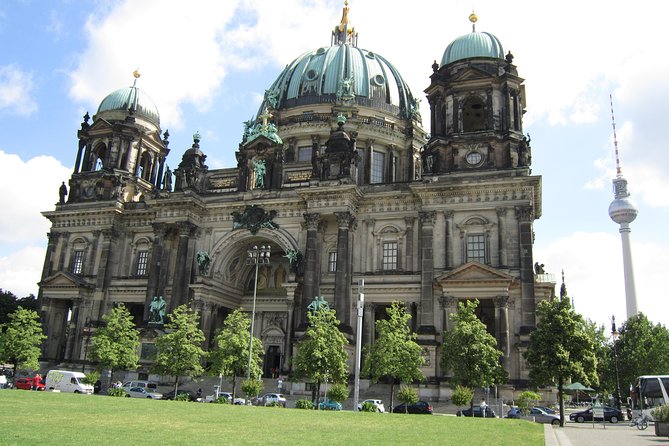
The Berlin Dome, or Berlin Cathedral, is Germany’s largest Protestant church. It was modeled after St. Peter’s in Rome and served as a place of worship for the Hohenzollern family. Members of the family, including King Friedrich Wilhelm I and his wife, are buried there.
The cathedral adds an important religious and dynastic chapter to the route. It also gives you a chance to see how Berlin’s rulers used grand buildings to express power and faith.
Museum Island comes next. Its five museums form a UNESCO World Heritage Site, and the area is one of the city’s strongest cultural centers. The tour’s listed stop lasts about 10 minutes, so you should not expect to visit a museum during the walk.
The useful part is planning ahead. You can stay after the tour and visit the Pergamon Museum or the Neues Museum, as suggested by the route. That makes Museum Island a practical ending point if you want to continue sightseeing on your own. Check current museum access and opening details separately before planning the rest of your day.
What the private format is really worth
The listed price is $432.55 per group of up to six people. That is expensive for three hours if you are alone or traveling as a couple. Split six ways, though, it becomes a more reasonable cost for a private guide, hotel pickup, and a route that covers many central sights.
There is one capacity detail to clarify before you book. The price information says up to six people, while the additional tour information gives a maximum of eight people per booking. Ask the operator which group limit applies to your reservation.
I see the best value for families, friends, or small groups who want to set the tone of the walk. A private tour can be especially useful if some people care more about architecture while others want the Nazi and Cold War story. You are not locked into the interests of a larger mixed group.
The tour does not include food or drinks. Most listed attractions have free admission, but the format is mainly an outdoor walk. If your goal is to spend hours inside museums, this is not the right product by itself.
Guides, timing, and practical details
The guide names connected with this experience include Sven, Thomas, and Tomas. The strongest praise focuses on preparation, clear facts, personal warmth, and storytelling. One guide is described as making the city’s stories feel alive while also taking care of a first-time visitor’s needs.
That tells you what to look for during the walk: not just a list of dates, but explanations that connect each place to the next. Berlin rewards that kind of context.
Pickup is offered from your hotel or private residence in Berlin. This removes the need to find an unfamiliar meeting point, though you should provide accurate pickup details when booking. The tour is near public transportation, and service animals are allowed.
Confirmation is provided at booking. You should dress for the forecast because the walk runs in all weather. Most people can take part, but three hours on foot still calls for sensible shoes and a pace that suits your group.
Free cancellation is available if you cancel at least 24 hours before the start time. Changes or cancellations inside that window are not accepted for a refund.
Who should book this Berlin walk?
I would choose this tour for a first visit when you want a clear introduction to central Berlin without spending the day inside one museum. It is also a good fit if you value conversation and want to ask direct questions about the city’s complicated past.
Families and small groups gain the most from the private setup. So do people with limited time, since the route covers several major sights in one outing. The hotel pickup is another advantage if you want an easy start.
I would hesitate if you dislike walking, want long museum visits, or are looking for a low-cost group tour. The schedule is full, and some stops are short. You will see many important places, but you must return later if you want to study their interiors properly.
Should you book it?
Book this private walk if you want Berlin’s major landmarks tied together by one guide, especially the Wall, Nazi-era sites, and Cold War checkpoints. Thomas, Tomas, and Sven are associated with the kind of careful, personable storytelling that suits this route.
Skip it if your priority is indoor admission, a slow architectural tour, or the lowest possible price. For a group of several people, the cost is easier to justify. For one or two people, compare it with a standard group walk before committing.
FAQ
How long does the private Berlin walking tour last?
The tour lasts approximately three hours.
Where can the guide pick us up?
Pickup is offered from your hotel or private residence in Berlin.
Is the tour conducted in English?
Yes. The experience is offered in English.
How many people can join the tour?
The price information lists a private group of up to six people. Additional information gives a maximum of eight people per booking, so confirm the applicable limit before booking.
Are admission tickets included?
The listed stops show free admission, and the tour includes taxes, fees, and handling charges. Food, drinks, and extended museum visits are not included.
Does the tour visit the inside of the museums?
The route includes Museum Island and suggests staying afterward to visit the Pergamon Museum or Neues Museum. The three-hour walk itself does not include a full museum visit.
What happens if I need to cancel?
You can receive a full refund if you cancel at least 24 hours before the experience start time. Cancellations or changes made less than 24 hours before the start time are not accepted for a refund.
Newest Berlin reviews
- Where It All Began: Berlin’s Queer & Trans History Tour★ 4.9 · 6 reviews
- Understanding Kreuzberg: The roots of local (sub)culture★ 4.9 · 11 reviews
- Berlin: guided canoe | kayaktour★ 4.1 · 7 reviews
- Private Potsdam City Tour in an authentic vintage van★ 5.0 · 14 reviews
- Warnemünde Shore Excursion: Private Sachsenhausen and Berlin Tour★ 5.0 · 12 reviews
- Ultimate E-Bike Tour of Berlin with Beer Garden Stop★ 5.0 · 4 reviews
- Potsdam Highlights – Private sightseeing tour by minibus★ 5.0 · 3 reviews
- In the Forbidden City – Potsdam Walking Tour★ 5.0 · 17 reviews
Walking Tours, compared.

Berlin’s Best: 2 Hour Walking Tour Third Reich and the Cold War
Read our review →
Third Reich Berlin: Hitler and WWII Walking Tour
Read our review →
Browse the lists this tour appears in