
Reviewed · KREUZBERG TOURS
Kreuzberg Private Walking Tour: Immigrants, Artists & Hipsters
Kreuzberg is where Berlin’s old scars meet its restless present. On this private three-hour walk, you’ll see street art, Turkish shops, old Wall fragments, creative spaces, and the new money pressing in along the Spree. Guide Klaus has a gift for adjusting the pace and linking the sights to what interests you.
I especially like the private format, which gives you room to ask questions instead of following a fixed script. I also like the mix of street life and serious history: Oberbaumbrücke and the Berlin Wall explain the politics, while SO36, Oranienstrasse, and local markets show how people made the neighborhood their own.
The main consideration is distance. Some stops are too far apart to reach on foot, so you’ll use public transport a few times. The $450 group price is sensible for a full group of 10, but feels steep for one or two people.
Key points to know before you book
- Kreuzberg beyond the postcard: See the district through immigration, punk culture, Cold War division, street art, and redevelopment.
- A private historian guide: Klaus can shape the walk around your interests and go at your pace.
- Oberbaumbrücke and SO36: Begin around one of Berlin’s best-known bridges and explore the eastern part of Kreuzberg.
- Street art with a reason: Old vacant buildings and Wall-era neglect helped create space for artists.
- Viktoriapark adds a green pause: The walk is not all pavement, murals, and city politics.
- Budget for transport: Public transit is not included, and an optional bike rental costs 10 euros per person.
Why Kreuzberg makes such a good walking tour
Kreuzberg is not one neat attraction. It is a neighborhood shaped by several forces that do not always agree with one another.
It began as a 19th-century workers’ district. Later, it became part of West Berlin, pressed against the Berlin Wall and marked by wartime damage, empty buildings, and political tension. Immigrants, anarchists, artists, squatters, business owners, and developers all left their mark.
That mixture is the point of this tour. You are not simply being led from one monument to the next. You are learning why a district with abandoned buildings and a reputation for street battles became a center for art, cafes, music, Turkish food, and independent shops.
I find that context especially useful in Kreuzberg. Without it, street art can look like decoration and new cafes can look like harmless improvements. With a good guide, you begin to see the arguments behind the walls, businesses, and construction sites.
The private setting matters here. Kreuzberg can be read in many ways, and your guide can spend more time on immigration, architecture, music, politics, food, or gentrification depending on your interests.
More Kreuzberg tours in Berlin:
- Kreuzberg: Culinary Food Tour
★ 4.5 · 770 reviews - Berlin: Kreuzberg Guided Walking Evening Tour
★ 4.7 · 555 reviews - Berlin: Alternative Bike Tour of Kreuzberg & Friedrichshain
★ 4.7 · 548 reviews
Starting at Oberbaumbrücke and the Spree
The meeting point is at Schlesische Strasse 18, in the Kreuzberg area. The tour begins around Oberbaumbrücke, the striking double-decker bridge crossing the Spree.
The bridge is more than a handsome starting point. It helps you understand the old division between East and West Berlin. It also places you near the eastern section of Kreuzberg, commonly known as SO36 after its former postal code.
From the bridge, you get an immediate sense of the area’s location and its changing character. The riverfront once marked a hard political boundary. Today, the same waterfront is tied to development plans that may bring more offices, housing, and commercial activity.
That change is central to the tour. Your guide can explain how Kreuzberg’s rough edges attracted artists and alternative communities, then attracted investment because those very qualities became desirable.
I like beginning here because the view gives the neighborhood a clear frame. You can connect the river, the old division of Berlin, the Wall, and the redevelopment debate before moving into the streets.
One practical note: Oberbaumbrücke is listed as the opening point, while the meeting location is on Schlesische Strasse. Confirm the exact meeting instructions after booking so you know where to wait and how the first short transfer works.
Berlin Wall remnants and the city’s unfinished story
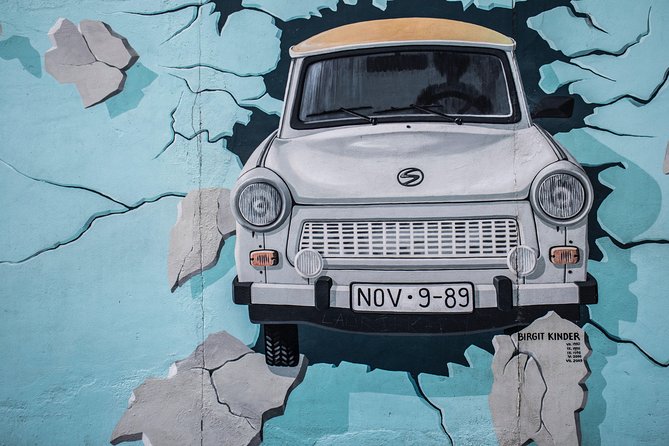
The Wall did not simply divide Berlin in the abstract. It passed through real streets and shaped daily life in districts such as Kreuzberg.
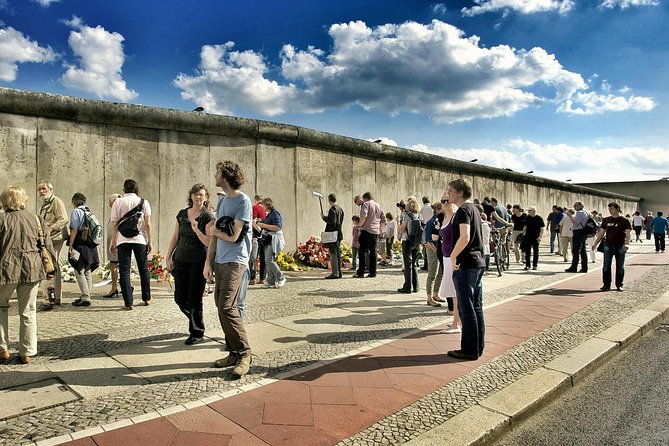
During this part of the walk, you will stop at a remaining section or memorial connected with the Berlin Wall. The time here is brief, about 25 minutes, but it gives the rest of the tour extra weight.
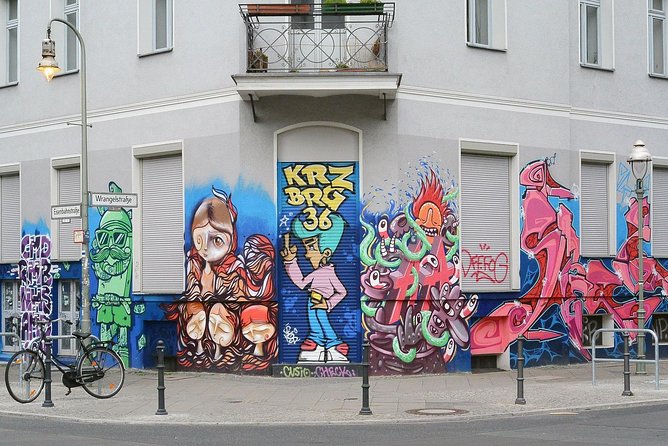
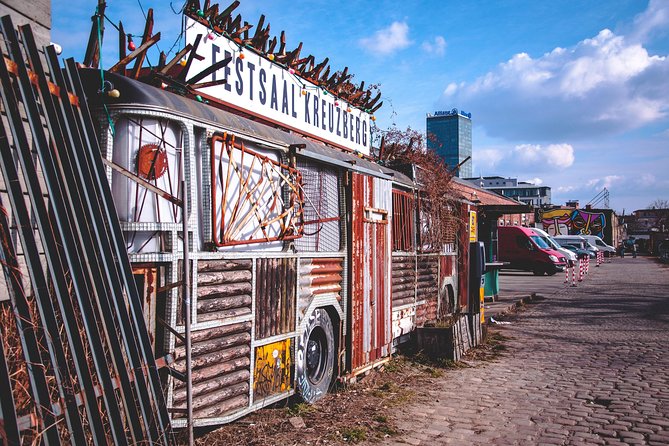
You will also pass walls filled with art, old buildings, and vacant plots that have been used for creative projects. These places help explain why Kreuzberg became associated with artists and alternative culture.
The important point is not that neglect automatically produces good art. It is that low rents, political separation, damaged buildings, and unused land created room for people who might not have found a place in more polished parts of Berlin.
A historian guide can connect those conditions to the present. The same district that once had empty buildings now faces rising interest and redevelopment. What was once ignored is now valuable, and that shift raises hard questions about who can afford to stay.
This is one of the strongest parts of the experience for anyone who wants more than a collection of colorful walls. You will see the physical remains of division while also considering how Berlin turned old wounds into cultural identity.
SO36 and Oranienstrasse: food, shops, and street politics
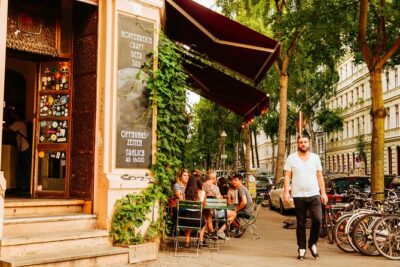
The tour then moves through SO36, the eastern half of Kreuzberg. Oranienstrasse is one of the key streets here, lined with cafes, boutiques, and businesses reflecting the district’s mixed population.
The name comes from the Dutch Princely House of Orange, but the street’s modern identity is tied to Kreuzberg’s social and political life. It was also known for clashes between anarchists and police around the turn of the century.
That past helps explain the neighborhood’s reputation for resistance. Kreuzberg has repeatedly pushed back against authority, large development projects, and attempts to make the district more orderly and profitable.
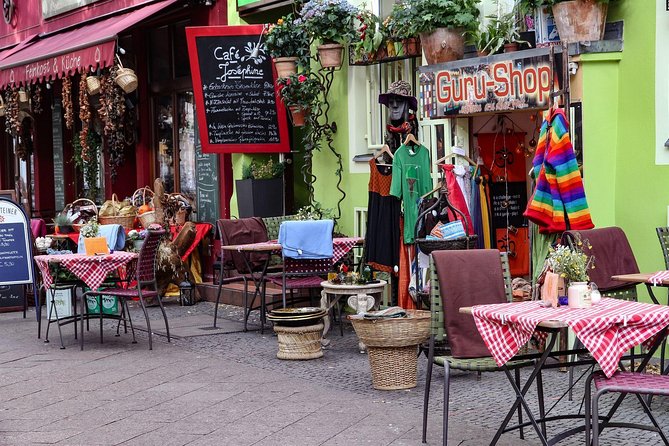
At the same time, this is not a museum of rebellion. It is a lived-in part of Berlin. Turkish businesses, cafes, food shops, market goods, and newer retailers share the same streets. The result is a useful look at how immigrant communities and alternative culture shaped the area.
You may also hear how celebrities such as David Bowie were drawn to Kreuzberg’s creative energy. That detail is interesting, but the real value is seeing why the district appealed to artists in the first place.
If food matters to you, ask your guide about local places along the way. Klaus has been praised for knowing where to find good spaetzle, a useful reminder that a neighborhood walk can also help you choose where to eat later.
The drawback is that the tour does not include food or drinks. You can ask for recommendations, but plan to pay for anything you order separately.
Other Berlin experiences to weigh up
- Discover Berlin Half-Day Walking Tour
★ 5.0 · 9,624 reviews - Berlin: Third Reich and Cold War 2 Hour Walking Tour
★ 4.9 · 6,830 reviews - Berlin: Discover Berlin Walking Tour
★ 4.9 · 5,998 reviews - Berlin’s Best: 2 Hour Walking Tour Third Reich and the Cold War
★ 5.0 · 5,486 reviews
Street art without losing the history
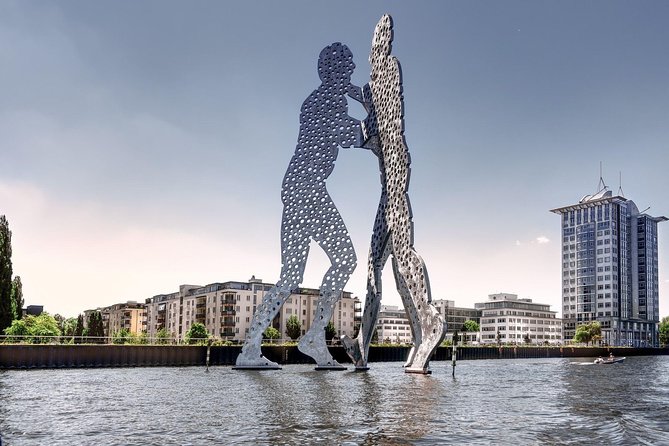
Kreuzberg’s street art is easy to photograph and easy to misunderstand. A guide adds value by explaining how it fits into the neighborhood’s past.
The area’s abandoned buildings and neglected plots gave artists places to work. Some creative projects took over empty sites, while other works appeared on walls throughout the district. The art became part of the public character of Kreuzberg.
You should not expect every piece to remain unchanged. Street art is temporary by nature, and construction or repainting can alter what you see. The tour’s lasting benefit is the explanation of why Kreuzberg became such a strong setting for public art.
This is also where a private tour can be better than a large group walk. You can stop to ask what a particular mural means, how local residents view it, or how the guide separates political art from simple decoration.
The tour presents the art alongside Turkish culture, independent retailers, and Cold War history. That wider setting keeps the experience from becoming a hunt for famous murals.
I would book this walk for people who want to understand the forces behind Berlin’s creative reputation. If your only goal is to photograph the biggest pieces of street art, a dedicated street-art tour may be a better match.
Viktoriapark brings a different side of Kreuzberg

Viktoriapark provides a welcome change after the denser streets of SO36. The stop lasts about 20 minutes and introduces one of Kreuzberg’s best-known green spaces.
The park shows that the district is not only walls, traffic, shops, and nightlife. It also gives you a chance to slow down and see how Berlin residents use public space.
Because the tour covers so much social history, this pause helps the rhythm. You can talk with your guide, catch your breath, and consider how the area’s identity extends beyond its counterculture image.
The park is not presented as a separate major attraction requiring a long visit. Think of it as one piece of the larger story, and do not expect a long picnic or extended free time there.
Distances between some sites make public transport necessary. That is worth knowing before you book because the experience is a walking tour, but not an entirely walk-only tour. Your guide will help connect the sections, yet you should allow for transit time and bring a valid way to pay for your rides.
An optional bike rental costs 10 euros per person. That may appeal to you if you prefer cycling between points, but the supplied details do not promise that a bike will replace every transit segment. Confirm the arrangement before choosing that option.
The future of Kreuzberg along the river
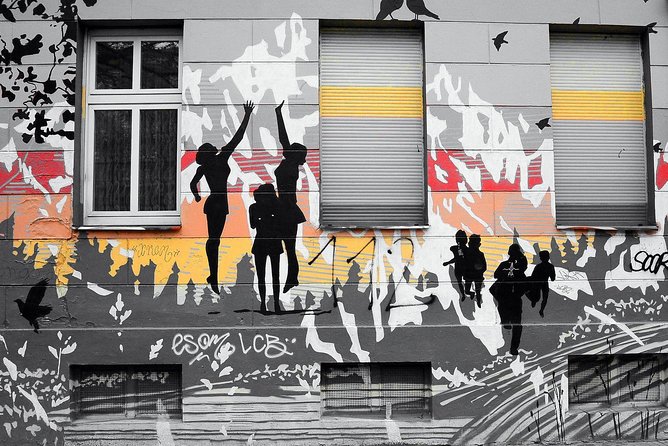
The final theme is what happens next. Riverside development may speed up the gentrification already changing parts of Kreuzberg.
The guide will discuss future plans and the pressure they may place on the neighborhood’s older businesses, artists, and residents. This makes the tour more useful than a simple look at what Kreuzberg was in the past.
Gentrification is not treated as a simple good or bad story. New investment can bring repairs, services, and jobs. It can also raise rents and make the culture that attracted investment harder to maintain.
That tension is visible throughout the walk. Turkish businesses and long-running local institutions share space with newer retailers. Alternative culture becomes part of the district’s appeal, then becomes something developers can sell.
I appreciate that the tour includes this unfinished question. You are encouraged to look at Kreuzberg as a place still being negotiated, not a finished product preserved for sightseeing.
The end point is listed simply as Berlin, Germany, rather than one specific attraction. Ask your guide where the walk finishes and how close you will be to public transport before setting a tight dinner or museum appointment.
Is the $450 private price a fair deal?
The cost is $450 per group of up to 10 people. At the full limit, that works out to $45 per person before public transport, food, or drinks.
For a group of friends or a family traveling together, that is a reasonable price for three hours with a private historian. You are paying for a guide who can adjust the pace, answer personal questions, and avoid the limits of a large scheduled group.
For two people, the calculation changes. The per-person cost becomes $225, which is high for a neighborhood walk unless you place a strong value on private guiding and focused history.
The price is easier to justify if you care about Kreuzberg’s politics, immigration, architecture, and future development. It is harder to justify if you only want a casual stroll or a list of photo stops.
The tour is usually booked around 10 days ahead. Morning and afternoon departures are available, but you need to state your preference when booking. Confirmation is sent within 48 hours, subject to availability.
Free cancellation is available if you cancel at least 24 hours before the start time. Changes or cancellations inside that period are not accepted for a refund.
Who will get the most from this walk?
I would recommend this tour to a small group that wants a serious introduction to Kreuzberg without giving up flexibility.
It suits:
- Families with older children who can handle several hours of city walking and discussion
- Visitors interested in immigration, Cold War Berlin, street art, and urban change
- People who prefer a private guide to a fixed large-group route
- Repeat Berlin visitors who want a neighborhood experience beyond the main sights
- Groups willing to use public transport between sections
It may not suit you if you want a relaxed cafe crawl, a food tour, or a fully step-free route with no transit changes. The tour also requires more interest and attention than a simple sightseeing loop.
The experience has worked well for a parent and a 12-year-old, especially because a guide can adjust the pace. Klaus, if assigned to your group, is described as friendly, fun, and attentive to individual interests. Guide assignments can vary, so do not assume he will lead every departure.
Should you book the Kreuzberg private walking tour?
Book it if you want to understand why Kreuzberg feels the way it does. The strongest parts are the private format, the historian’s context, the meeting of Turkish culture and alternative Berlin, and the honest look at gentrification.
I would especially choose it for a group of four to 10 people. At that size, the $450 fee becomes much better value, and you can shape the conversation around your own interests.
For one or two people on a tight budget, compare the cost with a regular group walk. For a visitor who wants a personal, flexible introduction to Kreuzberg and does not mind public transport, this tour offers a thoughtful way into one of Berlin’s most debated districts.
FAQ
How long is the Kreuzberg private walking tour?
The tour lasts approximately three hours.
Where does the tour begin?
The listed meeting point is Schlesische Str. 18, 10997 Berlin, Germany. The route begins around Oberbaumbrücke, so confirm the exact meeting instructions after booking.
Where does the tour finish?
The end location is listed as Berlin, Germany. Ask your guide for the precise finishing point and its nearest public transport connection.
How many people can join the private tour?
The group can include a maximum of 10 people.
Is a historian guide included?
Yes. The package includes a three-hour private walking tour led by a historian guide.
Is public transportation included?
No. You will need to use public transport several times because some key stops are too far apart to walk between. An optional bike rental costs 10 euros per person.
Are food and drinks included?
No. Food and drinks are not included unless specifically stated.
Are morning and afternoon departures available?
Yes. You can choose a morning or afternoon departure, but you should provide your preference when booking.
What is the cancellation policy?
You can cancel for a full refund up to 24 hours before the experience begins. Cancellations or changes made less than 24 hours before the start time are not accepted for a refund.
Newest Berlin reviews
- Where It All Began: Berlin’s Queer & Trans History Tour★ 4.9 · 6 reviews
- Understanding Kreuzberg: The roots of local (sub)culture★ 4.9 · 11 reviews
- Berlin: guided canoe | kayaktour★ 4.1 · 7 reviews
- Private Potsdam City Tour in an authentic vintage van★ 5.0 · 14 reviews
- Warnemünde Shore Excursion: Private Sachsenhausen and Berlin Tour★ 5.0 · 12 reviews
- Ultimate E-Bike Tour of Berlin with Beer Garden Stop★ 5.0 · 4 reviews
- In the Forbidden City – Potsdam Walking Tour★ 5.0 · 17 reviews
- Private Walking Tour of Potsdam and Sanssouci★ 5.0 · 24 reviews
Kreuzberg Tours, compared.
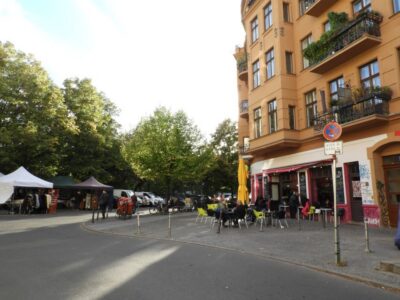
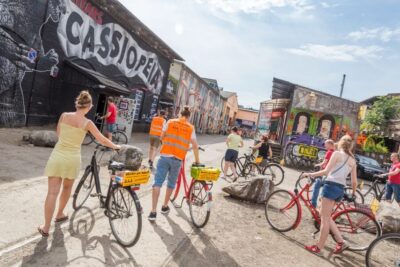
Alternative Bike Tour of Kreuzberg & Friedrichshain
Read our review →
Berlin Off-the-Beaten-Path Walking Tour: Kreuzberg, Mitte and Friedrichshain
Read our review →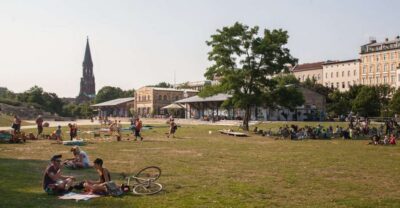
Kreuzberg Berlin: Off the Beaten Track PRIVATE Walking Tour
Read our review →
Experience the Alternative Kreuzberg on a Bike Tour
Read our review →Browse the lists this tour appears in